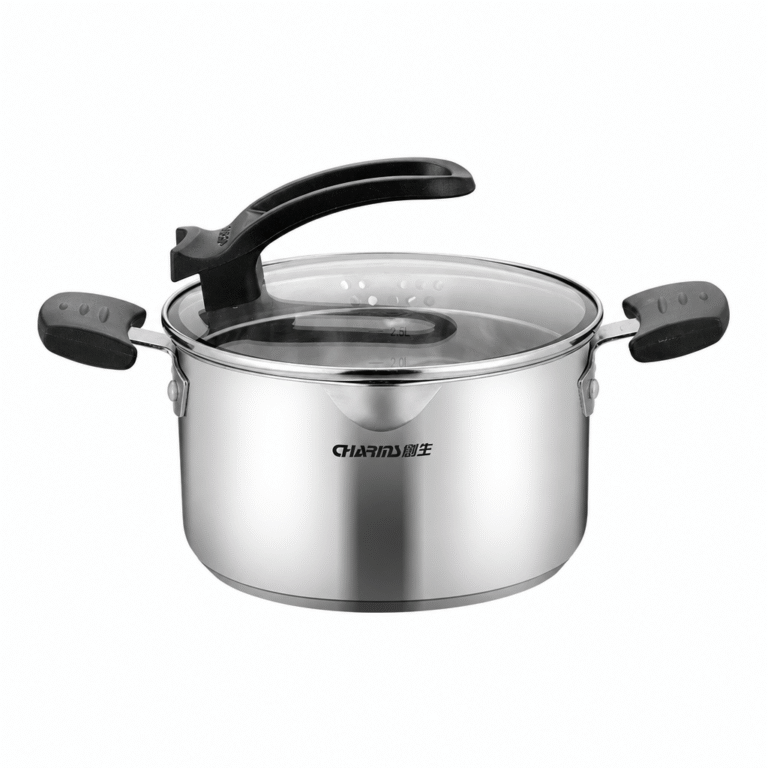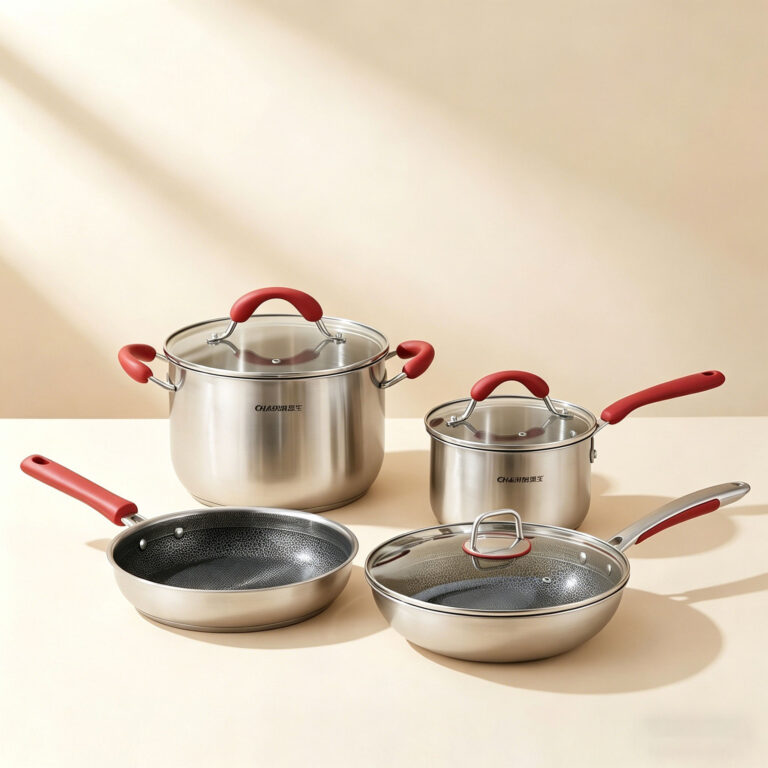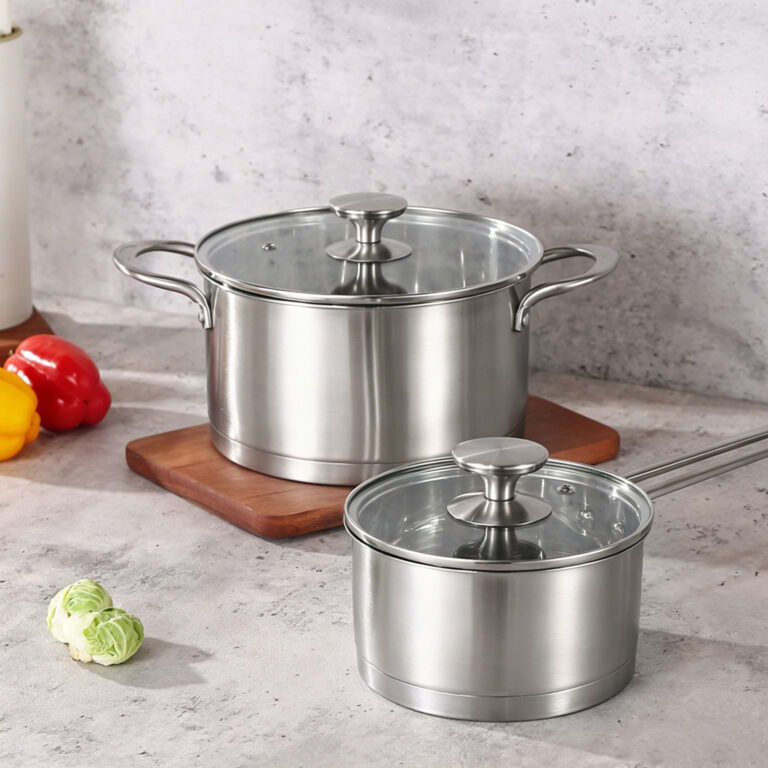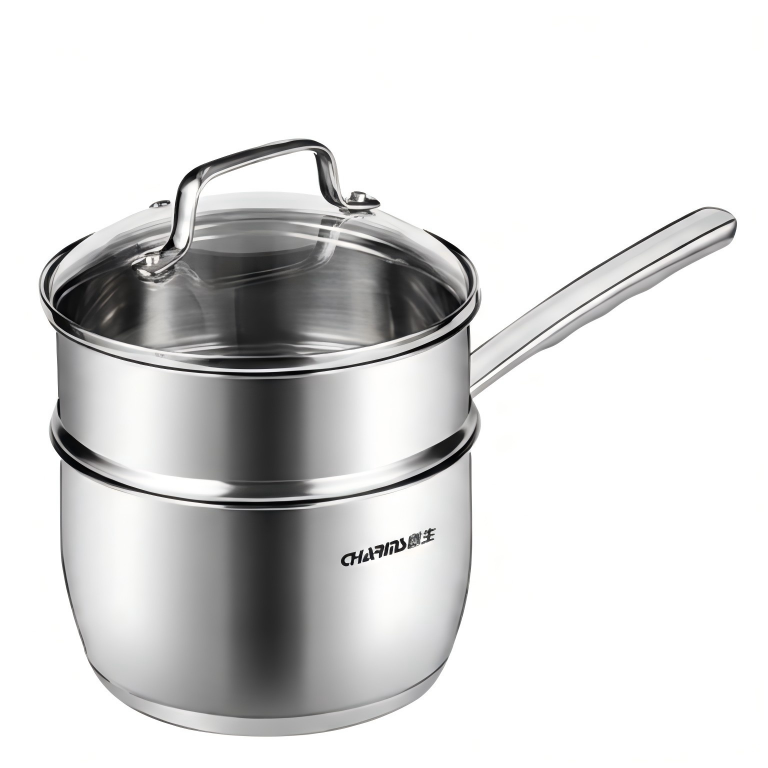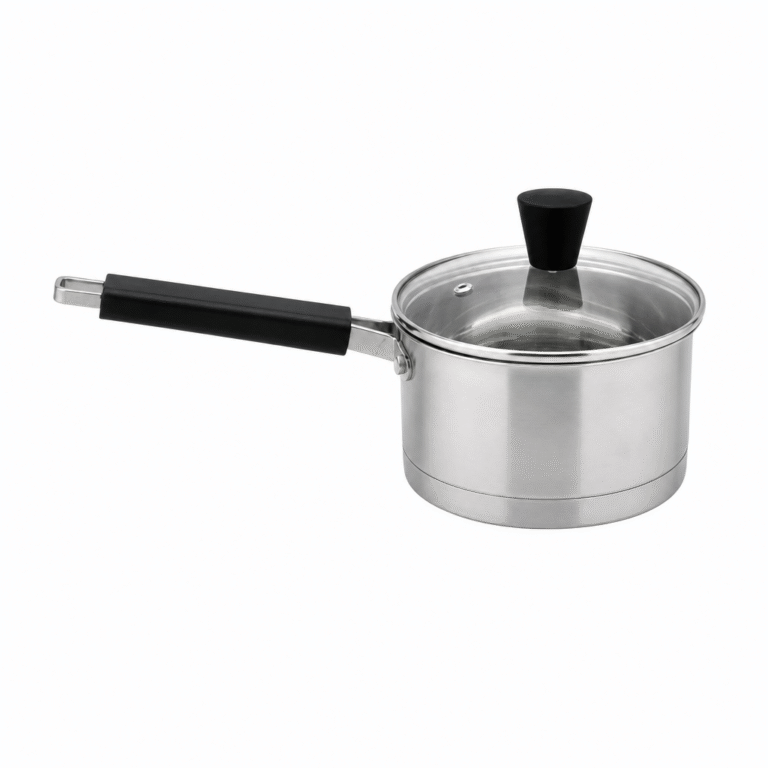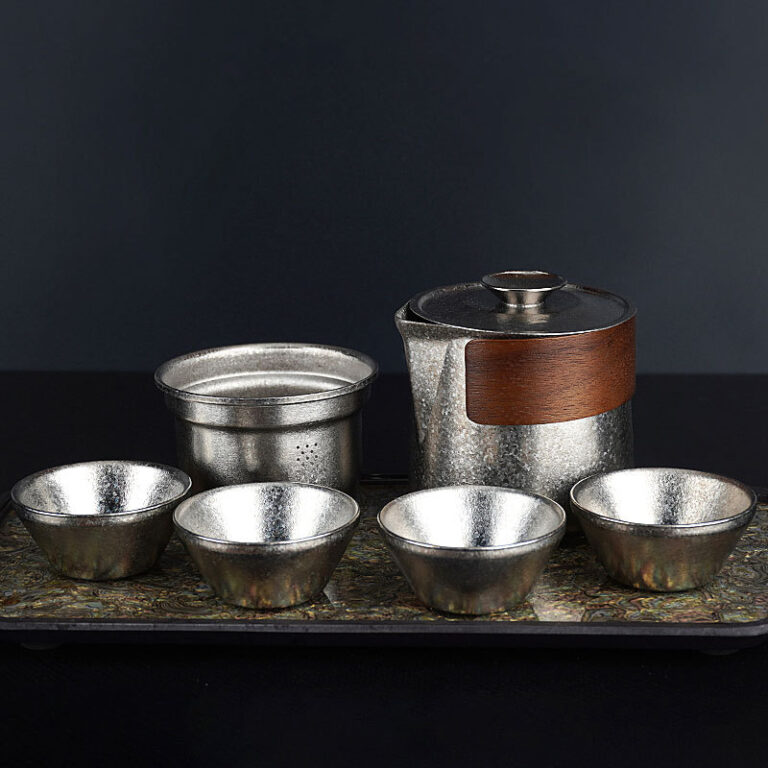


18/10 stainless steel cookware gets its name from its alloy composition: 18% chromium and 10% nickel. This matches the international standard ASTM A240 Grade 304, the most common food-grade stainless used in premium cookware worldwide. The chromium forms a passive oxide layer that resists rust and corrosion; the nickel stabilizes that layer and gives the steel its polished appearance. For most home cooks, 18/10 is the right choice — durable, non-reactive with food, and easy to maintain. If you’re cooking highly acidic dishes frequently or working in a commercial kitchen with salt-heavy environments, 316L (which adds molybdenum) offers a meaningful upgrade. This guide explains what the numbers actually certify, when the grade matters, and how to verify you’re getting what you paid for.
What the 18/10 Designation Really Tells You
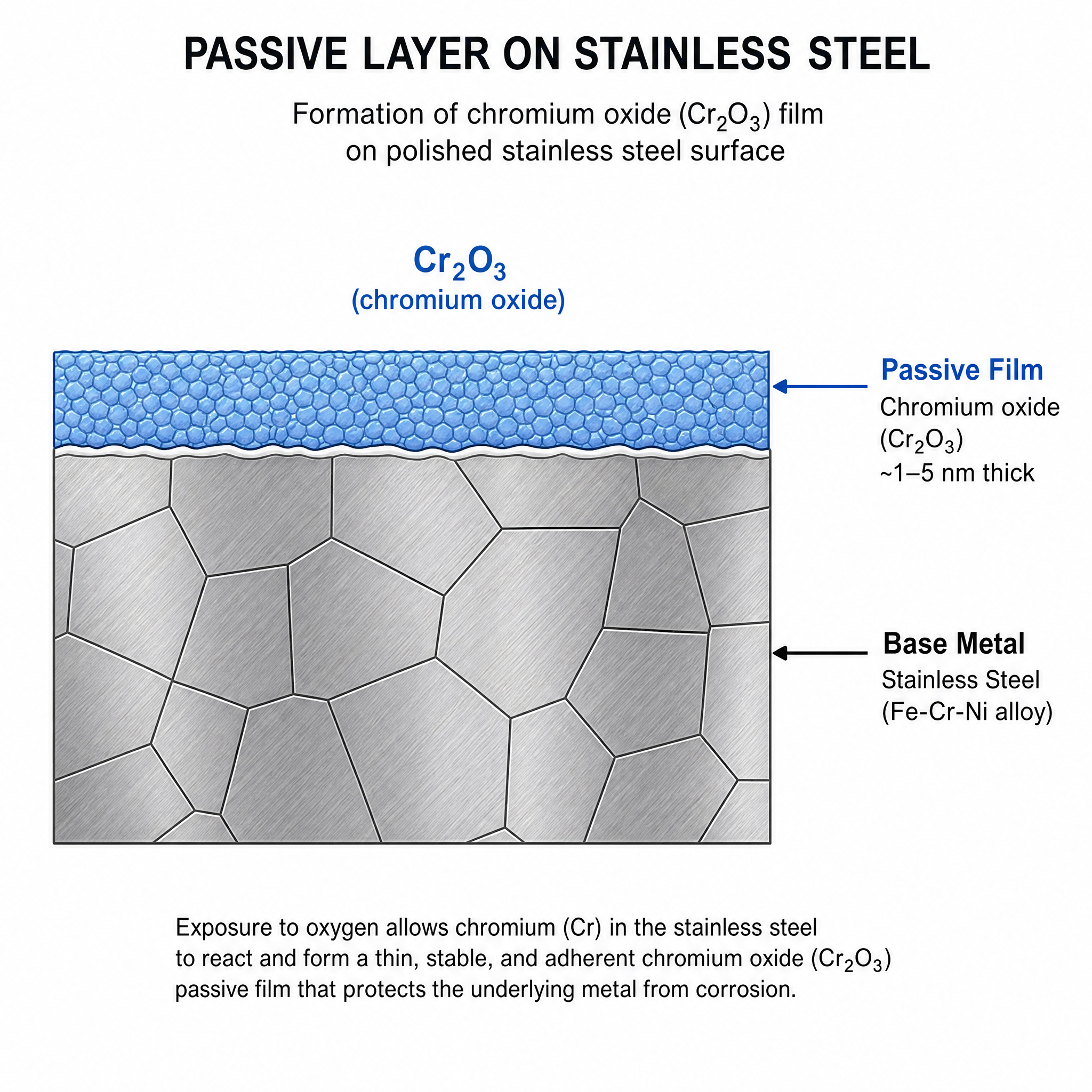
18/10 stainless steel is not a brand name or proprietary grade — it’s shorthand for the alloy composition defined under ASTM A240 Grade 304 (and its European equivalent EN 10088-1 1.4301).
The two numbers refer to weight percentages of two alloying elements in the steel:
- 18% chromium — forms a thin, self-healing chromium oxide passive layer on the steel surface that blocks oxygen and moisture from reaching the iron underneath. This is what makes stainless steel “stainless.”
- 10% nickel — an austenite stabilizer. It keeps the steel in its face-centered cubic crystal structure at room temperature, which improves both corrosion resistance and formability.
When you see “18/10” stamped on a pan or listed in a product description, the manufacturer is claiming the steel meets 304-grade composition — minimum 17.5–19.5% Cr and 8.0–10.5% Ni per ASTM A240/A240M. The 10% nickel figure is at the top of the 304 specification range, which is why manufacturers market it as 18/10 rather than just “304 stainless.”
A pan labeled 18/8 contains the same alloy family (304) but with nickel at the lower end of the specification — roughly 8% instead of 10%. In practice, the corrosion performance difference between 18/8 and 18/10 is small for typical cooking use. The real gap is between 18/10 (304) and 18/0, which contains no nickel at all, is ferritic rather than austenitic, and corrodes noticeably faster in acidic and salty environments.
For procurement buyers: When sourcing cookware and requesting grade verification, ask for the mill certificate (MTR — Material Test Report) specifying the heat number and chemical composition per ASTM A240 or EN 10088. A manufacturer who can’t provide this is selling you a grade claim without documentation.
The Nickel-Chromium Ratio: Why the Numbers Matter
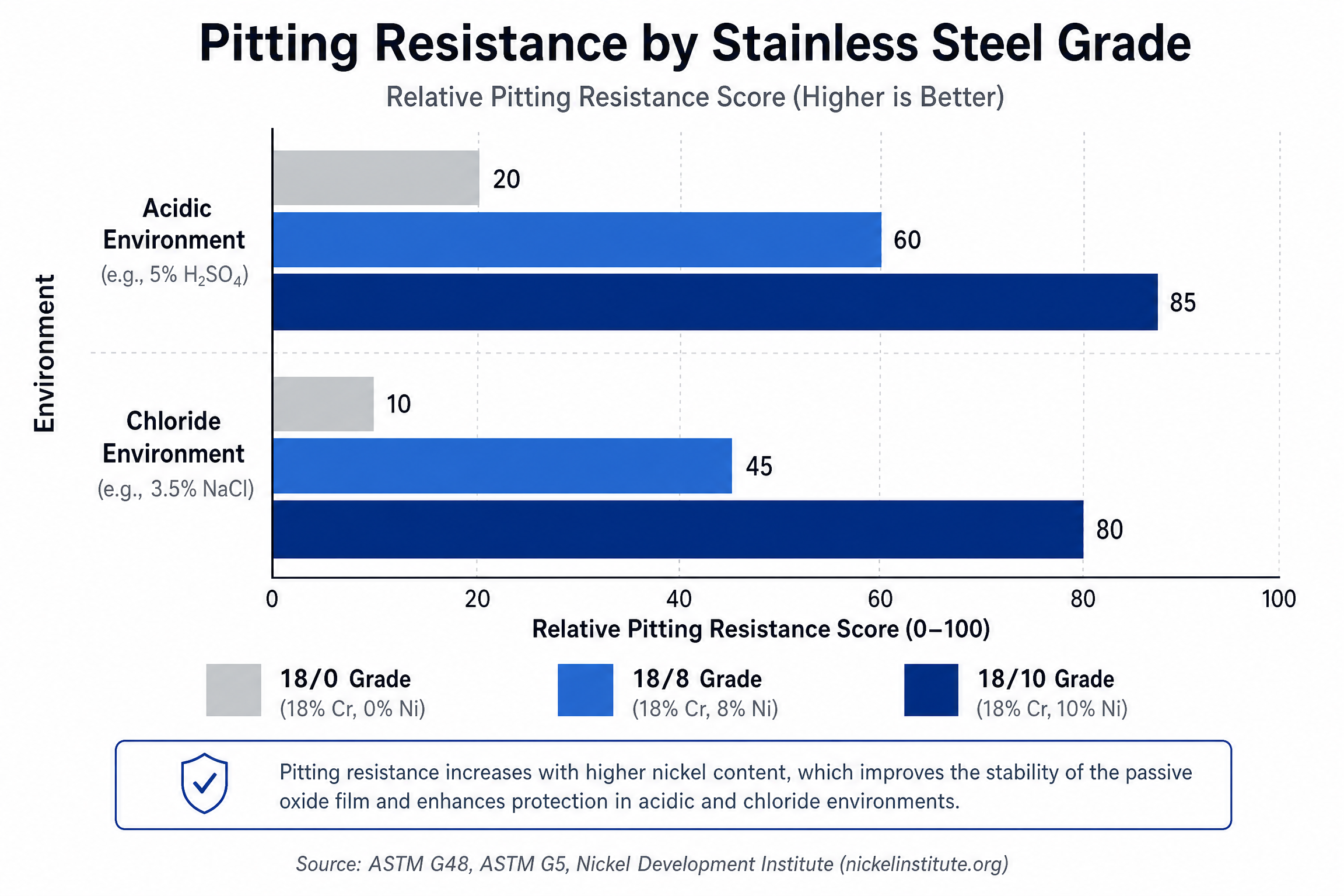
The ratio of chromium to nickel determines how stable the passive oxide layer remains when exposed to corrosive conditions — and that stability gap becomes real in a working kitchen.
Chromium handles the primary corrosion barrier. But chromium oxide is only stable across a limited electrochemical range. When you cook tomato sauce (pH ~4), citrus-braised meats, or salt-heavy stocks, the acidic chloride environment becomes aggressive enough to locally break down the passive film — a process called pitting corrosion.
Nickel’s job is to extend the stability range of that passive film. Higher nickel content pushes the steel’s corrosion potential in a more noble direction, making it harder for the passive film to break down under acidic or chloride attack. The International Molybdenum Association’s corrosion data for austenitic stainless steels confirms that moving from 8% to 10% nickel measurably improves pitting resistance in moderate chloride environments.
In real kitchen terms: an 18/0 pan left with tomato sauce residue overnight will show surface discoloration within days. An 18/8 pan holds up better. An 18/10 pan — properly cleaned and dried — typically shows no corrosion in normal home use over years of cooking.
What the nickel ratio does NOT affect:
- Heat distribution. 18/10 is a poor heat conductor on its own (thermal conductivity ~14–16 W/m·K). The performance you feel when cooking comes from the copper or aluminum core layer in tri-ply or multi-ply construction, not the steel grade. An 18/10 pan with a thin aluminum disc will heat less evenly than an 18/8 pan with a thick copper core.
- Non-stick properties. Neither 18/8 nor 18/10 is non-stick. The nickel ratio affects corrosion, not surface friction.
The practical takeaway: 18/10 vs 18/8 is a meaningful distinction for long-term corrosion resistance, particularly with acidic foods and high-salt cooking. It is not the factor that determines how evenly your pan heats or whether food sticks.
18/10 vs. 316L Cookware — An Honest Comparison
316L stainless steel is genuinely better than 304/18/10 for corrosion resistance — but for most home kitchens, the improvement is overkill, and the price premium is hard to justify.
Here’s what 316L adds: molybdenum, at 2–3% by weight. Molybdenum dramatically improves resistance to chloride-induced pitting and crevice corrosion. This is why 316L dominates marine engineering, pharmaceutical processing, and food processing equipment that handles aggressive brines, acidic cleaners, or continuous high-temperature acid exposure.
| Property | 18/10 (304) | 316L |
|---|---|---|
| Chromium content | 17.5–19.5% | 16–18% |
| Nickel content | 8–10.5% | 10–14% |
| Molybdenum | None | 2–3% |
| Carbon (max) | 0.08% | 0.03% (low carbon = “L”) |
| Pitting Resistance Equivalent (PREN) | ~19–20 | ~24–28 |
| Typical cookware price premium | Baseline | 20–60% higher |
| Best suited for | Home cooking, most professional use | Marine/coastal, aggressive acids, brine |
PREN = Pitting Resistance Equivalent Number: Cr + 3.3×Mo + 16×N. Higher = better pitting resistance.
When 316L genuinely wins:
- You cook extremely acidic dishes (pH below 3.5) daily and leave the food sitting in the pan
- Your kitchen environment has high chloride exposure (coastal property, high humidity + salt air)
- You’re running a commercial kitchen where pans are washed with harsh industrial chlorinated cleaners repeatedly
- You have a nickel sensitivity and want the lower-carbon 316L variant with better documented food-contact performance
When 316L is probably not worth it:
- Normal home cooking — tomato sauces, citrus marinades, salty dishes all cooked and served without extended soaking
- You clean your pans promptly after cooking
- Budget is a meaningful constraint
I’ve handled both grades in sourcing contexts, and the visible and tactile difference between a well-made 18/10 pan and a 316L pan is zero. The difference lives entirely in the alloy chemistry and becomes relevant only at the extremes of use.
One marketing note: some brands label cookware “surgical steel” or “medical grade” without specifying 316L. These are unregulated claims. If a brand is genuinely using 316L, they should specify ASTM A240 Grade 316L or EN 10088-1 1.4404 in their technical specifications.
Is 18/10 Food Safe? What the Standards Actually Say
18/10 stainless steel (ASTM 304) is classified as food-safe under FDA regulations and is approved for food contact use globally — but that doesn’t mean zero nickel migration, and the distinction matters for a small population.
The FDA does not maintain a single “food grade stainless steel” certification list, but stainless steel alloys including 304 and 316L have decades of regulatory acceptance for food contact equipment — accepted under the FDA Food Code’s performance standards for smooth, corrosion-resistant, nonabsorbent surfaces, and recognized in long-standing commercial use. The EU’s Council of Europe framework (CM/Res(2013)9, updated CM/Res(2020)9) governs metals and alloys for food contact through Specific Release Limits (SRLs) for metal ions, and 304/316 stainless steels are widely used and tested under this framework.
On nickel migration:
Studies published in peer-reviewed journals have measured nickel release from stainless steel cookware. Key findings from the literature (including Kamerud et al., J Agric Food Chem, 2013, and Kuligowski & Halperin, Arch Environ Contam Toxicol, 1992):
- New stainless steel pans release more nickel than well-seasoned or older pans — the passive oxide layer becomes more stable over time
- Cooking acidic foods (tomato, citrus) in stainless steel increases nickel release compared to neutral foods
- Measured migration values in acidic simulant testing range from ~0.08–0.21 mg/kg; in prolonged real-food acidic cooking with new pans, values can be higher — which is why prompt cleaning and not leaving acidic food sitting in a new pan matters most
- The EDQM Specific Release Limit (SRL) for nickel in food contact materials is 0.14 mg/kg, serving as the regulatory ceiling
- The EFSA (2020) Tolerable Daily Intake for nickel is 0.013 mg/kg body weight per day — for a 70 kg adult, approximately 0.91 mg/day
For nickel-sensitive individuals:
There are two distinct nickel concerns:
- Nickel contact allergy — a skin reaction from direct, prolonged skin contact with nickel-containing metal. This is common (affects ~15–22% of women in western populations per dermatology literature, including the EDEN study published in Contact Dermatitis, 2018). Cooking with stainless steel pans does not typically trigger contact allergy because food is the intermediary.
- Systemic nickel sensitivity — a smaller subset of people with documented nickel hypersensitivity may react to dietary nickel intake. For this group, reducing nickel migration from cookware is a legitimate concern. Switching to 316L reduces (but does not eliminate) nickel migration slightly, while ceramic or enamel-coated cookware eliminates stainless steel migration entirely.
The honest summary: for the vast majority of people, 18/10 cookware is safe across a lifetime of normal use. The concern is real but narrow — it applies to people with diagnosed systemic nickel hypersensitivity, not to anyone who has ever had a nickel reaction from jewelry.
How to Verify Your Cookware’s Steel Grade
Most cookware sold as “18/10” is exactly what it claims to be — but cheap imports sometimes use lower-grade steel with higher-grade marketing, and there are practical ways to check.
When evaluating cookware samples for sourcing purposes, here’s the verification process I use:
1. The magnet test (quick, imperfect)
304 stainless (18/10) is austenitic and essentially non-magnetic. Hold a strong magnet to the cooking surface: it should stick weakly or not at all. If a magnet grabs firmly, the steel is likely ferritic (18/0 or lower grade). Note: the magnet test is not definitive — some 304 alloys can become slightly magnetic through cold-working during manufacturing, and the base or handle may use different steel grades.
2. Request the mill test report (MTR)
For B2B procurement and volume buying, this is the right call. A legitimate 18/10 (304-grade) manufacturer can provide an MTR showing the heat number, chemical composition analysis, and the ASTM or EN standard met. If a supplier can’t provide this, that’s meaningful information.
3. Check manufacturer technical specifications
Reputable cookware brands list the specific steel grade designation in their product specs — not just “18/10” marketing language, but ASTM 304 or equivalent. Budget brands that only say “premium 18/10 stainless” without a standard reference are harder to verify.
4. Look for third-party certifications
NSF International certification (common for commercial foodservice equipment) requires verified material composition. EU CE marking for food contact materials under EU Regulation No 10/2011 provides another layer of documented compliance.
5. XRF testing (for commercial procurement)
X-ray fluorescence analyzers can non-destructively verify alloy composition in seconds. If you’re sourcing cookware at commercial scale and a supplier’s MTRs look questionable, XRF testing of sample pieces is definitive.
The honest reality: for name-brand cookware from established manufacturers, you don’t need to verify. The risk of mislabeled steel grade is concentrated in low-price, unbranded imports. If you’re paying $15 for a pan claimed to be 18/10, healthy skepticism is warranted.
Performance in the Kitchen: What 18/10 Actually Delivers
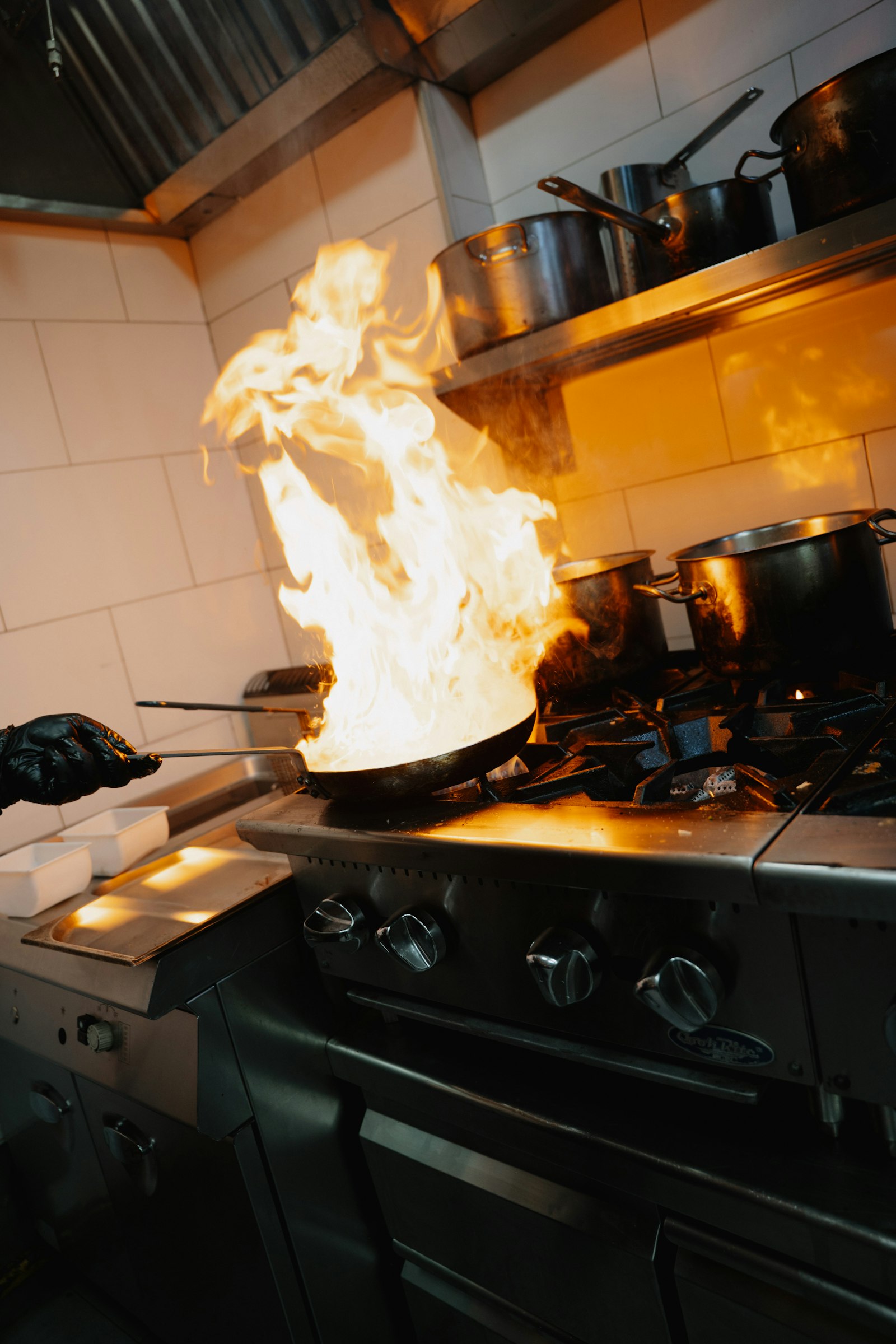
18/10 stainless steel is the surface layer of your pan — the alloy grade determines corrosion resistance and longevity, not cooking performance. Understanding what 18/10 controls (and doesn’t) prevents expensive misdirected decisions.
What 18/10 grade controls:
- Long-term resistance to rust, pitting, and staining
- Non-reactivity with food (no metallic taste transfer in normal cooking)
- Ease of cleaning and dishwasher durability
- Mirror-polish capability and sustained surface appearance
What 18/10 grade does NOT control:
- Heat distribution — determined by core construction (tri-ply, 5-ply, copper core, aluminum disc)
- Heating speed — determined by heat source and core mass
- Non-stick behavior — stainless steel sticks; managed by technique (preheat + fat), not alloy grade
- Weight — determined by gauge and construction, not steel grade
A well-built 18/10 tri-ply pan gives you:
- Even heating from edge to edge (aluminum or copper core does the work)
- A cooking surface that won’t react with acidic tomato sauces, citrus, or wine-based dishes
- Resistance to warping under high heat (austenitic 304 has better high-temperature strength than ferritic alternatives)
- A surface that can be scrubbed hard, run through the dishwasher repeatedly, and still look clean after years
In professional kitchens, 18/10 stainless is standard for sauté pans, saucepans, and stockpots because it tolerates the abuse: high heat, acidic sauces, commercial dishwashers, and daily scrubbing.
Expected lifespan: A well-maintained 18/10 pan from a quality manufacturer should last 20+ years. The failure modes are mechanical (handle loosening, dents, warping from extreme thermal shock) far more often than metallurgical. The 18/10 designation is in part why that longevity is realistic.
FAQ: Common Questions About 18/10 Stainless Steel Cookware
What does 18/10 mean in stainless steel cookware?
18/10 refers to the alloy composition: 18% chromium and 10% nickel. This corresponds to ASTM Grade 304 stainless steel. The chromium provides corrosion resistance by forming a protective oxide layer; the nickel stabilizes that layer and gives the steel its polished appearance and improved durability in acidic environments.
Is 18/10 stainless steel the same as 304 stainless steel?
Yes. 18/10 is the consumer-facing name for ASTM A240 Grade 304 (or EN 10088-1 1.4301 in European notation). The “18/10” label describes the alloy composition; “304” is the formal engineering designation. Both refer to the same material.
Is 18/10 cookware safe to cook with?
Yes, for the vast majority of people. 18/10 (304) stainless steel is FDA-accepted for food contact use and has decades of regulatory approval globally. Small amounts of nickel and chromium can migrate into food when cooking acidic dishes, but the quantities are well below WHO dietary intake guidelines for healthy individuals. People with diagnosed systemic nickel hypersensitivity should consult a physician.
What is the difference between 18/10 and 316L stainless steel cookware?
316L adds 2–3% molybdenum to the alloy, which significantly improves resistance to chloride-induced pitting and crevice corrosion. 316L has a higher Pitting Resistance Equivalent Number (~24–28 vs ~19–20 for 304). For most home cooks, 18/10 is sufficient. 316L is worth considering for high-frequency acidic cooking, coastal environments, or commercial kitchens using chlorinated industrial cleaners.
Why does a magnet stick slightly to some 18/10 pans?
304 austenitic stainless is nominally non-magnetic, but cold-working during pan manufacturing can induce martensite transformation, making it slightly magnetic. This doesn’t indicate lower quality or a different steel grade. The base may also use a magnetic ferritic layer for induction compatibility, which is a separate construction choice.
Does 18/10 stainless steel rust?
Properly maintained 18/10 stainless steel does not rust under normal cooking conditions. Rust can appear if the passive oxide layer is damaged by prolonged exposure to chlorinated water, harsh abrasive cleaners, or physical surface damage combined with aggressive acidic or chloride exposure. Rinse promptly, dry thoroughly, and avoid soaking in salt water.
How do I know if my cookware is actually 18/10?
The practical steps: check if a strong magnet has weak or no attraction to the cooking surface; look for ASTM 304 or EN 10088 standard references in the manufacturer’s technical specifications; for B2B sourcing, request a Material Test Report (MTR) from the manufacturer. Buying from established brands with documented specs is the most reliable approach for consumers.
What 18/10 Stainless Steel Actually Is — A Final Word
After sourcing and evaluating cookware across grade levels, the clearest thing I can say is this: 18/10 is a meaningful standard, not a marketing word — but it describes the steel, not the pan.
The grade tells you about corrosion resistance, food safety, and longevity. It doesn’t tell you about heat distribution (that’s the core construction), weight (that’s gauge and design), or whether food will release cleanly (that’s technique and preheating). A cheap 18/10 pan with a thin aluminum disc base will disappoint you. A well-built 18/10 tri-ply pan from a reputable manufacturer will outlast you.
For most buyers, 18/10 (304) hits the right balance — proven food safety, excellent corrosion resistance for normal cooking, and long service life. Upgrade to 316L if your specific use case puts you in the chloride/acid extreme. Skip it if budget is a constraint and your cooking is typical home use.
The grade deserves to be understood, not just marketed.