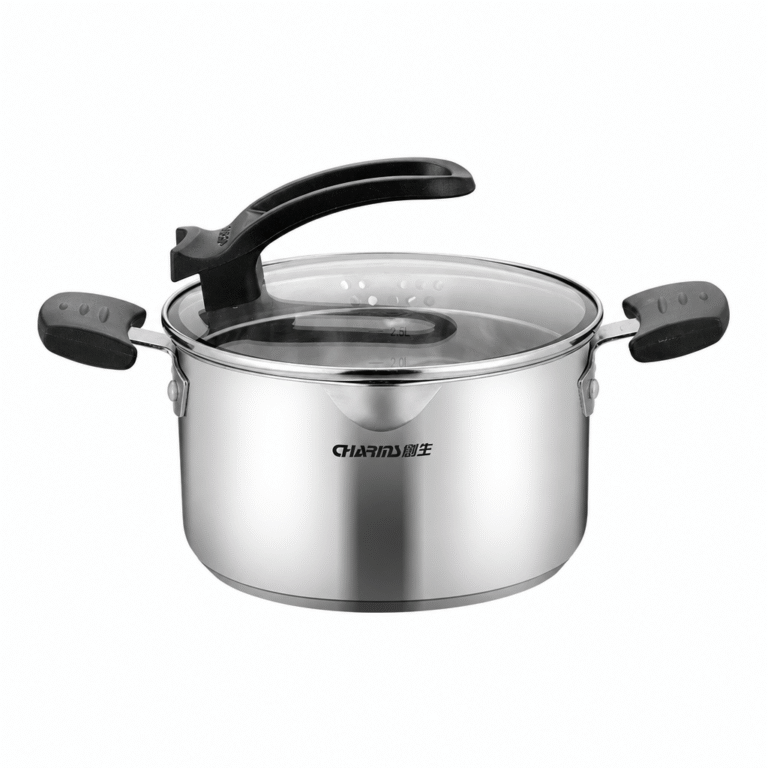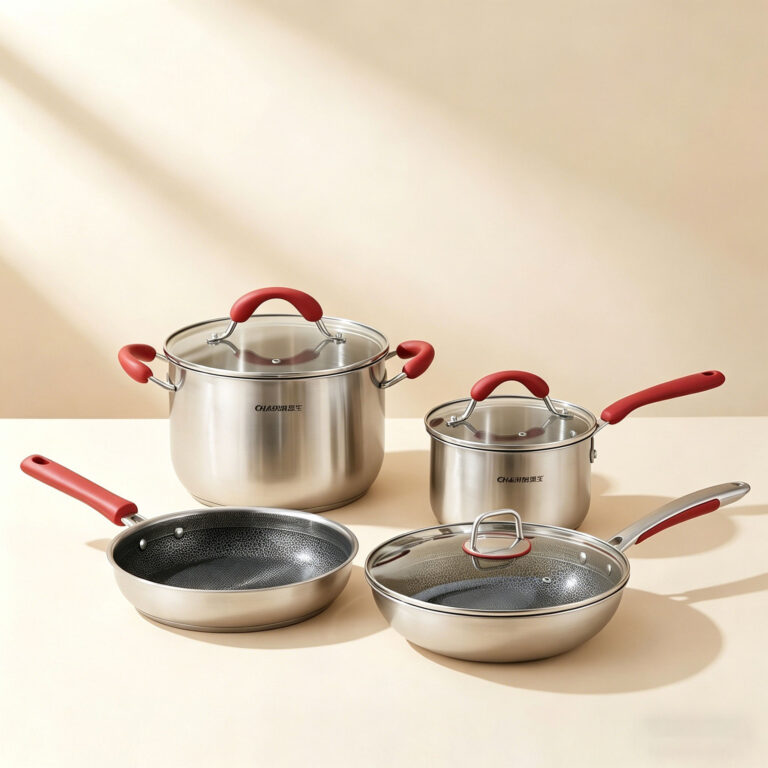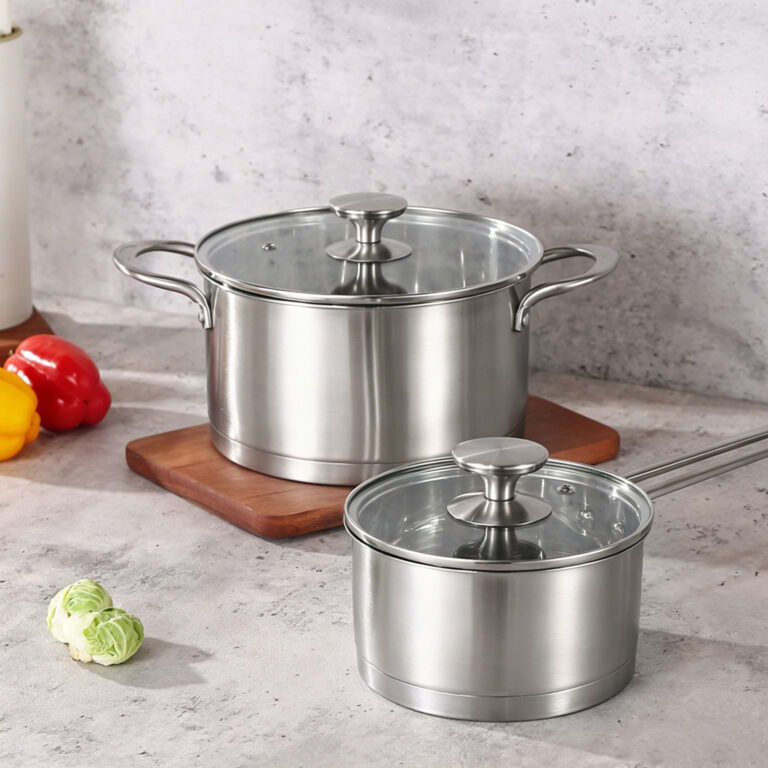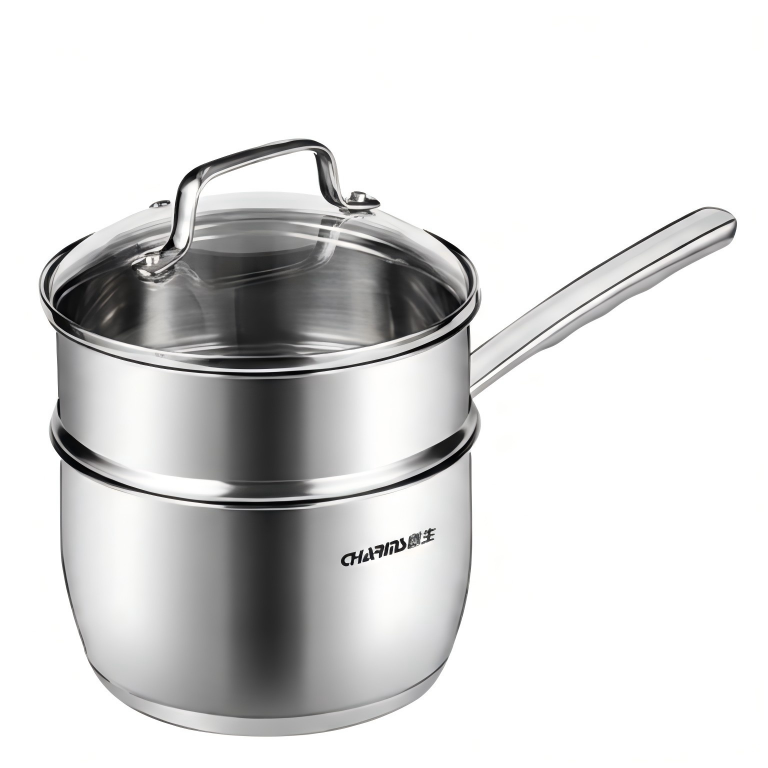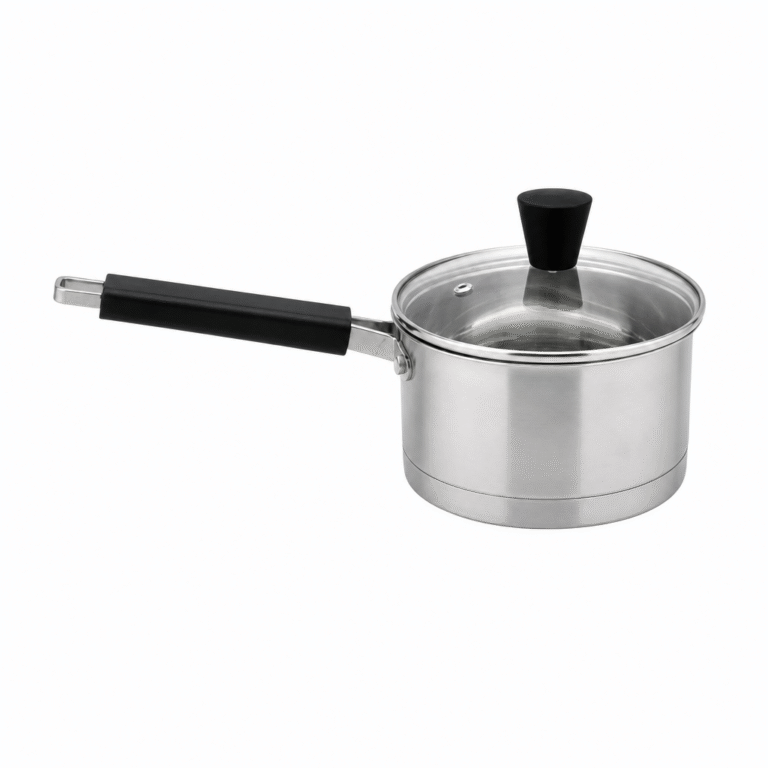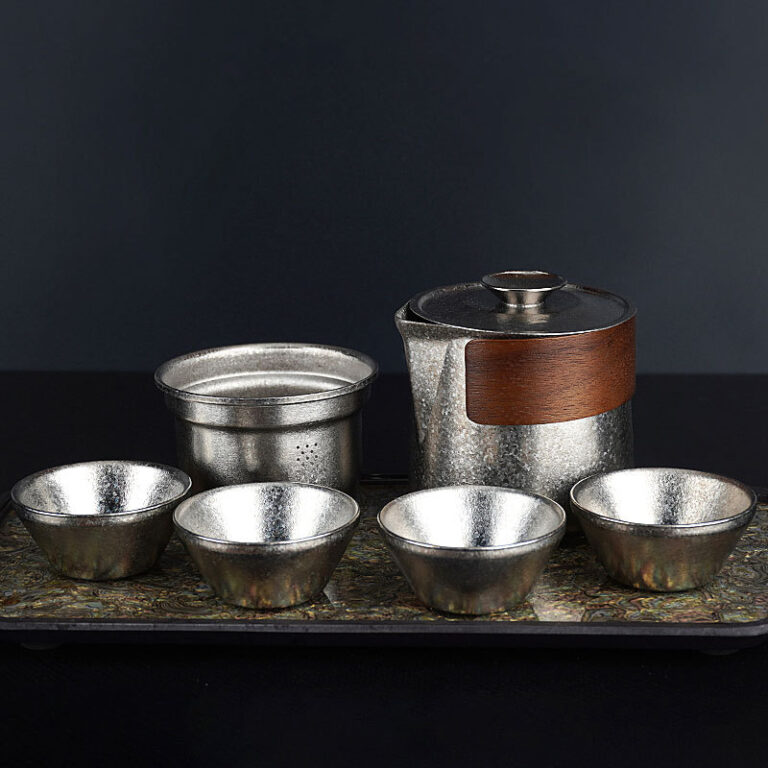


430 stainless steel is a ferritic alloy (16–18% chromium, no intentional nickel addition — max 0.75% per ASTM A240) that’s magnetic — which is exactly why it works on induction cooktops. It conducts heat roughly 60% faster than 304 stainless steel, costs roughly 25–35% less at the raw material level, and is considered food-safe under FDA and EU standards. The tradeoff: it’s less corrosion-resistant than 304 in high-acid or high-salt environments, and thin single-ply 430 pans can develop hot spots. Understanding when 430 is the right choice — and when it isn’t — depends on your cooktop type, cooking style, and whether you have a nickel sensitivity. This guide covers the material science, real-world cooking performance, and a direct comparison with 304 steel, without the marketing noise.
What Is 430 Stainless Steel? Decoding the 18/0 Label
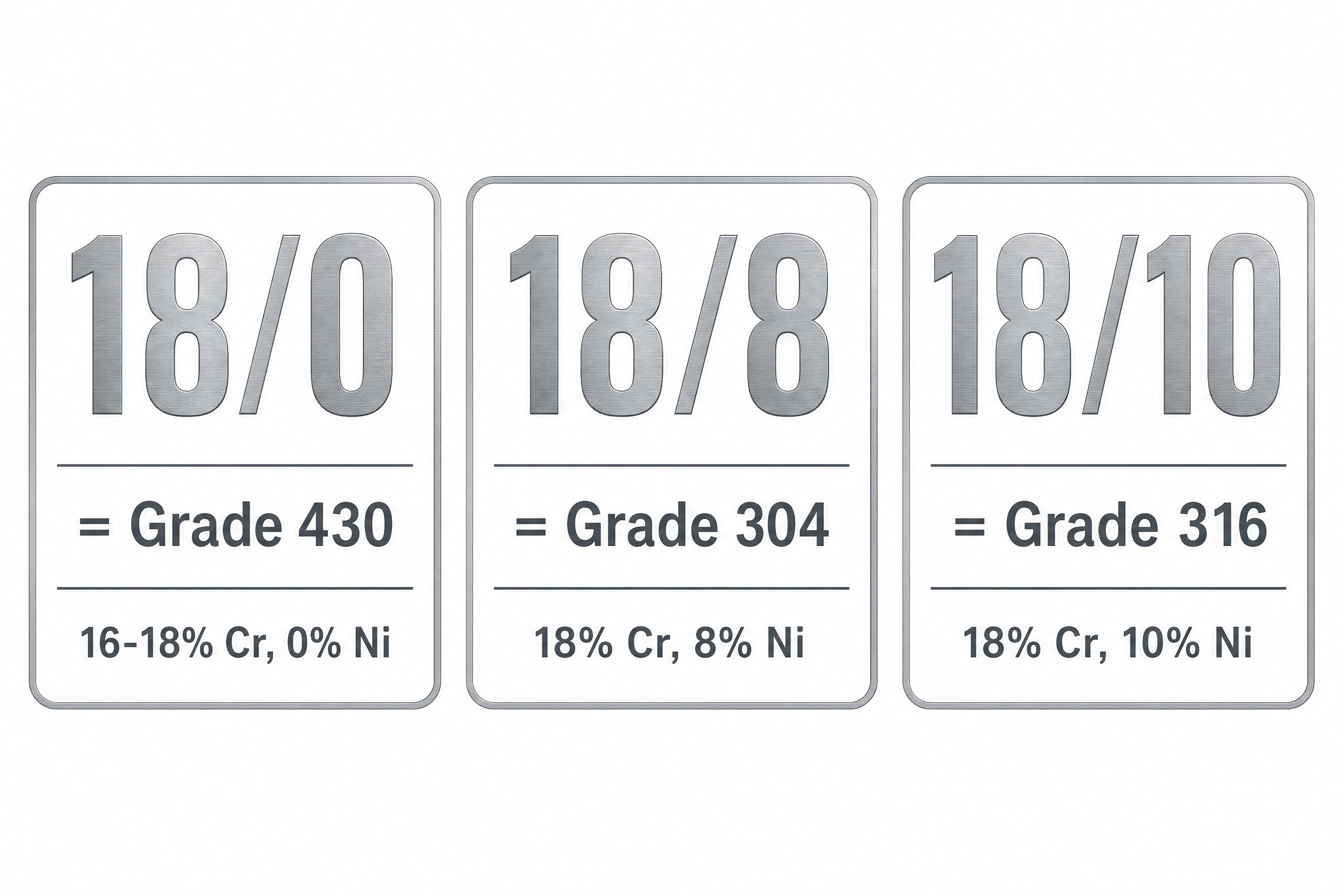
430 stainless steel is a ferritic alloy containing 16–18% chromium with no intentional nickel addition (ASTM A240 permits a maximum of 0.75% Ni as a trace allowance, but 430 is not alloyed with nickel). Most kitchen-grade stainless steels — 304 and 316 — contain 8–10% nickel, which is what gives them their superior corrosion resistance. Grade 430 trades that nickel for a lower price point and, crucially, a magnetic property that makes it the standard choice for induction-compatible cookware.
If you’ve ever seen “18/0” stamped on the bottom of a pan, that’s 430 steel. The notation refers to chromium/nickel content: 18% chromium, 0% nickel. “18/8” is 304 (18% Cr, 8% Ni), and “18/10” typically signals 304 or 316-range alloys with 10% nickel. Retailers and manufacturers use these shorthand labels, but they’re not standardized — an “18/0” pan is reliably 430, but always check for the AISI/ASTM grade designation if you need certainty.
The metallurgical term for 430’s internal structure is ferritic — its iron atoms arrange in a body-centered cubic (BCC) lattice. Austenitic steels like 304 use a face-centered cubic (FCC) structure instead. The BCC arrangement gives 430 its magnetic permeability, which is the physical property induction cooktops rely on to generate heat. Without it, an induction burner simply doesn’t recognize the pan exists.
430 vs 304 Stainless Steel Cookware — Side by Side
The core difference comes down to nickel content, corrosion resistance, and whether your stove uses induction. Here’s a direct comparison across the dimensions that actually matter in a kitchen:
| Property | 430 Stainless Steel | 304 Stainless Steel |
|---|---|---|
| AISI Grade | 430 (ferritic) | 304 (austenitic) |
| Chromium content | 16–18% | 18–20% |
| Nickel content | Max 0.75% (none added) | 8–10.5% |
| Crystal structure | BCC (ferritic) | FCC (austenitic) |
| Magnetic? | Yes | No |
| Induction compatible? | Yes | No (without 430 base layer) |
| Thermal conductivity | ~26 W/(m·K) | ~16 W/(m·K) |
| Corrosion resistance | Moderate | Good |
| Food safety (FDA/EU) | Yes | Yes |
| Typical cost (cookware set) | Lower (~25–35% less at raw material level) | Higher |
| Hardness (Rockwell B) | ~83 HRB | ~70 HRB |
| Best for | Induction cooktops, budget-conscious buyers, nickel-sensitive users | Gas/electric ranges, high-acid cooking, professional kitchens |
A few things this table reveals that most buying guides gloss over:
430 is actually a harder alloy than 304 (83 vs 70 HRB typical annealed, per ASM/MatWeb). This means it resists surface scratching slightly better, though both grades develop the expected fine scratches from normal use.
430 conducts heat about 60% faster than 304. This sounds like a major advantage, and in a pure conductivity sense it is — but the real-world cooking impact depends heavily on whether the pan is single-ply 430, or uses 430 only as an outer magnetic layer over an aluminum core (more on that below).
304 does not work on induction. This is a hard technical limit, not a performance preference. If you have an induction cooktop and buy a 304 pan, it won’t heat at all unless that pan has a 430 or other ferromagnetic base bonded to it.
Why 430 Works on Induction — And Why Most Articles Get This Wrong
The short answer: 430 is ferromagnetic, 304 is not. Induction cooktops generate heat only in magnetic materials.
An induction burner works by passing alternating current through a copper coil beneath the glass surface. This generates a rapidly oscillating magnetic field. When a ferromagnetic material — like 430 stainless steel — is placed in that field, eddy currents form within the metal itself, and those currents generate heat directly in the pan. No flame, no radiant element, no heat transfer through a third medium. The pan becomes the heat source.
Grade 304 stainless steel has near-zero magnetic permeability because its FCC austenitic structure doesn’t support the magnetic domain alignment that eddy current heating requires. You can test this yourself: a refrigerator magnet sticks firmly to 430 steel and barely registers on 304.
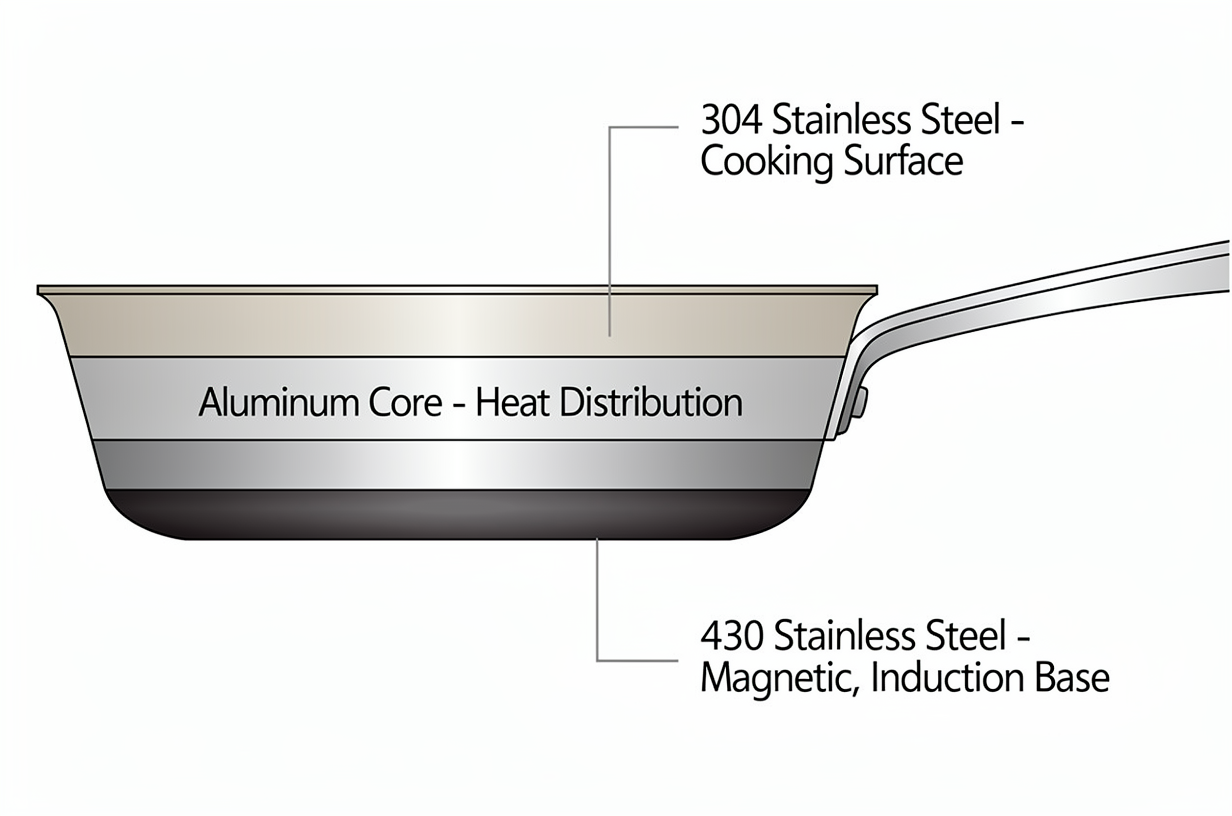
Here’s the part that confuses even experienced cooks: many premium cookware sets marketed as “304 stainless steel” actually use 430 steel for their induction compatibility. All-Clad’s D3 line, for example, uses an 18/10 (304-range) interior cooking surface but bonds a 430 exterior layer to achieve induction performance. Demeyere’s 5-Plus line does the same. When you’re buying a clad or multi-ply stainless pan for induction, you’re almost certainly getting 430 somewhere in the construction — the brand just emphasizes the 304 cooking surface in their marketing.
This isn’t deceptive. It’s good engineering. The 304 interior protects against the corrosion and nickel-leaching concerns that matter most for food contact, while the 430 exterior handles the induction function. A pan sold as “430 stainless steel” is typically a single-ply construction throughout — which means everything, including the cooking surface, is 430.
The Nickel Question — Who Should Choose 430 Steel
If you or someone in your household has a nickel sensitivity, 430 stainless steel is worth prioritizing. Grade 430 contains no intentionally added nickel — the ASTM A240 specification permits a maximum trace of 0.75% Ni, but unlike 304 (8–10.5% Ni) or 316 (10–14% Ni), 430 is not formulated with nickel as an alloying element.
Nickel is the single most common cause of allergic contact dermatitis worldwide, according to the American Academy of Dermatology — population sensitization rates run 8–19% in adults. For most people, the trace amounts of nickel that leach from 304 cookware into food during cooking are far below any clinically relevant threshold. The FDA and EU both permit 304 and 316 stainless for food contact without restriction (NSF/ANSI 51; EU 1935/2004).
But for people with diagnosed nickel hypersensitivity, even low-level dietary nickel exposure can contribute to systemic reactions. Some allergists recommend nickel-sensitive patients reduce dietary nickel intake, which includes switching away from nickel-containing cookware. In that specific context, 430’s zero-nickel composition is a genuine medical advantage, not marketing positioning.
What 430 steel doesn’t eliminate: chromium is still present at 16–18%. There’s no credible evidence that chromium leaches from 430 stainless steel at cooking temperatures in amounts harmful to healthy adults. Stainless steel is regulated for food contact under NSF/ANSI 51 (food equipment materials) in the US and EU Regulation 1935/2004, both of which permit stainless steel alloys including 430 for food contact use.
One honest caveat: if you’re cooking acidic foods (tomato-based sauces, citrus reductions, wine) for extended periods in a plain 430 pan, there is some potential for minor chromium migration — more so than in a 304 pan with its superior passive oxide layer. For occasional acidic cooking, this is a non-issue. For someone who makes tomato sauce every day in the same pan for years, a 304 cooking surface is the safer long-term choice.
Heat Distribution: 430’s Overlooked Advantage (With an Important Asterisk)
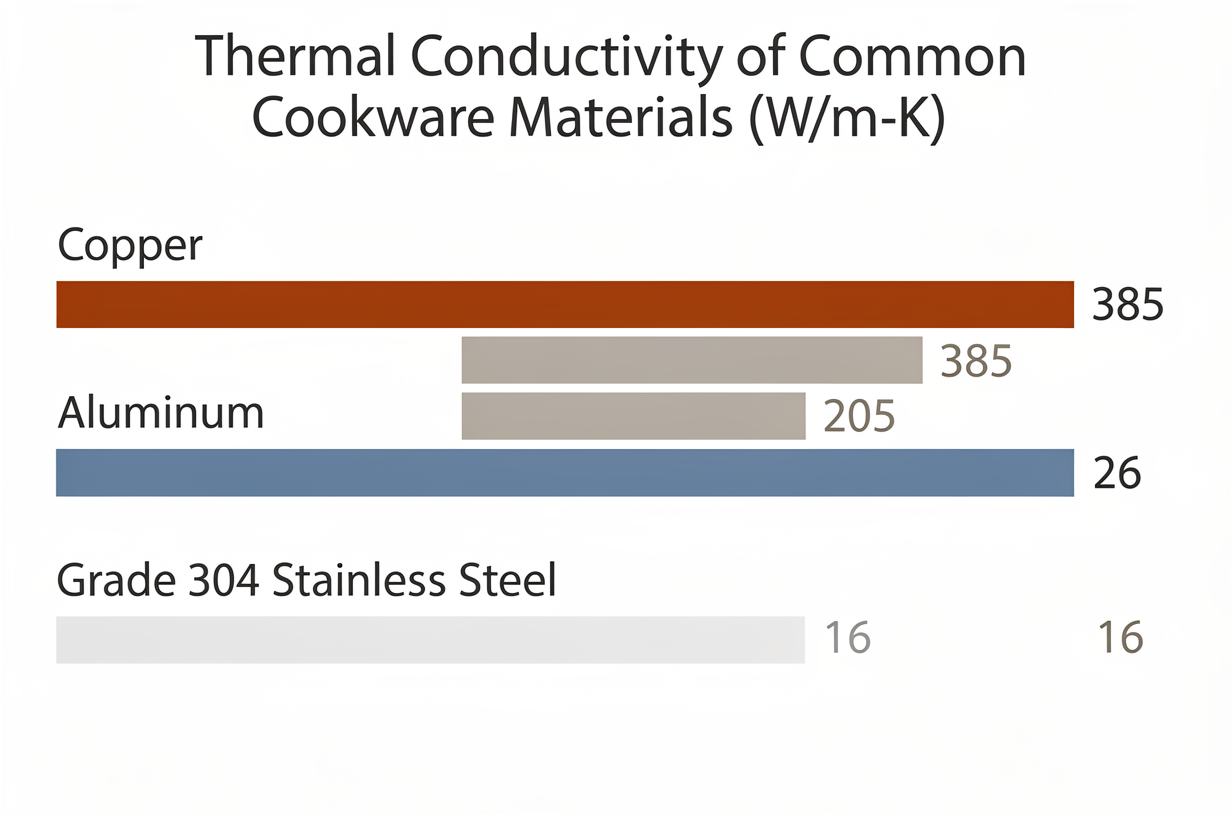
430 stainless steel has a thermal conductivity of approximately 26 W/(m·K) — about 60% higher than 304’s 16 W/(m·K). This is a real, measurable material property, and it means a 430 pan heats up faster and more evenly than a same-thickness 304 pan when used on a conventional burner.
That sounds like an unambiguous win. Here’s the asterisk.
In single-ply (one-layer) construction, both 430 and 304 are poor heat distributors compared to aluminum (~205 W/(m·K)) or copper (~385 W/(m·K)). The absolute difference between 26 and 16 W/(m·K) is real but modest — you’ll notice it as slightly faster heat-up, but neither grade gives you the even, hot-spot-free performance of a clad pan.
In clad or disk-bottom construction, the aluminum or copper core does the heavy lifting for heat distribution, and the steel’s conductivity becomes secondary. An All-Clad D3 with an aluminum core between two steel layers heats essentially identically whether the steel is 430 or 304 — the aluminum core runs at over 200 W/(m·K) and dominates the thermal behavior.
Where 430’s conductivity advantage actually shows up:
- Budget single-ply 430 pans heat more evenly than comparably priced single-ply 304 pans
- Wok cooking on gas — thin single-ply 430 woks heat fast and respond quickly to flame changes
- Induction efficiency — 430’s ferromagnetism plus higher conductivity means the electromagnetic energy converts to usable heat with slightly less waste than a 304-based induction pan
For most practical cooking — searing a steak, making a pan sauce, sautéing vegetables — you won’t notice a thermal difference between a well-made 430 pan and a well-made 304 pan of similar construction quality. What you’ll notice is the price difference.
When 430 Falls Short — Honest Limits
Grade 430 is not the right choice for every kitchen situation. Here’s where it genuinely underperforms.
High-acid and high-salt environments. 430’s passive chromium oxide layer protects it from most everyday cooking, but it’s thinner and less stable than the layer on 304 or 316 steel. Leaving salty water or tomato-based sauces in a 430 pan overnight is a reliable way to initiate surface pitting. On a 304 pan under the same conditions, the same corrosion takes longer to develop — and on 316 (which adds molybdenum), even longer still.
Coastal and high-humidity storage. If you live near the ocean or in a high-humidity climate and store pans without fully drying them, 430 pans are more likely to develop surface rust spots than 304. These spots are typically surface-level and removable with Bar Keepers Friend or a baking soda paste, but they’re a maintenance issue that 304 users don’t face as often.
Thin single-ply pans under high heat. The main risk with cheap, single-ply 430 cookware isn’t the alloy — it’s the thin gauge. A 0.5mm 430 pan will warp under high heat on a coil electric burner in the same way any thin pan of any steel grade will. Grade 430 itself doesn’t warp more than 304 at equivalent thickness; the problem is that budget 430 pans are often thinner than comparably priced 304 pans.
Dishwasher use. 430 handles dishwasher cycles worse than 304 over time. The alkaline detergents strip the passive oxide layer repeatedly, and 430’s less robust passivation takes longer to recover. Hand-washing extends the life of 430 cookware significantly.
Professional kitchens with heavy acid/salt use. If your cooking regularly involves long braises with wine or tomatoes, or you’re a professional cook running those pans through a dishwasher cycle three times a day, 304 or 316 is the correct grade for longevity.
How to Care for 430 Stainless Steel Cookware
The most common mistake with 430 pans is the same one that damages 304 pans: adding salt to cold water and letting the pan sit. Here’s a practical care protocol that keeps 430 cookware in good condition for years.
During cooking:
- Add salt only after water comes to a boil, and never let saltwater sit in a stationary pan — the salt concentration in the bottom of the pan is what initiates pitting, not salt in boiling water
- Avoid extended cooking of highly acidic foods (tomato sauce, citrus, vinegar-heavy dishes) in 430 pans; for those dishes, use enameled cast iron or a 304/316 pan if you have one
- Heat the pan before adding oil — stainless steel cookware releases food better when the metal is pre-heated and oil is added to a hot pan
After cooking:
- Don’t let the pan soak overnight — rinse or wash promptly after it cools
- Hand-wash with dish soap and a non-abrasive sponge; dishwasher use is possible occasionally but accelerates surface dulling and reduces lifespan
- Dry the pan immediately after washing — air-drying on a rack allows residual water to pit the surface, especially if your tap water is hard (high mineral content)
Removing discoloration:
- Rainbow staining (blue/gold/brown) is cosmetic — it’s a heat-induced oxidation of the chromium layer, not rust. A paste of baking soda and water, or a product like Bar Keepers Friend, removes it easily
- Brown/orange rust spots indicate actual surface corrosion. Treat with Bar Keepers Friend and a non-scratch pad; if the rust has penetrated the surface, the pan has been compromised and should be replaced
- White mineral deposits from hard water dissolve quickly in a 50/50 vinegar-water rinse; avoid soaking in straight vinegar for extended periods
Storage:
- If stacking pans, place a paper towel or pan protector between them to prevent scratching and moisture trapping
- Store in a dry location; extended exposure to humid air accelerates surface oxidation on 430 steel
Frequently Asked Questions
Is 430 stainless steel safe for cooking?
Yes. Grade 430 stainless steel is permitted for food contact under NSF/ANSI 51 (US food equipment materials standard) and EU Regulation 1935/2004. It contains no intentionally added nickel, which is an advantage for nickel-sensitive users. Chromium is present at 16–18%, but does not leach at harmful levels under normal cooking conditions with healthy adults.
What does 18/0 mean on stainless steel cookware?
It’s a shorthand for chromium/nickel percentages: 18% chromium, 0% nickel. 18/0 is reliably Grade 430 stainless steel. The notation 18/8 indicates 304 grade (8% Ni), and 18/10 typically indicates 304 or 316-range alloys with 10% Ni.
Why is 430 stainless steel used for induction cookware?
430 is ferritic — its body-centered cubic (BCC) crystal structure makes it ferromagnetic. Induction cooktops generate heat by inducing eddy currents in magnetic materials. Grade 304, with its austenitic FCC structure, has near-zero magnetic permeability and won’t heat on an induction burner unless a 430 base layer is bonded to it.
Does 430 stainless steel rust?
It can, but it’s not inevitable. Under normal cooking conditions — dry storage, hand-washing, no extended salt or acid contact — 430 pans resist rust well. The risk increases with dishwasher use, overnight soaking in salt water, humid storage environments, or repeated cooking of acidic foods without thorough washing.
Is 430 or 304 better for cookware?
Depends on your cooktop and cooking style. For induction ranges, 430 is essential (or a 430-based clad pan). For gas or electric coil ranges with frequent high-acid cooking, 304 provides better corrosion resistance. If you have a nickel sensitivity, 430’s zero-nickel composition is a clear advantage. For most home cooks on induction, a well-constructed 430 pan or a 304/430 clad pan offers the best combination of price and performance.
Summary
Grade 430 stainless steel is a specific engineering choice, not a compromise. Its zero-nickel composition makes it the right call for induction cooking and for anyone managing a nickel sensitivity. Its higher thermal conductivity gives it a genuine edge over 304 in single-ply construction. Its lower price — typically 30–50% less than equivalent 304 cookware — makes it the practical choice for most induction kitchen setups.
The limitations are real but manageable: avoid overnight soaking in salt or acidic liquids, hand-wash when possible, dry immediately. Follow that protocol and a quality 430 pan holds up for years of daily use.
What I’d tell anyone shopping for induction cookware: check the base layer first. If a pan doesn’t specify 430 or “magnetic stainless” somewhere on the label, test it with a magnet before you buy. And if you see “18/0” — that’s your confirmation you have a grade 430 pan, induction-ready out of the box.