

Carbon steel woks heat faster and achieve wok hei (that smoky, charred stir-fry flavor) more reliably than stainless steel, making them the choice of most Asian restaurant kitchens and experienced home cooks. Stainless steel woks require no seasoning, handle acidic ingredients without issue, and are dishwasher-safe — a practical advantage if you cook tomato-based or wine-heavy dishes regularly. The right choice comes down to your cooking style: frequent stir-fry cooks should go carbon steel; cooks who want zero maintenance and often cook acidic dishes may prefer stainless. This guide explains the actual physics behind the difference, the seasoning reality nobody warns you about, and a clear decision framework.
At a Glance: Carbon Steel vs Stainless Steel Wok
| Feature | Carbon Steel | Stainless Steel |
|---|---|---|
| Material | Iron + low carbon (~1%) | Iron + 18% chromium + 8–10% nickel |
| Heat response | Fast (thin walls, ~50 W/m·K) | Slower (thicker walls, ~16 W/m·K for 304 grade) |
| Typical 14″ weight | 2–4.6 lbs | 3–6 lbs |
| Seasoning required | Yes — essential | No |
| Acidic ingredients | Avoid prolonged contact | Fully compatible |
| Rust risk | Yes — needs drying and oiling | None |
| Dishwasher safe | No | Yes (most models) |
| Price range | $30–$80 (most good options) | $60–$200+ |
| Wok hei capability | Excellent | Possible with technique |
Why Carbon Steel Heats Faster — It’s Not Just the Alloy
The short answer: carbon steel woks are made thin — typically 1.5 to 2mm — and that construction is what makes them so fast.
Most people assume carbon steel beats stainless because it’s a “better heat conductor.” The conductivity difference is real — carbon steel runs around 50 W/(m·K) versus roughly 16 W/(m·K) for the 304-grade stainless steel used in most woks (per standard engineering tables). That’s about a 3× difference on paper. But the more important factor is thickness.
When I first switched from a stainless pan to a carbon steel wok, the speed was the first thing I noticed — not just “a little faster” but noticeably quicker to hit screaming hot temperatures. A well-made carbon steel wok like the Yosukata or Joyce Chen 14-inch reaches stir-fry temperatures in under 3 minutes on a home gas burner. A typical stainless steel wok, being thicker and less conductive, can take twice as long to reach the same surface temperature.
This matters enormously for wok hei — the complex smoky, slightly charred flavor that defines great Chinese stir-fry. Wok hei requires sustained high heat, fast tossing, and brief flares of flame from vaporized oil. Carbon steel’s thin walls respond instantly when you add cold vegetables: the pan recovers temperature in seconds. A stainless steel wok’s thicker mass absorbs that thermal hit harder, and the food starts to steam rather than sear.
Serious Eats, after testing 13 woks side-by-side, consistently recommends carbon steel for home stir-fry specifically because of this heat reactivity. Their 2026 pick — the Yosukata carbon steel flat-bottom wok — weighs about 3 lbs and heats noticeably faster than every stainless model in their test group.
That said, stainless isn’t hopeless for wok cooking. With proper preheating and smaller batch sizes (cook in 2–3 batches instead of one), you can get close to wok hei flavors. It just requires more technique compensation.

Where Stainless Steel Has the Genuine Edge
For cooks who regularly work with acidic ingredients, stainless steel isn’t just acceptable — it’s the better tool.
Carbon steel’s Achilles heel is its reaction to acidic foods. The iron in the metal reacts with acids from tomatoes, citrus, wine, and vinegar, which can strip the seasoning layer and leave a metallic taste in your food. This doesn’t ruin the pan permanently — you just need to reseason — but it’s a real constraint if your cooking includes a lot of shakshuka, tomato-braised meats, or Thai dishes with lime and fish sauce.
Stainless steel contains chromium, which forms a passive oxide layer on the surface that resists acid attack completely. You can simmer a tomato sauce in a stainless wok for an hour with no metallic taste and no surface degradation.
The stainless steel advantage list:
- No seasoning, ever. Pull it out of the box and cook.
- Dishwasher safe. Most high-quality stainless woks go in the machine without issue.
- Handles acidic dishes freely. Tomatoes, wine reductions, citrus sauces, vinegar-based glazes.
- Doesn’t rust. Leave it wet and nothing happens.
- Looks the same in 20 years. No patina management required.
The one health-related caveat worth knowing: stainless steel (particularly 18/8 and 18/10 grades used in cookware) can leach small amounts of nickel and chromium into food, especially when cooking acidic ingredients at high heat. A 1992 study published in Archives of Environmental Contamination and Toxicology (Kuligowski & Halperin) found measurable nickel and chromium leaching from stainless cookware. For most people this is a non-issue — the amounts are small and generally within safe dietary ranges — but if you have a nickel sensitivity or allergy, it’s worth flagging. Carbon steel, being mostly iron with minimal alloying elements, doesn’t carry this concern.
Stainless also wins for versatility in a shared kitchen. If someone else in your household isn’t going to maintain the seasoning properly, a stainless wok will survive the dishwasher without complaint.
The Seasoning Reality: What Nobody Tells You
A brand-new carbon steel wok will stick. A well-seasoned one won’t. The gap between those two states takes time — and most articles skip over this.
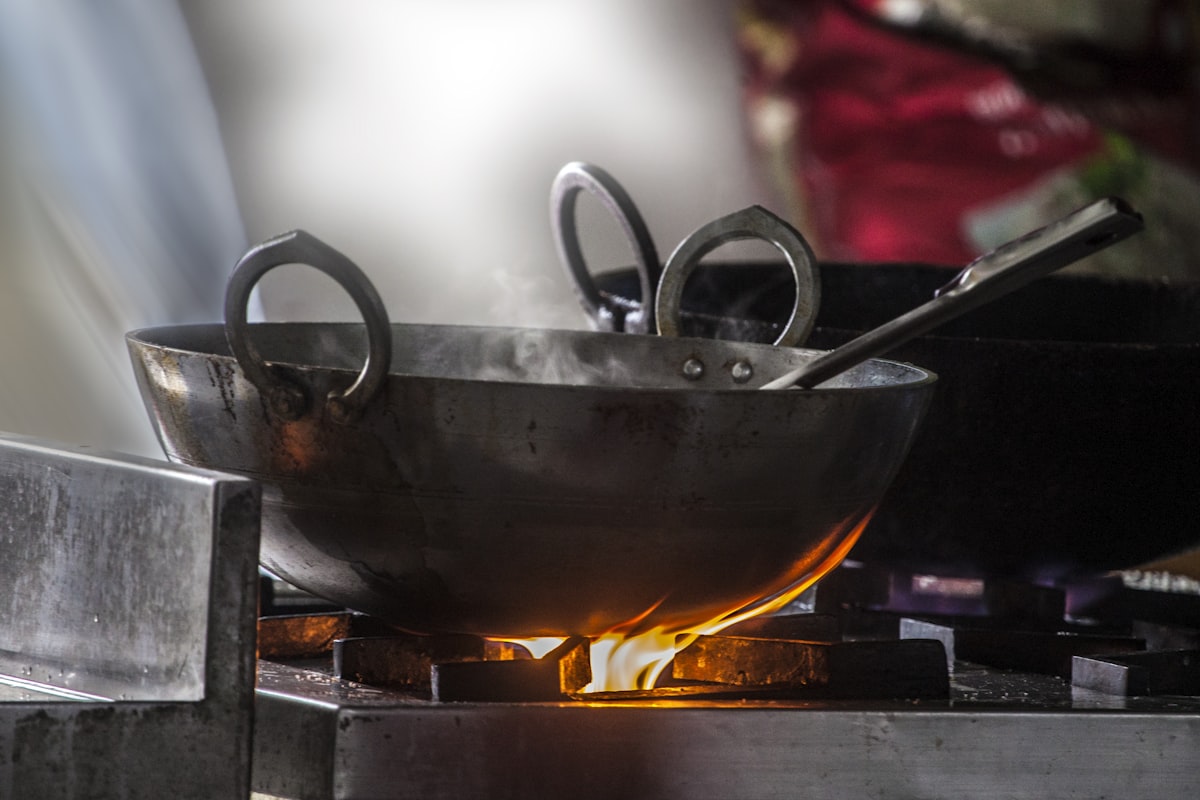
Seasoning is the process of polymerizing thin layers of oil onto carbon steel’s surface through repeated heat cycles. Each time you cook with oil at high heat, the oil bonds to the metal and builds up a microscopic non-stick patina. America’s Test Kitchen describes it as essentially baking oil into the pores of the metal until it bonds permanently.
The catch: this doesn’t happen after one or two uses. In my experience, a carbon steel wok goes through three distinct stages:
Stage 1 (weeks 1–3): Use with caution. The pan looks blotchy, food sticks to unpredictable spots, eggs are a disaster. Use plenty of oil, cook fatty proteins and vegetables rather than lean proteins. This is normal.
Stage 2 (months 1–3): Getting reliable. With regular use — cooking 3–4 times per week — the surface starts to even out. Stir-fry vegetables glide. Fried rice releases cleanly. Scrambled eggs still stick a little at the edges.
Stage 3 (month 3+): The payoff. A well-seasoned carbon steel wok becomes genuinely non-stick for most applications. The surface turns dark, almost black, and develops a slick quality that rivals any coating.
The seasoning timeline depends heavily on how you cook. High-heat stir-frying with oil builds seasoning fast. Low-heat simmering or cooking acidic foods erodes it. The most common mistake is cooking tomatoes or citrus dishes in a freshly-seasoned wok — the acid strips the still-fragile polymerized layer before it’s had time to fully bond.
A useful rule from the Reddit r/wok community: avoid prolonged acidic cooking for the first three months. After that, a quick tomato-based stir-fry (10–15 minutes) is generally fine — the fully cured seasoning is more acid-resistant. Extended acidic braises (30+ minutes) are still best done in stainless.
Caring for carbon steel between uses is straightforward but non-negotiable:
- Rinse with hot water while still warm (no soap, or minimal if food is stuck)
- Dry immediately and completely — residual water causes rust within hours
- Rub a thin film of oil over the cooking surface before storing
Day-to-Day Maintenance: The Honest Comparison
Carbon steel demands a ritual. Stainless steel demands almost nothing.
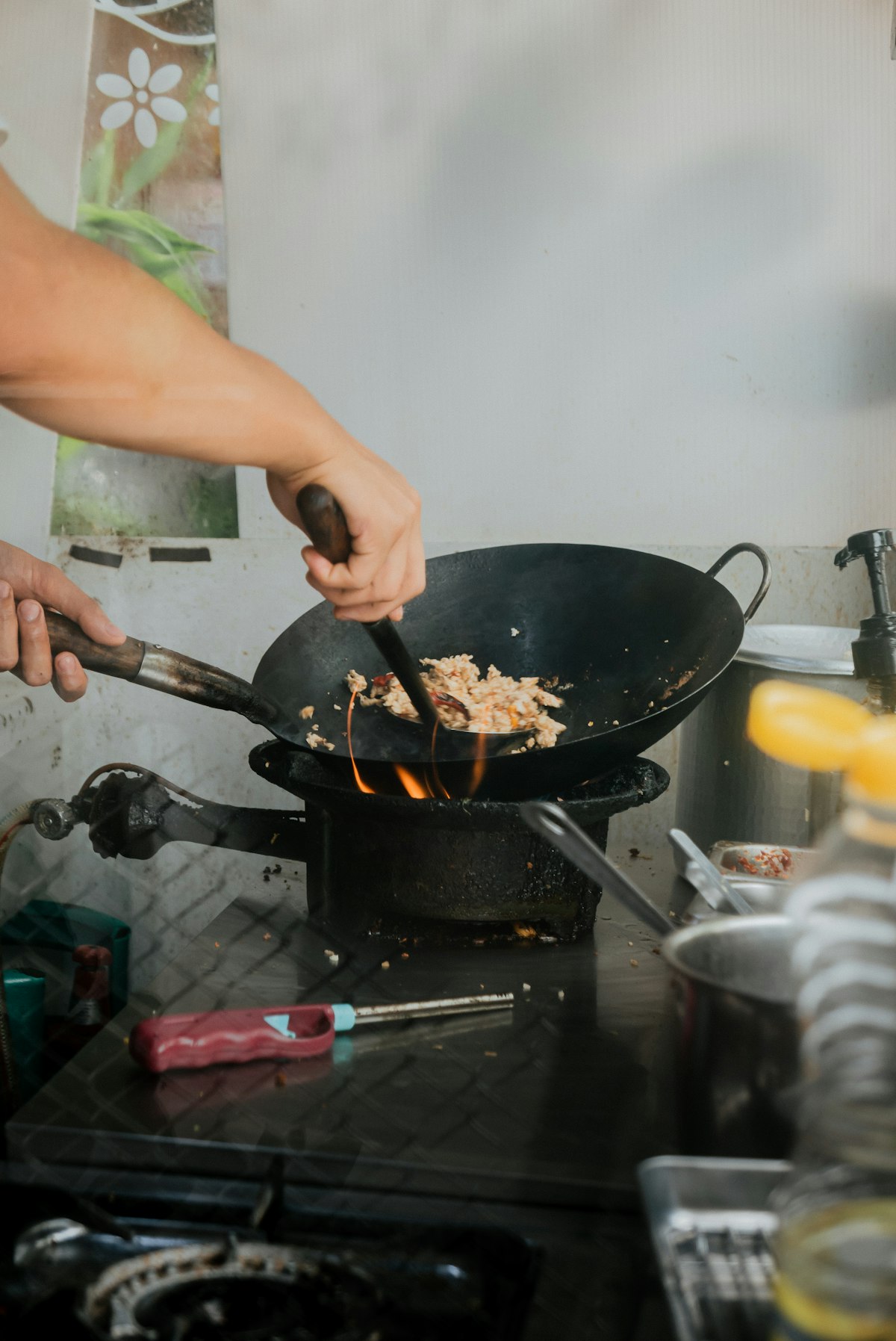
After each use, your carbon steel wok needs: a hot-water rinse, immediate drying (I use 30 seconds on the stove burner), and a thin wipe of neutral oil. Total time: under 3 minutes. It’s not burdensome if it becomes habit, but forget it once and leave the wok wet overnight, and you’ll wake up to a rust spot.
Stainless steel maintenance is basically: rinse it or toss it in the dishwasher. Done. For someone running a busy household kitchen, or anyone who shares cookware with people who won’t remember to oil the wok, this matters.
The flip side: stainless woks stain and discolor with use. The blue and golden heat tints that develop are harmless, but if you want the pan to look new, you’ll be spending time with Bar Keepers Friend and a scrubber. Carbon steel looks intentionally dark and weathered as it seasons — that look is part of how it works.
Long-term durability slightly favors carbon steel in one specific way: there’s nothing to wear out. Stainless steel multi-clad woks can delaminate at the edges over years of thermal cycling. A carbon steel wok, assuming it doesn’t rust through from neglect, can last a lifetime and be re-seasoned from scratch if necessary.
Which Wok Should You Buy? A Simple Decision Framework
The answer comes down to three questions about how you actually cook.
Choose carbon steel if:
- You cook stir-fry, fried rice, or Asian dishes at least 2–3 times per week
- You cook on a gas stove (or a powerful induction with a flat-bottom carbon steel wok)
- You’re willing to do the 2-minute post-cook maintenance consistently
- Wok hei flavor matters to you — you want that restaurant-style char
- Your cooking is mostly proteins, vegetables, and non-acidic sauces
Choose stainless steel if:
- You regularly cook acidic dishes (tomato sauces, wine reductions, Thai dishes with lime)
- You want a wok that tolerates being washed by anyone, including the dishwasher
- You cook infrequently and don’t want to maintain seasoning between sessions
- You’re sharing the wok with others who won’t follow carbon steel maintenance rules
- You already have carbon steel or cast iron pans and want a different tool for acidic cooking
The hybrid approach — and honestly what I’d recommend for most home cooks — is to own one of each. A seasoned 14-inch carbon steel wok (Yosukata, Joyce Chen, or Craft Wok are all solid in the $40–$80 range) handles 80% of stir-fry tasks. A stainless steel wok or large sauté pan covers the acidic and long-braise duties. But if you’re only buying one: most home cooks who care about Asian cooking will be happier with carbon steel, assuming they can commit to the maintenance routine.
Frequently Asked Questions
Can you cook tomatoes in a carbon steel wok?
Short cook times are fine — a quick tomato stir-fry (under 15 minutes) in a well-seasoned carbon steel wok typically won’t damage the seasoning significantly. Long acidic simmers (30+ minutes) will strip the patina and should be done in stainless steel. Freshly-seasoned pans (under 3 months of use) are more vulnerable and should avoid acidic ingredients entirely.
Is stainless steel wok safe? Does it leach nickel?
Stainless steel cookware can leach trace amounts of nickel and chromium into food, particularly when cooking acidic dishes at high heat. Research from Kuligowski and Halperin (1992) confirmed this leaching occurs, though the amounts are generally within safe dietary limits for most people. If you have a nickel allergy or sensitivity, this is worth factoring in — carbon steel cookware doesn’t carry this concern.
Which is better for induction stoves?
Both work on induction, but you need a flat-bottom wok for induction contact. Most carbon steel woks sold for home use now come in flat-bottom versions. Stainless steel with a magnetic base also works. Neither material has an inherent advantage on induction — it comes down to pan construction.
How long does it take to season a carbon steel wok?
A carbon steel wok reaches a reliable non-stick surface after roughly 3–6 months of regular use (cooking 3–4 times per week). Initial seasoning can be done in an oven or on the stovetop in one session, but the protective patina that makes carbon steel genuinely non-stick builds gradually through repeated high-heat cooking.
Can you put a carbon steel wok in the dishwasher?
No. Dishwasher detergents strip seasoning and will cause rust. Carbon steel woks should be hand-washed with hot water (minimal or no soap), dried immediately, and lightly oiled before storage.
Does a stainless steel wok achieve wok hei?
Yes, but with more technique required. Because stainless steel woks are typically thicker and slower to respond to heat, you need to preheat longer (4–5 minutes) and cook in smaller batches to avoid steaming food. Carbon steel’s thin walls and faster heat recovery make wok hei significantly easier to achieve, especially on home gas stoves.
Bottom Line
Carbon steel and stainless steel woks both work — they just work best for different cooks. Carbon steel is the traditional choice because its thin construction and iron composition give it the fastest heat response and the best shot at genuine wok hei. A well-seasoned carbon steel wok becomes progressively better over years of use, developing a natural non-stick surface that no coating can replicate. The cost: a daily maintenance habit and some restriction on prolonged acidic cooking.
Stainless steel earns its place for cooks who prioritize zero-maintenance cooking and work frequently with acidic ingredients. It won’t give you restaurant-level stir-fry without extra technique, but it will never rust, never need re-seasoning, and never complain about being left in the sink.
For most home cooks who bought this article’s core readership — people who want better stir-fry and are curious about woks — carbon steel is the answer. Start with a 14-inch flat-bottom carbon steel wok, give it 3 months, and cook through the sticky early phase. The result will be a pan that cooks better every year you own it.