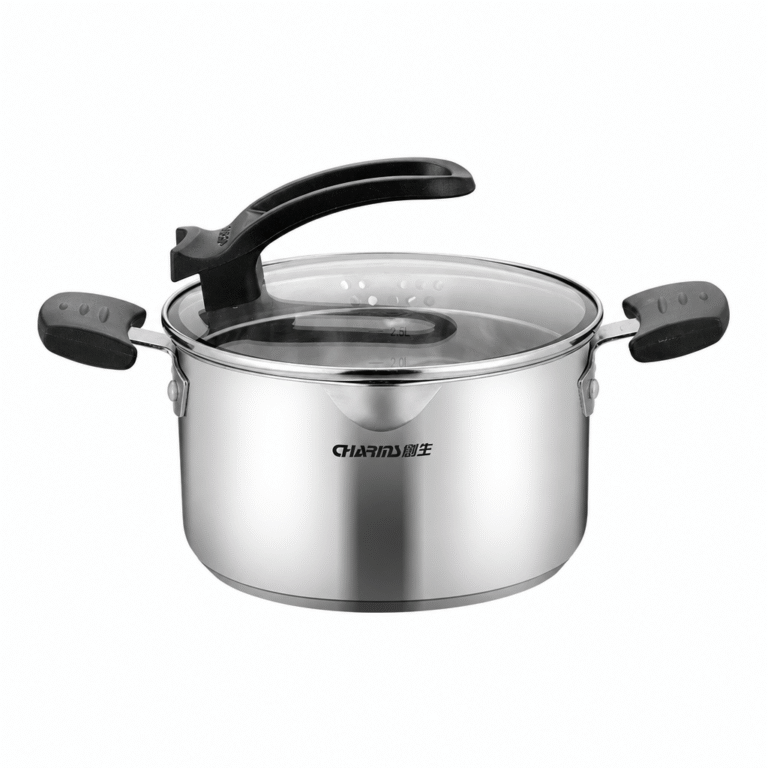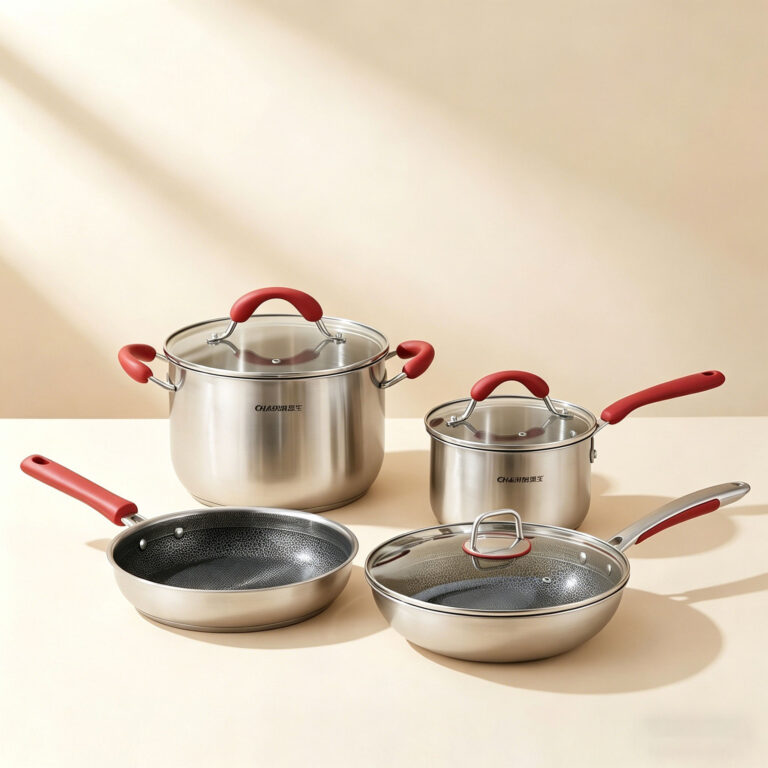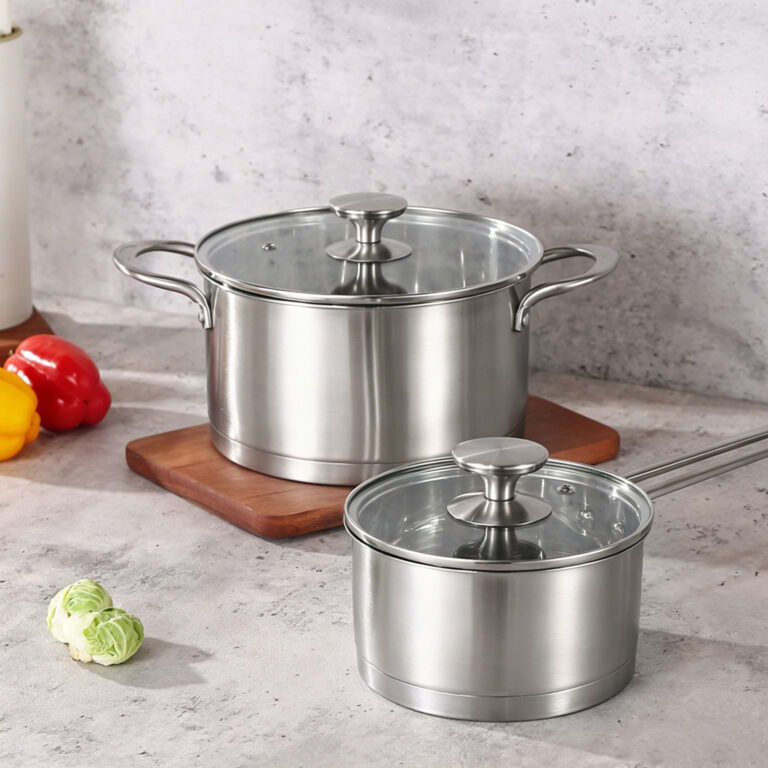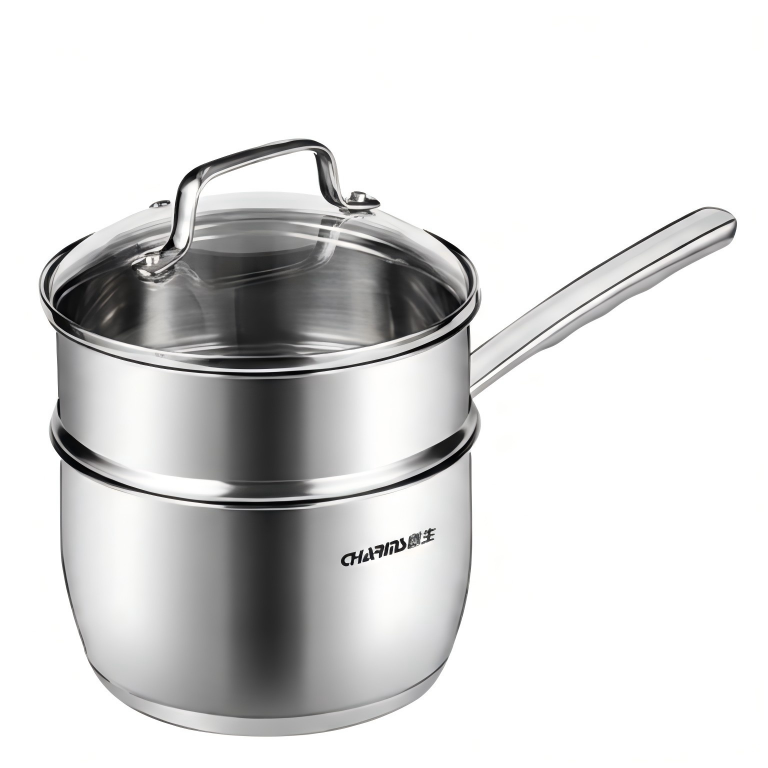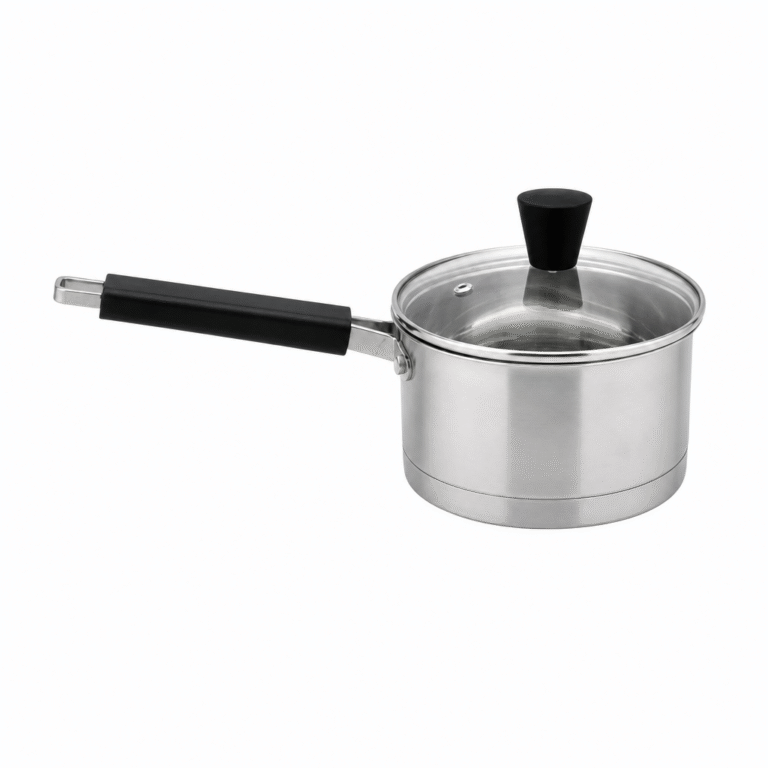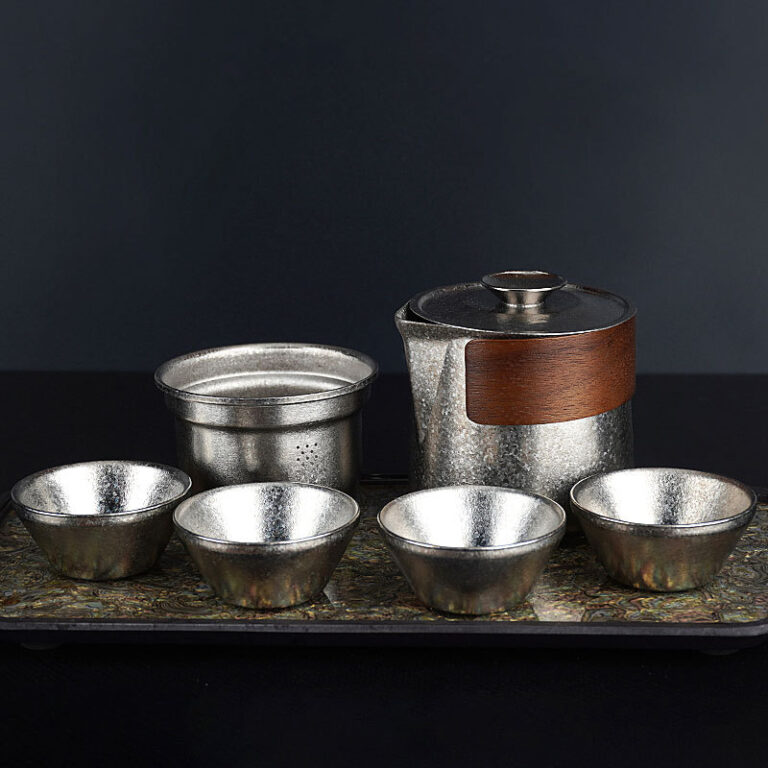


Choosing the right kitchenware is more important than ever before, as consumers are increasingly concerned about healthy cooking and food safety. Both ceramic and stainless steel kitchenware are popular choices, but they offer very different cooking experiences. From heat resistance and durability to non-stick properties and maintenance, each material has its own advantages and disadvantages. This article will compare ceramic and stainless steel kitchenware to help you determine which option is safer and more suitable for your kitchen.
1. What Is Ceramic Cookware?
1.1 Main Features of Ceramic Cookware
Ceramic cookware sold in today’s market is almost never made from solid clay fired in a kiln. The term “ceramic” refers primarily to the coating applied to an aluminum or steel base. That coating is a sol-gel compound — a silica-based material that is spray-applied and then cured at high temperatures. The result is a hard, smooth, non-porous surface that resists sticking and, importantly, contains no PTFE (polytetrafluoroethylene) or PFOA (perfluorooctanoic acid).
The base material is usually aluminum because it is lightweight and heats quickly. Some higher-end ceramic pieces use a cast aluminum or hard-anodized aluminum base for added stability. The ceramic layer itself is mineral-based, which is why manufacturers market it as “natural” or “eco-friendly” — and that claim has legitimate grounding, at least when the coating is intact.
1.2 Advantages and Disadvantages of Ceramic Cookware
✔ Advantages
- PTFE-free and PFOA-free surface
- Excellent non-stick release for eggs, fish, and delicate foods
- Visually attractive — wide range of colors and finishes
- Lightweight and easy to handle
- Easy to clean when coating is in good condition
✗ Disadvantages
- Coating degrades with high-heat use over time
- Metal utensils scratch and damage the surface
- Most are not oven-safe above 400°F (204°C)
- Non-stick properties fade within 1–3 years of regular use
- Difficult to repair once the coating chips or cracks
1.3 Common Uses for Ceramic Cookware
Ceramic pans perform best in lower-heat applications: scrambled eggs, sautéed vegetables, fish fillets, pancakes, and other delicate proteins that benefit from a forgiving non-stick surface. They suit home kitchens where aesthetics and ease of cleanup are prioritized. Because the coating is the functional layer, ceramic cookware is most effective when it is new, and its performance trajectory is largely one of gradual decline.
Commercial kitchens rarely rely on ceramic-coated pans for primary cooking. The reason is straightforward: coating durability cannot survive the continuous high-heat, high-frequency use that professional environments demand.
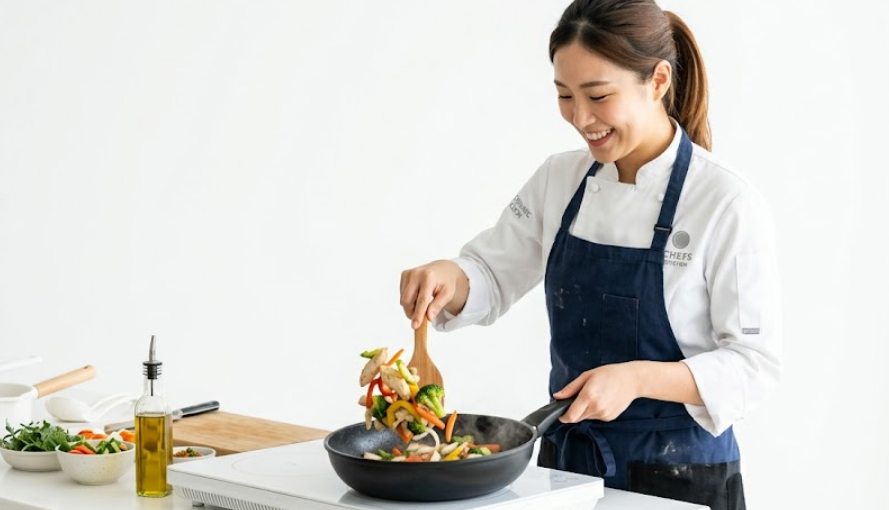
2. What Is Stainless Steel Cookware?
2.1 Main Features of Stainless Steel Cookware
Stainless steel cookware is constructed from an iron-chromium alloy, with chromium content of at least 10.5% by mass — which is the threshold at which the material’s characteristic corrosion resistance develops. The most common grades in cookware are 304 (also called 18/8, meaning 18% chromium and 8% nickel) and 316 (18/10, with added molybdenum for even greater resistance to acidic foods and chlorides).
Unlike ceramic cookware, stainless steel has no functional coating to degrade. The surface itself is the cooking material. This makes the structural integrity of stainless steel cookware far more predictable over its lifespan — there is no layer to chip, peel, or thin out.
Most quality stainless steel cookware incorporates a clad construction: layers of aluminum or copper bonded between stainless steel layers. This solves the inherent limitation of stainless steel — it does not conduct heat as efficiently as aluminum or copper on its own. A tri-ply or five-ply construction delivers even heat distribution from a material known for lasting durability.
2.2 Benefits of Stainless Steel Cookware
The benefit list for stainless steel is long, but a few points stand out with particular clarity. It tolerates oven temperatures up to 500°F (260°C) or higher without any concern about coating degradation. Metal utensils will not damage it. You can use it on induction cooktops, gas burners, electric coils, and in the oven — the same pan, the same cooking session, no limitations.
Stainless steel also has no chemical interaction with acidic foods. Wine reductions, tomato sauces, citrus-based braises — none of these will leach anything problematic from the pan into your food. The chromium oxide layer that gives stainless steel its corrosion resistance is passive and extremely stable.
2.3 Why Professional Kitchens Prefer Stainless Steel
Walk into any serious commercial kitchen — a restaurant brigade, a hotel banquet operation, an institutional food service facility — and you will see stainless steel everywhere. This is not tradition for tradition’s sake. It is a pragmatic choice driven by performance demands.
Professional cooks work at high heat, shift pans abruptly from stovetop to oven, use metal tongs and spatulas without hesitation, and need equipment that performs identically on day one and day one thousand. Stainless steel meets those requirements without compromise. Ceramic coatings do not.
A point worth noting: The preference for stainless steel in professional environments is not about cooking style — it is about reliability. When you need a pan that will perform predictably under sustained, demanding conditions, the material composition matters more than any surface treatment.
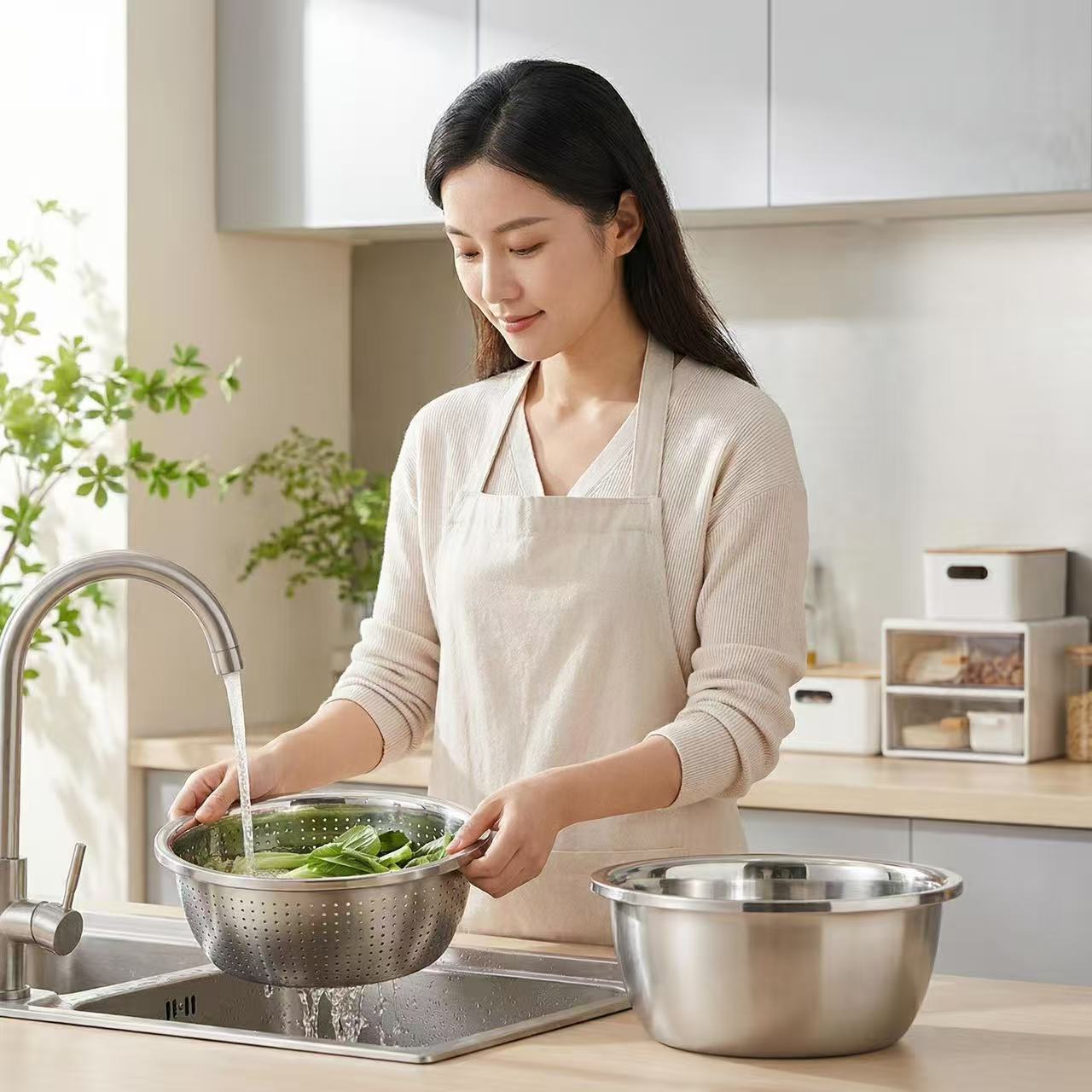
3. Ceramic vs Stainless Steel Cookware: Key Differences
The table below organizes the most meaningful differences across dimensions that matter to anyone evaluating cookware for sustained use.
| Dimension | Ceramic Cookware | Stainless Steel Cookware |
|---|---|---|
| Core Material | Aluminum base with sol-gel ceramic coating | Iron-chromium alloy (304 or 316 grade); often clad with aluminum |
| PTFE / PFOA | Free of PTFE and PFOA | No coatings; naturally free of both |
| Non-stick Surface | Yes — but degrades over 1–3 years | Not inherently non-stick; requires proper preheat and fat |
| Max Oven Temperature | Typically 350–400°F (177–204°C) | 500°F+ (260°C+), often unlimited with metal lids |
| Induction Compatible | Only if base is magnetic (some are not) | Yes — inherently magnetic |
| Metal Utensil Safe | No — scratches and damages coating | Yes — no surface to damage |
| Reactivity with Acidic Foods | Can leach coating compounds if scratched | Non-reactive; safe with all foods |
| Durability / Lifespan | 2–5 years before coating degrades significantly | 10–30+ years with proper care |
| Dishwasher Safe | Often hand-wash recommended to preserve coating | Generally yes, though hand-washing extends finish life |
| Heat Distribution | Good (aluminum base conducts well) | Excellent with clad construction; varies with single-ply |
| Environmental Footprint | Coating replacement cycle adds waste | Long lifespan reduces replacement frequency |
| Repairability | Cannot be restored once coating chips | Restorable by polishing; no coating to fail |
3.1 Safety and Health Comparison
Safety in cookware is a multi-layered question. It involves what the pan releases into food under normal use, what happens when the pan is heated beyond its intended range, and how coating integrity changes over the life of the product.
Ceramic coatings, when intact and used within their temperature limits, are generally considered safe. The concern arises when the coating becomes scratched, chipped, or degraded from repeated high-heat exposure. At that point, the silica-based coating can flake into food — and while silica itself is largely inert, the binding agents and colorants in some lower-quality coatings are not as well characterized. The safety profile of ceramic cookware is therefore most reliable when the pan is new and used gently.
Stainless steel presents a different profile. There is no coating to degrade. The primary concern cited about stainless steel is nickel and chromium leaching — both are present in the alloy. Research indicates that this leaching is real but minimal under normal cooking conditions, and the amounts involved are well below established safety thresholds for most people. Individuals with documented nickel sensitivity are the exception worth noting. For the vast majority of users, 304 or 316 stainless steel poses no meaningful health risk from leaching.
3.2 Heat Resistance and Cooking Performance
Ceramic coatings are rated for moderate heat. Most manufacturers recommend keeping temperatures below 400°F (204°C), and many go further by advising against preheating an empty ceramic pan — the concentrated heat can accelerate coating degradation even at temperatures within the stated range.
Stainless steel has no such constraint. You can preheat it empty, sear at high heat, deglaze immediately with cold liquid, and move the pan directly from a 500°F oven to a stovetop burner without any concern. This thermal resilience is what makes stainless steel the default choice for techniques that require high heat: searing proteins, building fond for pan sauces, reducing stocks, and deep-frying.
3.3 Durability and Lifespan
Durability is where the gap between the two materials becomes most apparent. A well-maintained piece of stainless steel cookware can last decades. The material does not lose functional properties over time — it does not thin, flake, or chemically change in ways that affect cooking performance. Surface discoloration, minor scratching, and cosmetic wear occur, but none of these affect how the pan actually cooks.
Ceramic-coated cookware follows a predictable decline curve. Non-stick performance begins to diminish within the first year or two of regular use, particularly if the pan sees high heat, metal utensils, or dishwasher cycles. By three to five years, most ceramic-coated pans have lost enough of their surface integrity to require replacement. This shorter replacement cycle has real cost implications — and environmental ones too, since each discarded pan represents material that cannot be easily recycled or restored.
4. Which Cookware Is Easier to Maintain?
4.1 Cleaning and Daily Maintenance
Ceramic cookware is easier to clean when it is functioning well. Food slides off a smooth, intact ceramic surface with minimal effort — warm water and a soft cloth are often sufficient. The challenge is that this ease of cleaning is contingent on the coating remaining undamaged. Once scratches accumulate, food begins to stick in those micro-abrasions, and cleaning becomes progressively harder.
Stainless steel has the opposite dynamic. It requires more attention in the early stages — learning to preheat properly, using adequate fat, and deglazing to lift any food that sticks. Once you understand the material’s behavior, maintenance becomes highly manageable. Stubborn residue responds well to a paste of baking soda and water, or a brief soak with dish soap. Bar Keepers Friend (oxalic acid-based) restores surface shine effectively without damaging the steel.
4.2 Scratch and Stain Resistance
Ceramic coatings scratch easily — this is one of their most significant practical limitations. A single slip with a metal spatula can compromise the surface. Even abrasive sponges and harsh detergents accelerate degradation. The coating’s smooth appearance is its appeal, but that same smoothness requires careful, consistent handling to preserve.
Stainless steel develops surface marks over time — fine scratches from utensils, potential heat toning (rainbow-colored staining) from high heat, and water spotting from mineral deposits. None of these affect cooking performance. The rainbow discoloration, often alarming to new stainless steel users, is simply a result of oxidized chromium reacting to heat and is completely removable with a cleaning agent like Bar Keepers Friend or white vinegar.
4.3 Long-Term Maintenance Costs
Over a ten-year period, the total cost of ownership tells a revealing story. A ceramic-coated pan purchased at a mid-range price point might need replacement every three to four years — meaning you could go through two or three pans in the time one quality stainless steel piece would still be performing at full capacity. The upfront price of stainless steel may be higher, but the per-year cost is considerably lower when amortized over its actual lifespan.
This cost calculation is why procurement decisions in food service, hospitality, and institutional cooking consistently favor stainless steel. Replacement frequency matters at scale — and stainless steel’s durability makes it the more economical choice over any multi-year horizon.
5. Which Cookware Is Better for Different Cooking Styles?
5.1 Best for Low-Oil Cooking
Ceramic cookware has a genuine advantage in low-oil cooking applications. Its non-stick surface requires minimal fat to prevent food from sticking, which suits cooking approaches that prioritize reduced oil intake. Eggs cooked in a quality ceramic pan with a thin layer of butter or spray oil will release cleanly and require no scrubbing. The same is true for fish fillets, pancakes, and similar delicate proteins.
Stainless steel can also accommodate lower-oil cooking, but it requires technique. A properly preheated stainless steel pan — heated until a drop of water beads and rolls across the surface before adding oil — will release food cleanly even with modest amounts of fat. This “water bead test” is the practical skill that separates those who struggle with stainless steel from those who use it confidently.
5.2 Best for High-Heat Cooking
High-heat cooking belongs to stainless steel. Searing a steak, browning chicken thighs until the skin is genuinely crisp, building a proper fond for pan sauces — all of these require sustained high heat that ceramic coatings cannot safely sustain without accelerating their own degradation.
The Maillard reaction — the chemical process that creates browned, flavorful crusts on proteins and vegetables — requires temperatures above 300°F (149°C) at the food surface. Reaching and maintaining those temperatures reliably and safely is what stainless steel does by design. It is not accidental that every professional sauté pan and rondeau in a commercial kitchen is stainless steel.
5.3 Best for Everyday Family Use
For typical home cooking — a mix of weeknight meals, occasional weekend projects, and the full range of techniques from scrambled eggs to braised short ribs — the most practical answer is often both materials in your kitchen, serving different roles. A ceramic pan handles eggs and fish. Stainless steel handles everything from pasta water to seared proteins to oven-finished dishes.
If you are choosing only one, stainless steel wins for versatility. You can sear in it, braise in it, boil in it, roast in it. A tri-ply stainless steel skillet can do nearly everything a full set of ceramic pans can do — and keep doing it for years after those ceramic pans have been replaced.
6. How to Choose Between Ceramic and Stainless Steel Cookware
6.1 Choose Ceramic Cookware If…
- Your cooking is primarily low-to-medium heat and you use minimal oil or butter
- You regularly cook delicate proteins — eggs, fish, thin cutlets — and prioritize easy cleanup
- Aesthetics matter in your kitchen and you prefer the matte, colorful appearance ceramic offers
- You are willing to replace the pan every few years and treat it gently in the meantime
- You only cook on stovetop settings and rarely need oven-to-stove flexibility
6.2 Choose Stainless Steel Cookware If…
- You cook at high heat frequently and need reliable searing performance
- You want cookware that works across all cooktop types including induction
- You value durability and expect your cookware to last a decade or more
- You cook acidic dishes — wine sauces, tomato-based braises, citrus reductions — regularly
- You want the freedom to use metal utensils and move from stovetop to oven without limitations
- Long-term value and lower replacement frequency matter in your purchasing decision
6.3 What to Look for When Buying Safe Cookware
Regardless of which material you choose, quality indicators in cookware are consistent across categories. For ceramic cookware, verify that the product is PFOA-free and PTFE-free, that the manufacturer specifies the safe temperature range, and that the base material is clearly identified. Avoid products from manufacturers who are vague about the composition of their coating — transparency about materials is a reliable proxy for quality.
For stainless steel, the grade number matters. Look for 18/8 (304) or 18/10 (316) steel. Cheaper products may use 201 stainless, which has lower chromium and nickel content and is more prone to corrosion and surface staining over time. The construction matters too: tri-ply or five-ply clad cookware distributes heat far more evenly than single-ply pieces, reducing the chance of hot spots that burn food.
Weight is a useful proxy for construction quality in stainless steel. A pan that feels substantial in your hand generally indicates adequate metal thickness — thin-walled stainless steel warps over time and creates uneven cooking surfaces that no amount of skill can compensate for.
On certifications: Cookware intended for serious use — whether commercial or professional home kitchens — benefits from third-party certification. ISO 9001 certification indicates a manufacturer’s quality management system has been externally audited. FDA compliance matters for food contact surfaces. These are not marketing labels; they are structural assurances about how the product is made.
Clad bottom construction — where multiple metal layers are bonded at the base — is the standard for quality stainless steel cookware and is meaningfully different from a simple disc-bottom design. Full-clad construction (where the layers extend up the sides of the pan) provides even greater heat distribution and is worth the additional investment for pans you will use daily.
7. Conclusion
Ceramic cookware and stainless steel cookware serve genuinely different functions, and the “safer” choice depends partly on what you mean by safe. If you mean free from synthetic coating compounds, stainless steel has the more durable safety profile — because there is no coating to degrade, chip, or flake. If you mean gentle on food and easy to cook with minimal oil, ceramic cookware delivers that, particularly when it is new.
The longer view favors stainless steel. Its safety profile does not diminish with age. Its performance does not decline with use. The upfront investment pays back over years, and the material itself makes no compromises when subjected to high heat, acidic foods, or demanding cooking environments. That is why the cookware industry’s most rigorous users — from professional restaurant brigades to institutional food service operations — build their kitchens around stainless steel.
Understanding what each material actually is, how it behaves, and where its limits lie puts you in a position to choose with precision — and to get the most from whichever cookware you bring into your kitchen.
If you are also looking for a reliable manufacturer of kitchenware that offers OEM, wholesale or customized kitchenware solutions, please feel free to contact us. We provide professional stainless steel kitchenware manufacturing services, including frying pans, saucepans, woks, kitchenware sets, etc., serving global brands and distributors.