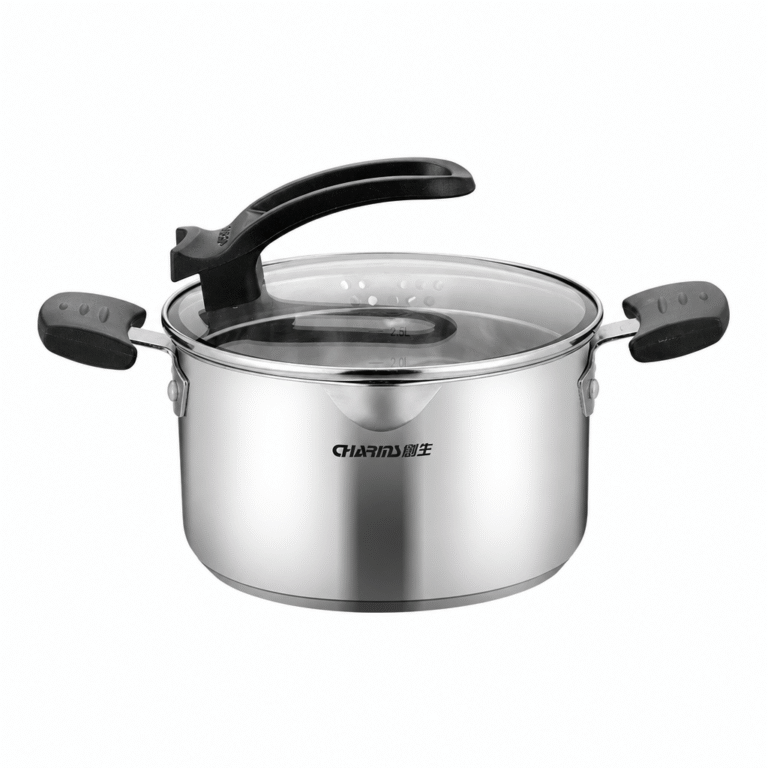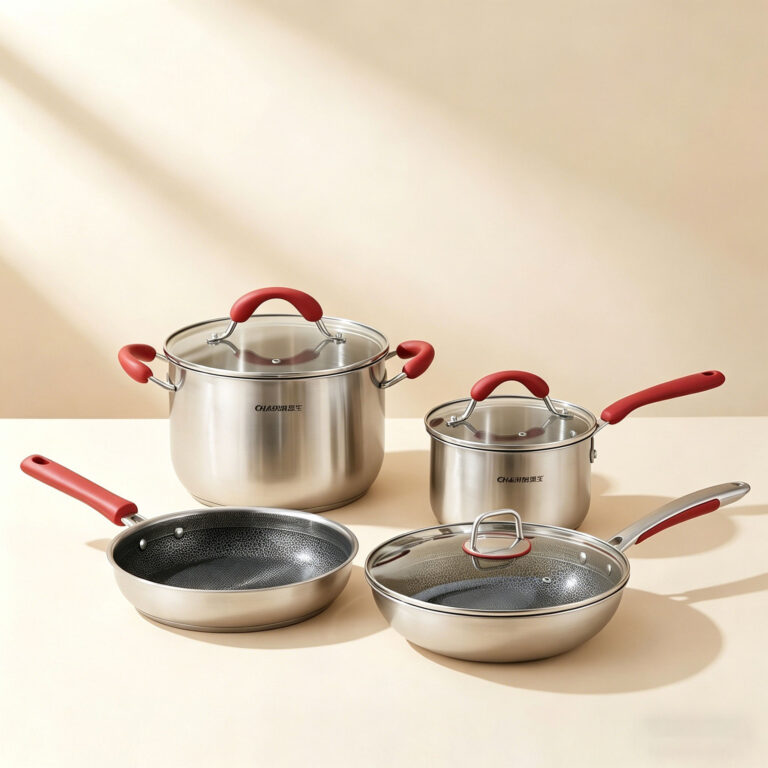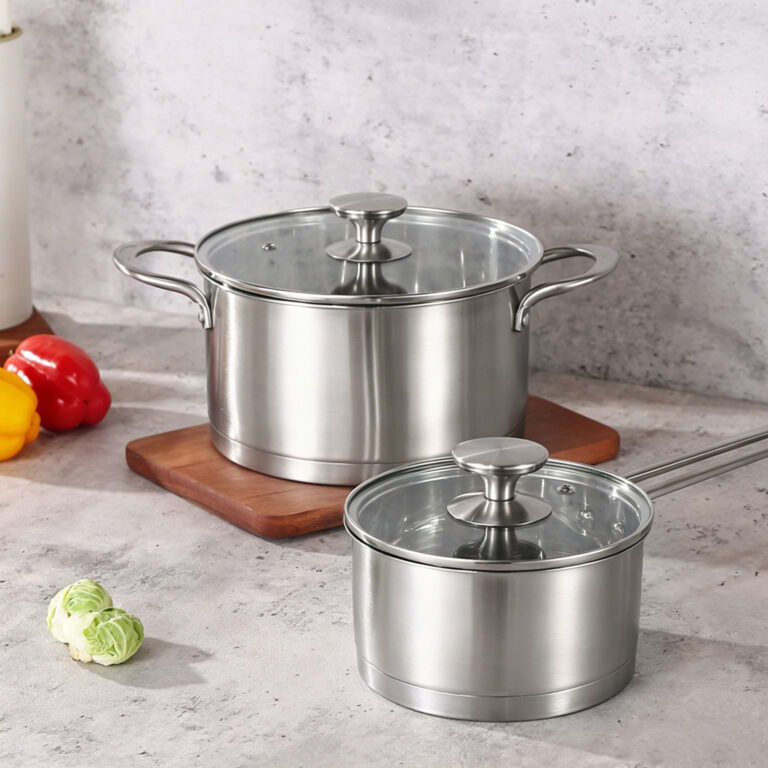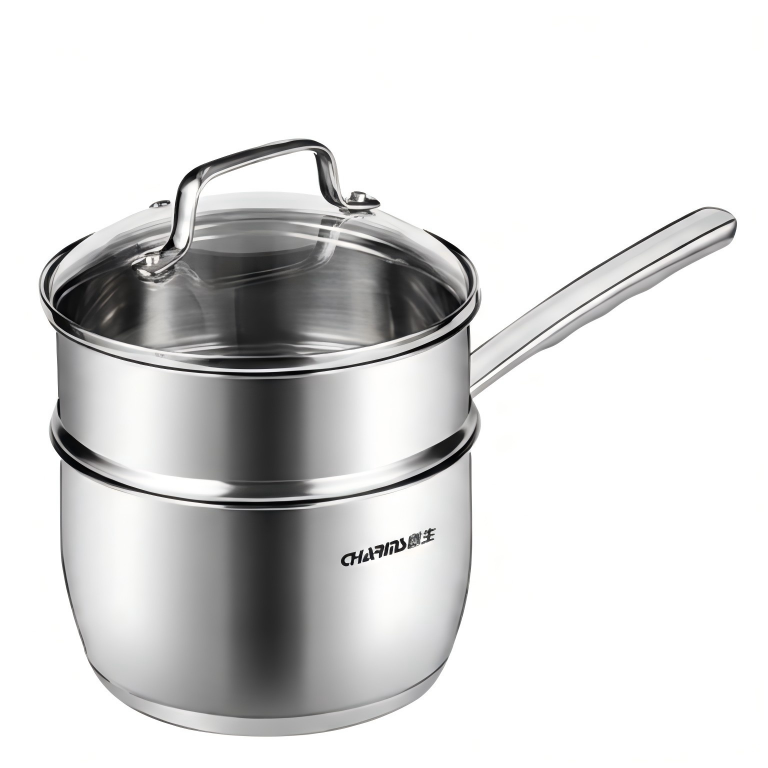


With the continuous growth of the global kitchenware industry, more and more brands, wholesalers and retailers will compare Chinese kitchenware manufacturers with European manufacturers before making purchasing decisions.
Although European kitchenware is usually associated with exquisite craftsmanship and tradition, Chinese manufacturers, through advanced production technologies, large-scale production capabilities and cost-effective OEM solutions, have become a more competitive choice. Understanding the differences between these two manufacturing regions can help buyers select the appropriate partners for their business needs.
1. Manufacturing Cost Comparison: China vs Europe
1.1 Labor and Production Costs
The labor cost gap between China and Europe remains significant — and it doesn’t narrow much year over year in ways that change sourcing decisions at the wholesale level. European manufacturing wages, particularly in Germany, France, Italy, and Scandinavia, are among the highest in the world. Factory workers in cookware production in countries like Germany or France earn three to five times more per hour than their counterparts in China’s Guangdong province.
That wage difference shows up directly in your unit cost. For commodity-adjacent products like stainless steel pots, pans, and food containers, where margins are already compressed, labor cost is not an abstraction — it’s the difference between a viable price point and one that kills the deal before negotiations even start.
European manufacturers often offset this through automation, but automation investment itself drives up overhead and gets passed along in pricing. The math rarely works in their favor for volume production.
1.2 Raw Material Supply Advantages
China’s raw material advantages in stainless steel manufacturing are structural, not temporary. The Guangdong province alone hosts one of the world’s most concentrated stainless steel supply chains — smelters, rolling mills, stamping facilities, hardware suppliers, and logistics infrastructure all sitting within tight geographic proximity. This cluster effect, particularly in Caitang (recognized nationally as China’s “Hometown of Stainless Steel”), reduces procurement lead times and keeps input costs low through competitive domestic sourcing.
European manufacturers, by contrast, often import stainless steel coils from Asia — sometimes from China itself — before processing them locally. That adds a layer of cost and a step in the supply chain that Chinese manufacturers don’t face.
Charms is located in Caitang, inside this supply cluster, with nearly 30 years of manufacturing experience. Proximity to raw material suppliers isn’t incidental — it’s foundational to how costs stay competitive without sacrificing material quality.
1.3 Which Region Offers Better Price Competitiveness?
For OEM manufacturing, wholesale supply, and private label production at meaningful volume, China consistently delivers lower total landed cost. European manufacturers can compete on premium positioning and certain niche certifications, but they rarely match Chinese factories on price-per-unit when volume reaches wholesale minimums.
The relevant cost comparison isn’t just factory gate price. It includes tooling, MOQ flexibility, sampling costs, and logistics. On nearly every one of those dimensions, Chinese manufacturers — particularly those operating in established industrial clusters — carry structural advantages that are difficult for European producers to neutralize.
2. Product Quality and Manufacturing Technology
2.1 Stainless Steel Material Standards
One of the most common misconceptions in cookware sourcing is that “Made in China” implies lower material grade. That assumption no longer holds for manufacturers operating at the upper tier of the Chinese stainless steel industry.
Food-grade 304 stainless steel (18/8 chromium-nickel alloy) is the benchmark material for premium cookware globally, regardless of manufacturing origin. Chinese manufacturers at the industrial level use the same 304 and 316 stainless steel grades as their European counterparts. The difference lies in how rigorously those standards are enforced across production runs — and that’s a function of the manufacturer’s quality systems, not their nationality.
At the commercial production level, leading Chinese cookware manufacturers maintain material traceability, incoming material inspection, and third-party testing that satisfies FDA and LFGB food contact requirements. These are the same standards European buyers demand regardless of origin.
2.2 Production Equipment and Automation
European manufacturers have historically led on automation, but that gap has narrowed sharply over the past decade. Chinese cookware factories at scale now operate with CNC machining, automated stamping lines, robotic welding, and precision grinding equipment that meets or exceeds European production floor standards.
One specific technology worth highlighting: Korean high-frequency brazing technology for clad bottom construction. This process — which bonds aluminum and stainless steel layers using precisely controlled electromagnetic induction — produces composite bottoms with superior heat distribution and bonding integrity. Charms operates Korean high-frequency brazing lines, the same technology standard used by premium cookware brands globally.
Automated production isn’t just about volume. It reduces human error variability, improves dimensional consistency, and creates a repeatable quality baseline that manual production simply cannot match at scale. For buyers sourcing cookware across multiple SKUs and large batch sizes, automation is what makes consistency possible.
2.3 Quality Control Systems and Certifications
Certification frameworks are often where the quality conversation gets concrete. European buyers frequently use certifications as proxies for quality assurance, and they’re right to do so — the question is whether those certifications require European manufacturing or simply European-recognized standards.
The answer: standards matter, not geography.
ISO 9001 (quality management systems), ISO 14001 (environmental management), and OHSAS 18001 (occupational health and safety) are international frameworks. Chinese manufacturers holding these certifications have passed the same third-party audits as any European facility would.
Charms holds all three: ISO 9001, ISO 14001, and OHSAS 18001. Beyond that, recognition as a National Inspection-Exempt Product recipient — a designation awarded by Chinese national quality authorities — reflects consistent conformance over time, not just a point-in-time audit pass. With 50+ registered patents across product design and manufacturing process, the technical depth goes well beyond assembly-line production.
3. OEM and ODM Capabilities
3.1 Product Customization Flexibility
OEM and ODM capability is where Chinese manufacturers genuinely outpace most European alternatives — and where the gap has the most direct commercial impact for brands, distributors, and wholesalers.
European factories tend to operate on standardized product lines with limited deviation from established molds. Customization exists, but it’s expensive, slow, and often gated behind minimum commitments that don’t suit emerging brands or buyers testing new SKUs.
Chinese manufacturers — particularly those with dedicated R&D teams and in-house tooling capabilities — can take a product brief from concept to sample without routing through third-party design agencies or external tooling shops. The customization menu is genuinely broad: material grade selection (201, 304, 316), surface finish (mirror polish, brush, sandblast, electropolish), coating type, handle material and ergonomic profile, lid design, engraving and branding, packaging configuration.
When a cookware brand wants to launch a private label line with differentiated aesthetics and specific functional features, that conversation is far more productive with a Chinese OEM partner than with most European alternatives.
3.2 MOQ and Lead Time Comparison
Minimum order quantity and lead time directly affect how capital-efficient your sourcing operation can be. European manufacturers typically require higher MOQs (partly because their unit economics demand it) and longer lead times (partly because production scheduling at premium wage rates is less flexible).
Chinese manufacturers operating at industrial scale can offer lower MOQs without proportionate cost penalties, because their production economics are built for volume efficiency at a lower threshold. Lead time for samples from Chinese manufacturers typically runs 7–14 days. Bulk production timelines for standard items run 30–35 days.
For brands managing inventory cycles, seasonal buying, or new product launches, that lead time advantage compounds significantly over multiple order cycles per year.
3.3 Private Label Cookware Manufacturing Services
Private label manufacturing isn’t just about slapping a logo on a standard product. Real private label service means the manufacturer handles design validation, material certification documentation, compliance testing, packaging engineering, and supply chain coordination — so the brand buyer doesn’t have to manage those individually.
That end-to-end service model is what distinguishes capable OEM partners from factories that simply accept custom logos. Charms operates as SUPOR’s trusted OEM partner — SUPOR being one of China’s largest cookware brands with significant global market presence. Serving a manufacturing partner at that scale requires the same quality and process discipline that any international brand buyer would require. That context speaks to real capability, not just stated capability.
4. Production Capacity and Supply Chain Efficiency
4.1 Large-Scale Manufacturing Advantages in China
Scale creates optionality that small-to-mid-sized European factories simply cannot replicate. When a buyer needs 50,000 units of a frying pan SKU and 30,000 units of a matching saucepan, the ability to run those simultaneously without compromising either timeline depends on production infrastructure.
Charms operates a 40,000㎡ modern manufacturing facility with 300+ production lines. Annual output capacity of 10,000 tons means the factory is built for volume — not as an occasional large order, but as the baseline operating condition. That scale matters when buyers have growth ambitions beyond their current order size.
4.2 Production Capacity Comparison
European manufacturers at premium positioning often cap their production intentionally — luxury brand economics favor scarcity and high margin, not volume. That’s a coherent business model for certain markets. It’s not a model that serves wholesale buyers, distributors, or brands that need reliable volume at predictable cost.
Chinese manufacturers in the Guangdong cluster operate at a different scale entirely. The infrastructure supporting a 40,000㎡ factory with 300 production lines — materials logistics, quality inspection bandwidth, packaging lines, warehousing — is designed for uninterrupted high-volume production. Buyers who’ve been told “we can’t take your order this quarter” by smaller manufacturers understand immediately why production capacity belongs in the sourcing evaluation.
4.3 Logistics and Global Export Efficiency
Guangdong province’s logistics network is one of the reasons Chinese cookware manufacturers can offer globally competitive landed costs even after freight. Shenzhen and Guangzhou ports handle enormous container volumes with frequent sailing schedules to North America, Europe, the Middle East, Southeast Asia, and Australia. The proximity of manufacturing facilities in Caitang to these export gateways keeps inland freight costs manageable.
European manufacturers shipping to non-EU markets face their own logistics costs, and while European port infrastructure is excellent, the freight economics from Europe to major non-European markets rarely favor European origin.
For buyers managing global distribution — sending product to Amazon FBA warehouses in multiple countries, to retail importers across regions, or directly to wholesale distributors — the consistency and predictability of Chinese export logistics carries real operational value.
5. Which Manufacturer Is Better for Different Buyers?
5.1 Best Choice for Startups and Private Label Brands
If you’re building a cookware brand from the ground up, or extending an existing brand into a new product category, the sourcing decision comes down to three practical questions: Can the manufacturer handle your current volume? Can they grow with you? Can they deliver the customization your brand positioning requires?
Chinese manufacturers — particularly those with genuine OEM/ODM capability — answer yes to all three more reliably than most European alternatives. The MOQ flexibility matters when you’re not yet running at full commercial scale. The customization depth matters when you need differentiated products, not catalog rebrands. The cost structure matters when you’re building margin into a product line that needs to compete in retail or online channels.
For startups sourcing 304 stainless steel food containers, airtight storage solutions, meal prep lunch boxes, or entry cookware sets, Chinese manufacturers provide the product range, material compliance (FDA certification), and price structure that makes commercial launch viable.
5.2 Best Option for Premium European Markets
European buyers sourcing for premium retail channels sometimes assume European manufacturing is required for positioning or regulatory compliance. Neither assumption is fully accurate.
Premium positioning is a function of product quality, branding, and how the product is presented — not of manufacturing geography. European food contact regulations (LFGB) can be satisfied by Chinese manufacturers that have pursued that certification, just as FDA certification is earned, not assumed, regardless of origin.
For premium commercial cookware — tri-ply clad stainless steel sets, professional-grade stock pots, high-end steamers — the material and process quality from top-tier Chinese manufacturers matches European production standards. The relevant question is which specific factory you’re working with, and what their certification portfolio looks like, not which continent their facility occupies.
5.3 How to Choose the Right Cookware Manufacturing Partner
The evaluation process should be systematic rather than assumption-driven. Start with material certification: can the manufacturer provide food contact compliance documentation for your target market? Move to process capability: do they have the equipment and technical staff to handle your specific product requirements? Then examine quality systems: do their certifications cover the management disciplines (quality, environment, safety) that indicate organizational maturity?
Beyond documentation, assess communication responsiveness. A manufacturer that answers detailed technical questions quickly, provides accurate sampling timelines, and is transparent about production scheduling is demonstrating operational reality — not just marketing capability.
Evaluate their existing client portfolio when possible. A manufacturer serving major cookware brands as an OEM partner has already been vetted by buyers with serious quality requirements.
6. Conclusion
6.1 Key Differences Between Chinese and European Manufacturers
The meaningful differences between Chinese and European cookware manufacturers are concentrated in four areas: cost structure, production scale, customization capability, and supply chain efficiency. European manufacturers maintain advantages in certain niche premium segments and in markets where geographic origin carries brand value. For volume sourcing, OEM manufacturing, and private label development across a broad product range, Chinese manufacturers — particularly those operating in established industrial clusters with strong certification profiles — offer a more complete package.
6.2 Why More Global Brands Source Cookware from China
The shift in global cookware sourcing toward China isn’t driven by cost alone, though cost matters. It’s driven by the combination of cost competitiveness, improving quality infrastructure, manufacturing scale, and OEM/ODM service depth that European manufacturers struggle to match collectively.
Brands that started sourcing from China exclusively for price reasons have frequently continued for quality and reliability reasons. The manufacturing ecosystem in Guangdong’s stainless steel cluster has matured to a point where it’s not a concession to source there — it’s often the most technically and commercially sound decision.
6.3 Partner with a Reliable Stainless Steel Cookware Manufacturer
With nearly 30 years of expertise in stainless steel cookware manufacturing, Charms Cook provides OEM and ODM solutions for global brands, wholesalers, and distributors. From cookware and steamers to food storage containers and kitchenware, the combination of advanced manufacturing technology — including Korean high-frequency brazing, 300+ production lines, and a 40,000-square-foot㎡ facility — with strict quality control (ISO 9001, ISO 14001, OHSAS 18001, FDA certified) and Guangdong’s export logistics network creates a manufacturing partnership that supports real business growth worldwide.
Whether your sourcing priorities center on 304 stainless steel food containers, airtight storage solutions, commercial cookware sets, or a fully custom private label product line, the right manufacturing partner is one that can meet your specifications, grow with your volume, and deliver consistently across every order cycle.