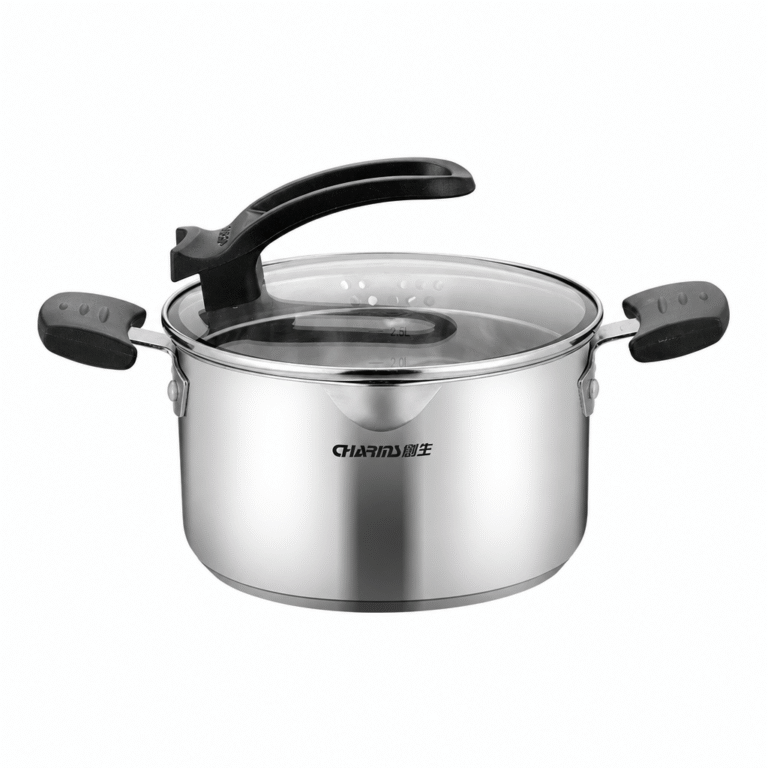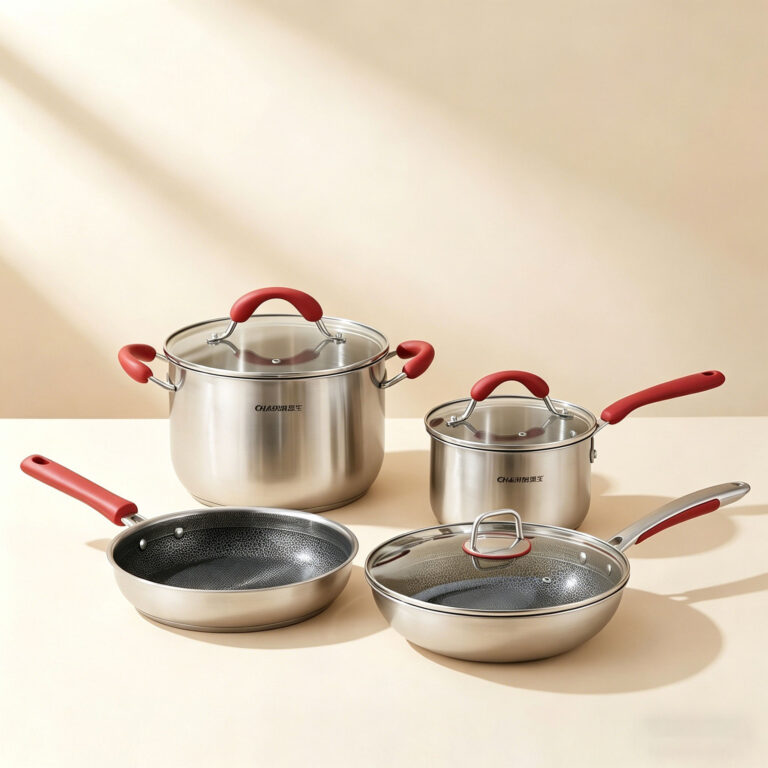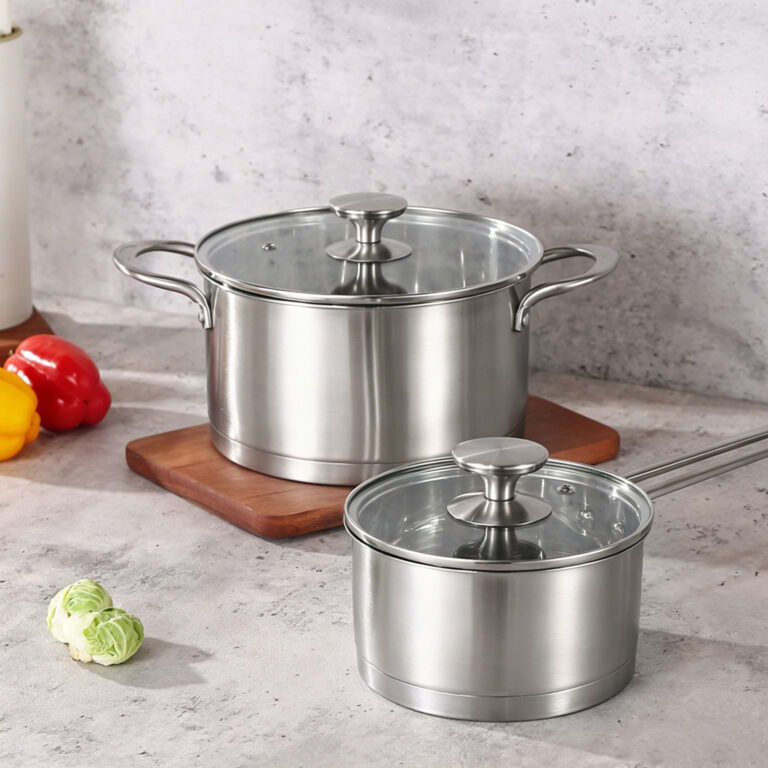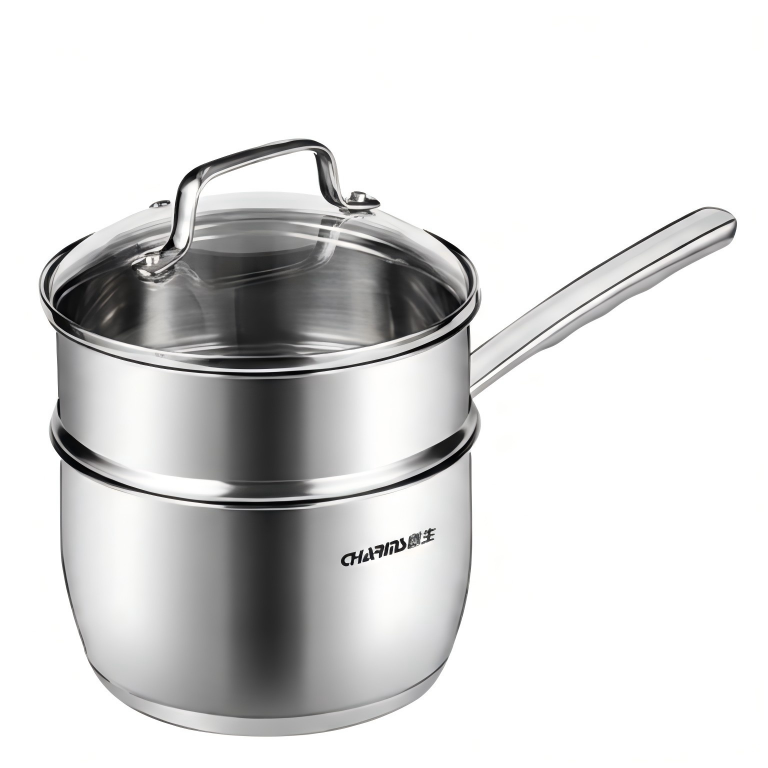


Choosing a cookware manufacturer is one of the most consequential decisions you’ll make for your kitchenware brand. Not just in terms of product quality — though that matters enormously — but in how it shapes your pricing, your delivery reliability, your ability to innovate, and ultimately whether your brand earns the trust of the people cooking with your products every day.
This guide is built for people who are serious about getting it right. Whether you’re launching a new cookware line, transitioning away from a supplier that’s let you down, or scaling production for an established brand, what you’ll find here goes beyond surface-level advice. We’re talking manufacturing realities, material trade-offs, customization processes, and the questions you actually need to ask before committing to any factory.
What Is a Cookware Manufacturer?
What Does a Cookware Manufacturer Do?
A cookware manufacturer does far more than stamp metal into pot shapes. At its core, a manufacturer is responsible for the full production chain: raw material sourcing, alloy processing, forming, surface treatment, assembly, quality inspection, and packaging. The best factories also carry significant R&D capability — meaning they don’t just execute your designs, they help refine and improve them.
When you partner with a manufacturer rather than a trading company, you gain direct access to the production floor. That matters when lead times are tight, when you need to adjust a specification mid-run, or when a quality issue needs to be traced and resolved at its source.
OEM vs ODM Cookware Manufacturing
These two models define very different working relationships, and understanding the distinction is essential.
OEM (Original Equipment Manufacturing) means you bring the design, and the manufacturer produces it. You control the specifications — dimensions, materials, surface finish, handle type, packaging — and the factory executes. This model suits brands that have already invested in product development and need a reliable production partner.
ODM (Original Design Manufacturing) means the manufacturer already has existing product designs that you can brand as your own. You select from their catalog, apply your logo and packaging, and go to market faster with lower upfront investment. ODM works well for brands entering new product categories or testing a market before committing to custom tooling.
Many experienced manufacturers offer both. The right choice depends on your brand maturity, budget, and how much differentiation you need in the market.
Why Manufacturers Matter in the Kitchenware Industry
The kitchenware supply chain has many layers. Distributors, trading companies, and importers all play roles — but none of them control what happens inside the factory. When you work directly with a manufacturer, you eliminate the markup layers that inflate cost, and more importantly, you gain visibility into the quality systems that protect your brand.
A product failure — a handle that cracks, a coating that peels after thirty uses, a lid that doesn’t seal — isn’t just a return. It’s a review, a complaint, a social media post. Manufacturers who take quality seriously build the infrastructure to prevent these failures before products ever leave the floor.
What Types of Products Do Cookware Manufacturers Produce?
The breadth of a manufacturer’s product range signals manufacturing capability. A factory that can produce a well-engineered pressure cooker has different capabilities than one that only makes basic pots. Here’s a breakdown of the major product categories and what to know about each.
Cookware
| Product | Key Considerations | Common Materials |
|---|---|---|
| Frying Pan | Even heat distribution, non-stick durability, handle heat resistance | Stainless steel, aluminum, carbon steel |
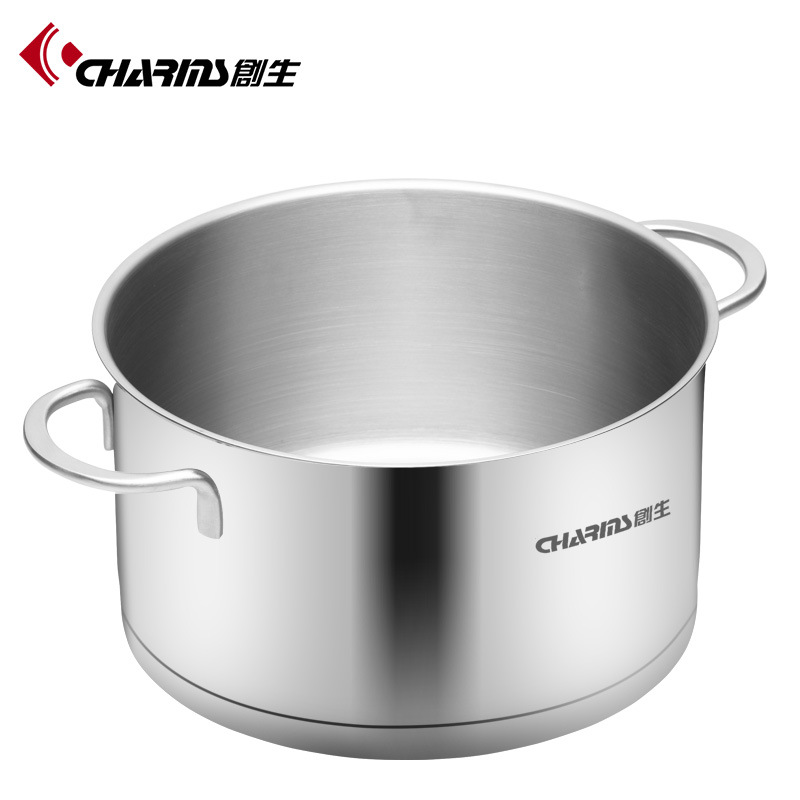
| Stock Pot | Capacity range, base thickness, lid seal quality | Stainless steel, aluminum |
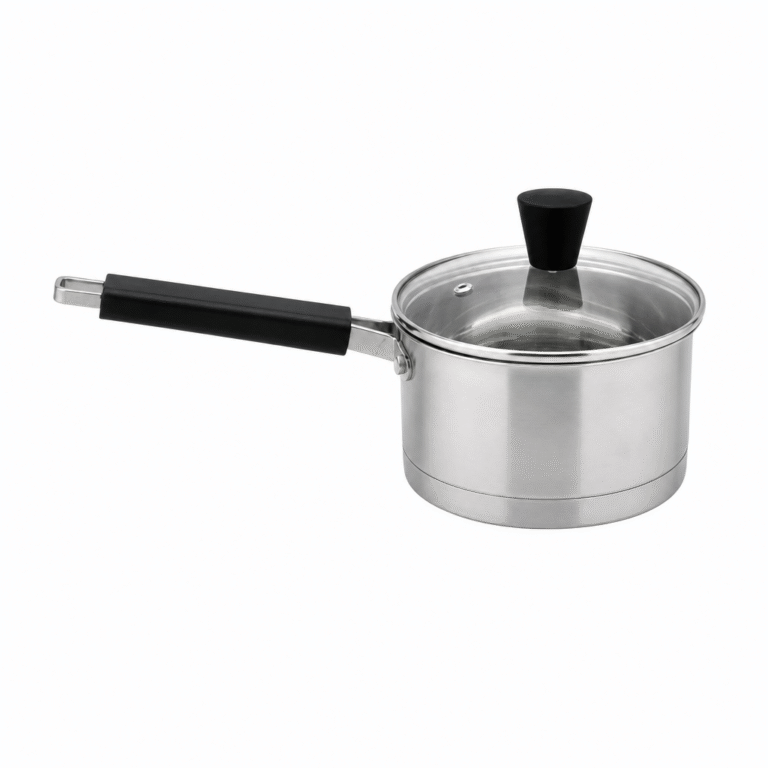
| Saucepan | Pour spout design, handle ergonomics, induction compatibility | Stainless steel, aluminum |
| Wok | Weight distribution, seasoning compatibility, wok ring support | Carbon steel, stainless steel, cast iron |
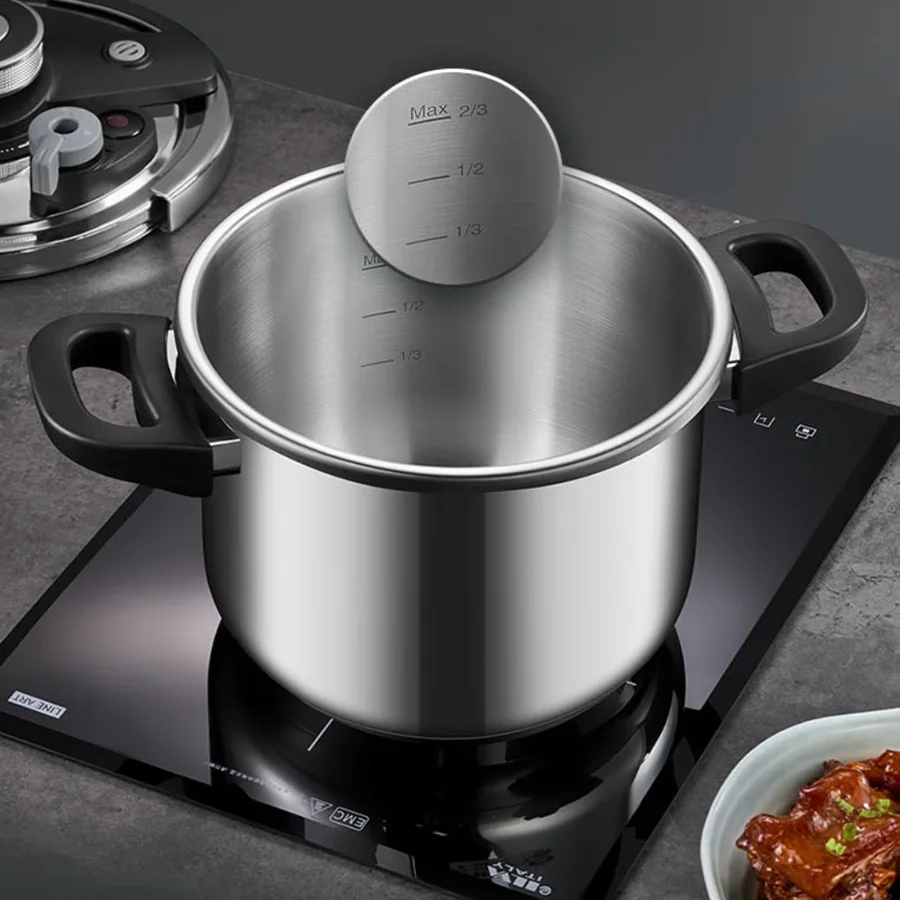
| Pressure Cooker | Valve engineering, safety mechanisms, pressure rating | Stainless steel |
| Steamer | Tier count, steam circulation, base seal quality | Stainless steel, aluminum |
| Hot Pot | Divider design, heat distribution, portable use | Stainless steel, aluminum |
| Cookware Sets | SKU consistency, packaging engineering, set composition logic | Mixed, typically stainless steel |
Drinkware & Outdoor
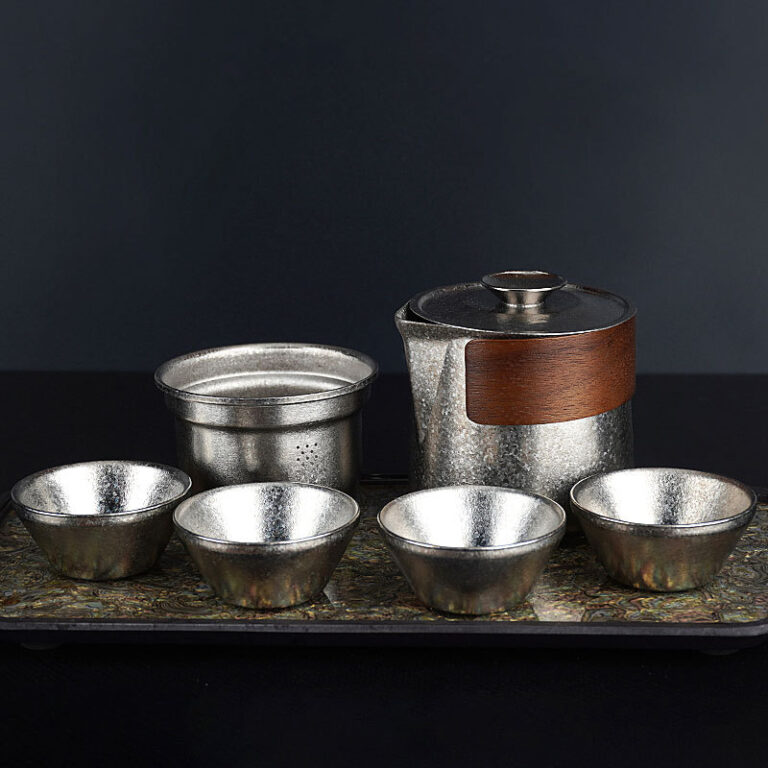
Kettles span a wide design range — from stovetop whistling kettles to electric models to gooseneck pour-over designs. Outdoor and camping cookware is a fast-growing category, driven by the overlanding and adventure travel market. Lightweight titanium and compact nesting designs are increasingly requested in this segment.
Storage, Tableware & Kitchen Tools
| Category | Products | What Buyers Should Know |
|---|---|---|
| Food Storage | Containers, sealed tanks, lunch boxes | Airtight lid engineering, food-grade certification critical |
| Tableware | Plates, bowls, cafeteria trays, mixing bowls | Commercial vs. residential grade matters here |
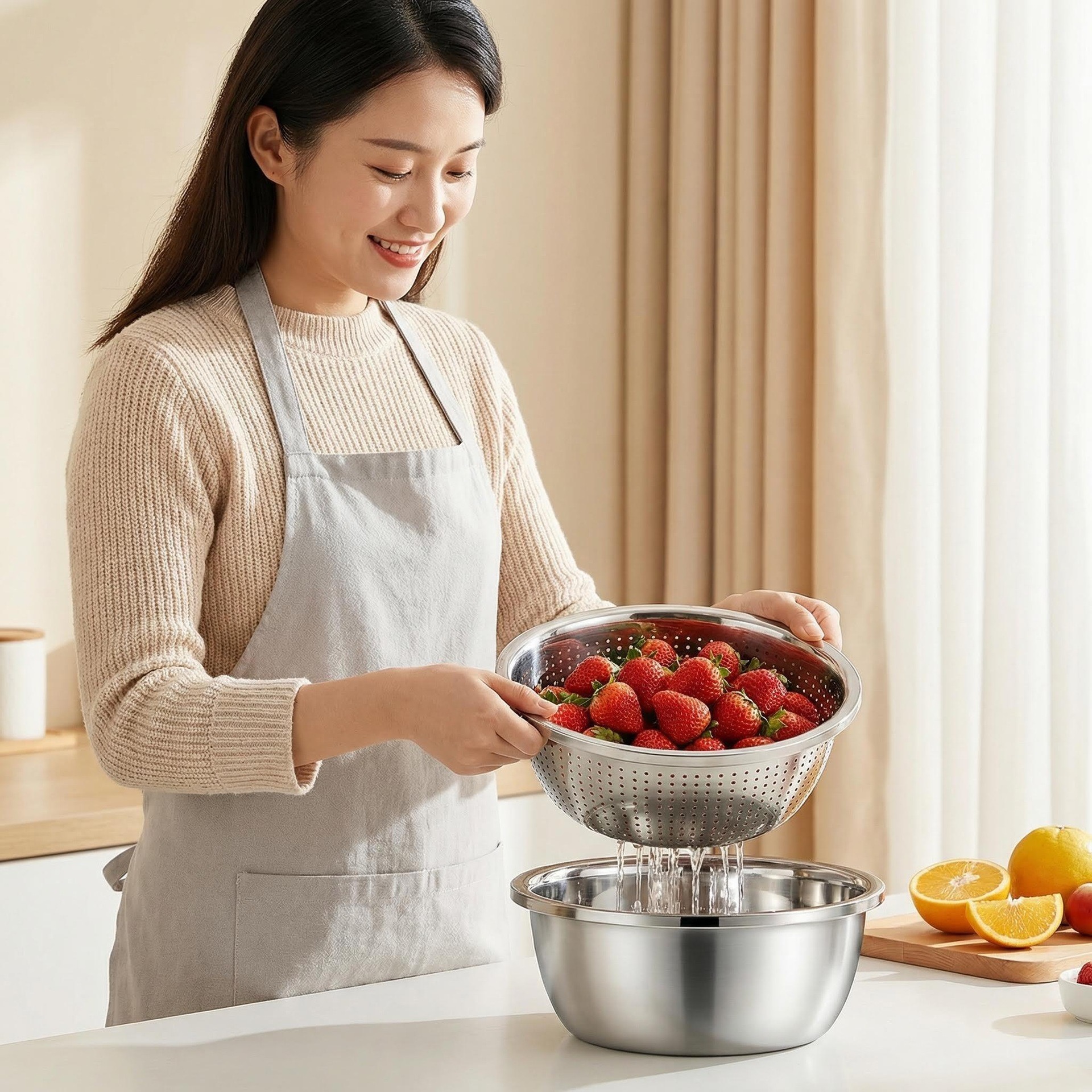
| Kitchen Tools | Strainers, ladles, utensils | Often produced as accessory SKUs alongside cookware sets |
The distinction between commercial-grade and residential-grade products isn’t just about thickness or durability. It’s also about the certifications required, the volume assumptions built into the design, and the institutional procurement processes those products need to fit.
What Materials Are Commonly Used by Cookware Manufacturers?
Which Material Is Best for Cookware?
There is no universal answer — and any manufacturer that tells you otherwise is oversimplifying. The right material depends on the end-use context, the price tier you’re targeting, the cooking methods your customers use, and the certifications required in your target market.
That said, here’s a grounded breakdown of how each material performs:
Stainless Steel
Stainless steel is the backbone of professional and premium cookware for good reason. It’s non-reactive, meaning it won’t leach flavors or chemicals into food. It’s durable enough for commercial kitchens, dishwasher safe, and holds up to the kind of abuse that renders cheaper materials unusable within a year.
Grade matters. 304 stainless (18/8) is the standard for food-grade cookware — corrosion-resistant, non-magnetic, and widely certified. 316 stainless adds molybdenum, making it more resistant to chlorides and salt — relevant for coastal commercial kitchens or high-salinity cooking environments. 201 stainless is a lower-cost option but offers reduced corrosion resistance and is not suitable for markets with strict food-safety requirements.
Construction matters too. Single-layer stainless is lightweight but conducts heat unevenly. Tri-ply construction — a layer of aluminum or copper bonded between two stainless layers — delivers dramatically better heat distribution. Five-ply goes further still, important for induction compatibility and professional performance.
Aluminum
Aluminum heats faster than stainless steel and costs less. For high-volume commercial kitchens where speed and price matter more than longevity, it’s a practical choice. The limitation is reactivity — bare aluminum reacts with acidic foods, which is why anodized aluminum (hard-anodized or coated) has become the preferred form for quality-conscious markets.
Cast Iron
Cast iron retains heat exceptionally well and is effectively indestructible with proper care. The drawbacks — significant weight, reactive surface, maintenance requirements — have made it more of a specialty item than a mainstream category. Enamel-coated cast iron addresses some of these issues but adds manufacturing complexity and cost.
Carbon Steel
Carbon steel sits between cast iron and stainless steel in terms of weight and performance. Favored by professional chefs for woks and skillets, it seasons like cast iron but heats more quickly. It’s increasingly popular in premium home cooking markets as consumers follow professional kitchen trends.
Non-stick Coatings
Non-stick coatings are a surface treatment, not a base material — an important distinction. PTFE (the technology behind Teflon) remains the most common, with newer ceramic-based coatings gaining ground in markets sensitive to PFOA and PFAS concerns. The quality of a non-stick coating depends on application technology (the number of layers, spray uniformity) and the substrate it’s applied to. A thin PTFE layer on lightweight aluminum will fail far sooner than a multi-layer ceramic coating on a robust tri-ply base.
Advantages of Stainless Steel Cookware
For brands building products meant to last — and to carry a brand reputation across years of use — stainless steel’s advantages are compelling. It survives dishwashers, metal utensils, high-heat searing, and oven use. It doesn’t require seasoning or special care instructions. It looks professional. And for markets in Europe, North America, and East Asia, food-grade stainless is the baseline expectation in the mid-to-premium price segment.
Glass lids and silicone handles round out stainless cookware designs effectively. Tempered glass lids with stainless steel rims allow monitoring without heat loss. Silicone handles rated to 250°C provide heat resistance while enabling logo customization through embossing.
What Are the Key Features of a High-Quality Cookware Manufacturer?
Manufacturing Capability and Capacity
A manufacturer’s physical scale tells you something real. Production floor area, number of active production lines, and annual output capacity affect whether a factory can absorb your volume without disrupting its existing customer base. A 40,000㎡ facility running 300+ production lines and producing 10,000 tons annually, for example, has the infrastructure to fulfill large orders reliably — and to onboard new clients without compromising delivery schedules for existing ones.
Equally important is the technology deployed. Korean high-frequency brazing technology for clad-bottom construction, for instance, produces stronger, more uniform bonds than older welding methods — directly affecting heat distribution performance in the finished product.
Quality Control Systems
Quality control in cookware manufacturing is not a single checkpoint. It’s an integrated system. Look for:
- Incoming material inspection: Are raw materials tested before entering production?
- In-process monitoring: Are dimensions and finish checked at each production stage?
- Final inspection: What percentage of finished units are tested, and by what protocol?
- Documentation: Can the manufacturer trace a quality issue back to a specific production batch?
Certifications like ISO 9001 (quality management), ISO 14001 (environmental management), and OHSAS 18001 (occupational health and safety) signal that these systems are audited externally, not just claimed internally. A National Inspection-Exempt Product designation — granted by Chinese authorities to consistently high-quality manufacturers — is a meaningful recognition in the domestic market.
Food Safety Certifications
The certifications required depend entirely on your target market.
- FDA compliance is required for products sold in the United States.
- LFGB certification is required for the German market and broadly respected across the EU.
- CE marking covers a range of product safety standards in the European market.
- SGS testing provides independent third-party verification valued by importers globally.
Don’t accept a manufacturer’s self-declaration on certifications. Request actual certificates, verify issuing bodies, and check expiration dates.
R&D Capability
R&D capability is what separates manufacturers from factories. A manufacturer with an active R&D team — engineers with expertise in material science, tooling, and ergonomic design — can help you develop products that don’t yet exist, improve prototypes that aren’t working, and anticipate the engineering problems that derail launches.
Patents are a useful proxy here. A manufacturer holding 50+ patents in stainless steel cookware manufacturing has built genuine technical knowledge, not just production capacity. That knowledge base is what enables them to develop patented products like multi-layer steamers with superior steam circulation or energy-saving pressure cookers with engineered valve systems.
Delivery Reliability and Logistics
Geographic positioning matters more than it might seem. Manufacturers located in Guangdong Province benefit from one of China’s most developed logistics infrastructures — proximity to major ports, well-established freight forwarding networks, and the customs processing experience that comes from decades of export-oriented manufacturing. A standard bulk order turnaround of 30–35 days, with sample production in 7–14 days, is a meaningful benchmark to hold manufacturers against.
How Does the Custom Cookware Manufacturing Process Work?
If you’ve never commissioned a custom cookware product from scratch, the process has more stages than most people expect. Each stage is a decision point — and understanding what happens at each one helps you manage timelines, catch problems early, and maintain quality through to mass production.
Stage 1: Product Design
Custom production starts with design. This can come from you — detailed technical drawings, CAD files, or physical reference samples — or it can begin with the manufacturer’s R&D team if you have a concept but not a specification. The output of this stage is a technical specification document that covers dimensions, materials, surface finish, handle design, lid type, and any branding elements.
Stage 2: Material Selection
Material selection is often treated as a checkbox, but it deserves deliberate attention. The grade of stainless steel, the thickness of the base, the composition of any bonded layers — these decisions determine the product’s performance, weight, cost, and the certifications it can qualify for. A manufacturer’s material science expertise is most valuable here.
Stage 3: Mold Development
For products with unique shapes or features, custom molds are required. Mold development is a significant upfront cost and typically takes two to four weeks. The mold determines the product’s geometry, and errors at this stage are expensive to correct later. Experienced manufacturers will review design files for tooling issues before mold production begins.
Stage 4: Sample Production
The first physical sample is the most important quality checkpoint in the entire process. This is where drawings become objects — and where the gap between specification and reality becomes visible. Evaluate samples against every dimension of the technical spec. Test handle heat resistance. Test lid seal. Test non-stick coating adhesion if applicable. Request revisions until the sample meets your requirements. Do not rush this stage.
Stage 5: Mass Manufacturing
Once the sample is approved, mass production begins. A manufacturer with organized production scheduling can give you visibility into where your order sits in the production queue, which matters for planning your own inventory and sales cycles.
Stage 6: Quality Inspection
Pre-shipment inspection — either by the manufacturer’s QC team or an independent third party — is standard practice for serious buyers. Define your Acceptable Quality Level (AQL) before production begins. An AQL of 2.5 for major defects and 4.0 for minor defects is a common standard for kitchenware. Know what you’re inspecting for, and make sure the manufacturer knows too.
Stage 7: Packaging and Shipping
Packaging is frequently underestimated. For cookware, protective packaging must survive container transit — vibration, compression, humidity. Custom packaging also represents a significant brand touchpoint. Color gift boxes, branded inserts, and bilingual labeling all require coordination and lead time. Experienced manufacturers integrate packaging development into the production timeline rather than treating it as an afterthought.
How to Choose the Right Cookware Manufacturer for Your Brand?
What Should You Ask Before Choosing a Manufacturer?
The questions you ask before signing a contract reveal as much about you as they do about the manufacturer. Here’s what experienced buyers focus on:
About capability:
- What is your current annual production capacity, and what percentage is currently utilized?
- What is your experience with products in our specific category?
- Do you have existing tooling for similar products, or will custom molds be required?
About quality:
- What are your in-process quality checkpoints?
- Which certifications do you currently hold, and can you provide copies?
- How do you handle production defects discovered after shipment?
About customization:
- What is your MOQ for custom products?
- What is your typical lead time from approved sample to shipment?
- How many active OEM/ODM clients are you currently working with?
About the working relationship:
- Who is our dedicated account contact?
- What is your preferred method of communication and what are your response time expectations?
- Can you provide references from existing clients in our target market?
How to Avoid Low-Quality Suppliers
The red flags are often visible before you place an order:
Prices that are dramatically below market rates almost always indicate compromised materials. A 304 stainless steel product cannot cost what a 201 product costs and maintain the same specification. When a price seems too good, it’s usually because something in the specification has been quietly changed.
Factories that resist factory audits are factories with something to hide. Any serious manufacturer welcomes third-party audits — they’re a standard tool for building buyer confidence, not an intrusion.
Be cautious with manufacturers who cannot provide actual certification documents, who cannot name the testing bodies that issued their certifications, or who become vague when asked about their quality inspection processes. Certification is not a marketing claim — it’s a document with an issuing authority, a scope, and an expiration date.
Finally, pay attention to communication quality in the pre-sales process. A team that is slow, disorganized, or unable to answer technical questions before they have your business will not improve once they do.
Why More Global Brands Choose Chinese Cookware Manufacturers
A Mature Industrial Ecosystem
China’s dominance in cookware manufacturing is not accidental. Decades of export-oriented production have created an industrial ecosystem where raw material suppliers, tooling manufacturers, surface treatment specialists, and logistics providers are clustered geographically. In regions like Caitang — recognized as China’s “Hometown of Stainless Steel” — the concentration of industry expertise means a cookware factory can source premium 304 stainless coil, commission custom tooling, and arrange sea freight in a way that simply isn’t possible in markets where the supply chain is more fragmented.
Cost Structure Without Compromising Quality
The cost advantage of Chinese manufacturing is real, but it’s often misunderstood. The savings don’t come primarily from lower labor costs — modern cookware factories are highly automated. They come from supply chain density, production scale, and infrastructure maturity. A factory running 300+ production lines can amortize tooling, energy, and overhead costs across volumes that smaller facilities cannot match.
This means a well-chosen Chinese manufacturer can deliver products at price points that would be impossible to achieve from European or North American facilities — without any compromise on material grade, construction quality, or certification compliance.
OEM Development Speed
For brands launching new products, speed to market is a genuine competitive advantage. Chinese manufacturers with strong R&D teams and comprehensive tooling libraries can move from approved design to production-ready sample in two weeks. That timeline is not achievable in manufacturing environments where tooling lead times alone run 8–12 weeks.
Export Experience and Compliance Infrastructure
Experienced exporters understand the documentation, labeling, and certification requirements for major markets. FDA compliance for the US, LFGB for Germany, CE marking for the EU — manufacturers who have been exporting for 20+ years have navigated these requirements for hundreds of clients. That institutional knowledge reduces the compliance burden for brands entering new markets and ensures shipments clear customs without costly delays.
Conclusion
A cookware manufacturer is not just a vendor — it’s a production partner whose capabilities and standards are directly reflected in every product that carries your brand. The manufacturer you choose determines what you can build, how quickly you can bring it to market, what it costs to produce, and whether it performs reliably in your customers’ hands.
Getting this decision right requires moving beyond price comparisons and factory brochures. It requires understanding the manufacturing process deeply enough to ask the right questions, evaluating quality systems with enough rigor to distinguish genuine capability from marketing claims, and building a working relationship with a team that communicates clearly and solves problems proactively.
The brands that build lasting cookware businesses do it by choosing manufacturing partners who share their standards — and by treating that partnership as a long-term investment rather than a transactional arrangement.
If you’re ready to take the next step — whether that’s requesting samples, discussing a custom development project, or getting a quote for an existing product — reach out to start the conversation.