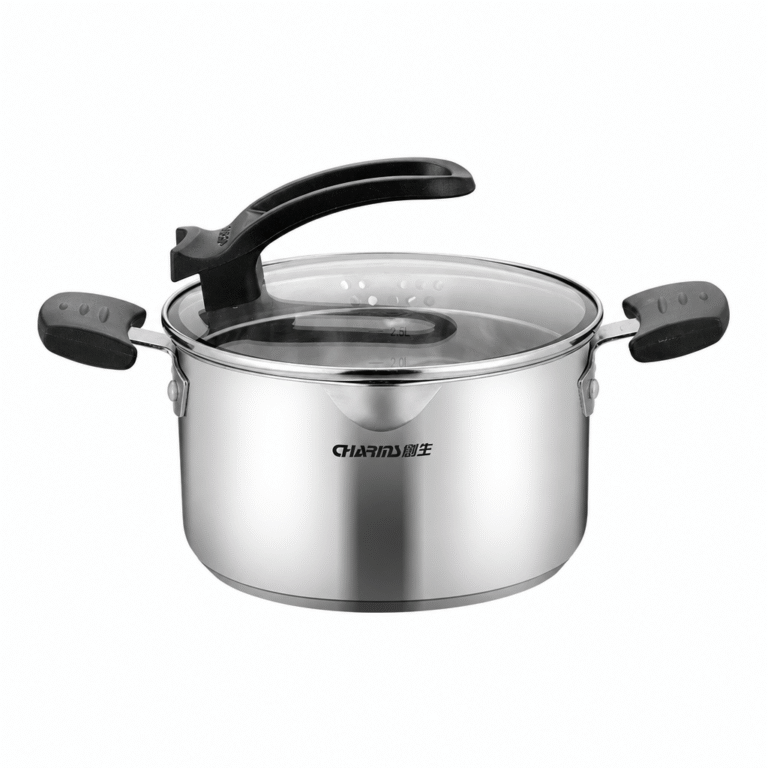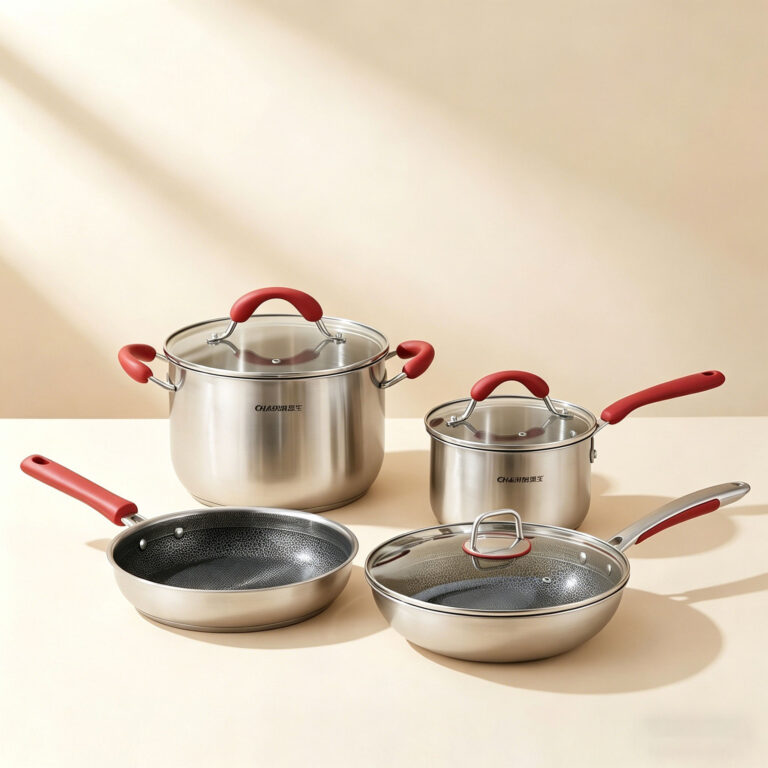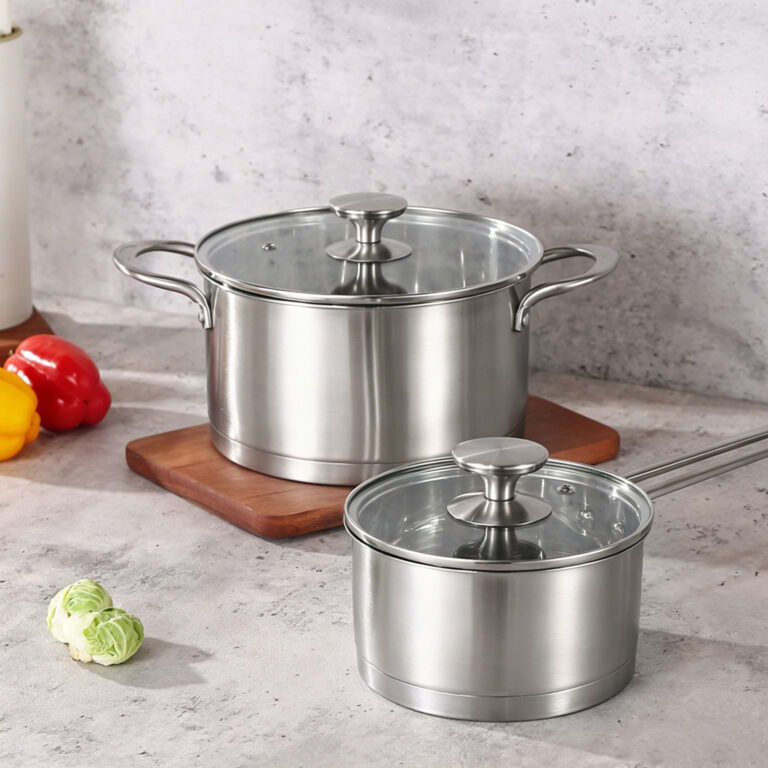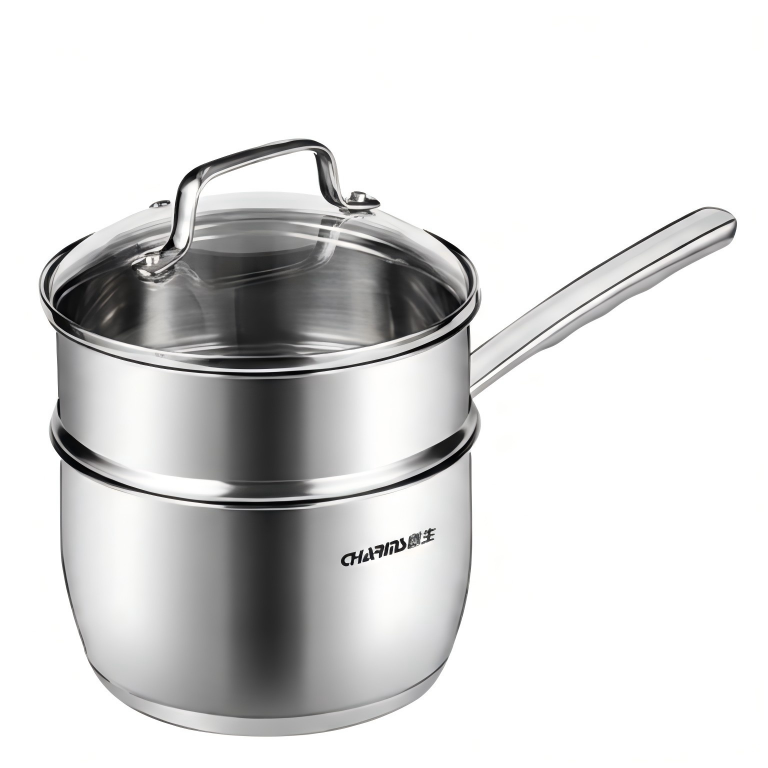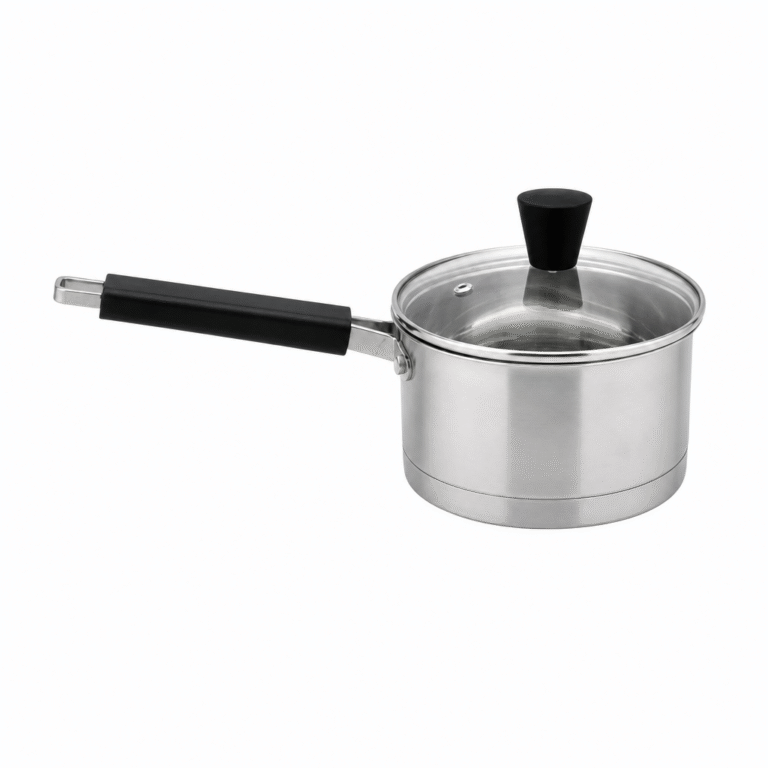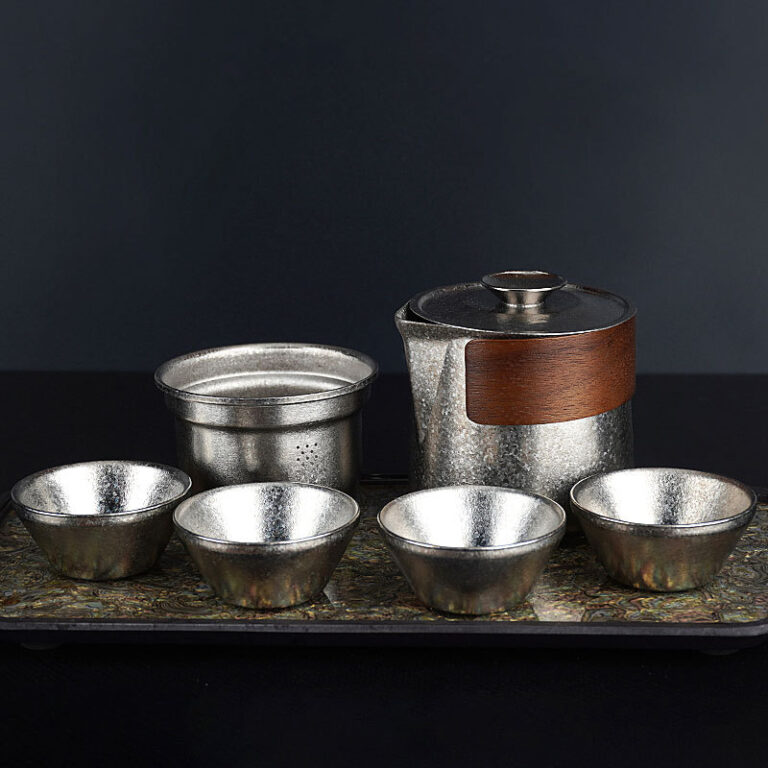


There is a quiet but significant shift happening in the stainless steel cookware supply chain. Buyers who once prioritized a mirror-bright polish are now asking a very different question: what was used to create that shine? The answer has pushed electrolytic finishing from a niche surface treatment into one of the most requested specifications in export-oriented cookware today.
What Is Electrolytic Finish Stainless Steel Cookware?
Electrolytic finishing — sometimes called electropolishing — is an electrochemical surface treatment applied to stainless steel after forming. An electric current passes through the metal while it is submerged in a controlled chemical bath. The process removes microscopic peaks from the steel’s surface at the molecular level, leaving a uniformly smooth, slightly matte-metallic result without any mechanical abrasion or added coating.
That distinction from mechanical polishing matters more than it might initially seem.
Traditional mirror polishing relies on abrasive compounds and buffing wheels. To achieve that characteristic gleam, manufacturers apply polishing waxes — often petroleum-based — to lubricate the abrasive process. These waxes fill in the micro-scratches left by polishing stages, and some residue inevitably remains on the finished product. The surface looks clean. Under a microscope, it is not.
Electropolishing, by contrast, adds nothing to the surface. It only removes material. The chromium-to-iron ratio at the surface improves, which is what gives electropolished stainless steel its elevated corrosion resistance. The pore structure collapses. Bacterial adhesion becomes significantly harder. The result is a surface that is measurably cleaner than what it replaced.
How the Process Works in a Factory Setting
Inside a production facility, electrolytic finishing follows several controlled stages. Steel components are first degreased and cleaned to remove forming lubricants. They then enter the electropolishing bath — typically a mixture of phosphoric and sulfuric acids — where direct current flows through the part as the anode. The current density and immersion time are calibrated to the specific alloy grade, usually 304 or 316 stainless, and the desired surface finish. After electropolishing, parts go through a passivation step, rinsing, and drying before quality inspection.
The resulting surface has a Ra (roughness average) value that is measurably lower than mechanical polishing achieves for comparable processing time — typically in the range of 0.2 to 0.8 micrometers. That smoothness is not cosmetic. It directly correlates with cleanability, stain resistance, and long-term appearance retention.
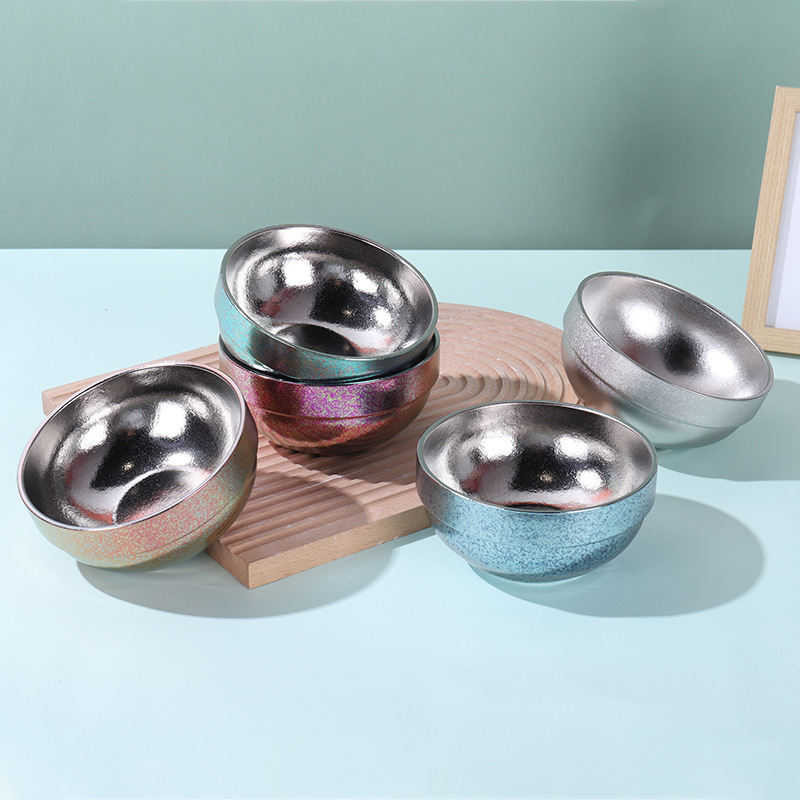
Why More Buyers Are Switching from Polished to Electrolytic Finish
Market preferences rarely shift without a reason. In the cookware category, the move away from conventional mirror polish is driven by converging pressure from three directions: regulatory scrutiny, end-consumer awareness, and brand positioning.
Regulatory Pressure Is Tightening
The EU’s Framework Regulation on food contact materials sets specific migration limits for substances that can transfer from cookware surfaces to food. While polishing wax itself is not always the regulated substance, the accelerants and chemical carriers used in wax formulations can include compounds that fall within the scope of these limits. Testing houses in Germany and the Netherlands have flagged residue-related non-conformances on polished cookware more frequently over the past several years.
Korean import regulations follow a similar logic. Korea’s Food Sanitation Act mandates that kitchen utensils meet specific standards for surface contaminants, and the Korea Consumer Agency has published guidance encouraging buyers to verify the surface treatment method on imported cookware. Electrolytic finishing satisfies that verification process more cleanly than mechanical polishing, because the process documentation is chemical and electrical — measurable and auditable in ways that wax residue testing is not.
Consumer Awareness Is Doing Real Work
Health-conscious purchasing has moved from a niche demographic into mainstream consumer behavior in South Korea, Germany, France, and the Nordic markets. Cookware brands serving those markets are fielding direct questions from their retail customers about surface treatments. The phrase “wax-free” or “chemical-residue-free” has appeared on product packaging in Seoul’s Lotte and Hyundai department stores — not as regulatory language, but as a marketing differentiator.
That signal travels quickly back through the supply chain. When a Korean kitchenware brand updates its product brief to specify “electropolished interior surface, no polishing wax,” the factory needs to respond with a capable process. This is the real-world mechanism driving adoption of electrolytic finishing among export-focused manufacturers.
Premium Brand Positioning
There is also a straightforward commercial logic. Electropolishing is a more expensive process than mechanical polishing at equivalent volumes. Buyers who specify it are signaling a willingness to pay for a verifiable quality upgrade. That positions electrolytic-finish cookware above entry-level and mid-range product tiers — which is exactly where margin compression has been most acute in the past five years.
Safety Advantages: No Polishing Wax, No Chemical Residue
Food safety is not a checkbox. It is the foundation on which long-term supplier relationships are built — or broken.
The food contact safety case for electropolished stainless steel rests on two interconnected properties: surface chemistry and surface geometry.
Surface Chemistry: Passive Layer Integrity
Stainless steel’s corrosion resistance comes from a chromium oxide passive layer that forms spontaneously at the surface. Mechanical polishing can disrupt this layer — abrasives and heat from buffing can embed iron particles or create localized hot spots where the passive layer is thinner. Electropolishing selectively dissolves iron from the surface at a higher rate than chromium, which enriches the surface in chromium and actually thickens the passive layer compared to the base metal.
Independent testing data from European surface treatment laboratories consistently shows that electropolished 304 stainless steel exhibits a chromium-to-iron ratio at the surface of approximately 1.4 to 1.7:1, compared to ratios below 1.0:1 after mechanical polishing. That surface enrichment directly translates to better performance in acidic food environments — think vinegar-based sauces, tomato-heavy dishes, citrus-infused stocks — where iron migration is the primary safety concern.
No Residue, No Ambiguity
Every compliance officer who has managed a cookware import program into the EU or Korea knows the headache of polishing wax certification. Is the wax food-grade? Which specific formulation was used? Does it meet the positive list requirements under EU Regulation 10/2011? Can the factory document chain of custody for the wax supplier?
Electropolished cookware eliminates that entire question. There is no wax to certify. The process chemicals — phosphoric and sulfuric acid — are thoroughly rinsed away and do not persist on the finished surface in detectable quantities. Third-party migration testing under standard EN 1186 conditions shows no detectable migration attributable to the electropolishing process itself.
Bacterial Resistance and Hygiene Retention
The geometry of an electropolished surface matters for food safety beyond chemistry. A mechanically polished surface, even a bright one, has micro-scratches — valleys where food particles, oils, and bacteria can reside and resist cleaning. The lower Ra of an electropolished surface means those valleys are shallower and less numerous. Cleaning effectiveness improves, and recontamination risk decreases.
In a commercial kitchen context, this property matters enormously. Stock pots and saucepans that are cycled through high-volume service and rapid cleaning benefit measurably from the improved cleanability of electropolished interiors.
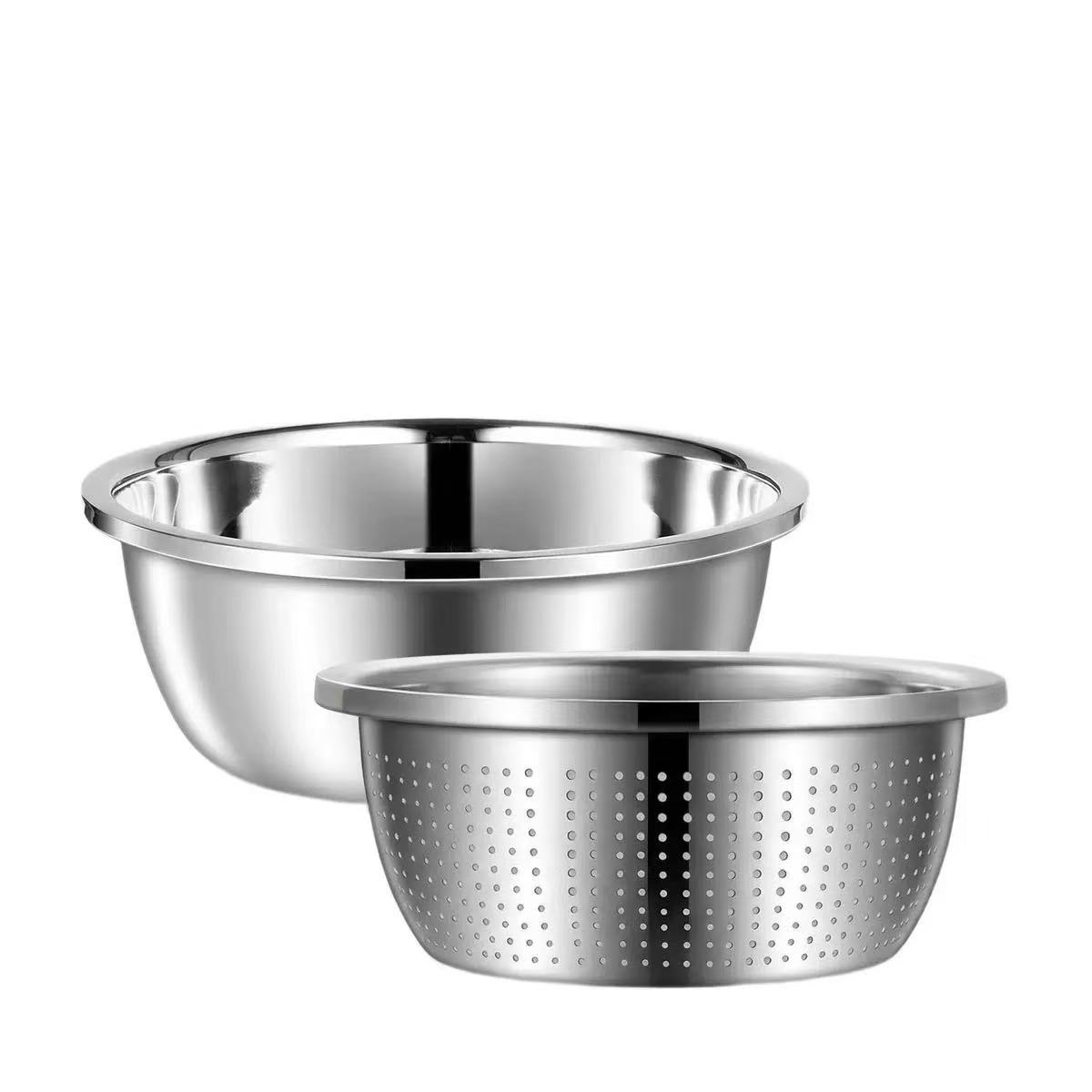
Surface Performance: Smooth, Anti-Fingerprint, and Corrosion Resistant
Safety is the entry requirement. Performance is what keeps buyers returning.
Corrosion Resistance That Holds Over Time
Cookware lives in a wet, thermally stressed environment. Repeated heating and cooling, exposure to salt, acidic foods, and dishwasher chemicals all attack the steel surface over time. Electropolished surfaces consistently outperform mechanically polished ones in salt spray testing (ASTM B117) and cyclical immersion testing, because the enriched passive layer provides a denser barrier to corrosive attack.
For export products with a one- to three-year warranty expectation — standard in the Korean and EU markets — this is not a theoretical benefit. It is the difference between a product that looks new after 18 months of regular use and one that shows surface discoloration and pitting.
Anti-Fingerprint in Practice
A common objection to matte-finish cookware is that it will show fingerprints and smudges more readily than a mirror-polished surface. The reality is the opposite for electropolished finishes.
Mirror-polished surfaces are highly reflective, which means any oil from a fingerprint is immediately visible as a contrast against the reflective background. The lower reflectivity of an electropolished surface — its slightly diffuse, satin-like quality — actually makes fingerprints less visually prominent. In a kitchen environment where pots and pans are handled constantly, this is a practical advantage that buyers notice.
Scratch Resistance in Everyday Use
Electropolishing slightly hardens the surface layer through the selective removal of softer iron-rich phases. The resulting surface resists light scratching from metal utensils and abrasive cleaners better than a pure mechanical polish, which leaves the surface in a state where any abrasive compound can re-scratch it along the pre-existing polish lines.
Over the first year of use, this difference becomes visible. Mechanically polished surfaces develop a worn, scratchy appearance from normal use. Electropolished surfaces retain their consistent matte-metallic texture because that texture is an intrinsic property of the surface, not a coating applied to it.
Aesthetic Trend: Modern Matte Metal Look for Premium Kitchenware
Design drives purchase decisions at the shelf level, even in the cookware category. The aesthetic that electropolishing produces — a clean, matte-metallic surface with a subtle directional sheen — is precisely what premium kitchenware design has moved toward over the past several years.
The End of the Mirror-Polish Era
Ten years ago, a high-gloss mirror finish signaled quality. The shinier the pot, the more premium the perception. That association has weakened significantly in the Korean, Japanese, and Northern European markets. Interior design aesthetics across those markets have shifted toward matte surfaces, warm neutrals, and what Japanese designers call wabi-sabi — an appreciation for honest material character over decorative gloss.
Cookware has followed that shift. The leading Korean kitchen brands — those sold in premium department stores and lifestyle concept shops — have moved their stainless steel lines toward brushed, satin, and electropolished finishes. A mirror-polished pot now reads, somewhat counterintuitively, as a lower-price product in certain segments of those markets.
Coherence with Premium Kitchen Aesthetics
Modern kitchen design in the $30,000+ renovation segment — the demographic that buys premium cookware as part of a lifestyle purchase — increasingly features matte black appliances, stone countertops, and integrated cabinetry with no visible hardware. A mirror-polished pot set is visually out of place in that environment. An electropolished set with its cooler, more subdued metallic quality integrates naturally.
For brands developing cookware lines for this demographic, the surface finish specification is an aesthetic decision first and a technical decision second.
Consistency at Scale
One underappreciated advantage of electropolishing over mechanical polishing is batch-to-batch visual consistency. Mechanical polishing results depend on operator skill, wheel condition, compound freshness, and the specific geometry of the part being polished. Two pots from the same batch can look noticeably different under consistent lighting.
Electropolishing parameters — current density, temperature, immersion time — are controlled electronically and produce highly consistent results across production runs. For buyers developing a branded product line, that consistency is valuable. It means the product photographed for the catalog will match the product that arrives in the customer’s home.
Export Market Demand: Why Korea and EU Prefer Electrolytic Finish
The preference patterns in Korea and EU markets are distinct but converging.
Korea: Health-First Consumer Culture
Korean consumers have one of the most developed product-safety-awareness cultures in global retail. Concerns about BPA in plastics, formaldehyde in furniture, and heavy metal migration in cookware have driven purchasing decisions in ways that would be unusual in North American or Southeast Asian markets.
The Korean market’s movement toward electropolished stainless steel reflects this. Retailers in Korea’s major department stores have increasingly required documentation on surface treatment processes as a condition of listing. Brands that can provide third-party test reports showing no detectable wax residue migration are preferred suppliers. That documentation is straightforward to produce for electropolished products and more complicated for conventionally polished ones.
Korean buyers also show a strong preference for the specific visual aesthetic that electropolishing produces. The matte, slightly cool-gray appearance aligns with the mureuk (weightiness/understated quality) design sensibility that has characterized premium Korean kitchen product lines for the past decade.
EU: Compliance as Competitive Advantage
In the EU, the compliance pathway for electropolished cookware is cleaner than for conventionally polished alternatives. Under EU Regulation 10/2011 on plastic materials and articles in contact with food — which is sometimes applied by analogy to surface treatment residues — buyers and importers face increasing pressure to demonstrate clean supply chains.
Germany’s BfR (Federal Institute for Risk Assessment) has published consumer safety guidance that specifically addresses surface treatments on metallic cookware and encourages suppliers to document the absence of process chemical residues. An electropolished product, with its documented wax-free process and auditable treatment chemistry, is better positioned for that documentation requirement.
Beyond compliance, EU market buyers in the specialty retail and homeware segments have the same aesthetic preferences driving demand in Korea. The Scandinavian design influence — visible in major retail chains across Sweden, Denmark, Finland, and their export markets — favors exactly the kind of clean, understated metallic surface that electropolishing produces.
North America: An Emerging Opportunity
While Korea and EU are currently the primary demand centers, North American buyers are beginning to ask the same questions. The growth of the “clean kitchen” category in premium US retail — driven by brands that position products around food safety, sustainability, and minimal processing — is creating a natural entry point for electropolished stainless steel cookware.

Manufacturing Considerations: Cost, Process, and MOQ
Understanding the production economics of electrolytic finishing is essential for making informed sourcing decisions. The picture is more nuanced than “electropolished costs more.”
Process Investment and Unit Economics
A dedicated electropolishing line requires capital investment in bath infrastructure, electrical systems, ventilation (the process generates gases that require extraction), and chemical management. These are meaningful fixed costs that not every factory carries. Manufacturers who have made that investment — and who operate the line at scale — can achieve unit economics that are competitive with high-quality mechanical polishing, particularly for complex-shaped components where achieving consistent mechanical polish is labor-intensive.
The cost premium for electropolishing versus standard mechanical mirror polish runs roughly 8% to 20% at the unit level, depending on part geometry, batch size, and the specific alloy being processed. For products that will be sold at a price point where a 15% surface treatment premium is less than 2% of retail, the business case is straightforward.
Alloy Selection and Process Compatibility
Not all stainless steel alloys respond identically to electropolishing. 304 (18/8) and 316 stainless — the dominant grades in cookware — are both well-suited to the process. 430 ferritic stainless, used in budget cookware, electropolishes less predictably and with less dramatic improvement in surface quality. If electrolytic finishing is a key specification for a product line, the corresponding alloy choice should be 304 at minimum, with 316 for products targeting the premium food safety positioning.
Multi-ply constructions — 3-ply and 5-ply cookware with aluminum or copper cores — can be electropolished on the stainless steel exterior and interior layers after the cladding process, provided the non-stainless edges are masked appropriately. This is standard practice in facilities that have experience with clad cookware.
MOQ and Production Planning
The batch-process nature of electropolishing means that MOQ logic differs slightly from mechanical polishing. Bath loading — the number of parts that can be processed simultaneously — is a key constraint. Production planning optimizes for full bath loads, which means that MOQ thresholds tend to be set at levels that correspond to full bath multiples rather than arbitrary round numbers.
For most standard cookware formats — saucepans, stockpots, woks — a working MOQ of 500 to 1,000 units per SKU is typical for electropolished finishes with a dedicated manufacturer. Smaller quantities are possible for prototyping and sample development, but the per-unit cost increases proportionally as bath utilization drops.
Factories with integrated production lines — where forming, welding, electropolishing, and assembly happen in sequence on-site — offer the cleanest turnaround times. Third-party electropolishing adds a logistics step and extends lead times by 5 to 10 days in most supply chain configurations.
Documentation and Quality Verification
One practical advantage of working with experienced electropolishing manufacturers is the quality of available documentation. Because the process is electronically controlled, production parameters — current density, bath temperature, immersion time, chemical concentrations — can be logged automatically for each batch. That data forms the foundation of a quality record that is difficult to fabricate and straightforward to audit.
For buyers managing compliance documentation for EU or Korean market entry, this traceability is a genuine operational advantage. The batch record for an electropolished pot can demonstrate, point by point, that the process was executed within the parameters validated by third-party migration testing. That audit trail does not exist for mechanical polishing.
For a broader overview of leading stainless steel cookware and kitchenware manufacturers in China, you can also check our full industry list here.
Conclusion
As the stainless steel kitchenware industry continues to upgrade, electrolytic surface treatment is gradually becoming an important standard for the high-end market, especially in markets such as South Korea and the European Union where there are higher requirements for food safety and product appearance. Compared to traditional polishing processes, electrolytic treatment not only eliminates the concern of polishing wax residue, but also provides a cleaner metal surface, better corrosion resistance, and a softer metal texture that is more in line with modern kitchen aesthetics. For brands that aim to enhance the quality of their products or expand their export markets, this process is becoming a more competitive option.
Charms Cook was established in Chao’an, the steel sheet capital of China, with nearly 30 years of experience in manufacturing stainless steel kitchenware. The factory covers an area of 40,000 square meters, has over 300 production lines, and an annual output of 10,000 tons. It has obtained certifications such as ISO9001, ISO14001 and OHSAS18001. It has long provided OEM services for well-known brands including Suopu, and can offer full-process customized support from material selection, structural design to surface treatment and packaging logistics. The lead time for regular orders is approximately 15-30 days.
If you are also looking for a cookware manufacturer, please contact us, and we will offer customized services.