
In the stainless steel cookingware industry, true cost control is never just about “lowering the price”. What you really need to focus on is whether the material selection is correct, whether the production process is efficient, whether the product quality can remain stable over the long term, and whether the chosen supply chain is reliable. Have you ever encountered such a situation: at first, the price seemed reasonable, but as the batches increased, there were inconsistencies in specifications, fluctuations in quality, repeated communication, and the overall cost was gradually pushed up?
So when you choose to wholesale kitchen appliances with a clear manufacturing mindset, things will be completely different. The reduction in unit prices is not achieved by sacrificing quality, but by coordinating production volume, process control, and long-term production planning from the very beginning, so that the entire production system serves you instead of constantly generating hidden costs.
In this article, Charms Cook is a kitchenware manufacturer with over 30 years of experience. Our products have been exported to dozens of countries, and we have a thorough understanding of customer needs. In the following article, I will share how custom-made kitchenware can help you save costs for your project.
What Is Wholesale Kitchenware?
Kitchen supplies wholesale refers to the mass production and supply of cooking utensils and kitchen appliances by manufacturers or major suppliers, rather than being purchased piece by piece through multiple distribution channels. In the stainless steel cooking utensil industry, wholesale is not merely a pricing model, but rather a structured procurement method that integrates raw material procurement, production planning, quality control, and delivery into a coordinated and unified system.
Unlike retail or small-batch purchasing, the planning of the kitchenware wholesale business is centered on production volume. Raw materials such as stainless steel sheets, aluminum cores, and accessories are purchased in advance, and the production line is arranged for continuous production. The specifications will also be determined before the production begins. As a result, each stage from shaping, bonding to polishing and assembly can be optimized, ensuring the consistency and efficiency of the products.
More importantly, wholesale kitchenware focuses on the total cost rather than just the unit price. When products are produced according to a unified standard and a repeatable process, issues such as quality differences, rework, shipping delays, and poor communication will be significantly reduced. For buyers of ongoing or multi-stage projects, wholesale kitchenware can provide cost predictability, stable quality, and a scalable supply chain without introducing unnecessary risks.
From a practical perspective, wholesale kitchenware means that you are not merely purchasing products, but rather collaborating with a manufacturing system that aims to provide consistent results on a large scale.
Suitable Types of Kitchenware for Wholesale Purchasing
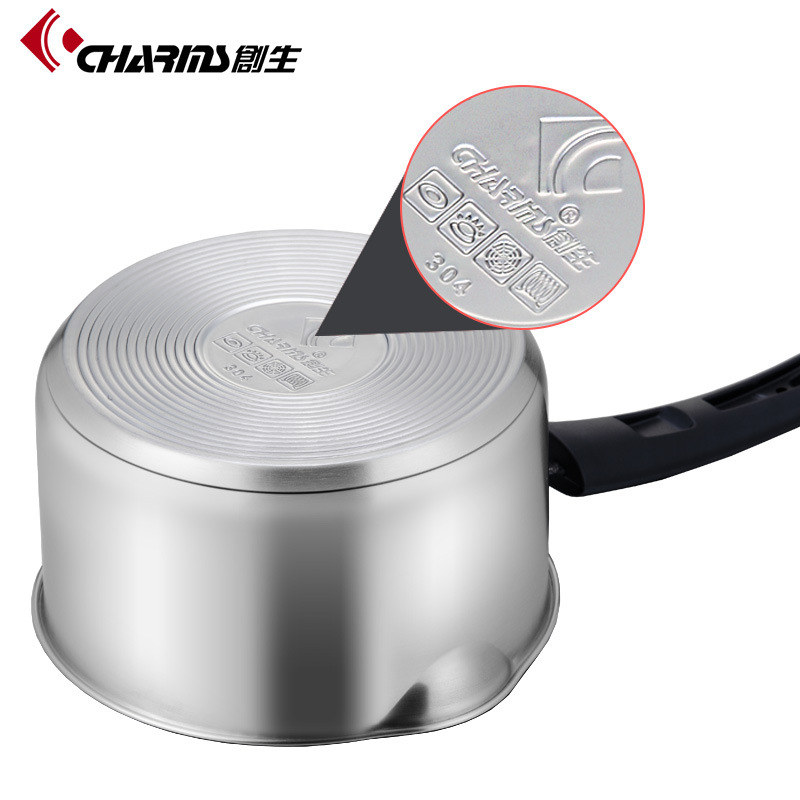
In the stainless steel kitchenware industry, most products can be customized. This depends on the manufacturer you choose, such as Charms Cook. We offer various customization options for kitchenware, including ODM and OEM. Here are some common types of kitchenware:
Core Stainless Steel Cookware
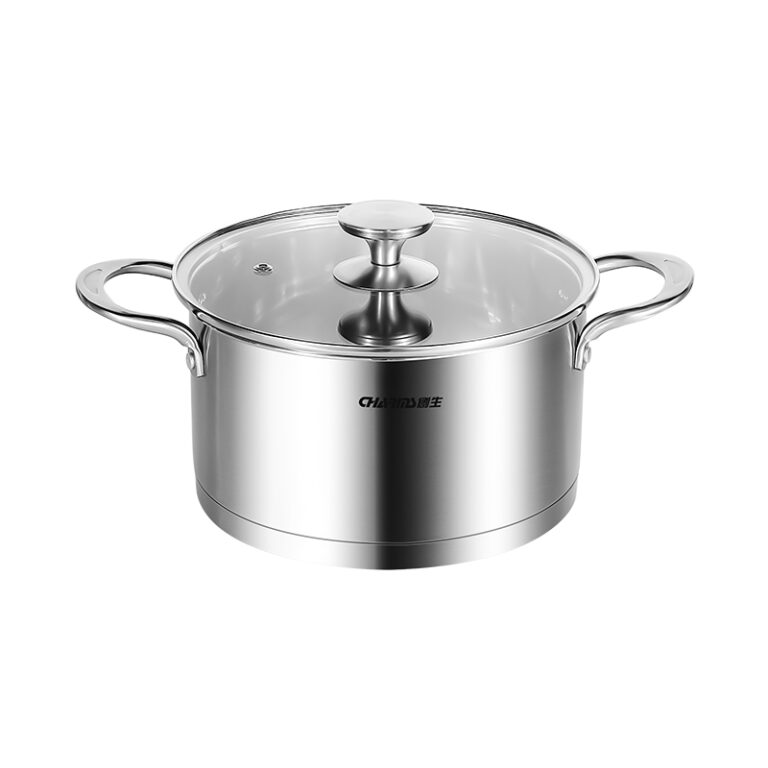
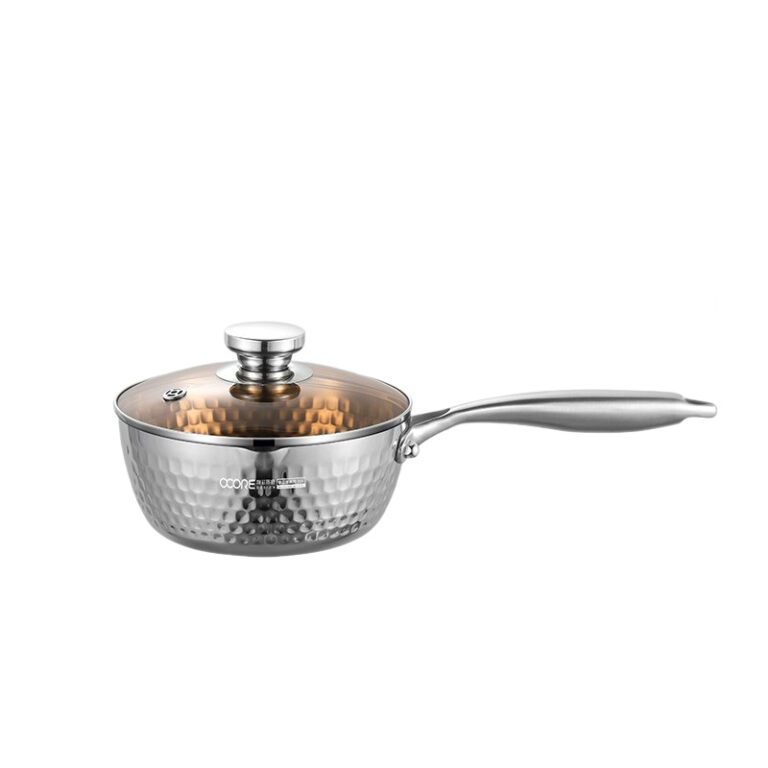
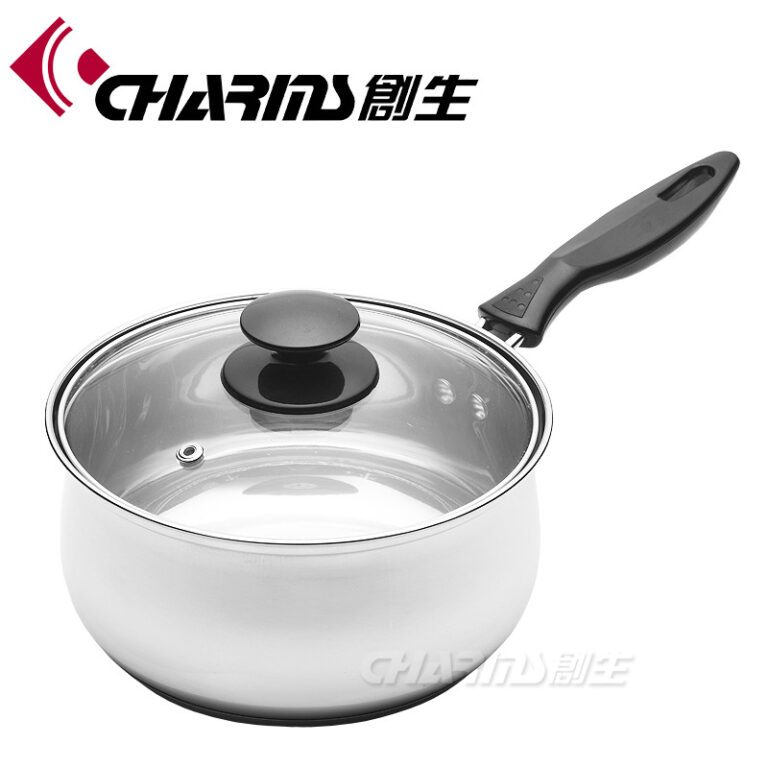
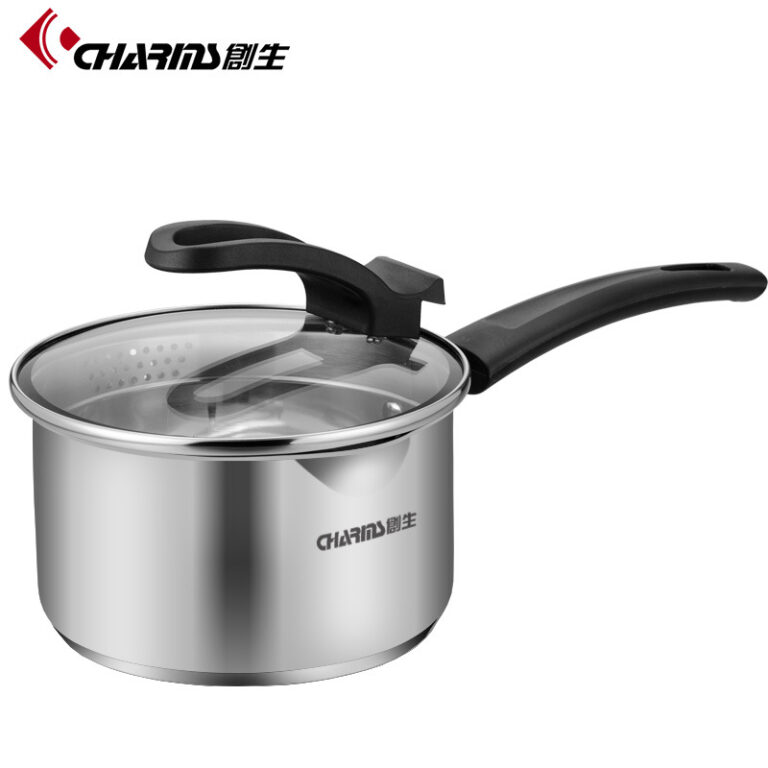
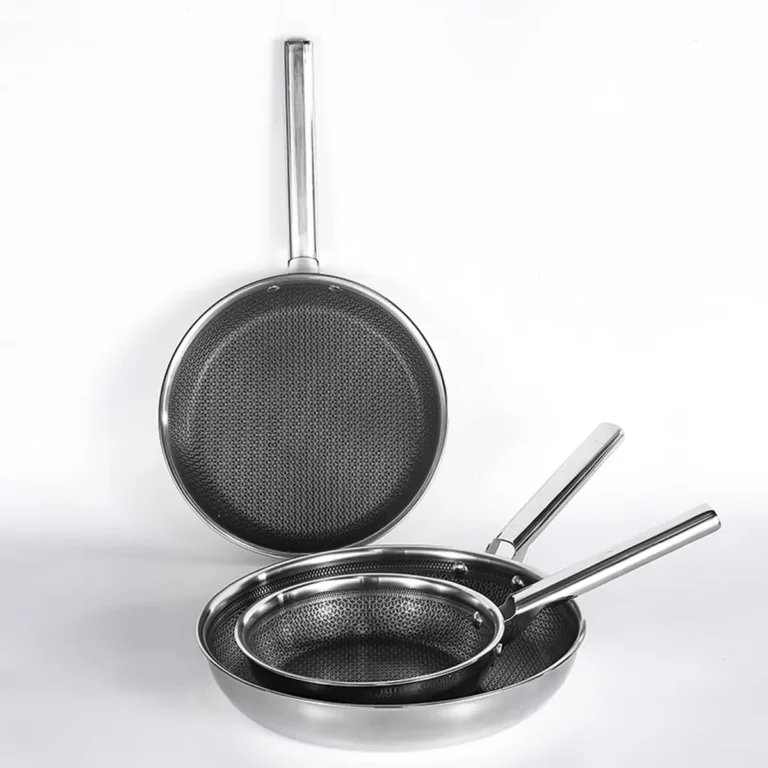
Items such as saucepans, stockpots, sauté pans, frying pans, and casseroles are ideal for wholesale purchasing. These products share common raw materials and manufacturing steps, including deep drawing, impact bonding or cladding, polishing, and assembly. When produced at scale, manufacturers can optimize material yield, reduce scrap rates, and maintain stable quality across large volumes.
Multi-Ply and Composite Cookware
Tri-ply and multi-layer stainless steel cookware benefit significantly from wholesale production. Bonding aluminum or copper cores between stainless steel layers requires precise control and specialized equipment. High-volume orders allow manufacturers to fully utilize these production lines, reducing per-unit bonding and inspection costs while ensuring uniform heat distribution.
Pressure Cookers and Steamers
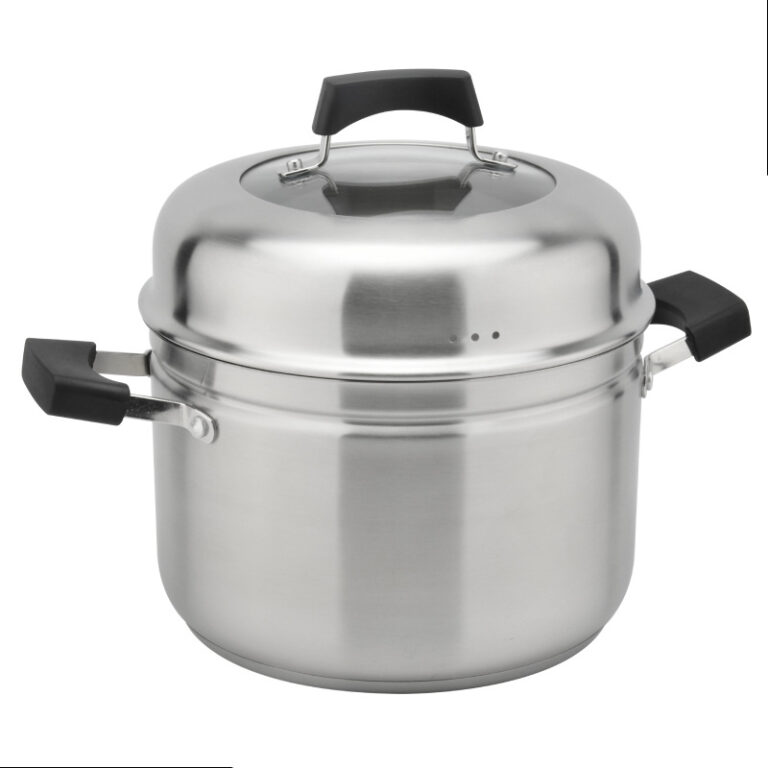
These products involve more complex engineering, including safety valves, sealing systems, and structural reinforcement. Wholesale production enables better cost allocation for tooling, safety testing, and certification, which would otherwise be disproportionately expensive in small batches.
Cookware Sets
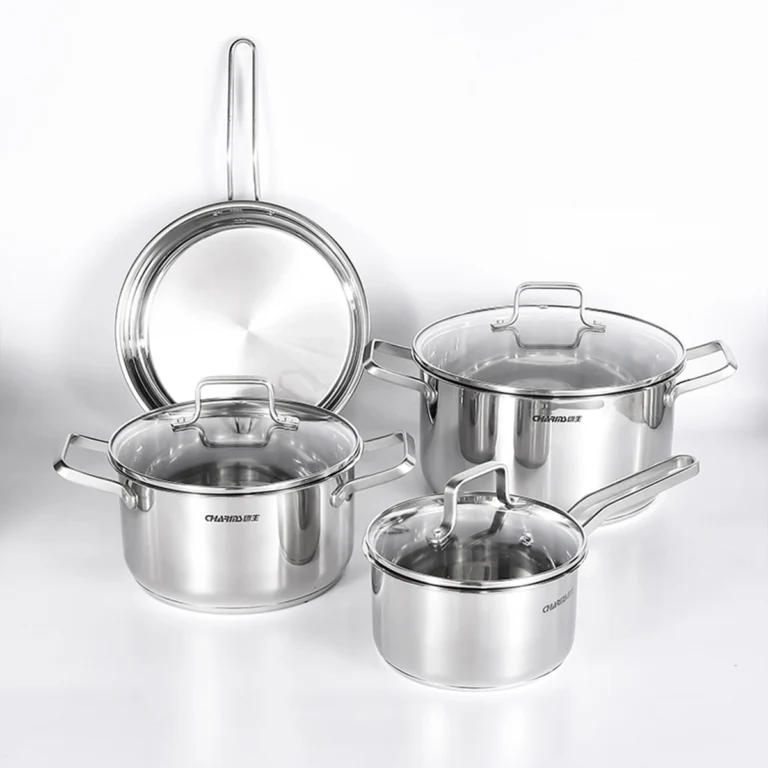
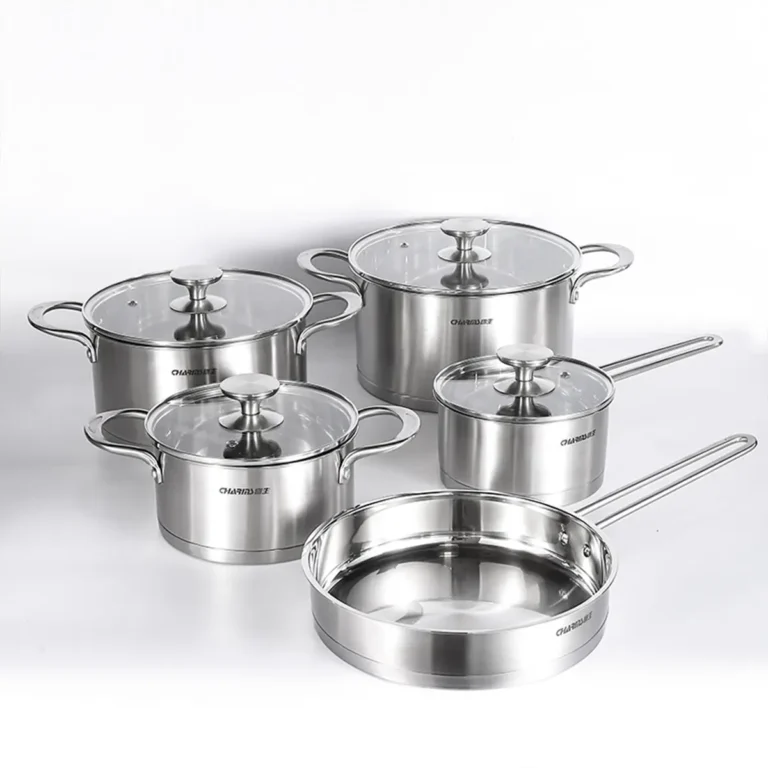
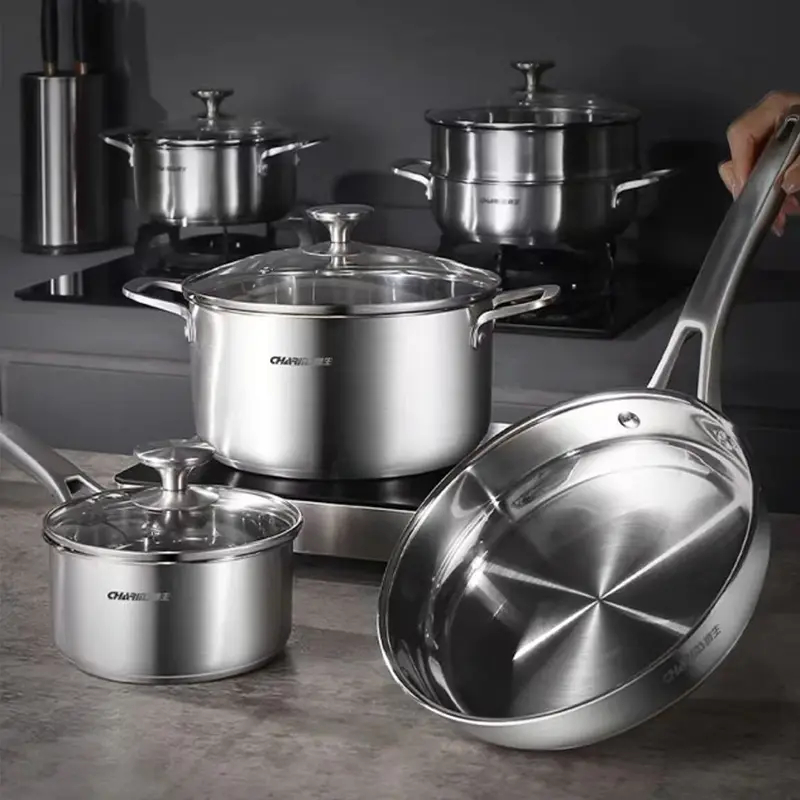
Sets are particularly well-suited for wholesale sourcing because they allow manufacturers to standardize components such as lids, handles, and packaging. This shared-component approach reduces inventory complexity and lowers overall production costs.
OEM/ODM-Ready Designs
Products designed for customization—such as handle shapes, surface finishes, or lid configurations—are more economical when produced in volume. Wholesale orders justify the upfront investment in molds, fixtures, and design adjustments, spreading these costs over a larger number of units.
Why Choose Wholesale Cookware?
Material Cost Optimization
Stainless steel prices fluctuate based on global nickel and chromium markets. Manufacturers that operate at scale secure raw materials through long-term procurement contracts, buffering against short-term price volatility. When you purchase wholesale, you indirectly benefit from this stability.
Process Efficiency
High-volume production allows manufacturers to fine-tune every step of the process—from blanking and forming to polishing and assembly. Machines operate at optimal capacity, labor is specialized, and quality checks are embedded into the workflow. This efficiency translates into lower production costs and fewer defects.
Consistent Specifications
Wholesale sourcing ensures that product dimensions, wall thickness, base construction, and surface finish remain consistent across shipments. This consistency reduces downstream costs related to product complaints, returns, or compatibility issues.
Reduced Transaction Overhead
Negotiating, onboarding, and managing multiple small suppliers increases administrative costs. Wholesale sourcing consolidates procurement into fewer, more reliable partnerships, simplifying communication, documentation, and quality assurance.
Long-Term Cost Visibility
Wholesale relationships often involve framework agreements that lock in pricing, specifications, and delivery schedules. This predictability supports more accurate budgeting and inventory planning.
How Does Wholesale Kitchenware Reduce Costs for Your Projects?
When you source kitchenware on a wholesale basis, cost reduction comes from restructuring how your products are planned, manufactured, and delivered—not from temporary price concessions. In the stainless steel cookware industry, many cost increases occur after production begins, when quality becomes unstable, specifications change, or schedules are disrupted. By choosing a wholesale sourcing model, you address these risks before they turn into expenses.
You benefit first from clearly defined production volumes. When volumes are confirmed in advance, manufacturers can plan raw material purchasing, labor deployment, and equipment usage with greater accuracy. Tooling, mold preparation, and testing are carried out under stable conditions, allowing fixed manufacturing costs to be allocated more efficiently across each unit.
You also gain from improved process stability. Continuous production runs reduce frequent machine adjustments and limit variability in forming, bonding, and finishing. This stability improves yield rates, reduces material waste, and lowers the likelihood of defects that would otherwise require rework or cause delivery delays.
Specification control is another area where you save costs. With wholesale kitchenware, dimensions, material thickness, base construction, and surface finishes are confirmed before production starts. This prevents mismatched components, packaging revisions, and last-minute adjustments that often increase costs when sourcing is fragmented.
You further reduce expenses through more efficient logistics planning. Packaging systems, pallet layouts, and container loading are designed around volume, which improves space utilization and lowers transportation costs per unit. Stable shipping schedules also reduce the risk of urgent or split deliveries.
Across the life of your project, these advantages work together. You experience fewer quality issues, more predictable lead times, and lower operational friction. Wholesale kitchenware reduces costs by ensuring that every part of the production system is aligned to support your objectives rather than creating hidden financial pressure.
How to Choose the Right Kitchenware Manufacturer
- Step 1: Define Your Product and Project Requirements:You should start by clearly defining what you need, including product types, material grades, thickness standards, structural details, target volumes, and cost expectations. Clear requirements allow you to assess manufacturers based on capability rather than price alone.
- Step 2: Assess Manufacturing Focus and Experience:ou need to determine whether the manufacturer specializes in stainless steel cookware. Long-term specialization indicates deeper technical knowledge, more mature processes, and better problem-solving ability during production.
- Step 3: Review Production Capacity and Process Stability:You should evaluate whether the factory can support your required volumes consistently. Production scale, automation level, and workflow stability all affect whether quality can be maintained as orders increase.
- Step 4: Request and Evaluate Samples:You should always review samples before bulk production. Samples help you verify material quality, weight, wall thickness, surface finish, handle construction, and overall workmanship. More importantly, they reveal whether the sample standard can be consistently reproduced in mass production.
- Step 5: Examine Quality Control Systems:You should look beyond certifications and understand how quality is managed in practice. Raw material inspections, in-process controls, and final testing procedures play a crucial role in preventing batch inconsistencies.
- Step 6: Evaluate Customization and Technical Support:If your project involves customization, you need to assess the manufacturer’s OEM/ODM capabilities and engineering support. Strong technical teams help you optimize designs, control costs, and manage changes efficiently.
- Step 7: Consider Communication and Long-Term Reliability:You should evaluate how effectively the manufacturer communicates and whether they are capable of supporting long-term cooperation. Clear communication, reliable delivery planning, and scalable capacity are essential for stable, ongoing projects.
Conclusion
Wholesale kitchenware is not about minimizing the price, but about making the cost controllable. When the materials, processes and production schedules are planned clearly from the very beginning, many hidden problems will not arise later. Choosing the right manufacturing partner will make the procurement more stable and less energy-consuming.
More importantly, you have chosen the right manufacturer. Charms Cook has over three years of experience as a manufacturer. If you are also looking for a similar manufacturer, please contact our team. We would be more than happy to receive your information and look forward to cooperating with you!