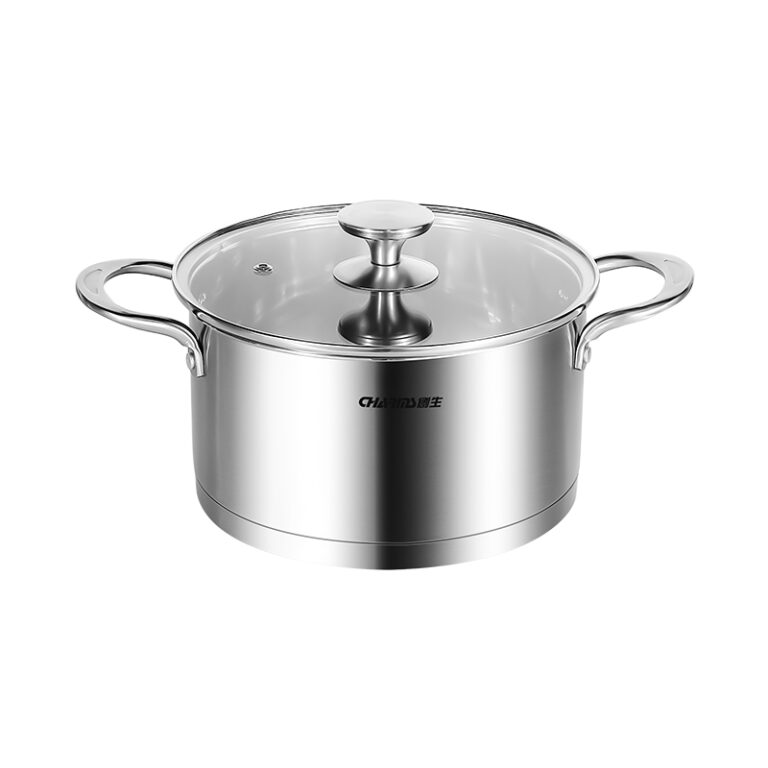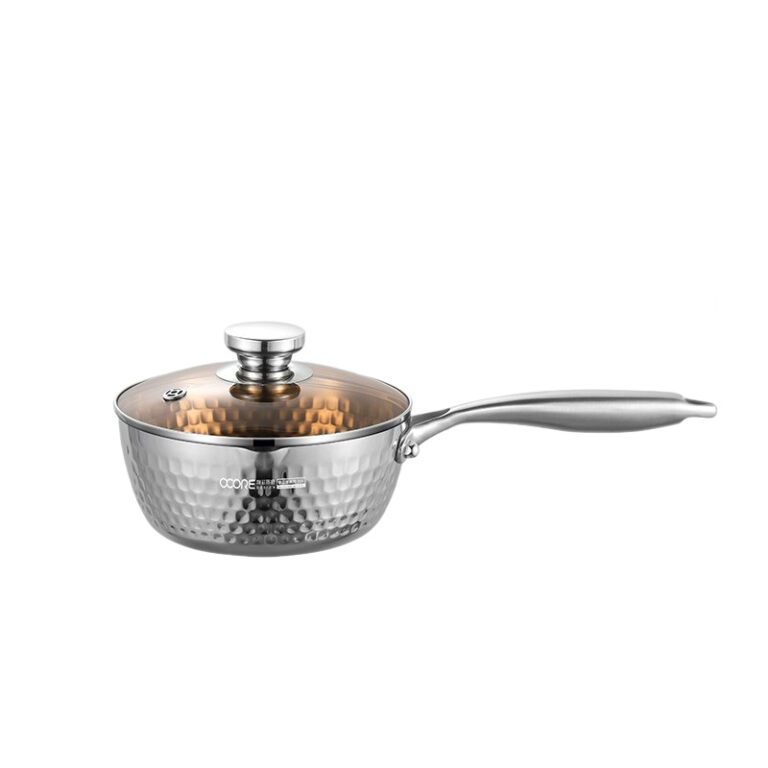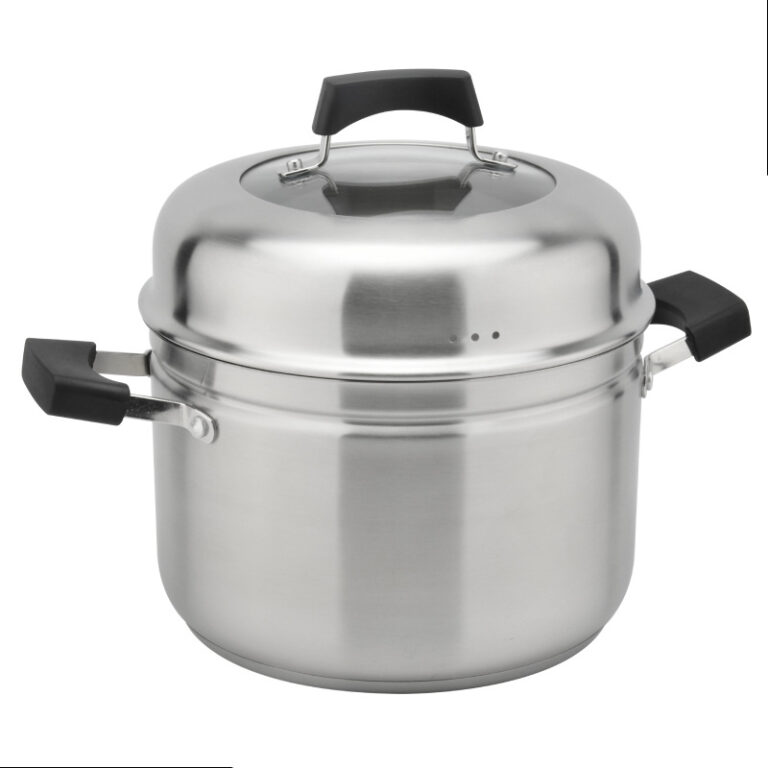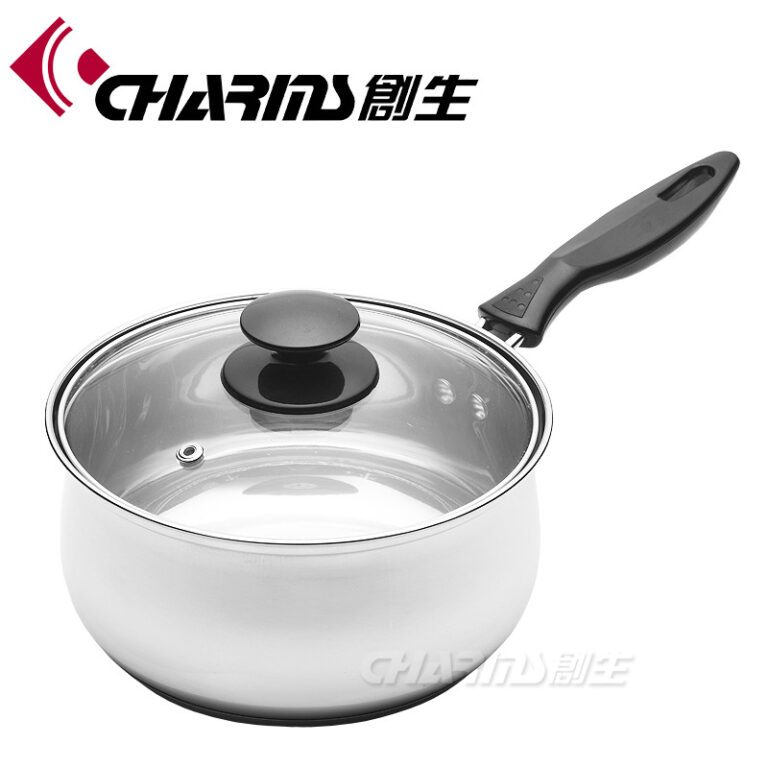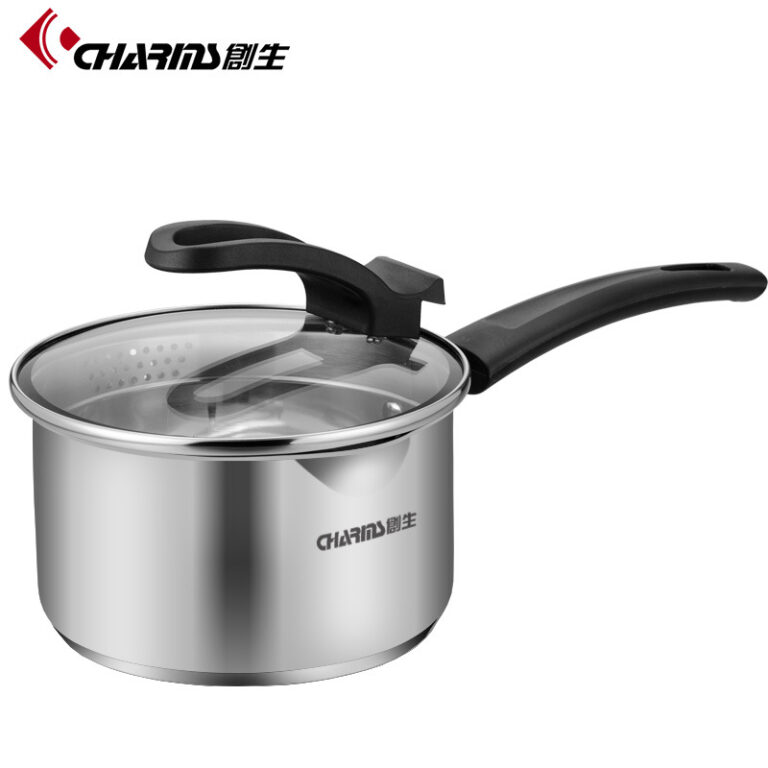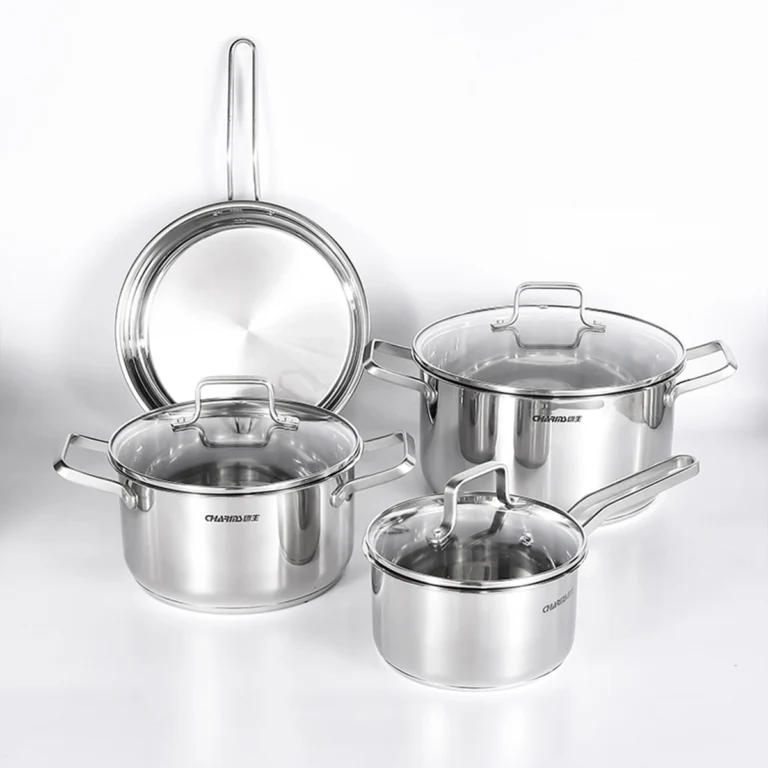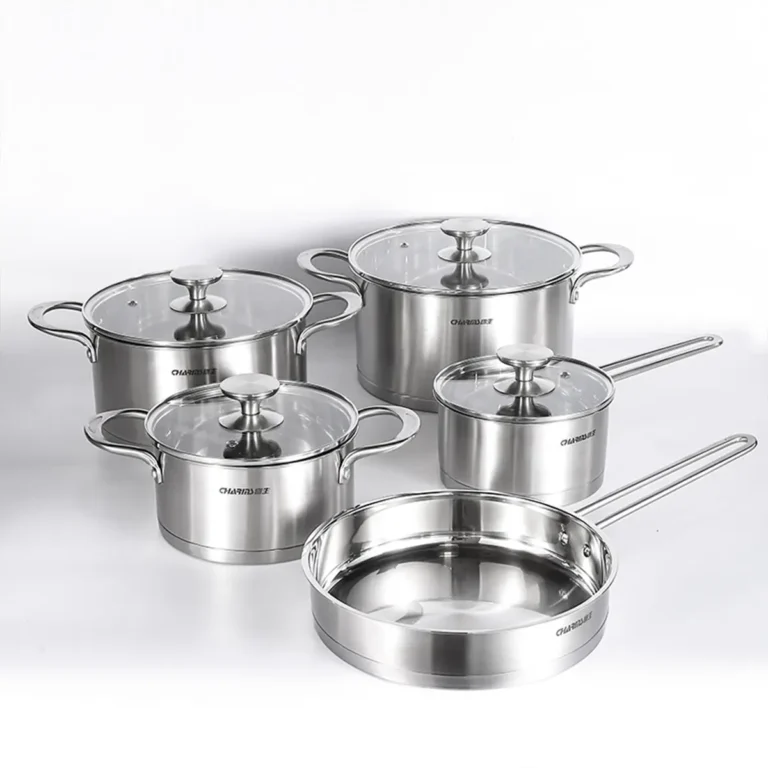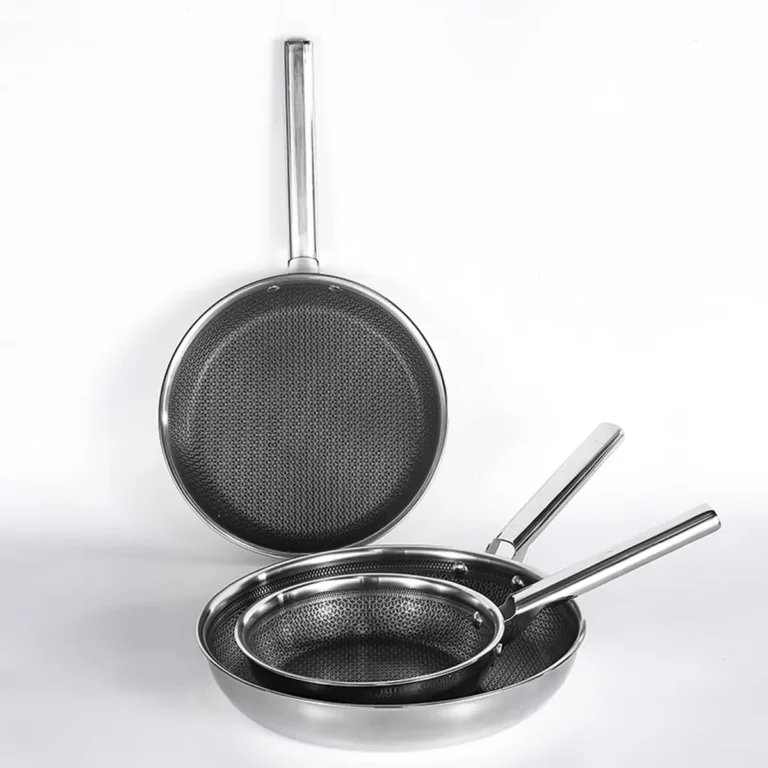

In professional kitchens, food processing plants, and high-frequency cooking environments, stainless steel cookware has been the mainstream choice for decades. This preference is not due to trends or brand effects, but rather because of its consistently outstanding performance under pressure. Stability, material safety, temperature control performance, and long-term reliability make stainless steel cookware a practical tool rather than an ornament.
Charms Cook is a company with over 30 years of experience in the stainless steel cookware industry. In this article, we will introduce you to 6 criteria for choosing a stainless steel cookware set. Whether you are involved in kitchenware design or in the process of purchasing, this article will be helpful to you!
Material Safety and Composition
Material safety is the foundation of stainless steel cookware. If this standard is compromised, nothing else matters—not durability, not heat performance, not aesthetics.
Stainless steel is not a single material. It is an alloy, primarily composed of iron, chromium, and nickel, with exact ratios defining the grade. The most commonly used grades in cookware are 304 (18/8 or 18/10) and 316 stainless steel.
304 stainless steel is widely accepted for food-contact applications. Its chromium content provides corrosion resistance, while nickel improves stability and shine. For most cooking environments, this grade offers an excellent balance between performance, safety, and cost.
316 stainless steel includes molybdenum, which enhances resistance to salt, acids, and aggressive cleaning agents. This matters in professional kitchens, marine environments, or regions where cooking involves acidic ingredients or frequent high-salt exposure.
Beyond the grade itself, material safety depends on sourcing discipline. Recycled steel content must be controlled. Impurities such as lead, cadmium, or excessive manganese are unacceptable. Reliable manufacturers conduct incoming material inspections and maintain traceability back to certified steel mills.
Another overlooked factor is surface treatment. Poor polishing or improper passivation can leave microscopic residues that affect corrosion resistance over time. A properly finished surface creates a stable chromium oxide layer, which is what actually protects stainless steel during daily use.
When evaluating cookware, ask how the steel is sourced, how batches are verified, and what internal standards are applied beyond minimum regulatory compliance. Serious manufacturers can explain this clearly, without hesitation.
Heat Conduction and Heat Distribution
Stainless steel is durable and safe, but it is not an efficient heat conductor on its own. This is why cookware construction matters as much as material choice.
High-performance stainless steel cookware relies on layered construction, often referred to as multi-ply. In these designs, aluminum or copper cores are bonded between layers of stainless steel. The purpose is simple: fast, even heat distribution without sacrificing surface safety.
Aluminum is the most common core material due to its excellent thermal conductivity and reasonable cost. Copper offers even faster response but increases complexity and price. The key is not the marketing term, but the thickness and bonding quality of the conductive layer.
Uniform bonding is critical. Poor bonding leads to hot spots, warping, and inconsistent cooking results. These issues often appear only after repeated heating and cooling cycles, which is why experienced buyers look beyond initial performance tests.
Base design also plays a role. Fully clad cookware distributes heat up the sidewalls, which is important for sauces, reductions, and temperature-sensitive cooking. Disc-bottom cookware concentrates heat at the base and may be suitable for boiling or high-volume operations but offers less control.
From a sourcing perspective, heat performance should be evaluated through both lab testing and real-use simulations. Reliable manufacturers understand how construction choices affect cooking behavior and can tailor designs based on intended use.
Durability and Manufacturing Quality
Durability is not just about thickness. It is about how every part of the cookware is engineered, assembled, and finished.
Warp resistance depends on material balance and forming accuracy. Cookware that is too thin deforms easily. Cookware that is too thick without proper stress relief may also warp over time. Experienced manufacturers control forming pressure, annealing cycles, and cooling rates to maintain structural stability.
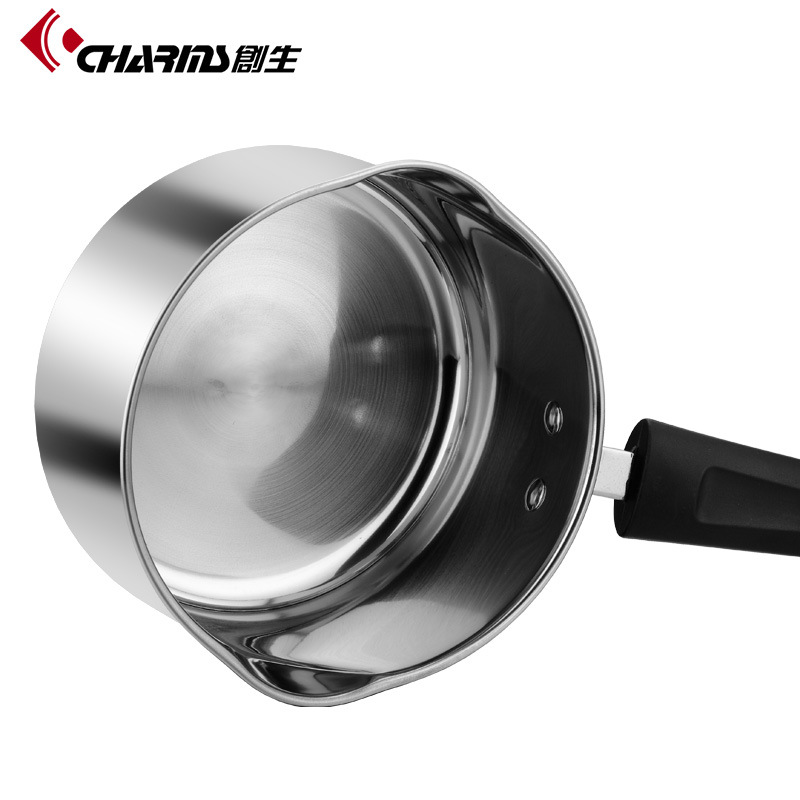
Rim design matters more than most people realize. Rolled rims improve pouring control and reduce deformation. Cut rims may look sharp initially but are more prone to damage and discomfort during use.
Handles are another critical point. Spot-welded handles must be aligned precisely and welded with consistent penetration. Weak welds fail under repeated thermal expansion. Overwelded joints discolor and weaken surrounding material.
Lids should fit securely without creating pressure imbalance. A well-designed lid helps regulate moisture retention and heat efficiency. Poor fit leads to rattling, steam leakage, and uneven cooking.
Manufacturing quality is reflected in consistency. When evaluating a supplier, inspect multiple units from different batches. Consistency across production runs indicates mature process control, not luck.
Compatibility with Different Cooktops
Modern kitchens rarely rely on a single heat source. Compatibility across gas, electric, ceramic, and induction cooktops is now a baseline requirement.
Induction compatibility deserves special attention. Not all stainless steel is magnetic. Cookware must include a ferromagnetic layer, usually stainless steel 430, to function properly on induction surfaces.
The challenge is balancing magnetic performance with corrosion resistance and heat distribution. This is where layered construction and material selection intersect. Poorly designed induction bases can buzz, vibrate, or heat unevenly.
Flatness tolerance is another critical factor. Even slight base deformation reduces contact with glass or induction surfaces, leading to energy loss and unstable heating.
Manufacturers with experience in global markets understand regional differences in cooktop standards and design accordingly. This reduces compatibility issues after distribution.
Ease of Use, Cleaning, and Maintenance
Cookware is only valuable if it performs well in daily use, not just during demonstrations.
Weight balance affects control and safety. Overly heavy cookware increases fatigue. Lightweight cookware may lack stability. Well-designed stainless steel cookware feels balanced when lifted, even when full.
Surface finish influences both performance and maintenance. Mirror-polished interiors are easy to clean but may show scratches more visibly. Satin finishes hide wear better and perform well for searing and browning.
Dishwasher compatibility is often requested, but not all stainless steel cookware responds well to harsh detergents. Clear guidance on cleaning methods helps prevent premature wear and customer dissatisfaction.
Maintenance considerations should be realistic. Stainless steel is durable, but it benefits from correct heat management and cleaning habits. Quality manufacturers provide practical usage guidance based on real-world testing, not idealized conditions.
Intended Use and Cooking Performance
The final standard brings everything together: how the cookware is actually used.
Different cooking tasks place different demands on cookware. Searing requires rapid heat response and stable surfaces. Simmering benefits from even heat retention. Boiling prioritizes capacity and stability.
A one-size-fits-all approach often leads to compromise. Well-developed cookware lines offer variations in construction, thickness, and shape to suit specific cooking styles.
Understanding the end user’s environment—home kitchens, professional settings, or mixed-use scenarios—guides better design and sourcing decisions. This is where experience matters most.
Manufacturers who actively cook with their own products tend to design better cookware. They notice details that do not appear in specification sheets but make a difference in daily performance.
Conclusion
Choosing stainless steel cookware is a technical decision grounded in material science, manufacturing discipline, and real cooking experience. When you evaluate cookware through these six standards—material safety, heat performance, durability, compatibility, usability, and intended use—you gain clarity that goes far beyond surface-level comparisons.
A professional manufacturer understands these standards not as selling points, but as design principles. At Charmscook, stainless steel cookware is developed with a focus on controlled materials, precise construction, and practical performance. Every design decision is made to support long-term reliability, consistent cooking results, and customization flexibility for partners who demand more than generic solutions.
When cookware is built with purpose and experience, it becomes a tool you can rely on—not just a product you purchase.