
Stainless steel cookware is a cornerstone in many kitchens, revered for its durability, even heating, and versatility. Yet, for many, the dream of a perfectly seared steak or a flawlessly fried egg often turns into a sticky nightmare.
The frustration of food adhering to the pan, leaving behind a stubborn mess and compromising the dish’s integrity, is a common culinary challenge. But what if I told you that achieving a non-stick experience with your stainless steel pots and pans is not just possible, but surprisingly straightforward once you understand the science and master a few key techniques? This guide is designed to empower you with the knowledge and confidence to transform your relationship with stainless steel, ensuring every cooking endeavor is a success.
Why Does Food Stick to Stainless Steel Cookware?
At its core, the sticking phenomenon in stainless steel cookware boils down to a few fundamental interactions between food, oil, and the pan’s surface. When you place food into a cold or improperly heated pan, the natural proteins and sugars in the food come into direct contact with the microscopic pores and ridges of the stainless steel. Without a sufficient barrier, these food particles bond directly with the metal, creating a sticky situation.
Think of it like this: the surface of stainless steel, though seemingly smooth to the naked eye, is actually quite intricate. Under a microscope, you’d see a landscape of tiny valleys and peaks. When food is introduced without proper preparation, it essentially gets “stuck” in these microscopic crevices. Furthermore, if the pan isn’t hot enough, the food will cool down the pan even further, preventing the formation of a crucial vapor barrier that helps food release easily. The absence of this barrier allows for a strong adhesive force to develop between the food and the pan, leading to frustrating residue and uneven cooking. Understanding this fundamental principle is the first step towards conquering stickiness.
How to Properly Preheat a Stainless Steel Pan?
Preheating is not just a step; it’s the foundational secret to preventing food from sticking to stainless steel. It’s a process often overlooked or misunderstood, but mastering it will dramatically improve your cooking outcomes. The goal of preheating is to evenly expand the metal of the pan, closing up those microscopic pores and creating a smoother, less adhesive surface.
The “water test” is the most reliable way to gauge if your stainless steel pan is properly preheated. Place your pan over medium to medium-high heat. Allow it to heat for 2-3 minutes. Then, gently sprinkle a few drops of water into the pan.
-
If the water immediately sizzles and evaporates: The pan is not hot enough. Continue heating.
-
If the water forms one large puddle and slowly evaporates, the pan is still not quite ready, or it might be a bit too cool.
-
If the water forms into small, dancing “mercury balls” that glide across the pan, this is the “Leidenfrost effect,” and it indicates your pan has reached the perfect temperature. The water is vaporizing so rapidly that it creates a cushion of steam, preventing direct contact with the hot metal. This is exactly the kind of barrier you want between your food and the pan.
Once you observe the mercury ball effect, you’re ready for the next crucial step. At this point, remove the pan from the heat briefly to allow the temperature to stabilize slightly before adding your cooking fat. This ensures the pan is hot enough to perform, but not so scorching hot that it immediately burns your oil or butter.
When Should You Add Oil or Butter to Prevent Sticking?
The timing of adding your cooking fat is as critical as the preheating itself. This is where many home cooks go wrong, adding oil to a cold pan and expecting non-stick results. The correct sequence is crucial for creating that essential non-stick barrier.
After your stainless steel pan has been properly preheated to the “mercury ball” stage (as described above), remove it from the heat for just a few seconds. This allows the pan’s temperature to normalize slightly, preventing the immediate smoking or burning of your oil. Now, add your chosen cooking fat – oil or butter – to the hot pan.
For oil: Pour a thin layer of high smoke point oil (like grapeseed, canola, or refined avocado oil) into the pan. Swirl it around to coat the entire cooking surface. You’ll notice the oil shimmer almost immediately. This shimmering indicates that the oil has reached its ideal cooking temperature and is ready for your food. The hot oil fills those microscopic pores on the pan’s surface, creating a smooth, non-stick layer.
For butter: Add a pat of butter to the hot pan. It will melt quickly and beautifully. The key with butter is to watch it closely; once it stops foaming and just before it starts to brown, that’s your window. The milk solids in butter can burn quickly, so timing is everything.
The crucial takeaway here is: heat the pan first, then add the fat. This ensures the oil or butter properly coats the expanded, smoothed-out surface of the stainless steel, forming a robust barrier that your food will effortlessly glide over.

What Cooking Techniques Help Prevent Food from Sticking?
Beyond preheating and proper fat application, several cooking techniques can further enhance your non-stick success with stainless steel. These are subtle yet powerful adjustments that seasoned chefs instinctively employ.
-
Don’t Overcrowd the Pan: This is a golden rule for stainless steel. When you overload a pan, the temperature drops drastically. This causes the food to steam rather than sear, releasing moisture that lowers the pan’s temperature even further. This creates a prime environment for sticking. Cook in batches if necessary, allowing ample space around each piece of food for proper searing and even heat distribution.
-
Let Food Release Naturally: Patience is a virtue in stainless steel cooking. When you place food into a properly preheated and oiled pan, resist the urge to immediately move it. Proteins, especially, need time to develop a crust. As the food sears, it will naturally release from the pan when it’s ready. If you try to force it, it will tear and stick. For example, when cooking a piece of fish or chicken, let it sit undisturbed for several minutes. You’ll often see the edges turn opaque or golden, and when you gently try to nudge it with a spatula, it should slide freely. This “natural release” is a clear sign that the Maillard reaction has occurred, forming a delicious crust and preventing sticking.
-
Ensure Food is at Room Temperature: Cold food placed directly into a hot pan will rapidly drop the pan’s temperature, leading to uneven cooking and increased sticking. For best results, allow proteins like meat, poultry, and even some vegetables to come to room temperature for 15-30 minutes before cooking. This promotes more even cooking and helps maintain the pan’s heat, reducing the risk of adhesion.
-
Use Enough Fat, But Not Too Much: The right amount of cooking fat is critical. Too little, and you won’t create a sufficient barrier. Too much, and your food will be greasy. A thin, even coating that shimmers in the pan is usually perfect. The precise amount will vary slightly depending on the pan size and the food being cooked, but practice will quickly help you find the sweet spot.
How Does Temperature Control Play a Role?
Temperature control is arguably the most sophisticated aspect of cooking with stainless steel, and it’s where true mastery lies. It’s not just about getting the pan hot; it’s about maintaining the right temperature throughout the cooking process.
Stainless steel excels at retaining and distributing heat, but this also means it can become too hot, leading to burning and sticking. Conversely, if it’s not hot enough, food won’t sear properly and will likely stick.
-
Start Hot, Adjust Down: As we’ve discussed, begin with a medium to medium-high heat for preheating. Once your oil is shimmering or butter is melted and ready, you’ll often need to slightly reduce the heat before adding your food. This is particularly true for delicate items or dishes that require longer cooking times.
-
Respond to Your Food: Pay attention to how your food is reacting. Is it sizzling too aggressively? Turn the heat down. Is it barely cooking, or are things starting to look wet rather than seared? Increase the heat slightly. Cooking with stainless steel is a dynamic process, requiring constant observation and minor adjustments.
-
Understand Heat Zones: Even with a well-made stainless steel pan, the heat can be more intense directly over the burner. Learn your stove and your pans. If you notice one area cooking faster, you might need to rotate your food or adjust the pan’s position. Quality stainless steel, like that offered by Charmscook, is designed for optimal heat distribution, minimizing these hot spots, but awareness is still key.
-
Use Medium Heat for Most Tasks: For general cooking, from sautéing vegetables to searing chicken, medium heat often provides the ideal balance for stainless steel. It allows the pan to get hot enough for proper browning without quickly scorching the food or the oil. High heat should generally be reserved for boiling water or quick, intense searing of specific items, always with vigilant attention.
Mastering temperature control comes with practice. It’s about developing an intuition for your cookware and your ingredients, ensuring that the pan is always providing the optimal environment for your food.
Does Stainless Steel Cookware Need to Be Seasoned?
This is a common question, and it stems from the popularity of cast iron seasoning. The short answer for traditional stainless steel cookware is no, it does not require seasoning in the same way cast iron does.
Seasoning, in the context of cast iron, involves baking layers of oil onto the surface to create a natural, non-stick polymer coating. Stainless steel, by its very nature, is non-reactive and has a very different surface structure. It doesn’t absorb and polymerize oil in the same manner as cast iron.
However, a technique often referred to as “temporary seasoning” or “creating a temporary non-stick surface” can be beneficial and is essentially what we’ve been discussing: the proper preheating and oiling method. When you heat a stainless steel pan and add oil, that layer of hot oil effectively fills the microscopic pores and creates a temporary non-stick barrier. This is the “seasoning” you achieve with stainless steel – it’s a process you repeat with each use, rather than a permanent coating.
Some advanced culinary techniques involve deliberately building up a very thin, invisible layer of oil over time through repeated proper use and gentle cleaning. While not true seasoning, this can contribute to a slightly more non-stick surface over the long term. But don’t misunderstand: it will never replicate the factory-applied non-stick coating of dedicated non-stick pans. The true non-stick performance of stainless steel comes from mastering the preheat-and-oil technique.

How to Clean and Maintain Stainless Steel Cookware to Preserve Its Non-Stick Performance?
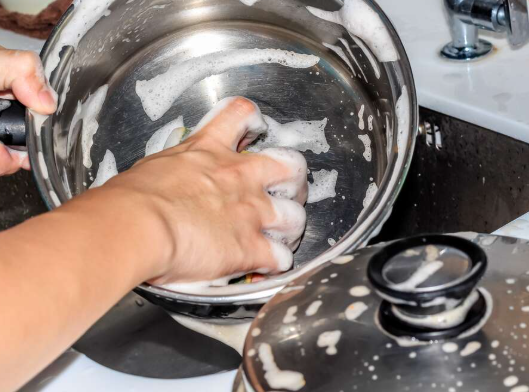
Proper cleaning and maintenance are essential not only for the longevity of your stainless steel cookware but also for ensuring its continued non-stick performance. A clean pan is a happy pan, free of baked-on residues that can act as sticking points in future cooking sessions.
-
Cool Down Gradually: After cooking, resist the urge to plunge a hot stainless steel pan directly into cold water. This can cause thermal shock, potentially warping the pan and making it uneven, which in turn can lead to sticking. Allow the pan to cool down naturally on the stovetop or a heat-safe surface until it’s safe to handle.
-
Soak if Necessary: For stubborn bits of food, a simple soak with hot water and a little dish soap can work wonders. Let it sit for 15-30 minutes, and most residues will lift easily.
-
Avoid Harsh Abrasives (Mostly): For everyday cleaning, a non-abrasive sponge or cloth with dish soap is usually sufficient. For more persistent stuck-on food or discoloration, fine-grade steel wool or specialized stainless steel cleaners can be used carefully. However, avoid overly aggressive scrubbing with highly abrasive pads, as this can scratch the surface, making it more prone to future sticking.
-
The Baking Soda and Vinegar Trick: For truly challenging stuck-on messes, a natural and effective solution is a paste of baking soda and a little water. Apply it to the affected area, let it sit for a few minutes, then scrub gently. For burned-on stains, you can also try simmering a cup of water with a few tablespoons of white vinegar in the pan for 5-10 minutes, then letting it cool and scrubbing. This helps to loosen residues.
-
Remove Discoloration (Blue/Rainbow Stains): Stainless steel can sometimes develop iridescent blue or rainbow-colored stains, often due to high heat. These are harmless but can be removed with a mild acid like white vinegar or lemon juice. Simply wipe the pan with a cloth dampened with vinegar or lemon juice, then rinse and dry.
-
Dry Thoroughly: Always dry your stainless steel cookware completely after washing to prevent water spots and potential mineral buildup.
Conclusion
Mastering the art of cooking with stainless steel without sticking isn’t about magic or specialized coatings; it’s about understanding the fundamental principles of heat, surface interaction, and a few refined techniques. By consistently applying the wisdom of proper preheating through the “water test,” adding oil or butter at the optimal moment, practicing smart cooking habits like not overcrowding the pan, and keenly controlling your cooking temperature, you can unlock the full potential of your stainless steel cookware.
Remember, stainless steel doesn’t require “seasoning” in the traditional sense, but rather a consistent application of heat and fat to create a temporary non-stick barrier. And finally, diligent cleaning and maintenance are crucial to preserve the integrity of your pans and ensuring they continue to perform flawlessly.