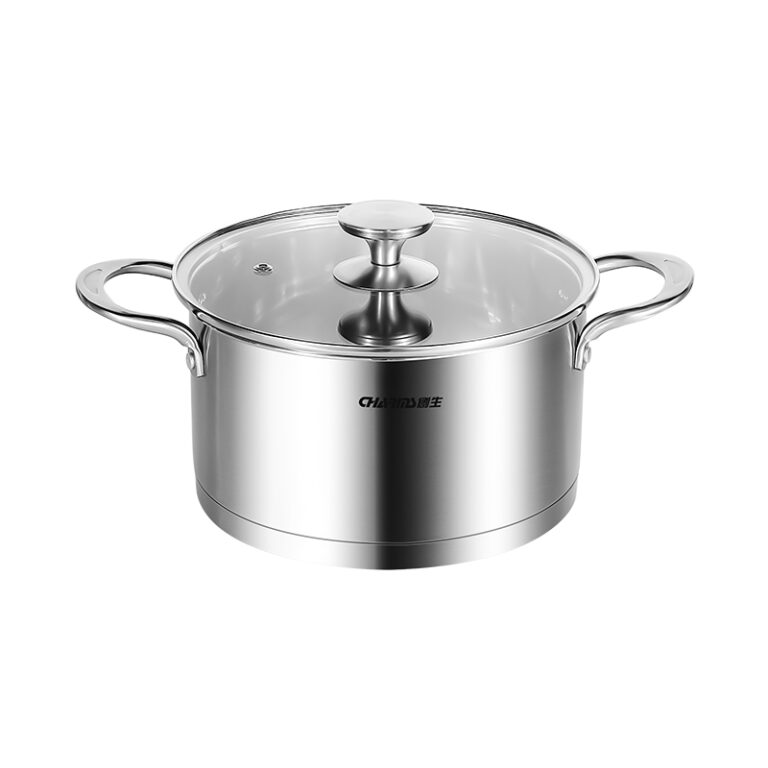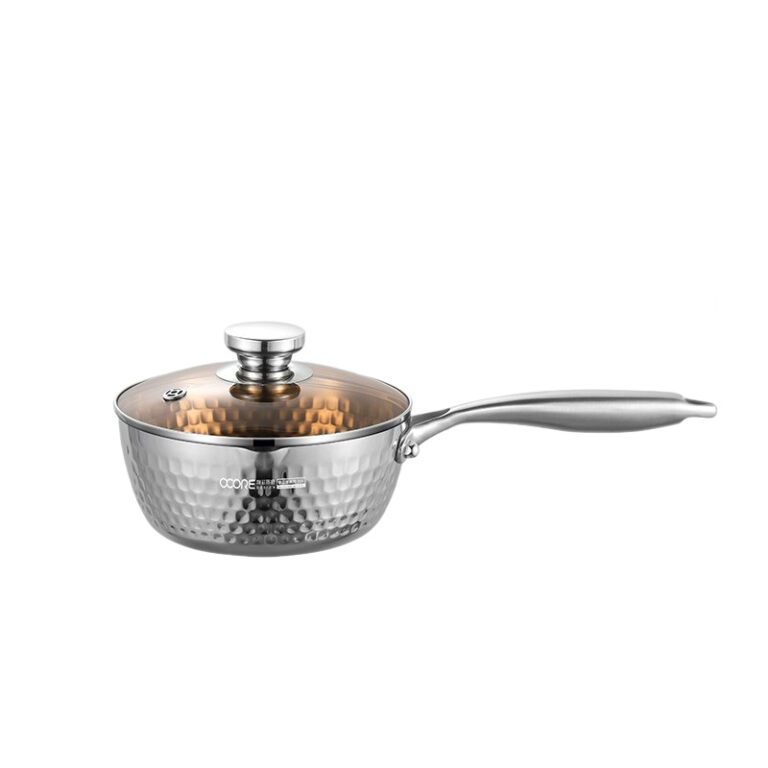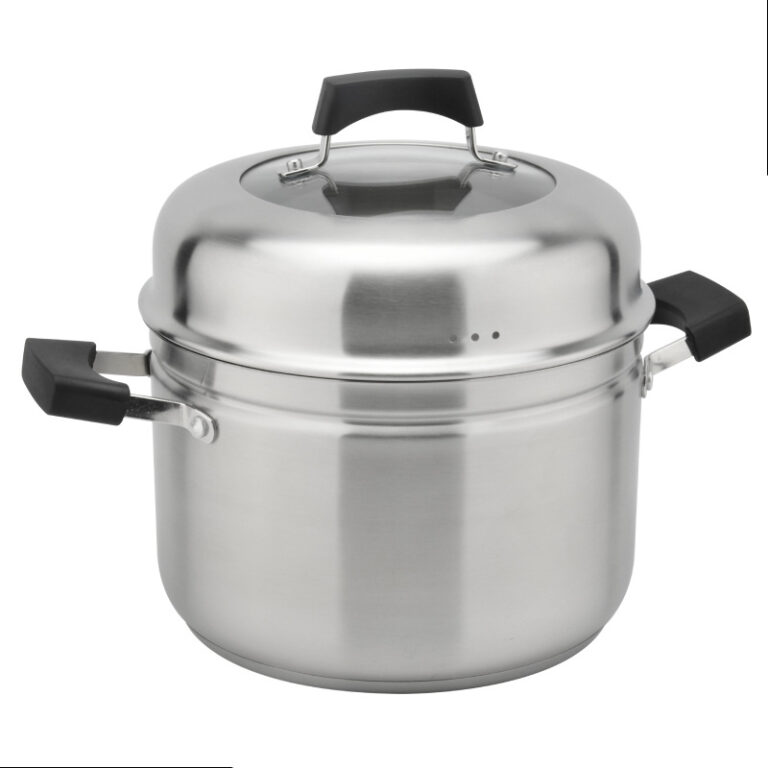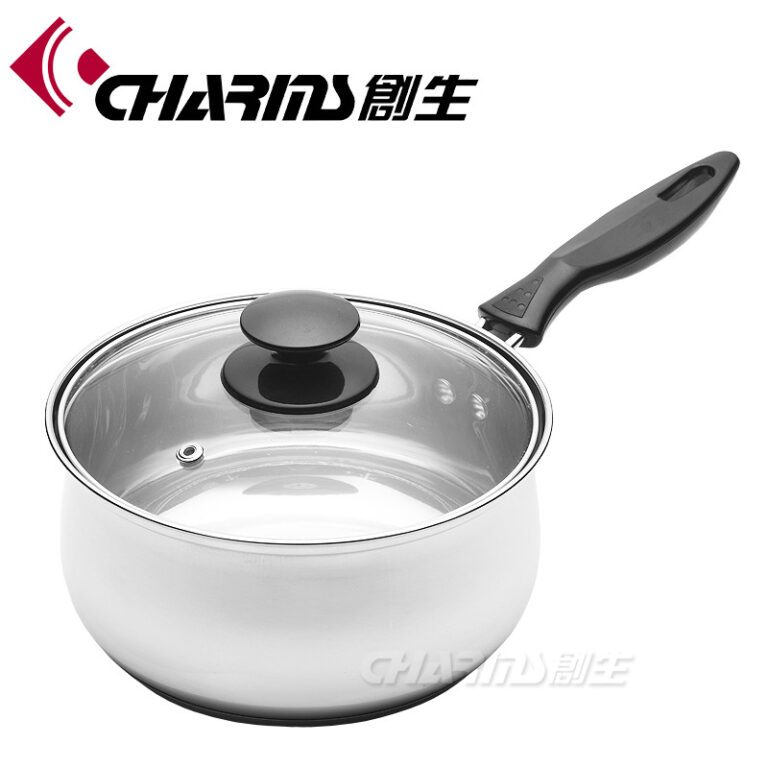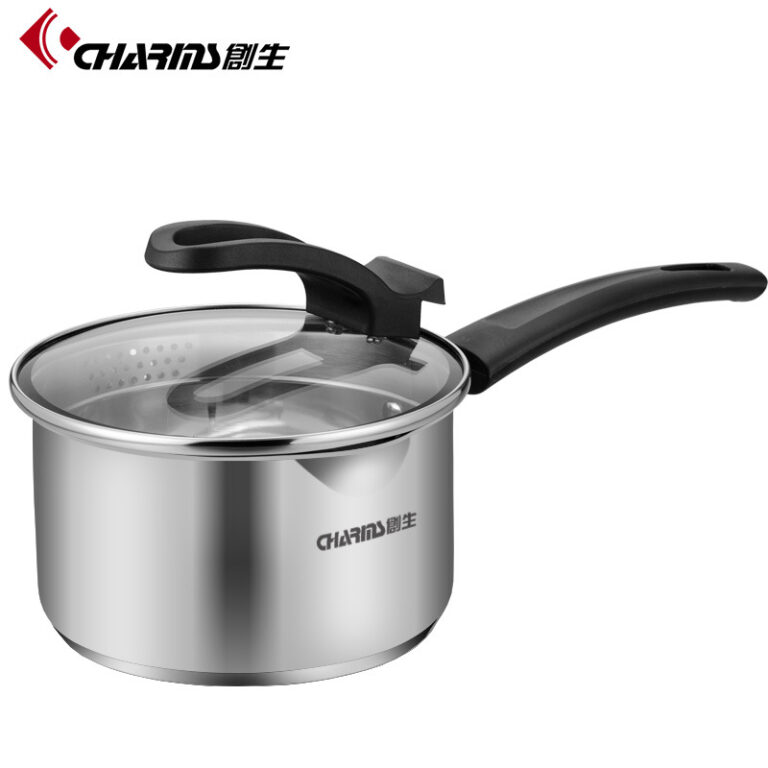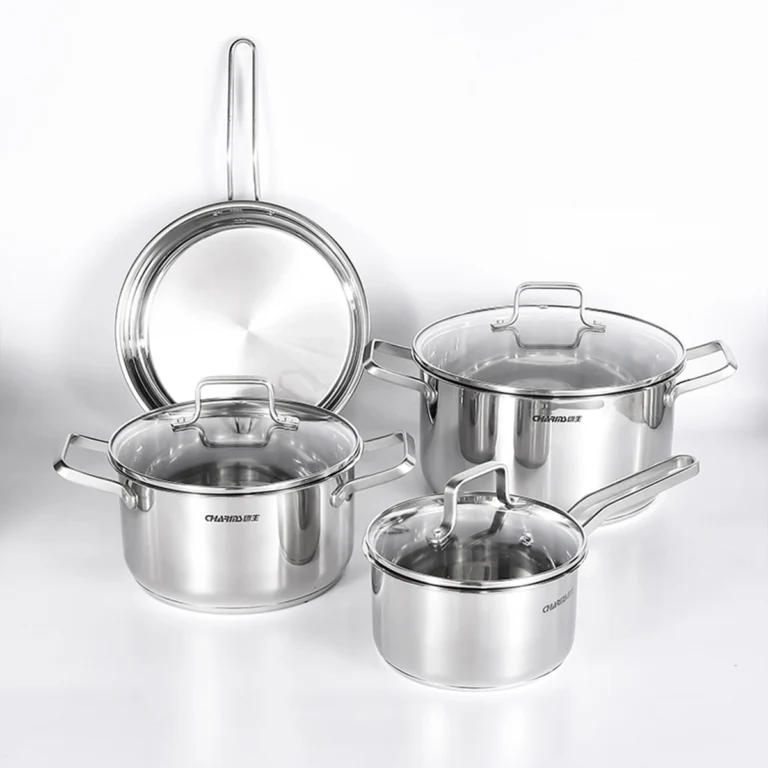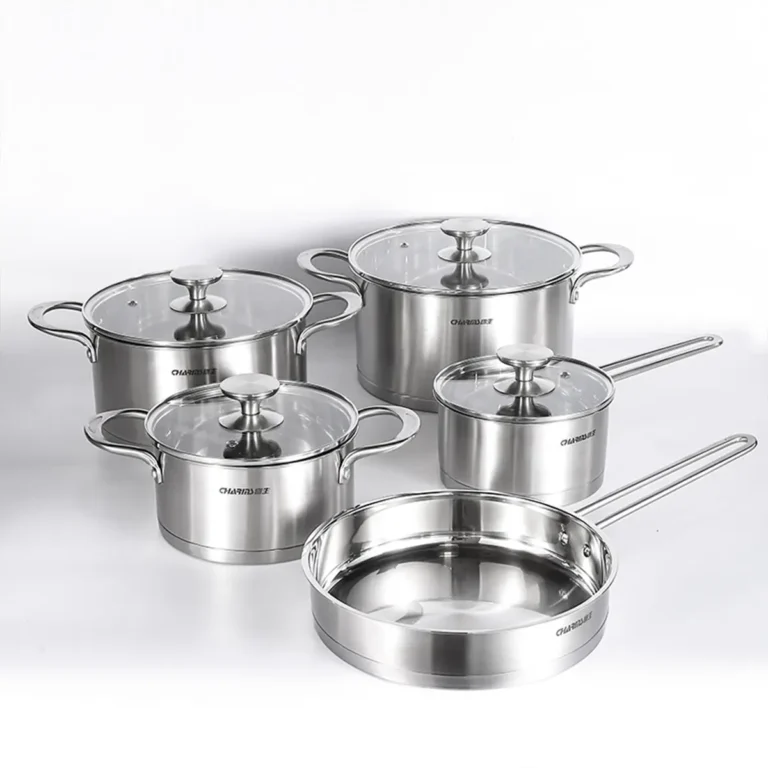

Step into any professional kitchen, from the bustling Michelin-starred restaurants in Paris to the quiet family taverns in Rome, and take a look behind the stove. There, you can almost always see a huge, shiny cylinder quietly bubbling. This is a stock pot.
For many people, this is just a “simple soup pot”. However, for those who often work in the kitchen and need to understand the differences in welding and materials, or the thermal limits of aluminum and stainless steel – the high soup pot is the main force in the kitchen.
If you want to understand this essential device, you must see through its glamorous appearance. You need to understand the “why” behind the design. Why is it so high? Why is the bottom so thick? Why do some handles get hot while others remain cool?
Charm scook, as a manufacturer with many years of experience in stainless steel kitchenware, we have seen too many Pots. Different materials have different thermal conductivity, etc. Today, in this article, we will explore some information about soup pots together.
1. What Is a Stock Pot?
At its simplest level, a stock pot is a generic term for a large, deep pot with a flat bottom. But “large” and “deep” are not just aesthetic choices; they are functional requirements.
A true stock pot is defined by its geometry. Typically, the height of the pot is roughly equal to or greater than its diameter. This specific shape serves a crucial culinary purpose. When you are making stock—extracting gelatin from bones or flavor from vegetables—you need to cover the ingredients with water. However, you also want to limit evaporation.
If you used a wide, shallow pan, the surface area would be too large. The water would evaporate too quickly, leaving your ingredients exposed before the flavors have fully extracted. The tall, narrow sides of a stock pot minimize the surface area relative to the volume. This allows for long, slow simmers that can last for hours, or even days, without the pot running dry.
About Science of Stock Pot
There is also the matter of heat currents. In a tall pot, heat is applied to the bottom. As the liquid at the base warms, it rises. As it reaches the top, it cools slightly and sinks. This creates a natural, circular convection current. This movement gently agitates the ingredients, ensuring an even extraction of flavors without the violent motion of a rolling boil, which can make a stock cloudy.
So, a stock pot is not just a bucket for boiling water. It is a precision tool designed to manage evaporation and control fluid dynamics to create liquid gold.
2.What Are the Common Materials for Making Stock Pots?
You can shape a pot out of almost anything that holds water—clay, copper, iron, or aluminum. But when we talk about modern, high-performance stock pots, the conversation really begins and ends with one material: Stainless Steel.
However, simply saying “Stainless Steel” is not enough. In our industry, that is a vague term. It is like walking into a car dealership and asking for “a vehicle with wheels.” To truly understand quality, we have to look at the metallurgy. The specific grade of steel used dictates the pot’s lifespan, its safety, and ultimately, the flavor of the food it produces.
The Gold Standard: 304 Stainless Steel (18/10 or 18/8)
If you are looking for the “heart” of a premium stock pot, you are looking for 304-grade stainless steel. In the culinary world, we often refer to this by its composition numbers: 18/10 or 18/8.
But what do those numbers actually mean to a cook or a buyer?
- 18% Chromium: This is the shield. Chromium is what makes the steel “stainless.” It reacts with oxygen in the air to form a microscopic, invisible layer of chromium oxide on the surface. This layer repairs itself if scratched and prevents the iron inside from rusting.
- 10% (or 8%) Nickel: This is the secret weapon. Nickel is expensive, but it is vital. It gives the steel its luster and silver-like shine, but more importantly, it dramatically increases corrosion resistance. It transforms the steel’s internal structure (making it “Austenitic”), which makes it incredibly tough and ductile.
Why 304 Matters for Stock Pots Specifically
You might ask, “Why do I need such high-grade steel just to boil water?”
Think about what happens in a stock pot. You are not just boiling water; you are often simmering acidic ingredients—tomatoes, wine, vinegar, or lemon—for 8, 12, or 24 hours.
- The Reactivity Problem: If you were to use a lower quality steel (like 201 grade, which has very little nickel) or raw aluminum, the acid would slowly attack the metal over those long hours. This leaches metallic ions into the food. The result? Your delicate chicken soup ends up tasting like a tin can.
- The 304 Solution: 304 stainless steel is non-reactive. It remains chemically neutral, even when exposed to hot acids for long periods. It respects the ingredients, ensuring that the only thing you taste is the food. For a vessel designed for slow cooking, this is non-negotiable.
3. What Are the Common Types of Soup Pots?
There are also some different types based on different cooking needs. Understanding these types can help you choose the right ingredients or kitchen utensils.
| Pot Type | Primary Features | Best Used For |
| Classic Stock Pot | Tall cylindrical shape, flat bottom, loop handles. | Making bone broth, boiling lobsters, cooking corn on the cob, canning jars. |
| Soup Pot (Stew Pot) | Shorter and wider than a stock pot. Thick base. | Thick stews, chili, curries. The wider mouth allows for easier browning of meat. |
| Pasta Pot (Multi-Cooker) | A stock pot that includes a perforated metal insert (colander). | Boiling pasta. You lift the insert to drain, leaving the hot water in the pot for the next batch. |
| Asparagus Pot | Very tall and narrow. Includes a wire basket. | Steaming asparagus upright. The stalks boil while the delicate tips steam gently. |
| Commercial Stock Pot | Extremely large capacity (20 quarts to 100+ quarts). Simple finish. | Restaurants, hotels, or large-batch community cooking. |
4. How to Choose a Good Stock Pot?
For retailers and brand managers, selecting a stock pot isn’t simply about picking a product off a shelf; it is about vetting the manufacturing process behind it. A sample might look perfect in a showroom, but consistency across a thousand units requires a factory with precise engineering and robust quality control.
When evaluating a manufacturer or assessing a prototype sample, specific technical criteria must be prioritized to ensure the final product meets the demands of the market.
The “Cut Test”: Verifying the Impact Bonded Base
The most critical failure point in any stock pot is the bottom. If the aluminum core is not bonded correctly to the steel body, it will delaminate (separate) after repeated heating cycles.
- The Procedure: Professional buyers often request a “cut sample”—a pot sliced vertically through the center.
- What to Look For: Inspect the cross-section of the base. In a high-quality “impact bonded” base, the aluminum layer should look like it has been liquefied and forced into the microscopic texture of the steel. There should be zero visible gaps or air pockets.
- The Risk: Even a microscopic air gap acts as an insulator. This causes the bottom to overheat in specific spots, leading to warping or the base eventually falling off. A manufacturer utilizing high-tonnage friction presses (1600 tons or higher) will produce a seamless, gap-free bond.
Material Verification: The Acid Test
Visually, 201-grade stainless steel (cheap, prone to rust) looks identical to 304-grade (premium, rust-resistant). A factory could potentially swap materials to cut costs.
- The Solution: Do not rely on trust alone. Use a generic manganese detection liquid or a handheld XRF analyzer on the sample.
- The Standard: The testing liquid should not turn red (indicating high manganese/low nickel). For a premium product, the chemical composition must be verified as containing 8-10% nickel. This ensures the pot will survive the “salt spray test” and years of domestic use without pitting.
Surface Finishing and Polishing consistency
Polishing is labor-intensive, and it is often where costs are cut. However, the finish is not just cosmetic; it affects corrosion resistance.
- Automated vs. Manual: Inquire about the factory’s polishing lines. Automated polishing lines are preferred over manual labor because they apply consistent pressure.
- The Inspection: Examine the reflection on the exterior. It should be uniform without “orange peel” textures or wavy distortions. On the interior, a “satin” or “brushed” finish is often preferred as it hides whisk marks from cooking, but the grain direction must be uniform. Check the area around the handle rivets—this is a common “dead zone” where polishing machines often miss, leaving rough, dull patches.
Handle Load and Thermal Testing
A stock pot is unique because of its weight. A 20-quart pot filled with liquid weighs over 40 pounds. The mechanical attachment of the handles is a safety-critical feature.
- Load Testing: Manufacturers should provide data on static load testing. A quality standard involves loading the pot with 1.5x its maximum capacity weight and suspending it by the handles for a set period (e.g., 2 hours) to ensure no deformation occurs.
- Thermal Breaks: If the handles are stainless steel, examine the design geometry. A “hollow cast” handle or a handle connected by a forked flange minimizes heat transfer from the pot body to the user’s hand. Solid metal bars attached directly to the pot will become dangerously hot too quickly.
Lid Fit and Rim Geometry
The interface between the pot and the lid indicates the precision of the metal stamping tooling.
- The Wiggle Test: Place the lid on the pot and attempt to slide it side-to-side. Excessive movement indicates loose tolerances in the tooling.
- The Pouring Rim: Inspect the edge of the pot. A “rolled” or flared rim adds structural rigidity to the top of the pot (preventing it from becoming an oval shape if dropped) and allows for dripless pouring.
5. How to Maintain Your Stock Pot?
This is a question that many people are more concerned about, when I buy a pot, how can I use it longer? We are a professional manufacturer, and we have written our experience below
Phase 1: Preparation and First Use
Before a stock pot cooks its first meal, it requires a specific cleaning procedure to remove manufacturing residues.
- The Problem: New pots often retain microscopic traces of polishing compounds, machine oils, and metal dust from the factory floor. If these are not removed, heating the pot will “bake” these oils onto the steel, creating permanent yellow or brown stains.
- The Procedure: Fill the pot with a mixture of hot water, mild dish soap, and a cup of white vinegar. Scrub the interior thoroughly with a soft sponge, rinse, and dry immediately. The vinegar helps cut through the industrial oils that soap alone might miss.
Phase 2: Proper Cooking Techniques (Prevention)
Damage to a stock pot rarely happens during cleaning; it happens during cooking.
1. The Salt Protocol (Preventing Pitting)
Pitting corrosion is the most common issue in stainless steel cookware. It appears as tiny, pin-prick holes in the bottom of the pot.
- The Cause: Adding salt to cold water. Undissolved salt crystals sink to the bottom and form a highly concentrated chloride solution. This solution aggressively attacks the passive chromium layer of the steel.
- The Solution: Salt should only be added after the water has reached a rolling boil. The agitation of the boiling water dissolves the crystals instantly, preventing them from settling on the steel surface.
2. Managing Heat and Expansion
- Pre-heating: Stainless steel expands when heated. A high-quality stock pot with an impact-bonded base (aluminum sandwich) is designed to handle this. However, heating an empty pot on high heat for an extended period can cause the metals to expand at different rates, potentially leading to base separation (delamination) or warping.
- The Solution: Always have liquid or oil in the pot before turning on high heat.
Phase 3: Routine Cleaning and Maintenance
1. Avoiding Thermal Shock
Never take a piping hot stock pot and plunge it into cold water or fill it with ice water.
- The Physics: The rapid temperature drop causes the metal to contract violently. This can warp the base permanently. Once a pot is warped, it will no longer sit flat on glass-top or induction stoves, rendering it unstable and inefficient.
- The Step: Allow the pot to cool naturally on the stove or a trivet until it is warm to the touch before washing.
2. The Tool Selection
To preserve the mirror-polished finish, abrasive tools must be avoided.
- Prohibited: Steel wool, copper scrubbers, and harsh scouring powders. These create micro-scratches that dull the shine and can actually make food stick more in the future.
- Recommended: Nylon scrubbing pads, soft sponges, and liquid detergents.
Phase 4: Troubleshooting Common Issues
Over time, even a well-maintained pot will show signs of use. Here is how to restore it.
1. Removing “Heat Tint” (The Rainbow Effect)
Users often report a rainbow-colored discoloration on the interior floor of the pot.
- The Cause: This is not a defect. It is a thickening of the chromium oxide layer caused by high heat or minerals in the water.
- The Fix: The condition is cosmetic and harmless. To remove it, wipe the inside with a little diluted white vinegar or lemon juice. The acid dissolves the mineral layer instantly, restoring the silver shine.
2. Dealing with Stuck-on or Burnt Food
If a thick stew or sauce burns onto the bottom, mechanical scraping is not the answer.
- The Deglazing Method: Add a small amount of water and dish soap to the pot. Place it back on the stove and bring it to a gentle simmer for 10-15 minutes. The heat and moisture will break the bond between the carbonized food and the steel. The burnt layer should then lift off easily with a wooden spoon or soft spatula.
3. Removing Mineral Deposits (White Spots)
In areas with hard water, white calcium spots (limescale) may form on the interior.
- The Fix: Boil a solution of 1 part vinegar to 3 parts water in the pot for 15 minutes. Allow it to cool, then wash as normal.
Phase 5: Storage
Finally, how the pot is stored affects its lifespan. If stacking pots to save space, friction between the metal base of one pot and the polished interior of another causes scratching.
6.Chinese Stock Pot Manufacturers
The landscape of global manufacturing has shifted. China, specifically the Guangdong region, is now the epicenter for premium cookware production, blending scale with high-tech precision.
Charms cook
- Scale & Capacity: With a 40,000㎡ facility and over 300 production lines, Charms delivers an annual output of 10,000 tons. This scale ensures stability for global buyers.
- Advanced Technology: Unlike older factories, Charms utilizes Korean high-frequency brazing technology. This ensures the “impact bonded” base is fused at a molecular level, virtually eliminating the risk of bottom separation.
- Certified Trust: As a strategic OEM partner for giants like SUPOR, Charms operates with ISO 9001 and ISO 14001 certifications.
- Innovation: It isn’t just about copying; it’s about creating. With 30+ R&D engineers, the company develops patented energy-saving designs and ergonomic solutions for ODM clients.
If you are looking for the right manufacturer for your upcoming project, please feel free to contact us. We work closely with partners who value continuous quality, reliable production and clear communication.
7.Conclusion
Whether it’s a home kitchen or a professional restaurant, choosing a good stock pot is not something that can be decided casually. From materials, structure, craftsmanship to daily maintenance, every step affects how long it can accompany you in the future and how stably it will perform. Understanding these seemingly “hidden” details is actually an upgrade for your kitchen.
I hope this article can give you more confidence when choosing and using a soup pot. If you are looking for a reliable cookware manufacturer, you are also welcome to communicate with us at any time and bring better products to the market together.
Thank you for your reading!