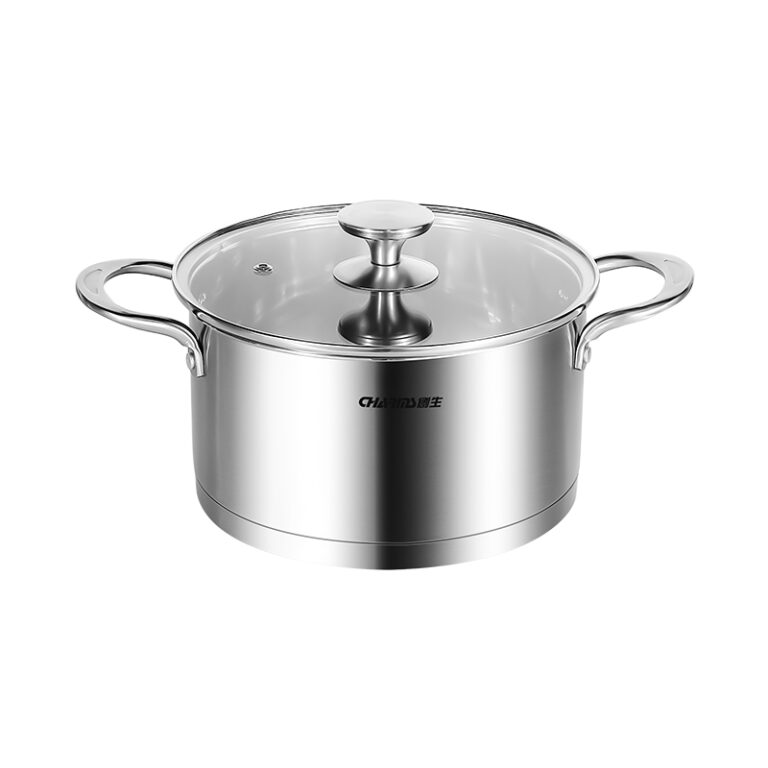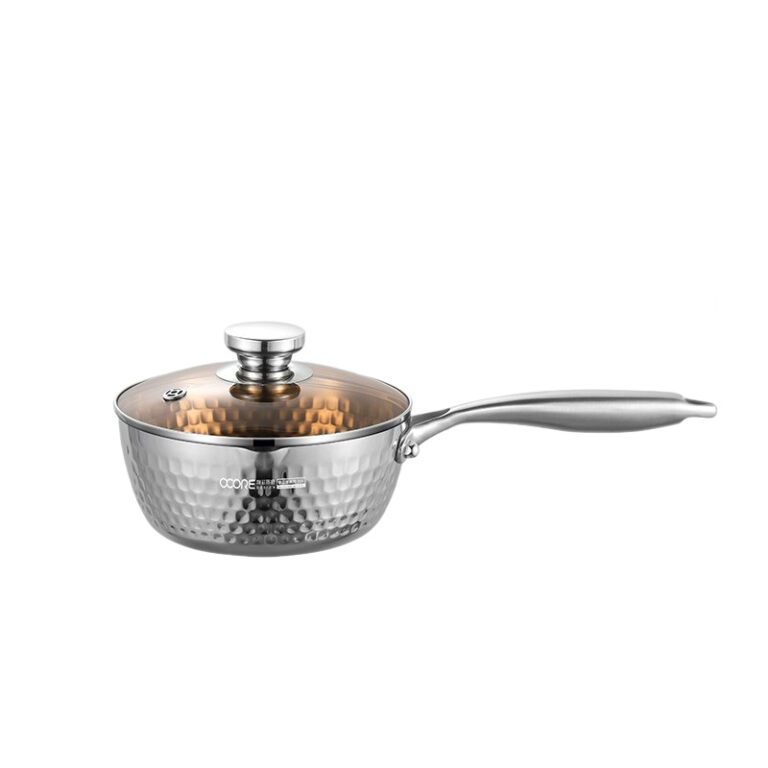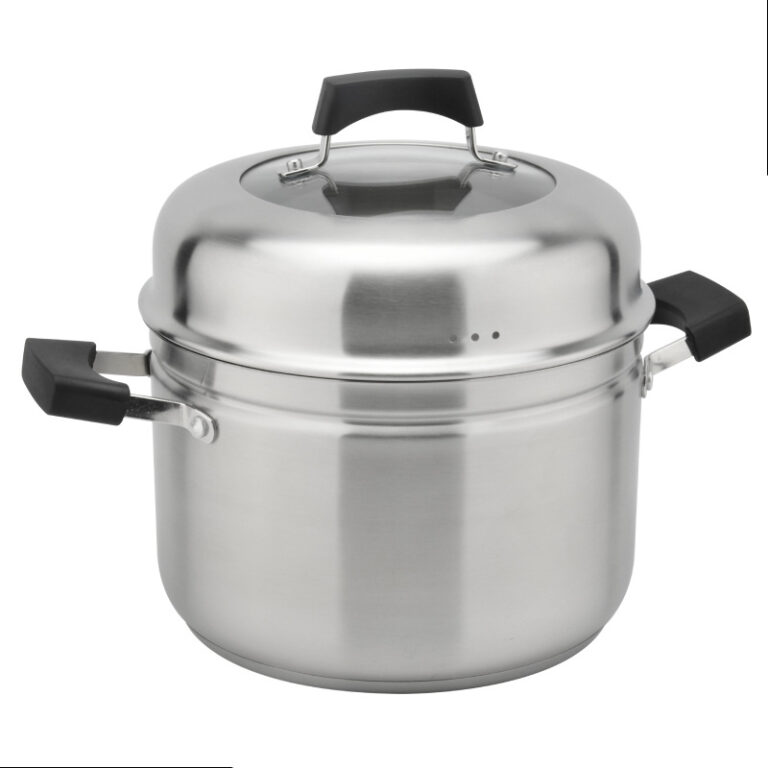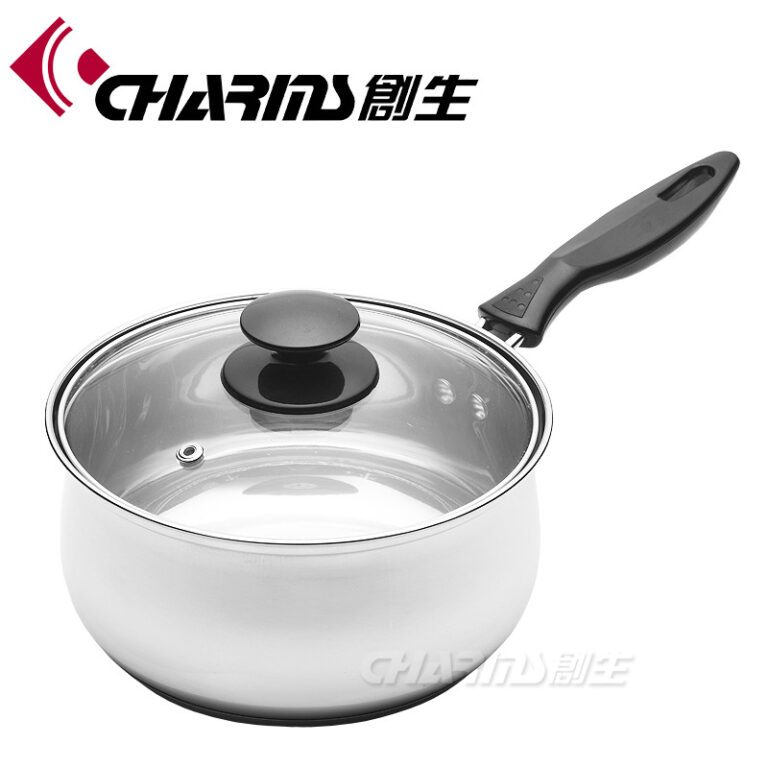

You might think that finding a good non-stick pan is very simple. But once you have actually used a few of them, you will find that it is not the case. Some pans perform well at first, being easy to fry eggs and convenient to clean. However, after a few weeks, they start to stick, heat unevenly, and even the coating peels off, making people more and more disappointed with each use. So, the real question emerges: What kind of non-stick pan can be considered good? Why can some POTS be used stably for many years, while others can only last for a few months?
Having been deeply involved in the stainless steel cookware industry for over three decades, CharmS Cook has a very profound understanding of the structure, material evolution and practical durability of non-stick pans. Having dealt with different markets and cooking habits for a long time, we have witnessed the advantages and disadvantages of various non-stick pans and also seen the growth of 304 stainless steel in professional-grade non-stick pans. For this reason, we are even more aware that choosing a reliable non-stick pan is never as simple as “looking at the price” or “looking at the coating name”, but rather truly understanding the technical logic behind it.
In this article, I will take you to learn more about non-stick pans and teach you how to choose a good non-stick pan. Let’s get started!
1.What is a non-stick pan?
A non-stick pan is a frying pan designed so food releases easily from the cooking surface without sticking, even when you use very little oil. It achieves this through a special surface treatment — usually a coating or a textured stainless-steel pattern — that reduces friction and prevents food from bonding to the metal.
Here’s the idea in simple terms:
Low-friction cooking surface
The cooking surface is engineered so eggs, fish, pancakes, and other delicate foods slide off smoothly. This can be done with:
- PTFE coatings (commonly known as Teflon-style coatings)
- Ceramic coatings
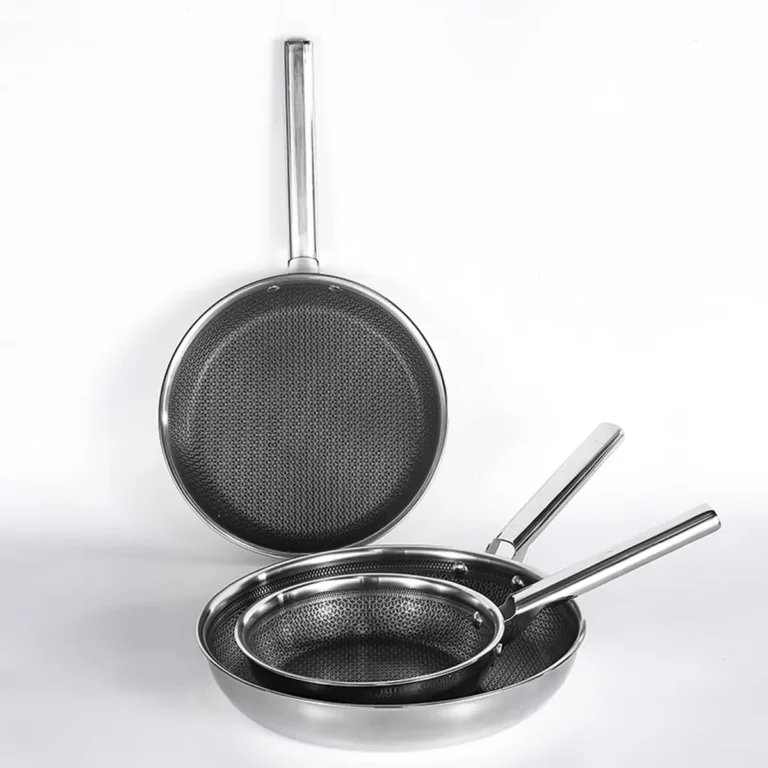
- Textured stainless steel + thin non-stick layer (like honeycomb or etched patterns)
Easier cooking
Because the surface doesn’t grab onto food, you can:
- Cook with less oil
- Flip delicate ingredients more easily
- Achieve cleaner browning without tearing
- Reduce burnt residues on the pan
Easier cleaning
Non-stick surfaces prevent food from building up and burning, so cleanup usually takes just a quick wipe with soapy water. This is especially important when the pan is used many times a day.
Heat guidelines
Non-stick coatings are designed for low to medium heat. Excessive heat can shorten their life. Hybrid stainless + coating designs can tolerate higher temperatures than soft coatings, but all non-stick systems have a recommended upper limit.
Different technologies, different performance
Not all non-stick pans perform the same. Some are extremely slippery but less durable. Others (like hybrid stainless steel non-stick) may not feel as “buttery smooth” at first but last much longer and tolerate harsher use.
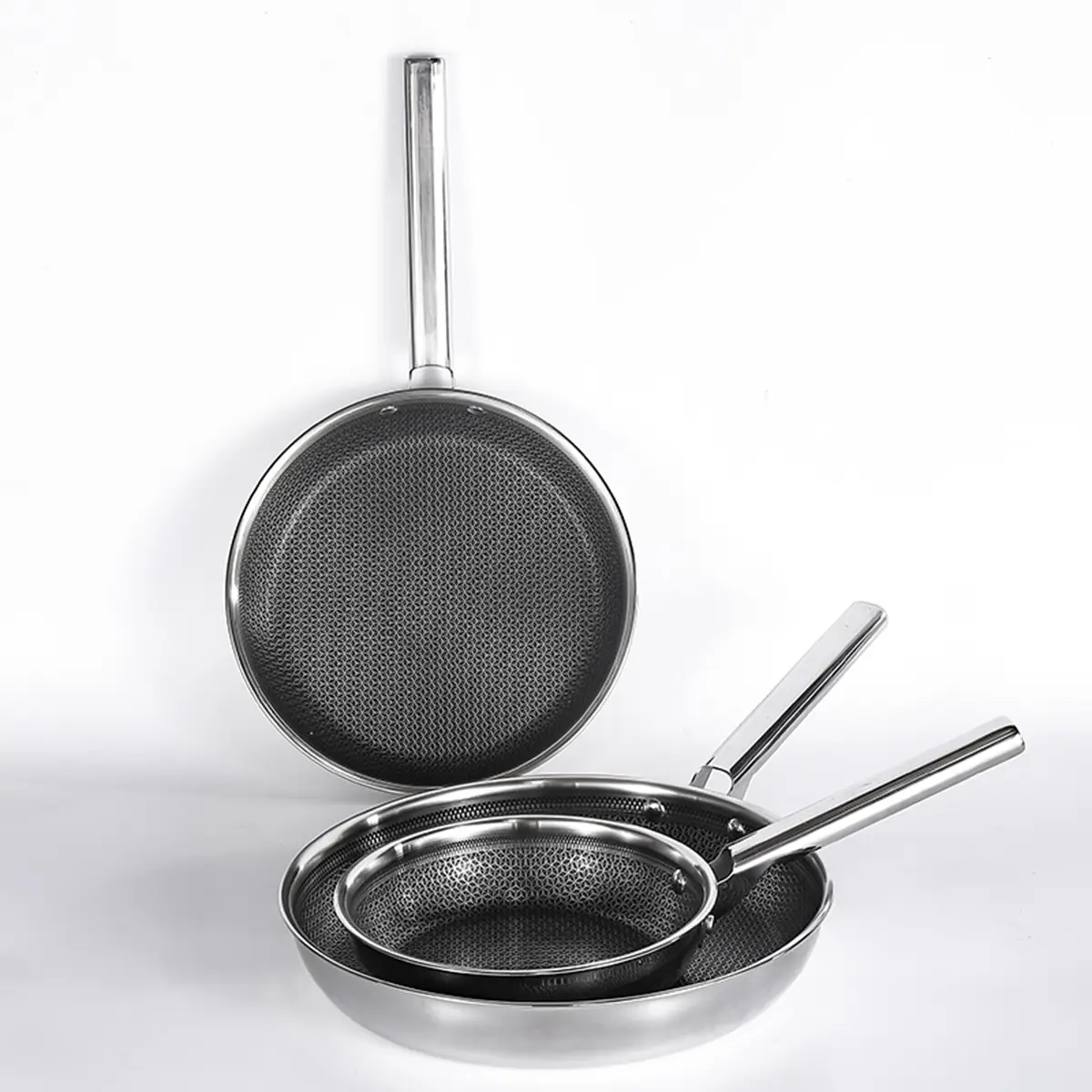
2.What Makes a Good Non-Stick Frying Pan?
A good non-stick frying pan should feel easy to use from the moment you pick it up—and stay that way. It’s not just about how smooth the surface looks on day one. A truly reliable pan needs to cook evenly, stay durable, and handle everyday use without losing its non-stick performance. Here’s what matters most:
A Long-Lasting Non-Stick Surface
The coating should stay smooth after many uses, not just the first few. It needs to resist scratches and hold up through regular cooking and cleaning.
Even, Steady Heating
A good pan heats evenly across the whole surface. This helps food cook better and also keeps the coating from wearing out too quickly.
Strong Coating Adhesion
The way the coating bonds to the metal is important. When the adhesion is done well, the surface won’t peel or bubble early.
Safe, Stable Materials
A reliable non-stick pan stays safe under normal cooking temperatures and uses materials that don’t react with your food.
5Comfortable to Hold and Use
A sturdy base, balanced weight, and a handle that feels good in your hand make a big difference during daily cooking.
Works on Different Cooktops
A good non-stick pan should fit into your kitchen easily—whether you use gas, electric, ceramic, or induction.
3.Common Non-Stick Frying Pan Materials: A Complete Comparison
Not all non-stick materials are built the same. Each has its strengths, limitations, and ideal use cases. Here is a clear comparison to help you quickly understand the differences.
| Material | Heat Conductivity | Durability | Safety | Maintenance | Price Level | Best For |
|---|---|---|---|---|---|---|
| Aluminum (Non-Stainless) | Very good | Low–Medium | Medium | Easy | Low | Lightweight daily cooking |
| Hard-Anodized Aluminum | Excellent | Medium–High | High | Easy | Medium | Home chefs wanting smoother heating |
| Ceramic-Coated | Good at first | Low | High | Moderate | Medium | Low-oil cooking, short-term use |
| PTFE (Teflon-Type) Coating | Very good | Medium | High (normal temps) | Easy | Low–Medium | Everyday frying and sautéing |
| 304 Stainless Steel with Non-Stick Coating | Good + very stable | Very High | Very High | Easy | Medium–High | Professional environments, durability seekers |
| Titanium-Reinforced Coating on Stainless Steel | Excellent | Very High | Very High | Easy | High | Heavy-duty, long-term performance |
| Cast Iron with Seasoned “Natural Non-Stick” | Medium | Extremely High | Very High | High | Medium–High | High-heat searing, long-term users |
4.Why Choose a 304 Stainless Steel Non-Stick Frying Pan?
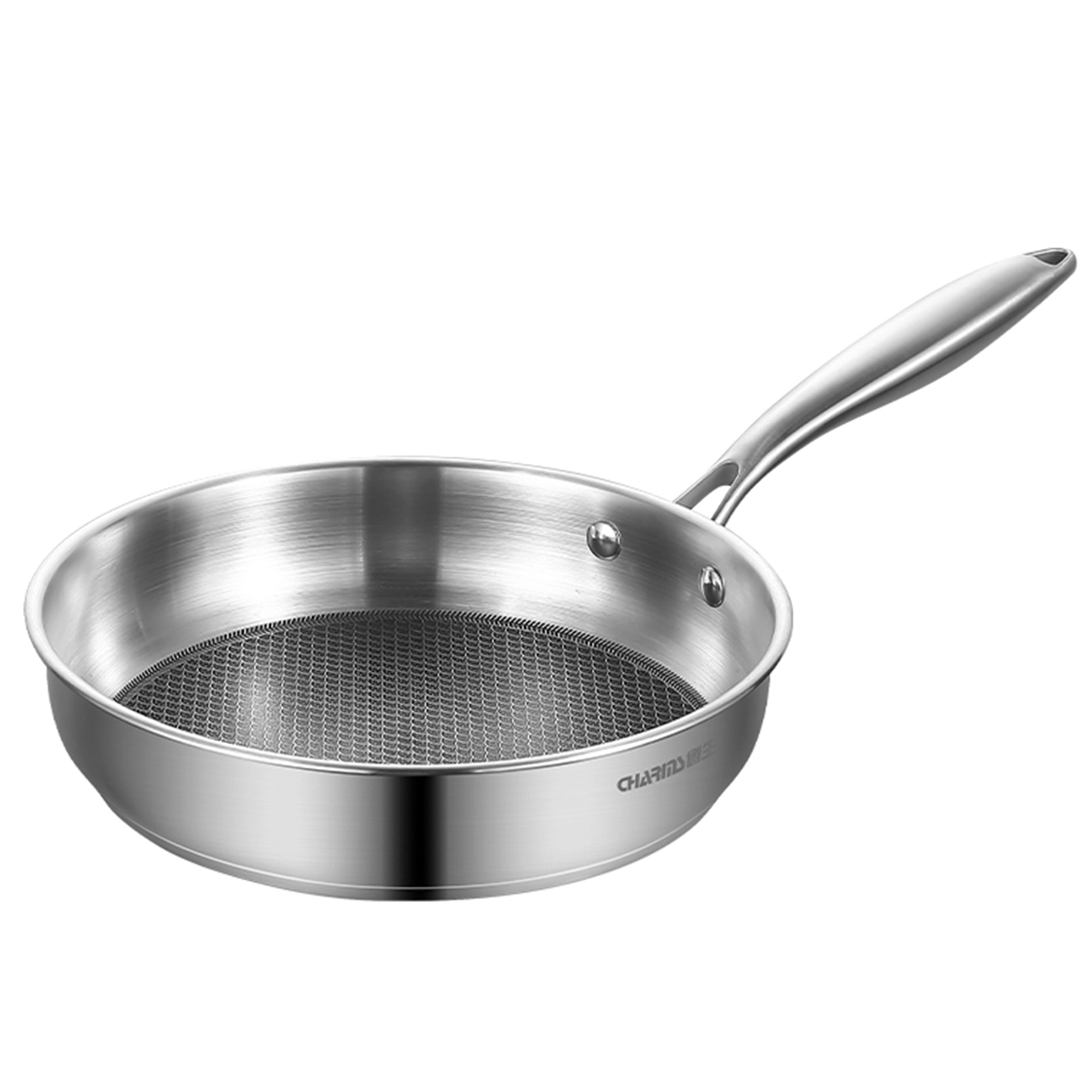
Stainless steel POTS are not only beautiful and attractive but also highly durable. This material has excellent anti-rust performance and can maintain stable performance even when cooking acidic ingredients, ensuring that your frying pan remains safe and clean after years of use. Unlike softer metals, 304 stainless steel can maintain its shape at high temperatures, form a stable base, protect the non-stick coating and extend its service life.
The surface of 304 stainless steel provides a solid foundation for modern non-stick coatings, reducing the risk of peeling or bubbling over time. It does not react with other substances and meets strict food contact standards, thus not altering the flavor or quality of the ingredients. In addition, it is suitable for all stoves, including gas stoves, induction cookers, ceramic stoves and electric ceramic stoves, making it perfectly compatible with any kitchen configuration. Therefore, investing in a 304 stainless steel non-stick pan means choosing a durable, safe and long-lasting product that always maintains good performance. In the long run, it saves both time and replacement costs.
5.How to choose the best non-stick frying pan for your needs?
For professional purchasers or those concerned about long-term performance, choosing the right non-stick pan is more like evaluating a “tool” rather than just a pot. The thinking point could be more practical: What kind of cooking tasks do you need it to undertake? Is it high-frequency production, continuous high temperature, or mainly medium and low-temperature cooking? If the application scenarios are mostly eggs, fish or other ingredients that need to be smoothly separated, then the coating performance that is stable, easy to clean and has uniform heat conduction will be the primary factor. However, if the demands are mainly focused on high-temperature frying, long-term use, and strong wear resistance, materials with stable structures, high-temperature resistance, and low deformation should be given priority, such as 304 stainless steel composite pot bodies or hard anodized aluminum structures.
In addition, whether the pot body is compatible with different heating devices, whether the coating meets relevant safety standards, whether the handle installation is stable, whether the weight of the pot body is suitable for long-term operation, and whether the cleaning method conforms to the work process, all these directly affect the overall usage efficiency and cost. Finally, what you need to measure is whether this pot can maintain stable quality over long-term use, whether it can reduce maintenance costs, lower wear and tear, and bring consistent and controllable cooking performance in actual operation. Only when all these key conditions match the usage scenarios can one truly select a reliable, efficient and high-quality non-stick pan suitable for continuous investment.
6.Conclusion
Choosing the right non-stick frying pan is not just about picking a smooth surface or a well-known coating – it’s more about understanding the product’s materials, structure and actual performance. High-quality POTS, especially those made of 304 stainless steel and reliable non-stick coatings, offer durability, uniform heating, safety and long-term stability. They are a practical investment for professional kitchens or those who value stable cooking results.
By carefully considering your cooking style, frequency, heat requirements and maintenance needs, you can choose a pot that not only performs well from day one but also remains efficient and reliable after years of use. Ultimately, the best non-stick pan should combine performance, durability and ease of use – allowing you to be confident, efficient and at ease with every meal.
If you are looking for a manufacturer, please contact us!