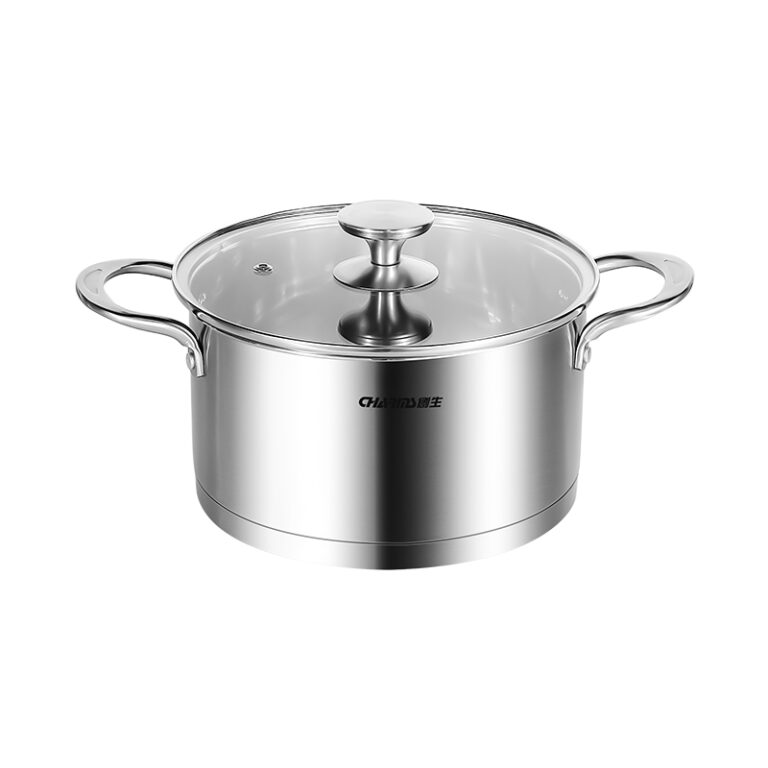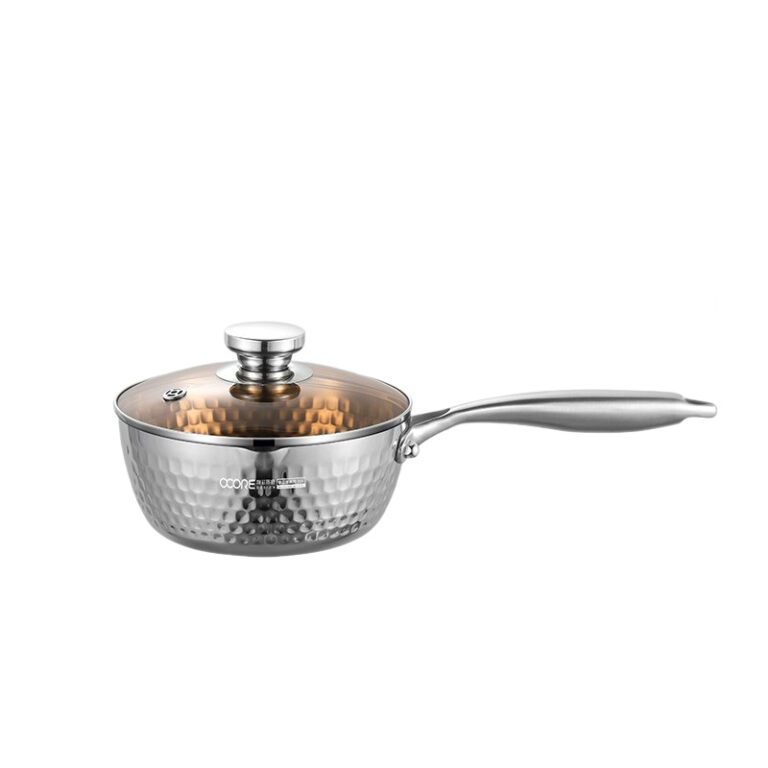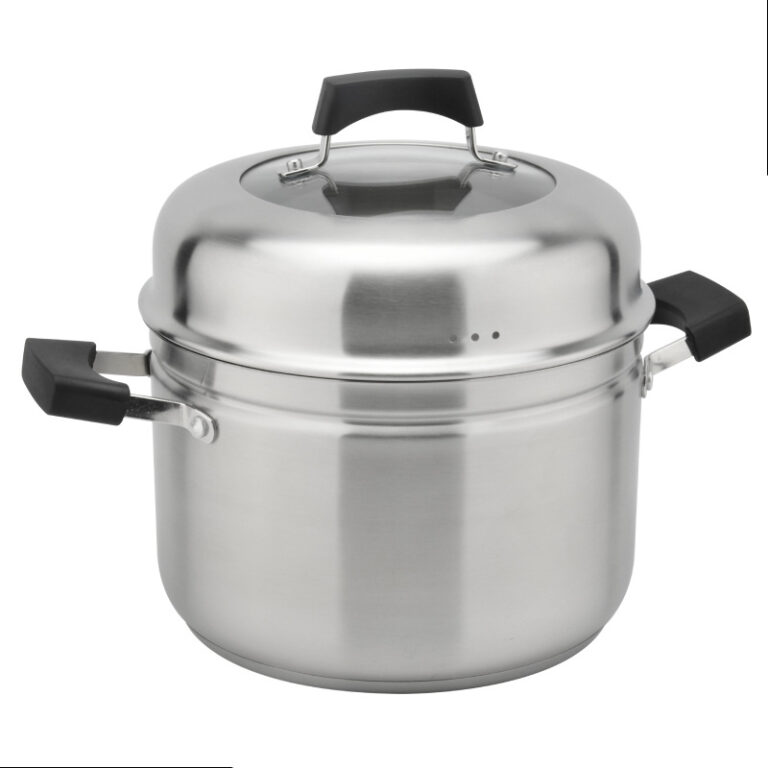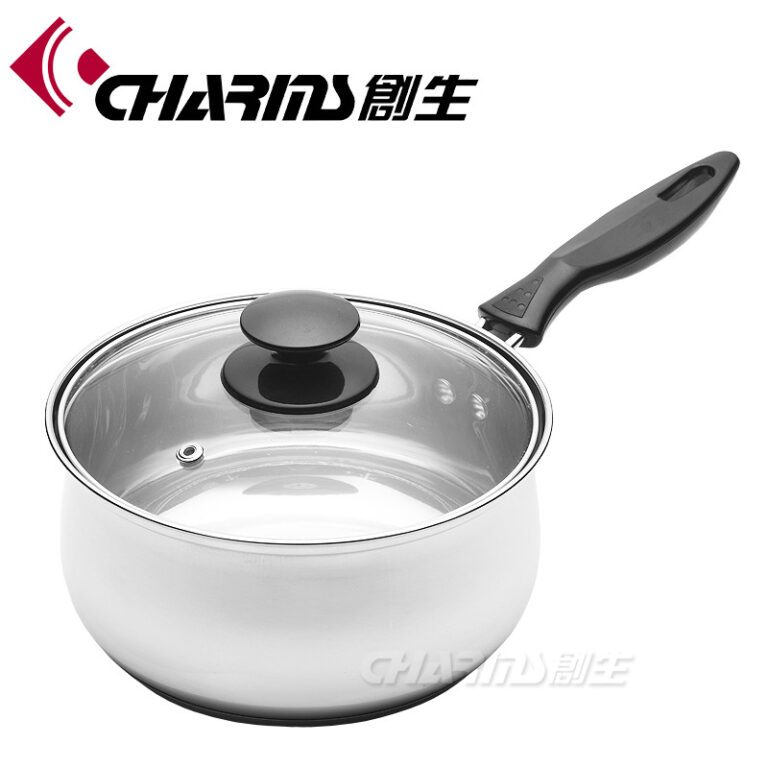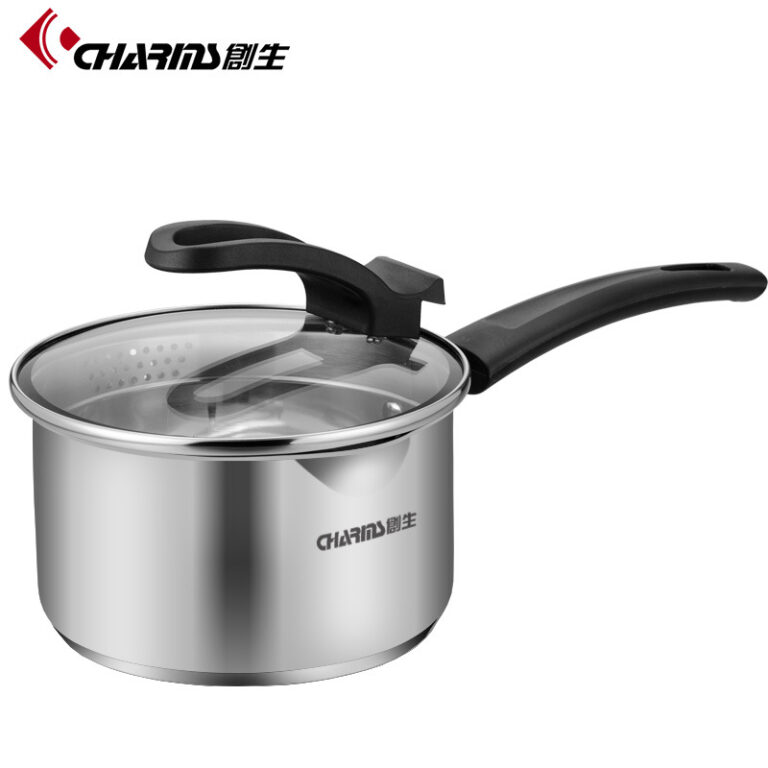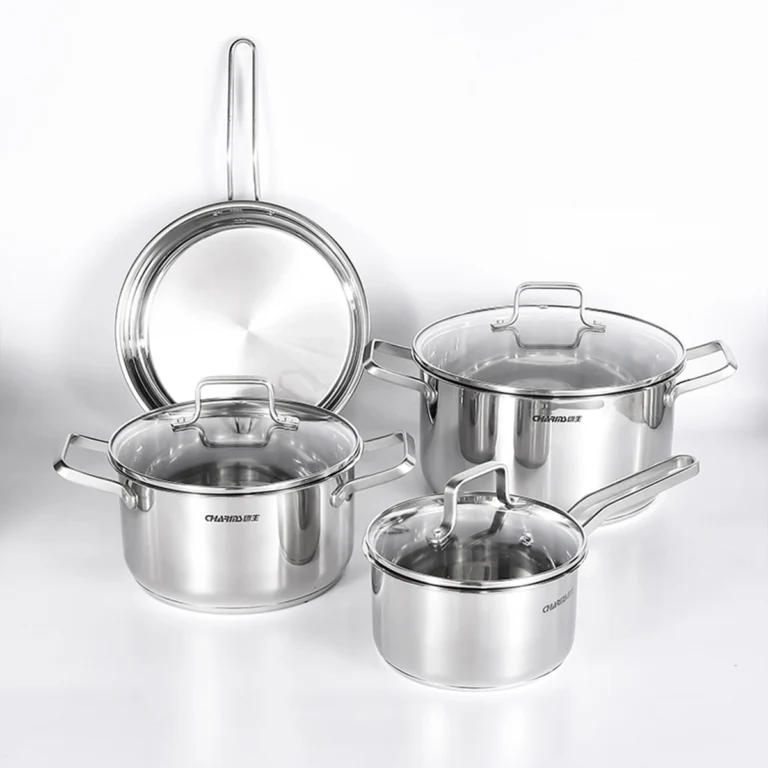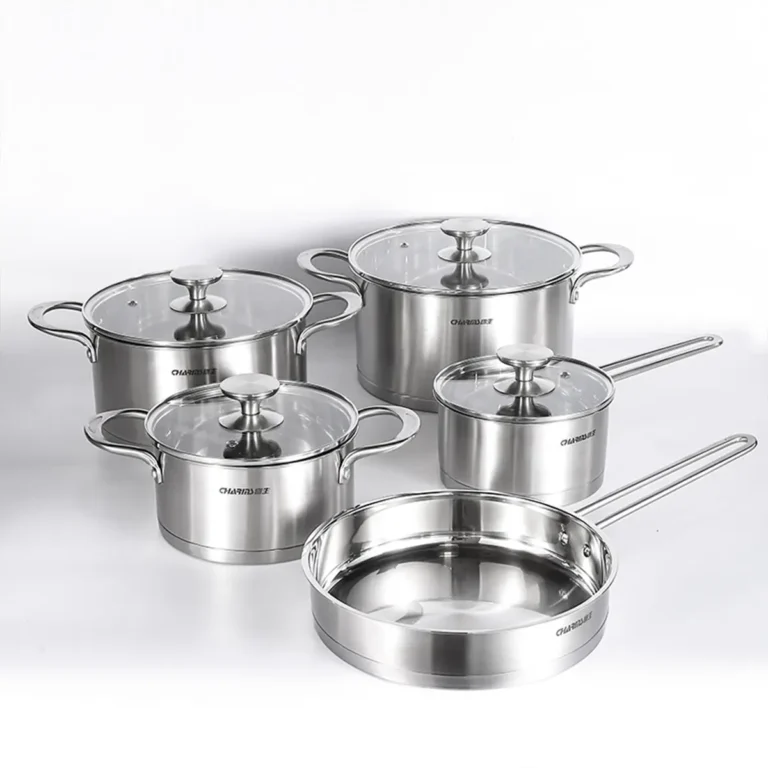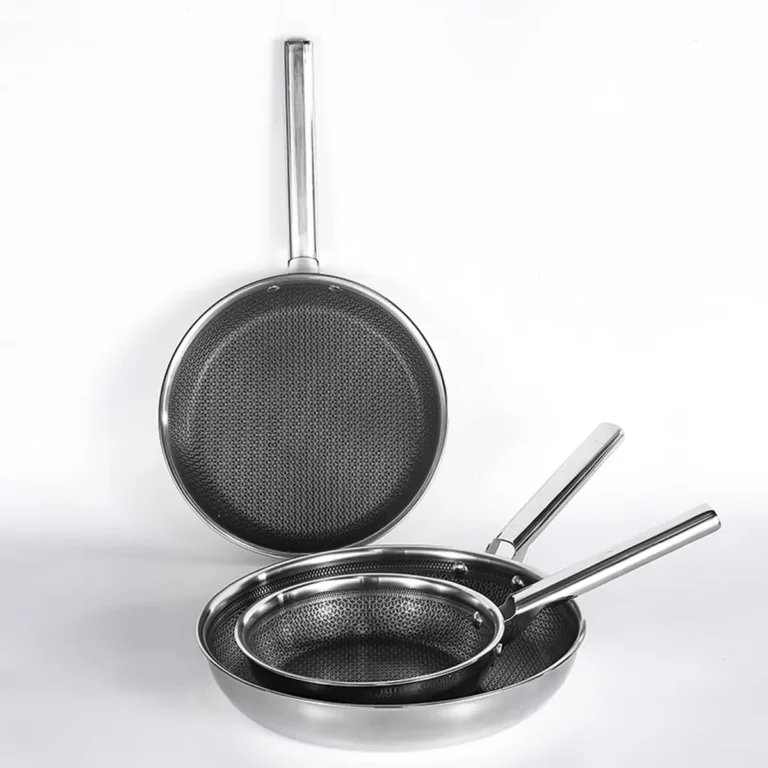

Are you wondering if the pots made of 304 stainless steel and 316 stainless steel are the same? Many people, when they first encounter stainless steel frying pans, get confused by these two numbers. At first glance, they both seem to be food-grade stainless steel, can be used to make pots, and are quite common. But after a deeper understanding, you will find that this is not a “random choice” issue.
Charms Cook is a Chinese cookware manufacturer with over 30 years of experience. We specialize in high-end stainless steel cookware, integrating innovative technologies and superior craftsmanship to offer durable, elegant, and environmentally friendly kitchen solutions.
What Is a 304 Stainless Steel Wok?
304 stainless steel is currently the most widely used material for stainless steel cookware. It is mainly composed of iron, chromium, and nickel, with a high chromium content. This is the main reason why it is not prone to rust. In practical use, 304 stainless steel performs very stably. It can withstand high-temperature cooking and does not react with food easily. It is highly suitable for daily Chinese cooking scenarios, such as stir-frying, frying, and boiling. From a manufacturing perspective, 304 stainless steel performs well in processes such as forming, stretching, and polishing, with high stability. This is also the main reason why it is widely used.
5 Major Advantages of 304 Stainless Steel Woks
- Excellent corrosion resistance, meeting daily usage requirements: In a normal kitchen environment, 304 stainless steel is not prone to rust and can effectively handle moisture, grease, and common seasonings.
- High-temperature resistant, not prone to deformation: During intense high-temperature cooking, the structure of the pot remains stable and is not likely to deform due to temperature differences.
- Has little impact on food, and offers a purer taste: It does not react significantly with the ingredients, thus preserving the original flavor of the food.
- Processed to perfection, with stable quality: Whether it’s the shape of the pot body or the surface treatment, achieving consistency becomes much easier.
- High cost-effectiveness and wide applicability: Achieved a good balance between performance and cost, suitable for most usage scenarios.
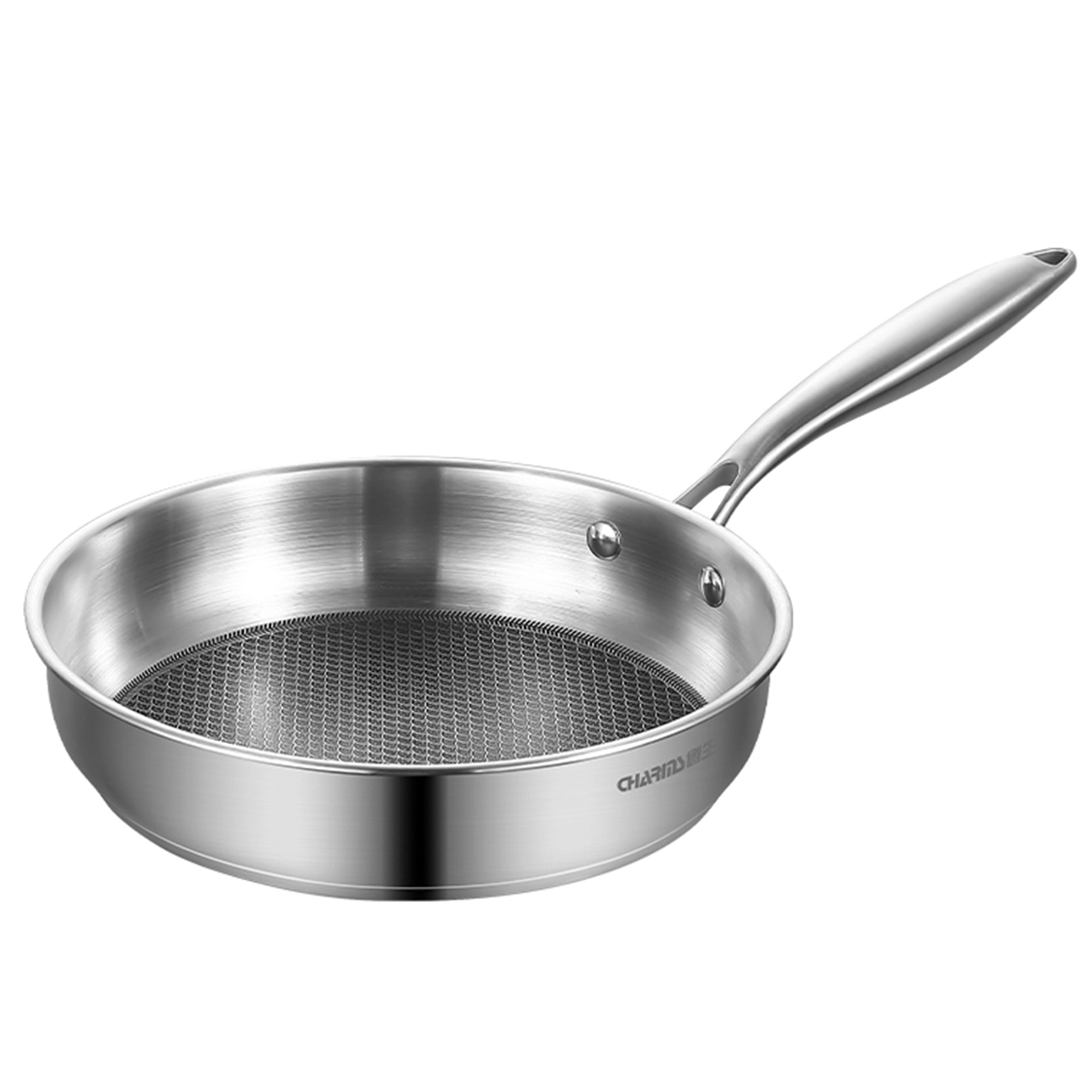
What Is a 316 Stainless Steel Wok?
316 stainless steel can be regarded as an “upgrade” over 304. It adds molybdenum to its composition, which may seem insignificant but actually brings about significant performance changes.The addition of molybdenum makes 316 stainless steel more stable when exposed to salt, acidic substances, and complex environments. This is why 316 stainless steel is often used in fields with higher material requirements.
In the cooking pan, 316 stainless steel is more commonly used for products that have higher requirements for durability and stability.
5 Major Advantages of 316 Stainless Steel Woks
- Stronger corrosion resistance: In environments with high salt content or high humidity, the surface is less likely to be affected.
- The surface becomes more stable after long-term use: After repeated high-temperature treatment and cleaning, the appearance of the pot body changes less.
- More friendly to acidic ingredients: When frequently exposed to acidic or strongly flavored ingredients, the material maintains greater stability.
- Longer service life: In high-intensity usage conditions, the performance degrades more slowly.
- Material positioning is more upscale: It is often used in frying pan products with higher quality requirements.
304 vs 316 Stainless Steel Woks: A Detailed Comparison
| Comparison Dimension | 304 Stainless Steel Wok | 316 Stainless Steel Wok |
|---|---|---|
| Primary Alloy Elements | Chromium, Nickel | Chromium, Nickel, Molybdenum |
| Corrosion Resistance | Excellent for daily cooking | Superior in salty or aggressive environments |
| Resistance to Chlorides | Moderate | High |
| Surface Stability Over Time | Stable under normal use | More consistent under prolonged stress |
| Reaction With Acidic Foods | Minimal | Even lower risk |
| Manufacturing Complexity | Lower | Slightly higher |
| Raw Material Cost | More economical | Higher |
| Typical Applications | Household, general cookware | Premium, professional, demanding environments |
| Long-Term Durability | Very good | Exceptional |
| Material Perception | Industry standard | High-end / advanced |
How to Choose Between a 304 and 316 Stainless Steel Wok
Choosing the correct material is not a single decision. It is a process. Below is a structured approach that reflects how experienced buyers and manufacturers evaluate stainless steel cookware projects.
Step 1: Define the Product’s Intended Use Environment
Start with real usage conditions, not assumptions.
Ask yourself:
- Will the wok be used primarily in standard household kitchens?
- Will it face frequent exposure to salt-heavy cooking or high humidity?
- Is it intended for long daily usage cycles?
Clear answers here eliminate unnecessary material upgrades or costly under-specification.
Step 2: Clarify Performance Expectations
Determine what “performance” means for your product.
- Is surface appearance after years of use critical?
- Is resistance to aggressive cleaning chemicals required?
- Are you optimizing for longevity or cost balance?
Performance expectations shape material necessity.
Step 3: Evaluate Sample Prototypes Carefully
Material selection should never be finalized on paper alone.
Evaluate samples for:
- Weight distribution
- Heat response
- Surface finishing consistency
- Post-polishing appearance
Small differences become more visible during hands-on inspection.
Step 4: Assess Manufacturing Capabilities
Not every manufacturer handles 316 stainless steel with equal precision.
Confirm:
- Forming consistency
- Polishing quality
- Welding stability
- Quality control standards
Material advantages only matter when manufacturing execution matches them.
Step 5: Align Material Choice With Long-Term Value
Avoid short-term cost thinking.
Consider:
- Warranty expectations
- Customer usage behavior
- Brand positioning longevity
The right material supports the entire product lifecycle—not just production.

About Charms Cook
Charms Cook is a cookware manufacturer located in Caidang, China, known as the “Steel Capital of China”. It has nearly three decades of experience in producing stainless steel cookware. Over the years, we have always focused on the research and manufacturing of high-end stainless steel cookware, integrating mature and stable production processes with continuous technological innovation to create durable, reliable and detail-oriented kitchen products.
We have obtained certifications for multiple systems such as ISO 9001, ISO 14001 and OHSAS 18001. Relying on over 50 patented technologies and a complete testing process, we ensure that every aspect, from raw material selection to product manufacturing maintains consistent and controllable quality standards.
From product design to large-scale production, we offer our partners comprehensive customized support. The flexible ODM model enables us to assist customers in achieving clear product positioning and effective differentiation while ensuring production efficiency and stability.If you are also looking for a manufacturer, you can contact us!
Conclusion
When you are confused between 304 and 316, there is no definite answer for this. It depends on your specific usage scenario and product positioning.
304 stainless steel, with its stable performance, mature processing technology and excellent cost-effectiveness, remains a reliable choice for the majority of households and regular cooking environments; while 316 stainless steel, through its higher levels of corrosion resistance and long-term stability, meets the demands of products that require greater durability, complex cooking environments and higher quality.
Our family has been engaged in the stainless steel cookware industry for over thirty years. If you have any questions during the selection process, please contact our team. We look forward to becoming your partner!