

If you’ve ever packed for a weekend outdoors and stared at your kitchen cookware wondering whether you could just throw a regular pan into your bag — you’re not alone. It’s one of the most common questions that comes up when people start building out an outdoor kitchen setup. The short answer is: you can use a regular pan outdoors, but it’s not really built for that life. Understanding exactly why leads to some genuinely useful decisions about what to source, stock, and sell.
Let’s get into the real differences — not just weight and size, but the engineering logic behind why camping cookware and household cookware are fundamentally different tools built for fundamentally different environments.
What Is a Camping Pan?
A camping pan is cookware built specifically for use outside the home kitchen. Every design decision — material selection, wall thickness, handle mechanism, surface treatment — responds to one central challenge: outdoor cooking is unpredictable. Heat sources are inconsistent. Space is limited. Conditions can change fast.
The most common materials in this category are aluminum alloy, stainless steel, titanium, and occasionally cast iron. Each serves a different type of outdoor user.
Aluminum alloy is the most widely used camping pan material worldwide. It heats fast, weighs very little, and costs less than most alternatives. Hard-anodized aluminum goes one step further — the surface hardening process makes it significantly more resistant to scratching and wear without adding meaningful weight. For solo hikers on multi-day trips, this is often the preferred choice.
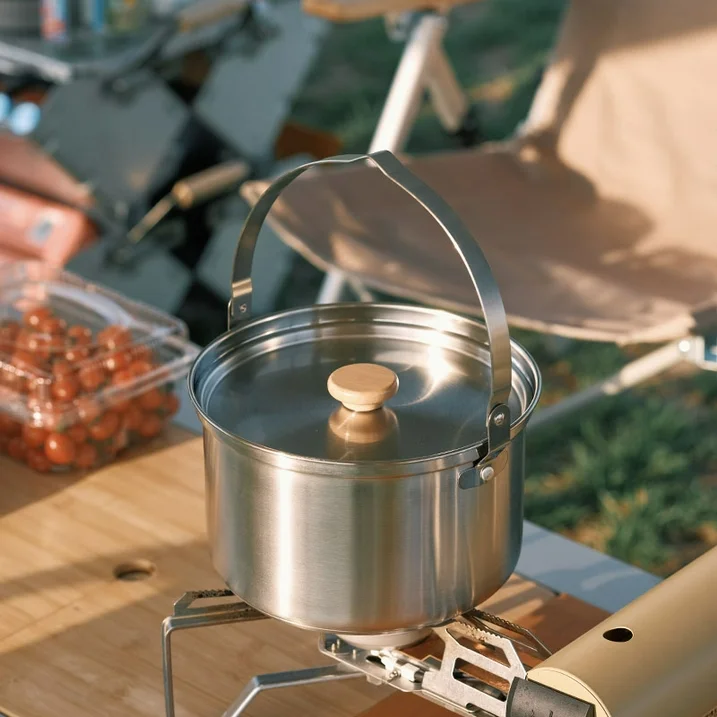
Stainless steel brings a different set of strengths. It doesn’t react with acidic foods, it’s nearly impossible to dent under normal conditions, and it holds up across years of hard use. The tradeoff is weight — stainless steel camping pans are heavier than aluminum equivalents. For car campers, RV travelers, or group outdoor cooking, that weight difference is far less of a concern.
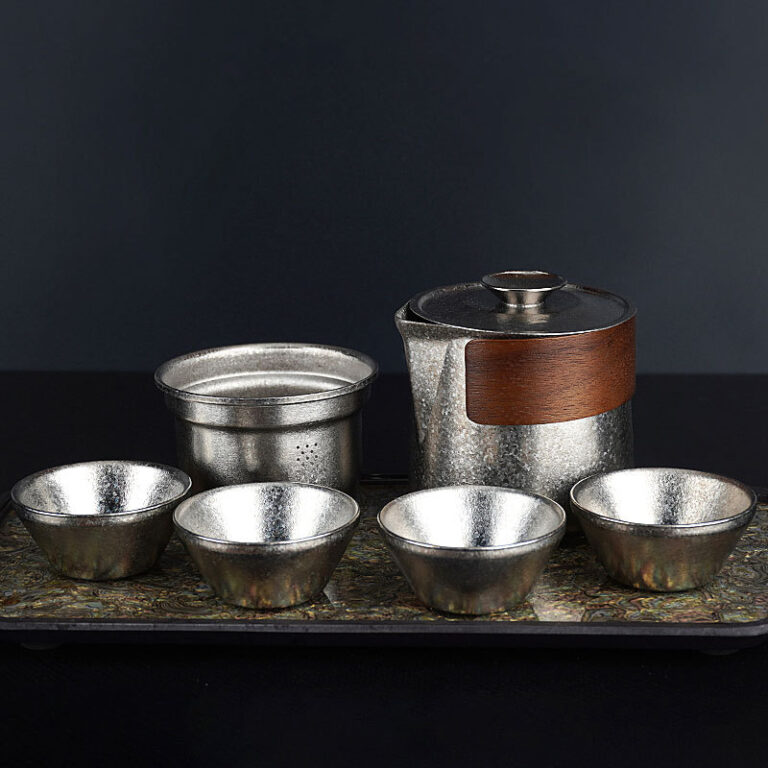
Titanium sits at the premium end. It offers the best weight-to-durability ratio of any camping pan material, resists corrosion extremely well, and performs reliably at altitude where temperature swings are severe. The main barrier is cost — titanium cookware is substantially more expensive to produce and to purchase.
Cast iron is the outlier. Heavy, slow to heat, and requiring specific care to prevent rust — but it delivers exceptional heat retention and natural non-stick performance once properly seasoned. Cast iron camping pans are practical only for car camping or base camp situations where carrying weight is not a limiting factor.
Beyond material, the structural features that define a camping pan are its collapsible or detachable handle, its ability to nest with other pieces, and its general tolerance for rough handling. These aren’t cosmetic choices — they’re functional responses to the realities of outdoor cooking.
What Is a Regular Pan?
A regular pan is designed entirely around the controlled environment of a domestic kitchen. Flat, stable burners. Consistent gas or electric heat. A kitchen counter to set things on. A sink nearby for cleanup.
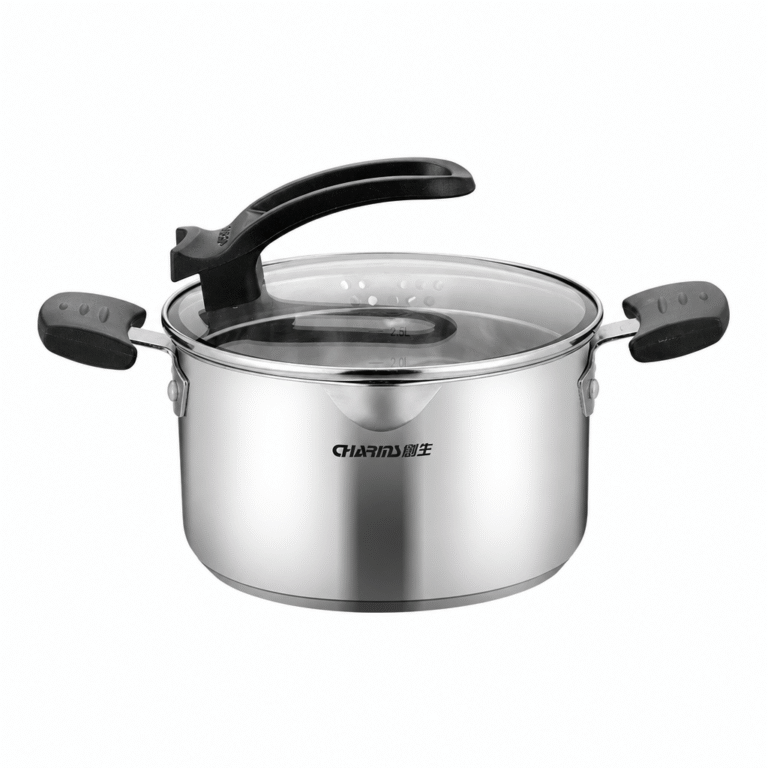
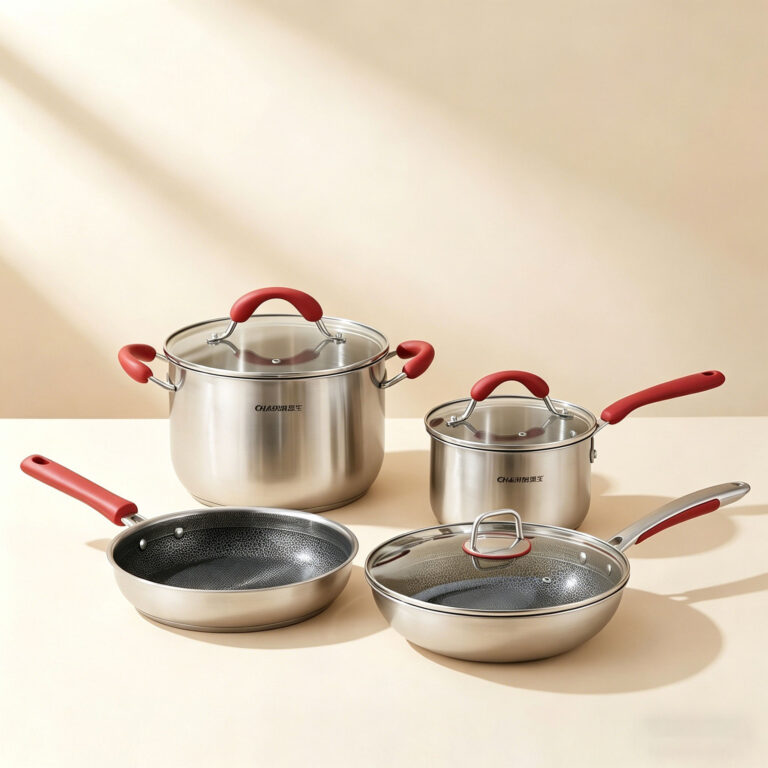
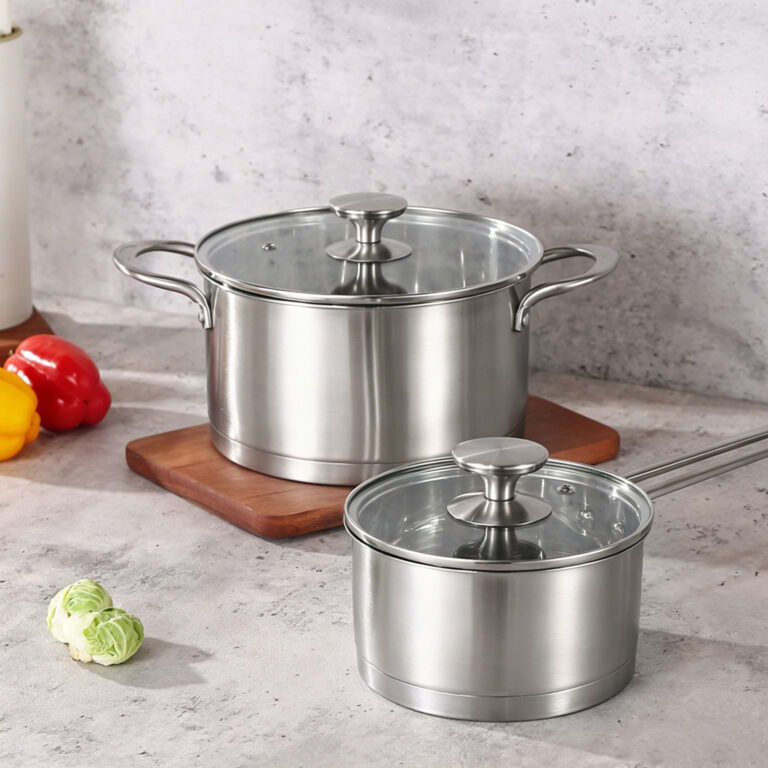
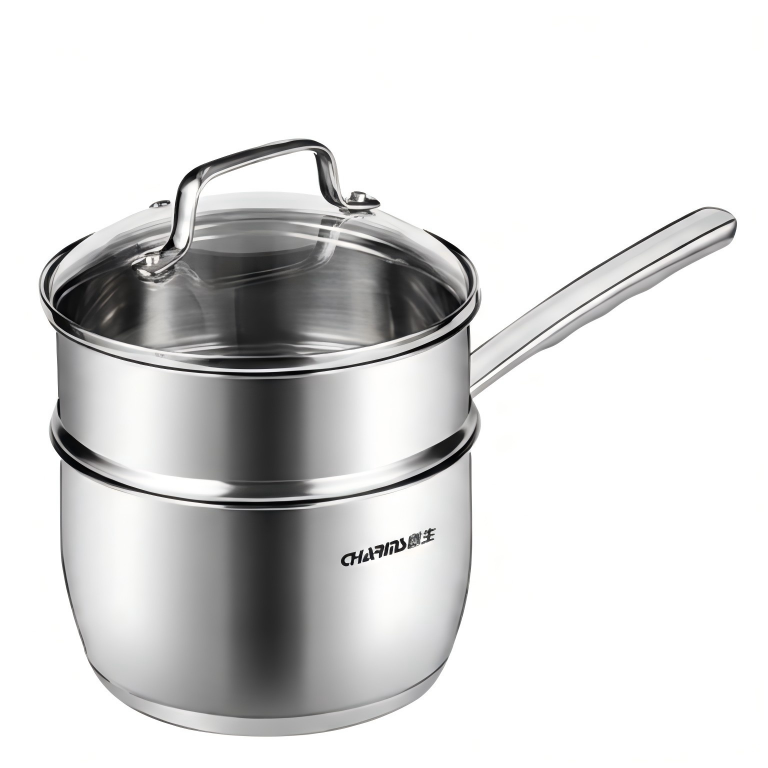
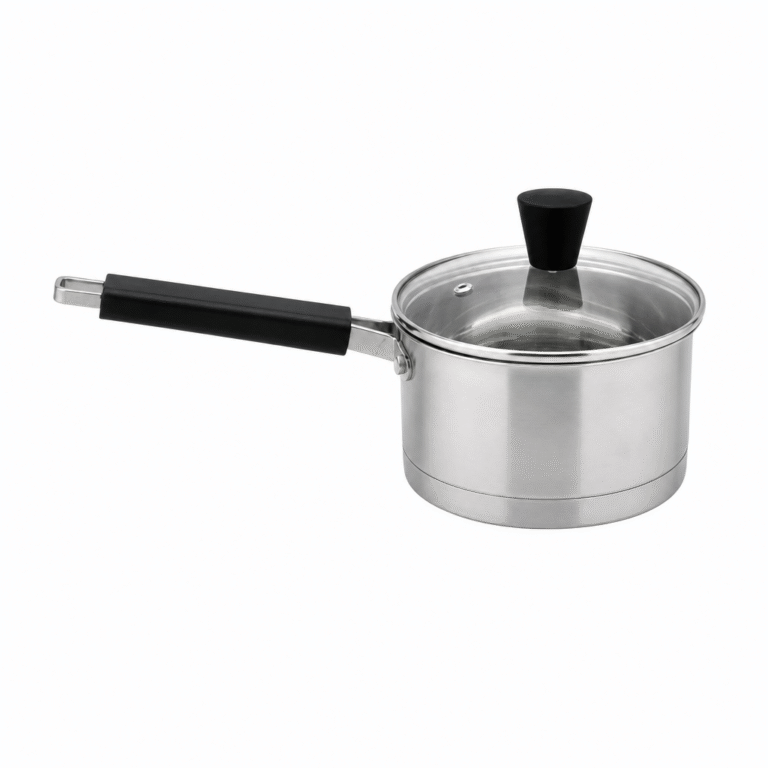
Regular pans come in a wide range of categories: frying pans, sauté pans, saucepans, stock pots, woks. Each is optimized for specific cooking techniques that require precise heat control, even heat distribution, or particular vessel shapes. The materials vary too — stainless steel (often clad with aluminum or copper cores), enameled cast iron, non-stick coated aluminum, and carbon steel are among the most common.
What regular pans are optimized for, above all else, is cooking performance. They’re designed to distribute heat evenly across a broad, flat surface. Long, riveted handles give stability and keep your hand away from heat. Heavier bases increase thermal mass so the pan doesn’t react too violently to temperature changes. Lids fit precisely to trap moisture and regulate internal cooking temperatures.
These are exactly the qualities that make a regular pan excellent in a home kitchen — and exactly the qualities that cause real problems outdoors.
Core Difference One: Weight and Portability
This is the most visible difference, and it’s where the two categories genuinely diverge in philosophy.
A well-equipped backpacker’s camping pan might weigh 85–150 grams. A mid-range stainless steel frying pan for home use typically weighs 900 grams to well over 1.5 kilograms. That’s not a minor gap — it’s a design choice that reflects completely different priorities.
Camping pans achieve low weight through thinner walls, lighter base materials, and simplified construction. The handle is often the most dramatic change. Where a home pan has a long, fixed stainless handle that provides excellent leverage at the stove, a camping pan uses a folding handle that locks into place during cooking and folds flat for packing. Some camping pan sets use a single detachable gripper that fits multiple pot and pan sizes — one handle for the entire kit.
Nesting is another key feature that regular pans simply can’t replicate. A properly designed camping cookware set stacks pots and pans inside each other, often fitting a complete 2–4 person cooking kit into a single compact cylinder roughly the size of a large water bottle. Regular pans, with their protruding handles and variable shapes, can’t be packed this way.
For operations sourcing cookware for outdoor retail, hospitality, or outdoor recreation markets, this portability engineering is where the real value proposition lives. Customers aren’t just buying a pan — they’re buying a system that packs, stores, and travels efficiently.
Core Difference Two: Heat Source Compatibility
This is where many people get tripped up when they try to use regular kitchen pans outdoors.
A home kitchen operates on consistent, controllable heat. Gas burners, induction cooktops, and electric rings all deliver regulated heat to a flat-bottomed pan in a predictable way. Regular pan bases are engineered for this. Induction-compatible pans have magnetic stainless steel bases specifically sized to interact with induction coils. Pans with thick clad bases rely on flat, even contact with the burner.
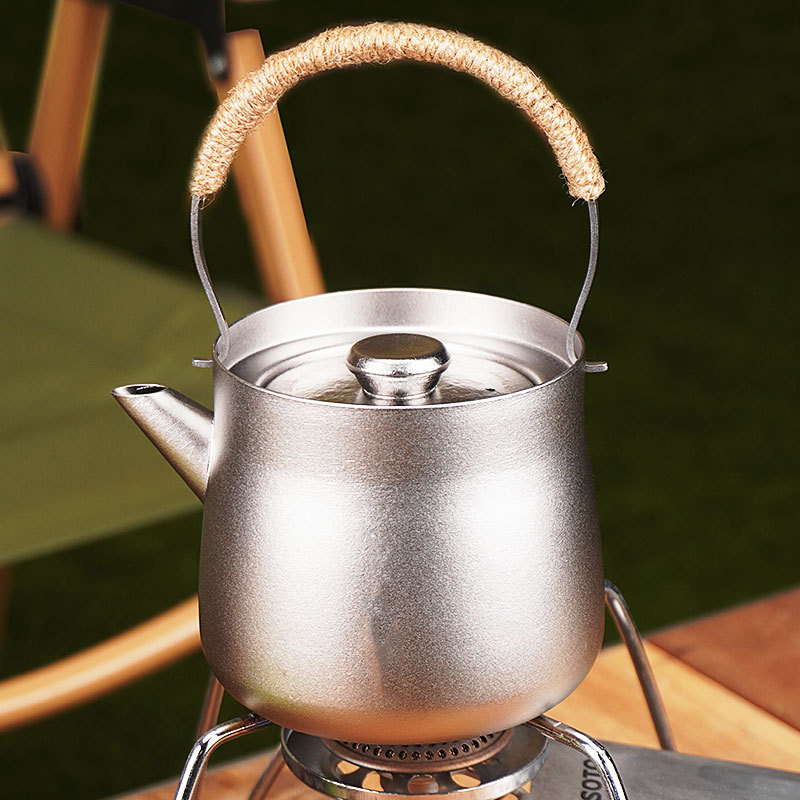
Outdoor heat sources are different in almost every way. Open flames from wood fires create intense, localized, inconsistent heat. Camp stoves with canister fuel or alcohol burners deliver concentrated flame patterns that don’t spread evenly across a large pan base. At altitude, lower air pressure affects combustion efficiency, which changes how stoves actually perform. Wind interrupts burner output unpredictably.
Camping pans respond to these realities structurally. Their thinner bases heat faster under concentrated flame — a quality that’s a liability on an induction cooktop but a genuine asset on a camp stove. Some camping pans feature heat exchanger rings on the bottom — circular fins that capture and distribute flame energy more efficiently. Pots with heat exchanger bases boil water measurably faster than flat-bottomed equivalents on the same camp stove, which matters when fuel conservation is a real concern in the field.
The handle attachment is also a heat-compatibility issue. Camping pan handles are designed not to conduct heat dangerously in a fire environment. Regular pan handles, even with heat-resistant grips, are engineered for contact with stove grates — not direct exposure to campfire conditions.
For non-stick coating, the compatibility gap is even more pronounced. Most conventional non-stick coatings are not rated for open flame use. They can degrade or lose performance when exposed to the uneven, high-temperature heat of an open fire. Camping pans that include non-stick surfaces use coatings specifically rated for outdoor conditions, or they use alternative materials like titanium and seasoned cast iron that perform naturally without chemical coatings.
Core Difference Three: Durability and Structural Design
Drop a regular frying pan from waist height onto a concrete floor. It’ll probably survive. Drop it repeatedly over weeks of outdoor use — off a picnic table, onto gravel, packed under other gear in a car — and things start to fail. Riveted handle connections loosen. Non-stick surfaces chip. Thinner bases begin to warp under temperature cycling between freezing mornings and campfire heat.
Outdoor cookware encounters stresses that home cookware was never designed to handle. Physical impact is constant. UV exposure affects certain handle materials over time. Temperature cycling tests metal joints and coatings differently than the relatively stable environment of a domestic kitchen.
Camping pan construction accounts for this directly. Welded or reinforced handle connections replace riveted attachments on quality outdoor pans. Simpler geometry — fewer seams, fewer joints, fewer points of failure — reduces the number of places where damage can start. Thicker wall construction in the lower pan body absorbs impact without deforming.
Regular pans, particularly premium home cookware, optimize in a different direction. Multi-layer clad bottoms. Precision-cast handles with ergonomic grips. Machined lid rims that create effective moisture seals. Glass lids for visual monitoring during cooking. Every one of these features improves cooking performance in a kitchen — and every one adds complexity, weight, and vulnerability to outdoor conditions.
Handle design is especially revealing. A long, fixed, riveted handle is excellent for controlling a heavy pan on a home stove. That same handle, extended outward past a camp stove, catches wind, creates leverage that can tip the entire setup, and makes packing impossible. Camping pan engineers solve this by eliminating the long fixed handle entirely and replacing it with a folding or detachable mechanism. It’s a small change with a big impact on usability in the field.
The manufacturing philosophy behind durable outdoor cookware requires simpler design with tighter tolerances — not more features. That’s a different kind of engineering precision than home cookware demands, and it’s worth understanding when evaluating product quality at a manufacturing level.
Core Difference Four: Cooking Performance and Capacity
Here’s where honest comparison gets nuanced. A regular pan, in the right conditions, cooks better than a camping pan. That’s not a flaw in outdoor cookware — it’s a reflection of what each product is actually optimized for.
A tri-ply clad stainless pan with an aluminum core distributes heat with exceptional evenness across the entire cooking surface. Eggs brown uniformly. Sauces reduce without hot spots. Precise temperature control allows techniques like deglazing or careful reduction. These results require consistent, evenly distributed, controllable heat — exactly what home cooking environments provide.
Camping pans heat faster and less evenly. On a camp stove with a concentrated burner, the center of the pan gets significantly hotter than the edges. Experienced outdoor cooks know to rotate food, keep portions small, and use cooking methods that are more forgiving of uneven heat. The goal outdoors isn’t culinary precision — it’s reliable, fast, functional cooking under variable conditions.
Capacity differences also reflect genuine differences in use patterns. A regular family kitchen might include a 28cm frying pan, a 5-liter stock pot, and a range of intermediate sizes — because cooking for 4–6 people from a full pantry requires volume and variety.
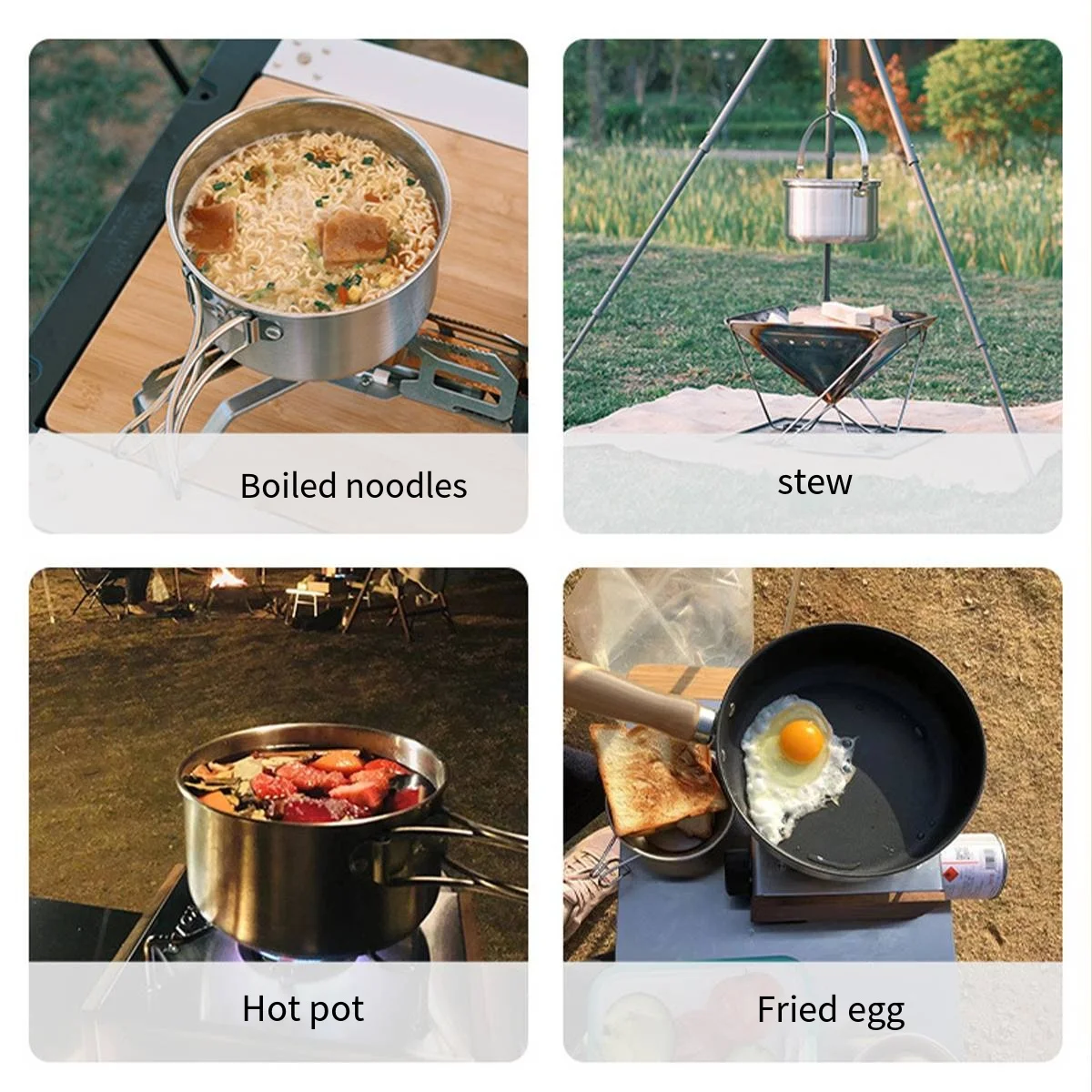
Camping pans are sized around specific scenarios: solo hiking (0.8–1.2 liter pots), couples (1.5–2 liter sets), small groups (2.5–4 liter sets). The emphasis is on doing more with less — pans that can sauté, boil, serve as a plate, and stack compactly. Lids that double as frying pans. Pots that double as cups. Multi-function design that reduces total gear load without sacrificing the ability to cook a real meal at the end of a hard day on the trail.
For anyone sourcing outdoor cooking equipment at scale — whether for retail, hospitality, outdoor recreation rental fleets, or private-label product development — understanding this performance trade-off is essential to matching product specifications to actual end-user needs.
Why These Differences Matter Beyond the Consumer Level
The gap between camping pans and regular pans isn’t just about individual purchasing decisions. It reflects two different manufacturing philosophies, two different supply chain requirements, and two very different sets of end-user expectations.
A buyer sourcing regular cookware needs products that perform under consistent, controlled conditions — where quality is measured in evenness of heat distribution, surface durability under daily use with metal utensils, and the kind of longevity that comes from controlled kitchen environments.
A buyer sourcing camping cookware needs products that perform under variable, harsh, outdoor conditions — where quality is measured in weight per square centimeter of cooking surface, handle reliability under thermal stress, and the ability to nest into a compact kit that travels without damage.
Stainless steel sits at the intersection of both categories. Well-engineered stainless steel camping pans offer the field durability, corrosion resistance, and heat tolerance that outdoor use demands — while still being food-safe, washable without special care, and compatible with a range of heat sources including camp stoves, open fire, and induction when the right base construction is used. That’s why stainless steel has remained a dominant material across both categories despite decades of competition from aluminum and titanium in the outdoor space.
Understanding the structural and material differences between camping pans and regular pans gives you a cleaner framework for product selection, inventory planning, and communicating value to end customers — whether they’re outfitting an outdoor hospitality operation, a retail camping section, or a private label product line built around the outdoor cooking market.
The two categories serve different worlds. The best sourcing decisions start from knowing exactly which world you’re equipping.