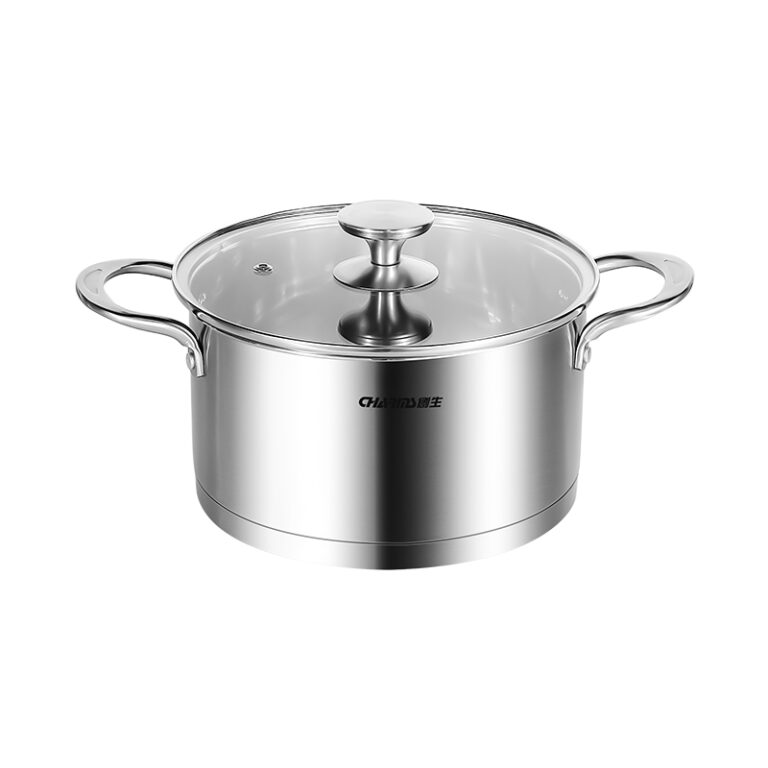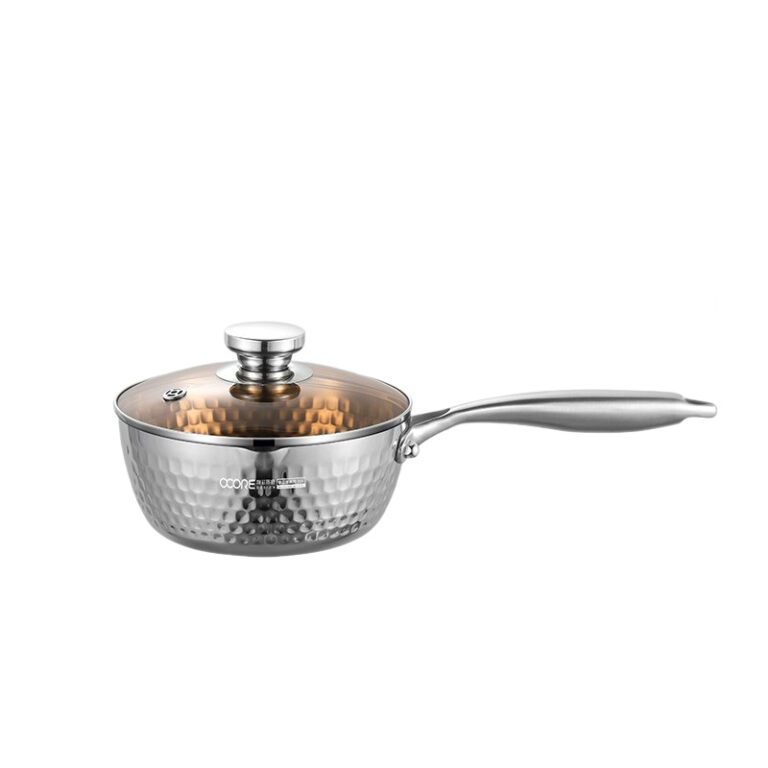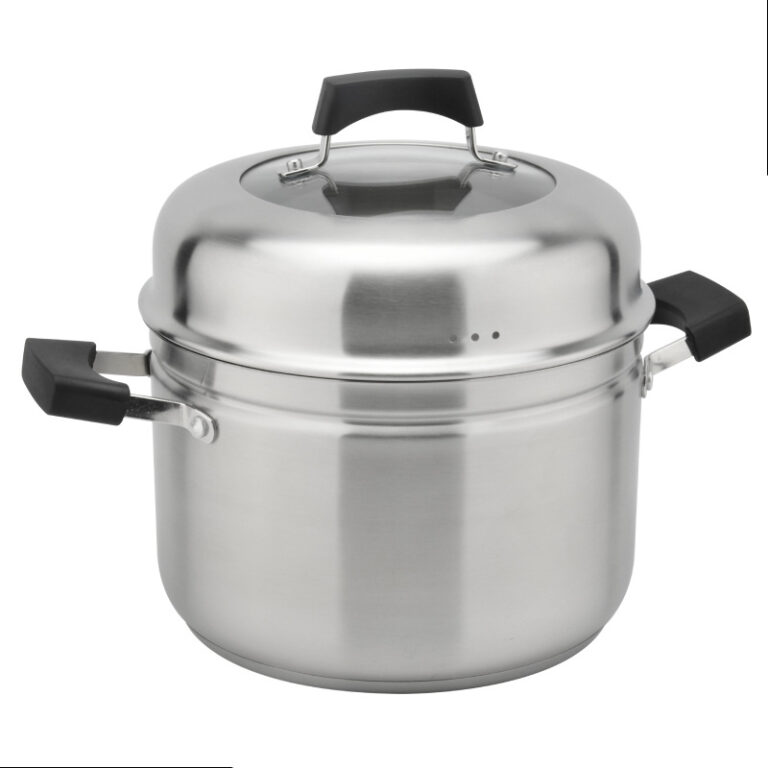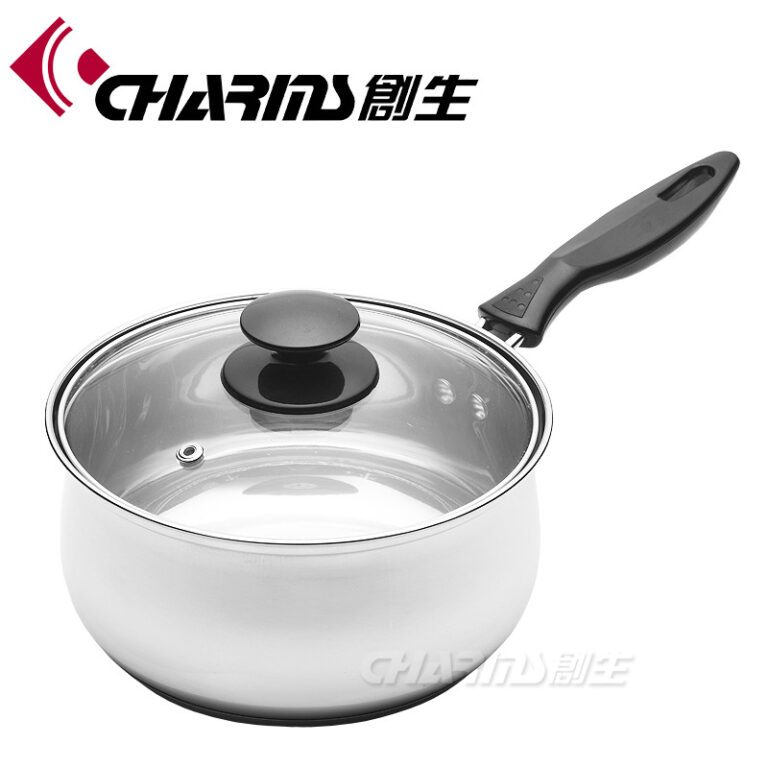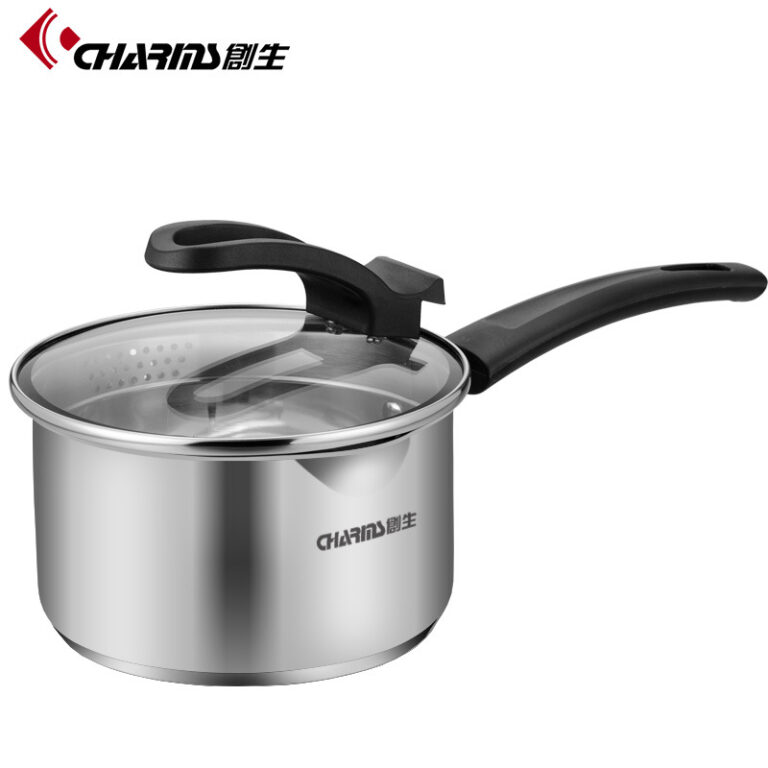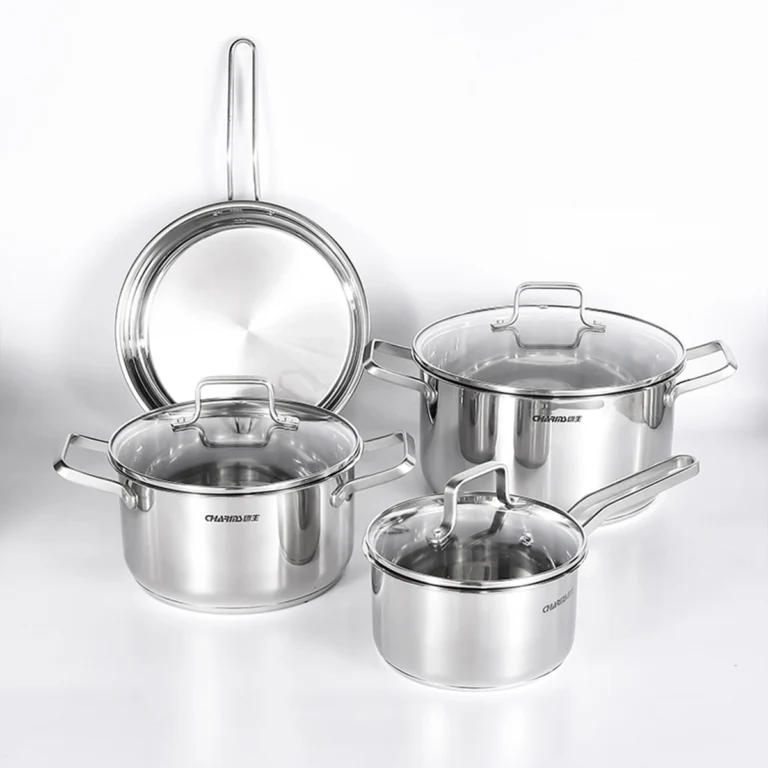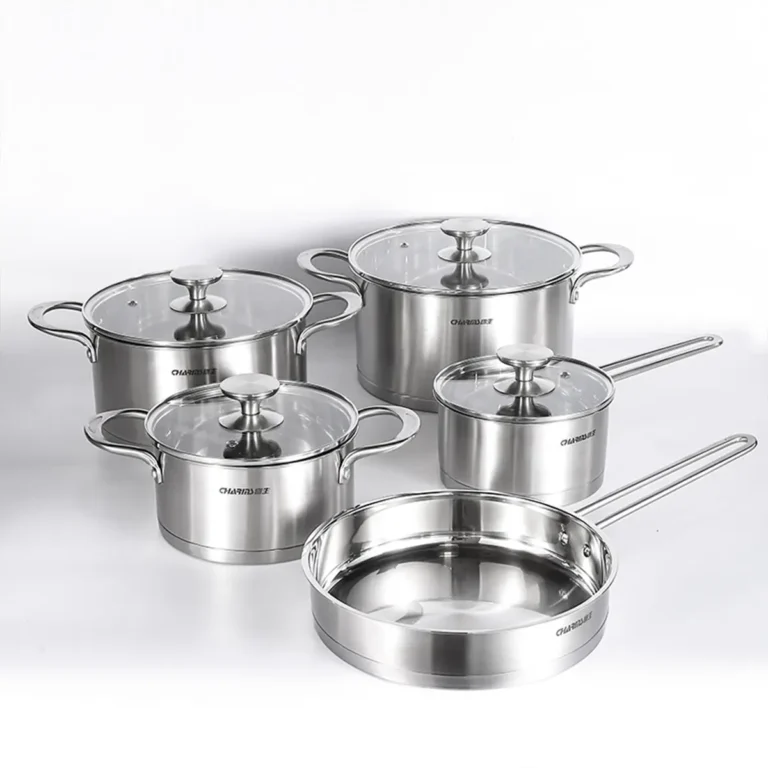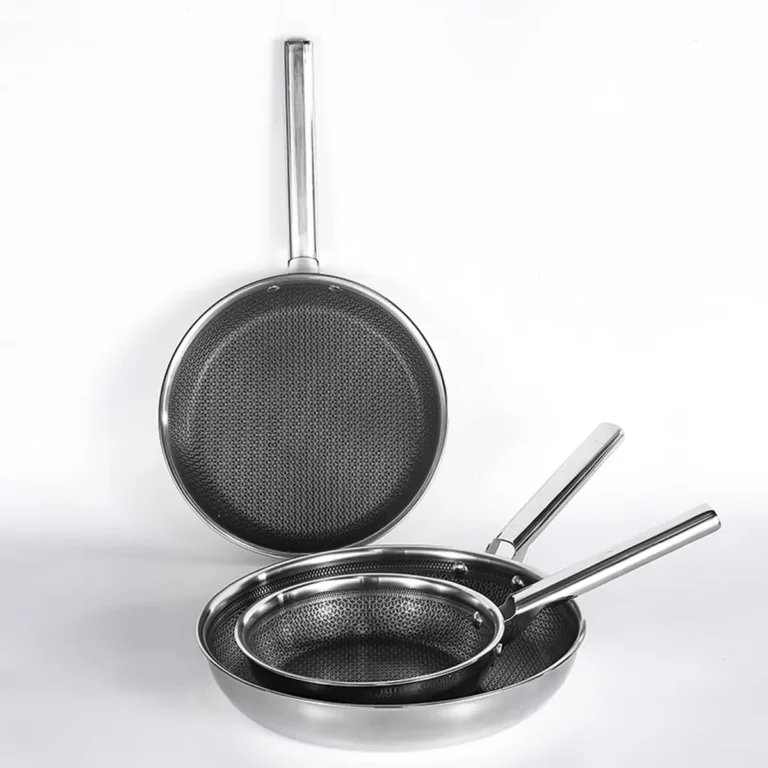

Whether you are using a frying pan or a skillet standing in front of a cooker rack, even those who cook every day sometimes use the two pots interchangeably.
It is not difficult for professional chefs because they know that frying pans and skillets make different foods, so, in this article, I will take you to understand what is the difference between the two. To better make the best choice between them, okay, let’s explore it together in the following article. Let’s get started!
1.. What is a Frying Pan?
Do you know when the frying pan came into being? In fact, the appearance of the frying pan can be traced back to a long time ago. At that time, people could complete a simple meal by placing a metal plate on the fire. As time goes by, the materials have evolved from iron and copper to the current precise and stable 304 stainless steel, and the shape has become increasingly suitable for daily use. However, its core purpose has remained unchanged – to give ingredients a beautiful color and aroma in a short time.
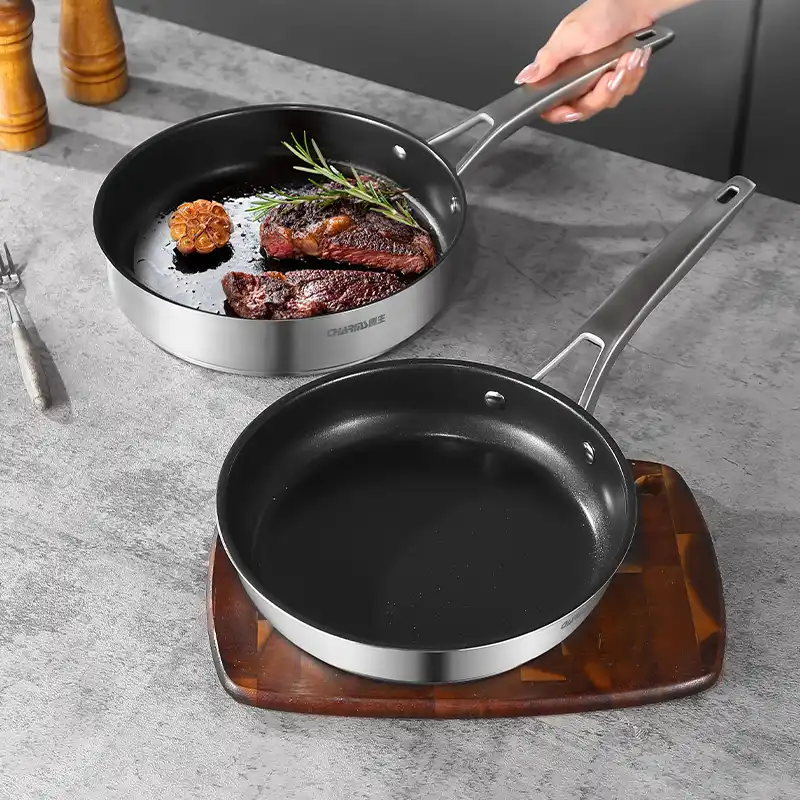
Today’s frying pan has a distinct feature: a wide and flat bottom, a low rim that extends outward, and a light weight. These designs allow you to easily hold the handle with one hand, push or flip the ingredients, or quickly reduce excess moisture. It is precisely for this reason that it has become an ideal tool for handling dishes that “require a bit of speed and heat control” – such as frying a charred steak, stir-frying a plate of crispy vegetables, or allowing eggs to slide gently at the bottom of the pan. It can be said that as long as you want the ingredients to be more fragrant, crisper and evenly colored, the frying pan almost never disappoints.
2.What is a Skillet?
The history of the Skillet can be traced back to the early era of cast-iron cookware. At that time, people needed a tool that could withstand open flames, high temperatures and long cooking times, and thus this type of pot with a higher depth and a more solid structure emerged. As materials have gradually evolved from traditional cast iron to lighter and more stable stainless steel, the core features of Skillet have remained unchanged: a higher pot wall, a thicker pot body, and a structure that can firmly lock in heat.
This design makes it appear stable and durable during cooking, especially suitable for handling thicker meat pieces, dishes with soup, or those that need to be directly transferred from the stove to the oven. Compared with the frying pan that emphasizes speed, the Skillet is more like a “slow and steady” player in the kitchen – whether you are stewing, braising, or making a home-cooked dish that requires layer-by-layer seasoning, it can provide more space and more even heating, making the entire cooking process more comfortable and relaxed.
3. What is the main difference between Frying Pan and Skillet?
| Dimension | Frying Pan | Skillet |
|---|---|---|
| Side Height | Low and flared, easy to flip and stir food | Tall and straight, holds more liquid and thicker ingredients |
| Cooking Surface | Larger flat area, ideal for spreading food in a single layer | Slightly smaller, better for thick cuts or saucy dishes |
| Weight | Light and easy to maneuver | Heavier, stable and durable |
| Heat Response | Heats up quickly, cools down quickly, very responsive | Heats more slowly but retains heat longer, stable temperature |
| Best Cooking Methods | Quick searing, sautéing, shallow frying | Braising, simmering, searing, oven finishing, saucy dishes |
| Moisture Control | Evaporates quickly, good for dry cooking | Evaporates slower, keeps food moist and juicy |
| Ease of Handling | Easy to toss, flip, and stir | Less agile for tossing, better for slow cooking and large portions |
| Ideal Ingredients | Thin cuts of meat, eggs, vegetables, foods that need crisp edges | Thick cuts of meat, dishes with sauce, recipes finished in the oven |
| Kitchen Role | “Speedy performer” – great for fast, high-heat cooking | “Steady partner” – perfect for slow, controlled, or liquid-based dishes |
4.What Are the Differences in Material and Performance Between the Two?
Although both frying pans and skillets can be made from high-quality 304 stainless steel, their thickness, construction, and heat performance create noticeable differences that directly affect cooking results.
1. Thickness and Layering
- Skillets usually feature a thicker, multi-layered design, which enhances heat retention and stability, keeping temperature consistent even when adding cold ingredients.
- Frying pans are thinner and lighter, heating up and cooling down more quickly, making them ideal for fast, responsive cooking.
2. Heat Conduction and Retention
- Frying pans heat quickly and respond instantly to changes, perfect for quick sautéing, frying eggs, or searing thin cuts of meat.
- Skillets warm more slowly but hold heat longer and distribute it evenly, making them better for thick cuts, braising, or recipes that move from stove to oven.
3. Evaporation and Moisture Control
- Frying pans, with their wide, shallow design, encourage faster evaporation, giving food a crisp texture.
- Skillets, with taller, straighter walls, slow down evaporation, helping food retain moisture and juiciness.
4. Handling and Cooking Style
- Frying pans are lightweight and easy to maneuver, ideal for tossing, flipping, and precise temperature control.
- Skillets are heavier and more stable, perfect for slow cooking, thicker ingredients, saucy dishes, and seamless stove-to-oven cooking.
Material and Performance Comparison
| Feature | Frying Pan | Skillet |
|---|---|---|
| Thickness | Thin, lightweight | Thick, sturdy |
| Layering | Single layer or thin multi-layer | Multi-layer, even heat distribution |
| Heat-Up Speed | Fast | Moderate |
| Heat Retention | Medium | High |
| Evaporation | Quick, good for dry cooking | Slower, retains moisture |
| Best Cooking Methods | Quick sautéing, eggs, thin cuts | Braising, thick cuts, saucy dishes, stove-to-oven |
| Handling | Light and agile | Heavy and stable |
5.How to Choose the Right Frying Pan or Skillet for Your Cooking?
Choosing between a frying pan and a skillet isn’t about which is “better”—it’s about which suits your cooking style and the dishes you make most often. Each pan has its strengths, and understanding them helps you make decisions with confidence.
1. Consider the Type of Cooking You Do
- If you often cook dishes that require quick, high-heat cooking—like stir-fried vegetables, eggs, or thin cuts of meat—a frying pan is ideal. Its wide, shallow surface encourages fast evaporation, crisp edges, and even browning.
- If your recipes involve thicker ingredients, sauces, or slow-cooking techniques—like braised meat, stews, or dishes that start on the stove and finish in the oven—a skillet is a better choice. Its taller walls and heavier base keep heat stable and contain liquids effectively.
2. Think About Speed vs. Stability
- Frying pans heat quickly and cool down quickly, giving you responsive control—perfect for fast-paced cooking.
- Skillets take longer to heat but maintain consistent temperature, making them better for dishes that need gentle, steady cooking.
3. Volume and Portion Size
- If you’re cooking for one or two people, a frying pan’s large flat surface allows food to cook evenly in a single layer.
- For family-sized meals or thicker cuts, the skillet’s depth provides extra capacity without spilling.
4. Texture Preference
- Want crisp, golden surfaces? Frying pan.
- Prefer tender, juicy interiors with rich sauces? Skillet.
5. Ease of Handling and Workflow
- Frying pans are light and easy to maneuver for tossing, flipping, and stirring.
- Skillets are heavier, but the extra stability is helpful when working with liquids or oven-finishing recipes.
Practical Tip: Many kitchens benefit from having both—a frying pan for fast, high-heat tasks and a skillet for slower, deeper cooking. Understanding when to reach for each tool can make your cooking more predictable, efficient, and enjoyable.
6.How to Care for Your Frying Pan and Skillet?
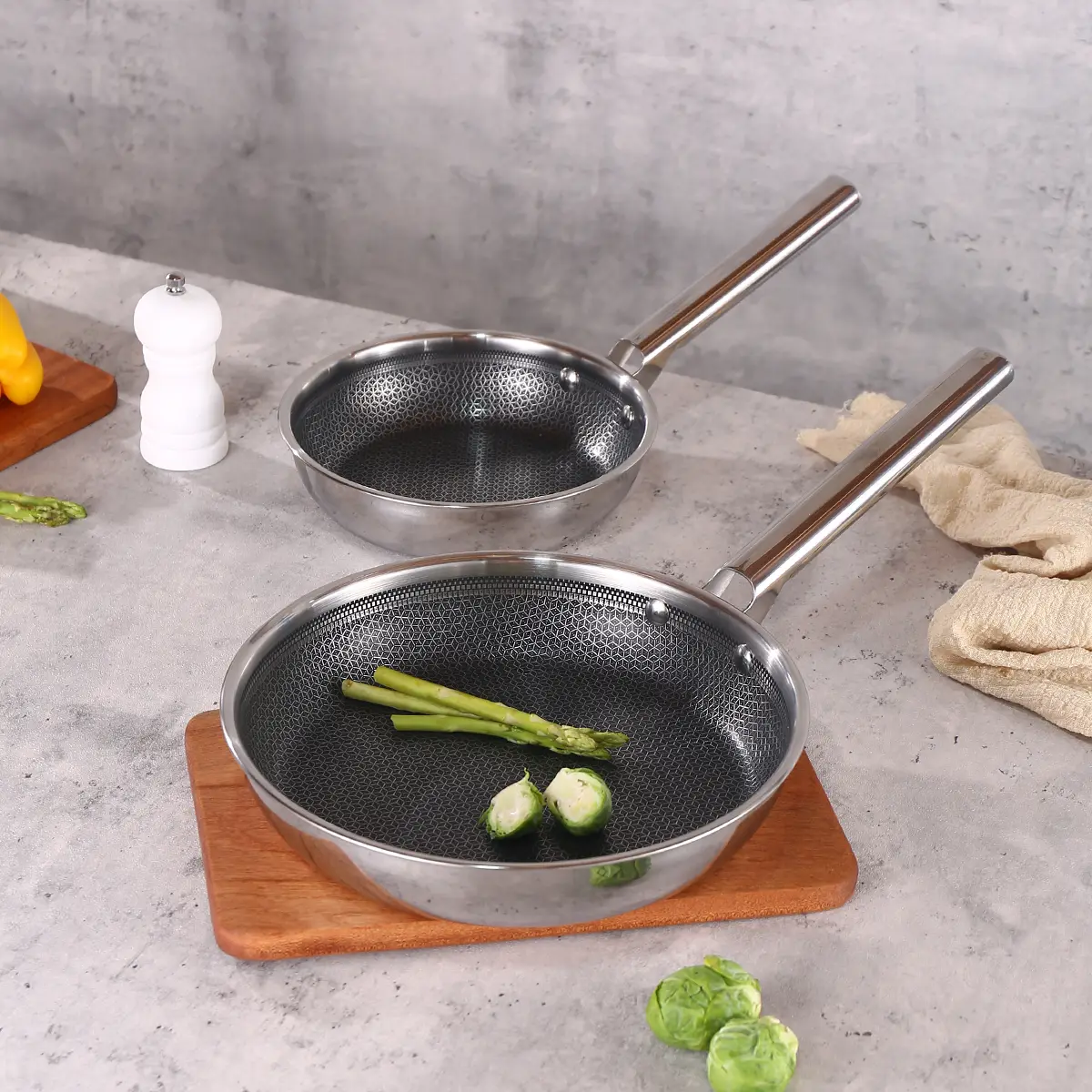
Although frying pans and deep frying pans are similar in material, due to their different structures, there are still some subtle differences in their maintenance. The frying pan is light and thin, and it heats up quickly and sensitively. Therefore, it is best to preheat it slowly before use to avoid deformation caused by high temperature when the pan is empty. Cleaning is also very simple: gently wipe with warm water and a soft sponge. If it sticks to the pot, soak it for a while first, then gently brush it with baking soda, and immediately dry it to keep it shiny.
Deep frying pans are heavier and have better heat retention and even heating. They are suitable for slow heating. When cleaning, also pay attention to the corners of the high pan walls to prevent sauce from remaining. Avoid sudden temperature changes. After using the oven, keep the handle dry. If stacked, separate them with soft cloths. Careful maintenance not only extends the lifespan of cookware but also makes every cooking more convenient and worry-free, ensuring your pot always performs at its best.
Tips for Routine Maintenance
To keep a frying pan and a deep frying pan in the best condition for a long time is actually not complicated. A few minutes of small habits every day can extend the lifespan of the cookware. First of all, preheating should be moderate: Do not heat an empty pan at high temperature for a long time, especially a frying pan, to avoid deformation of the pan bottom. Secondly, clean up promptly after cooking: gently wipe with warm water and a soft sponge. If there are stubborn food residues, soak for a few minutes before washing, or gently brush with baking soda. Remember to avoid directly scratching the pot with steel wool or sharp tools to prevent the stainless steel surface from being scratched.
Also, pay attention to dryness: Dry immediately after washing, especially the handles and corners of the pot walls, to avoid water stains and rust. For deep frying pans, make sure to dry the handles thoroughly after using the oven. When stacking and storing them, use soft cloths to separate them to prevent scratches. Regular maintenance is also very important: Occasionally applying a small amount of cooking oil to the bottom of the pot can enhance the anti-sticking effect and make the cookware look shiny and new at the same time.
Finally, pay attention to the choice of tools when using them: Try to use wooden spatulas, silicone spatulas or nylon spatulas to turn the ingredients over. This not only protects the surface of the pot but also ensures that the ingredients are heated evenly. By adhering to these small details, your frying pan and deep frying pan will become more and more convenient to use, and your cooking experience will also get better and better.
Conclusion
Frying pans and deep frying pans each have their own advantages: frying pans are light and flexible, suitable for quick stir-frying and for ingredients that require a crispy texture; The deep frying pan is stable and thick, making it more suitable for slow stewing, thick-cut meat or cooking with sauce. Understanding their characteristics and application scenarios can not only make cooking more efficient but also ensure that each dish achieves the desired taste.
If you are looking for a manufacturer for your project, please contact Charms Cook’s stainless steel cookware – as a leading manufacturer in Caitang, the “Hometown of 304 Stainless Steel” in China, Charms has nearly 30 years of professional experience and advanced production technology, combined with innovative design and strict quality control. Bring durable, beautiful and environmentally friendly high-end solutions to the kitchen, making every cooking more convenient and reassuring. Act now!