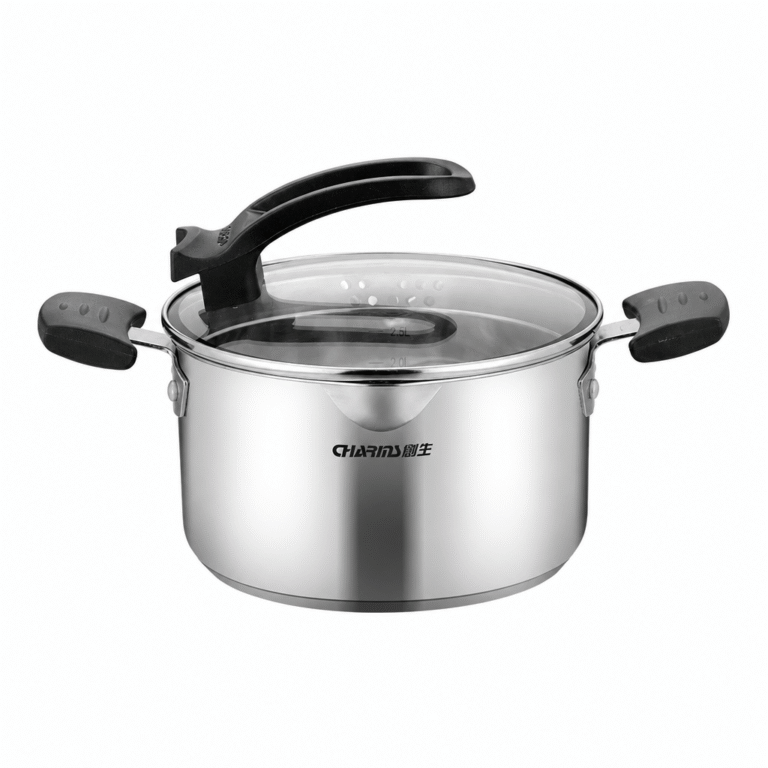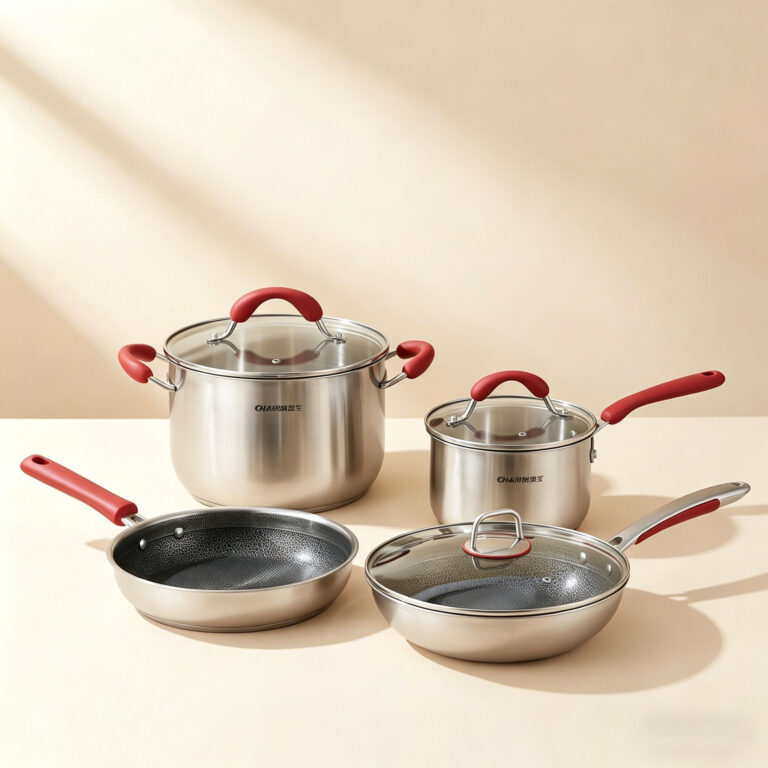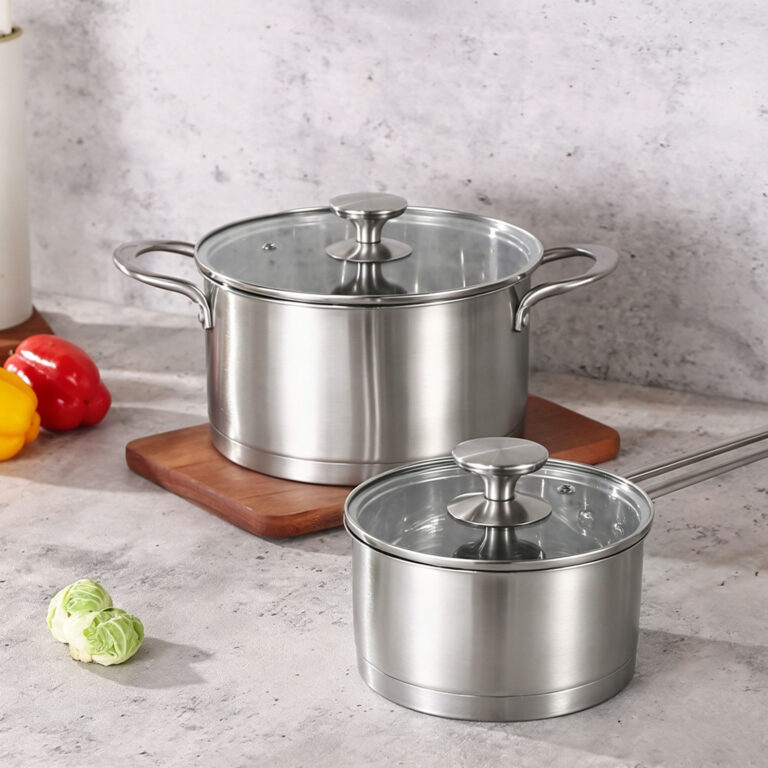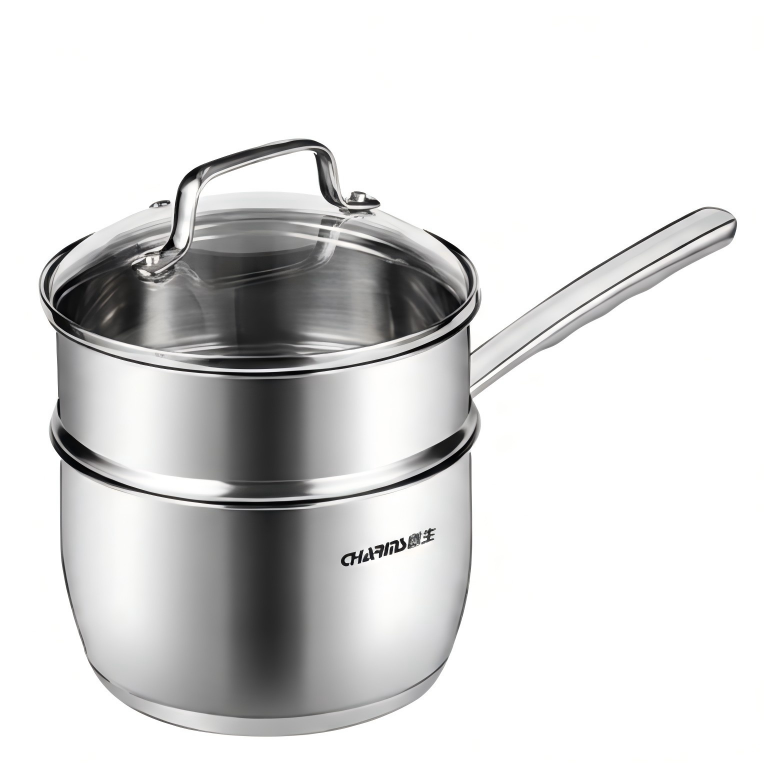

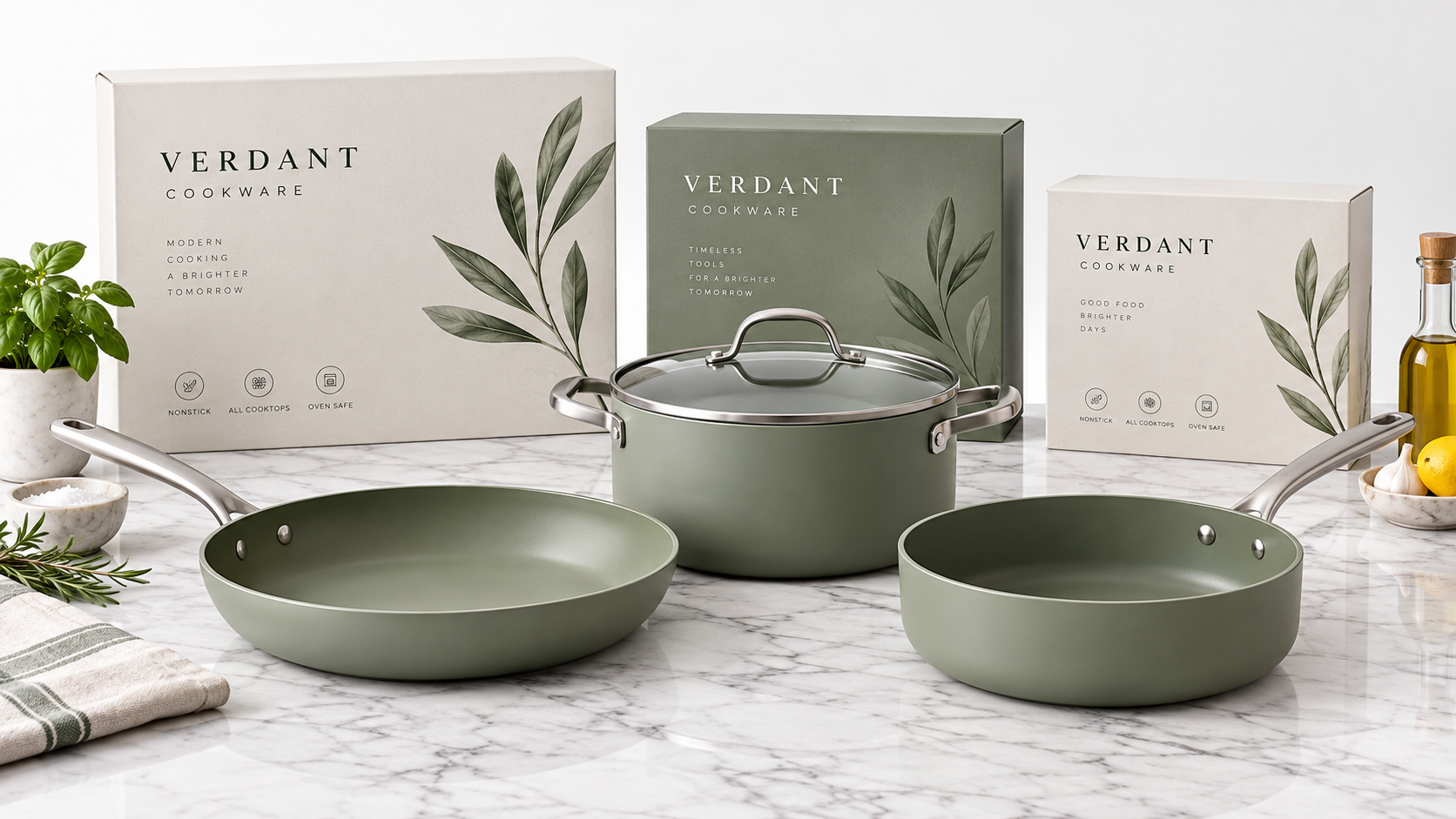
Launching a cookware brand via OEM or private label means partnering with a manufacturer to produce products under your own brand name — no factory required. The process involves choosing between OEM, ODM, or white-label production models; selecting a manufacturer in China or the US; meeting regulatory certifications (LFGB, FDA, PFOA-free); customizing your product and packaging; and managing MOQ commitments that typically start at 200–1,000 units per SKU. Brands like CharmsCook have used this exact model to bring professional-grade cookware to market without building their own production facility.
OEM, ODM, or Private Label — What’s the Difference?
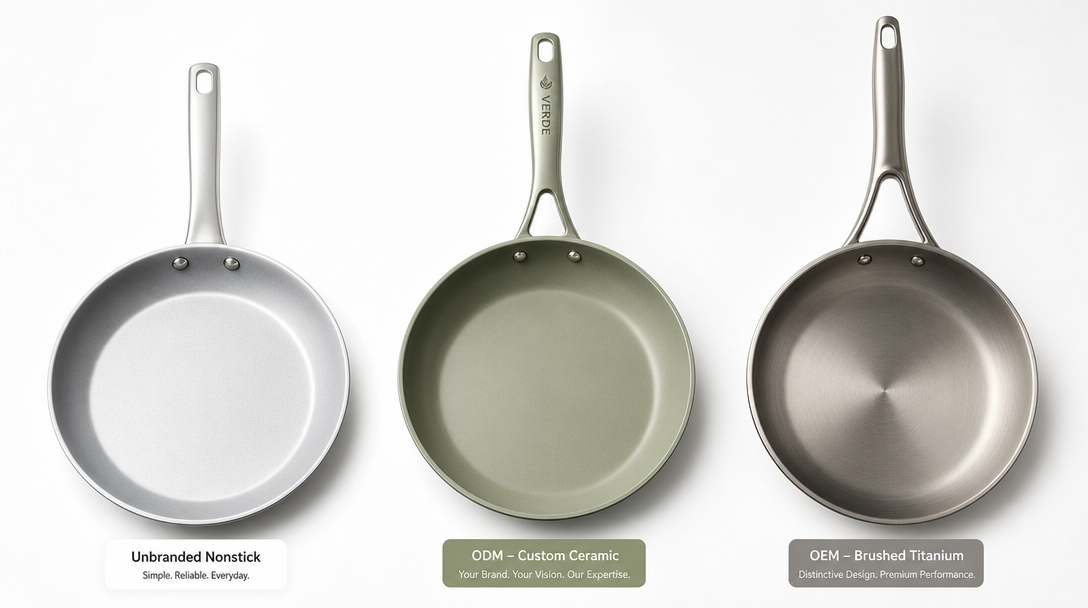
Most sourcing guides use these three terms interchangeably. They’re not the same, and choosing the wrong model will cost you time and money.
| Model | What You Control | Manufacturer’s Role | Best For |
|---|---|---|---|
| White Label | Brand name + packaging only | Sells identical product to multiple brands | Testing demand fast, lowest cost |
| OEM (Original Equipment Manufacturing) | Product spec + materials + brand | Manufactures to your exact specification | Brands with a specific product vision |
| ODM (Original Design Manufacturing) | Brand + some customization on existing design | Designs and manufactures; you select/modify | Brands that want differentiation without full R&D |
The practical difference: White label is fastest and cheapest but creates zero competitive moat — your competitor can order the same pan and slap their logo on it. OEM and ODM let you own a product spec that is harder to copy directly. For a brand like CharmsCook, working with OEM and ODM partners means every piece of cookware carries specifications that reflect the brand’s positioning, not just a generic factory baseline.
When I evaluated sourcing options for a cookware line, the realization that surprised me most was how much ODM opens up. Factories often have 30–50 existing pan shapes and coating formulations you can modify — different handle materials, custom exterior colors, proprietary coating brands — without paying for full custom tooling.
Step 1: Define Your Product and Brand Position
Before you contact a single factory, you need to know what you’re building and who it’s for.
The four positioning levers for a cookware brand:
- Material — Stainless steel (tri-ply/5-ply), nonstick aluminum, cast iron, ceramic-coated, carbon steel. Each attracts a different buyer and carries different manufacturing costs.
- Coating — This is your biggest brand signal. PFOA/PFOS-free ceramic is now table stakes for health-conscious consumers. Proprietary coating names (used by brands like Caraway and Our Place) create a perceived moat.
- Handle and hardware design — Stainless vs. cast iron vs. soft-grip silicone handle material affects perceived quality more than almost any other touchpoint.
- Packaging tier — Retail box quality is often what converts a browser to a buyer on Amazon or in-store. A $4 upgrade in packaging can increase perceived value by $40.
CharmsCook’s approach (charmscook.com) demonstrates this clearly: rather than competing on price in a commodity segment, the focus is on specific material quality and the customer experience of unboxing and daily use.
Step 2: Choose Your Manufacturing Source — China vs. US
Both have legitimate cases. The honest comparison:
| Factor | China Manufacturers | US Manufacturers |
|---|---|---|
| MOQ | 200–1,000 pcs (existing molds); 2,000–5,000 (custom tooling) | 1,000–10,000 pcs (varies by tooling type) |
| Lead time | 45–90 days production; 30 days shipping | 6–16 weeks total |
| Unit cost | Lower, especially at scale | 30–80% higher, varies by material |
| Customization depth | High — coating, color, handle, packaging | High but often fewer coating options |
| Certifications | Factory-issued; verify independently | Often ISO-certified; simpler compliance trail |
| Communication | Requires relationship management; time zone gaps | Straightforward |
| Risk | QC requires on-site or third-party inspection | Lower defect risk |
For a brand launching its first SKU with a $15,000–$30,000 budget, Chinese ODM is typically the right starting point — lower MOQ means lower capital at risk while you validate the market. US manufacturing makes more sense once you’re running reorders above 2,000 units and want a “Made in USA” brand story.
Verified manufacturers to evaluate:
- West Bend Company — US-based, private label since 1911, ISO 9001:2015, no tooling cost on existing molds
- Ledian Cookware — Stainless steel OEM/ODM, MOQ from 200 pcs
- Lianshang Cookware — MOQ 200 pcs, custom colors/logos/packaging
- Dowe Cookware — Yongkang-based, OEM logo/color/packaging, MOQ 500–1,000
Step 3: Understand the Certifications You Actually Need
Cookware sits at the intersection of food safety and consumer product regulation. Getting this wrong delays or kills your launch.
For the US market:
- PFOA/PFOS-free compliance — Mandatory. The EPA’s PFAS regulations and state-level bans (California’s AB 1200, effective 2023) prohibit intentionally added PFAS in cookware. Your manufacturer must provide documentation.
- California Prop 65 — If selling in California, requires warning labels if products contain listed chemicals above threshold levels. Get a signed declaration from your factory.
- FDA food contact compliance — Coatings and materials that contact food must comply with FDA 21 CFR regulations for food-contact surfaces. Most reputable OEM factories have this documentation ready.
For the EU/UK market:
- LFGB (Germany) — Europe’s most stringent food contact standard. If your factory has LFGB certification for coatings, EU and UK compliance generally follows.
- REACH regulation — Restricts hazardous chemicals in products sold in the EU.
Practical tip from the CharmsCook sourcing process: When requesting quotes from factories, ask for documentation on all of the above upfront. A factory that hesitates or cannot produce current certificates (within 12 months) is a yellow flag. Certificates have expiry dates — verify the date, not just the existence.
Step 4: Customization — What You Can Actually Control
This is where most first-time brand builders underestimate their leverage. A good ODM factory gives you more customization options than you’d expect without paying for custom tooling.
Customization layers, from lowest to highest cost:
- Logo + engraving — Most basic. Laser engraved or embossed on handle. Cost: minimal, often included in sampling.
- Exterior color — Powder coat or spray finish. Choose from factory’s color library (free) or commission a Pantone match (small upcharge). This is your fastest brand differentiation.
- Packaging design — Full custom printing on retail box. A well-designed box significantly impacts unboxing experience and perceived premium positioning.
- Handle material swap — Select from available handle types (stainless, cast iron knob, silicone sleeve). Usually no tooling cost if using existing handle molds.
- Custom coating — Specify coating brand (Whitford Xylan, Weilburger Greblon, or factory-proprietary). Different coatings carry different durability and safety stories. This is the highest-leverage brand differentiator.
- Custom tooling (full OEM) — New mold for unique body shape or handle. Cost: $1,000–$5,000+ depending on complexity. Justified once you’re at scale.
At CharmsCook, the combination of a signature exterior color, branded handle engraving, and a specific PFOA-free ceramic coating creates a recognizable product identity that a white-label buyer cannot replicate by simply ordering the same SKU.
Step 5: Sampling and Quality Validation
Never commit to a production run without validating physical samples. This step is non-negotiable.
Standard sampling process:
- Request a pre-production sample (PPS) — typically costs $150–$400 per piece, deducted from your first production order
- Test against your spec sheet: coating adhesion, handle torque, lid fit tolerance, weight vs. spec
- Conduct a real-world cook test: heat distribution, hot spots, nonstick performance after 30 cooking cycles
- If anything is off, revise and request a corrected sample — budget for 2–3 rounds
What to test specifically:
- Nonstick coating durability: 500 abrasion cycles minimum
- Handle stability: no wobble at rated temperature
- Lid seal: fit within ±0.5mm tolerance
- Weight variance: within 3% of spec
Getting this wrong at sampling stage costs $300. Getting it wrong after a 2,000-unit production run costs $30,000 and three months of your life.
Step 6: Pricing, MOQ, and Financial Planning
Realistic cost structure for a first cookware SKU (single pan, China ODM):
| Stage | Cost Range |
|---|---|
| Sampling (2–3 rounds) | $400–$1,200 |
| Custom packaging design (external designer) | $500–$1,500 |
| Packaging printing (MOQ run) | $800–$2,000 |
| First production run (500 units, nonstick pan) | $6,000–$15,000 |
| Third-party QC inspection | $300–$600 |
| Freight (FOB to US warehouse) | $1,500–$3,000 |
| Total first SKU to US warehouse | $9,500–$23,000 |
These are industry estimates based on standard China ODM workflows. Your actual costs will vary by product complexity, coating specification, and packaging tier.
Margin reality check: A nonstick pan that costs $12–$18 FOB China can retail for $45–$80 on Amazon or DTC, depending on brand positioning. That is a workable margin — but only after accounting for Amazon referral fees (~15%), advertising spend (15–25% of revenue at launch), and returns.
How Long Does It Take to Launch?
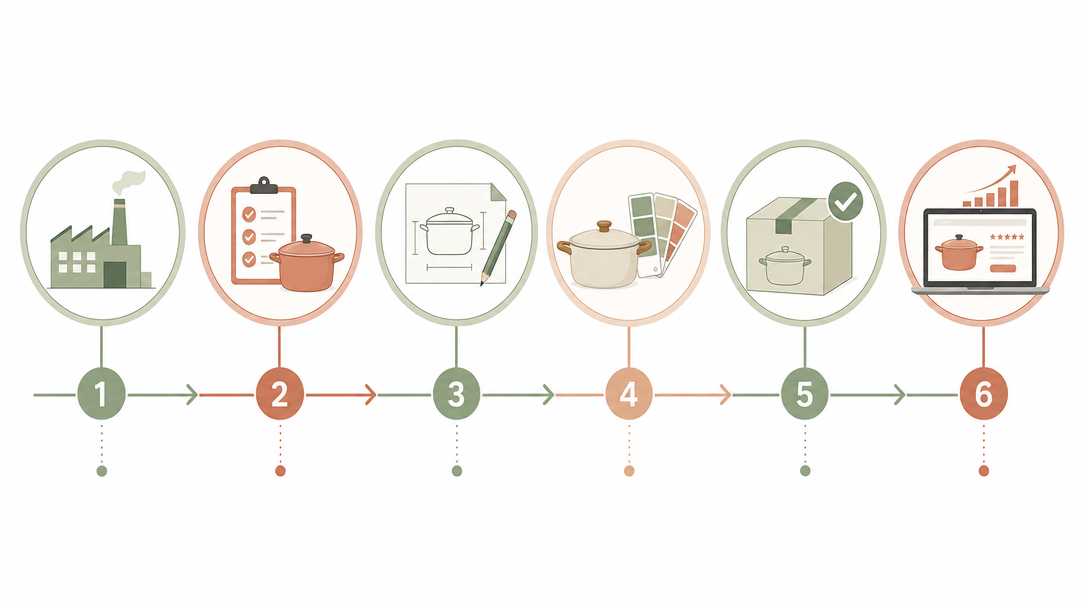
From first factory contact to product live on Amazon, a realistic timeline is 16–24 weeks:
- Weeks 1–3: Shortlist 3–5 suppliers, request quotes and spec sheets
- Weeks 4–6: Request and receive pre-production samples
- Weeks 7–9: Sample revision and approval
- Weeks 10–13: Production run (45–60 days)
- Weeks 14–15: QC inspection and freight booking
- Weeks 16–20: Ocean freight transit (25–35 days) and customs clearance
- Weeks 21–24: FBA prep and listing launch
The most common delay: Sampling rounds taking longer than expected. Budget 4 weeks per round — not 2.
Building a Brand, Not Just a Product
This is where most OEM-sourced cookware brands fail. A good pan is table stakes. The brand — story, positioning, visual identity, and customer experience — is what generates repeat purchase and word-of-mouth.
The CharmsCook framework (charmscook.com) centers on three brand pillars that translate into sourcing decisions:
- Material honesty — Every product page explains what’s in the coating, what certifications it holds, and why that matters. This builds trust in a market saturated with vague “non-toxic” claims.
- Design coherence — A consistent color palette and handle aesthetic across the product line signals intentionality. It’s a tell that separates a real brand from a rebranded commodity.
- Customer education — How to season, how to clean, how to get maximum life from the product. This reduces returns and increases lifetime value.
None of these require custom tooling. They require a clear brand brief, consistent execution, and a manufacturer who can work to spec reliably.
Summary
Building a cookware brand via OEM is genuinely achievable with $10K–$25K and 4–6 months of focused execution. The model works. The risks are in three places: choosing a factory without verifying certifications, skipping or rushing the sampling process, and launching a product without a differentiated brand story.
The brands that succeed — including those like CharmsCook that have navigated this path — combine rigorous sourcing discipline with a clear positioning that makes the product worth the margin. An OEM manufacturer gets you the pan. The brand is still yours to build.
Frequently Asked Questions
What is the difference between OEM and private label cookware?
OEM (Original Equipment Manufacturing) means a manufacturer produces cookware to your exact specifications — materials, coating, shape. Private label is broader: it can mean OEM, ODM (modifying an existing design), or white label (your logo on a standard product). Most brands use ODM in practice: they modify an existing factory design rather than engineering from scratch.
How much does it cost to start a cookware brand?
A realistic first-SKU budget, including sampling, a 500-unit production run, packaging, QC, and freight to a US warehouse, is $9,500–$23,000. The wide range depends on product complexity, coating specification, and packaging tier. Budget toward the higher end for a positioned premium product.
What certifications does cookware need for the US market? At minimum: PFOA/PFOS-free documentation (required under EPA PFAS rules and California AB 1200), FDA 21 CFR food-contact compliance, and California Prop 65 compliance documentation. For EU/UK expansion, add LFGB certification. All should be supplied by your factory with dated certificates.
How long does it take to launch a private label cookware line?
16–24 weeks from first factory contact to live listing, assuming no major sample revision delays. The most common delay is sampling — budget 4 weeks per round, not 2. Ocean freight adds another 4–5 weeks after production.
What MOQ should I expect from a cookware OEM manufacturer?
Chinese ODM factories typically start at 200–500 units per SKU for existing molds, rising to 2,000–5,000 for custom tooling. US manufacturers generally require 1,000–10,000 units. Starting with a China ODM at 500 units is the lowest-risk approach for a first launch.
Can I really differentiate a cookware brand if everyone uses the same factories?
Yes — coating specification, exterior color, handle material, packaging design, and brand story all create differentiation that a white-label competitor cannot instantly copy. The physical product is the starting point. The brand is the moat.