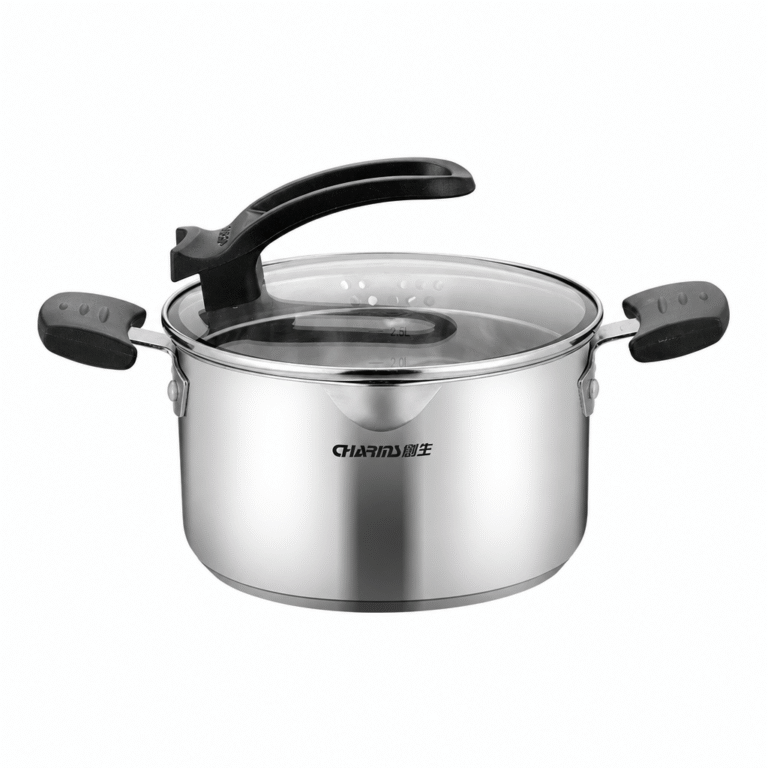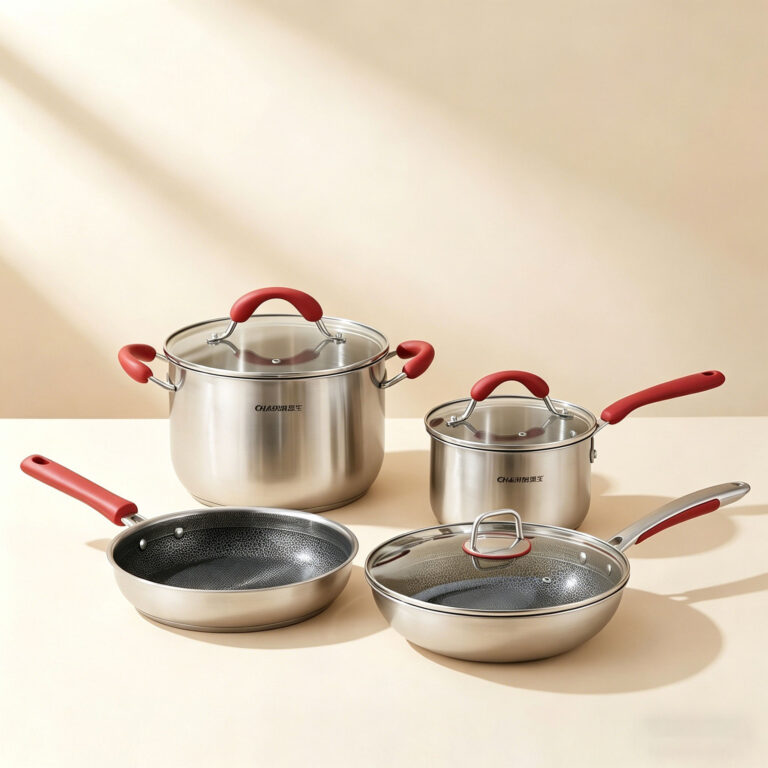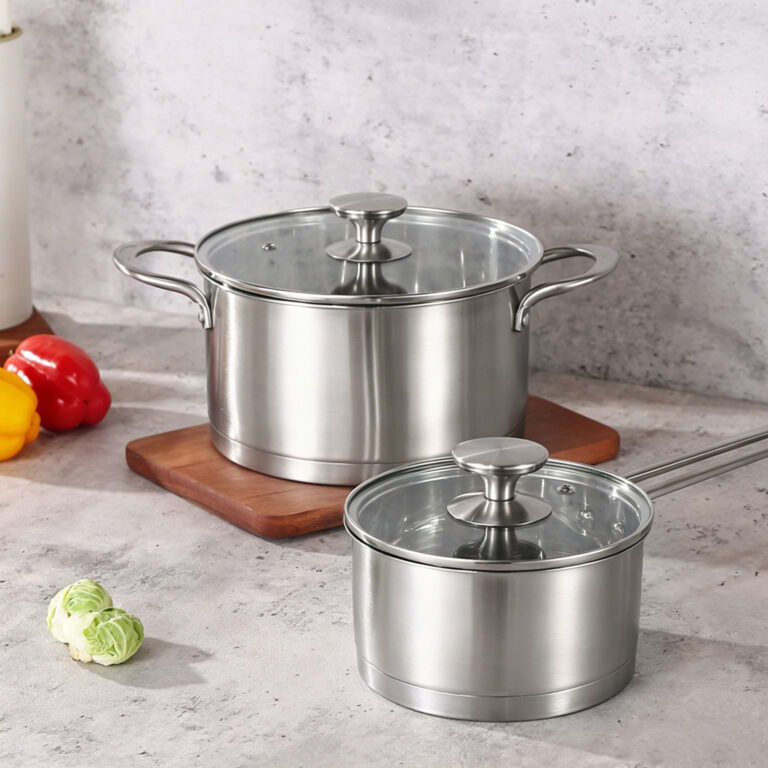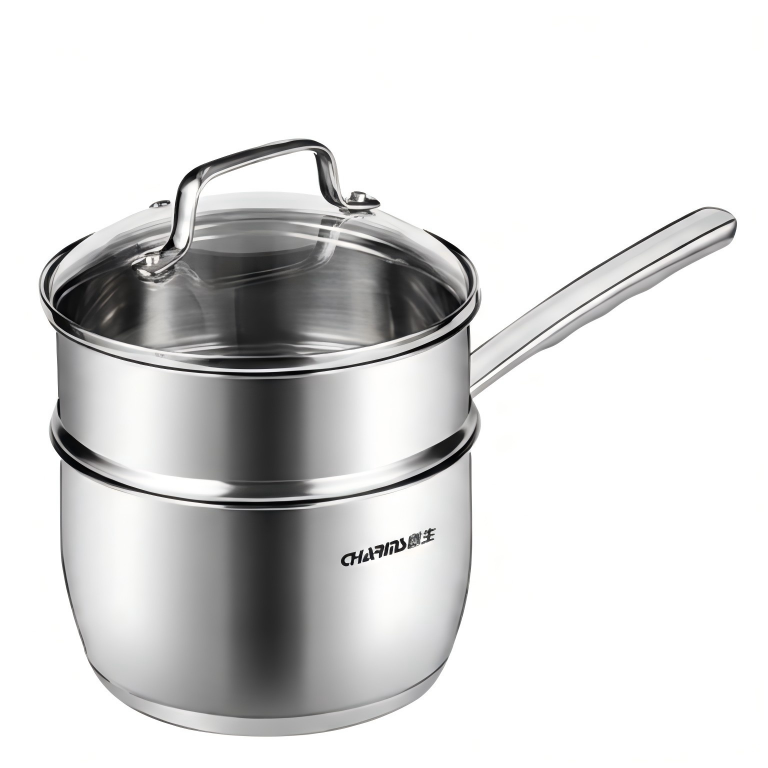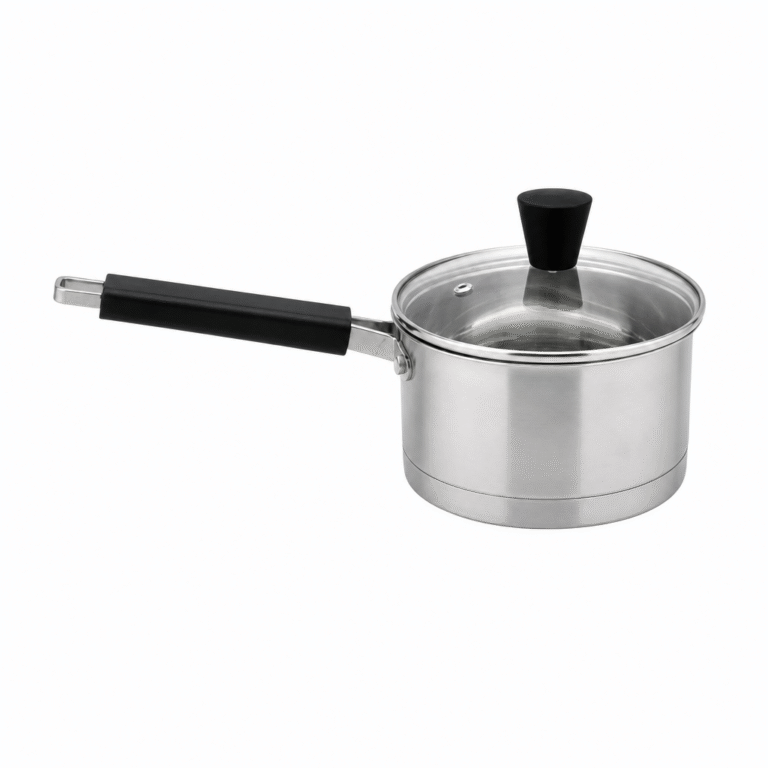


Most stainless steel cookware is oven-safe, but “most” is doing real work in that sentence. The steel body of your pan can almost always handle oven heat — the failure points are the handles, the lid, and the grade of steel. Budget pans cap out around 350–400°F. Mid-range and premium fully-clad pans (All-Clad, Made In, Misen) are rated between 500°F and 800°F. Glass lids have their own lower limit, usually 350°F. And plastic or composite handles will fail regardless of how good the pan itself is. This guide covers temperature limits by tier, a quick check method that doesn’t require digging out the manual, and the cooking techniques where stainless genuinely shines over other materials.
The Short Answer — and Why “Yes” Is More Complicated Than It Sounds
Yes, stainless steel cookware can go in the oven. The steel itself tolerates high heat without releasing harmful chemicals or degrading the way PTFE nonstick coatings can at high temperatures. That’s one of the core reasons professional kitchens stock stainless rather than nonstick — chefs need to sear on the stovetop and finish in the oven without switching pans.
But the answer is “yes, with conditions,” not “yes, unconditionally.” Chef Steve Chiappetti, who oversees culinary operations at theWit Hotel in Chicago, puts it plainly: “Every brand of stainless steel is unique, and not all handle heat the same.” What limits most pans isn’t the steel — it’s everything attached to it.
The three real questions to ask:
- What are the handles made of? (Metal handles are fine; plastic, rubber, or wood are not)
- Does the pan have a lid, and what’s the lid’s rating?
- What temperature does the manufacturer specify for the pan body itself?
If the handles are fully metal, there’s no lid involved, and the pan is labeled as a clad or multi-ply construction, you’re almost certainly fine at standard baking temperatures (350–450°F). The edge cases come with cheaper single-layer pans, composite handles, and glass lids.
Stainless Steel Oven Temperature Limits by Tier
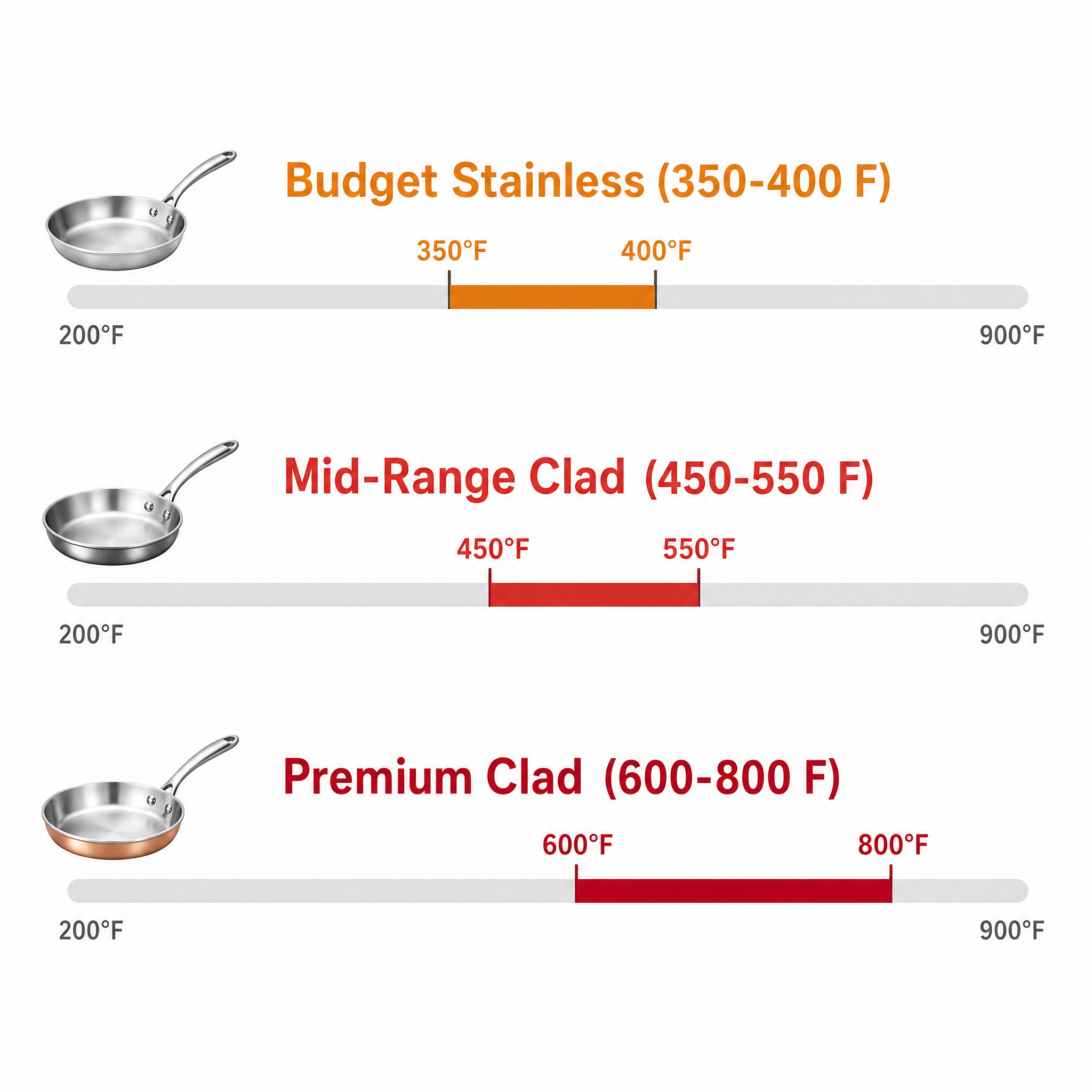
This is where most articles give you a vague range. Here’s a more useful breakdown based on manufacturer specs and real-world testing data:
| Pan Tier | Construction | Typical Oven Rating | Examples |
|---|---|---|---|
| Budget / single-layer | Thin stamped steel, often not fully clad | 350–400°F | Kirkland (some lines), IKEA 365+ |
| Mid-range / clad | 3-ply or 5-ply bonded construction | 450–550°F | Cuisinart Multiclad Pro (500°F), Caraway Stainless (550°F) |
| Premium / fully clad | Multi-ply with aluminum or copper core | 500–600°F | All-Clad D3, D5, Copper Core (all 600°F) |
| Professional / heavy clad | Thick cladding, fully welded handles | 600–800°F | Made In Stainless Clad (800°F), Misen Stainless (800°F), Demeyere (600°F) |
The pattern: what raises the oven rating is the construction, not just the brand name. Fully clad pans — where the aluminum or copper core runs all the way up the sides, not just across the base — tolerate higher temperatures more evenly and are less prone to warping under heat stress.
A few real numbers worth knowing:
- All-Clad D3, D5, and Copper Core: 600°F (broiler-safe)
- Made In Stainless Clad: 800°F
- Caraway Stainless: 550°F
- Cuisinart Multiclad Pro: 500°F (Amazon listings often say 550°F, but the official Cuisinart manual and Cuisinart product specialists confirm 500°F)
- Misen Stainless: 800°F
The 800°F rating on Made In is genuine — the pan was designed with that in mind and uses 5-ply cladding with a 304 stainless interior and exterior — but in practical home cooking, you’ll never need it. Most oven recipes top out at 500°F, and even serious searing finishes stay below 550°F. What the higher ratings actually tell you is that the pan has more thermal headroom and is less likely to warp if the oven runs hot.
At 350°F (175°C): Every properly clad stainless pan handles this safely, including ones with silicone handle grips (most silicone is rated to 400–450°F).
At 400–425°F (200–220°C): Still fine for most mid-range and premium pans. Starts becoming risky for budget pans with composite handles. Remove glass lids at this point unless the lid is specifically rated higher.
At 450–500°F (230–260°C): Requires confirmed oven-safe rating from the manufacturer. Fine for All-Clad, Made In, Misen, Caraway, and Cuisinart MultiClad Pro. Risky for budget pans. Metal-handled, fully-clad pans are safe here.
Above 500°F / broiler: Only use pans explicitly rated for broiling. Most premium stainless pans are broiler-safe (All-Clad explicitly states this for D3/D5/Copper Core), but the lid must come off and handles must be fully stainless.
The Handle and Lid Trap — The #1 Reason Stainless Pans Fail in the Oven
This is the part most “can stainless steel go in the oven” articles skim past: the pan body is almost never the problem. The handles and lid are.
Handles: what fails and what doesn’t
| Handle material | Oven-safe? | Notes |
|---|---|---|
| Solid stainless steel (riveted or welded) | Yes — no limit from handle material | Gets hot in oven; always use mitts |
| Silicone-wrapped metal | Usually yes — up to 400–450°F | Check manufacturer’s spec; some silicone degrades at high heat |
| Phenolic resin / Bakelite (“hard plastic”) | 350°F max, some lower | Common on budget sets; can crack or warp |
| Soft rubber grip | Not oven-safe | Will melt or deform at oven temperatures |
| Wood or wooden inlay | Not oven-safe | Can char, crack, or catch fire |
| Cast iron assist handle (on some stainless pans) | Yes | Fine at any cooking temperature |
The trap with composite handles is that they look metal but aren’t fully metal. You’ll see this on mid-price sets where the main handle is hollow steel with a phenolic resin core or grip. The steel part could handle 600°F. The resin insert caps it at 350°F. Always check what’s inside, not just what’s visible.
Lids: a separate rating, always lower
Glass lids are consistently the weakest link in any stainless set:
- Tempered glass lids on All-Clad: 350°F maximum
- Generic tempered glass lids: usually 350°F, some 400°F
- Stainless steel lids: match the pan rating (usually 500°F+)
All-Clad states this explicitly: remove glass lids for any cooking above 350°F, and always remove them for broiling. This catches people off guard because the stainless pan itself is rated to 600°F — but the lid that came with it is limited to 350°F.
The Kirkland case study: A Reddit user discovered their Costco Kirkland 5-ply set — marketed as professional-grade — was rated to only 400°F. The reason wasn’t the steel. It was the handle construction. Five-ply cladding doesn’t automatically mean the handle assembly can keep up.
Chef Gabriel Kreuther, whose NYC restaurant runs high-output kitchens, frames it this way: “Before you put stainless steel in the oven, check the handles and ensure they are also oven-safe.” He specifically calls this out before any temperature discussion — because in a real kitchen, it’s where mistakes happen.
How to Check If Your Specific Pan Is Oven-Safe (No Manual Required)
Lost the box. No manual. No idea what brand this is — it came from your parents’ kitchen. Here’s a fast check that works on almost any pan.
Step 1: Check the bottom of the pan
Flip it over. Look for:
- “Oven Safe” stamped or printed in the steel
- A temperature rating (e.g., “Oven Safe to 500°F”)
- An oven symbol — a small square with wavy lines inside, or a square with an oven icon
If you see “Oven Safe” with no temperature, assume 350–400°F as a conservative baseline.
Step 2: Examine the handles
Run your fingers along the handle. Solid, heavy, and cool-sounding when tapped? Probably all-metal. Hollow, light, or with any visible seam where different materials join? Check closer.
Look for these red flags:
- Any visible rubber, silicone grip, or plastic cap at the base of the handle where it meets the pan
- A wooden section anywhere on the handle (even a small inlay)
- A hollow sound when you knock the handle — some budget handles are stamped steel over a non-metal core
If handles are completely metal and riveted through the pan body, you’re almost certainly oven-safe. The rivet construction is a strong signal of professional-grade build quality.
Step 3: Check the lid separately
Lids are a separate item, not just an accessory to the pan. Glass lids are never safe above 400°F. If your lid has any plastic component (a handle knob, a rim seal), it’s not oven-safe at all.
Step 4: Search the brand + model
Most brands post their oven ratings on their product pages. Search “[brand name] [pan type] oven safe temperature” — this takes 30 seconds and gives you the manufacturer’s actual number. For common brands:
- All-Clad (D3/D5/Copper Core): 600°F, broiler safe
- Made In Stainless Clad: 800°F
- Cuisinart Multiclad Pro: 500°F
- Calphalon Tri-Ply: 450°F
- Caraway Stainless: 550°F
- Misen Stainless: 800°F
When to default to 350°F:
If you genuinely cannot verify the pan and it appears to be a budget piece with a composite handle, 350°F is a reasonable conservative maximum. Most casseroles, braises, and frittatas cook comfortably at 350–375°F.
Stainless Steel Grades and What They Mean for Oven Use
You’ll see “18/10,” “304,” and “430” on cookware listings. These aren’t marketing numbers — they describe the actual alloy composition, and they have real implications for oven performance.
18/10 stainless steel
- 18% chromium, 10% nickel
- Also called grade 304 in ASTM classification
- The most corrosion-resistant grade used in cookware
- Handles high heat well; less prone to surface oxidation at oven temperatures
- Oven rating implication: The grade itself is highly heat-tolerant. If the pan body is 18/10 and the construction is fully clad, oven performance is excellent.
18/8 stainless steel
- 18% chromium, 8% nickel
- Functionally very close to 18/10 for cooking purposes
- Slightly less corrosion resistance, but negligible difference in oven use
- Common in mid-tier cookware
18/0 or 430 stainless steel
- 18% chromium, no nickel
- Magnetic (works on induction)
- More economical to produce
- Can handle oven heat, but more susceptible to surface discoloration at high temperatures (above 450°F)
- Often used in budget sets marketed as “oven safe to 400°F”
What actually limits oven safety more than the grade:
The grade of stainless tells you about corrosion resistance and reactivity — it does not determine oven temperature limits on its own. What sets oven limits is the pan’s overall construction:
- Fully clad vs disc-bottom: A disc-bottom pan (thick aluminum disc bonded only to the base) is less stable under repeated oven heating than a fully clad pan where the aluminum runs up the sides. Under intense heat cycling, disc-bottom pans are more likely to develop hot spots or minor warping.
- Handle attachment method: Fully welded or riveted stainless handles are stronger and more thermally stable than handles attached with adhesives or plastic fasteners.
- Wall thickness: Thinner walls warp faster under sudden temperature changes.
The practical takeaway: “18/10” or “304” on the label is a good sign, but it tells you about the steel’s surface quality — not the pan’s structural integrity under oven heat. Look for fully clad construction and all-metal handles, and the grade becomes secondary.
The Best Things to Cook in a Stainless Pan in the Oven
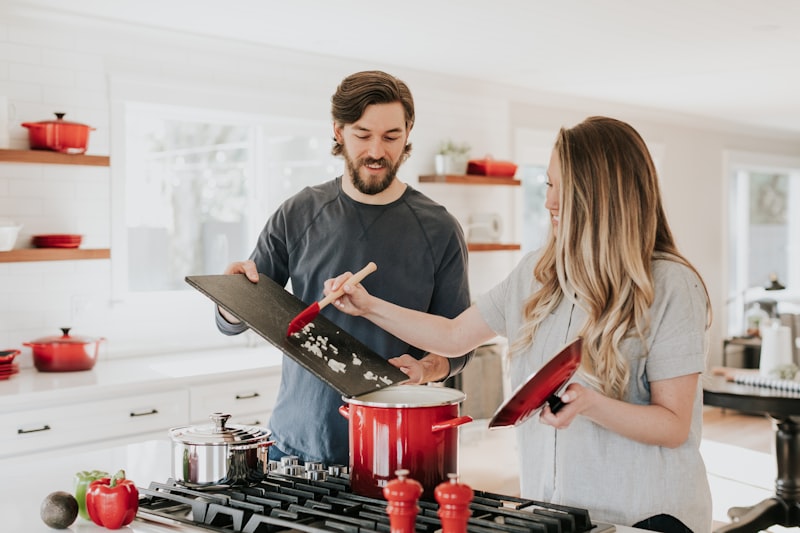
Stainless really earns its place here. The stovetop-to-oven move — where you sear, then finish in the oven in the same pan — is where it outperforms nearly everything else, including cast iron (heavier, slower to respond) and nonstick (lower temperature ceilings, can’t broil).
Reverse-sear steak
Start the steak low in the oven (225–250°F) until it reaches about 10–15°F below target internal temperature, then pull it out, crank the stovetop to high, and sear in the same stainless pan. The result is an even edge-to-edge cook with a hard crust. Chef Kreuther describes stainless as ideal for “high-heat searing followed by oven finishing” — the reverse sear is exactly this in reverse.
Frittatas
Cook the egg base on the stovetop until the edges set, then slide the whole pan into a 375°F oven for 8–12 minutes to finish the top. The even heat distribution of a fully clad stainless pan means no rubbery bottom while the top finishes. A 10-inch all-metal handle stainless skillet is the standard tool for this in restaurant prep kitchens.
Braises and pan sauces
Sear bone-in chicken thighs or short ribs stovetop, build the sauce in the same pan, then cover and transfer to a 325–350°F oven for 45–90 minutes. This is where sauté pans with straight sides shine — the 3-quart and 4-quart sizes are ideal for 2–4 servings without having to switch to a Dutch oven.
Roasted vegetables with a sear
Sear cut vegetables (Brussels sprouts, asparagus, thick-sliced carrots) cut-side down in hot oil stovetop for 2–3 minutes, then flip and transfer to the oven at 400–425°F to finish roasting. This gets you caramelization from the sear and even cooking from the oven — something hard to achieve by oven-only roasting.
Skillet cornbread and baked goods
A preheated stainless skillet gives cornbread a crisp, well-browned bottom crust in the same way cast iron does, without the weight penalty. Heat the oiled pan in the oven for 5 minutes before adding batter, bake at 400–425°F.
What stainless doesn’t do well in the oven:
Anything that needs a nonstick release — eggs baked directly on the pan surface, for example. Stainless doesn’t release like seasoned cast iron or nonstick. Use a light oil coat and don’t expect the same slip. Also, stainless discolors with heavy browning at the bottom of the pan — this is cosmetic, not structural (see next section), but worth knowing before your first high-heat braise.
After the Oven: Discoloration, Warping, and What’s Normal
Rainbow discoloration (heat tinting)
If your stainless pan comes out of the oven with a gold, blue, or purple tint on the interior surface, that’s heat tinting — a cosmetic oxidation of the chromium in the steel. It’s normal, especially at temperatures above 400°F. The steel has not been damaged. The discoloration doesn’t affect cooking performance or food safety.
To remove it: a paste of baking soda and water, or a stainless steel cleaner like Bar Keepers Friend, will polish it off. Using high-smoke-point oils (avocado, refined sunflower) when cooking at high oven temperatures reduces how much tinting accumulates over time.
Brown or black staining on the exterior
If you’re using the pan over high stovetop heat before the oven, burnt oil can carbonize on the exterior or the underside of the pan. This is again cosmetic, not structural, and Bar Keepers Friend handles it well. It’s not a sign the pan was damaged.
Warping
Warping is different — and is a sign of structural stress. It typically happens when:
- A very hot pan is placed on a cold surface or run under cold water immediately after oven use
- A thin-walled budget pan is subjected to repeated high-heat cycling
- The pan is heated dry (no food or oil) at very high temperatures
The fix and prevention: Always let your stainless pan cool naturally on the stovetop before washing. “Allow your cookware to cool naturally before washing to maintain its pristine condition and prevent warping” — this is All-Clad’s own care guidance, and it applies universally.
If a pan does warp (you’ll notice it wobbles on a flat burner), it’s usually from thermal shock, not from oven use per se. A warped pan from a reputable brand within its first few years of careful use is typically covered under warranty.
Handles getting hot in the oven
Every handle gets hot in the oven — including “stay-cool” handles, which are engineered to stay cooler on a stovetop but will reach full oven temperature when surrounded by oven heat. This is not a defect. Always use oven mitts rated for the temperature you’re cooking at. A stovetop mitt rated to 300°F is not sufficient for pulling a pan from a 500°F oven.
Frequently Asked Questions
Can I put a stainless steel pan in the oven at 400°F?
Yes — any properly clad stainless pan with all-metal handles is safe at 400°F. This includes most mid-range and premium pans. Budget pans with composite handles should be checked; many are rated to 350–400°F. Glass lids should be removed at 400°F unless specifically rated higher.
Is stainless steel oven-safe at 425°F?
Yes, for most mid-range and premium pans. Fully clad pans from brands like Cuisinart, Caraway, Misen, and All-Clad are all rated above 425°F. At this temperature, the only typical concern is a glass lid (remove it) or a silicone handle grip (check the manufacturer’s rating, as some silicone is only rated to 400°F).
Can stainless steel go in the oven at 350°F?
Yes. 350°F is safe for virtually any stainless steel pan, including budget models and pans with silicone handle wraps. It’s also typically within the range of tempered glass lids, though checking the specific rating before using a glass lid is always worth doing.
How hot can a stainless steel pan get in the oven?
It depends on the specific pan. Budget pans typically cap at 350–400°F. Mid-range pans: 450–550°F. Premium fully clad pans: 500–600°F. The highest-rated consumer stainless pans (Made In Stainless Clad) are rated to 800°F, though standard oven cooking never approaches that.
Why is my stainless steel set only rated to 400°F if it’s 5-ply?
The ply count describes the pan body — how many layers of metal are bonded together. It doesn’t determine the rating of the handles. A 5-ply pan with a composite handle assembly can still be limited by the handle material. The Kirkland 5-ply set is a well-known example of this.
Can stainless steel go under the broiler?
Yes, if the pan is explicitly rated for broiling. Most premium stainless pans (All-Clad D3, D5, Copper Core; Made In Stainless Clad) are broiler-safe. The lid must be removed. Broiling with a glass lid is never safe.
My stainless pan turned blue/gold after the oven — is it ruined?
No. That’s heat tinting — a cosmetic oxidation on the chromium surface. It doesn’t affect cooking performance or food safety. Bar Keepers Friend or a baking soda paste will remove it. Use higher smoke-point oils in future high-temperature cooking to minimize it.
Does 18/10 stainless steel mean it’s oven-safe?
18/10 (also called 304 grade) describes the alloy composition — 18% chromium, 10% nickel. It’s highly corrosion-resistant and handles heat well. But the oven safety of a pan depends on the full construction (cladding, handle material), not just the grade. An 18/10 pan with a rubber handle is not oven-safe. An 18/10 pan with all-metal handles and full cladding is.
The Bottom Line
Most quality stainless steel cookware handles oven use without issue. The steel body is rarely the limiting factor — the handles and lid almost always are. For anyone cooking in the 350–450°F range with a fully clad, all-metal-handle stainless pan, the answer is simply yes, put it in. Remove the glass lid if there is one.
Where it gets more nuanced: higher temperatures above 450°F require verified manufacturer ratings; budget pans with composite handles cap lower than the brand marketing often implies; and “stay-cool” handles are a stovetop feature, not an oven feature.
The most practical upgrade for oven versatility isn’t buying a new pan — it’s checking whether the one you have has all-metal handles. That single factor unlocks more temperature range than switching to a higher-grade stainless steel.