


A colander has large holes and drains fast — it’s the right tool for pasta, potatoes, and produce. A strainer has fine woven mesh and filters precisely — reach for it when rinsing rice, straining broth, or sifting flour. Both are available in stainless steel, which outperforms plastic in heat resistance and longevity. This guide breaks down the structural differences, covers all common kitchen strainer types by mesh size, and answers whether you actually need both tools in your kitchen.
Colander vs Strainer at a Glance
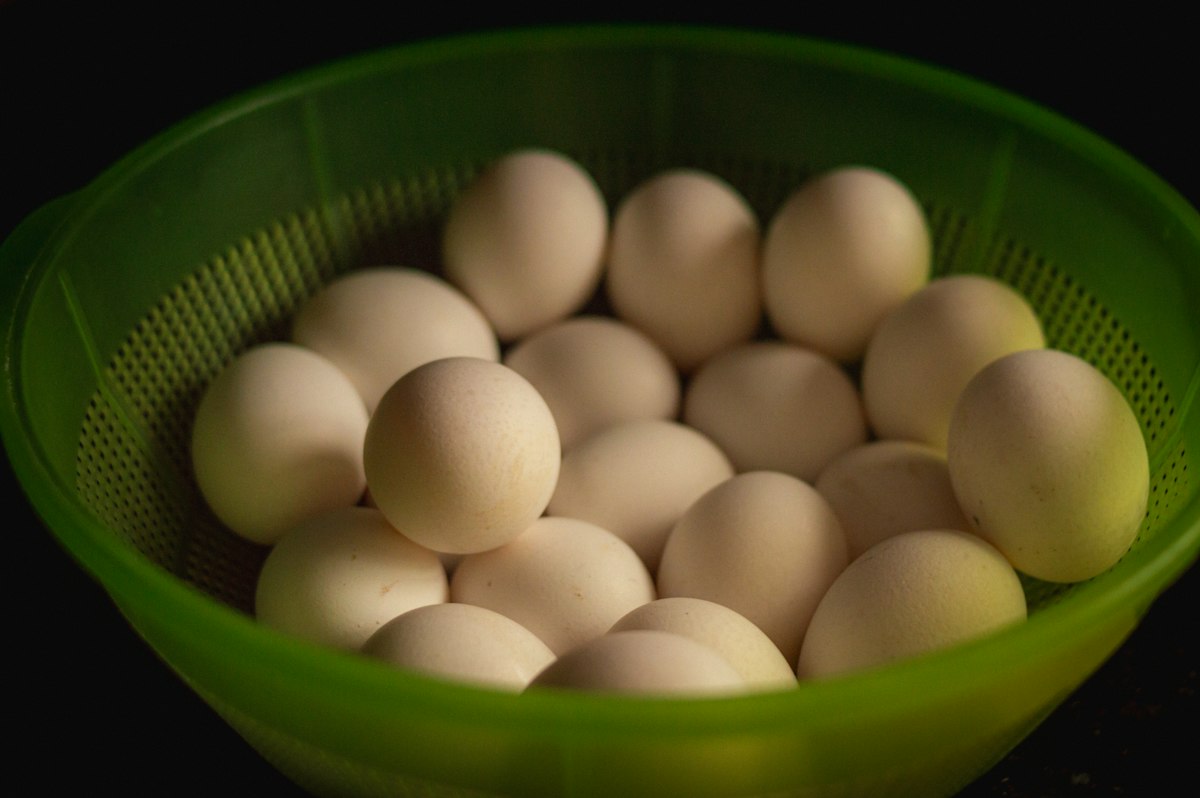
The fastest way to understand the difference: a colander drains, a strainer filters.
| Feature | Colander | Fine Mesh Strainer |
|---|---|---|
| Hole type | Large perforations (3–8mm) | Woven wire mesh (0.2–1mm) |
| Structure | Bowl with base, 2 handles | Handheld, long handle |
| Best for | Pasta, vegetables, canned foods | Rice, broth, sauces, flour |
| Capacity | Large (3–8 qt typical) | Small to medium (2–8 in diameter) |
| Self-standing | Yes — sits in sink | No — handheld or rested on bowl |
| Stainless steel grade | 18/8 (304) or 18/0 | 18/8 (304) standard |
| Price range | $15–$60 | $10–$50 |
The key difference isn’t size — it’s hole size and filtration precision. A colander’s perforations are wide enough for water to rush through fast, which is exactly what you want when draining a pound of pasta before it overcooks. A strainer’s mesh is tight enough to catch a single grain of rice or a tea leaf.
What a Colander Does (and When It Falls Short)
A colander is a perforated bowl, typically stainless steel or plastic, that sits in your sink on its own base. The standard two-handle design makes it easy to pour an entire pot into without spilling. It’s the workhorse for:
- Pasta and noodles — dump the whole pot in, drainage is fast, pasta doesn’t overcook
- Rinsing produce — lettuce, apples, potatoes, peppers go in, water runs through
- Draining canned foods — beans, chickpeas, corn
Where a colander fails: anything small. Rice grains slip straight through those large holes. Quinoa disappears. If you try to strain a broth through a colander, the fat and herb particles you wanted to remove just go with it.
Stainless steel vs plastic colanders: A 304 stainless steel (18/8) colander won’t warp under boiling water poured from a 200°F pot. Plastic colanders, especially cheaper ones made from polypropylene, can warp with repeated exposure to near-boiling liquid. They’re also harder to clean thoroughly once stained by tomato sauce. For a tool you’ll use weekly for years, stainless steel is worth the extra $10–$20.
What a Strainer Does (and the Mesh Size That Actually Matters)
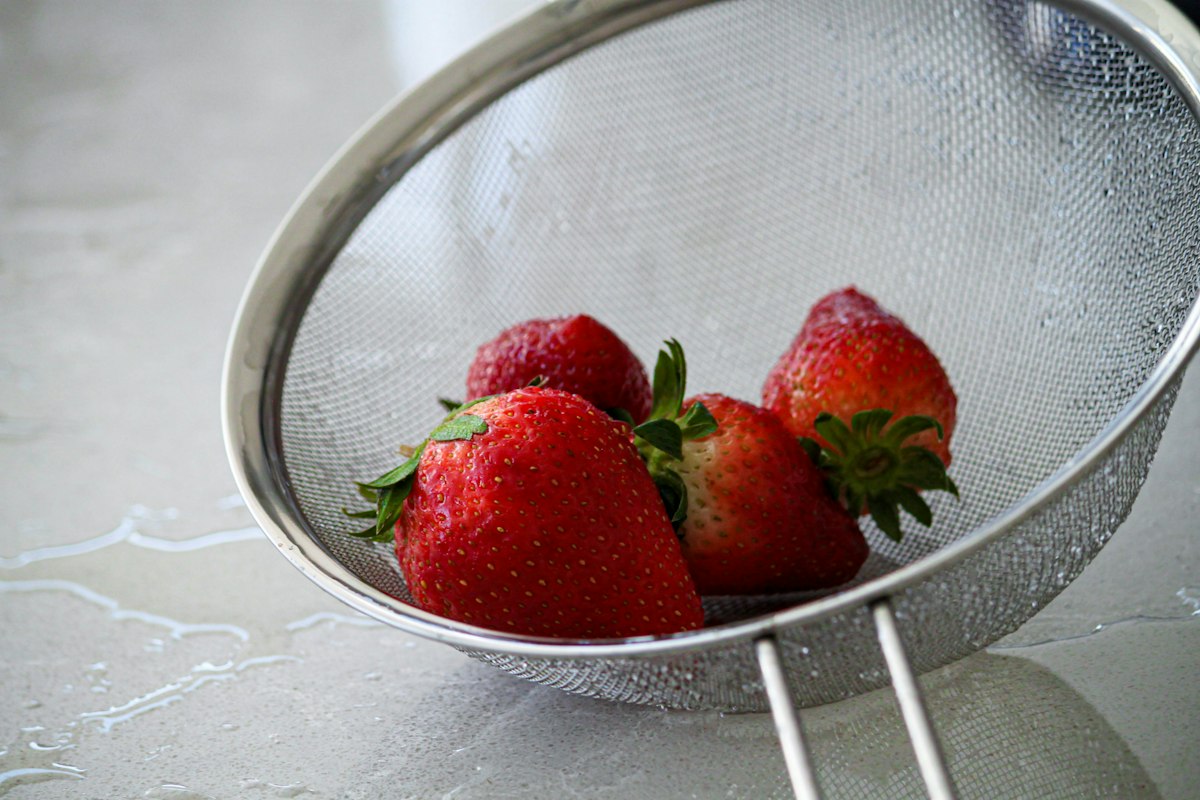
A strainer — properly called a fine mesh strainer or sieve — has a woven wire basket instead of drilled holes. The mesh weave is what creates the tight filtration. Most kitchen strainers are made from 18/8 stainless steel wire, which resists rust and holds its shape after dishwasher cycles.
Mesh isn’t one-size-fits-all. There are three practical tiers:
Fine mesh (80+ mesh count / ~0.18mm openings)
- Rinsing rice, quinoa, lentils, couscous
- Straining broth, stock, sauces for a silky texture
- Dusting powdered sugar or cocoa over desserts
- Straining freshly squeezed citrus juice
Medium mesh (30–50 mesh count / ~0.3–0.5mm openings)
- General-purpose draining for small pasta shapes
- Rinsing canned beans (when you don’t want to drag out the colander)
- Washing berries without them escaping
Coarse mesh (10–20 mesh count / ~1mm openings)
- Skimming foam from stocks
- Blanching vegetables in boiling water (spider strainer territory)
Most home cooks need one fine mesh strainer in the 6–8 inch diameter range. That size handles nearly every precision task without taking up cabinet space.
Types of Kitchen Strainers: A Quick Map
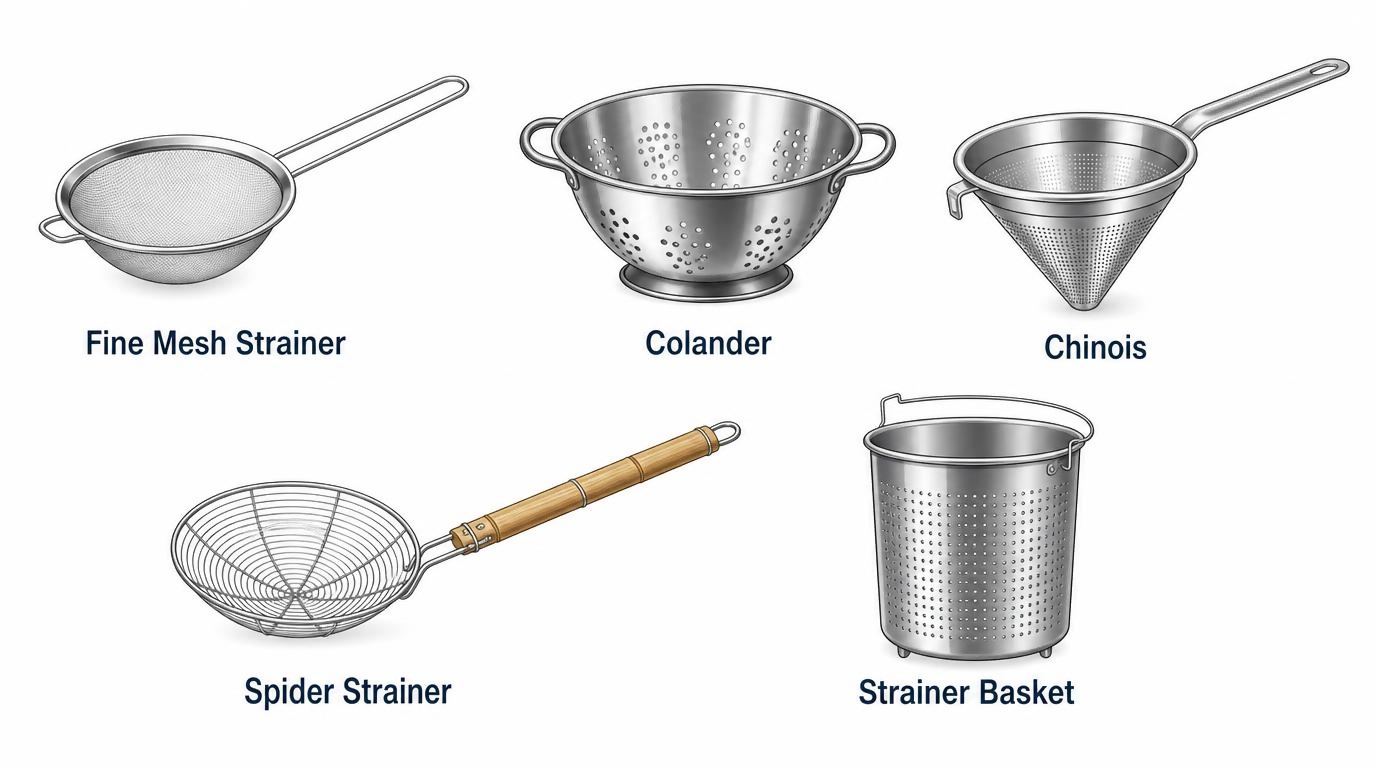
The “strainer” category is wider than most articles let on. Here’s the full landscape:
Fine mesh strainer / sieve — the standard handheld tool with woven mesh basket. Most used. Rösle’s stainless steel round-handle model has been Serious Eats’ top pick for years.
Chinois — a conical fine mesh strainer used with a pestle to push purees and sauces through for ultra-smooth results. Professional kitchens use these for veloutés and custards.
China cap strainer — similar cone shape to a chinois but with larger perforations; used to press seeds and solids out of fruit sauces.
Spider strainer — a wide, shallow mesh basket on a long handle, used for lifting blanched vegetables or fried foods out of hot liquid. Common in Asian cooking.
Strainer basket — a deep cylindrical mesh basket that sits inside a pot; you blanch or cook in it, then lift everything out at once.
Cocktail strainer — small fine mesh for straining ice and muddled herbs into a glass.
For the home kitchen, a colander + one fine mesh strainer covers 95% of tasks. Add a spider strainer if you blanch vegetables or fry regularly.
Stainless Steel: Why It’s the Default Choice
Both colanders and strainers come in stainless steel, plastic, and sometimes silicone. Stainless steel wins on three grounds:
- Non-reactive — won’t leach anything into acidic foods like tomato sauce, citrus juice, or vinegar-based dressings
- Heat-resistant — handles boiling water without warping or releasing chemicals
- Durability — a quality 18/8 stainless colander or strainer will outlast a dozen plastic ones
The grade marker to look for is 18/8, which means 18% chromium and 8% nickel (ASTM grade 304). This is the standard food-safe, corrosion-resistant stainless used in restaurant kitchens. Some cheaper strainers use 18/0 (no nickel), which is less corrosion-resistant and can rust at the weld points over time.
Plastic is lighter and cheaper — acceptable if you’re on a tight budget or only using it occasionally. Silicone colanders are collapsible and good for small kitchens, but the mesh variants aren’t common.
Do You Actually Need Both?
This is the question most articles dodge. Here’s a straight answer:
If you cook pasta more than once a week and cook for two or more people: yes, own both. Trying to drain a full pot of spaghetti through a handheld mesh strainer is slow and messy.
If you’re cooking for one or have a small kitchen: a large fine mesh strainer (8–9 inches) can substitute as a colander for smaller portions and still handle all the precision tasks. One tool, less clutter.
If you never cook rice, grains, or strain sauces: a colander alone is enough.
The honest answer is that these tools occupy different filtration zones. A colander can’t do what a fine mesh strainer does, and a small strainer can’t do what a large colander does. They’re not substitutes — they’re complements.
FAQ
What is the main difference between a colander and a strainer?
A colander has large drilled holes (3–8mm) for fast drainage of bulk foods like pasta and vegetables. A strainer has fine woven mesh (typically 0.2–1mm openings) for filtering small particles like rice grains, broth, or sauce pulp.
Can I use a strainer instead of a colander for pasta?
For small portions, yes. For a full pound of pasta, a handheld mesh strainer is too small and slow. The pasta keeps cooking while you work in batches. A colander is the right tool here.
What mesh size strainer do I need?
For most home cooks, a fine mesh strainer in the 80-mesh range (around 0.18mm openings) handles rice, broth, sauces, and sifting. A medium-mesh (30–50 mesh) works for berries and small pasta shapes.
Is stainless steel better than plastic for a colander or strainer?
Yes, for regular use. 18/8 stainless steel (grade 304) resists warping under boiling water, doesn’t stain from tomato sauce, and lasts years longer than plastic. The price difference is usually $10–$20 and worth it.
What is a chinois strainer?
A chinois is a conical fine mesh strainer used in professional kitchens to strain purees and sauces to an ultra-smooth texture. It pairs with a pestle to push food through the mesh. It’s not necessary for most home cooks unless you make refined sauces or custards regularly.
What’s the difference between a sieve and a strainer?
They’re the same thing in kitchen language. “Sieve” is more common in British English and often refers to dry sifting, while “strainer” is more common in American usage and covers both wet and dry tasks.
The Tool That Matches Your Cooking
Owning both a stainless steel colander and a fine mesh strainer isn’t excessive — it’s efficient. They occupy different filtration zones, and trying to make one do the other’s job creates friction you don’t need mid-recipe.
If you’re buying just one, a large fine mesh strainer in 18/8 stainless is the more versatile choice. It handles grain-rinsing, sauce work, and light pasta draining. If pasta is a weekly ritual, add a full-size colander. Either way, stainless steel in 18/8 grade is the material to reach for — it won’t warp, rust, or wear out before you do.





