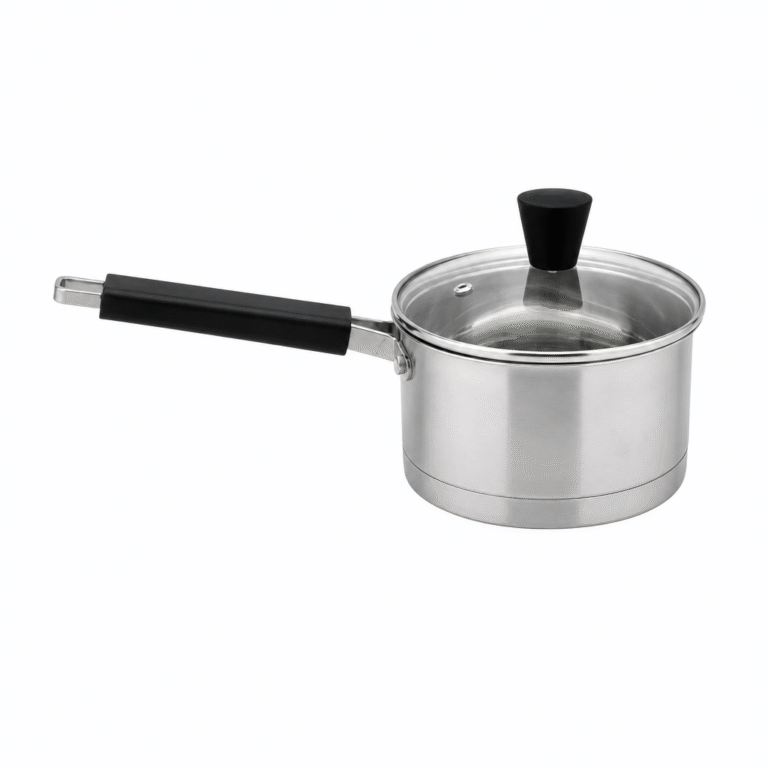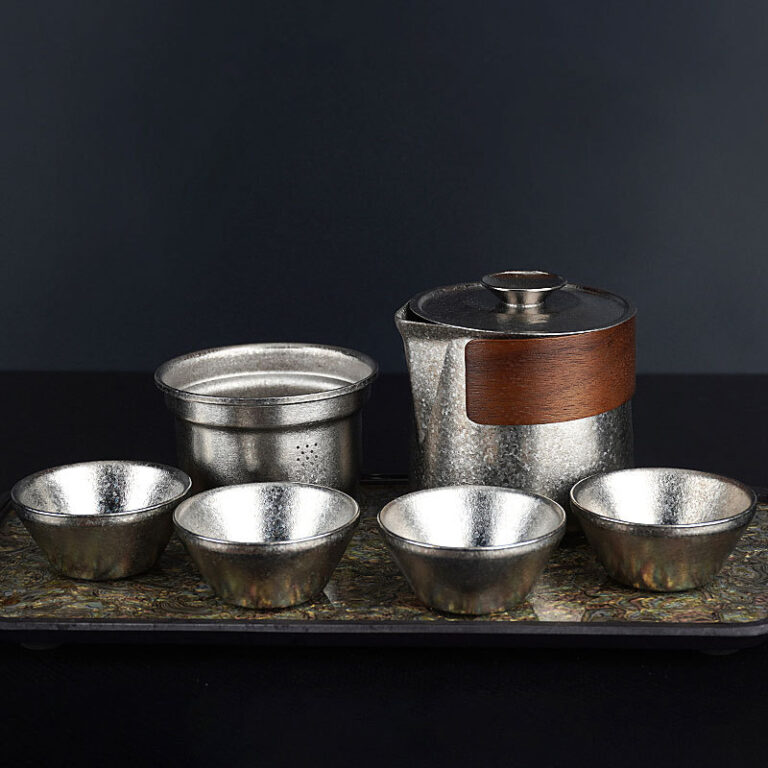


Sourcing cookware packaging wholesale from China means choosing between rigid gift boxes (typically $2–$8/unit at 500 pcs MOQ) and color retail boxes ($0.28–$2.00/unit at 500–3,000 pcs MOQ). The choice affects not just shelf appeal but your landed cost — carton size alone can shift freight per unit by 40%. This guide covers every major packaging format available from Chinese manufacturers, what things actually cost, the MOQ traps importers fall into, and what Amazon FBA and EU retailers require before your first shipment arrives.
Color Box vs. Gift Box: Not Just an Aesthetic Choice
Most buyers frame this as a branding question. It isn’t — it’s a structural and cost question first.
A color box is a folding carton: E-flute corrugated or SBS coated board, 4-color offset print, flat-packed for shipping. It’s the standard format for Amazon FBA, mass retail, and any channel where your packaging needs to survive a distribution center. At 500 pieces, expect $0.28–$2.00 per unit FOB depending on board weight and finish. At 2,000–3,000 pieces, the per-unit cost drops further.
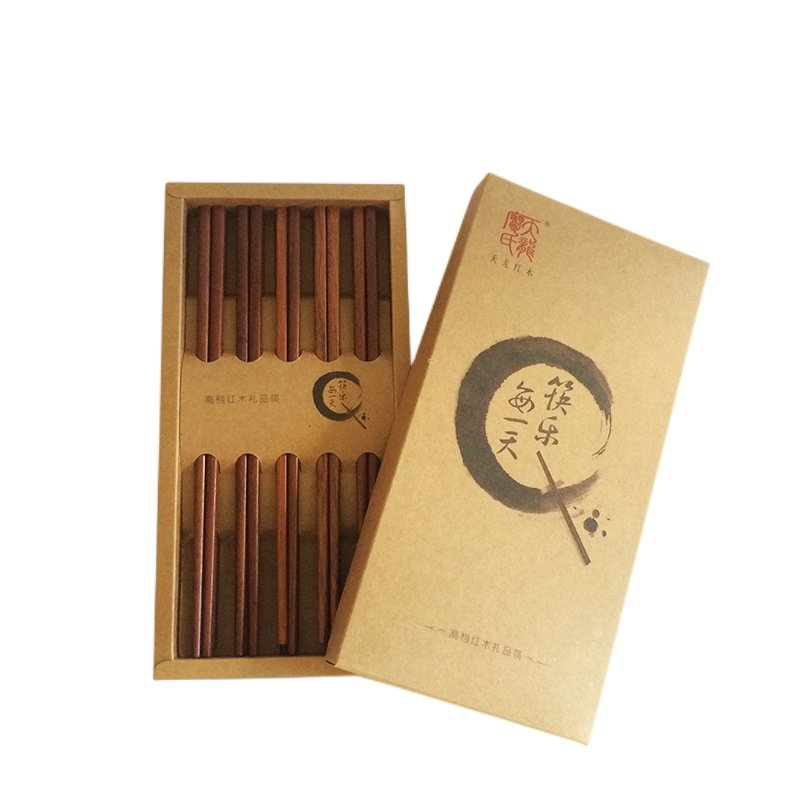
A gift box (rigid box) is built from greyboard — typically 1,200–2,400 GSM chipboard covered in art or specialty paper. It does not collapse. Closure styles include magnetic flap, two-piece lid-and-base, and drawer pull. Because of the greyboard core, rigid gift boxes ship at full volume even when empty, so freight during packaging transport is higher. At 500 pieces, basic rigid gift boxes typically run $2–$4 per unit FOB; add foil stamping and soft-touch lamination and you’re in the $4–$8 range.
For a holiday cookware set going into gourmet retail or direct-to-consumer gifting, the rigid gift box is the right call. For a frying pan sold on Amazon or through a distributor, a color retail box is more appropriate — and materially cheaper.
The Five Formats Chinese Factories Actually Produce
Beyond the color box and gift box, the Chinese market offers formats that most buyers don’t consider until a retailer or platform forces the issue:
Window box: A kraft or coated board carton with a PET or acetate panel cut into the face. The buyer can see the product without opening the box. Used extensively for single-piece cookware — a wok, a sauté pan, a Dutch oven. The acetate or PET insert adds $0.05–$0.15 per unit to tooling cost.
Display box / shelf-ready packaging (SRP): The outer master carton is engineered to open and sit directly on a retail shelf without repacking. This requires specific FEFCO case codes, precise perforations, and barcode placement compliant with each retailer’s planogram. If your buyer is Costco, Target, or a European DIY chain, they will specify SRP as a requirement — not a suggestion.
Blister pack: PVC or PET vacuum-formed blister sealed to a printed card. Cost-effective for accessories, lids, and lower-price single items. At volume, blister cards run $0.03–$0.15 per unit. Not suitable for anything premium, but common for accessories shipped alongside a main cookware set.
Hybrid (color inner + plain master carton): One printed retail color box per piece, grouped into a plain corrugated master carton. This single production run serves both Amazon FBA (where the color inner box goes directly into the warehouse) and wholesale distribution (where the master carton travels to a distributor who breaks it down). Maintaining two separate packaging SKUs is unnecessary overhead — the hybrid eliminates it.
MOQ Reality: Product MOQ and Packaging MOQ Are Not the Same Number
This is where most first-time importers get caught. Your cookware factory sets its product MOQ — typically 1,000–3,000 units per SKU. Your packaging is sourced from a separate printing house, and that printing house sets its own MOQ based on the print run, not on how many pans you’re ordering.
The gift packaging market globally was valued at USD 27.5 billion in 2025 and is projected to reach USD 41.9 billion by 2035 at a CAGR of 4.3% (Future Market Insights, 2025) — a signal that demand for premium retail presentation, including cookware gift sets, is growing steadily rather than flattening.
Standard MOQs from established Chinese packaging factories:
| Factory Type | Rigid Gift Box | Corrugated Color Box |
|---|---|---|
| Most established suppliers | 500 pcs | 500–1,000 pcs |
| Low-MOQ specialists (Packshion, Dongguan) | 300 pcs | 500 pcs |
| Volume corrugated suppliers | — | 2,000–3,000 pcs |
If your product MOQ is 2,000 units but the packaging print run is 3,000 units, you’re paying for 1,000 boxes you have no product to put in. On a first order where you’re validating market demand, that’s unnecessary capital tied up in cardboard.
The practical fix: Use the cookware factory’s stock (unprinted) boxes or plain cartons on your first order. Run your own branded packaging from the second order onward, when your reorder quantity aligns with the packaging print run MOQ. One-time costs — artwork ($300–$1,500) and printing plates ($100–$400 per color) — are paid once and amortized across all future runs.
What Cookware Actually Costs to Package: The Carton Math
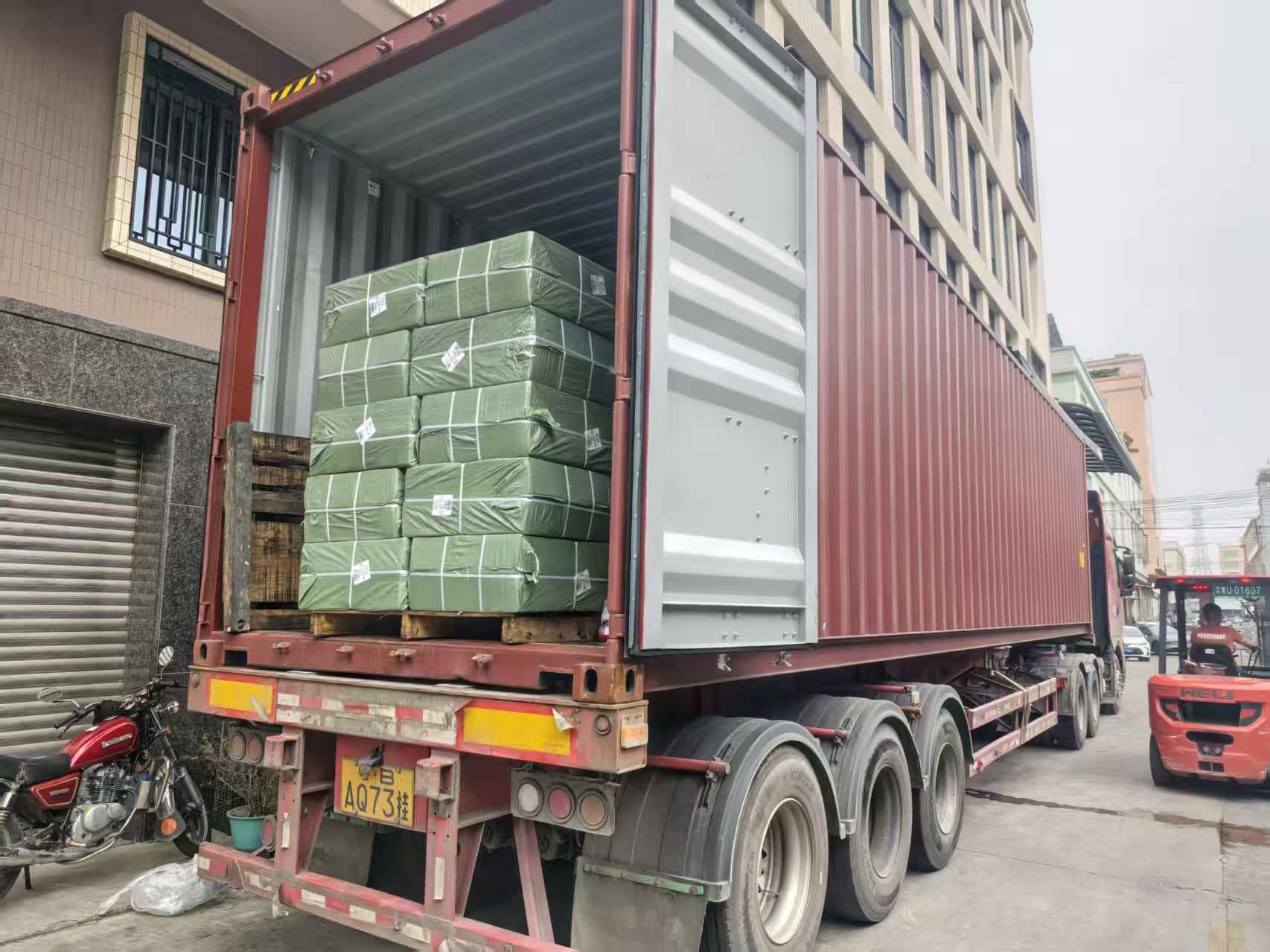
The box price per unit is only part of the story. Carton outside dimensions directly set your freight cost per unit.
A 40-foot container holds roughly 67 CBM of usable space. Consider two carton configurations for the same 5-piece cookware set:
| Carton Size | CBM per Carton | Sets per 40ft Container |
|---|---|---|
| 60 × 40 × 35 cm | 0.084 CBM | ~795 sets |
| 70 × 50 × 40 cm | 0.140 CBM | ~478 sets |
The larger carton carries 40% fewer sets per container. If sea freight for a 40ft container runs $3,500–$5,000 (standard China–US West Coast, 2026), the larger carton configuration adds $3–$5 per unit in freight before the box has even been printed.
Nesting — stacking cookware pieces inside each other before packing — reduces carton volume by 25–35%. This is the most effective single packaging cost-reduction decision available to a cookware importer, and it costs nothing beyond a foam separator between polished surfaces.
What Amazon FBA and EU Retail Actually Require
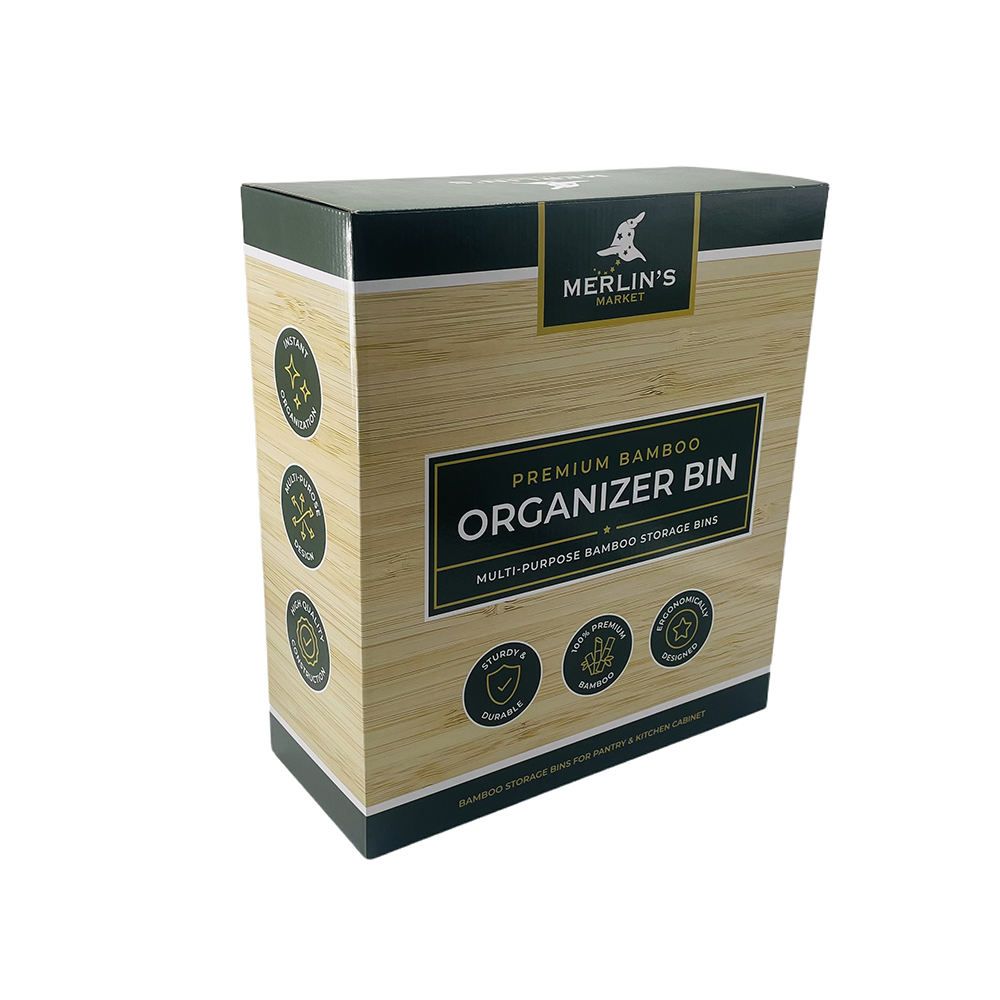
Amazon FBA
Amazon’s packaging rules for cookware are specific and enforced at the receiving dock:
- Poly bags (for any cookware with loose parts or accessories): minimum 1.5 mil thickness, suffocation warning printed or labeled on bags larger than 5 inches in any dimension
- FNSKU barcode: must be scannable on the outside of the retail unit; placement must not be obscured by packaging tape or box flap overlap
- Drop test: your carton construction must protect the product through FBA’s standard drop heights (typically 3–5 feet depending on weight)
Packaging suppliers in China can produce FBA-compliant color boxes, but you need to supply the FNSKU barcode artwork and confirm poly bag specifications in writing before production. Don’t assume compliance — confirm it on the purchase order.
EU Retail and EU Regulation 2025/40
EU Regulation 2025/40 — in force and directly applicable as of 2025 — sets recyclability requirements, harmonized labeling rules, and extended producer responsibility (EPR) obligations. The critical point that most articles miss: the importer is the “producer” under EU law, not the Chinese packaging factory. EPR registration fees and recycling obligations fall on the company placing the product on the EU market, regardless of where the packaging was manufactured.
If you’re selling into Germany, France, or the Netherlands, confirm that your packaging materials meet the recyclability requirements under 2025/40 and register with the relevant national EPR scheme before your first shipment lands.
Certifications Worth Asking For
Not every claim on a supplier’s website corresponds to a current, valid certificate. Request the actual certificate number and verify it.
- FSC CoC (Chain of Custody): The packaging manufacturer must hold this certification, not just claim to source FSC-certified paper. Look up the certificate number at info.fsc.org.
- ISO 9001: Baseline quality management; check that the certificate is current and covers the specific factory location.
- SGS test report: Materials testing for durability and safety; ask for the specific report number and scope.
- Low-migration / food-safe inks: Required when packaging liner material contacts cookware surfaces that will touch food. Relevant standard is EU Regulation 10/2011 for EU markets; FDA 21 CFR 176.170 for US. Ask specifically whether the printing inks used are low-migration formulations.
Pricing Summary: What to Budget
| Format | MOQ | FOB Unit Price | One-Time Setup |
|---|---|---|---|
| Folding color box (standard 4-color) | 500–1,000 pcs | $0.28–$2.00 | $400–$1,900 |
| Rigid gift box (basic) | 500 pcs | $2–$4 | $400–$1,900 |
| Rigid gift box (foil + spot UV) | 500 pcs | $4–$8 | $400–$1,900 |
| Window box | 500 pcs | $1–$3 | $500–$2,000 |
| Blister card | 1,000–3,000 pcs | $0.03–$0.15 | $300–$800 |
Surface finish add-ons are typically minor per-unit increases: foil stamping adds roughly $0.04–$0.07/unit; spot UV adds $0.04/unit; soft-touch lamination adds $0.05–$0.08/unit; embossing or debossing adds $0.05–$0.10/unit. These numbers are consistent across Alibaba supplier quotes and packaging industry pricing guides — the finishes that most elevate perceived value cost less than $0.10/unit to add.
One-time setup (artwork + plates) is paid once and carries forward to all future reorders. On a 2,000-unit run, a $1,500 setup cost adds $0.75 per unit — on a 10,000-unit reorder, the same setup cost adds $0.15 per unit.
Total packaging lead time from artwork submission to product in a US or EU warehouse: 10–12 weeks on a first order. Experienced importers submit packaging artwork while their product order is in production. Waiting until production is complete before starting packaging delays everything by 3–6 weeks.
The Right Packaging for Your First Order
Use stock (unprinted) packaging from the cookware factory on your first import. Validate that the product sells, confirm your reorder quantity, then invest in a branded print run aligned to that volume. The foil stamping, soft-touch lamination, and embossed logo add $0.08–$0.25 per unit at scale — not enough to skip, but not worth locking in before you know the product moves.
On your second order, submit artwork early, align packaging MOQ to product order quantity, and confirm carton dimensions with the freight forwarder before finalizing the dieline. That last step — checking carton dimensions against container efficiency — takes 10 minutes and can save several dollars per unit in freight.
FAQ
What is the minimum order for custom cookware packaging from China? Most established suppliers require 500 pcs for rigid gift boxes and 500–3,000 pcs for corrugated color boxes. Note that packaging MOQ is set by the printing supplier, not your cookware factory — the two numbers are often different.
How much does custom cookware packaging cost per unit? Standard 4-color color boxes: $0.28–$2.00/unit depending on volume and construction. Rigid gift boxes with basic finish: $2–$4/unit at 500 pcs. Add foil stamping and spot UV and you’re at $4–$8/unit. Budget $400–$1,900 one-time for artwork and printing plates.
What is the difference between a color box and a gift box for cookware? Color box = folding carton with full-color print; ships flat; lower cost; standard for Amazon FBA. Gift box = rigid greyboard construction; does not collapse; higher per-unit cost and freight; used for premium retail and gifting.
How long does it take to get custom cookware packaging from China? 10–12 weeks door-to-door for a first order. Packaging development (artwork approval and printing) adds 3–6 weeks before production can start. Submit artwork while your product is in production, not after.
What certifications should I ask for from a Chinese packaging supplier? ISO 9001 (verify certificate is current), FSC CoC (verify manufacturer holds it — not just sources FSC paper), SGS test report, and low-migration ink confirmation. For EU markets, confirm materials meet EU Regulation 2025/40 recyclability requirements.
Does carton size affect shipping costs? Yes, significantly. A 10 cm increase in one carton dimension can reduce units per 40ft container by 30–40%, increasing freight per unit by the same proportion. Confirm carton outside dimensions with your freight forwarder before finalizing your dieline.
The Box Is Part of the Cost Structure, Not an Afterthought
Every packaging decision made at the specification stage — format, dimensions, material, finish — has a downstream cost implication in freight, storage, and compliance. The importers who manage landed cost well treat the packaging spec review as part of the product development process, not something to sort out after samples are approved. That means submitting packaging artwork during production, confirming carton dimensions against container CBM before printing, and aligning packaging MOQ to actual order volumes — not to what the supplier’s catalog says is available.
The Chinese packaging supply chain has the range to support everything from a plain kraft color box at $0.40/unit to a luxury magnetic gift set at $20+/unit. The format question is one of alignment: what channel is this product entering, what does that channel require, and what does the packaging cost once it’s in a container on the water?