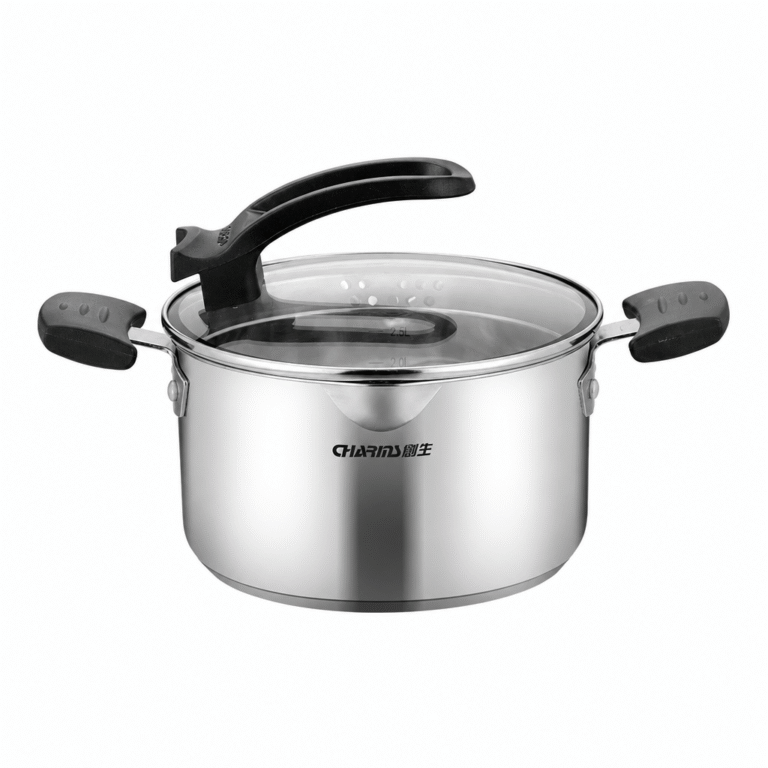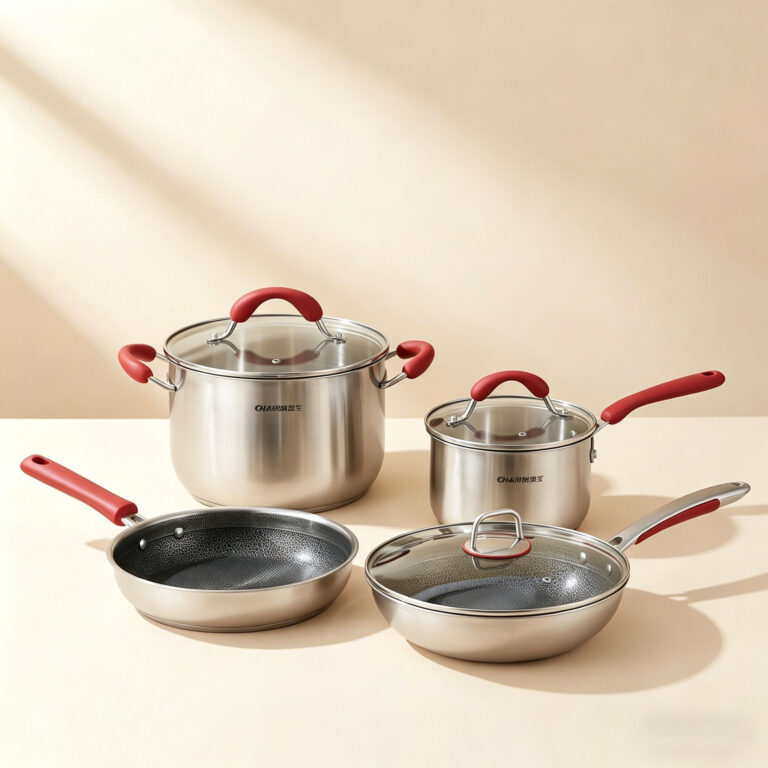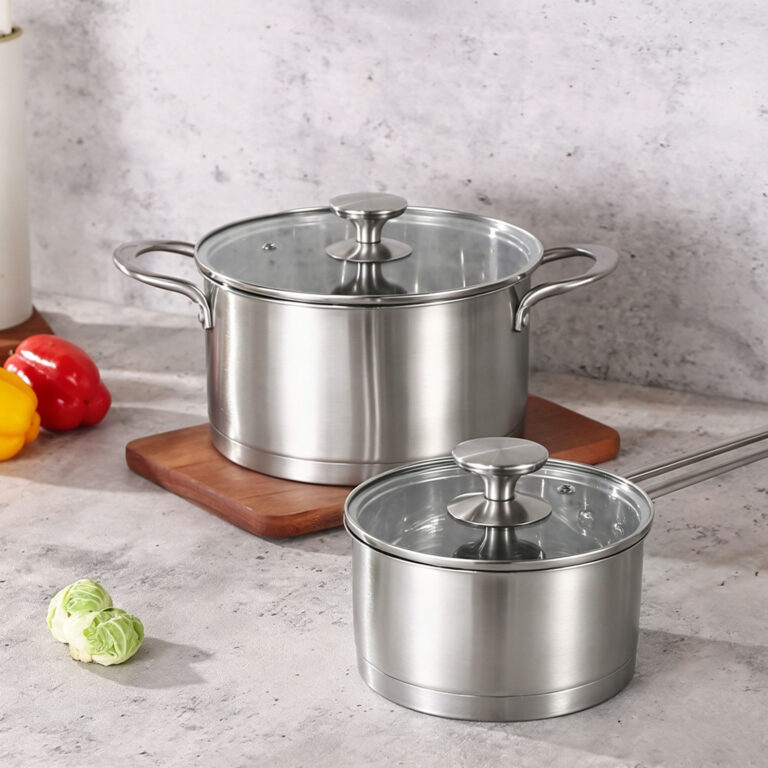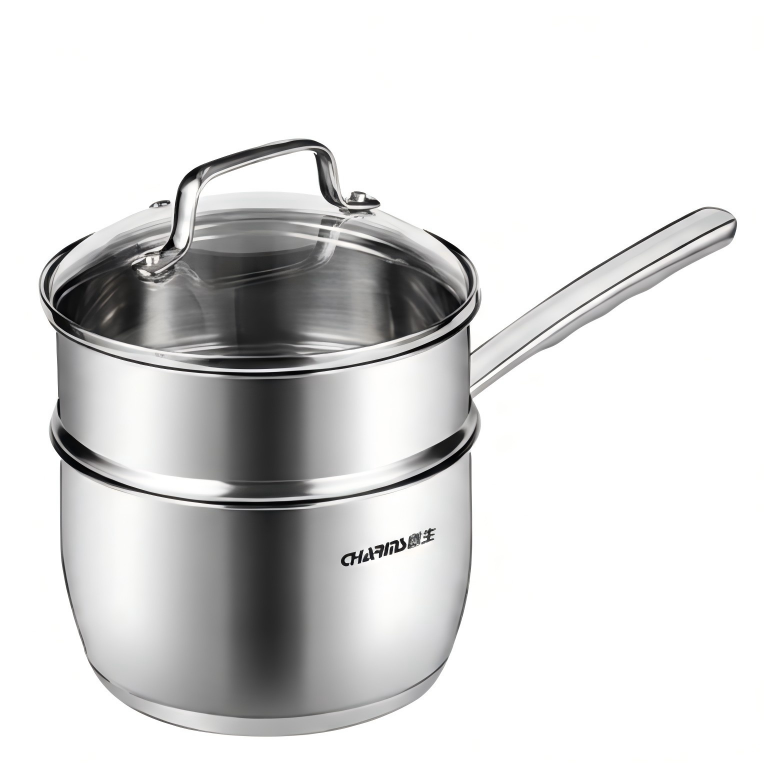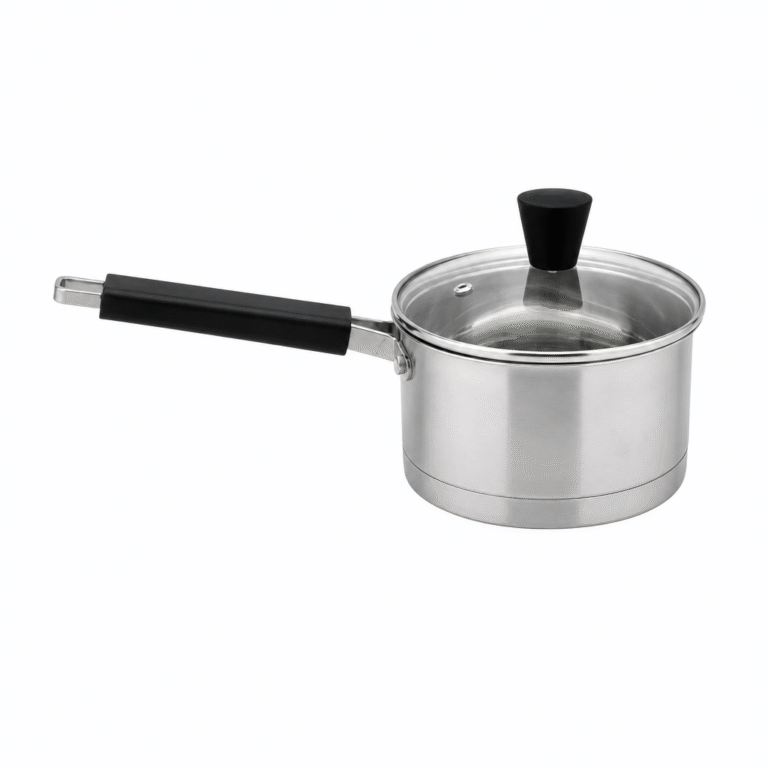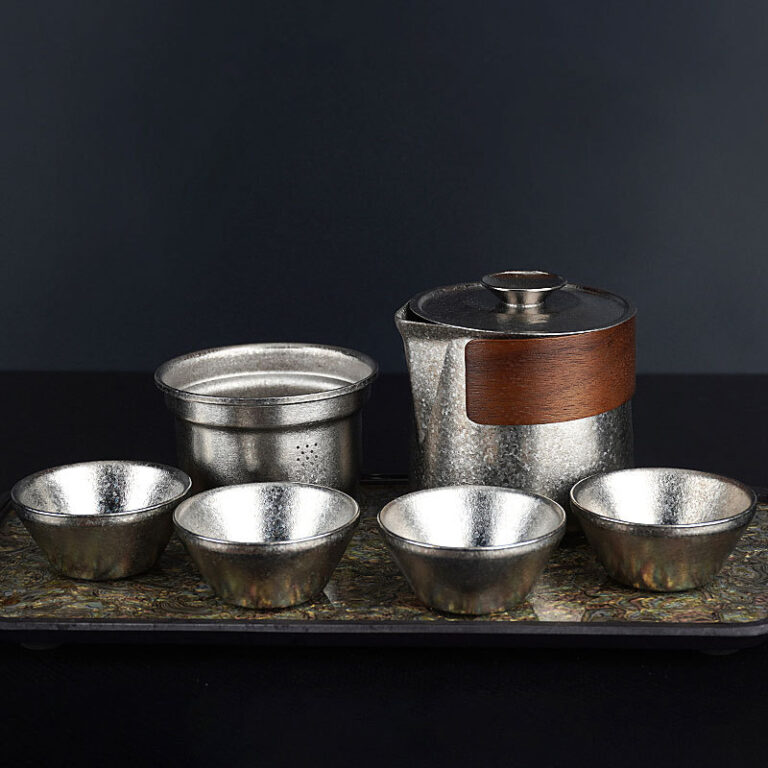


A cookware pre-shipment inspection (PSI) is an independent quality check conducted by a third-party inspector at the factory once production is at least 80% complete. For importers and brand owners sourcing pots, pans, and cookware from Asia, it is the last reliable line of defense before goods ship. This guide covers what inspectors actually check on cookware, how AQL standards apply, what coating and safety tests matter, and how much it costs — with real context from CharmsCook‘s own sourcing process.
What Is a Cookware Pre-Shipment Inspection?
A pre-shipment inspection (PSI) — also called a Final Random Inspection (FRI) — is an on-site quality audit conducted when production is complete and at least 80% of goods are packaged. An independent third-party inspector travels to the factory, pulls a random sample of finished units based on AQL (Acceptable Quality Limit) sampling tables, and evaluates them against your purchase order specs and any applicable safety standards.
The inspector does not work for your factory or for you. That independence is exactly the point.
What a PSI is not: It is not a factory audit (which evaluates the facility and management system) and it is not an in-production check (which happens mid-run). The PSI answers one specific question: Are these specific goods ready to ship?
For cookware, the stakes are higher than for most consumer goods. Defects are not just cosmetic — a flaking nonstick coating, a sharp burr on a lid handle, or heavy metal migration in a ceramic glaze can trigger product recalls, retailer rejections, and regulatory action in target markets.
What Inspectors Actually Check on Cookware
 Photo: Intel Free Press / Wikimedia Commons / CC BY 2.0
When we run pre-shipment inspections on CharmsCook products, the checklist covers six core areas. Third-party providers like V-Trust, Asia Quality Focus, and Tetra Inspection follow the same structure:
1. Quantity & Packaging Verification Inspectors confirm the carton count, units-per-carton, labeling accuracy, and barcode scan results against the packing list. Underfilled containers and mislabeled cartons are more common than most buyers expect.
2. Visual / Workmanship Inspection This is where most defects surface on cookware:
- Surface scratches, dents, or pitting on pan bodies and lids
- Coating uniformity — bubbles, holidays (bare spots), or uneven thickness on nonstick and ceramic surfaces
- Weld and rivet integrity on handles
- Sharp edges or burrs on rims and cut metal parts
- Anodizing or polishing consistency on aluminum and stainless pieces
3. Dimensional & Weight Checks Key dimensions (diameter, depth, wall thickness, handle length) are verified against the approved sample. For cookware sold by size, even a 2mm variance affects fit-to-lid compatibility and retail display compliance.
4. Functional Testing
- Lid fit and seal
- Handle stability under load (torque test on riveted handles)
- Silicone or plastic component heat resistance verification
- Non-stick release performance on sampled units
5. Safety & Regulatory Compliance This is the area where cookware diverges most from general product inspection. Key checks include:
- LFGB (Germany / EU): Migration limits for nonstick coatings and metals
- FDA (US): Food-contact material compliance
- GB 4806.9 / GB 4806.10 (China domestic market): Metal and coating food-contact standards
- Heavy metal migration (lead, cadmium) in ceramic glazes — a common failure point flagged by Tetra Inspection’s homeware team
Note: Full migration testing requires a certified lab, not just a visual check. A PSI can identify obvious compliance risks (wrong raw material certs, missing test reports) but lab migration tests should be run separately as part of your product qualification.
6. Carton Drop & Shock Test Inspectors perform on-site carton drop tests to verify that packaging protects the product through normal shipping handling.
How AQL Works for Cookware
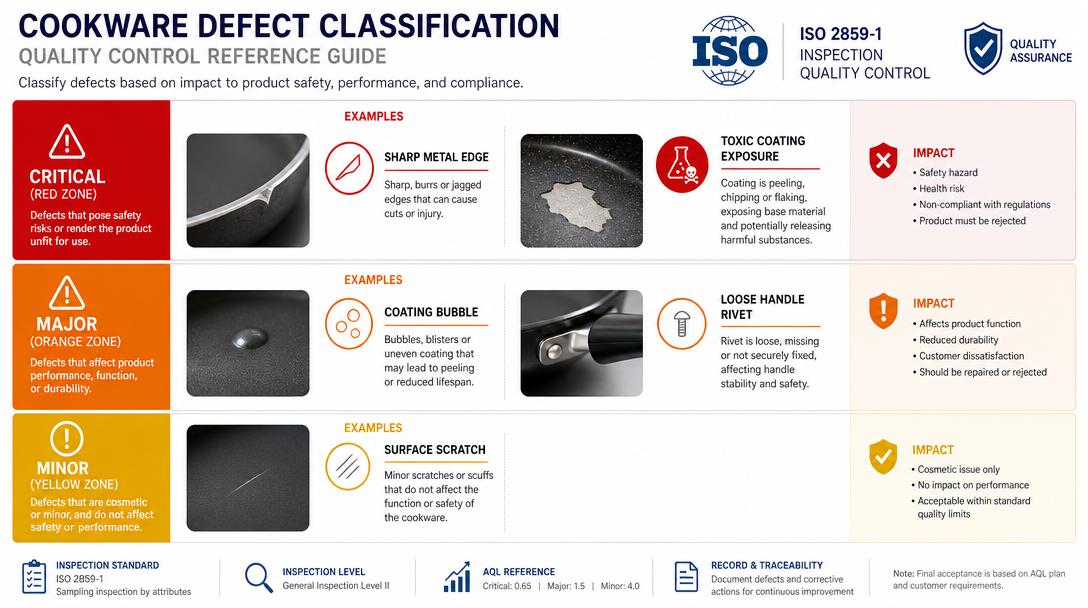
AQL (Acceptable Quality Limit) is the statistical framework that determines how many units to inspect and how many defects are acceptable before rejecting a lot. For cookware, defects are classified into three tiers:
| Defect Class | Cookware Examples | Typical AQL |
|---|---|---|
| Critical | Heavy metal migration above limits, toxic coating, sharp edges causing injury risk, missing safety temper on glass lids | 0 (zero tolerance) |
| Major | Coating bubbles/holidays, handle wobble, significant dimensional deviation, wrong size/color shipped | 1.5 |
| Minor | Surface micro-scratches within tolerance, minor labeling misprint, slight color variation within spec | 4.0 |
AQL 0 on critical defects means a single critical defect in the sample fails the entire lot. AQL 1.5 on major defects means roughly 1.5% of the batch can have major defects before the lot is rejected. These are the industry-standard settings most B2B cookware buyers use — you can tighten them for premium SKUs or safety-sensitive products.
The sample size is determined by the total lot quantity and the ANSI/ISO 2859-1 sampling table. For a typical 2,000-unit cookware shipment, an inspector will check approximately 125–200 units at inspection level II (the standard level).
Third-Party Inspection: Why Not Rely on the Factory?
The factory has a financial incentive to ship. You do not want the person being paid to produce the goods to also be the person deciding whether those goods are acceptable. This is not about distrust — it is about structure.
In practice, factories pass their own internal inspections and then buyers discover problems at the warehouse, on retailer shelves, or — worst case — in consumer hands. The cost differential is stark:
- Third-party PSI cost: $218–$598 per man-day (one-day inspection covers most cookware orders)
- Defect-related losses prevented: Industry data from Tetra Inspection places this at 5–15% of order value
- Inspection cost as % of order value: Typically 0.5–3%
On a $15,000 cookware order, a $300 inspection that catches a nonstick coating defect prevents a potential $1,500–$2,250 loss from rejected goods, rework, or re-shipment.
At CharmsCook, third-party inspection is a standard line item on every production order — not an optional add-on. The first time we skipped it on a “trusted” supplier, we received 200 units with handle rivets that failed the torque test. Every one had to be reworked at our cost.
What Happens When Inspection Fails?
A failed inspection report does not automatically mean you reject the shipment. Most buyers use the report to negotiate one of three outcomes:
- Hold and rework: Factory corrects the defects and a re-inspection is scheduled (at additional cost, usually paid by the factory if the failure was their error)
- Partial shipment: Accept the compliant portion; hold or rework the remainder
- Price reduction: Accept the shipment with a negotiated discount that covers rework on your end
The key is that you have documented evidence — timestamped photos, inspector measurements, and a signed report — before the goods leave the factory. Without that, the negotiation happens after you’ve already paid and the goods are on a container ship.
Cookware-Specific Risks Third-Party Inspectors Catch
General importers often underestimate how many cookware-specific failure modes exist. Based on industry inspection data and CharmsCook’s own quality history, the most common findings on cookware inspections are:
- Nonstick coating holidays — bare spots where coating did not adhere, invisible until first use
- Handle torque failure — riveted handles that pass visual but fail a 50 Nm torque test
- Wrong packaging insert — instruction manuals for a different product, wrong language
- Glass lid without safety tempering — looks correct but shatters under thermal shock
- Incorrect labeling — wrong material claim (e.g., “18/10 stainless” when the actual alloy is 201)
- Heavy metal migration in colored ceramic coatings — lead and cadmium exceeding EU limits, identified via raw material certificate review at inspection
FAQ
What is the difference between a pre-shipment inspection and a factory audit? A factory audit evaluates the production facility — its processes, certifications, capacity, and management systems. A pre-shipment inspection evaluates a specific batch of finished goods. For cookware importers, you typically need both: a factory audit before placing the first order, and a PSI on every significant production run.
When should I schedule a cookware pre-shipment inspection? Book the inspection when production is 100% complete and at least 80% of the goods are packaged. Scheduling too early means inspectors find unfinished goods; too late and the shipment has already left the factory. Most inspection companies need 2–5 business days’ notice.
How much does a cookware pre-shipment inspection cost? Expect $218–$598 per man-day depending on location (China factory inspections tend to be on the lower end), provider, and any special tests required. Most standard cookware orders complete in one man-day. Specialized coating migration tests are additional and require a lab, not just an on-site inspector.
Can I write my own inspection checklist? Yes, and you should. The inspector follows your specification — they do not write it. A good cookware inspection checklist includes your product spec sheets, the approved sample reference, AQL levels per defect class, packaging requirements, and any market-specific regulatory standards (FDA, LFGB, REACH). CharmsCook provides its B2B buyers with a working checklist template on request via charmscook.com.
What third-party inspection companies work with cookware suppliers in China? Commonly used providers include Asia Quality Focus, V-Trust, Tetra Inspection, Bureau Veritas, SGS, and Intertek. For cookware-specific expertise, look for providers that list food-contact materials and coating inspection in their capabilities, not just general consumer goods.
Summary
Pre-shipment inspection is not a cost — it is a risk management tool. For cookware specifically, where coating safety, handle integrity, and regulatory compliance all affect end-user safety, skipping a third-party PSI to save $300 on a $15,000 order is a trade-off that rarely works in the buyer’s favor.
At CharmsCook, every production batch goes through independent third-party QC before leaving the factory. The process is not complicated: book an inspector, share your spec sheet and AQL levels, and review the report before authorizing shipment. What changes is that you stop discovering problems at your warehouse and start resolving them while the factory can still fix them.
If you’re building out your cookware sourcing process, the pre-shipment inspection step belongs in the workflow from day one — not after the first recall.