

Most importers overpay for cookware from China not because they negotiate badly, but because they negotiate the wrong things. This guide covers what actually drives FOB price in cookware — steel grade, gauge, base construction, coating, and order structure — and how to use that knowledge to get a better price without turning your supplier into an adversary. Includes real FOB price benchmarks, the spec substitution trap to watch for, and the exact timing windows when factories are most open to price movement.
What FOB Price Actually Means (And Why It’s the Only Basis Worth Negotiating)
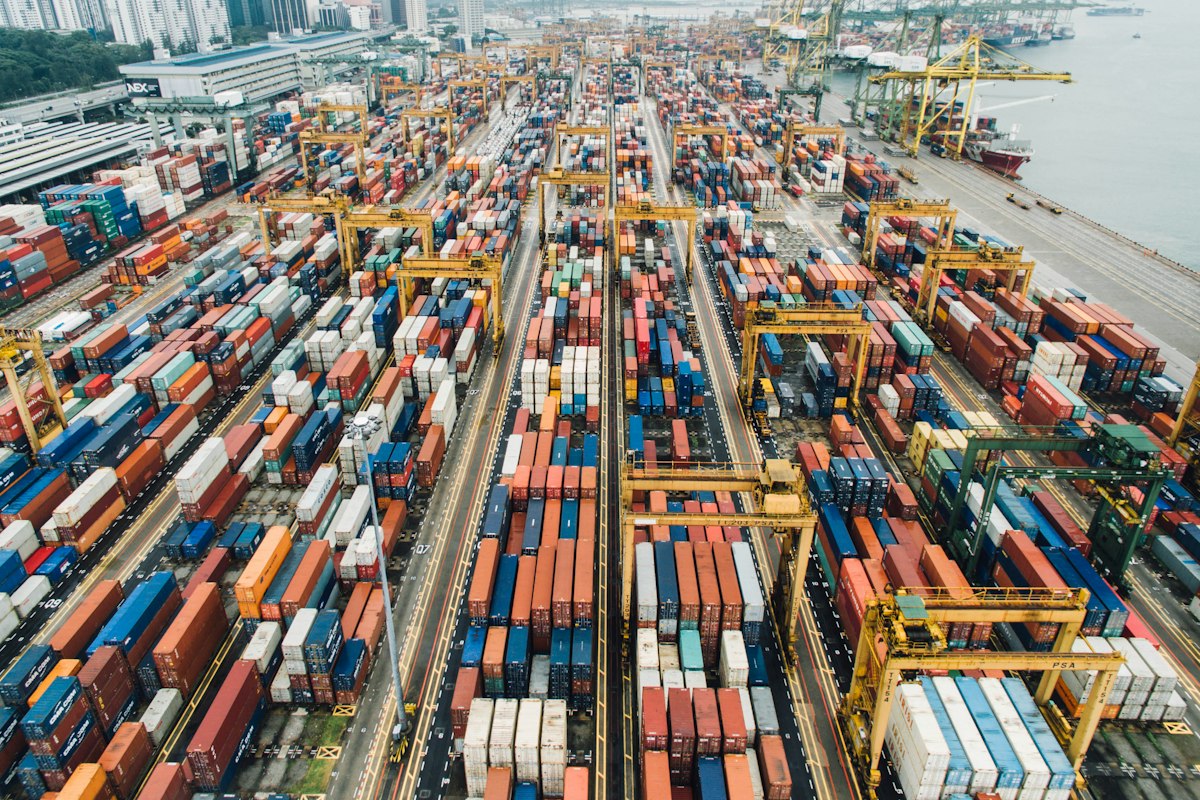
FOB — Free On Board — means the supplier’s price includes everything up to the moment the goods are loaded onto the vessel at the Chinese port. Your freight forwarder takes responsibility from there.
Always request FOB when asking for a cookware quote. Here’s why: CIF (Cost, Insurance, Freight) and DDP (Delivered Duty Paid) quotes bundle freight and insurance into the unit price, meaning you cannot see how much the factory is marking up logistics. Two factories quoting you CIF may have a $1.50 spread that has nothing to do with manufacturing cost — one is just padding the freight margin.
FOB gives you a clean factory price. Once you have three FOB quotes, you can apply your own freight estimate (sea freight from Chinese ports typically runs $100–$150 per CBM for a full container, $120–$180 for LCL) and compare actual manufacturing costs on equal terms.
Rough FOB benchmark ranges out of China (2026):
| Product | Quantity | FOB Range |
|---|---|---|
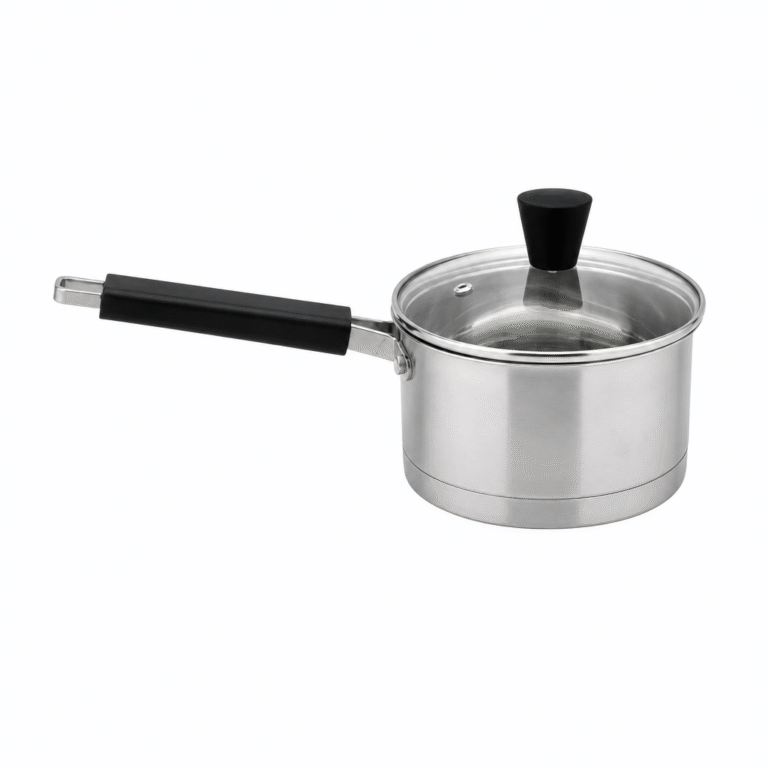
| Stainless steel saucepan, 20cm, 304/0.6mm, no coating | 3,000 pcs | $3.00–$4.80 |
| Nonstick fry pan, 24cm, PFOA-free, granite coating | 3,000 pcs | $3.80–$6.20 |
| Casserole/Dutch oven, 26cm, 3-ply base | 1,500 pcs | $8.50–$13.00 |
| Cast iron skillet, 25cm, pre-seasoned | 500 pcs | $7.00–$10.50 |
| 5-piece stainless cookware set, 304 | 500 sets | $22–$35 |
These ranges assume production-intent samples confirmed, standard packaging, no custom handles. A quote outside these ranges is not automatically wrong — it means you need to understand why.
The Six Things That Actually Drive Cookware Unit Price
This is where most negotiation guides fail. They tell you to “leverage volume” and “build relationships.” That’s true but incomplete. If you don’t know what’s in the price, you can’t negotiate intelligently.
1. Steel grade. 304 stainless (18/10) is the baseline. 316 is more expensive. 201 is significantly cheaper — it looks identical but has lower nickel content, lower corrosion resistance, and will not hold up to dishwashers or salt water as long. A factory quoting 201 when you specified 304 saves them $0.40–$0.70 per piece. Always ask for the mill certificate and verify the grade.
2. Wall gauge. A 20cm saucepan at 0.6mm uses measurably less steel than one at 0.8mm. The difference is often invisible to the eye. Factories under pricing pressure sometimes quietly thin the gauge by 0.1mm — legal if they change the spec, fraudulent if they don’t. Measure a sample with a micrometer at three points on the wall.
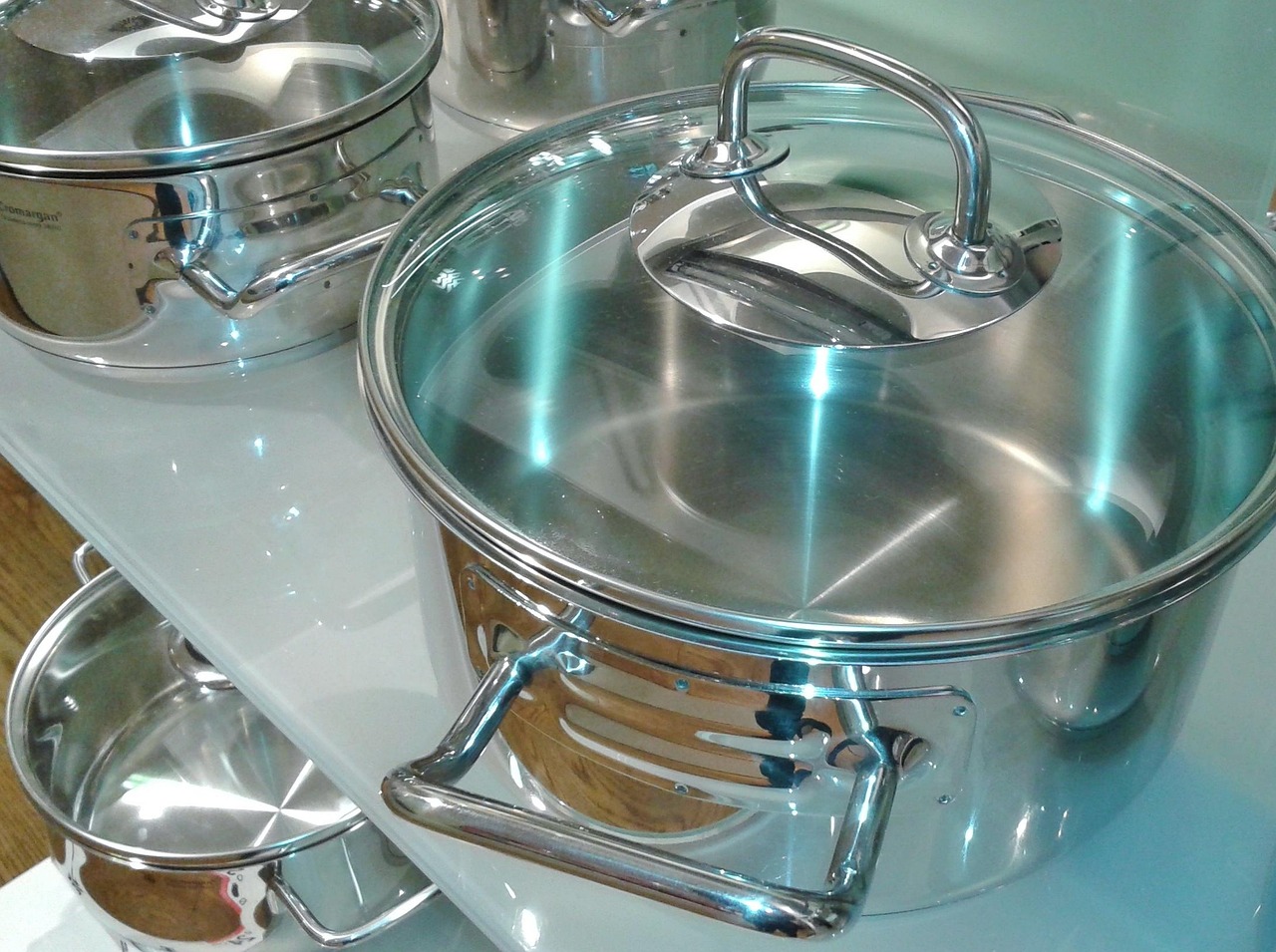
3. Base construction. The base is often the most expensive single component. A flat, single-layer base costs far less than an impact-bonded three-layer composite (stainless/aluminum/stainless). That composite base improves heat distribution dramatically, but the cost gap between a single-layer and a 3-ply encapsulated base can be $1.50–$3.00 per piece at this scale. Be explicit in your spec.
4. Coating type and thickness. For nonstick pans, coating is both a safety compliance issue and a major cost lever. PTFE-based coatings vary widely in thickness (10μm vs 20μm vs 40μm) and number of layers. Ceramic and granite-pattern coatings have different cost structures. A cheaper coating looks the same in photos but fails faster in customer hands. Ask for the coating brand name, layer count, and thickness specification.
5. Surface finish. Mirror polish requires labor-intensive finishing. Brushed or satin finishes are faster. A factory quoting mirror polish on a heavily pitted blank is going to struggle to hit the price — or skip steps you won’t see until a customer complaint.
6. Order quantity per model — not total order value. A $50,000 order spread across 12 different models gets worse pricing than a $50,000 order concentrated in two models. The factory changeover, material procurement, and packaging print run are all per-model costs. Concentrating volume on fewer SKUs is the single highest-leverage move most importers never use.
The Spec Substitution Trap
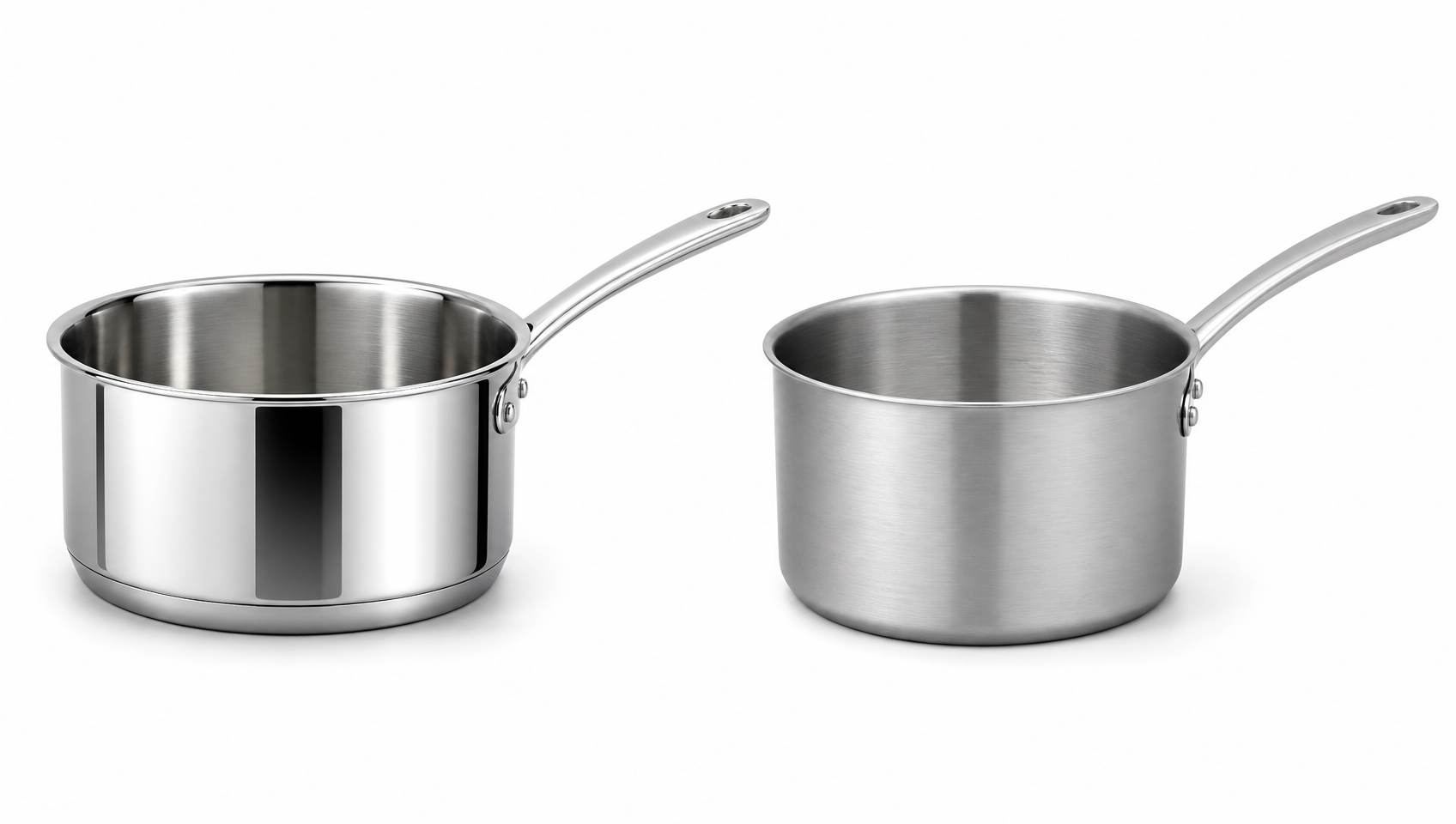
When a factory comes back with a price 20% lower than everyone else, there are two possibilities: they’re more efficient, or the spec changed. The second is more common.
I’ve seen this pattern directly: a buyer receives a sample that passes every visual test. The price is sharp. Production runs. The delivery arrives and within six months, customers report rusting rims and handles loosening. Investigation reveals the production run used 201 instead of 304 and handle screws were changed from stainless to carbon steel.
How to protect yourself:
- Lock the specification in writing before production. Include steel grade, gauge at three measurement points, base layer count, coating brand and spec sheet, handle material.
- Request a mill certificate for every batch, not just the sample.
- Run a pre-shipment inspection by a third party (SGS, Intertek, QIMA). It costs $200–$350 for one inspector-day and is the most cost-effective insurance in this business.
The spec substitution trap is also why negotiating purely on price is dangerous. If a factory cannot hold their quality at your target price, they will find another way to get there.
What Factories Actually Respond To

Negotiation with a Chinese cookware factory is not adversarial if you approach it right. Factories respond to signals of being a worthwhile long-term customer, not to pressure tactics.
What moves price down:
- Volume certainty. “I want 3,000 pieces per quarter, committed for 12 months” is a far stronger position than “I might order 10,000 if the first batch goes well.”
- Simplifying packaging. Custom color boxes add cost and MOQ to the packaging supply chain. If you can accept standard brown carton or a simpler print, ask what the price difference is — often $0.30–$0.60 per piece.
- Faster payment. Standard is 30% deposit, 70% against B/L copy. Offer 40% deposit or 100% TT before production for a returning customer order — some factories will give 2–5% for this.
- Concentrating SKUs. As above: fewer models at higher volume per model.
- Off-peak timing. Factories have capacity gaps in late Q1 (after Chinese New Year orders ship) and occasionally in summer. A confirmed order that fills idle capacity is worth something.
What does NOT move price:
- Generic complaints (“your competitors are cheaper”)
- Vague volume promises
- Aggressive lowball opening bids — China sourcing veterans say this signals an amateur buyer, not leverage
- Asking for price reductions after samples are approved without a reason
How to Structure the Negotiation Email
When you have three or more FOB quotes in hand and your spec locked down, this is a workable opening:
“We’ve reviewed quotes from several suppliers and your quality looks strong. We’re targeting $X FOB [city], which reflects [quantity] per model over a [timeframe]. We’d also be open to [specific concession — simplified packaging / adjusted payment terms / later delivery window] if that helps. Can you confirm whether this works?”
Three things this does: gives a specific target (not “can you lower the price”), explains why (volume/timeline), and offers a trade. It treats the factory as a business partner, not a vending machine.
If they can’t meet your target price, ask them to break down where the cost sits: material, processing, packaging, logistics margin. This conversation often surfaces adjustable line items you hadn’t considered.
Timing: When Factories Are Most Open to Negotiation
- Late January / February: Post-Chinese New Year. New capacity opens up, many factories are looking to fill Q2 order books. This is the best window to negotiate new terms with existing suppliers.
- May–June: Between Canton Fair sessions. Factories have a read on the year and are responsive.
- Avoid September–October: Peak season, peak freight. Factories have full order books and you have the weakest leverage.
The One Number You Must Know Before Any Negotiation
Your landed cost. FOB price is the starting point, not the end. Add:
- Sea freight: $100–$150/CBM (standard 20ft container carries 25–28 CBM)
- Destination charges (port handling, customs clearance): typically $300–$600 fixed
- Import duty: varies by market (US: most cookware at 0–3.5% MFN; EU varies by HTS code; check Section 301 tariffs for US-China sourcing)
- Local delivery
If your target retail price is $29.99 and your landed cost needs to be under $8 to hit margin, you know exactly what FOB target to work toward. Walking into a negotiation without this number means accepting whatever you’re offered.
The Price You Can’t Negotiate Lower Than
Every factory has a floor: raw material cost plus processing plus minimum margin. If a quote is already at the floor, further pressure produces one of three outcomes: the factory walks away, they replace your spec, or they accept and cut corners on QC. None of these helps you.
The right question is not “how low can you go” but “where is the flexibility?” Base construction, packaging, payment timing, and order structure are all legitimate variables. Steel grade and wall thickness are not — you agreed those in the spec, and relaxing them is a different product.
The buyers who get consistent, fair pricing from Chinese cookware factories are the ones who make it easy to work with them — clear specs, predictable orders, reasonable timelines, and payments that arrive on schedule. That reliability is worth more to a factory than any negotiation tactic.
Price Lock vs. Raw Material Fluctuation
One practical item most guides skip: steel prices fluctuate. Nickel (the key alloy in 304 stainless) moves with commodity markets. A factory quoting you today may legitimately need to revise if nickel prices spike before production starts.
Standard practice: lock the FOB price for 30–45 days. For larger programs, include a material escalation clause tied to an index (London Metal Exchange nickel spot is standard). This protects both sides and prevents an awkward conversation six weeks before production starts.
Don’t Negotiate on Price Until You’ve Locked the Spec
This is the single most important sequencing rule. Negotiating price before specification is fixed means you’re comparing prices on different products. The cheapest quote almost always has a material or process variable you haven’t noticed yet.
Lock: steel grade and gauge, base construction type, coating spec (brand + layers + thickness), handle material, surface finish, packaging, and compliance certifications required for your market. Then get FOB prices. Then negotiate.
Anything else is guesswork.
Getting the Most Out of the Relationship Long-Term
The best pricing lever in Chinese manufacturing is being a predictable, growing customer. Factories offer better pricing, faster sampling, and priority production slots to buyers they trust.
Three practices that build that trust faster than any negotiation tactic:
- Give accurate forecasts — even rough ones. “I expect 3,000 pieces per quarter” lets them plan.
- Approve samples promptly. Delays in your feedback cost them more than they cost you.
- Pay on time, every time. Payment redirection fraud is a real threat in this trade (see notes on verifying bank account names before any transfer), and a buyer with a clean payment record is genuinely valued.
Long-term, the relationship is worth more than any single price point.
The Price Is Right When the Spec Is Clear
Getting a fair FOB price from a Chinese cookware factory comes down to three things: knowing what drives the cost, comparing on an equal spec, and asking for movement in the right places. The buyers who consistently get good pricing are not the most aggressive negotiators — they’re the most prepared ones.