

Deglazing a stainless steel pan means adding liquid to a hot pan right after searing to dissolve the caramelized brown residue on the bottom — called fond. That residue is concentrated Maillard-reaction flavor, not burnt food. Stainless steel is ideal for this technique because it’s non-reactive (safe for acidic wine and vinegar), produces highly visible fond, and doesn’t suppress the browning the way nonstick pans do. Add ¼–½ cup of room-temperature liquid, scrape with a wooden spoon, and reduce for 1–2 minutes to build a pan sauce from scratch. This guide covers everything from building great fond to finishing the sauce with butter.
What Is Fond — and Why You’ve Been Washing It Down the Drain
The first time I made chicken thighs in a stainless steel pan, I thought I’d burned it. The bottom was covered in dark, sticky brown patches, and my instinct was to fill the pan with water and scrub.
I was about to throw away the best part of the meal.
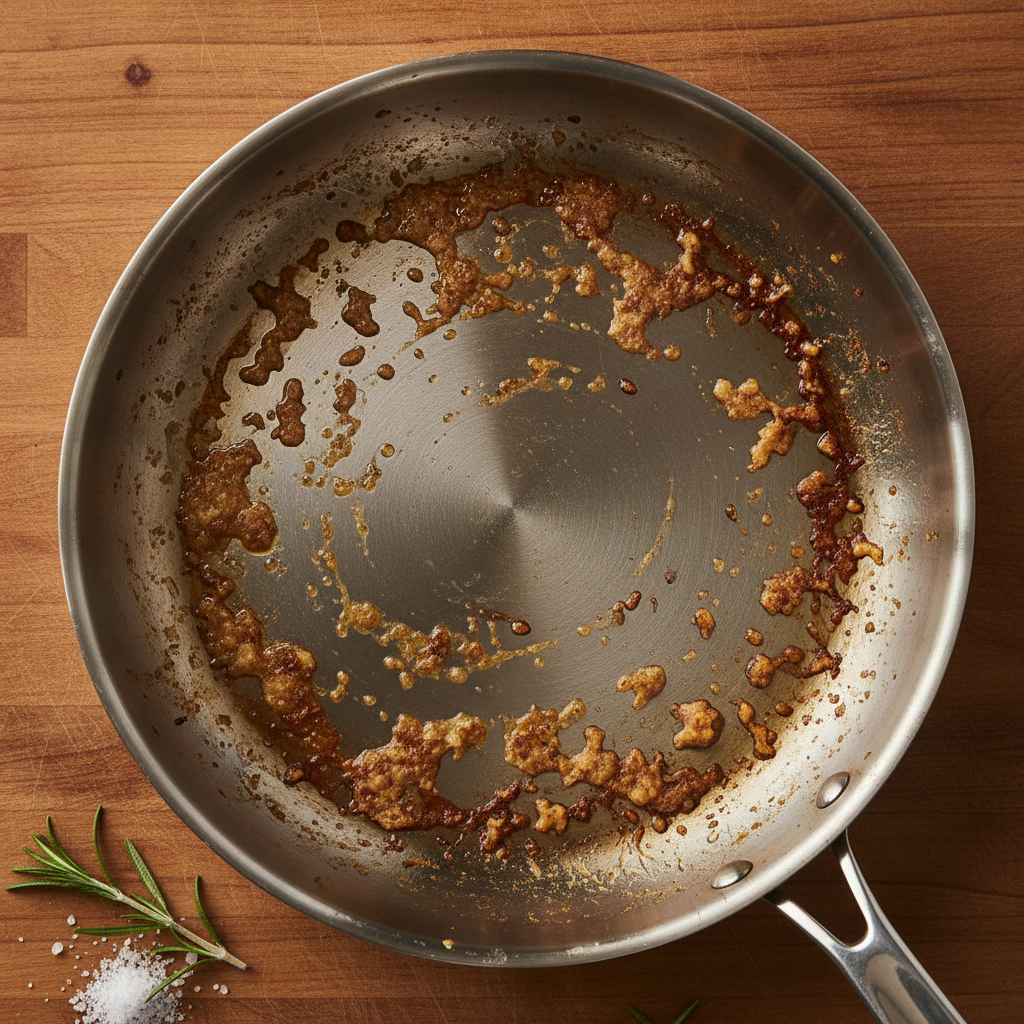
That brown residue is called fond — from the French fonds de cuisine, meaning “foundation of cooking.” It’s also sometimes called sucs (the French word for juices). Whatever you call it, it’s not a mess. It’s concentrated flavor.
Fond forms through the Maillard reaction, a chemical process where amino acids and reducing sugars in food react under heat. This happens between roughly 285 and 330°F (140–165°C) — a range that produces hundreds of distinct flavor compounds, including melanoidins (deep savory notes), pyrazines (roasty, nutty aroma), and glutamyl peptides (natural umami boosters). Push past this window without moisture and you get pyrolysis — bitter, acrid, unrecoverable.
Golden-brown fond: use it. Black fond: it’s burned. The line between them is about 30 seconds on a too-hot pan.
The key insight is that stainless steel makes fond visible in a way cast iron never does. Cast iron’s dark surface hides the color progression. With stainless, you can watch the gradation from pale yellow to deep amber and pull it off heat at exactly the right moment.
Why Stainless Steel Is the Right Pan for Deglazing
Not all pans are created equal for this technique. Here’s how common options compare:
| Pan Type | Produces Fond? | Visible? | Works with Acidic Liquids? |
|---|---|---|---|
| Stainless steel | Yes | Yes — clearly | Yes |
| Cast iron / carbon steel | Yes | No — dark surface hides it | Limited — acids attack seasoning and add metallic taste |
| Nonstick | No — coating prevents adhesion | N/A | Technically yes, but nothing to deglaze |
| Enameled cast iron | Yes | Partially | Yes |
Stainless steel wins on two counts. First, it’s non-reactive — you can deglaze with dry white wine, red wine, vinegar, citrus juice, or stock without any chemical interaction with the pan surface. Cast iron and carbon steel restrict you to non-acidic liquids unless you want to strip the seasoning and introduce a metallic flavor.
Second, stainless steel doesn’t suppress browning. Nonstick coatings prevent the protein-to-metal contact that creates fond in the first place. You simply can’t deglaze a pan with nothing stuck to it.
There’s a practical bonus too: after deglazing, the same hot liquid that builds your sauce also cleans the pan. The technique is self-maintaining.
How to Build Great Fond Before You Deglaze
The quality of your pan sauce depends entirely on what you built before adding liquid. Poor fond means a pale, thin sauce. Deep, evenly caramelized fond means complexity in every drop.
1. Dry the protein thoroughly.
Moisture on the surface steams rather than browns. Pat chicken, steak, pork, or fish completely dry with paper towels. This is the single most impactful step — most home cooks skip it, then wonder why the pan is greasy and gray instead of golden.
2. Use the mercury-bead test (the Leidenfrost effect).
Before adding oil, heat the empty stainless pan over medium-high heat for 1–2 minutes. Flick a few drops of water in. If they skitter across the surface in a single bead without evaporating — that’s the Leidenfrost effect, and the pan is at the right temperature (roughly 400°F / 205°C). Add oil now. This prevents sticking by creating a temporary barrier between food and metal.
3. Don’t crowd the pan.
Each piece of protein needs direct contact with the hot surface. Crowding causes the pan temperature to drop and releases steam — the food braises instead of sears, and you get no fond. Work in batches if necessary.
4. Let the meat release on its own.
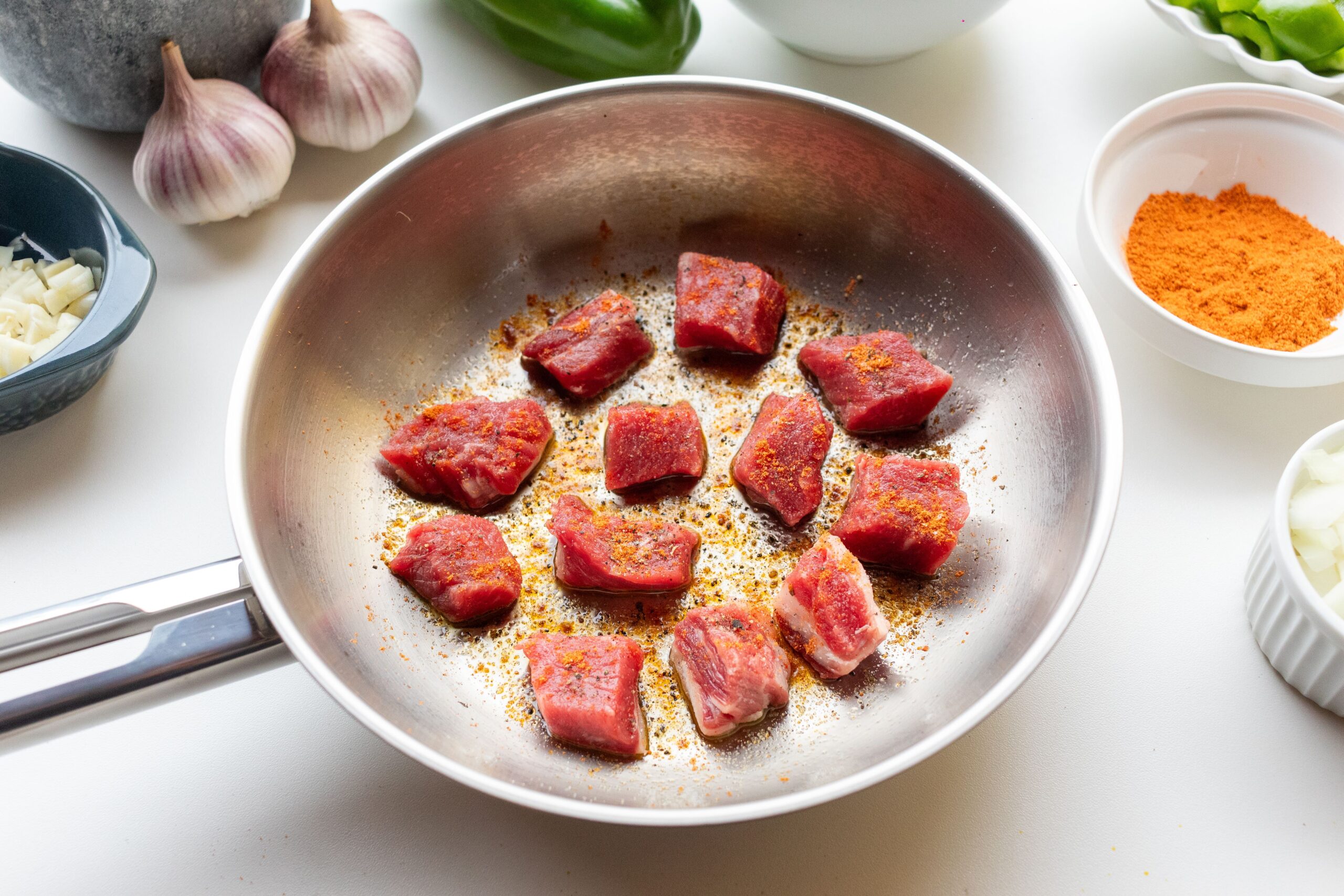
Stainless steel has a reputation for sticking. This reputation is mostly unfair. When protein hits a properly preheated pan, it initially bonds to the metal. As the Maillard crust forms, it naturally releases. If you’re tugging at the meat and it won’t move — it’s not ready. Wait another 30–60 seconds. It will let go.
5. Watch the color, not the clock.
Every piece of protein is different. Target deep golden-brown to mahogany on the seared face. That color represents maximum fond depth. Pale beige = not enough; gray or black = too far.
How to Deglaze a Stainless Steel Pan: Step-by-Step
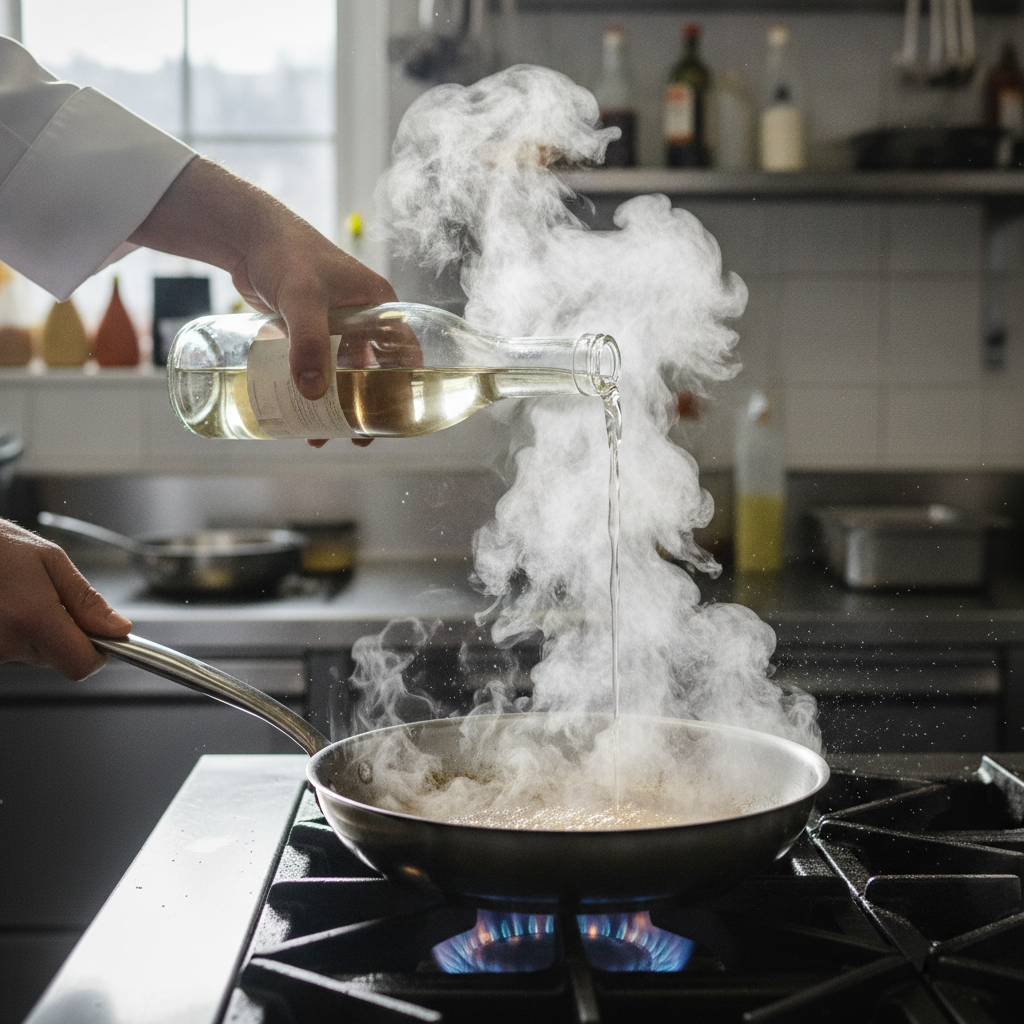
Once the protein is seared and removed, move quickly. The window is narrow — fond can go from perfect to burned in under a minute.
Step 1: Remove the food and reduce the heat.
Set seared meat or vegetables aside to rest. Lower the burner to medium. The pan will retain heat for at least 30 seconds from carryover.
Step 2: Pour off excess fat (optional but recommended).
Leave roughly 1 tablespoon of fat in the pan. Too much fat makes the sauce greasy; too little causes the aromatics to stick in Step 3.
Step 3: Add aromatics (optional, but this is the restaurant step).
Drop in 1–2 tablespoons of finely minced shallot or garlic. Let them cook 45–60 seconds, stirring constantly, until softened and translucent. They pick up the residual fond and add another flavor layer before the liquid goes in.
Step 4: Add deglazing liquid.
For a 10-inch pan, add ¼ to ½ cup of liquid. Pour it in a steady stream; tilting the pan slightly and pouring along the edge (not straight into the center) reduces splatter. The liquid will immediately hiss and bubble violently — this is correct.
Step 5: Scrape with a wooden spoon or silicone spatula.
Work the bottom of the pan while the liquid is actively bubbling. The combination of heat and liquid loosens every bit of fond. If some spots resist, press the spoon flat against them. Everything should come up within 30–45 seconds.
Step 6: Simmer and reduce.
Let the liquid reduce by roughly half — typically 1–2 minutes over medium heat. The sauce should coat a spoon lightly. If it’s still watery, keep going. If it reduces too fast, add a splash more liquid.
Step 7: Finish the sauce.
Off heat, swirl in 1–2 tablespoons of cold butter, cut into pieces. Cold butter emulsifies into the sauce, giving it gloss and body without making it greasy. Add a pinch of salt, fresh herbs if you have them, and optionally a small splash of the same liquid you deglaized with to brighten the finish.
Choosing Your Deglazing Liquid
The liquid you use determines the personality of the final sauce. There’s no single right answer — match it to the protein and the rest of the dish.
| Liquid | Best With | Notes |
|---|---|---|
| Dry white wine | Chicken, fish, pork | Adds acidity + floral depth; cook long enough to remove raw alcohol taste (~1 min) |
| Dry red wine | Beef, lamb, duck | Richer, more tannic; excellent with robust meat |
| Chicken stock | Chicken, pork, veg | Savory, neutral; excellent base for herb-forward sauces |
| Beef stock | Beef, lamb | Deep umami; reduce further for intense jus |
| Dry sherry or vermouth | Anything | More concentrated than wine; a little goes further |
| Apple cider vinegar | Pork, duck | Sharp, cutting richness; use sparingly (2–3 tbsp max) |
| Citrus juice | Fish, scallops, chicken | Bright and light; add at the very end to preserve acidity |
| Beer (lager or ale) | Pork, sausage | Malty, earthy; pairs with braised preparations |
Can you deglaze with water? Yes — water will lift the fond and you can build from there with butter and herbs. It works in a pinch, but it adds nothing of its own. Think of water as the neutral carrier; every other liquid on this table adds flavor complexity.
Avoid sweet liquids (fruit juice, sweet wine, soda) unless you intentionally want a sweet glaze. They reduce to sticky and can burn quickly.
Turning the Deglaze into a Restaurant-Quality Pan Sauce
The difference between “pan drippings” and a “pan sauce” is about 3 more minutes and a few deliberate steps. Here’s what turns a simple deglaze into something worth talking about.
Layer flavors at every stage. The aromatics added in Step 3 above build the base. If you have fresh thyme, rosemary, or a bay leaf, add them with the aromatics. Remove before serving.
Reduce with intention. A pan sauce should have enough body to coat the back of a spoon — the French call this nappant. Taste it as it reduces. It should get progressively deeper and more concentrated. If it’s too sharp (from wine), the reduction is softening that acidity. If it starts to taste flat, a pinch of salt or a splash of vinegar will open it back up.
Butter mounting (monter au beurre). This is the step that separates home cooking from restaurant cooking. Once off the heat, swirl in cold butter in pieces — 1 tablespoon at a time. Cold butter creates an emulsion: fat distributes evenly through the water phase of the sauce, making it glossy, silky, and cohesive. Hot butter breaks the emulsion and you get a greasy, separated mess. This is why the pan must be off heat before the butter goes in.
Finish with acid. A small squeeze of lemon juice or a half-teaspoon of vinegar added after the butter mount brings everything forward. It’s the culinary equivalent of turning up the volume — it doesn’t change the notes, it makes them louder.
A full pan sauce from start to finish takes about 5–6 minutes after the protein comes out. That’s exactly how long the meat should rest before slicing.
Common Mistakes — and How to Fix Them
The fond is black, not brown.
This means the heat was too high or the protein sat too long. Black fond is bitter and can’t be saved. Don’t deglaze it — wipe the pan out and start over with the sauce using stock and aromatics. Lesson: watch color, not the timer.
The liquid evaporates before all the fond lifts.
The pan is too hot, or you used too little liquid. Lower the heat before adding liquid, and start with ½ cup rather than ¼ cup. You can always reduce more.
The sauce is thin and watery.
Keep reducing. If it’s been 5 minutes and still won’t thicken, the liquid-to-fond ratio is off (not enough fond, or the fond was pale). Add a splash of stock and reduce more aggressively. A pinch of arrowroot or cornstarch stirred into 1 tablespoon of cold water, then added to the sauce, thickens it quickly in a pinch — but it doesn’t add flavor, so use it as a backup.
Violent splattering when liquid hits the pan.
The pan was too hot when you added liquid. Pull the pan off heat for 5–8 seconds before pouring. Pour along the edge, not into the center. Use room-temperature liquid rather than cold-from-the-fridge stock.
The sauce tastes flat.
Likely under-seasoned or under-reduced. Taste and add salt first. Then check if the butter-mount happened off heat (if done on heat, the sauce can taste dull and fatty). A small splash of wine or citrus at the very end revives flat sauces reliably.
Frequently Asked Questions
What is fond in cooking?
Fond is the layer of caramelized protein and sugar residue that adheres to the pan surface after searing meat or vegetables at high heat. It forms through the Maillard reaction — a chemical process between amino acids and reducing sugars that occurs between 285 and 330°F (140–165°C). The word comes from French fonds de cuisine, meaning “culinary foundations.” It’s concentrated, savory flavor — not burnt food.
Why does fond form on stainless steel but not on nonstick?
Nonstick coatings (PTFE or ceramic) create a barrier between the food and the metal surface, preventing the protein-to-metal adhesion required for Maillard browning to occur on the pan itself. Stainless steel allows direct contact, so the browned compounds stick to the surface and can later be dissolved into a sauce.
Can I deglaze with water?
Yes, but water adds no flavor of its own. It will successfully lift the fond and incorporate it into the liquid, but the resulting sauce will lack depth compared to wine or stock. Think of water as a neutral carrier — effective for pan cleanup or as a base if you plan to add other flavoring agents.
How do I know when the fond is ready to deglaze?
Color is your indicator: the bottom of the pan should show an even, deep golden-brown to mahogany tone. If it’s pale gold, it needs more time. If any spots are black, the heat was too high. The pan will also smell nutty and savory — not sharp or acrid.
What if I don’t have wine? What’s the best non-alcoholic substitute?
Stock or broth is the simplest substitute — chicken stock for poultry, beef stock for red meat. Apple juice (unsweetened) or apple cider vinegar (diluted) work for pork. Pomegranate juice with a splash of balsamic is a solid red-wine substitute for beef. All lift fond effectively; just adjust salt levels since stock adds its own sodium.
Can I deglaze cast iron with wine?
This is technically possible but not ideal. The acid in wine can strip cast iron’s seasoning, leaching metallic flavors into the sauce. If you only have cast iron, use stock instead of acidic liquids, and deglaze quickly. This is one of the genuine advantages of stainless steel for pan sauce work.
Final Thoughts
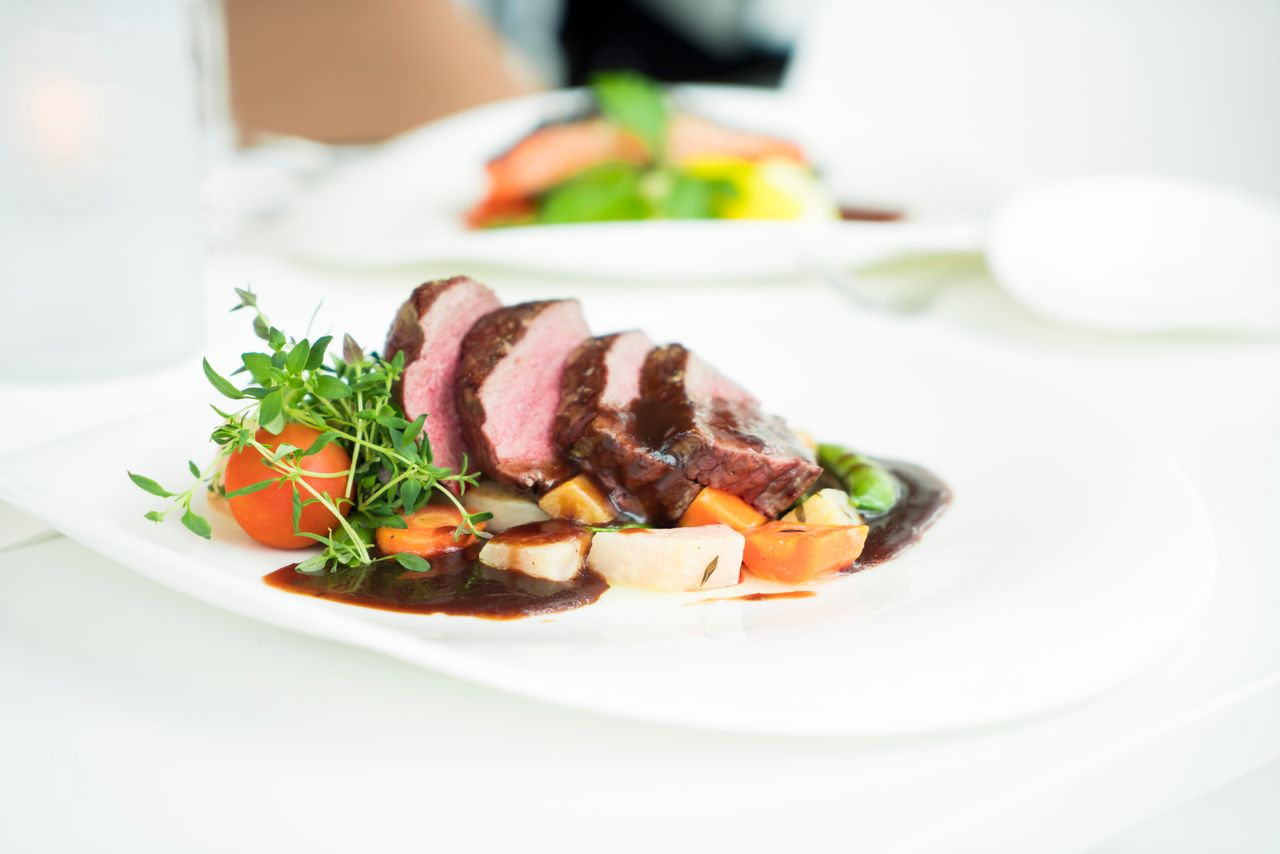
Deglazing is one of the highest-leverage techniques in home cooking. The effort is minimal — 5 minutes, a splash of wine, a wooden spoon — and the return is a sauce that tastes like you spent all day on it. The key is treating fond not as a cleaning problem but as a flavor asset.
Stainless steel makes this easy because it lets you see what you’re working with. The color tells you everything: when the fond is ready, when the sauce is reducing, when the butter has emulsified. Other pans can produce decent pan sauces, but none give you the same clear visual feedback.
The next time you sear something in a stainless pan and see a brown crust forming on the bottom — don’t reach for the sponge. Reach for the wine.