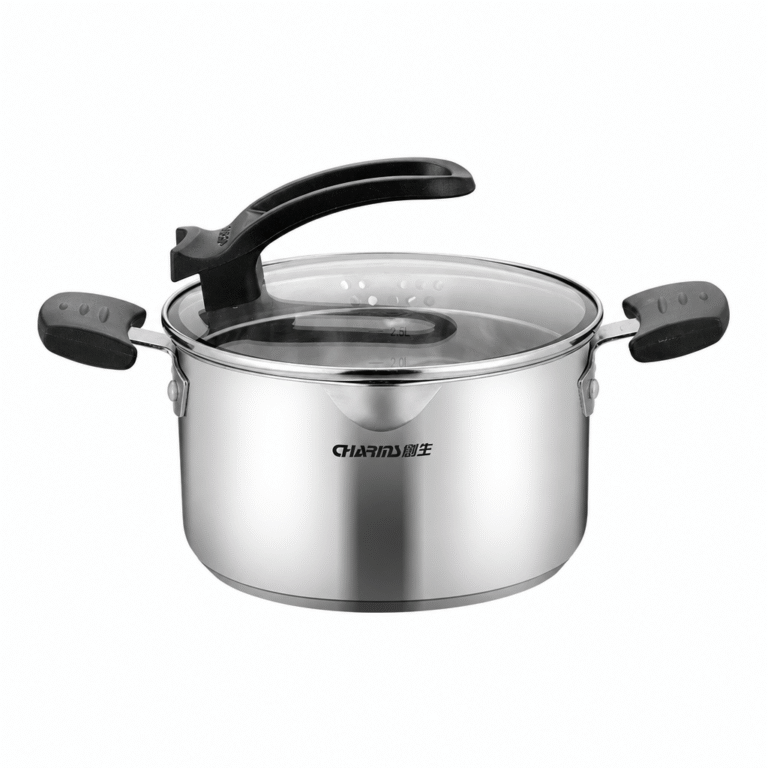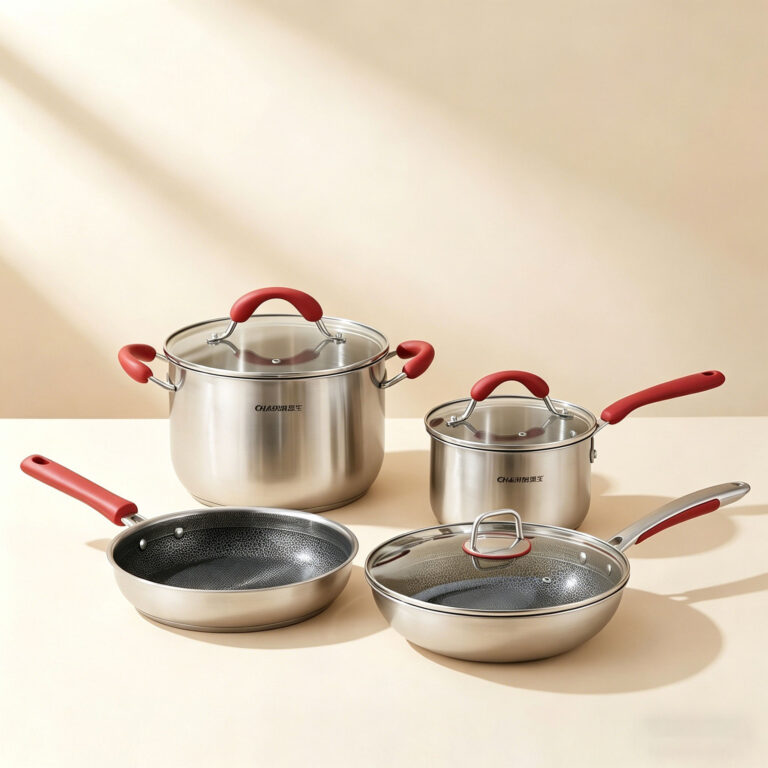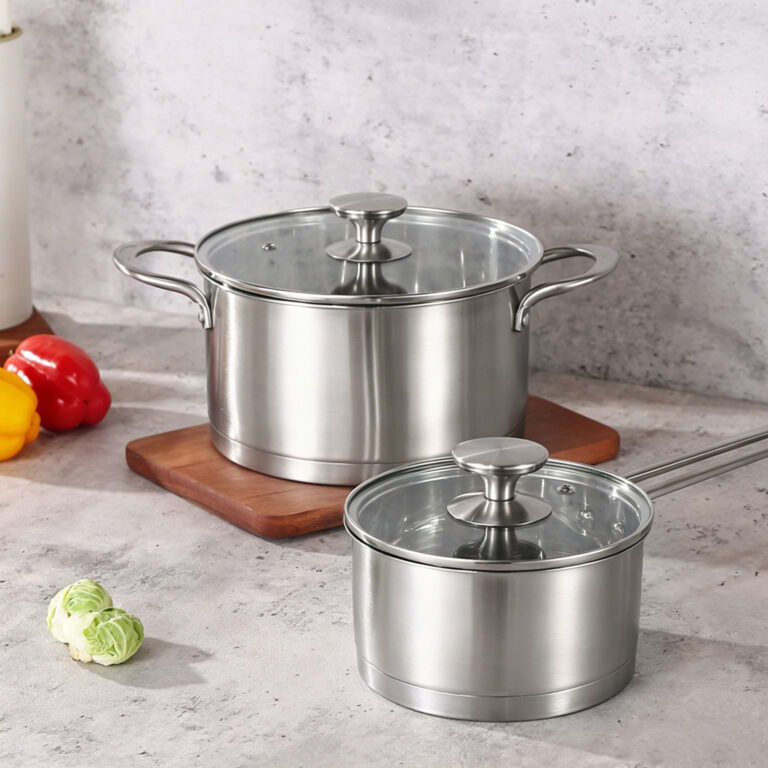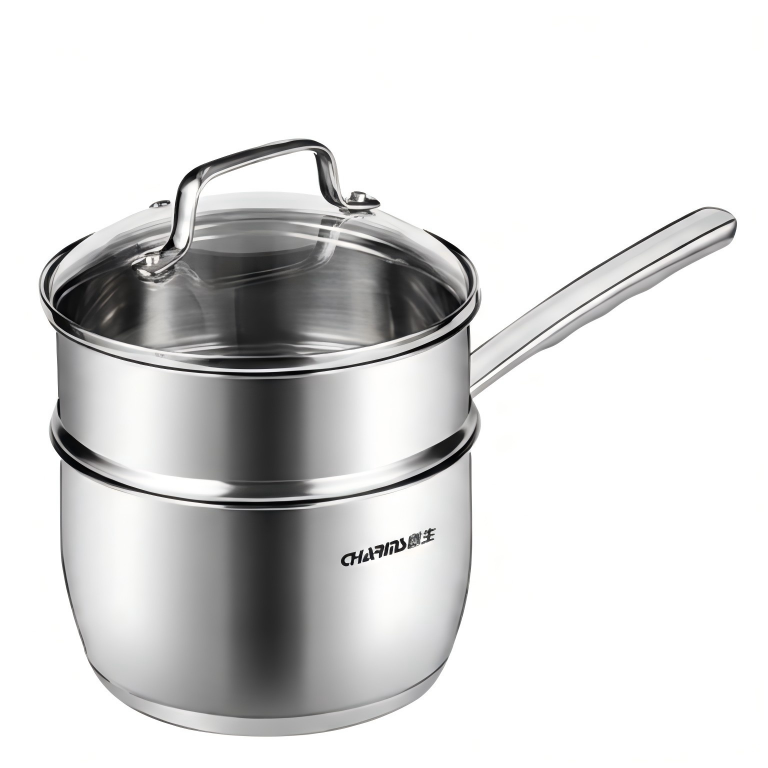


Yes, stainless steel cookware leaches small amounts of nickel into food — but the quantity depends heavily on the steel grade, food acidity, cooking time, and pan age. The widely repeated claim that “316 stainless steel has less nickel than 304” is chemically incorrect: 316 actually contains more nickel by composition (10–14% vs 8–10.5%). What makes 316 safer for nickel-sensitive cooks is its molybdenum content (2–3%), which creates a more stable passive oxide layer that resists corrosion and dramatically reduces nickel migration. For most people, cookware-derived nickel is a minor fraction of total dietary intake. For the roughly 1–2% of the population with Systemic Nickel Allergy Syndrome (SNAS), grade and cooking habits both matter.
The Misconception Most Articles Get Wrong: 316 Has More Nickel
316 stainless steel contains more nickel than 304, not less — but it still leaches less. Here’s why that matters.
Walk into any kitchenware store and you’ll hear a salesperson explain that “316 is better for nickel allergy because it has less nickel.” Pull out a copy of ASTM A240 and the story changes completely.
Per ASTM A240, the industry standard for flat-rolled stainless steel:
| Property | 304 Stainless Steel | 316 Stainless Steel |
|---|---|---|
| Chromium content | 18.0–20.0% | 16.0–18.0% |
| Nickel content | 8.0–10.5% | 10.0–14.0% |
| Molybdenum content | None | 2.0–3.0% |
| Carbon (max) | 0.08% | 0.08% |
| Common marketing label | 18/8 or 18/10 | Marine / Surgical grade |
316 carries up to 14% nickel by weight — significantly more than 304. So why does it leach less?
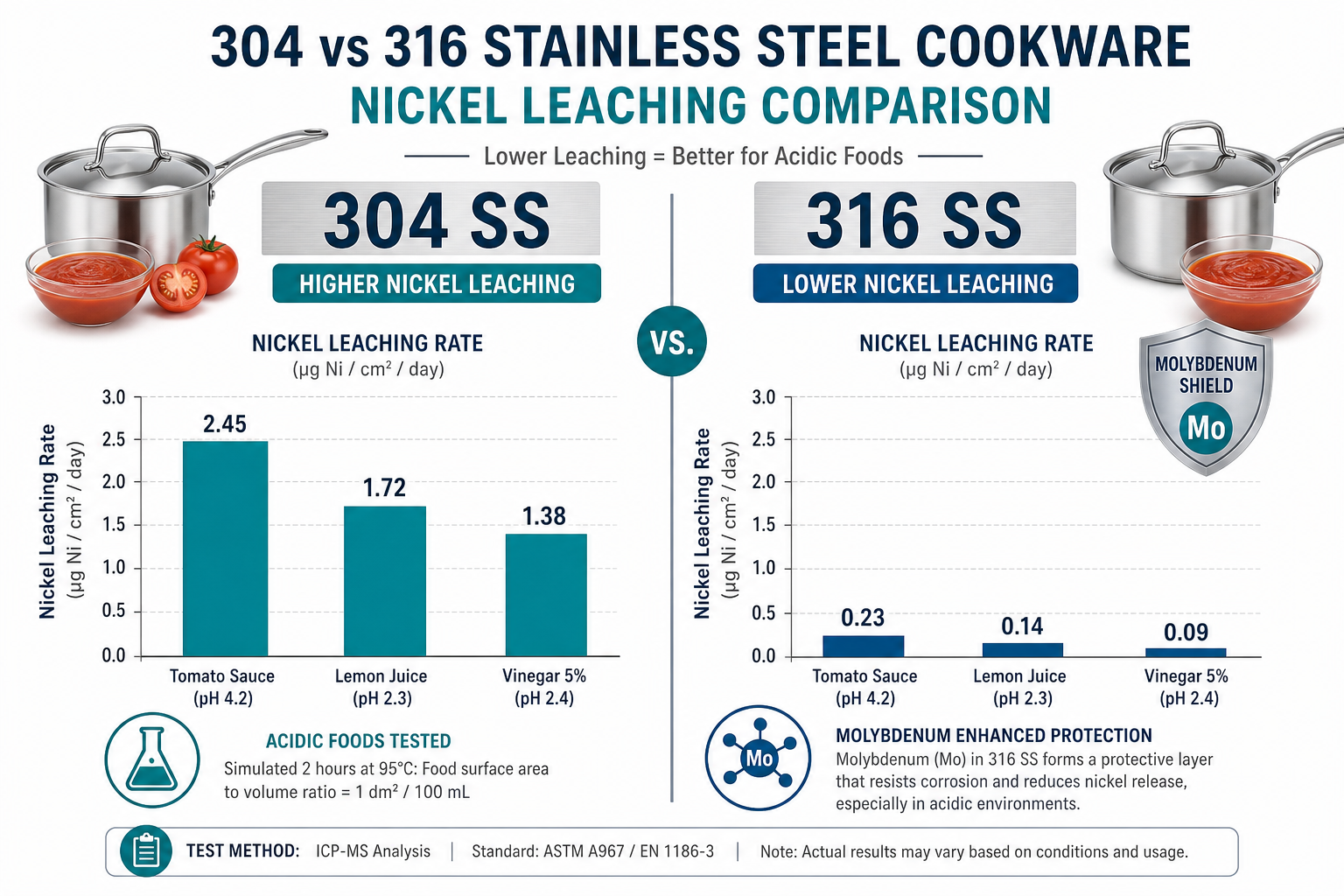
The answer is molybdenum. When molybdenum is present in the alloy, it strengthens the chromium-oxide passive layer that forms on stainless steel’s surface. This layer acts as a barrier between the metal and whatever is in your pan. A more stable, denser passive layer means fewer nickel ions escape into food, even though there’s more nickel in the base metal.
Think of it like a well-sealed wine bottle versus a corked one with a damaged seal. The first bottle has more wine, but none of it spills. The second has less wine but leaks.
What the Research Says About How Much Nickel Actually Leaches
Nickel migration from stainless steel cookware is real, measurable, and highly dependent on cooking conditions.
The most-cited study on this topic is Kamerud et al. (2013), published in the Journal of Agricultural and Food Chemistry (Oregon State University / USDA). Researchers measured nickel migration from stainless steel cookware over repeated cooking cycles with tomato sauce:
- First cooking cycle (brand-new pan, tomato sauce): ~5.76 mg/kg — the highest leaching point
- Second use onward: leaching drops sharply with each subsequent use as the passive layer stabilizes
- By the 10th cooking cycle: approximately 0.7 mg/kg (~88 µg per 126 g serving)
- The key pattern: a new pan can leach 8× more than the same pan after regular use
This is the detail most cookware articles miss. The common claim that “new pans leach more” understates just how dramatic the difference is — we’re talking about an order of magnitude.
A separate study on stainless cookware in acidic simulants found nickel levels in 4% acetic acid (a standard proxy for vinegar/tomato) reaching 1–3.3 mg/L after 30 minutes to 2 hours of contact, compared to essentially zero in distilled water. Acidic foods increase nickel leaching by 300–800× versus neutral water.
No published study has directly compared 304 vs 316 cookware under identical cooking conditions in a controlled head-to-head trial. The general position among corrosion chemists — that 316 leaches meaningfully less than 304 in acidic environments due to molybdenum’s passivation effect — is based on well-established electrochemical principles and comparative corrosion data, not a single dedicated cookware cooking experiment. That’s worth being honest about.
Three factors drive leaching up most sharply:
- Acidity — Tomato sauce, vinegar-based marinades, citrus, and wine can drop pan pH below 4.5. At this pH range, the passive layer becomes vulnerable and nickel migration can increase by 10× or more compared to neutral water.
- Pan newness — Brand-new pans leach the most. The first 10–15 uses of any stainless steel pan shed the most surface material as the passive layer stabilizes.
- Cook time — A 10-minute sauté leaches a fraction of what a 3-hour braise does. Time in contact matters.
What doesn’t move the needle much: stovetop temperature (within normal cooking range), minor scratches from normal use, or whether the pan is 18/8 or 18/10 (both are 304 grade; the “18/10” label just means 10% nickel rather than 8%).
How Much Is Actually Dangerous? Putting the Numbers in Context
For most people, the nickel contribution from cookware is small relative to overall dietary intake and well below safety thresholds.
The European Food Safety Authority (EFSA) established a Tolerable Daily Intake (TDI) for nickel of 2.8 μg per kilogram of body weight per day (EFSA CONTAM Panel, 2015). For a 70 kg adult, that’s 196 μg/day. Note: EFSA updated this in 2020 to 13 μg/kg bw/day based on reproductive toxicity endpoints, which raises the threshold to ~910 μg/day for a 70 kg adult. The original 2015 figure is the one most commonly cited in cookware safety discussions.
Average dietary nickel intake for European adults is roughly 120–160 μg/day from food alone — whole grains, legumes, nuts, and chocolate are the biggest contributors, not cookware. This already accounts for a meaningful portion of the TDI budget under the 2015 standard.
Cookware in perspective: simmering tomato sauce in a brand-new 304 pan for 2 hours can yield leaching in the range of several mg/kg. For a 300 g serving of that sauce, you could be getting several hundred micrograms from the cookware alone — relevant against the 2015 TDI for someone who is already consuming a high-nickel diet. After the pan is well-seasoned (10+ uses), that same scenario drops to roughly 0.7 mg/kg (~210 µg per 300 g serving) — still meaningful but not alarming for people without SNAS.
For someone cooking mostly neutral foods (eggs, chicken, vegetables) in a well-seasoned pan, the cookware contribution is likely under 10 μg per meal.
The EU Council of Europe Resolution ResAP(2013)2, which covers metal alloys in food contact applications, sets a specific migration limit for nickel of 0.14 mg/kg food (140 μg/kg). Quality stainless steel cookware under normal cooking conditions falls below this threshold for non-acidic foods.
Who Actually Needs to Worry: Allergy vs. Sensitivity vs. General Population

Nickel allergy and nickel sensitivity are two different clinical conditions with different triggers and thresholds.
Contact nickel allergy (the type that causes a rash from wearing cheap jewelry) is one of the most common metal allergies — affecting approximately 17% of women and 3% of men based on European patch-test data. This is an immune reaction triggered by direct skin contact with nickel ions. Your cookware isn’t touching your skin, so this form of allergy is largely irrelevant to cooking with stainless steel.
Systemic Nickel Allergy Syndrome (SNAS) is a different story. Estimated to affect 1–2% of the general population, SNAS occurs when ingested or inhaled nickel triggers systemic reactions — eczema flares, gastrointestinal symptoms, headaches. People with SNAS are typically advised by dermatologists to follow a low-nickel diet (generally targeting under 150–200 μg/day of dietary nickel).
For SNAS patients, cookware choice does matter:
- Prefer well-seasoned pans over brand-new ones
- Choose 316 over 304 if cooking acidic dishes regularly
- Avoid long simmering of acidic sauces (tomatoes, citrus, wine)
- Don’t store acidic foods in stainless containers overnight
For everyone else — people with contact nickel allergy from jewelry but no SNAS, or no allergy at all — the nickel contribution from stainless steel cookware is unlikely to cause harm at typical cooking frequencies.
Real-World Cooking Scenarios: A Practical Risk Assessment
The combination of pan grade, food type, and cooking time determines actual exposure far more than brand claims.
I’ve looked at the research on leaching across different scenarios, and here’s what emerges as the practical picture:
| Scenario | Pan Type | Estimated Ni Leaching | Risk Level for SNAS |
|---|---|---|---|
| Boiling pasta water (10 min) | New 304 | Trace (~0.004 mg/L) | Very Low |
| Sautéing chicken (15 min) | Seasoned 304 | Negligible | Very Low |
| Simmering tomato sauce (2 hr, 1st use) | New 304 | ~5.76 mg/kg | High |
| Simmering tomato sauce (2 hr, 10th+ use) | Seasoned 304 | ~0.7 mg/kg | Moderate |
| Simmering tomato sauce (2 hr) | 316 (any age) | Lower than 304 (Mo effect) | Low–Moderate |
| Cooking vinegar-based dishes (1 hr) | New 304 | ~2–3 mg/L in simulant | High for SNAS |
| Cooking vinegar-based dishes (1 hr) | 316 | Meaningfully lower (no direct study) | Moderate for SNAS |
These figures draw on published leaching studies (Kamerud 2013; PMC10386729) and standard food simulant data. No published controlled trial has directly compared 304 vs 316 cookware under identical cooking conditions — the 316 advantage is extrapolated from its superior corrosion resistance chemistry. Individual pan quality, surface finish, and actual food pH all affect real-world results.
The practical takeaway: the difference between a new 304 pan and a well-seasoned one is far greater than the difference between 304 and 316 grades. Seasoning your pan through the first 10–15 uses matters more than upgrading grades for most people.
304 vs 316: When the Upgrade Actually Makes Sense
Switching from 304 to 316 makes the most difference for people who regularly cook acidic dishes or have confirmed SNAS.
Here’s an honest breakdown of when the investment in 316 is justified:
Choose 316 if:
- You have confirmed SNAS and are on a low-nickel diet
- You regularly cook tomato-based sauces, wine reductions, or citrus-heavy dishes
- You prefer a new pan without wanting to season through the initial high-leaching phase
- You’re sourcing cookware for a professional kitchen with high-acidity menu items
Stick with 304 (with good habits) if:
- You don’t have SNAS — just contact allergy from jewelry
- Your cooking is mostly neutral: meats, vegetables, eggs, pasta
- Your pans are already well-seasoned (1+ years of regular use)
- Budget is a consideration — 316 cookware typically costs 20–40% more
What makes 0 difference:
- 18/8 vs 18/10 labeling (both are 304; the extra 2% nickel by composition has negligible leaching impact)
- “Surgical grade” marketing claims (surgical steel is 316L, which is 316 with lower carbon — fine for cookware, but the “surgical” label is a marketing positioning, not a higher standard for food safety)
One thing rarely mentioned in competitor articles: the surface finish matters too. Electropolished or mirror-finished stainless steel has a denser passive layer than brushed finishes and leaches somewhat less under the same conditions. High-end brands using electropolished interiors aren’t just selling aesthetics.
Practical Steps to Reduce Nickel Leaching (Whatever Pan You Own)
These habits reduce nickel migration more reliably than switching grades for most cooking situations.
- Season your new pan first. Cook neutral, high-fat foods (bacon, butter-based sauces) in a new pan for the first 10–15 uses before switching to acidic recipes. The passive layer stabilizes significantly during this period.
- Don’t simmer acidic foods for extended periods. If a recipe calls for tomato sauce to cook for 3 hours, finish it in a non-reactive vessel (enamel-coated cast iron, ceramic) once the initial searing is done.
- Never store acidic leftovers in stainless pots overnight. This is a longer, lower-temperature exposure that still contributes meaningfully to nickel migration.
- Skip the harsh scrubbing. Steel wool and abrasive scouring pads damage the passive layer. Use soft sponges and gentle cleaners to keep the surface intact.
- If you have SNAS, consider cast iron or enamel-coated options for acidic dishes. Enameled cast iron (like Le Creuset or Staub) and ceramic-coated cookware leach essentially no nickel. They’re not replacements for stainless across all uses, but they’re excellent for long acidic cooks.
Frequently Asked Questions
Does 316 stainless steel have less nickel than 304?
No — this is one of the most common misconceptions. 316 contains 10–14% nickel by composition, compared to 8–10.5% in 304. What 316 offers is better corrosion resistance due to its 2–3% molybdenum content, which stabilizes the protective oxide surface layer and significantly reduces nickel migration into food.
Is stainless steel cookware safe if I have a nickel allergy?
It depends on the type of allergy. Contact nickel allergy (from jewelry) is unlikely to be triggered by cookware since the metal doesn’t touch your skin. Systemic Nickel Allergy Syndrome (SNAS) — where ingested nickel causes reactions — is a different matter. SNAS patients should prefer 316 over 304 for acidic cooking, use well-seasoned pans, and limit long simmering of acidic dishes.
How much nickel do I actually get from stainless steel cookware?
It varies sharply with pan age and food type. A brand-new 304 pan simmering tomato sauce can leach ~5.76 mg/kg in the first use, dropping to ~0.7 mg/kg by the 10th use as the passive layer stabilizes (Kamerud et al., 2013). Neutral foods cooked in seasoned pans yield negligible amounts. EFSA’s 2015 TDI is 196 μg/day for a 70 kg adult; EFSA’s 2020 update raised this to ~910 μg/day based on reproductive endpoints.
Does “18/10 stainless steel” mean less nickel than “18/8”?
Both are 304-grade stainless steel — the numbers refer to the approximate chromium and nickel percentages. 18/10 actually has slightly more nickel (10%) than 18/8 (8%), but the leaching difference in practice is negligible. Neither is 316.
Is there a truly nickel-free option for cooking?
No stainless steel is nickel-free. For truly minimal nickel exposure, consider enameled cast iron, glass, or ceramic cookware for acidic dishes. Titanium cookware is another option — it contains no nickel and has excellent corrosion resistance, though it’s expensive and heats unevenly without a cladded base.
Does a scratched stainless steel pan leach more nickel?
Minor surface scratches from normal cooking utensils have a relatively small effect on nickel migration compared to pan age and food acidity. Heavy abrasion (steel wool, harsh scouring) that damages the passive layer can increase leaching more meaningfully — another reason to treat your pan’s surface with care.
Summary
The 316 vs 304 debate for nickel-sensitive cooks comes down to one chemical fact most cookware articles miss: 316 wins not because it contains less nickel, but because its molybdenum content makes the surface more resistant to corrosion and dramatically reduces migration. For the general population and people with contact-only nickel allergy, standard 304 cookware used with reasonable habits (season first, avoid prolonged acidic cooking) poses minimal risk. For SNAS patients on a low-nickel diet, 316 is the genuinely better choice — particularly for acidic cooking where the leaching difference is most pronounced. The single most impactful thing any cook can do regardless of grade: season the pan through its initial uses before throwing a long-simmering tomato sauce into it.