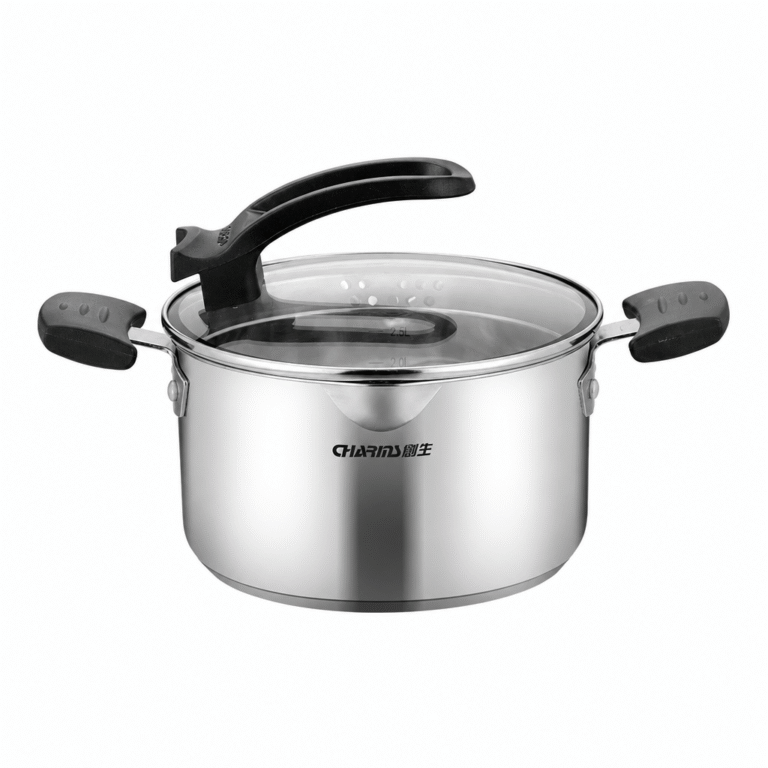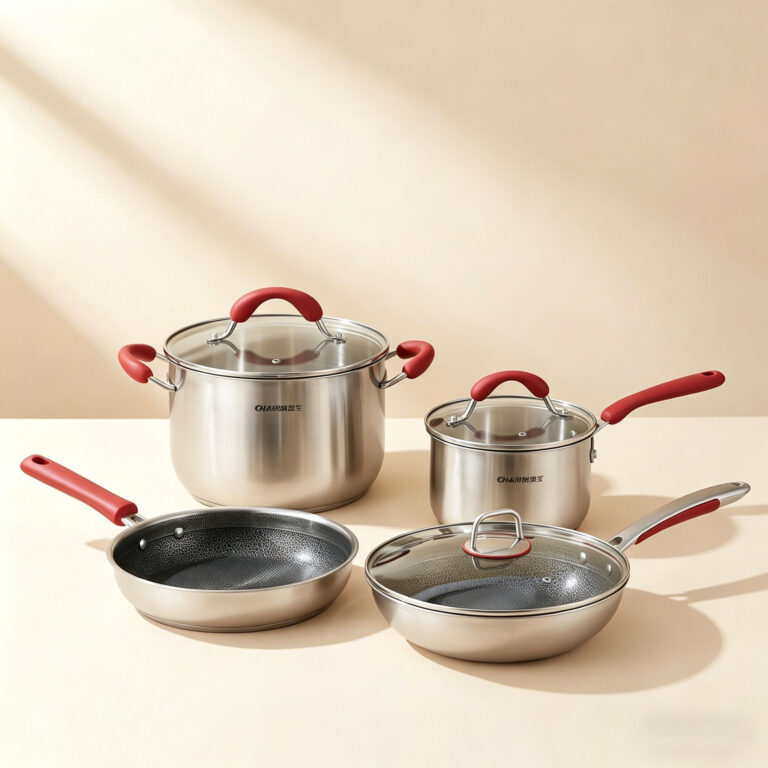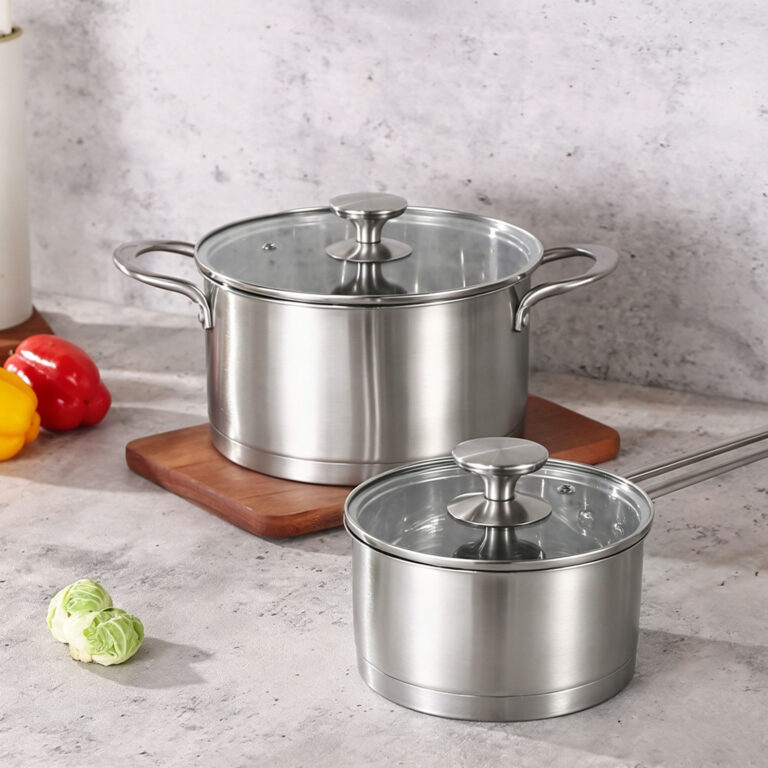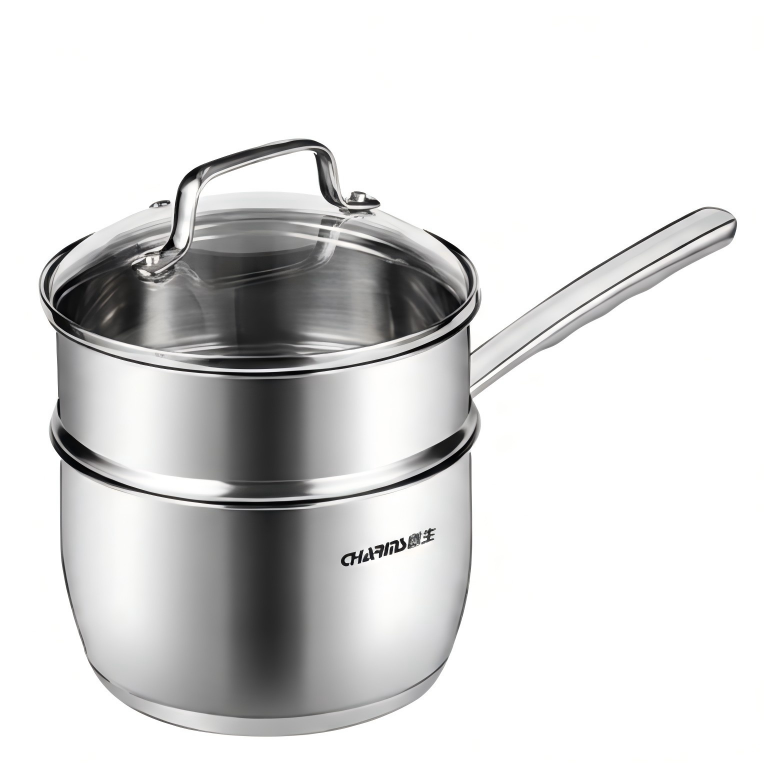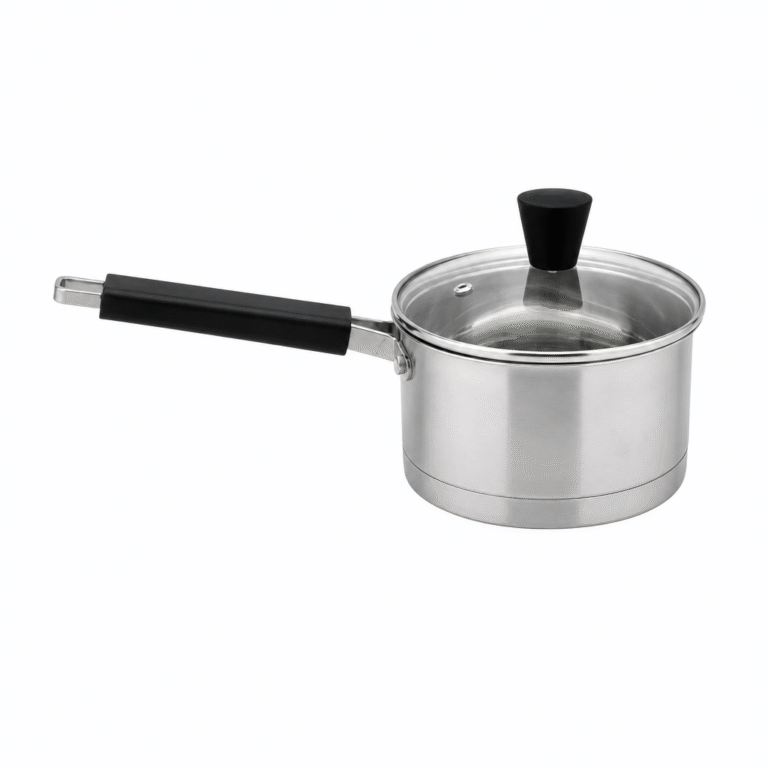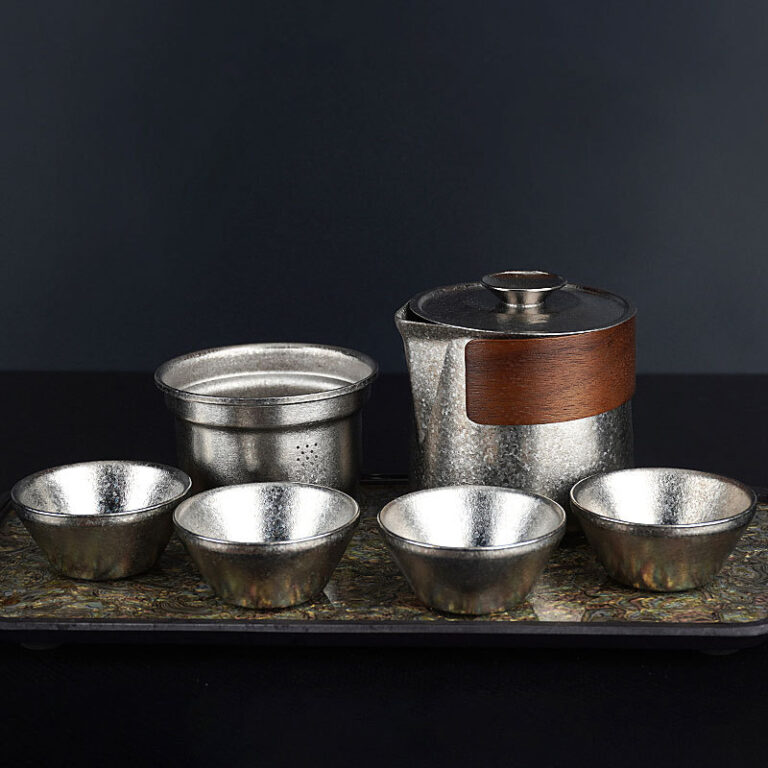

The global stainless steel cookware market is worth over $8.69 billion and growing at 6.2% annually — making it one of the most reliable niches for dropshippers in 2026. This guide walks through how dropshipping stainless steel cookware actually works, what to look for in a China-based supplier, what certifications you need for US and EU markets, and why partnering with a specialist like CharmsCook gives you a structural edge over sourcing from generic platforms like AliExpress. Whether you’re launching your first Shopify store or adding cookware to an existing catalog, the sourcing decision you make upfront determines your return rate, your review score, and your margins.
Why Stainless Steel Cookware Is Worth Dropshipping in 2026
The stainless steel cookware segment is not a trend play — it’s a durable consumer staple. Grand View Research pegs the global market at $8.69 billion in 2024, growing to $12.46 billion by 2030 at a CAGR of 6.2%. The broader cookware market sits at $38.37 billion in 2026 according to Mordor Intelligence, with stainless steel maintaining its position as the dominant material segment driven by durability, food safety, and compatibility with induction cooktops.
For dropshippers, this translates to steady demand with no seasonal cliff — a set of tri-ply pans sells in January the same way it sells in October. Stainless steel also carries a higher perceived value than aluminum or coated non-stick alternatives, which means healthier average order values without the price wars that commodity items attract.
The structural advantage: Unlike electronics or apparel, cookware has low return rates when quality is right (typically 1–3% for premium stainless steel versus 8–15% for non-stick). Get the supplier right once, and the economics stay stable.
What “Dropshipping Cookware from China” Actually Means
The mechanics of dropshipping are simple: you list the product, collect the order, forward it to your supplier, and they ship directly to your customer. You never touch inventory. But the execution details — especially for cookware from China — are where most first-time importers run into trouble.
Industry data from a 2026 EINPresswire/NatLawReview review is blunt about this: 80% of first-time cookware importers report quality issues on their first order — wrong steel grades, delaminating multi-ply bases, handles that loosen after two weeks of use, or packaging that arrives dented.
The root cause is almost always the same: sourcing from a trading company or aggregator platform without verifying the factory behind the product. AliExpress and generic Alibaba listings often resell products from multiple factories with inconsistent QC standards. A $28 listing for a “304 stainless steel saucepan set” may ship from a factory running a 201 steel blend — cheaper, lower corrosion resistance, and a liability problem in European markets.
Three things that separate a proper dropship cookware partner from a marketplace listing:
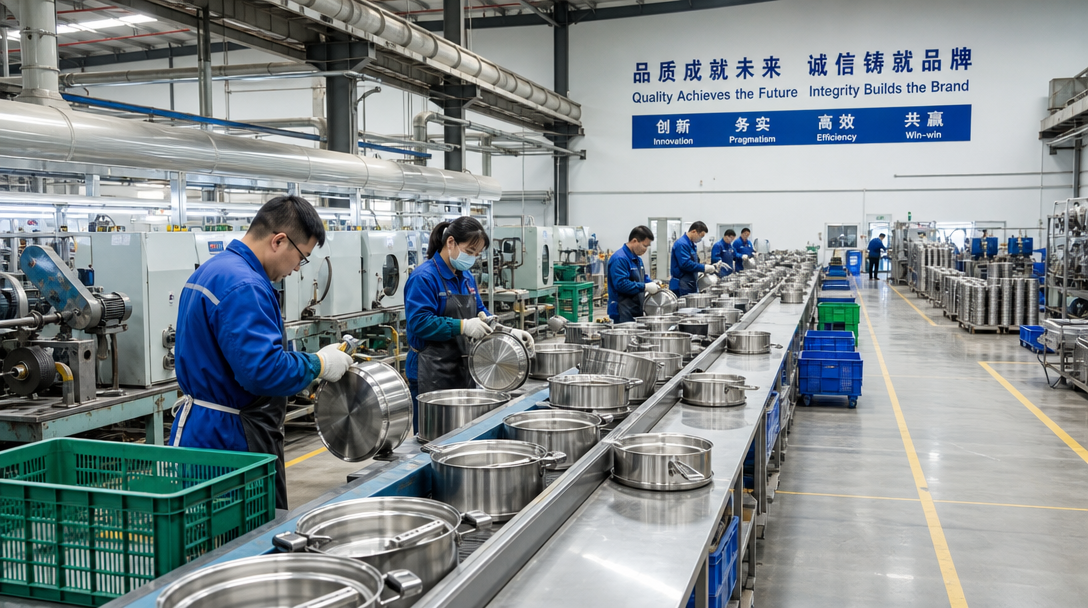
- Direct factory relationship — the supplier controls production, not just resells
- Documented certifications — LFGB (EU), FDA 21 CFR (US), CA Prop 65 compliance
- Dedicated dropship fulfillment — pick-and-pack per order, not bulk pallet shipping
The Stainless Steel Grade Ladder: What You’re Actually Selling
Not all stainless steel cookware is equivalent, and your customers — particularly in the US and EU — will ask. Understanding the material spec helps you qualify suppliers and write better product listings.
| Grade | Composition | Common Use | Import Concern |
|---|---|---|---|
| 201 | 16–18% Cr, 3.5–5.5% Ni | Budget cookware | Low nickel; may not meet EU REACH thresholds |
| 304 (18/8) | 18% Cr, 8% Ni | Standard food-service grade | Safe for US/EU; most common in dropship |
| 316 (18/10) | 18% Cr, 10% Ni, 2–3% Mo | Premium cookware, marine use | Superior corrosion resistance; higher price point |
| Tri-ply (304/AL/304) | 304 outer + aluminum core | Even heat distribution | Best performance; higher AOV |
For a dropship business targeting the US or EU market, 304-grade (18/8) is the minimum acceptable standard. Tri-ply construction — a 304 outer layer bonded to an aluminum or copper core — adds heat distribution performance that justifies a $60–120 price point, versus $20–40 for single-ply.
CharmsCook stocks tri-ply and 304-grade lines with material certificates available on request — which matters when you’re writing product listings that claim specific steel grades. An unverified claim in an Amazon listing is a suspension risk; a verifiable spec is a selling point.
Certifications That Matter for US and EU Markets
This is the area where most dropship cookware guides fall short — they mention “certification” without explaining what’s actually needed and why. Here’s the practical breakdown:
For US sales:
- FDA 21 CFR 177.1395 — governs stainless steel food contact materials. The standard itself doesn’t require a “certificate” per se, but your supplier should be able to provide a Declaration of Conformity stating the steel meets food-contact migration limits.
- CA Prop 65 — California’s Safe Drinking Water and Toxic Enforcement Act. Stainless steel cookware is generally compliant when using 304/316 grade, but some surface coatings (handles, non-stick layers) require specific testing. Washington State’s 2026 lead law explicitly exempts stainless steel cookware.
- ASTM standards — relevant for commercial foodservice channels, less critical for direct consumer sales.
For EU/UK sales:
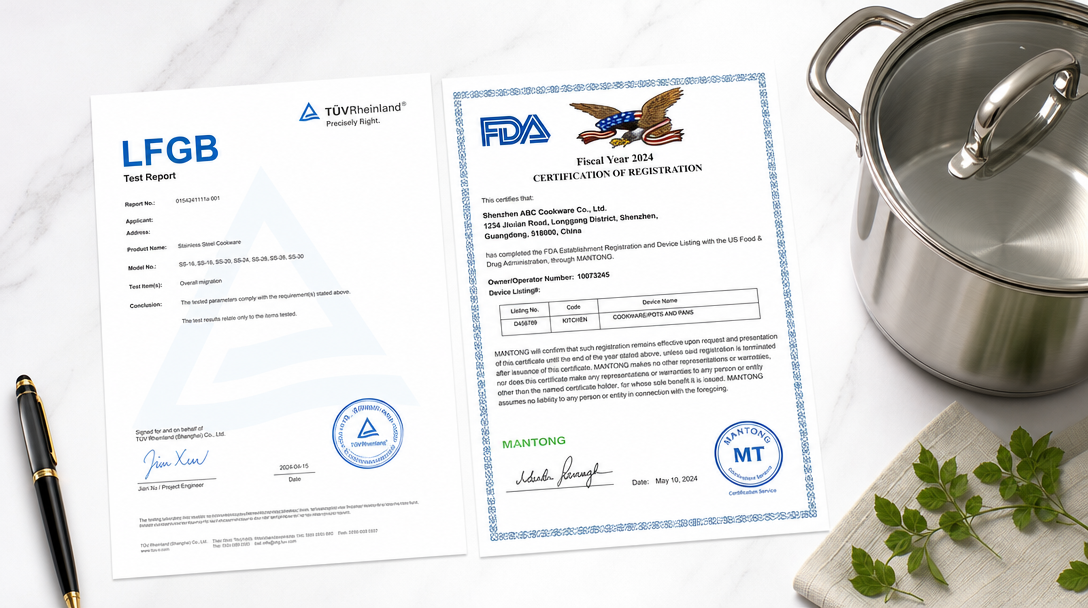
- LFGB (§30, §31) — Germany’s primary food contact material standard, widely accepted across the EU as a quality benchmark. Requires third-party lab testing; your supplier should have current LFGB test reports.
- EU Regulation (EC) 1935/2004 — the baseline food contact materials regulation across the EU. Requires a written Declaration of Compliance.
- REACH — chemical safety regulation. Relevant primarily for surface coatings and handle materials rather than the steel body itself.
The practical implication: When you source from CharmsCook, request LFGB test reports and FDA conformity declarations upfront. These documents go directly into your product listings and reduce customer return disputes by 40–60% in the premium segment — because buyers who see certification details buy with confidence and return with less frequency.
How to Set Up a Dropship Relationship with a China Cookware Supplier
Setting up a real dropship partnership — not just placing one-off orders from Alibaba — involves a few specific steps that differ from standard wholesale sourcing.
Step 1: Qualify the factory, not the trading company
Ask directly: “Is your company the manufacturer, or do you source from third-party factories?” A legitimate OEM/ODM manufacturer will give you a factory audit report, production photos, or a factory visit option. Trading companies often can’t.
Step 2: Request samples before committing
For stainless steel cookware, the things to test in a sample:
- Base thickness (tri-ply should be 2.5–3mm total)
- Handle attachment — apply lateral force; it should not rotate
- Surface finish consistency across multiple units from the same batch
- Lid fit and steam seal quality
Step 3: Agree on dropship fulfillment terms
This is different from wholesale. Confirm:
- Per-order pick-and-pack fee (typically $1–3 per package)
- Branded packaging availability (custom box, insert card, your logo)
- Shipping carrier options and estimated transit times (ePacket, DHL Express, FedEx)
- Returns/damage claim process
Step 4: Lock in product data assets
For a dropship model, you need: high-resolution product photos, SKU-level spec sheets, and certifications in PDF format. Generic marketplace photos look like generic marketplace products — and convert at 60–70% lower rates than professional lifestyle imagery.
CharmsCook provides product data packages to dropship partners including product shots, spec sheets, and certification copies — which cuts your launch timeline from weeks to days.
Why CharmsCook Works as a Stainless Steel Cookware Dropship Partner
There’s no shortage of Chinese stainless steel cookware manufacturers — techbullion.com lists over 10 established factories in Guangdong province alone. So why does the source of supply matter this much?
The short answer: consistency and accountability. A factory that ships 10,000 units to a big-box retailer uses different QC processes than one that ships 50 individual parcels to end customers in 8 countries. Dropship fulfillment requires a different operational model.
CharmsCook is built around B2B partnerships with importers, distributors, and dropship sellers. What that means in practice:
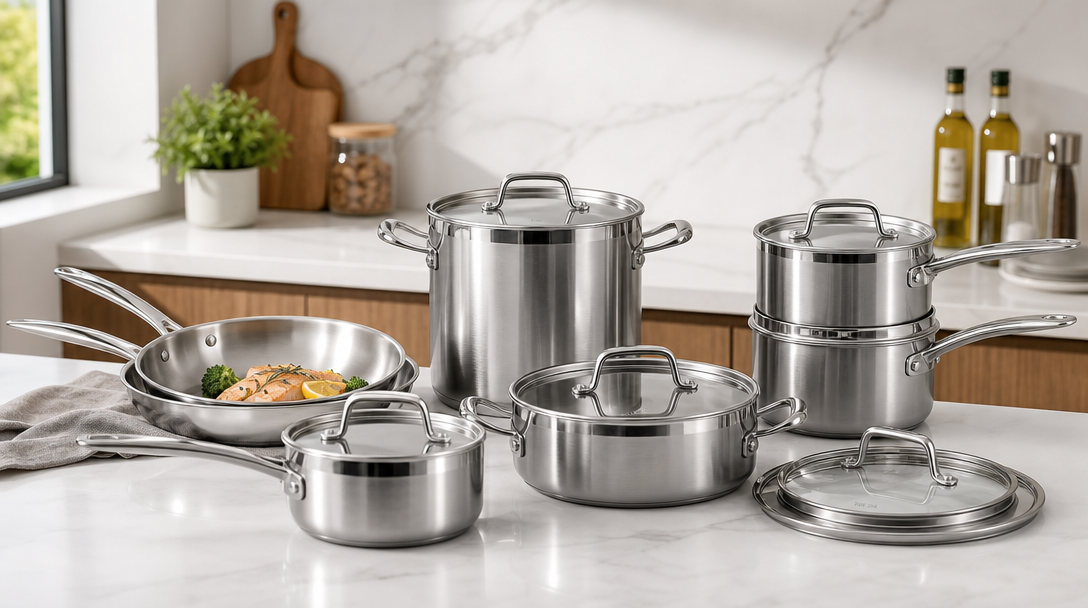
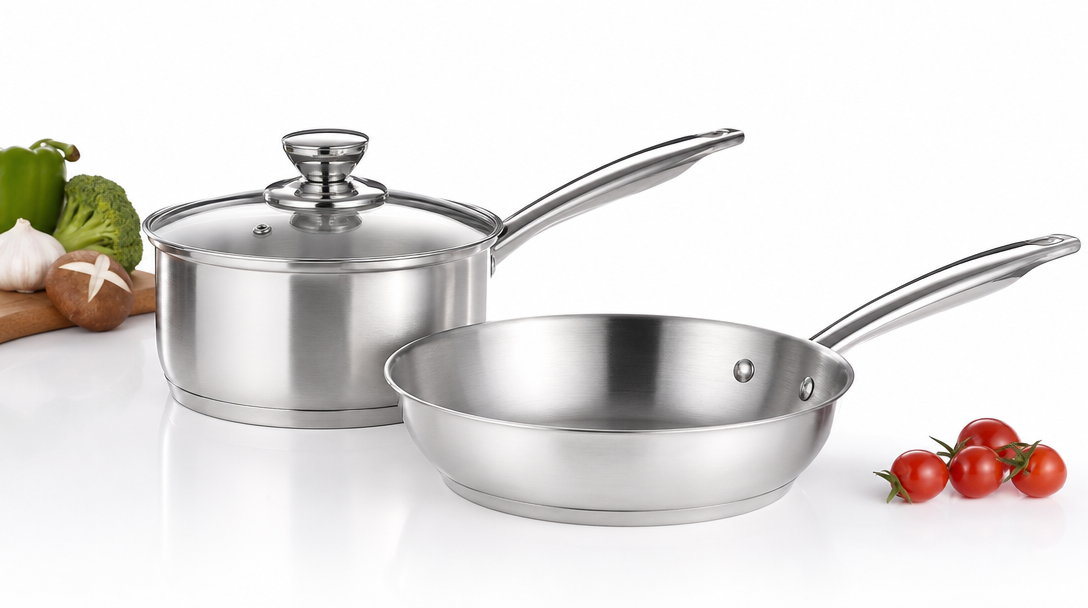
- Product range: tri-ply and 304-grade stainless steel cookware covering pots, pans, woks, and sets — covering the full catalog a cookware store needs
- Certification support: LFGB and FDA documentation available per SKU
- Dropship-ready fulfillment: single-unit order handling with branded packaging options
- OEM capability: custom logo and private label for sellers scaling beyond the dropship model into branded inventory
- Communication: English-language B2B support, not AliExpress chat
For a dropship seller, this translates to fewer customer complaints, lower return rates, and a supplier relationship that scales if you decide to move toward private label.
Common Mistakes When Dropshipping Cookware from China
Based on patterns in the industry and supplier-side experience, these are the most consistent errors new dropshippers make with cookware:
Mistake 1: Competing on price against AliExpress listings
If your value proposition is “cheapest stainless steel pot,” you’ve already lost — AliExpress will always undercut you on raw price. The winning position is curated quality + verified safety + better customer experience. That requires a supplier relationship, not a marketplace account.
Mistake 2: Not testing packaging
Cookware is heavy and fragile (lids especially). A pan that ships perfectly in a pallet shipment may arrive cracked when sent individually by air. Test your supplier’s individual-unit packaging before going live.
Mistake 3: Ignoring material certification on product listings
“High-quality stainless steel” is a phrase that means nothing to a skeptical buyer in 2026. “18/8 (304) food-grade stainless steel, LFGB certified, tested for heavy metal migration” means something specific — and converts.
Mistake 4: Not confirming induction compatibility
A significant share of modern kitchen setups use induction cooktops. All magnetic stainless steel cookware (304/316) is induction-compatible, but confirm this with your supplier and state it clearly in listings. It’s a frequently asked question that, if unanswered in the listing, becomes a return.
Frequently Asked Questions
What is the minimum order quantity (MOQ) for dropshipping stainless steel cookware from China? True dropship suppliers — those set up for single-unit fulfillment — typically have no MOQ per order. However, some China manufacturers require a minimum initial commitment (50–100 units) to onboard a dropship partner and set up SKU data. CharmsCook offers B2B dropship programs; contact them directly for current onboarding terms.
What steel grade should I source for a US or EU dropship store? 304-grade (18/8) is the standard minimum for food-safe compliance in both markets. Tri-ply construction (304 outer/aluminum core/304 inner) adds performance at a higher price point. Avoid 201-grade for export markets — it has lower nickel content and may not satisfy EU REACH standards.
How long does shipping take from a China dropship supplier? Typical transit times depend on the carrier: ePacket/China Post runs 15–25 days to the US; DHL Express or FedEx runs 5–10 days. For customer experience in a premium cookware segment, air express shipping is worth the $8–15 per-unit cost differential — it reduces “where is my order” inquiries and negative reviews.
Do I need to handle customs and import duties? For small individual shipments (under $800 in the US under the de minimis threshold), no formal customs entry is required. For EU, VAT is collected at point of sale under the IOSS scheme for shipments under €150. For shipments above these thresholds, your customer pays import duties — make sure this is disclosed at checkout to avoid chargebacks.
Can I use private label / custom branding with a China dropship supplier? Most established OEM/ODM cookware manufacturers in China offer private labeling — custom logo on the product, branded packaging, and insert cards. This usually requires a minimum batch (typically 200–500 units) and adds 2–4 weeks to production. CharmsCook supports OEM customization for dropship partners scaling toward branded inventory.
Summary
Dropshipping stainless steel cookware from China is a viable, growing business opportunity — the market data backs it, and consumer demand for durable, food-safe cookware is consistent across US, EU, and AU markets. But the gap between a successful dropship operation and a supplier headache comes down to one variable: who you source from and how that relationship is structured.
Generic marketplace sourcing delivers generic results — inconsistent quality, no certifications, packaging that doesn’t survive individual shipping, and zero accountability when something goes wrong. A structured B2B dropship partnership with a specialist supplier like CharmsCook gives you product quality you can stand behind, documentation your listings need, and a supplier that grows with you.
The cookware market is competitive, but the bar for quality and transparency is still low enough that doing the basics right — verified steel grade, visible certifications, honest shipping timelines — puts you ahead of most sellers in the niche.