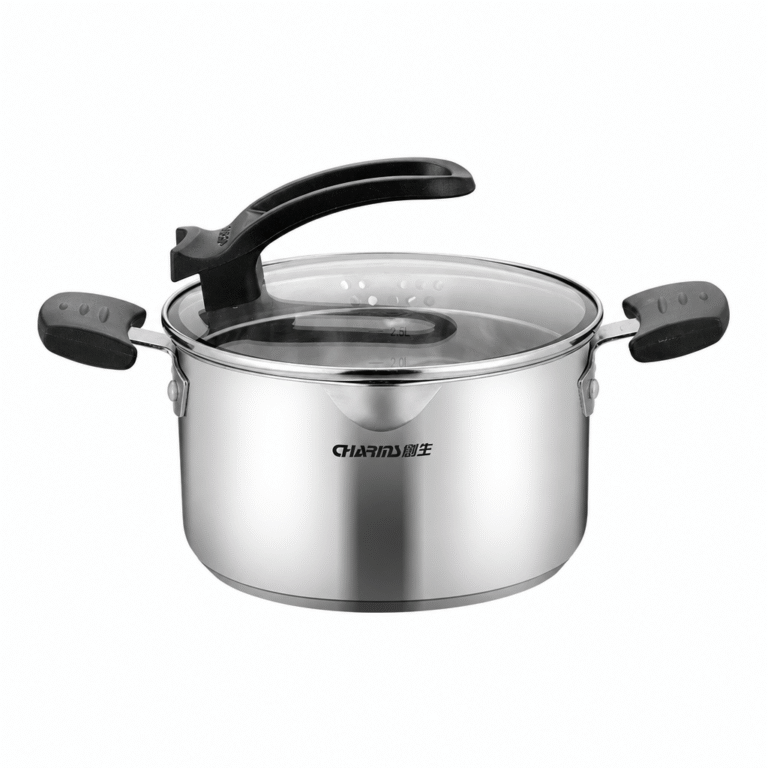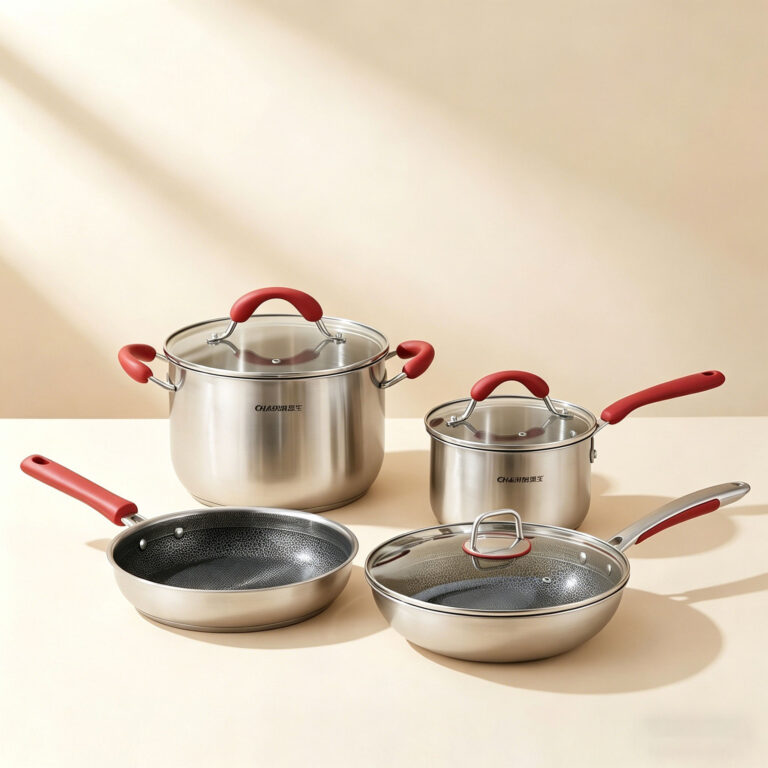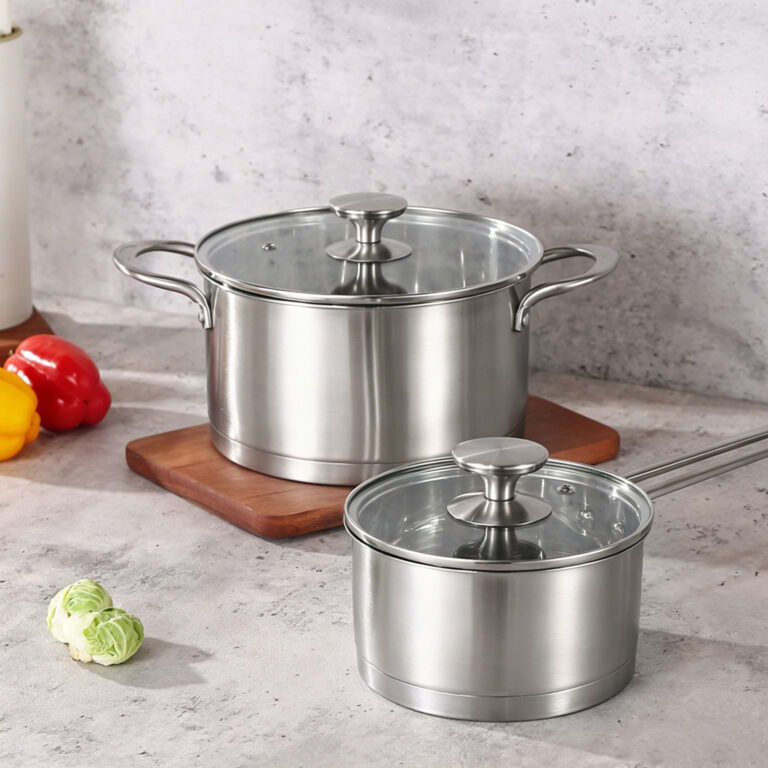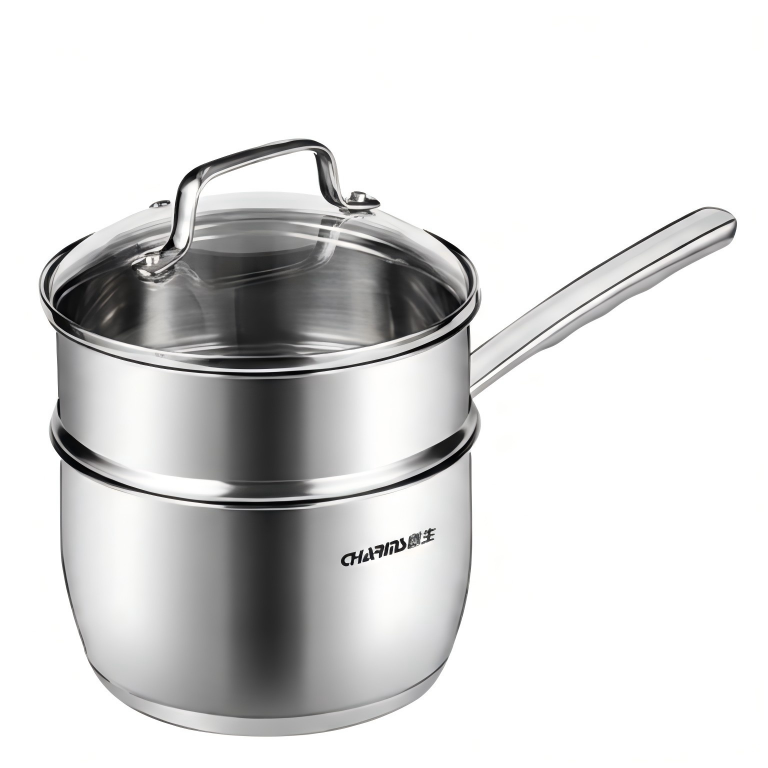


A cookware factory audit is a structured on-site verification of a supplier’s legal standing, production capability, quality systems, and material safety compliance before you place an order. Unlike general supplier assessments, cookware audits must go deep on food-contact material safety—non-stick coating chemistry, metal migration limits, and certification validity (LFGB, FDA 21 CFR, EU 1935/2004). At CharmsCook, we use a six-pillar audit framework that eliminates high-risk suppliers before costly production runs. This checklist covers legal verification, factory infrastructure, raw material traceability, in-line quality control, social compliance, and pre-shipment testing protocols.

Why Cookware Factory Audits Require a Different Mindset
Most factory audit guides were written for electronics or apparel. Cookware sits in a fundamentally different risk category—your product contacts food every single day. A cosmetic defect on a garment is a refund request. A non-compliant coating on a frying pan is a product recall, a liability claim, and potentially a public health incident.
Three risks make cookware audits unique compared to other product categories:
Food-contact material safety. Non-stick coatings (PTFE, ceramic, enamel), surface treatments, and base metals all fall under food contact material regulations. Migration limits for heavy metals—lead, cadmium, nickel—are strictly defined by LFGB (Germany), FDA 21 CFR 175–177 (USA), and EU Regulation 1935/2004.
Material substitution risk. Suppliers often pass initial audits with premium material samples, then ship lower-grade alloys in bulk production. Verifying raw material traceability—from mill certificates to incoming inspection records—is the only reliable way to catch this before your container is on the water.
Coating chemistry compliance. PFOA was phased out of US manufacturing by 2015 through EPA’s PFOA Stewardship Program, and formally banned in the EU under POP Regulation 2019/1021 effective December 2020. Yet some factories—particularly smaller or lower-tier operations—continue sourcing non-compliant coating formulations. Without certificate-level verification at the audit stage, you won’t know until a lab test fails after shipment.
The 6-Pillar Factory Audit Framework
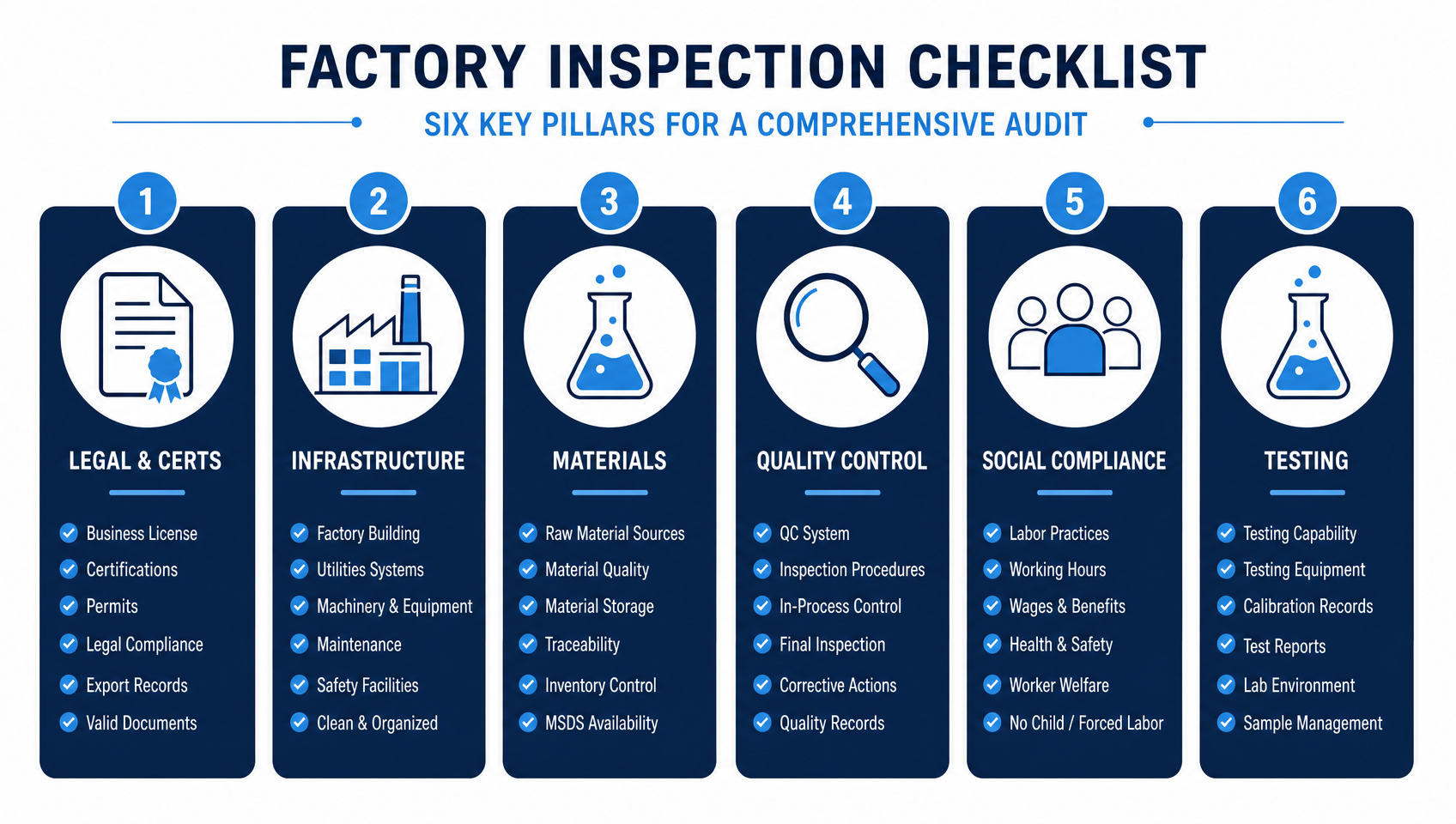
Each pillar maps to specific documentation you must physically review on-site—not just receive by email.
Pillar 1 – Legal Registration & Certification Validity
Start here. If the factory can’t prove it legally exists and that its certifications are active and verifiable, nothing else matters.
- Business license: Check the registered name, scope of operations, and expiry date. The name on the license must match the name on all export documents exactly.
- ISO 9001 certificate: Take the certificate number and verify it on the issuing certification body’s public registry (SGS Verify, Bureau Veritas, TÜV SÜD). Expired or unverifiable certificates are common—verify, don’t assume.
- Export license / customs registration: For China-sourced products, confirm the factory holds general trade export rights.
- Product-level certifications: For cookware specifically—LFGB test reports (migration tested to EN 1186 for non-stick coatings and relevant BfR recommendations), FDA compliance letters (21 CFR 175.300 for coating resins, 21 CFR 177.1550 for PTFE), REACH SVHC declarations, and California Prop 65 compliance statements. Verify issue date and that the issuing laboratory holds ISO 17025 accreditation.
Red flag: A supplier who sends only PDF copies by email but won’t let you inspect the original documents on-site is managing perception, not compliance.
Pillar 2 – Factory Infrastructure & Production Capacity
Match what you see against what the supplier has claimed.
- Production equipment: Are the stamping presses, die-casting machines, or spinning lathes adequate for your order volume? Check machine age and maintenance logs, not just the showroom floor.
- Declared capacity vs. visible reality: A factory claiming 50,000 units per month should have the workforce, shift schedule, and active machinery to support that claim. Walk the production floor, count the active workstations.
- Dedicated lines for your orders: If the factory runs multiple brand labels, confirm there is a physically separated production and storage area for your products. Cross-contamination of packaging and labels is a recurring issue in multi-brand factories.
- Non-stick coating application equipment: Check that coating spray booths are enclosed, temperature-controlled, and that curing ovens have calibrated temperature monitoring with documented logs. Coating adhesion and performance are directly tied to curing process consistency.
Pillar 3 – Raw Material Safety & Traceability
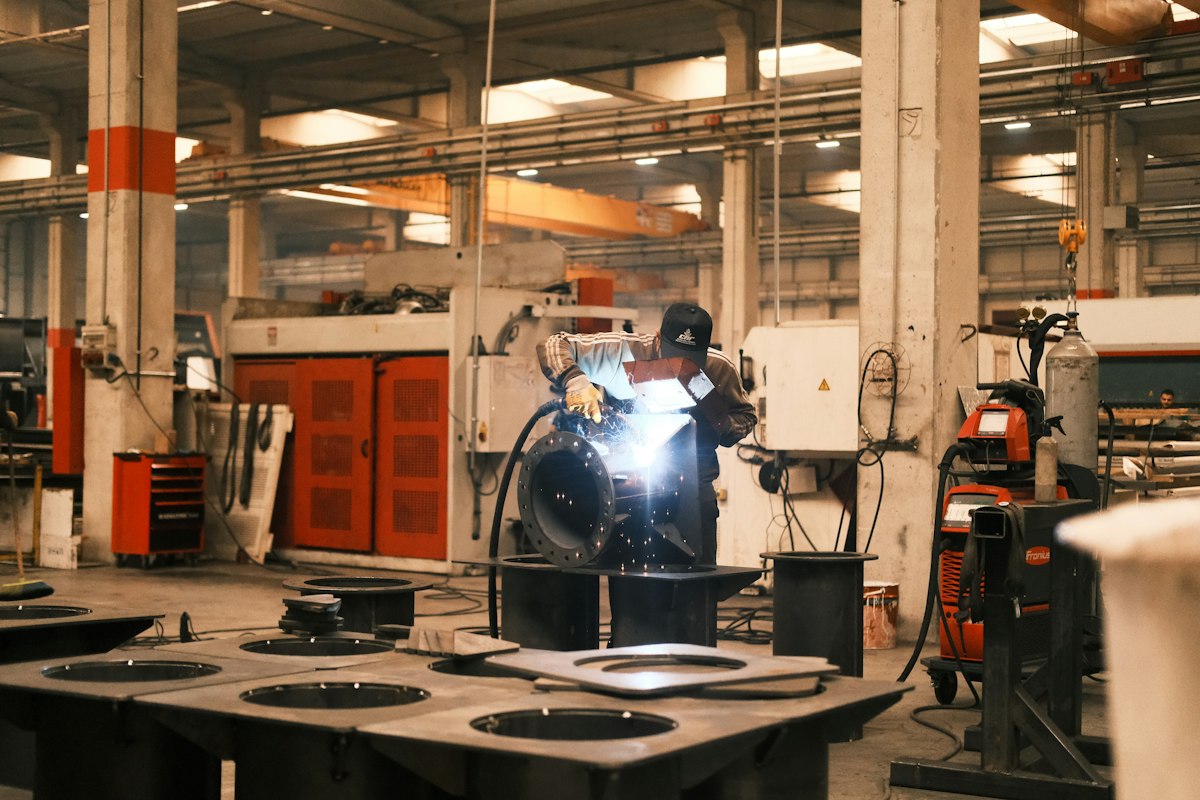
This is where cookware audits diverge most from standard manufacturing assessments.
- Mill certificates for base metals: For stainless steel cookware, request the material certificate to EN 10204 3.1 or 3.2 standard, confirming 304 or 316 grade. For aluminum, verify alloy designation (3003, 5083, etc.). Without this certificate, grade claims are unverifiable.
- Non-stick coating MSDS and supplier chain: Request the Material Safety Data Sheet for the coating product and confirm the coating manufacturer—Chemours (Teflon), Whitford, Ilag, or other established suppliers with documented PFOA-free declarations. Generic or unbranded coating formulations from unknown chemical suppliers are a disqualifying risk.
- Incoming material inspection (IQC) records: Does the factory test every raw material batch on arrival, or rely solely on supplier declarations? Request IQC records from the past three months and check for non-conformance entries and how they were handled.
- Chemical storage: Coatings and solvents must be stored separately from raw materials, with proper labeling, segregation, and spill containment.
At CharmsCook, we require full material traceability from mill to finished product for every SKU we source. Supplier contracts include a clause requiring retention of raw material certificates for five years.
Pillar 4 – Production Process & In-Line QC
- SOPs at workstations: Standard operating procedures for each production stage should be posted at the workstation, not stored in a management office. Operators should be able to explain their own quality checkpoints without prompting.
- First-article inspection (FAI) records: Review FAI reports from the last five production runs. The frequency of non-conformance entries and the speed of resolution tells you more about a factory’s QC maturity than any certification on the wall.
- In-process defect tracking: Is there a real-time defect log on the production floor? How are defective pieces physically segregated from conforming product? Factories with mature systems use a red-bin or tagged quarantine system with documented root-cause analysis for each batch.
- Calibrated measurement tools: Calipers, thickness gauges, and coating adhesion testers should all have current calibration stickers and traceable calibration logs. Uncalibrated tools mean your QC data is meaningless.
- OQC (outgoing quality control): Verify the final inspection sampling plan and AQL level. For cookware, AQL 2.5 for major defects is the industry standard. Any factory using AQL 4.0 or above for final inspection is accepting a defect rate that will affect your customer returns.
Pillar 5 – Social Compliance & Labor Standards
Increasingly, EU and North American retailers require BSCI or SMETA audit results from their suppliers. Even if your market doesn’t mandate it today, a factory’s labor practices predict its operational stability and long-term reliability.
- BSCI or Sedex/SMETA report: Check the most recent audit date (within 24 months) and the associated corrective action plan. Factories with recurring labor violations—unpaid overtime, forced overtime, excessive working hours—tend to have high turnover that directly undermines production consistency.
- Working hours compliance: Overtime records should show compliance with Chinese labor law, which caps overtime at 36 hours per month (approximately 8–9 additional hours per week). BSCI’s absolute maximum benchmark is 60 hours per week during peak production periods. Any factory operating above 60 hours/week on a sustained basis represents both a compliance risk and an operational stability risk.
- Fire safety: Emergency exits must be unobstructed, fire extinguishers must be current, and evacuation plans posted in visible locations.
- PPE compliance in coating areas: Workers in non-stick coating application areas wearing proper respiratory protection and chemical-resistant gloves signals that the factory takes chemical safety seriously—which also means they’re more careful about coating formulation compliance.
Pillar 6 – Pre-Shipment Testing & Documentation
Passing Pillars 1–5 qualifies the factory. Pillar 6 governs every specific order.
- Product-specific test reports: LFGB migration testing and FDA-compliant lab reports must be product-specific—your SKU, your coating lot number, your production batch—not a generic certificate covering “stainless steel cookware.” Reports from ISO 17025 accredited laboratories only.
- Golden sample retention: The factory must retain a sealed, dated approved sample for every production order. This is your reference standard for resolving disputes if bulk production deviates from the agreed specification.
- Independent pre-shipment inspection (PSI): Commission a third-party PSI through QIMA, SGS, or Bureau Veritas for every first order and annually for ongoing suppliers. The cost ($250–$400 per inspection) is negligible compared to the cost of a failed shipment.
- Pre-shipment document package: Commercial invoice, packing list, certificate of analysis (COA), test reports, MSDS for any restricted materials, and customs declaration must all be confirmed correct before goods leave the factory.
10 Red Flags That End the Conversation
Sourcing cookware over time teaches you to trust specific warning signs over polished sales presentations:
- Certifications exist but the factory won’t show original documents—only emailed PDFs
- LFGB or FDA test reports are more than 3 years old or not product-specific
- The coating material supplier name is absent from the MSDS, or the MSDS pre-dates 2020
- Parts of the factory floor are inaccessible during the audit visit (“currently not running”)
- Raw material storage and finished goods share the same space with no separation or labeling
- No dedicated incoming inspection area and no documented IQC records for the past 90 days
- Workers in the coating application area without respiratory protection
- Every first-article sample looks identical across multiple brand inquiries—no tooling differentiation
- ISO or BSCI certificates are presented, but the issuing certification body has no public registry entry
- A request for the raw material mill certificate is answered with “we’ll send that later”
Any single item from this list warrants a serious conversation with the supplier before proceeding. Items 1, 3, 4, or 9 are typically disqualifying on their own.
How CharmsCook Vets Every Supplier
At CharmsCook, we run a mandatory two-stage verification before onboarding any manufacturing partner. Stage one is a document review: legal registration, all certifications, and the most recent LFGB or FDA test reports with lab accreditation independently verified. Suppliers who clear Stage 1 advance to a factory visit using this exact six-pillar framework.
We focus most heavily on Pillars 3 and 4—raw material traceability and in-line QC—because that’s where the gap between a beautiful sample and a substandard production run most often hides. We also require independent pre-shipment inspection on all initial orders and retain the right to conduct unannounced follow-up audits after 12 months of partnership.
It’s not a frictionless process, and some otherwise capable factories have declined on that basis. That self-selection has been useful information.
Frequently Asked Questions
How long does a thorough cookware factory audit take?
A complete six-pillar audit takes one full working day on-site—roughly 7–8 hours. Compressing it to a half-day means cutting into raw material traceability checks and QC records review, which are the two areas where quality failures most often trace back to.
Do I need to hire a third-party audit company?
If you’re sourcing more than $50,000 USD per year from a single factory, yes. QIMA, SGS, and Bureau Veritas offer standardized audit reports that are useful both for your own risk assessment and as leverage in supplier negotiations. For smaller initial orders, a structured self-audit using this checklist is a reasonable starting point—just document everything photographically.
What’s the practical difference between LFGB and FDA certification for cookware?
LFGB (Lebensmittel- und Futtermittelgesetzbuch) operates under EU Framework Regulation 1935/2004 and applies stricter migration limits for heavy metals and organic compounds in food contact materials than FDA requirements. Products certified to LFGB standard typically satisfy FDA requirements as well. The reverse is not always true. For brands selling into European markets, LFGB is the relevant standard to verify.
Can a factory hold ISO 9001 certification and still fail product-level compliance?
Yes, and it happens regularly. ISO 9001 certifies a quality management system—documentation practices, process controls, management review. It says nothing about what the system produces. A factory can have excellent paperwork while sourcing non-compliant coating materials. Product-level compliance (LFGB, FDA, REACH) requires separate, product-specific laboratory testing.
What should I do if a supplier fails one pillar but passes the others?
Distinguish between structural failures and correctable gaps. Structural failures—no material traceability system, missing QMS, persistent labor violations—typically warrant disqualification. Correctable gaps—an expired certificate, a missing calibration log—can be addressed through a documented Corrective Action and Preventive Action (CAPA) plan with a defined completion deadline (typically 30–60 days) before the order proceeds.
A One-Day Audit That Prevents a Year of Headaches
Cookware sits at the intersection of daily use and food safety—that combination demands more than a quick factory tour and a reassuring phone call. The six pillars in this checklist aren’t bureaucratic overhead; they are the minimum viable verification for a product your customers will use at every meal.
Use this framework on your next sourcing visit. Adapt it to your specific product categories. And if a factory is uncomfortable with any part of it, that discomfort is itself useful data.