

Importing cookware from China to the USA in 2026 means navigating a stacked duty structure — typically 2% MFN base + 25% original Section 301 (List 3) + 10%–12.5% new Section 301 forced-labor duty (effective July 24, 2026) — pushing the effective rate on stainless steel cookware to ~37–40% of declared value. Customs clearance requires an ISF “10+2” filing 24 hours before vessel loading, a full CBP entry package within 15 days of arrival, and — as of July 8, 2026 — mandatory CPSC electronic filing of Certificates of Compliance at the time of entry. The $800 de minimis exemption for China-origin goods ended May 2, 2025. This guide walks through every step, with current HTS codes, duty math, and a practical compliance checklist.
Why This Guide Exists: The Duty Surprise That Trips Up First-Time Importers

Most importers sourcing cookware through platforms like Alibaba or 1688 focus on product price and supplier lead time — and then get blindsided at the port.
At CharmsCook, we work with importers and OEM buyers sourcing titanium and stainless cookware from Chinese factories. One recurring issue we see: buyers assume China’s low factory prices mean low landed costs. They don’t account for the layered tariff structure that currently applies to all China-origin goods.
The bottom line: a stainless steel wok that costs $8 FOB Shenzhen can carry $3.50–$4.50 in duties per unit before it touches a US warehouse shelf. That math changes margins fast.
What HTS Code Applies to Your Cookware?
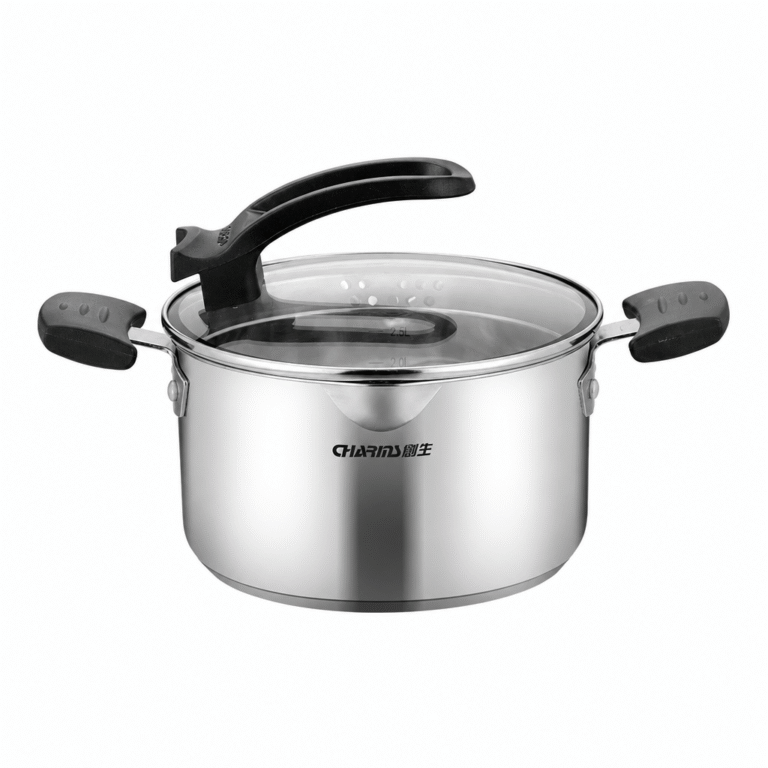
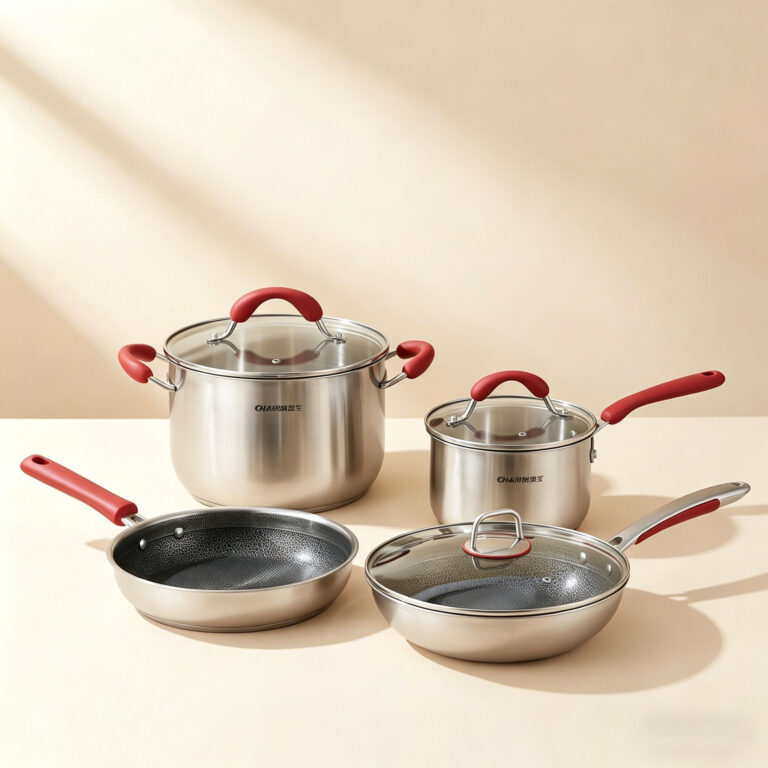
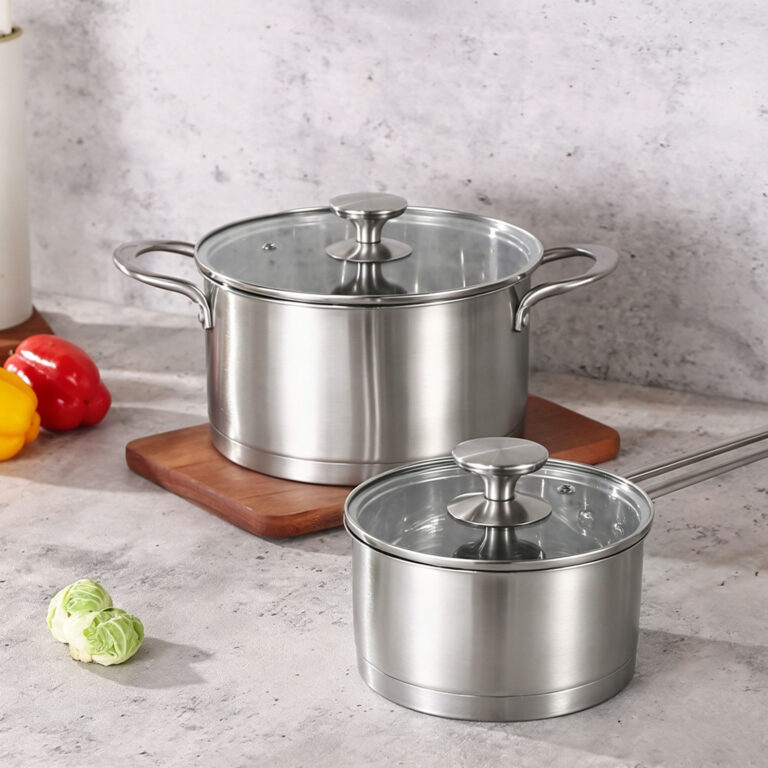
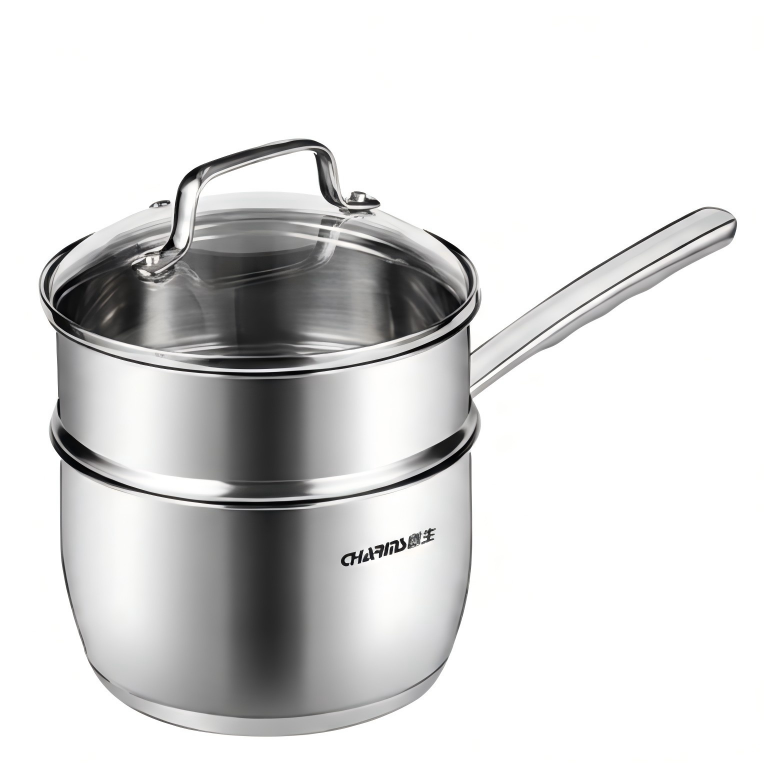
The first step in any import calculation is getting the right HTS (Harmonized Tariff Schedule) code. For cookware from China, the relevant chapter is Chapter 73 — Articles of Iron or Steel, with most cookware falling under Heading 7323.
| Product Type | HTS Code | Material | MFN Base Duty |
|---|---|---|---|
| Stainless steel pots, pans, woks | 7323.93.00 | Stainless steel | 2% |
| Cast iron cookware | 7323.91.00 | Cast iron | 5.3% |
| Other iron/steel cookware (non-cast, non-SS) | 7323.99.90 | Other iron/steel | 3.4% |
| Titanium cookware (classified as base metals) | 8119.00 / 8113.00 area | Titanium | 3.7% (verify at HTS) |
| Aluminum cookware | 7615.10.71 | Aluminum | 3.1% |
| Non-stick cookware (coated) | Often 7323.93 or 7323.99 | SS or other | Varies |
Important: HTS codes are 10 digits for US import purposes. Classification errors are one of the top reasons CBP issues penalties. When in doubt, request a binding ruling from CBP before your first shipment.
The 2026 Duty Stack: What You Actually Pay
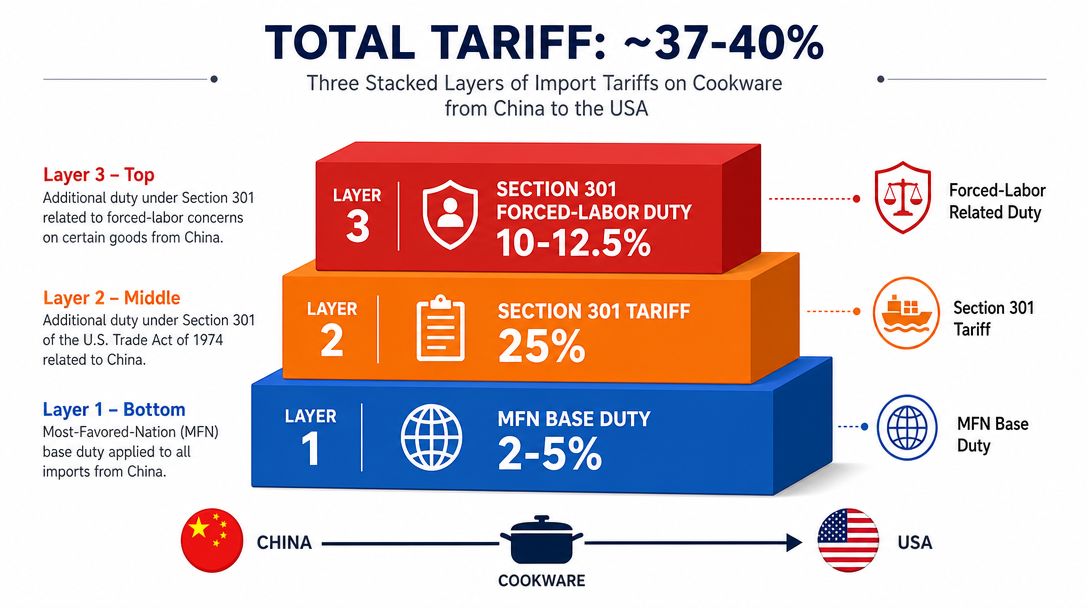
The tariff landscape on China imports shifted significantly in 2026. The IEEPA-based tariffs were struck down by the US Supreme Court on February 20, 2026 and replaced by Section 122 surcharges (10%–15%), which then expired July 24, 2026. A new Section 301 forced-labor duty (10%–12.5%) took effect the same day. The original Section 301 (25%) from the USTR List 3 China investigation remains in place.
For any cookware classified under HTS 7323, the duty you pay to CBP is not a single rate — it’s a stack of three separate charges, all calculated on the customs value (CIF or FOB depending on terms):
| Layer | Rate | Authority |
|---|---|---|
| MFN (Most-Favored-Nation) base duty | 2%–5.3% | Standard HTS |
| Section 301 tariff (original, Trade Act of 1974) | 25% | USTR List 3 / China-origin goods |
| Section 301 forced-labor duty (eff. July 24, 2026) | 10%–12.5% | New Section 301 action |
| Total effective rate (stainless steel example) | ~37–40% | Stacked on declared value |
Example calculation on a $10,000 shipment of stainless cookware (as of Oct 2026):
- Customs value: $10,000
- MFN (2%): $200
- Original Section 301 (25%): $2,500
- New Section 301 forced-labor (10%): $1,000
- Total duty owed: ~$3,700
That’s over one-third of the product cost in duties alone — before freight, insurance, or customs broker fees. Industry analysis (eightx.co, 2026) independently puts the stacked rate for HS 7323 at ~38% (MFN + 25% Sec 301 + 10% Sec 301/122), confirming this range.
Always verify current rates at hts.usitc.gov before booking a shipment. Tariff rates in 2025–2026 have changed multiple times by Executive Order and court ruling; what applied last quarter may not apply today.
The 6-Step US Customs Clearance Process for Cookware

Here’s how a standard ocean freight shipment of cookware clears US customs from China. This is the process we’ve helped buyers navigate at CharmsCook — and where most delays and penalties come from.
Step 1 — ISF “10+2” Filing (24 Hours Before Vessel Loading)
The Importer Security Filing (ISF, sometimes called “10+2”) must be submitted to CBP electronically at least 24 hours before your cargo is loaded onto a vessel in China. Your freight forwarder or customs broker typically handles this.
The filing includes 10 data elements from the importer (seller, buyer, HTS codes, country of origin, container stuffing location, etc.) plus 2 from the carrier. Missing or late ISF filings can result in fines of up to $5,000 per violation and cargo holds at the port.
Step 2 — Ocean Transit and AMS Filing
During the voyage (typically 20–35 days from China to US West Coast), the carrier files an Automated Manifest System (AMS) entry with CBP. This is the carrier’s responsibility, not yours.
Step 3 — CBP Entry Filing (Within 15 Days of Arrival)
Once your container arrives at a US port, you (or your licensed customs broker) have 15 calendar days to file a formal entry with CBP. The entry package must include:
- Commercial invoice (seller to buyer, itemized by SKU)
- Packing list (carton count, weights, dimensions)
- Bill of lading or sea waybill
- ISF confirmation number
- Bond confirmation (see below)
- CPSC Certificate of Compliance (electronic filing as of July 8, 2026 — see next section)
For shipments over $2,500, you need either a single-entry bond or an annual continuous bond. Most regular importers opt for the annual bond (~$500–$600/year) as it covers unlimited entries.
Step 4 — CBP Examination Decision
CBP uses risk algorithms to decide whether to release your cargo or examine it. Three possible outcomes:
- Green Lane (most common): Release without physical exam — typically within 1 business day
- Tailgate exam: CBP inspects a random selection of cartons at the dock
- Intensive/devanning exam: Full container unloaded and inspected — adds 3–7+ business days and $500–$2,000+ in exam fees you pay
China-origin shipments face elevated exam rates due to trade policy scrutiny. Providing accurate, detailed documentation is the best way to stay in the green lane.
Step 5 — Duty Payment
Once released (or post-exam), your customs broker submits CBP Form 7501 (Entry Summary) and pays duties on your behalf. You’ll reimburse the broker. Duties are generally due within 10 business days of filing the entry summary.
Step 6 — Final Release and Delivery
After duty payment, your cargo receives a CBP release, and your freight forwarder can arrange delivery to your warehouse or Amazon FBA facility.
Typical total customs clearance timeline: 3–7 business days for a clean, well-documented shipment with no exam.
The July 8, 2026 CPSC eFiling Mandate — What Cookware Importers Must Know
This is the biggest compliance change for cookware importers in 2026, and most guides still don’t mention it.
Effective July 8, 2026, the US Consumer Product Safety Commission (CPSC) requires that Certificate of Compliance (CoC) data be filed electronically through CBP’s Automated Commercial Environment (ACE) at the time of customs entry — not just kept on file.
Does cookware fall under CPSC regulation? Yes, if it includes:
- Non-stick cookware with coatings (PFOA/PFOS rules, California Prop 65)
- Cookware marketed toward children
- Pressure cookers (ASTM F2136 or similar)
- Any cookware subject to a mandatory safety standard
Standard stainless or titanium cookware without special coatings or pressure mechanisms is generally not under a CPSC mandatory standard — but you still need to confirm the specific CPSC-regulated list for your product category.
What happens if you don’t eFile? CBP can hold your cargo for up to 60 days, and repeat violations can result in product seizure and heightened future scrutiny. This is not a grace period you want to test.
At CharmsCook, we recommend that buyers confirm CPSC product classification with their customs broker before the first shipment — not after the hold notice arrives.
The End of De Minimis for China: What Changed in May 2025
As of May 2, 2025, the $800 de minimis exemption no longer applies to goods of Chinese or Hong Kong origin.
Previously, individual shipments valued under $800 could enter the US duty-free without formal customs entry. Platforms like Shein and Temu exploited this heavily. That loophole is closed.
For B2B cookware importers shipping containers, this change is less impactful — you were already filing formal entries. But for direct-to-consumer brands doing DTC cross-border shipping from China to US customers, this is a fundamental shift. Every shipment now requires duty payment and customs documentation, regardless of value.
Documents Checklist for Importing Cookware from China
| Document | Who Prepares It | Required? |
|---|---|---|
| Commercial invoice | Chinese supplier | Yes |
| Packing list | Chinese supplier | Yes |
| Bill of lading / Sea waybill | Freight carrier | Yes |
| ISF “10+2” filing confirmation | Customs broker / forwarder | Yes |
| Customs entry (CBP Form 3461 / 7501) | Licensed customs broker | Yes |
| Customs bond | Surety company via broker | Yes (>$2,500 shipments) |
| Certificate of Conformity / CoC | Manufacturer / testing lab | If CPSC-regulated |
| CPSC eFiling data | Importer via broker in ACE | If CPSC-regulated (July 2026+) |
| Country of origin marking | Factory (physical on goods) | Yes — “Made in China” required |
Practical Tips to Avoid Customs Holds and Penalties
Based on patterns we’ve seen with CharmsCook buyers sourcing from China factories:
- Get HTS classification confirmed before ordering — not estimated, confirmed. Ask your customs broker for a pre-shipment classification review.
- File ISF early — aim for 48–72 hours before vessel loading, not the minimum 24. Port congestion can eat buffer time fast.
- Accurate declared values — CBP flags under-valued invoices. Don’t let suppliers split invoices to lower apparent value.
- Country of origin on every item — Each piece of cookware must be physically marked “Made in China.” Missing marks = potential hold and recall.
- Confirm your CPSC status — Use the CPSC product database to verify if your specific SKU category requires a CoC before July 2026 eFiling.
- Use a licensed customs broker — For cookware with China-origin tariff stacking, the broker fee ($150–$300 per entry) pays for itself in avoided errors.
Working with a Sourcing Partner Who Knows the Compliance Landscape
Navigating duty stacking, ISF timing, and CPSC eFiling is significantly easier when your supplier already understands the US import process.
At CharmsCook, we specialize in B2B titanium and stainless cookware for importers, distributors, and brand owners. Our team works with buyers who are importing to the US regularly and can help coordinate documentation requirements with your freight forwarder from the factory side.
FAQ
What is the import duty on cookware from China in 2026? For most stainless steel cookware (HTS 7323.93), the effective stacked duty rate as of October 2026 is approximately 37–40% of declared value — combining the 2% MFN base duty, 25% original Section 301 tariff (List 3), and 10%–12.5% new Section 301 forced-labor duty (effective July 24, 2026). Note: IEEPA tariffs were struck down by the Supreme Court in February 2026 and are no longer in effect. Always verify current rates at hts.usitc.gov before each shipment, as rates have changed multiple times in 2025–2026.
What HTS code is used for cookware from China? Most cookware falls under HTS 7323 (table, kitchen, or household articles of iron or steel). Stainless steel cookware is 7323.93; cast iron is 7323.91; other iron/steel cookware is 7323.99. Aluminum cookware uses 7615. Get a formal classification confirmation from a licensed customs broker before filing your first entry.
Do I need a CPSC certificate to import cookware from China? It depends on your product. Non-stick coated cookware, pressure cookers, and cookware marketed to children are likely CPSC-regulated. Standard stainless or titanium cookware without coatings typically is not, but confirm this with your customs broker or directly via the CPSC product category database. As of July 8, 2026, CPSC Certificate of Compliance data must be filed electronically at the time of customs entry for all regulated products.
Can I still use the $800 de minimis exemption for cookware from China? No. The $800 de minimis exemption for Chinese-origin goods was eliminated effective May 2, 2025. All imports from China — regardless of value — now require formal or informal customs entry and applicable duty payment.
What is ISF filing and when does it need to be submitted? The Importer Security Filing (ISF, or “10+2”) is a mandatory electronic filing submitted to CBP at least 24 hours before your cargo is loaded onto a vessel in China. It includes 10 data elements about the shipment (HTS codes, parties involved, origin) plus 2 from the carrier. Late or missing ISF filings can result in fines of up to $5,000 per violation and cargo holds at the US port.
Conclusion
Importing cookware from China in 2026 is entirely viable — but the math is more demanding than it was three years ago. The combination of Section 301 tariffs (25%), IEEPA additional duties (20%), and the base MFN rate means you’re paying roughly 47–48 cents in duty for every dollar of declared value on standard stainless steel cookware. Add the end of de minimis and the new CPSC eFiling mandate, and this is a compliance-heavy environment that rewards importers who do their homework upfront.
The importers who succeed work with factories that understand documentation requirements, use licensed customs brokers, and verify HTS classification before placing orders — not after the container arrives.
At CharmsCook, we’ve helped B2B buyers navigate exactly this landscape for titanium and stainless cookware. If you’re sourcing from China and want a supplier who can support your documentation needs from the factory side, reach out.