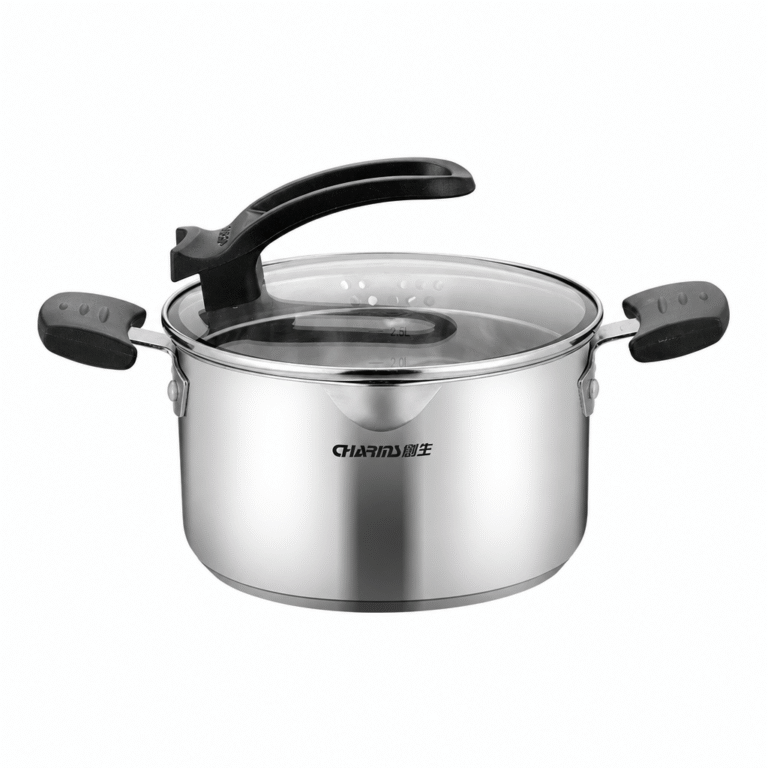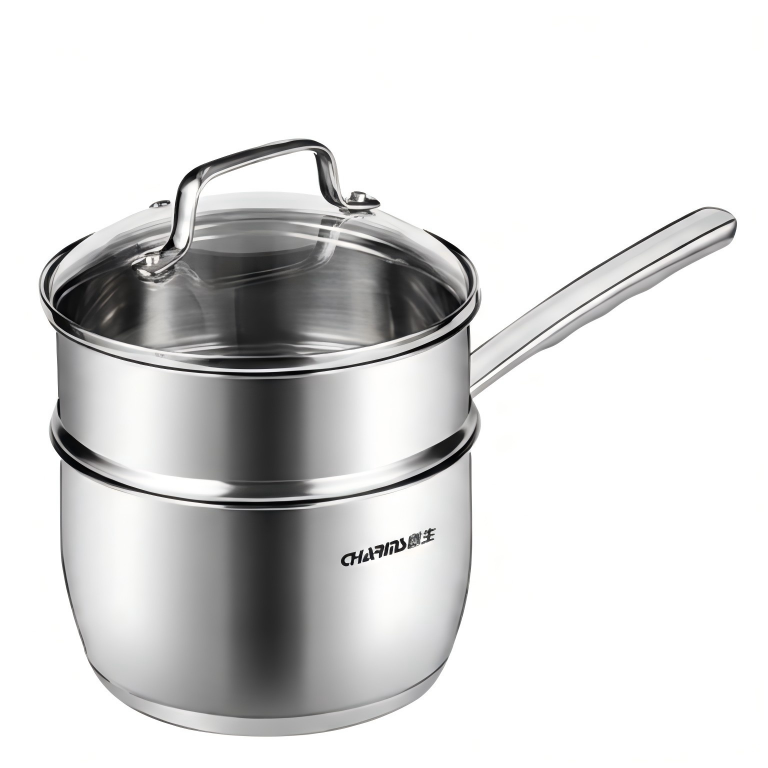


Burnt food on stainless steel is almost always salvageable. The fastest method — taking about 3 minutes — is a baking soda paste scrubbed with a crumpled ball of aluminum foil. For moderate scorching, boiling water with baking soda loosens residue in under 10 minutes. Heavy carbonized buildup responds best to a baking soda and vinegar soak, or Bar Keepers Friend for the toughest cases. This guide covers all five methods ranked by speed, explains why each works, and tells you which ones to skip.
Why Burnt Food Sticks to Stainless Steel
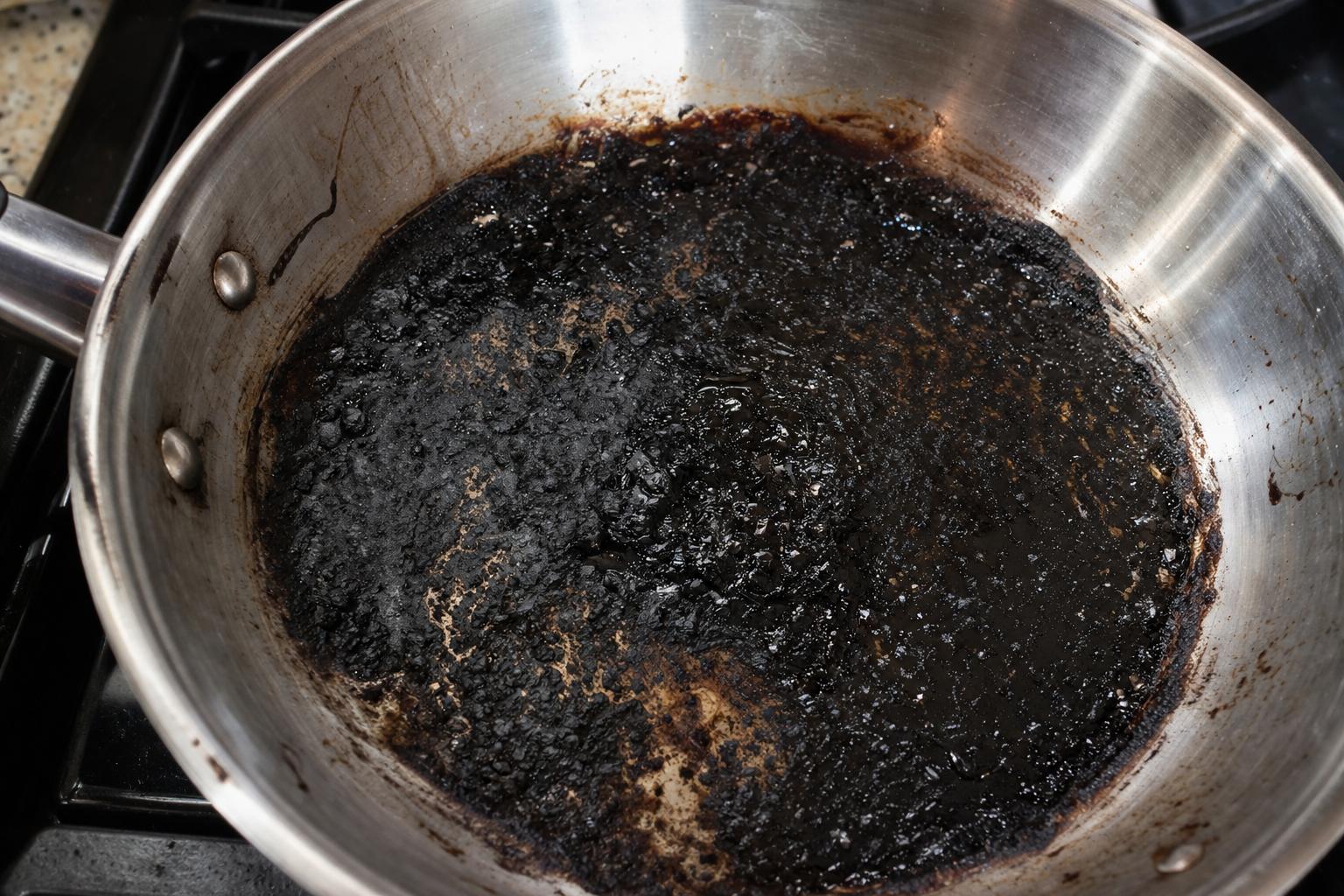
Stainless steel grips burnt residue differently than non-stick — here’s why that matters for cleaning.
When food scorches in a stainless steel pan, the proteins, sugars, and fats break down under high heat through pyrolysis — thermal decomposition that converts organic material into carbonized char. That char then adheres mechanically to the microscopic pores and irregularities of the metal surface. The result is a carbonized layer that’s chemically different from the original food — it’s not just “cooked on,” it’s essentially a thin layer of carbon locked into the steel’s surface.
This is why cold water and dish soap alone rarely work. You’re not dealing with dried food; you’re dealing with a chemical bond.
Stainless steel has one significant advantage here: it can handle heat, abrasion, and mild acids without damage. That means you have more options than with non-stick pans — you can boil solutions in the pan, use baking soda pastes, apply mild acids like vinegar, and even scrub with aluminum foil without worrying about scratching a coating.
Baking soda (sodium bicarbonate) works on two levels. Its alkaline pH (~8.3) helps neutralize acidic burned food compounds, and its fine crystalline structure provides mild abrasion when used as a paste. When combined with acid (vinegar or lemon juice), the fizzing reaction physically loosens the bond between carbon and metal.
Method Comparison: Which to Use and When
| Method | Time | Effort | Best For | Supplies |
|---|---|---|---|---|
| Baking soda paste + foil | ~3 min | Low | Light–moderate burns, fast cleanup | Baking soda, water, foil |
| Baking soda boil | ~10 min | Very low | Moderate burns, whole pan bottom | Baking soda, water |
| Baking soda + vinegar soak | ~15–20 min | Low | Heavy burns, carbonized residue | Baking soda, white vinegar |
| Boiled lemons | ~25 min | Very low | Light–moderate, great smell | Lemons, water |
| Bar Keepers Friend | ~5 min | Medium | Severe burns, discoloration | BKF powder or liquid |
Method 1: Baking Soda Paste + Aluminum Foil (Fastest, ~3 Minutes)
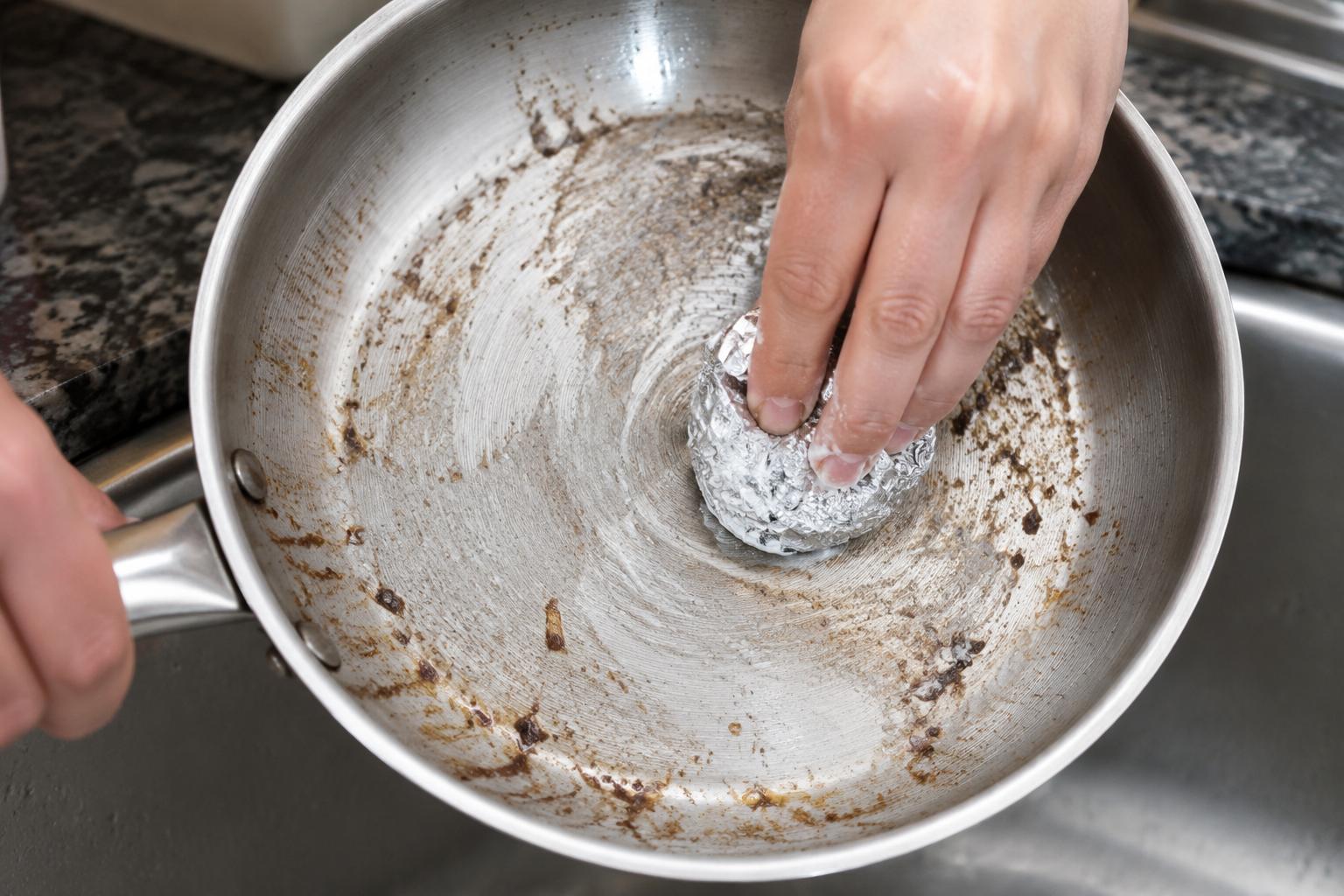
This is the fastest method that actually works — and it uses things most people already have.
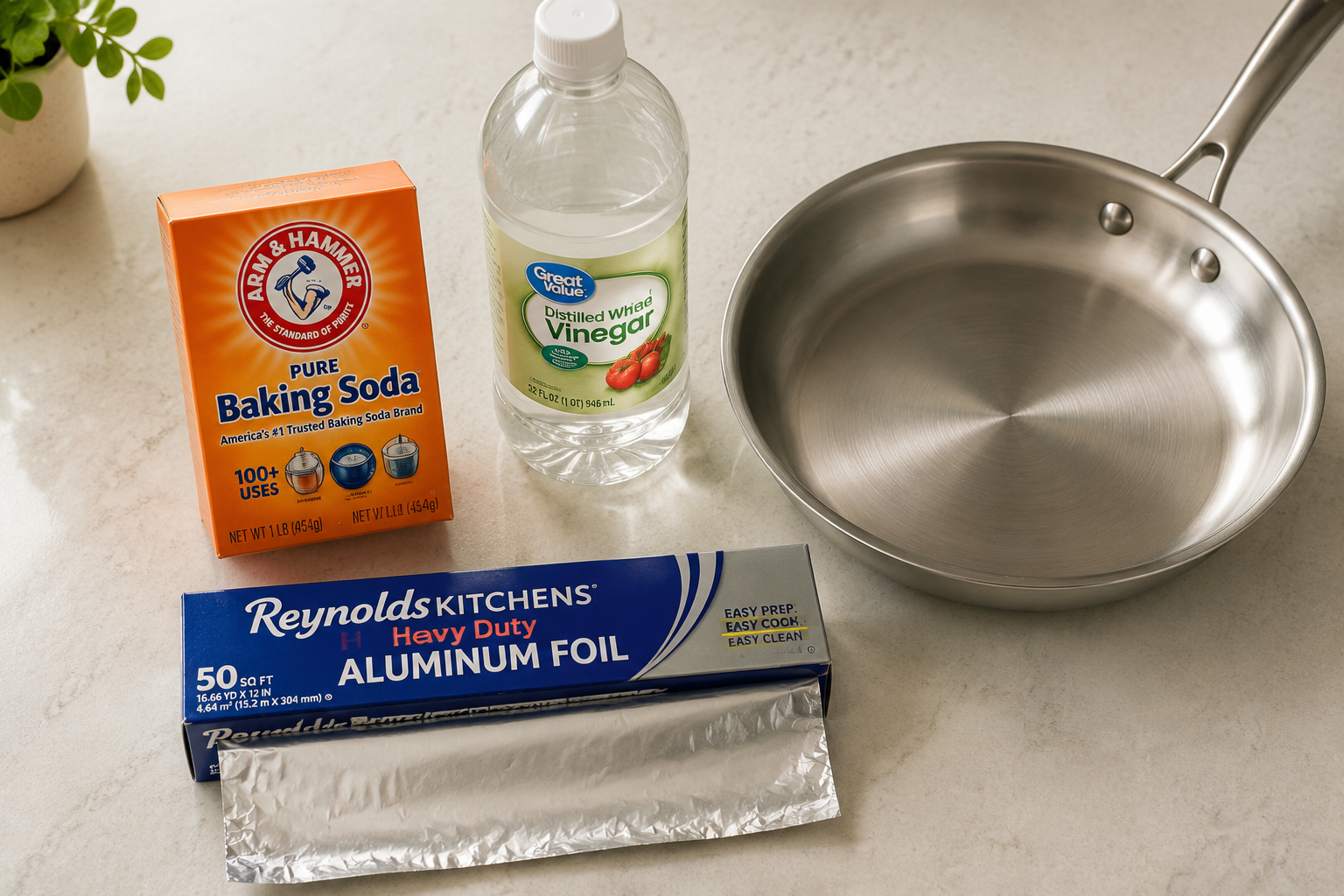
I’ve used this method on everything from scorched scrambled eggs to burnt tomato sauce, and it consistently delivers results faster than any other approach. The aluminum foil acts as a gentle abrasive pad that won’t scratch stainless steel, while the baking soda paste does the chemical lifting.
What you need:
- 2–3 tablespoons of baking soda
- A small amount of water
- A piece of aluminum foil (crumpled into a ball)
Steps:
- Let the pan cool to room temperature or warm — never clean a pan that’s still very hot.
- Sprinkle 2–3 tablespoons of baking soda directly over the burnt area.
- Add just enough water to form a thick paste (not runny — you want it to stay put).
- Crumple a piece of aluminum foil into a roughly golf ball-sized ball.
- Scrub the paste in circular or back-and-forth motions. You don’t need to press hard — medium pressure is enough.
- Rinse with warm soapy water. Repeat once if needed.
Why the foil works: Aluminum foil has a Mohs hardness of approximately 2.5 — softer than stainless steel (5–6 on the Mohs scale), meaning it scrubs the carbon layer without scratching the metal surface. It’s significantly more effective than a standard sponge or nylon brush for lifting carbonized residue.
Tip: If you have leftover foil from covering a baking dish, ball it up and keep it for this exact purpose. One ball can clean multiple pans.
Method 2: Baking Soda Boil (~10 Minutes, Minimal Effort)
Fill the pan, add baking soda, boil — this is the “set it and walk away” method.
This method is ideal when the burnt area covers most of the pan bottom, or when you don’t want to scrub at all. The boiling action loosens the carbon layer from below, and the baking soda solution keeps it from re-adhering.
Steps:
- Add enough water to cover the burnt area by at least ½ inch.
- Add 2–3 tablespoons of baking soda per quart of water.
- Bring to a boil on the stovetop.
- Reduce to a simmer and let it bubble for 5–10 minutes. You’ll often see dark bits floating to the surface — that’s the burnt food releasing.
- Remove from heat and let cool for a few minutes.
- Pour out the water and wipe with a soft cloth or sponge. Most residue will come off with almost no effort.
- For any remaining spots, use a nylon brush or the foil method above.
Why it works: The heat expands the bond between the carbon layer and the steel slightly, and the alkaline solution works into those gaps. The combination breaks the mechanical and chemical grip the burnt food has on the surface.
Variation: Add 1 cup of white vinegar to the water along with the baking soda for a more powerful solution (let the fizzing settle before boiling).
Method 3: Baking Soda + Vinegar Soak (~15–20 Minutes, Heavy Burns)
For carbonized black residue that doesn’t budge — this is the escalation.
When regular boiling or paste scrubbing doesn’t fully clear a scorched pan, the vinegar-first method creates a more aggressive chemical reaction. I’ve found this most effective on burnt sugar (like caramel that’s gone too far) and thick protein buildups (scorched meat fond that dried completely).
Steps:
- Add white vinegar to the pan, enough to cover the burnt area by at least ½ inch.
- Bring the vinegar to a boil on the stovetop and let it simmer for 2–3 minutes.
- Remove from heat. Carry the pan to the sink before the next step.
- Add 1 cup of baking soda. It will fizz vigorously — this is normal and intentional. The fizzing reaction creates carbon dioxide that physically disrupts the bond between burnt food and metal.
- Let the fizzing die down completely (2–3 minutes).
- Discard the liquid down the drain.
- While the pan is still warm (not hot), scrub with a nylon brush or scouring pad. Add more baking soda if needed.
- Rinse and wash normally.
A note on the chemistry: The acetic acid in white vinegar (approximately 5% concentration) reacts with baking soda to produce water, CO₂, and sodium acetate. The CO₂ bubbles do physical work; the sodium acetate in solution helps keep loosened carbon particles suspended. Despite internet claims, this reaction does not damage stainless steel — the concentration is far too low for that.
Method 4: Boiled Lemons (~25 Minutes, Best Smell)
Low effort, great for light-to-moderate burns, and your kitchen will smell like a spa.
This method consistently surprises people when they try it. Quarter two or three lemons, add them to the pan with a few inches of water, and bring to a boil. The citric acid in the lemon juice — along with the physical agitation of boiling — loosens burnt particles. You’ll start seeing food debris float to the surface within minutes.
Steps:
- Quarter 2–3 lemons and place them in the pan.
- Add water to cover the burnt area by 1–2 inches.
- Bring to a boil. Boil for 5–10 minutes, until you see particles floating.
- Remove from heat, discard water and lemons.
- Rinse and do a quick scrub with a dish brush to remove any remaining bits.
This method rated 4/5 in testing by The Kitchn (February 2026) — it required almost no scrubbing and left the pan clean. The citric acid in lemon juice (~5–6% concentration) is comparable to the acetic acid in standard white vinegar (~5%), making this a similarly effective but gentler-smelling approach. Lemons also lack vinegar’s sharp odor, which is why many people prefer this method.
Best use case: You’ve been cooking with lemons anyway and have leftovers. Or you want a no-chemical, pleasant-smelling option for a pan that’s not heavily burnt.
Method 5: Bar Keepers Friend (For Severe Burns and Discoloration)
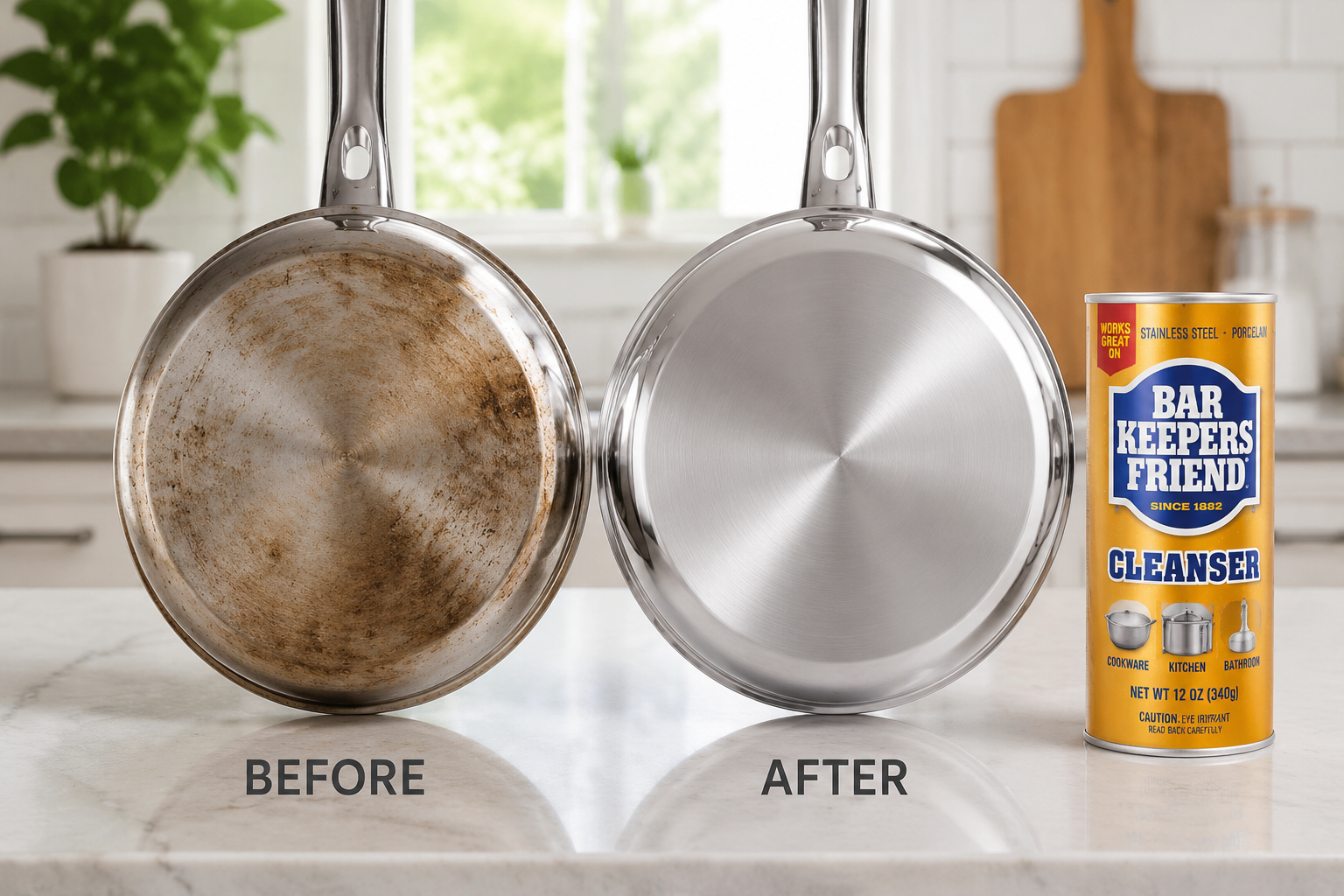
When nothing else works, this is the product the Reddit cookware community reaches for.
Bar Keepers Friend (BKF) contains oxalic acid, which dissolves rust, tarnish, and the stubborn discoloration that baking soda can’t touch. It also includes a mild abrasive that, at the correct particle size, polishes stainless steel rather than scratching it. For pans with black carbonized buildup, blue-gray heat discoloration, or rainbow oxidation stains, BKF is the most effective household solution available.
Steps:
- Wet the pan surface slightly.
- Sprinkle BKF Cleanser powder (or apply BKF Soft Cleanser) directly on the affected area.
- Use a damp non-scratch sponge or soft cloth to work the cleaner in, following the grain of the stainless steel (linear strokes, not circular).
- Let sit for 1–2 minutes for severe stains.
- Rinse thoroughly — don’t let BKF sit for more than a few minutes on stainless steel.
- Wash with soap and water.
Important: Do not use BKF on non-stick pans, cast iron, or aluminum. It’s designed for stainless steel, ceramic, and porcelain surfaces. Always follow the grain of the steel to avoid cross-grain scratches. Wear gloves — oxalic acid is a mild irritant.
What Doesn’t Work Well
Two popular methods that underperform — and why.
Dryer sheets: Soaking a dryer sheet in warm soapy water and letting it sit for an hour does loosen the top layer of burnt food, but it rarely removes everything. You’ll still need a second method to finish the job. Not worth starting here.
Boiling water + vinegar alone (without baking soda scrub): This gets recommended constantly online. In practice — tested on a burnt egg — it creates steam and smell but doesn’t meaningfully lift burnt residue on its own. The vinegar boil is useful as a step within the baking soda + vinegar method, not as a standalone solution. Tested by The Kitchn, it rated 1/5 — the worst of five methods tested.
How to Prevent Burnt Food in Stainless Steel Next Time
The pan is clean — here’s how to keep it that way.
Most burnt food in stainless steel happens for one of three reasons: insufficient preheating, adding food before the pan is ready, or leaving the heat too high and walking away.
Preheat properly: Stainless steel needs time to reach an even temperature. Heat the empty pan over medium heat for 2–3 minutes. Test with a few drops of water — if they bead up and roll around (the Leidenfrost effect), the pan is ready. At this point, add oil and let it heat for another 30 seconds before adding food.
Use enough fat: Stainless steel is not non-stick. A sufficient amount of butter, oil, or cooking fat creates a barrier between the food and the metal. Reduced-fat cooking works better in non-stick pans.
Don’t walk away at high heat: Proteins and sugars scorch fast on a pan that’s too hot. Once you add food, stay present. High heat has its place (searing meat), but once food is down, monitor it.
Deglaze while the pan is hot: After cooking, while the pan is still warm, add a small amount of water, wine, or stock and swirl. This lifts any fond (the brown bits) before it has a chance to carbonize. Makes cleaning after dinner much easier.
Frequently Asked Questions
Is baking soda safe to use on stainless steel?
Yes. Baking soda is mildly alkaline and mildly abrasive, but its particle size is fine enough that it won’t scratch the surface of quality stainless steel cookware. It’s one of the most recommended cleaning agents specifically because it’s effective without causing damage.
Can I use baking soda and vinegar together on stainless steel?
Yes. The reaction (fizzing) is safe for stainless steel. The acetic acid in white vinegar at standard household concentration (~5%) does not corrode stainless steel. Avoid leaving highly acidic solutions sitting in a pan for extended periods, but the cleaning steps described here are well within safe limits.
How long should I let baking soda sit on a burnt pan?
For a paste method (no heat), 30 minutes to a few hours is ideal. Overnight works for very stubborn burns. If you boil the baking soda solution, 5–10 minutes of simmering is sufficient — heat significantly speeds up the process.
Will burn marks always come off stainless steel?
Almost always. Stainless steel is durable enough that the methods above will remove virtually all burnt food residue. The rare exception is a pan that has been dry-heated to extreme temperatures repeatedly — in those cases, the surface may have developed pitting or permanent discoloration that cleaning can’t reverse. For standard kitchen accidents, full recovery is expected.
Does Bar Keepers Friend scratch stainless steel?
When used correctly — following the grain of the steel, with a non-scratch sponge, and rinsed off promptly — BKF does not scratch stainless steel. It’s specifically formulated for stainless steel surfaces. Using it in circular motions or with steel wool can leave visible marks.
What’s the fastest method overall?
Baking soda paste scrubbed with a crumpled ball of aluminum foil. Active time is approximately 3 minutes for light-to-moderate burns. It’s the method rated highest (5/5) in The Kitchn’s comparative test.
The Bottom Line
Stainless steel can handle almost any cleaning method short of steel wool and acid baths. For most burnt food situations, baking soda is your first tool — either as a paste with foil (fastest), as a boiling solution (hands-off), or combined with vinegar for heavier buildup. Boiled lemons work and smell great. Bar Keepers Friend handles the cases that nothing else touches.
The key takeaway: don’t panic when you burn something in a stainless steel pan. Every method here has been tested on real burnt pans with real results. The pan almost certainly isn’t ruined — it just needs the right approach matched to the severity of the scorch.