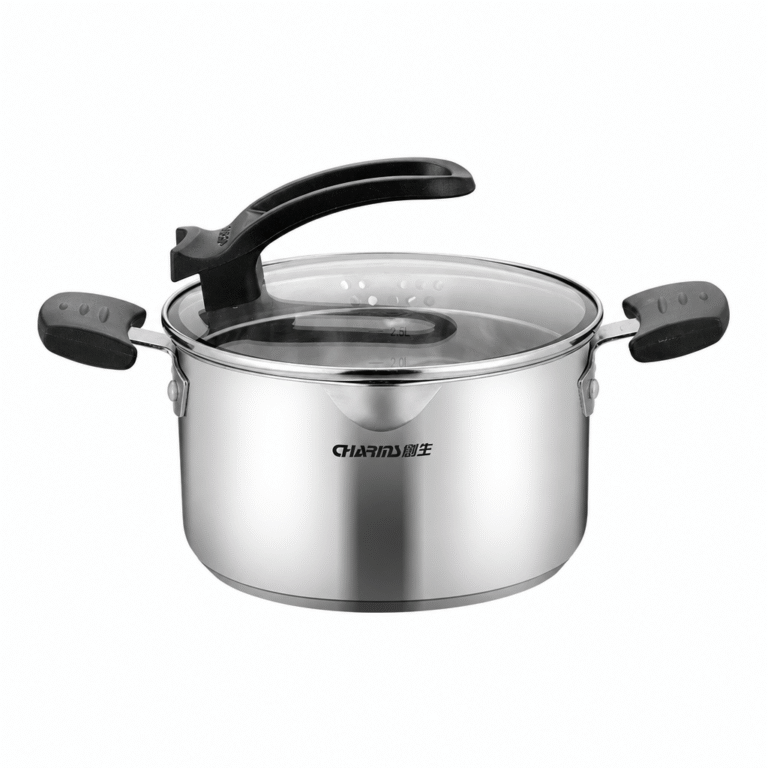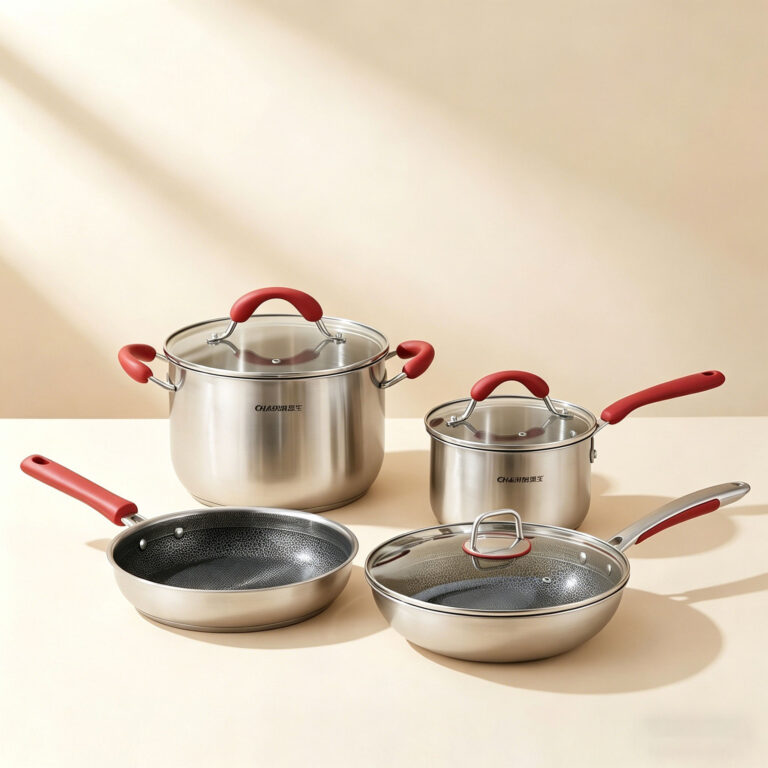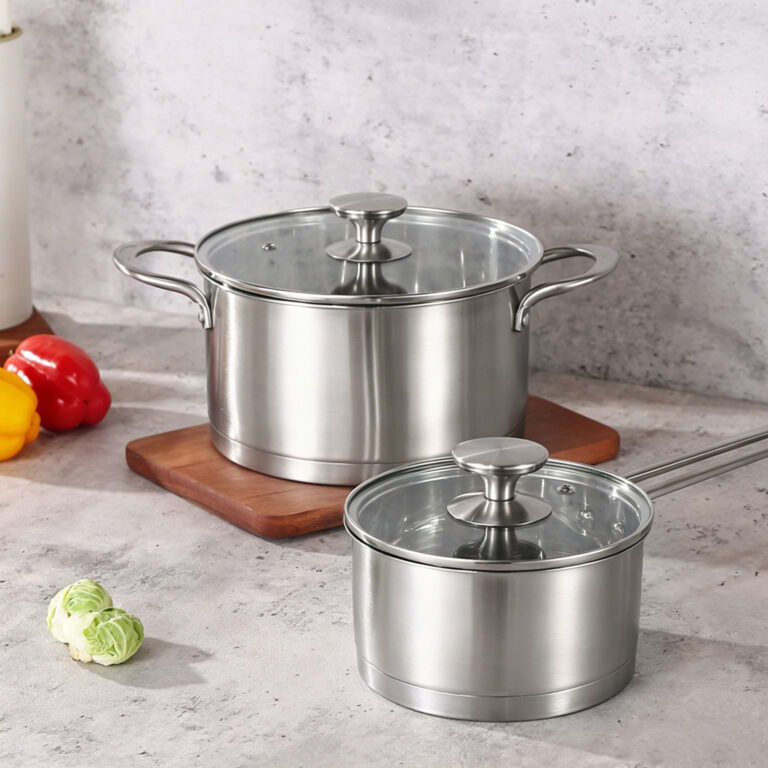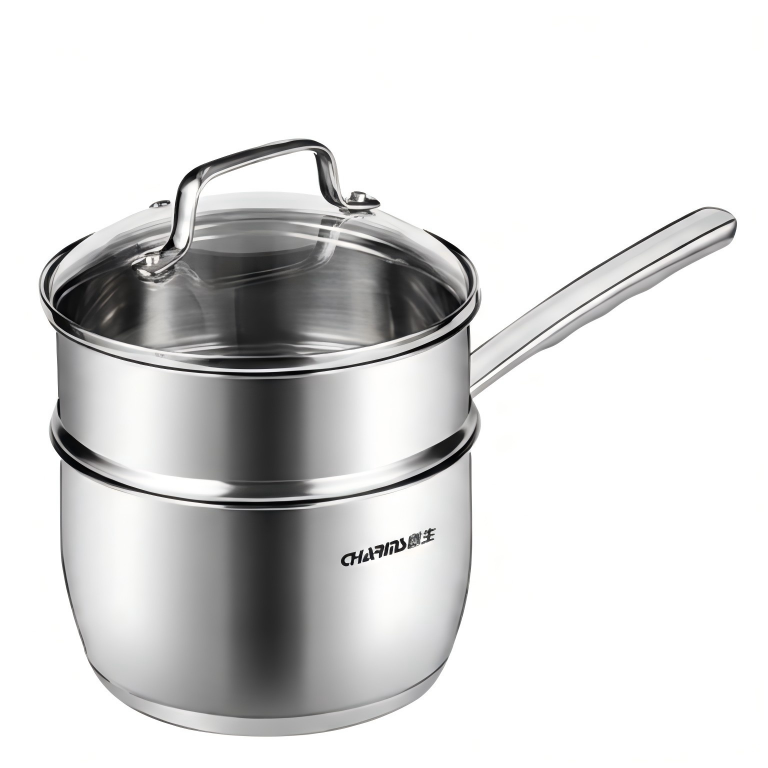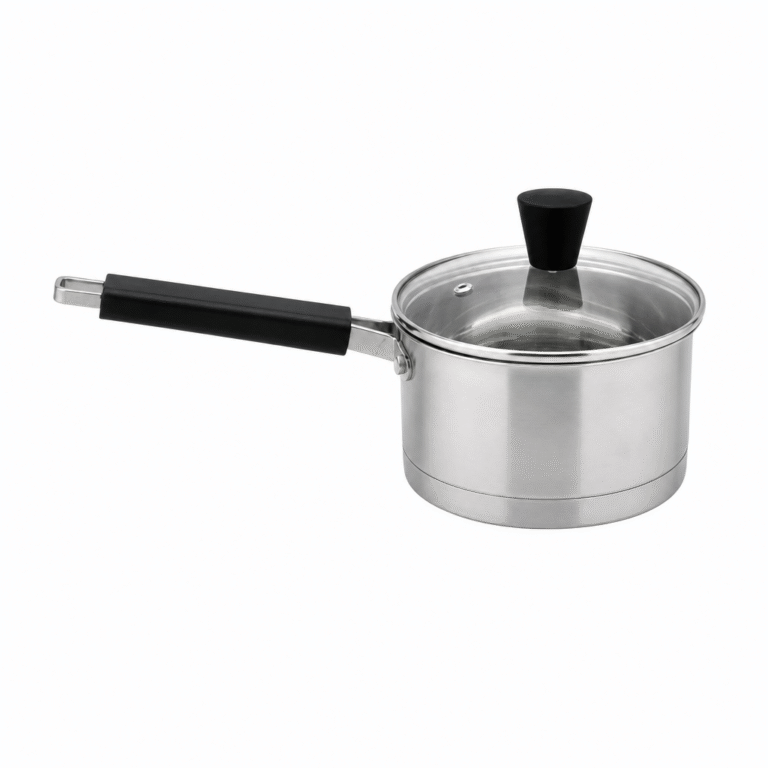


Stainless steel cookware is more often damaged by storage than by cooking. The main threats are direct pan-on-pan contact, trapped moisture, and mixed-metal stacking in shared cabinets. To protect your investment: always store pans bone-dry, separate stacked pieces with felt or silicone protectors, use a vertical organizer or hanging rack when space allows, and keep lids stored separately. This guide ranks five storage methods by real-world scratch risk, covers free DIY alternatives to commercial pan protectors, explains the pre-storage checklist most guides skip, and includes a mixed-metal stacking warning that almost no other article covers.
Why Storage Damages More Pans Than Cooking Does
Most cooks assume their stainless pans wear down from hard use — high heat, metal utensils, acidic sauces. In practice, the kitchen cabinet is usually the culprit.
Stainless steel gets its corrosion resistance from a thin chromium oxide layer (Cr₂O₃) on the surface. This passive film is only a few nanometers thick, but it self-repairs: when lightly scratched and exposed to oxygen, it re-forms within hours. The problem is repeated mechanical abrasion from daily stacking. That constant friction breaks the layer down faster than it can regenerate, leaving microscopic raw metal exposed to moisture.
The iron in stainless steel — typically over 60% of the alloy in 18/10 grade cookware — will oxidize when that passive layer is compromised and moisture is present. That’s how a pan marketed as “rust-proof” ends up with orange-brown spots 18 months after purchase.
Two things drive this: surface contact and moisture. Eliminate both, and quality stainless cookware lasts decades.
The First Rule: Store Dry, Every Single Time
Before any pan goes into storage — even overnight — it needs to be completely dry. Not “dry to the touch.” Bone dry.
Stainless steel has seams, riveted handle attachments, and rolled rim edges where water hides long after the exterior looks dry. A pan stored with trapped moisture creates a humid microclimate inside your cabinet stack. Over time, that leads to mineral deposit buildup, pitting around rivets, and surface discoloration.
Pre-storage checklist:
- Wash with mild dish soap and a soft sponge
- Rinse under hot water (hot water evaporates faster than cold)
- Pat the exterior, interior, and handle base dry with a microfiber towel
- Flip upside down on a drying rack for at least 20–30 minutes
- Check the handle rivets and rim edge before stacking
Cabinet location matters here too. Under the sink is the worst place to store stainless cookware. Pipe condensation and humidity spikes create exactly the conditions that accelerate corrosion. If that’s your only option, add a silica gel desiccant packet to the cabinet and replace it every three months.
5 Storage Methods, Ranked
Not all storage options protect pans equally. Here’s how the main options compare on the factors that actually matter:
| Method | Scratch Risk | Space Needed | Best For | Ventilation |
|---|---|---|---|---|
| Hanging pot rack | Very Low | Overhead / wall | 6+ piece sets, daily cooks | Excellent |
| Vertical slotted organizer | Very Low | 1–2 cabinet shelves | 3–6 pans, no drilling | Good |
| Deep drawer + pan protectors | Low | 1 full deep drawer | Small kitchens, modern cabinetry | Moderate |
| Cabinet stacking + separators | Low–Moderate | 1–2 shelves | Most home kitchens | Poor–Moderate |
| Nested stacking (bare) | High | Minimal | Not recommended | Poor |
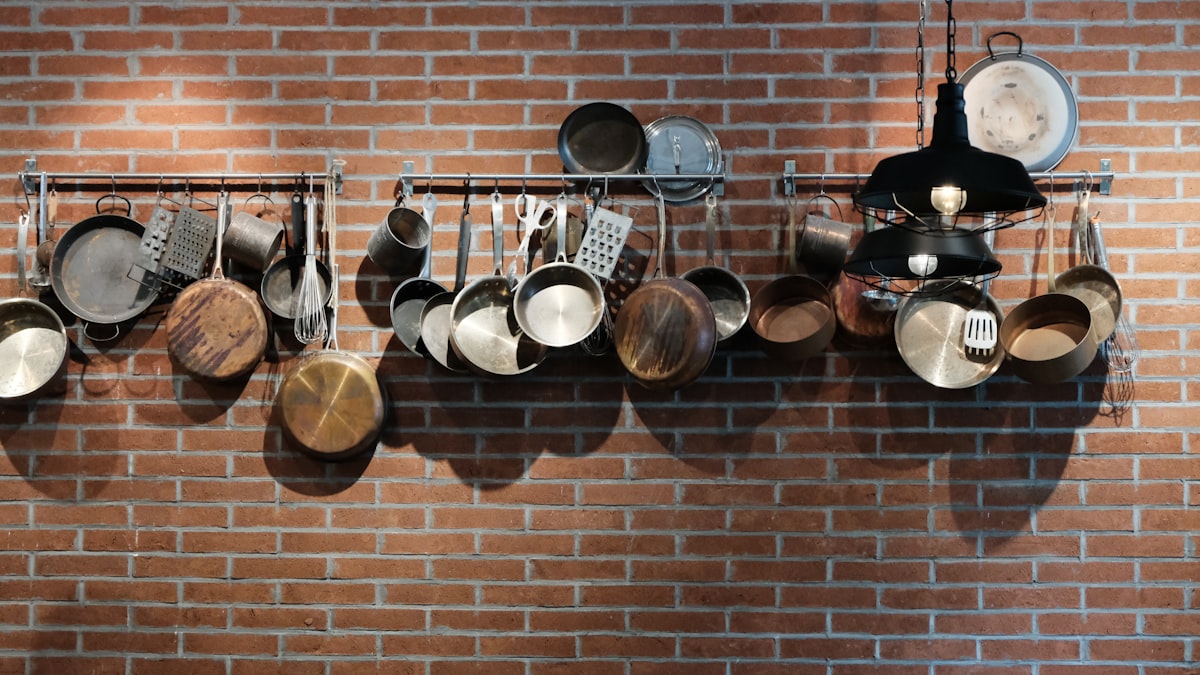
Hanging pot rack wins on protection. Each pan hangs individually — zero surface contact, full air circulation, and you can see your whole collection at a glance. The trade-off: you need a ceiling anchor rated for 50+ lbs for a full set, and the installation is permanent. For renters, that’s usually a dealbreaker.
Vertical slotted organizer is the best no-drill option. Pans slot in like books on a shelf, no cooking surface touches another. Available for $15–30. In my own kitchen, switching to a vertical organizer for my 10-inch and 12-inch skillets eliminated essentially all new scratches compared to stacking.
Deep drawer with pan protectors works well in modern kitchens with deep drawers (at least 3.5 inches). Pans lie flat with separators between each piece — easy access, visually clean, and the drawer walls prevent pans from shifting.
Cabinet stacking with separators is the most common default and it works well when done correctly. The key variables are separator material and stack height — both covered below.
How to Stack Stainless Steel Safely
When a rack or dedicated drawer isn’t possible, stacking is fine — but two rules apply: always use separators, and keep stacks at four pieces maximum.
Why four? Beyond that, the bottom pan bears significant cumulative weight. More importantly, taller stacks shift when you pull one piece out, causing the remaining pans to slide against each other.
Separator materials compared:
| Material | Protection Level | Cost | Reusable | Notes |
|---|---|---|---|---|
| Felt pan protectors (commercial) | Excellent | $8–15/15-pack | Yes | Best option; 8″ covers a 10″ pan adequately |
| Silicone pan protectors | Excellent | $10–18/set | Yes | Slightly thicker; stays centered well |
| Old cotton kitchen towel (cut circles) | Good | Free | Yes | Performs nearly identically to felt in testing |
| Thrift-store felt sheet (cut to size) | Good | ~$1–2/sheet | Yes | One sheet covers 4–6 pans |
| Coffee filters | Moderate | $0.03 each | No | Emergency use only; compresses under heavy pans |
| Paper towels | Poor | — | No | Tears and shifts; skip entirely |
| Rubber shelf liner (cut circles) | Poor | — | Yes | Can transfer marks to stainless; avoid |
A thick cotton kitchen towel cut into rough circles performs nearly identically to commercial felt pads — and costs nothing if you have an old towel you’d otherwise discard. The thickness threshold that matters is roughly 2mm: thin below that and the protector compresses under pan weight and stops absorbing micro-impacts.
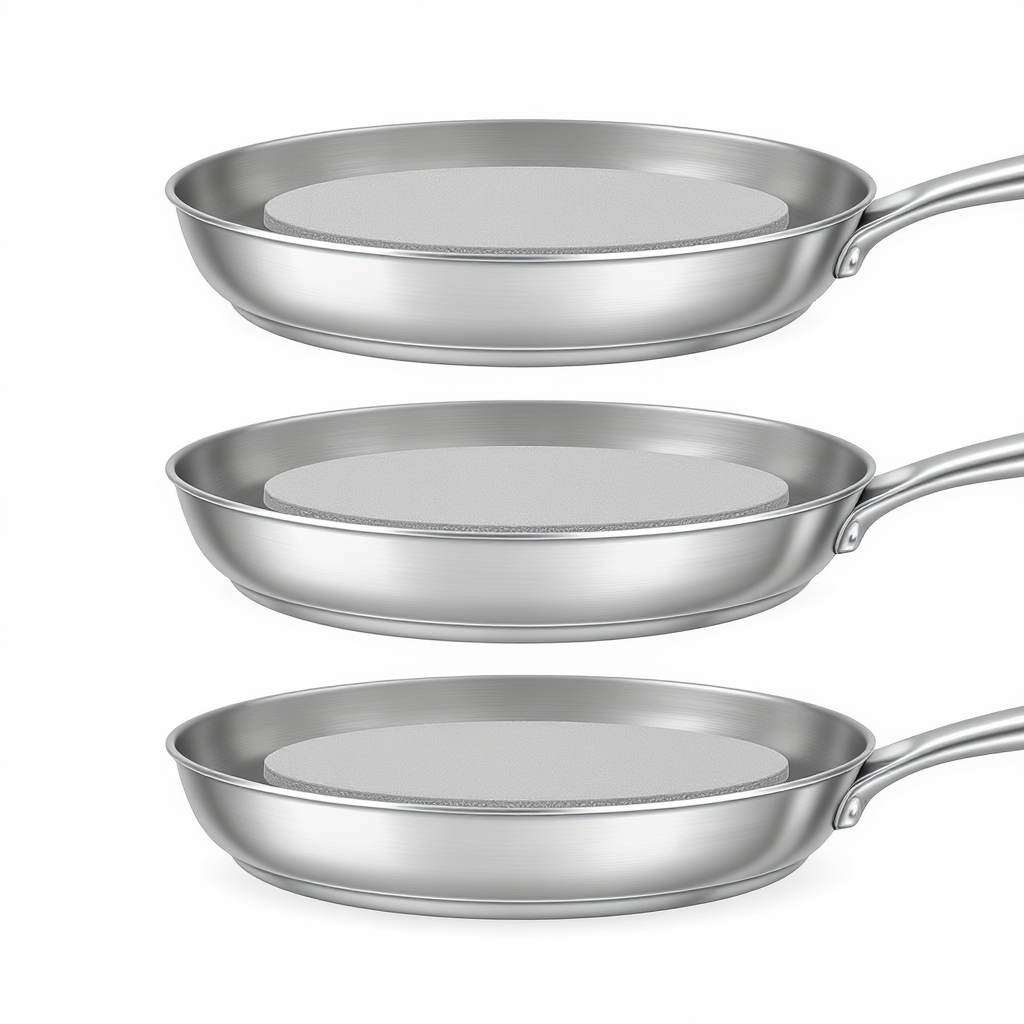
The mixed-metal warning: Never stack cast iron directly on stainless steel, even with a separator. Cast iron’s rough, seasoned surface acts like sandpaper against stainless. A single heavy Dutch oven placed on a stainless skillet will leave deep radial scratches even through a standard felt pad. Keep cast iron in a completely separate cabinet section.
There’s a subtler risk too: aluminum pans stored in direct contact with stainless in a humid cabinet can cause micro-galvanic corrosion — the two dissimilar metals create a small electrochemical cell that slowly etches the aluminum surface. Separators eliminate this entirely; knowing it exists is half the battle.
Where to Store Cookware in Your Kitchen
Best locations:
- Cabinet adjacent to or below the stove — shortest path to the burner, less daily handling, fewer drops
- Deep drawer below the cooktop
- Pot rack above the island or range
Locations to avoid:
Under the sink — pipe condensation and humidity spikes create the exact conditions that initiate rust on stainless. This is the most common origin story for “rust-proof” pans that develop orange spots. If this is your only option, use a moisture-absorbing cabinet liner and check pans monthly.
Above the stove cabinet — grease particles and repeated heat cycles coat pan exteriors in a thin film that bakes on over time. Not a rust risk, but it means more cleaning before every use.
Corner lazy Susan cabinet — the rotation mechanism causes pans to slide and bump with every turn. Each rotation is a scratch event. Store other items here instead.
Lid Storage: The Problem Most Guides Ignore
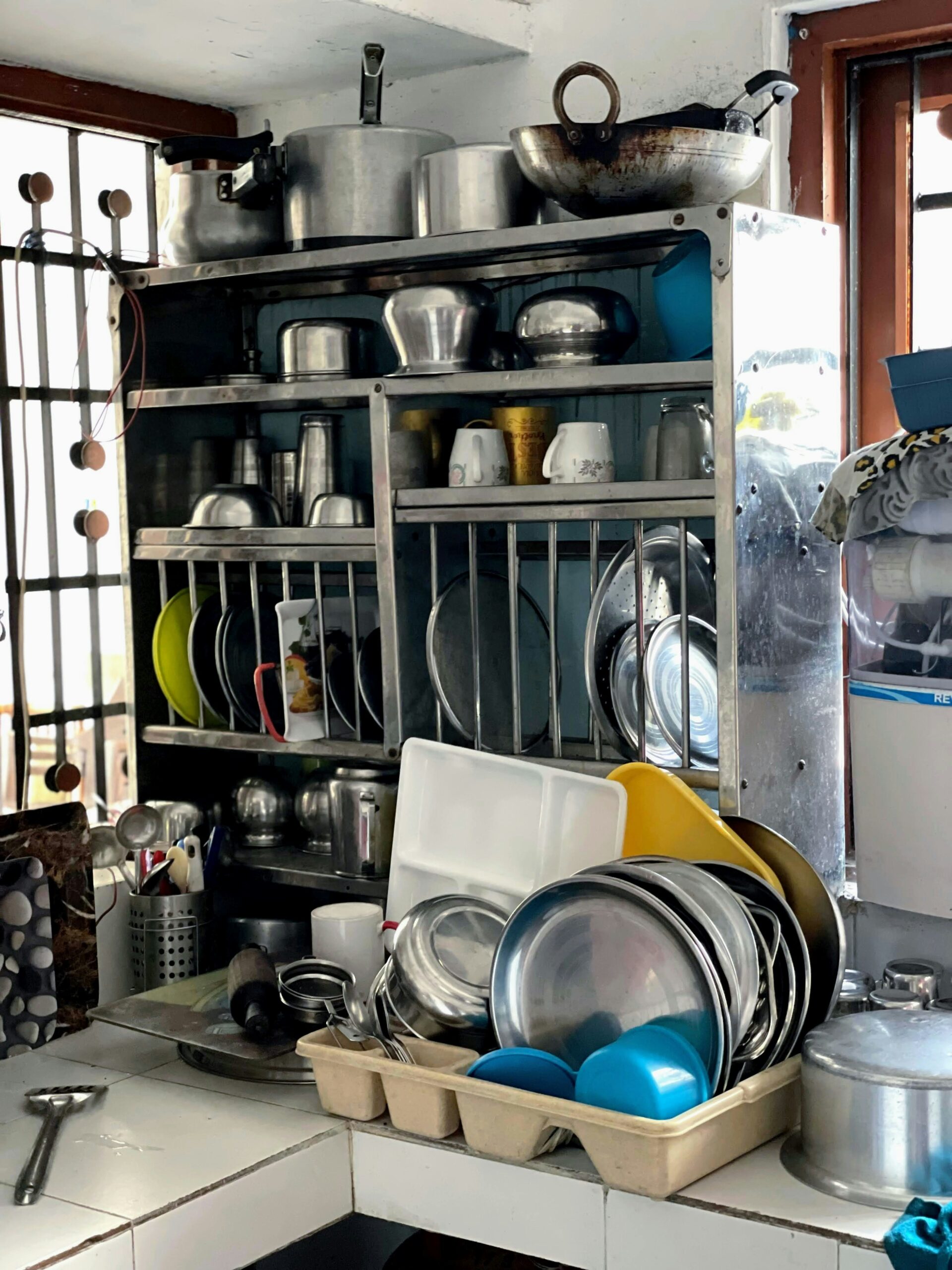
Storing lids inside stacked pans is one of the most common mistakes. A lid resting inside a pan creates a small sealed microenvironment that traps moisture and keeps the lid rim in constant contact with the pan interior. Both cause damage over time — water spots inside the pan and rim marks on the interior surface.
Three lid storage options that work:
- Over-door lid rack ($8–15): mounts on the cabinet door with tension or screws; holds 4–8 lids vertically; no drilling into the cabinet itself
- Countertop lid organizer: a vertical file-style holder; keeps lids upright and fully accessible; the trade-off is counter space
- Separate shelf section: stand lids upright between the cabinet wall and a bookend or divider; no hardware required
If you must store a lid with its pan, invert the lid (dome-side down) and place a dry cloth in the dome before stacking. This breaks the sealed pocket and eliminates most of the moisture trapping. It’s not ideal long-term, but far better than storing the lid right-side-up inside the pan.
Long-Term and Seasonal Storage
For pans you won’t use for three or more months — seasonal kitchens, items stored during a move, secondary cookware sets — standard cabinet storage isn’t enough.
Long-term storage protocol:
- Full clean: wash, rinse, dry completely using the pre-storage checklist
- If any surface spots exist, treat with a paste of baking soda and water, rinse, dry
- Wrap each piece individually in a clean cotton cloth (an old pillowcase works perfectly)
- Store in a cool, stable-humidity location — avoid damp basements, humid garages, or unheated storage units
- Do not use plastic wrap or sealed plastic containers: they trap condensation from temperature swings
For storage beyond six months, applying the thinnest possible film of food-grade mineral oil before wrapping adds a moisture barrier. This is standard practice for carbon steel and cast iron; it’s less commonly done for stainless but legitimate. Remove it completely before first use by washing with dish soap.
Three Storage Mistakes That Quietly Ruin Good Cookware
1. Storing a pan before it’s fully dry
The most common and most damaging mistake. Mineral deposits from water spots harden into a thin surface crust over weeks. Once calcified, they require Bar Keepers Friend or a baking soda paste to remove — and repeated aggressive scrubbing eventually dulls the finish permanently.
2. Stacking cast iron and stainless in the same pile
Even with a separator, the weight and rough texture of cast iron creates micro-abrasion as the stack settles and shifts. The damage is cumulative and often invisible until you look at the pan in direct light. Keep them in completely separate sections.
3. Ignoring cabinet humidity over time
A kitchen cabinet near a dishwasher, under the sink, or on an exterior wall in a humid climate creates repeated moisture cycles. Over 12–18 months, this is enough to initiate surface rust on 18/8 grade stainless (which has slightly lower nickel content than 18/10, reducing its resistance in humid conditions). A small silica gel packet or a cabinet moisture absorber costs less than two dollars and extends pan life significantly.
Frequently Asked Questions
Can stainless steel cookware rust in storage?
Yes — stainless steel is corrosion-resistant, not corrosion-proof. Rust develops when the chromium oxide passive layer is broken down by repeated scratching, prolonged moisture exposure, or chloride contact (salt residue). Storing pans dry and using separators eliminates the main triggers.
What is the best thing to put between stainless steel pans when stacking?
Felt pan protectors or thick cotton kitchen towels cut into circles. Commercial felt pads (such as the BOYAN 15-pack or Cuisinart protector set) work excellently, but a section of an old cotton towel cut to the pan’s diameter performs nearly identically at zero cost.
Should I hang stainless steel cookware or store it in a cabinet?
Hanging is better for the pans — no contact between surfaces, excellent ventilation, easy access. If you cook daily and have ceiling or wall space, a pot rack is worth the installation. For renters or smaller collections, a vertical slotted organizer in a cabinet gives similar scratch protection without drilling.
How many stainless steel pans can I safely stack?
Three to four pieces maximum. Beyond that, the bottom pan bears significant weight, and the stack becomes unstable — pulling one pan out causes the others to shift and contact each other.
How often should I clean cookware before storing it?
After every single use. Never store a pan with food residue or moisture. Even water from a quick rinse needs to be fully dried first. Pans left with residue risk both surface staining and creating a moist environment that promotes corrosion.
The Bottom Line
The most expensive part of owning quality stainless steel cookware isn’t the purchase — it’s the decade of daily storage that determines whether those pans still look good in year ten. Four things protect the investment:
- Store completely dry — no exceptions, every time
- Separate every stacked surface — felt, cotton towels, or silicone; anything that prevents metal-on-metal contact
- Choose the storage location carefully — away from moisture sources, with ventilation where possible
- Keep lids stored separately — they trap moisture and create rim contact inside your pans
Most cookware that scratches, spots, or rusts prematurely fails on one of these four. None of them require buying anything — a dry towel and a well-ventilated cabinet are enough to start.