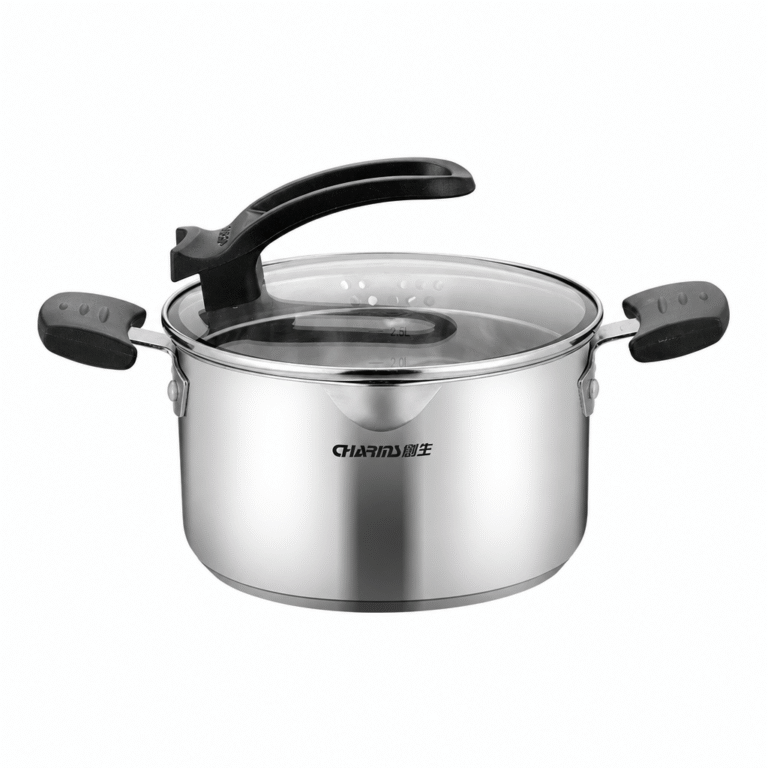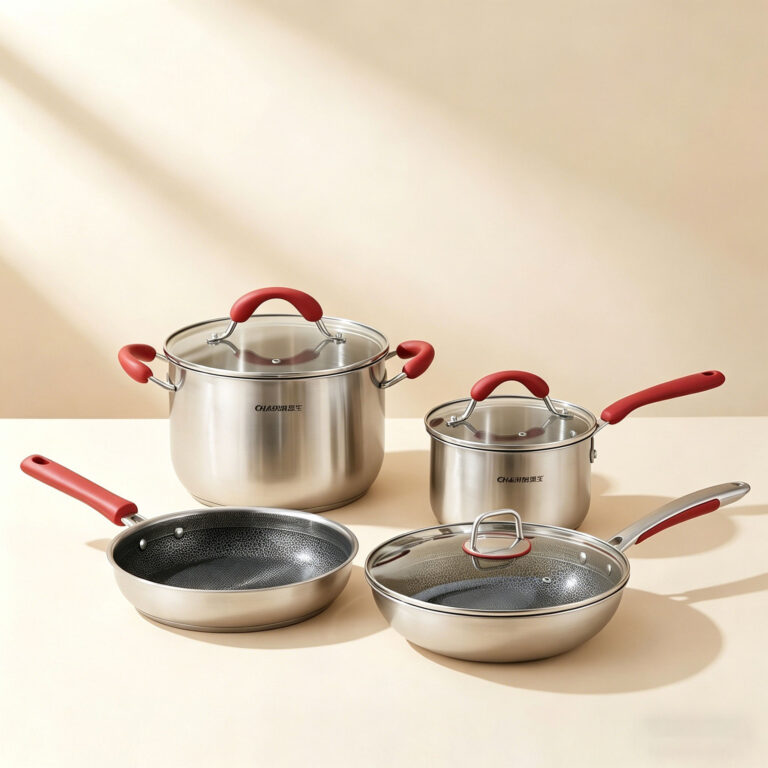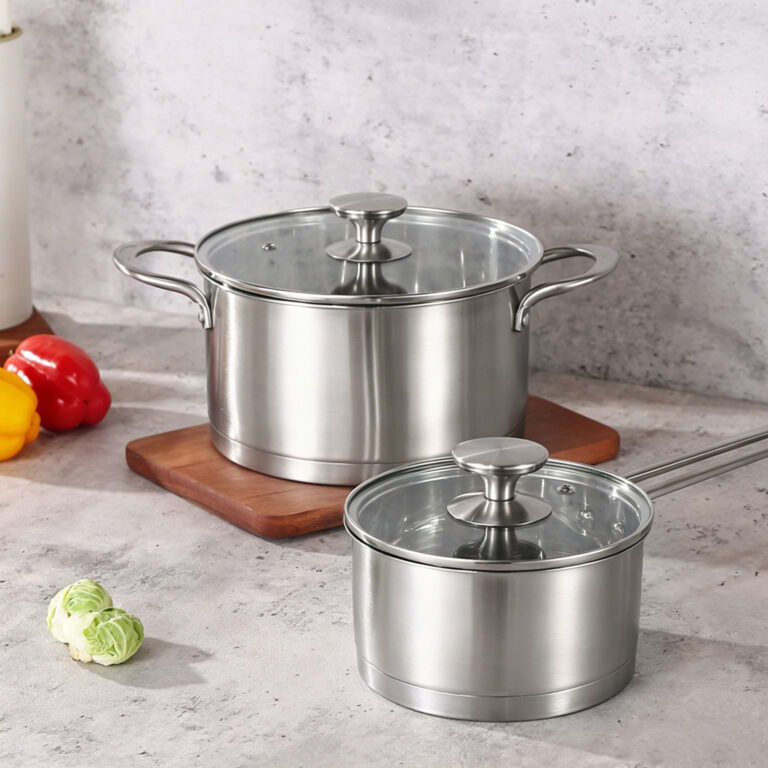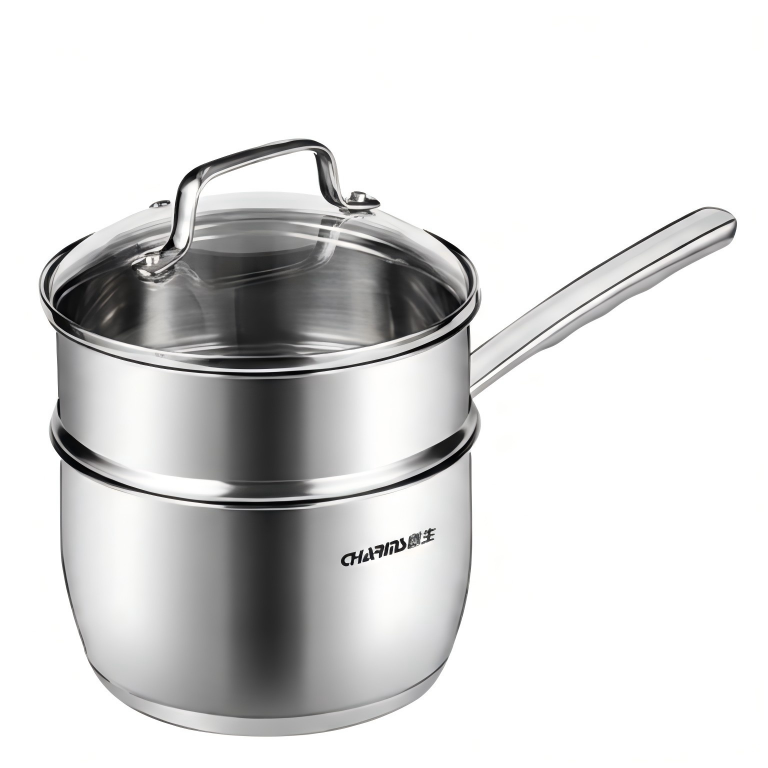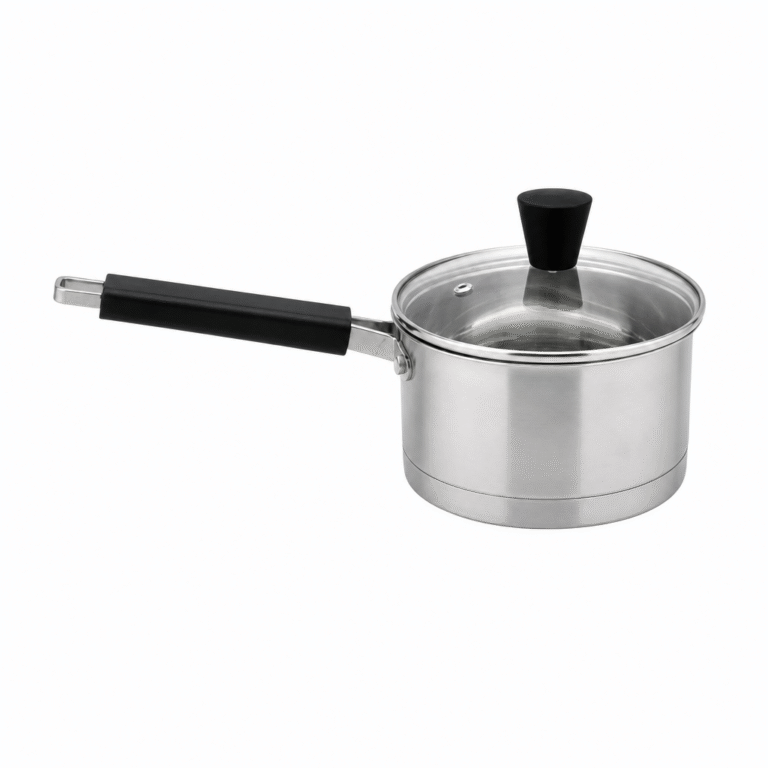


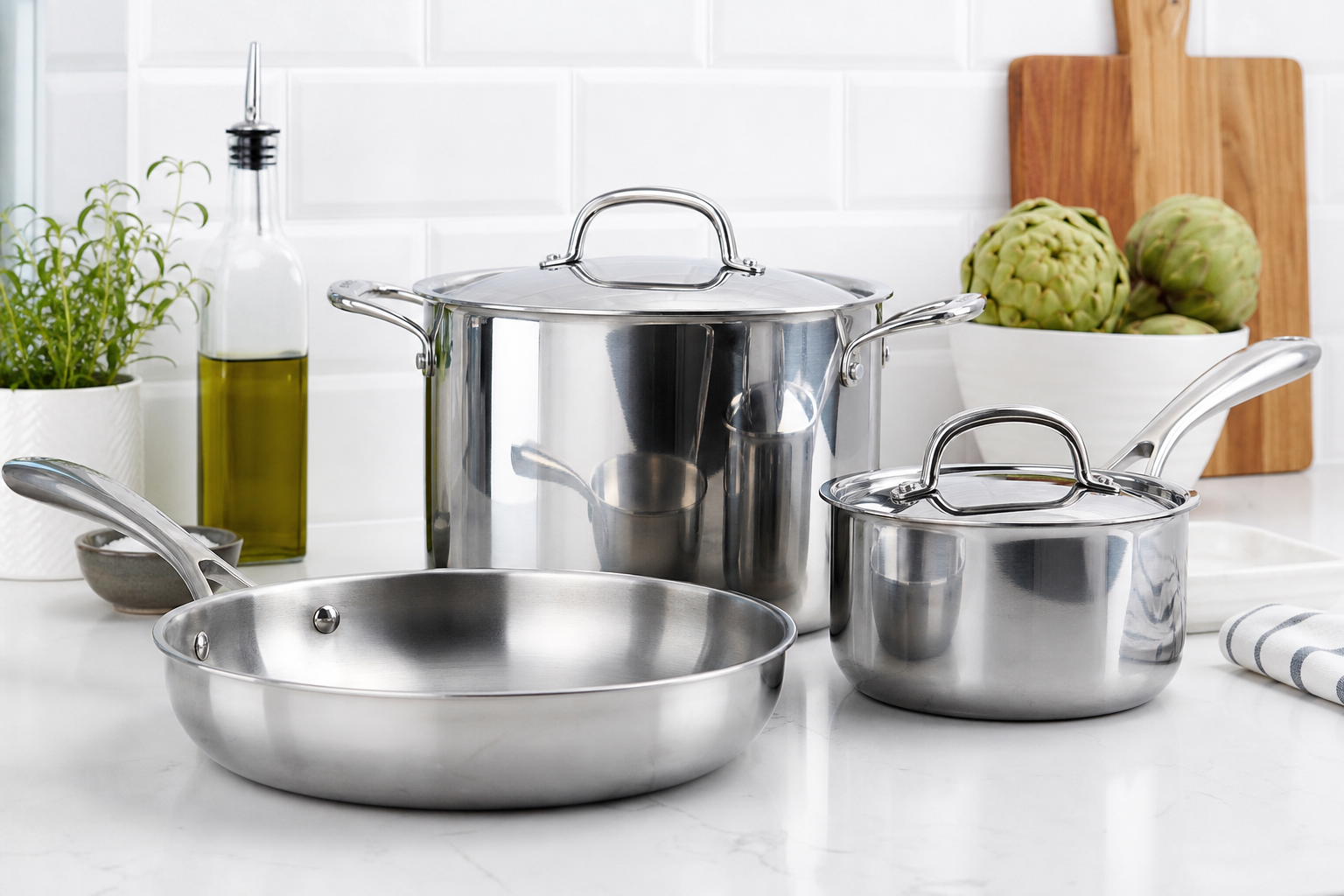
Stainless steel cookware is FDA-recognized as safe for food contact and ranks among the healthiest cookware materials available. The main concern — nickel and chromium migration — is real but minimal under typical cooking conditions. Risk increases with acidic foods (tomatoes, vinegar, citrus) cooked for extended periods, and matters most for people with nickel allergies or sensitivity. For them, 18/0 stainless (nickel-free) is the practical switch. Compared to conventional non-stick pans containing PTFE or PFAS compounds, stainless steel has a significantly stronger safety profile. For most households, a quality stainless steel pan is a low-risk, long-lasting choice that doesn’t require constant replacement like coated alternatives.
The Short Answer: Yes — With Two Caveats Worth Knowing
Stainless steel cookware is safe for the vast majority of people. The FDA recognizes stainless steel as a generally safe material for food contact, and it has been used in commercial food processing and home kitchens for decades without a documented pattern of harm. Under typical home cooking — moderate heat, normal cook times, non-acidic foods — metal migration into food is negligible.
The two caveats that are actually worth your attention:
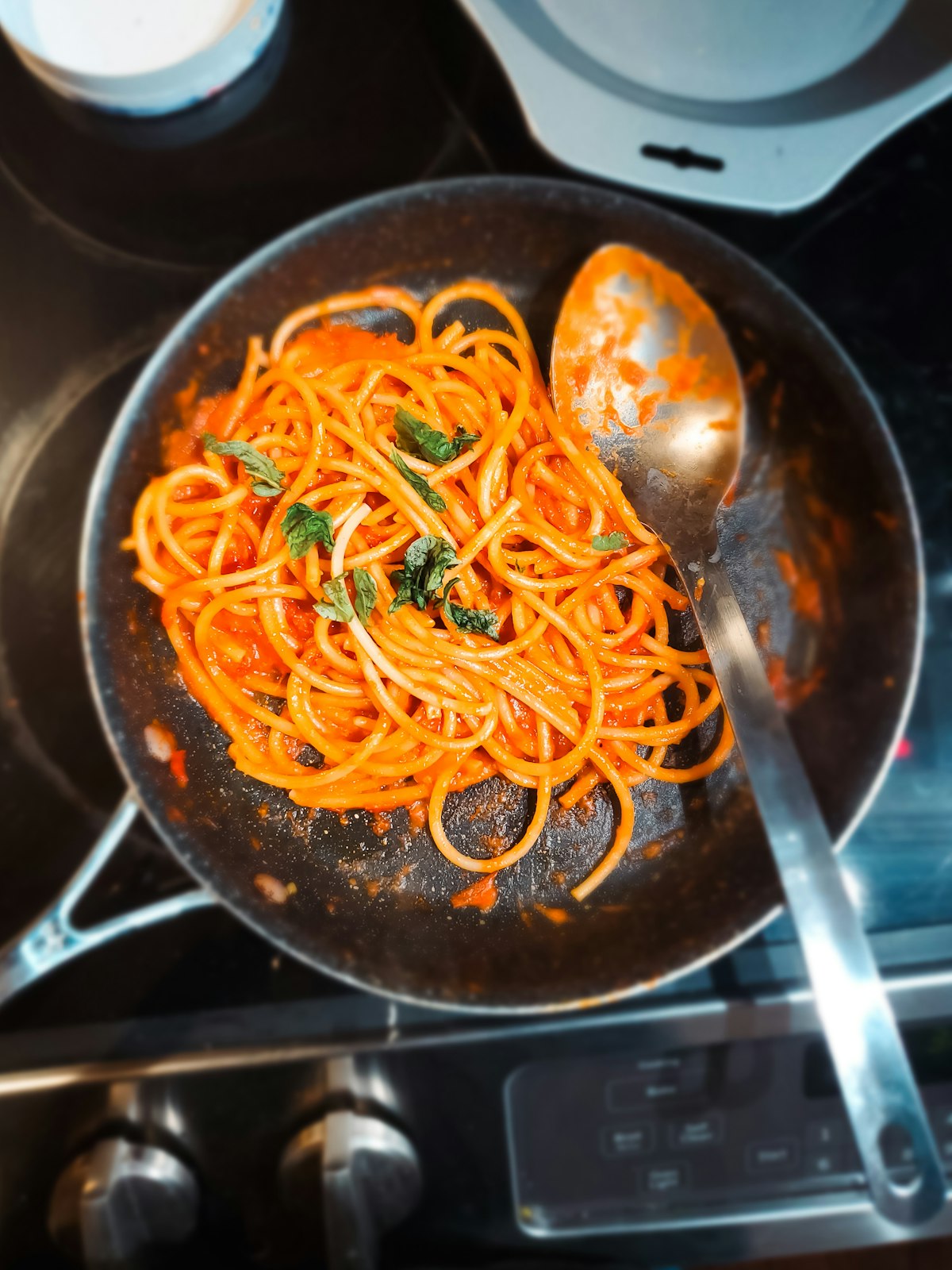
1. Nickel leaching increases with acidic foods and extended cooking times. Simmering a tomato sauce for 90 minutes in a new 18/10 stainless pan releases measurably more nickel than a 10-minute sauté. For most people, this remains well below any established threshold of concern. But it’s not zero.
2. People with nickel allergies or nickel sensitivity may react even at low exposure levels. The fix is straightforward: choose 18/0 stainless steel (which contains no nickel) or switch to cast iron.
That’s the core of it. Everything below fills in the evidence.
What’s Actually Inside Your Stainless Steel Pan
Stainless steel is an alloy — iron combined with at least 10.5% chromium (which creates the rust-resistant surface) and, in most cookware grades, nickel. Two grades dominate home cookware:
- 18/10 stainless steel (Grade 304): Labeled as 18% chromium, 10% nickel — though “18/10” is a marketing convention. The ASTM A240 standard for Grade 304 actually specifies 18–20% Cr and 8–10.5% Ni, so the nickel content can vary within that range. The most common choice in mid-to-high-end cookware; more corrosion-resistant, shinier finish.
- 18/0 stainless steel: 18% chromium, no nickel. Less expensive, slightly less corrosion-resistant, but completely nickel-free. The right choice for nickel-sensitive cooks.
- 18/8 stainless (also Grade 304): 18% chromium, ~8% nickel. Functionally equivalent to 18/10 for kitchen use — same grade, slightly different nominal nickel content within the same ASTM spec.
Premium cookware brands like All-Clad, Demeyere, and Made In use multi-ply construction — 304 stainless on the cooking surface bonded to an aluminum or copper core for heat distribution. The cooking surface you actually contact is still stainless steel; the core materials don’t touch your food.
What about 316 “surgical grade” stainless? Some brands market 316 as the healthiest option. It adds molybdenum for better chemical resistance — useful in medical devices and marine environments. In a home kitchen context, the safety advantage over 304 grade is not meaningfully supported by independent research. It’s a harder, more expensive steel to form, and the practical difference for everyday cooking is marginal.
The Nickel Question: What the Research Actually Shows
Multiple published studies have measured nickel migration from stainless steel cookware. The findings are consistent:
- New pans leach more. A 2013 study by Kamerud et al. in the Journal of Agricultural and Food Chemistry found that after six hours of cooking tomato sauce in new stainless steel pans, nickel concentrations increased up to 26-fold and chromium up to 7-fold compared to sauce cooked in glass. Migration dropped significantly with repeated use as the surface stabilized.
- Acidic foods are the main driver. Tomato sauce, lemon juice, vinegar-based dishes, and wine reductions all increase nickel and chromium migration compared to neutral foods.
- Time is a multiplier. A 10-minute cook releases far less than a 2-hour braise in the same pan with the same food.
- Damaged surfaces release more. Heavily scratched or pitted interiors show higher migration than intact surfaces.
Putting it in context: The National Academies of Sciences, Engineering, and Medicine (NASEM) set a tolerable upper intake level for nickel of 1.0 mg/day for adults — a threshold based on soluble nickel salts under controlled conditions. The actual migration from stainless steel cookware under typical home cooking scenarios falls well below this level in most studies. The risk is more relevant for people who already have high dietary nickel exposure (nuts, legumes, and chocolate are naturally high in nickel) and also cook acidic foods daily in new pans.
Chromium migration is less discussed but also studied. Chromium from Grade 304 stainless is primarily Cr(III) — the form naturally present in food and required in small amounts by the body — not the toxic Cr(VI) form associated with industrial exposure. Under normal cooking, Cr(III) migration is considered nutritionally insignificant for most people.
How Stainless Steel Compares to Other Cookware
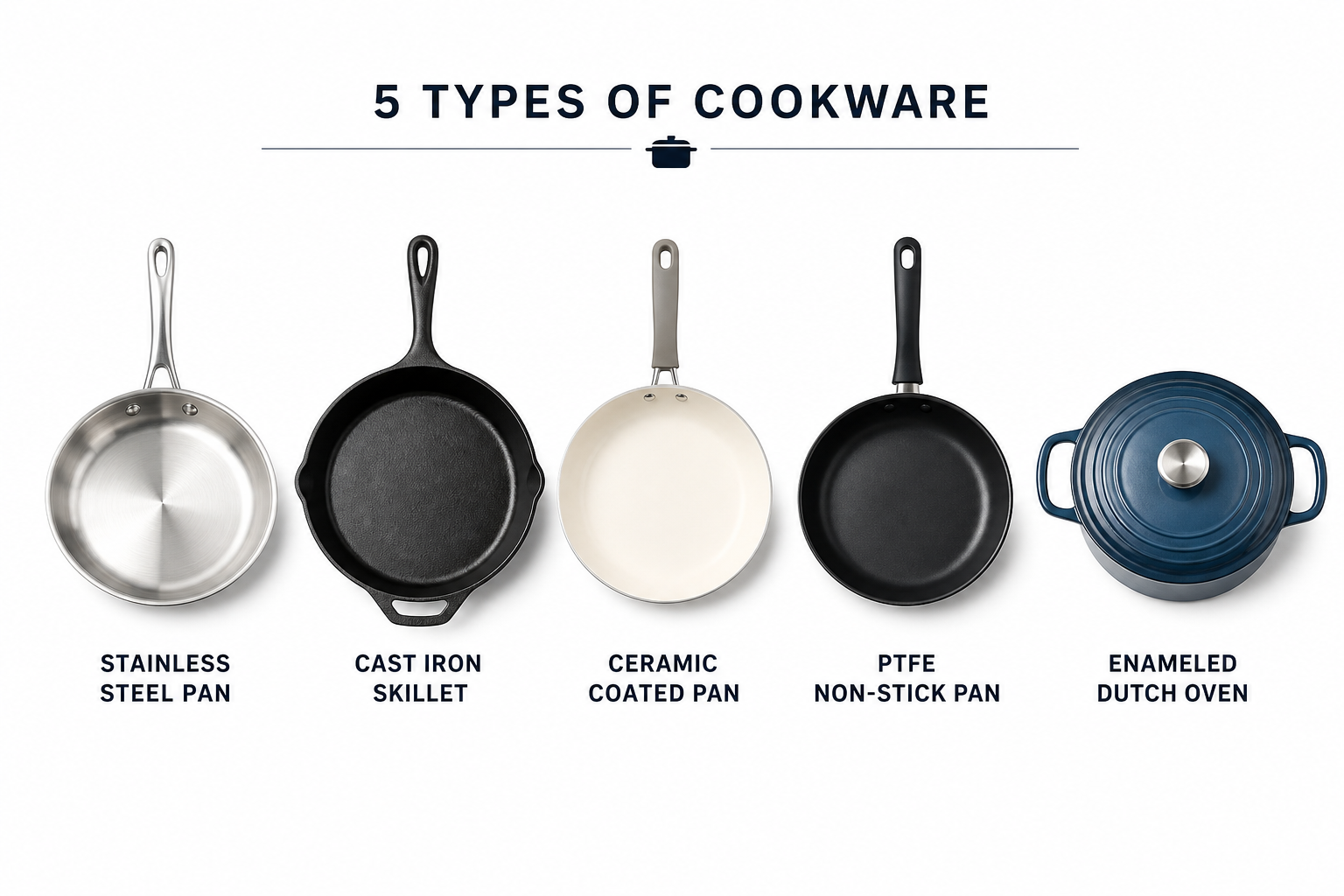
The health question for any cookware material only makes full sense in comparison. Here’s where each material stands:
| Cookware Material | Key Health Factor | FDA/Regulatory Status | Nickel-Free? | Primary Concern |
|---|---|---|---|---|
| Stainless Steel 18/10 (304) | Minor nickel/Cr(III) leaching | Accepted food-contact material | No | Nickel allergy |
| Stainless Steel 18/0 | Negligible leaching | Accepted food-contact material | Yes | None significant |
| Cast Iron (bare) | Iron migration into food | Generally recognized safe | Yes | Excess iron (rare: hemochromatosis) |
| Enameled Cast Iron | Enamel prevents metal contact | Safe when enamel is intact | Yes | Chipped enamel |
| High-quality Ceramic Coated | Inert when intact; degrades with use | Generally safe (brand-dependent) | Yes | Coating lifespan; quality variation |
| PTFE Non-stick (Teflon) | Releases fumes above ~500°F / 260°C | FDA-approved below 500°F | Yes | PFAS compounds; fume risk if overheated |
| Carbon Steel (seasoned) | Similar profile to bare cast iron | Generally safe | Yes | Requires seasoning maintenance |
| Unlined Copper | Copper toxicity with acidic foods | Not recommended unlined | Yes | Copper leaching |
| Bare Aluminum | Aluminum migration | Not recommended uncoated | Yes | Aluminum exposure |
The clearest takeaway from this table: PTFE-based non-stick cookware carries the most documented health complexity — the legacy PFOA contamination (voluntarily phased out by major US manufacturers by 2015 under the EPA PFOA Stewardship Program), ongoing questions about replacement PFAS compounds, and the PTFE fume risk at temperatures home cooks can realistically reach. Stainless steel’s nickel concern is comparatively well-characterized and minor for the general population.
The “non-toxic cookware” label now appears on products across all price ranges and materials. The term has no regulatory definition. Any manufacturer can print it regardless of what their product actually contains.
The Healthiest Cookware Options, Ranked by Evidence
Based on regulatory status, published leaching studies, and documented risks, here’s an evidence-based ranking:
Tier 1 — Lowest established health concern:
- 18/0 stainless steel — no nickel, FDA-accepted, no coating to degrade, extremely durable
- Enameled cast iron — zero direct metal-food contact when enamel is intact; avoid visibly chipped pieces
- Seasoned carbon steel — no coating concerns; iron migration similar to cast iron but at lower levels
Tier 2 — Low concern for most people:
- 18/10 stainless steel — minimal leaching under normal conditions; avoid for those with nickel sensitivity
- Cast iron (bare) — iron supplementation is actually beneficial for many people; caution only for those with iron overload conditions like hemochromatosis
- High-quality ceramic-coated from verified brands — generally safe; coating lifespan matters, and quality varies significantly between brands
Tier 3 — Use with informed caution:
- PTFE non-stick — fine at normal cooking temps; the concern is overheating (above 500°F/260°C), older pans with potential PFOA residue, and fume toxicity (notably lethal to birds even at moderate temperatures)
- Ceramic from unverified sources — lower-cost ceramic coatings from poorly regulated manufacturers have in some cases tested positive for lead and cadmium
Not recommended uncoated:
- Bare copper, bare aluminum
One thing worth noting: the Tier 1 materials also tend to last significantly longer than coated cookware. A well-maintained 18/0 or 18/10 stainless steel pan can realistically last 20–30 years. A PTFE non-stick pan typically degrades within 3–5 years of regular use. From a cumulative exposure standpoint, the longevity advantage of uncoated stainless is meaningful.
How to Use Stainless Steel Safely (Practical Tips)
You don’t need to throw out your stainless pans. A few habits meaningfully reduce any theoretical leaching risk:
Season new pans with neutral cooks first. Leaching is highest in the first several uses of a new pan. Before your first long acidic cook, boil water or cook neutral foods (eggs, grains, mild vegetables) a few times. This stabilizes the surface and reduces subsequent leaching.
Avoid long-simmering acidic dishes in damaged or very new pans. Tomato sauce, citrus reductions, and wine-heavy braises are fine for occasional short cooks. For multi-hour acidic braises, an enameled Dutch oven is a lower-leaching alternative.
Don’t store leftovers in the pan overnight. Especially acidic foods. Transfer to glass or ceramic containers for storage — the food is in contact with the metal for much longer when stored, with no heat to mitigate.
Replace visibly damaged cookware. For stainless steel, deep pitting or discoloration warrants attention. For coated cookware (ceramic, non-stick), any visible flaking means it’s time to replace.
Choose 18/0 if you have a confirmed nickel allergy. It performs nearly identically to 18/10 for everyday cooking tasks. The minor difference in corrosion resistance is irrelevant in kitchen use.
Avoid extreme high heat with an empty pan. Less a health issue with stainless (it doesn’t off-gas the way PTFE does) and more a pan-quality issue — it can cause discoloration and warp thinner pans.
FAQ
Is stainless steel cookware safer than non-stick?
For the general population, yes. PTFE-based non-stick pans release fumes when heated above approximately 500°F (260°C), and some formulations contain PFAS compounds with documented health and environmental concerns. Stainless steel has no coating to degrade and no fume risk at cooking temperatures.
Does stainless steel leach metals into food?
Yes, in small amounts — primarily nickel and chromium from 18/10 grade pans. Under normal cooking conditions, the amounts are generally below WHO safe intake thresholds for most people. Leaching increases with acidic foods (tomatoes, vinegar) and longer cooking times.
What is the safest cookware material overall?
No single material is safest for every person. For those without specific sensitivities: enameled cast iron (when enamel is intact), 18/0 stainless steel, and seasoned carbon steel are among the lowest-risk options. For people with nickel allergies: avoid 18/10 stainless and choose 18/0 or cast iron instead.
Is 18/10 stainless steel safe to cook with?
Yes, for most people. The 10% nickel content means it’s not appropriate for those with nickel allergies, but for everyone else, migration under normal cooking conditions is well below established safety thresholds.
Can I use stainless steel if I have a nickel allergy?
Switch to 18/0 stainless steel (nickel-free) or enameled cast iron. Standard 18/10 stainless steel should be avoided by anyone with diagnosed nickel contact dermatitis or systemic nickel sensitivity.
Is ceramic cookware healthier than stainless steel?
Possibly, when the ceramic coating is intact and from a reputable brand with third-party testing. The caveat: ceramic coatings degrade with use and vary widely in quality. A high-quality stainless steel pan that lasts decades may represent less cumulative exposure than a ceramic-coated pan replaced every few years — especially if the replacement is from a less-verified source.
What does “non-toxic cookware” actually mean?
Legally, nothing. “Non-toxic” is unregulated marketing language — any manufacturer can use it without meeting a specific safety standard. Focus instead on material grade (18/0 vs 18/10), FDA food-contact status, and whether the brand provides independent testing data.
Summary
Stainless steel earns its reputation as a healthy cookware choice through a straightforward safety profile, not marketing. For most households, a quality stainless steel pan — used sensibly — is one of the lower-risk decisions you’ll make in the kitchen.
The materials actually worth scrutinizing are uncoated aluminum and bare copper, older non-stick pans with potential PFOA residue, and low-cost ceramic imports with unverified coatings. A well-maintained 18/10 stainless set, treated to a few neutral-cook break-ins before acidic use, isn’t what should be keeping health-conscious cooks up at night.
If you have a nickel allergy, the answer is simple: 18/0 stainless gives you the same cooking performance with zero nickel exposure. For everyone else, the research supports what most professional kitchens have quietly demonstrated for decades — stainless steel works, lasts, and doesn’t give you much to worry about.