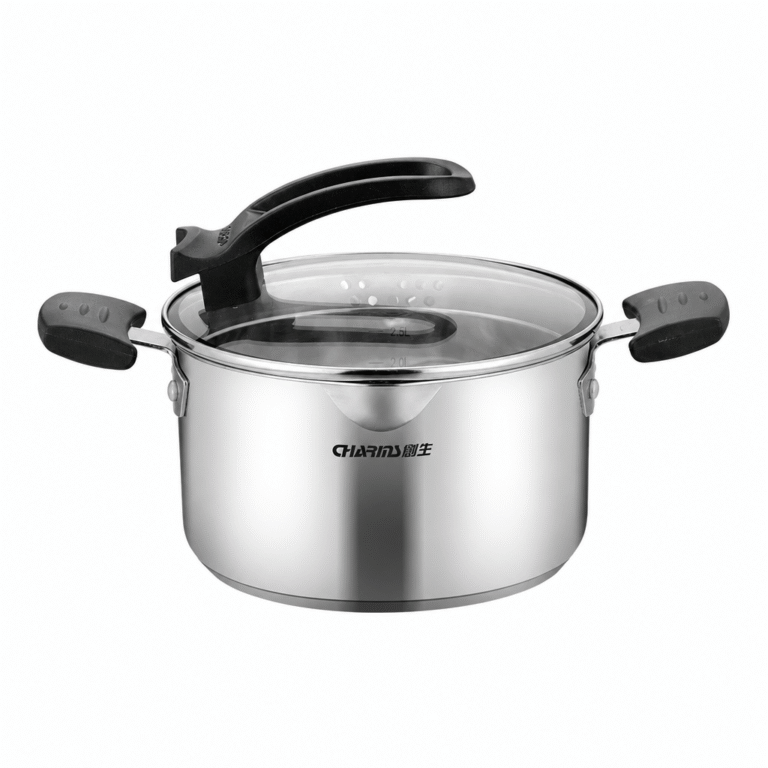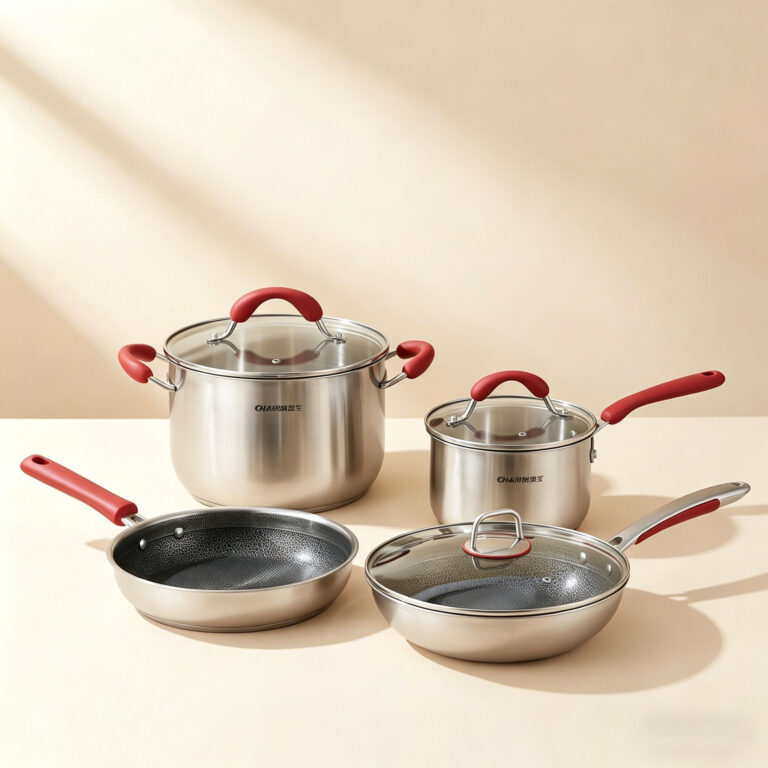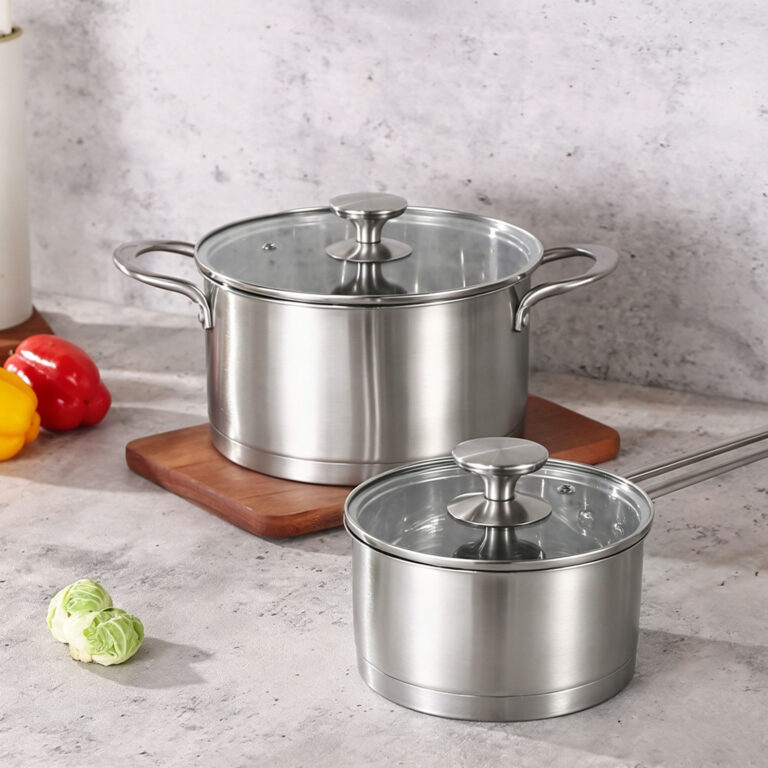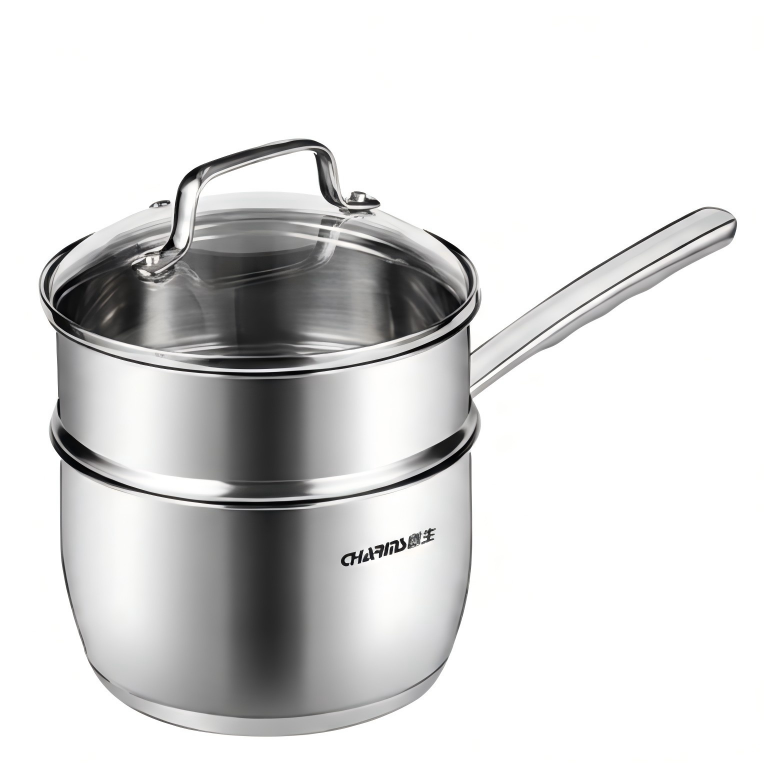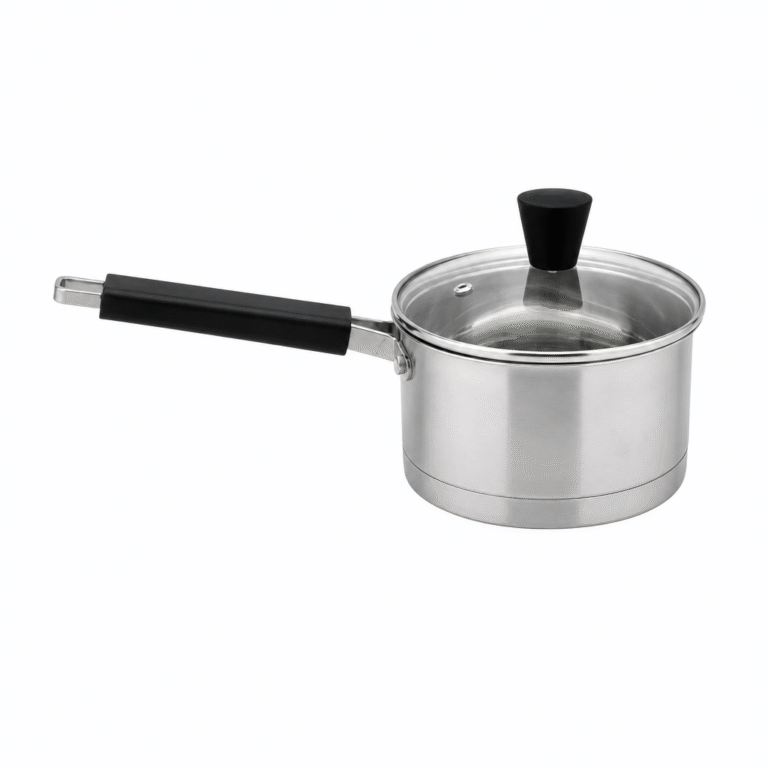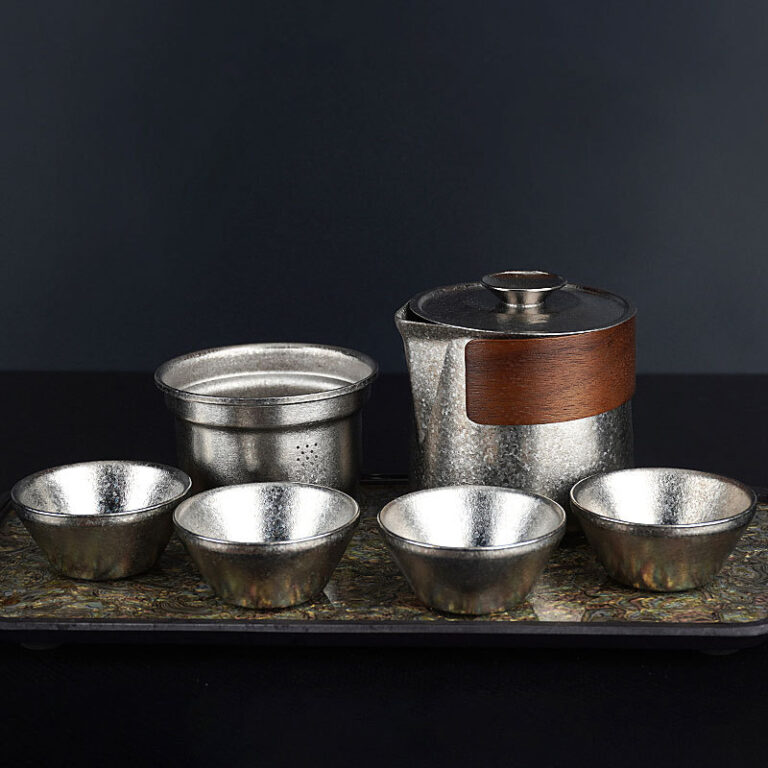


LFGB (Lebensmittel- und Futtermittelgesetzbuch) is Germany’s food safety law — specifically §30 and §31 — that governs migration of harmful substances from cookware into food. It is recognized as the EU gold standard for food contact material safety, stricter than U.S. FDA standards. Testing covers overall migration (≤10 mg/dm²), specific substance migration, heavy metals, and mandatory sensory testing for odor and taste. Certification costs $450–$1,100 per material type and takes 2–6 weeks. Any cookware brand targeting Germany or broader EU buyers — including titanium, stainless steel, and coated pans — needs a valid LFGB test report to enter the market. CharmsCook supplies LFGB-certified cookware to EU importers and brand owners.
What Is LFGB Certification — and Why Cookware Buyers Can’t Ignore It

LFGB stands for Lebensmittel- und Futtermittelgesetzbuch — Germany’s Food and Feed Code. Sections §30 and §31 are the two clauses that directly apply to cookware and any material that contacts food during cooking, storage, or serving.
§30 covers chemical migration: the law prohibits materials from transferring substances into food in quantities that could harm human health or alter the sensory properties of food.
§31 extends this to the sensory dimension: cookware must not produce abnormal odors or flavors when in contact with food — a requirement with no equivalent in U.S. FDA rules.
LFGB operates within the broader EU framework established by EU Regulation (EC) No. 1935/2004, which sets the general safety principle for all food contact materials across the EU. A product that passes LFGB is considered to satisfy 1935/2004’s requirements. Think of LFGB as the practical test protocol; 1935/2004 is the overarching legal mandate.
For B2B buyers: LFGB is not a CE mark or an RoHS certification — it is a material safety test report issued by an accredited laboratory. You will not find an LFGB “certificate” on a government registry; you will find a test report from a lab like SGS, TÜV Rheinland, or Intertek confirming compliance.
LFGB vs. FDA: Key Differences for Cookware Importers
If your supplier offers either FDA or LFGB compliance, understanding what each covers protects you from regulatory exposure.
| Criterion | LFGB (Germany/EU) | FDA (United States) |
|---|---|---|
| Legal basis | German LFGB §30/§31 + EU Reg. 1935/2004 | FDA 21 CFR (Code of Federal Regulations) |
| Lead limit | ≤0.8 mg/dm² | ≤4.0 mg/L |
| Cadmium limit | ≤0.07 mg/dm² | ≤0.4 mg/L |
| Sensory test (odor/taste) | Mandatory | Not required |
| Overall migration limit | ≤10 mg/dm² | No single equivalent |
| Market covered | Germany + broadly accepted across EU | United States |
| Stricter standard? | Yes — significantly stricter | No |
The practical implication: A cookware product that meets LFGB will typically meet FDA standards. The reverse is not true. If you are sourcing for both EU and US markets, qualifying for LFGB first is the more efficient path.
What the LFGB Test Actually Covers for Cookware
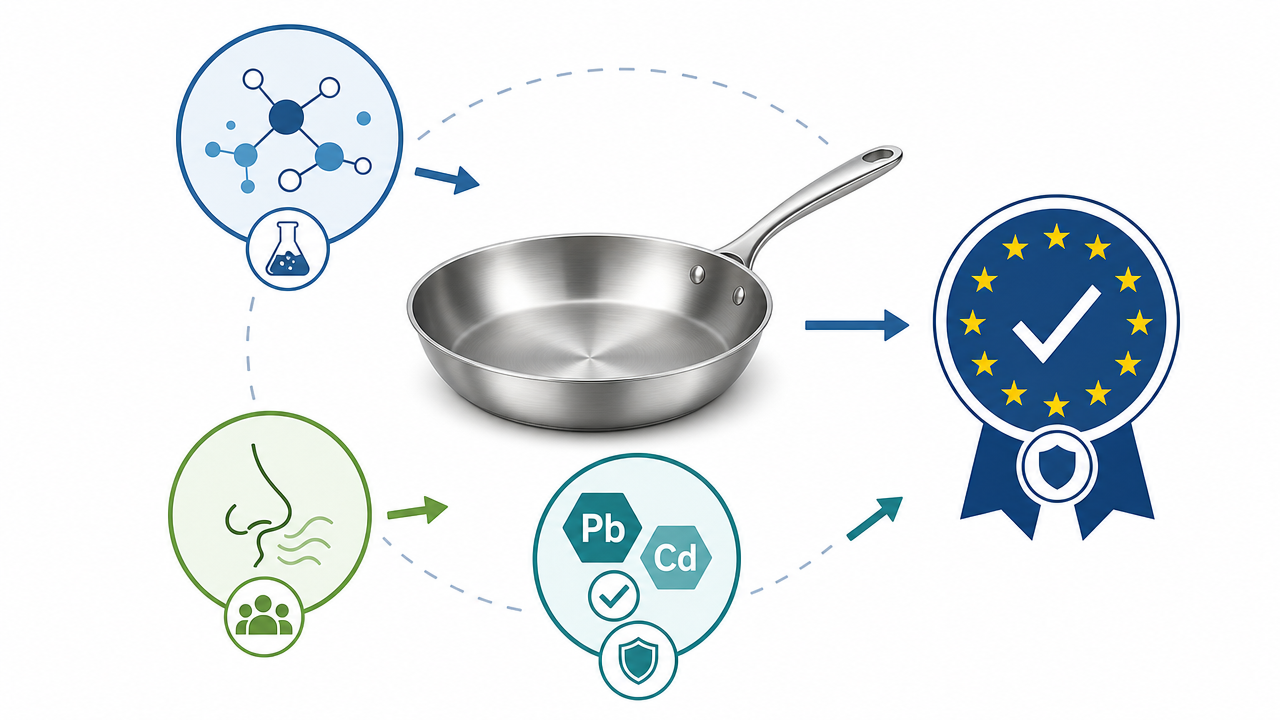
Testing is conducted on the food-contact surfaces of the cookware using food simulants — liquids that mimic different food types (acidic, aqueous, fatty, dry). The lab applies these simulants under controlled temperature and time conditions, then measures what migrated out of the material.
The four core test categories for metal and coated cookware:
1. Overall Migration Test Measures the total mass of all substances released from the material. The limit is ≤10 mg/dm² (or 60 mg/kg food). This is the baseline pass/fail gate.
2. Specific Migration Tests Targets individual substances of concern. For coated cookware (non-stick), this includes PFOA (perfluorooctanoic acid) and PFOS — both now restricted under EU law. For metal cookware, specific heavy metal migration is tested.
3. Heavy Metal Extraction Tests for lead, cadmium, chromium, nickel, and other metals. Particularly relevant for stainless steel cookware and enamel-coated pots, where the alloy composition directly affects test outcomes.
4. Sensory Test (Odor and Taste) A trained panel evaluates whether the cookware imparts any foreign odor or taste to water or food simulants at use temperature. No abnormal result is required — this is binary pass/fail. This test has no FDA equivalent and is one of the most common reasons products fail LFGB when they come from suppliers only familiar with FDA requirements.
For coated or multi-material cookware (e.g., a pan with a stainless body, aluminum core, and non-stick coating), each material layer that contacts food may require separate testing — which is why costs for coated items can reach $1,100 per set.
LFGB Test Process: Step-by-Step for Cookware Sourcing
Getting LFGB compliance documentation for a cookware product is straightforward once you know the sequence:
Step 1 — Confirm material composition with your supplier. You need to know exactly what the food-contact surface is made of: stainless steel grade, coating chemistry, any handle materials that touch food. Vague answers from a supplier are a risk signal.
Step 2 — Select an accredited test laboratory. LFGB testing must be conducted by a laboratory accredited under German or EU standards. Commonly used labs globally include SGS, TÜV Rheinland, Intertek, and BV (Bureau Veritas). Labs in China with EU accreditation are widely accepted and generally faster for China-manufactured products.
Step 3 — Submit samples and a completed test application. Typically 3–5 samples per SKU. The lab determines the relevant food simulants, temperature conditions, and contact duration based on the product type and intended use.
Step 4 — Wait for test results. Standard timeline: 2–3 weeks for a conventional single-material product. Full certification packages (including Declaration of Compliance documentation) run 4–6 weeks. Rush testing is available at most labs for a premium.
Step 5 — Receive the test report and issue a Declaration of Compliance (DoC). The lab issues a test report. You or your supplier then draft a Declaration of Compliance — a formal document stating the product meets LFGB requirements, signed by the responsible party placing the product on the EU market. The DoC travels with the product and must be available to EU market authorities on request.
Estimated costs:
- Single material (e.g., stainless steel cookware): $450–$650
- Multi-material or coated items (non-stick, enamel): $1,100+ per set
- Rush testing: typically 30–50% premium
Does LFGB Cover the Entire EU — or Just Germany?
This is the most common point of confusion among importers new to the EU market.
LFGB is a German national law. It does not automatically extend legal authority across all 27 EU member states. However, because LFGB §30/§31 is built directly on top of EU Regulation 1935/2004 — which does apply uniformly across the EU — a product that passes LFGB testing is considered compliant with the EU-wide food contact material framework.
In practice: French, Dutch, Italian, and other EU importers routinely accept LFGB test reports as sufficient evidence of EU food contact compliance. It has become the de facto EU standard because it is more comprehensive than most member states’ own national implementations of 1935/2004.
The short answer: LFGB certification provides strong coverage for the entire EU market. If a specific member state has additional national requirements (rare for cookware), your compliance team will flag this at import.
How CharmsCook Approaches LFGB Compliance for EU Buyers
At CharmsCook, LFGB compliance documentation is treated as a baseline sourcing requirement, not an optional add-on. Every product line intended for the EU market — whether titanium cookware, stainless steel sets, or coated pans — goes through accredited lab testing before orders are confirmed.
From a B2B sourcing perspective, what matters most to importers is not just having a test report, but having one that covers the actual production batch — not a one-time sample test on a prototype. CharmsCook maintains current test reports tied to production-spec materials, available to verified buyers on request.
For importers assessing suppliers, this is the verification question worth asking: “Is this test report for the same material specification currently in production?” A report from two years ago, on a prototype coating formula, is not adequate EU market documentation.
Frequently Asked Questions
Is LFGB certification mandatory to sell cookware in Germany? LFGB compliance is effectively mandatory. While there is no single government registry to “register” a product, EU Regulation 1935/2004 requires food contact materials to be safe, and German authorities can and do test products on the market. A valid LFGB test report and Declaration of Compliance are your legal defense if questioned.
How long is an LFGB test report valid? There is no fixed expiry date. However, if the material formulation, coating chemistry, or production process changes, the existing report is no longer valid for the new specification. Most importers request updated reports every 2–3 years or whenever a supplier changes materials.
Can I use the same LFGB report for multiple EU countries? Yes. A LFGB-compliant product satisfies EU Regulation 1935/2004, which applies across all EU member states. The same test report can support market entry in Germany, France, Netherlands, and other EU markets.
What is the difference between overall migration and specific migration? Overall migration measures the total mass of everything that transfers from the cookware material into food simulants — the limit is ≤10 mg/dm². Specific migration tests target individual substances (PFOA, lead, cadmium, nickel) and compares each against its individual limit. A product must pass both.
Does LFGB apply to the entire cookware or just the cooking surface? Only the food-contact surfaces are tested. For a frying pan, this is the interior cooking surface and any areas that contact food. Exterior coatings and handle materials that do not contact food are not subject to LFGB migration testing.
Summary
LFGB certification — specifically §30 and §31 — is the EU’s most rigorous food contact material standard for cookware. It goes beyond FDA requirements with mandatory sensory testing and stricter heavy metal limits. The testing process takes 2–6 weeks through an accredited lab, costs $450–$1,100+ depending on material complexity, and results in a test report and Declaration of Compliance that covers the German and broader EU market. For B2B buyers sourcing cookware for EU distribution, validating that a supplier’s LFGB report matches current production specifications is the single most important compliance step. CharmsCook provides LFGB-compliant cookware with full documentation for EU importers and brand owners.