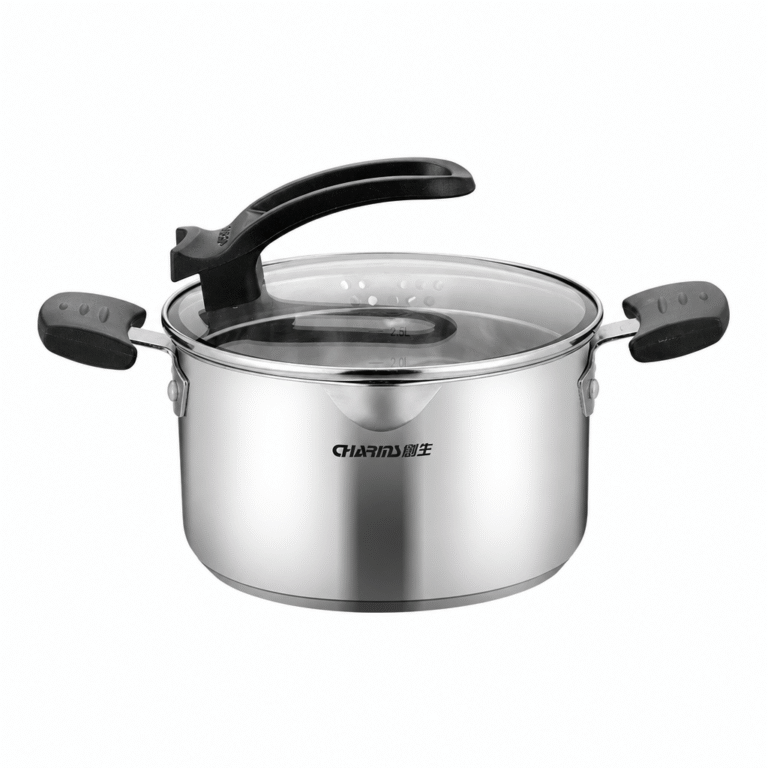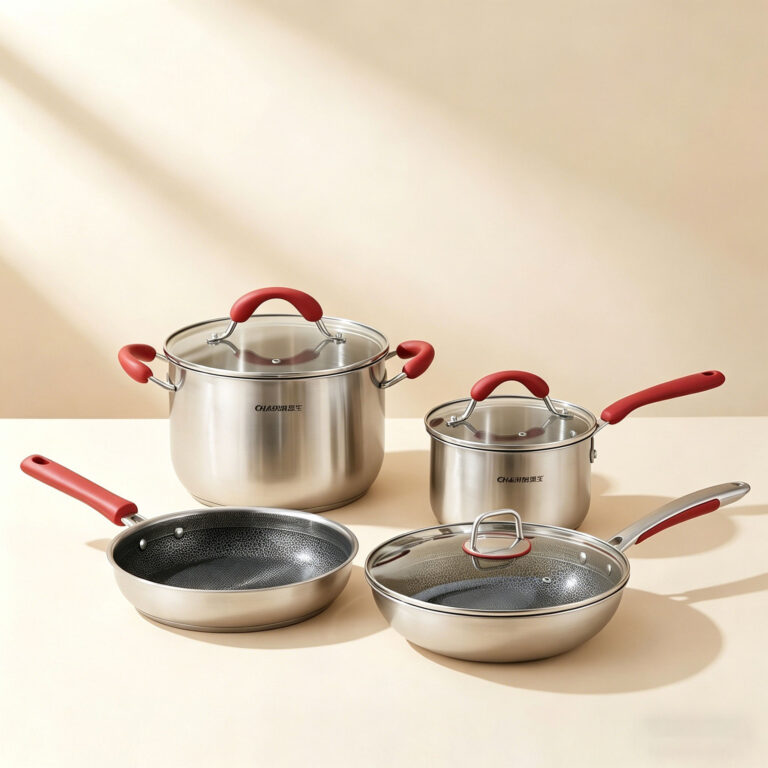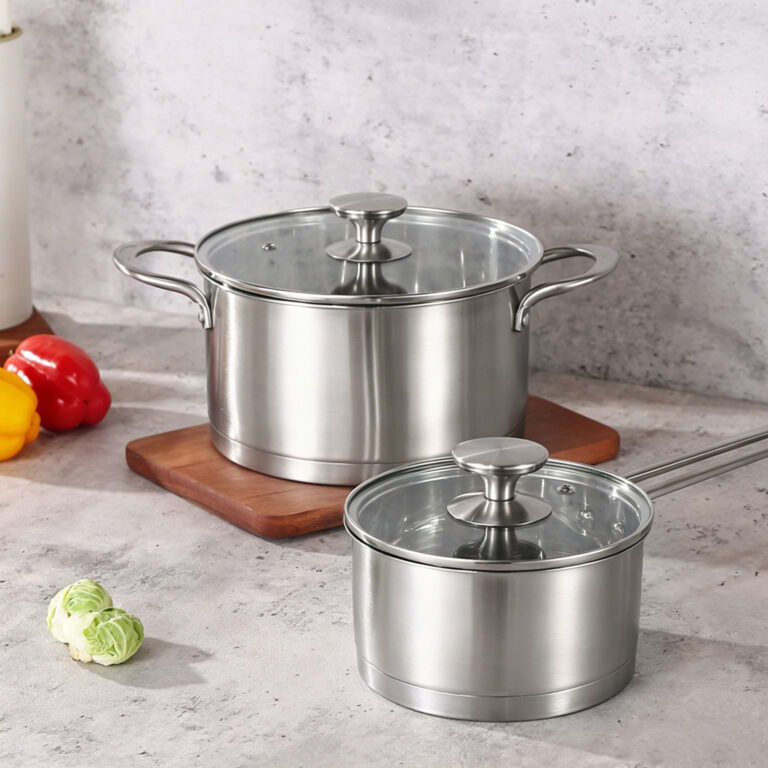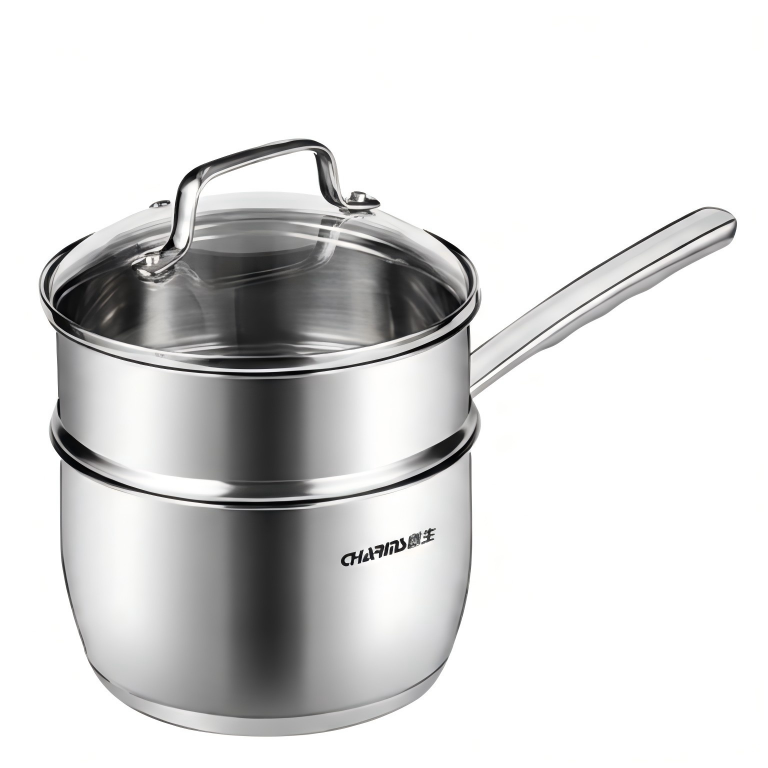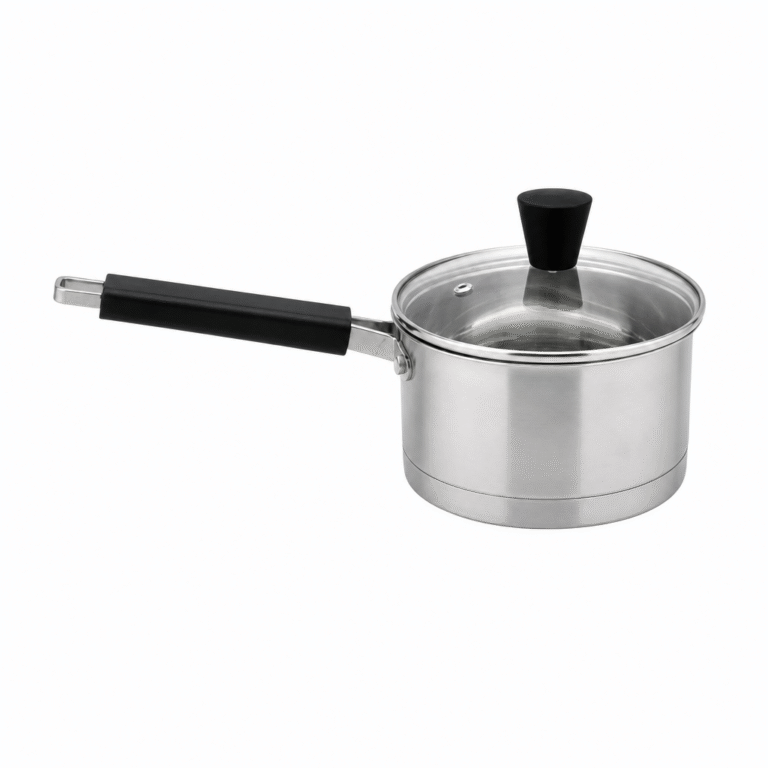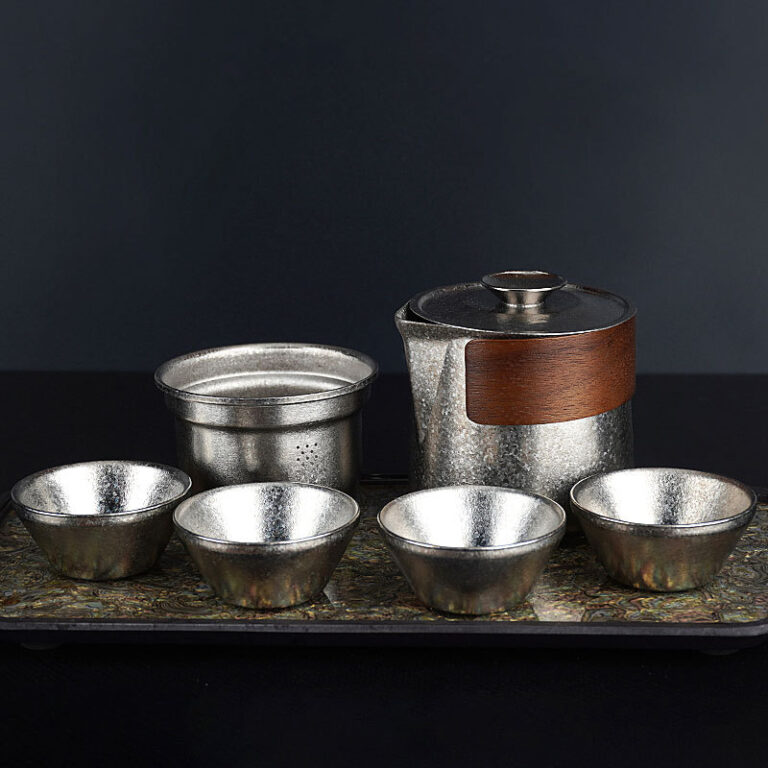


Stainless steel cookware contains zero PFAS, zero PTFE, and zero synthetic coatings — making it one of the most verifiably non-toxic options available. But the “PFOA-free” label on most non-stick pans is misleading: PTFE, the coating itself, is technically a PFAS compound. This article breaks down the real chemistry, compares stainless steel against PFAS-coated non-stick and ceramic alternatives across safety, performance, and durability, and explains what to look for when buying truly non-toxic cookware. Includes practical technique tips for cooking on stainless without food sticking.
The “PFOA-Free” Label Is Not What You Think
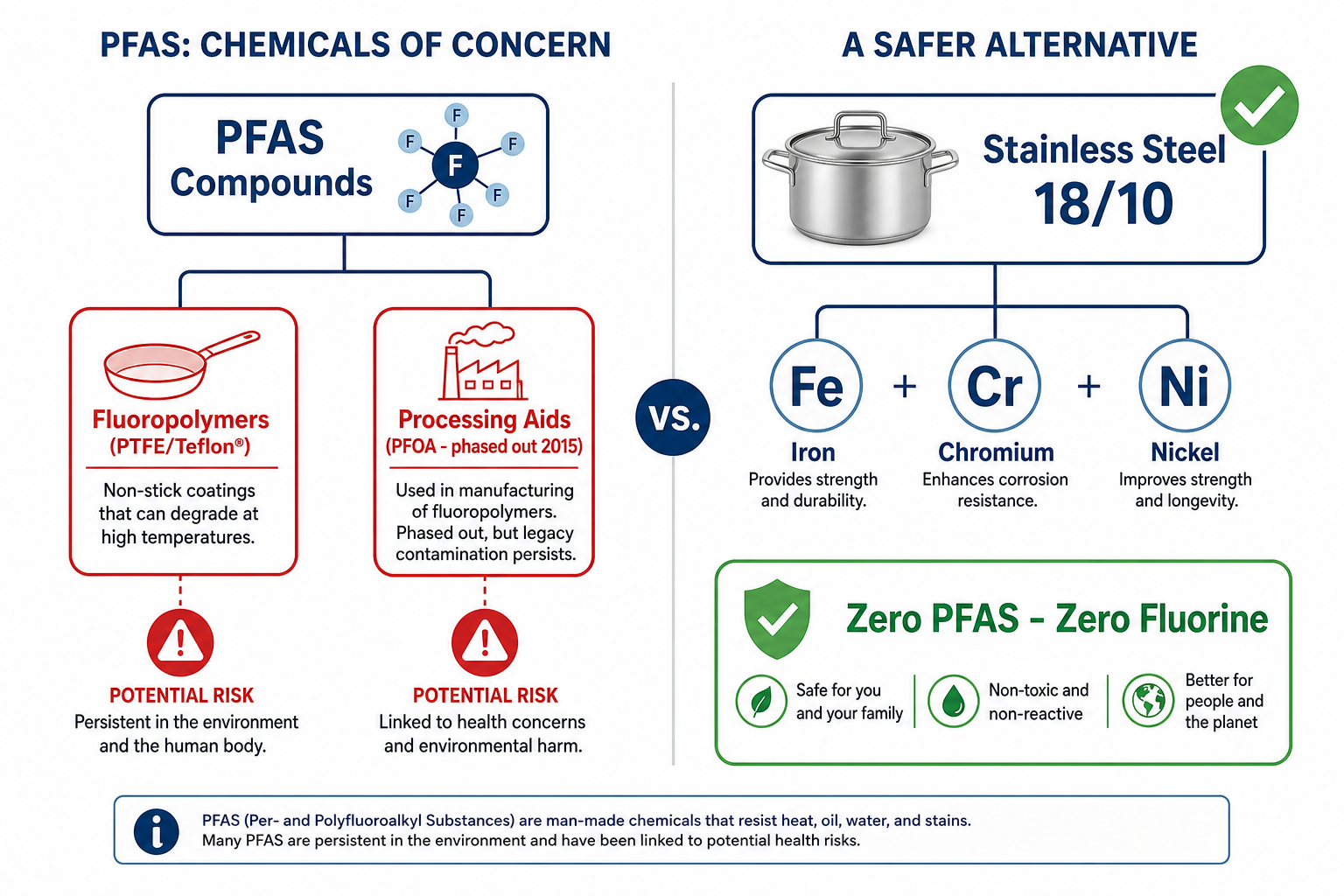
The core issue: “PFOA-free” does not mean PFAS-free. Most consumers don’t realize this, and most cookware brands don’t go out of their way to clarify it.
PFAS stands for per- and polyfluoroalkyl substances — a family of more than 9,000 synthetic chemicals (per the EPA’s CompTox database) that share a carbon-fluorine backbone. The EPA considers many of them persistent environmental and health hazards, linking cumulative exposure to increased cancer risk (particularly in the digestive, endocrine, and respiratory systems), hormone disruption, and immune function changes. In April 2024, the EPA finalized the first-ever federal drinking water standards specifically targeting PFAS compounds.
PFOA (perfluorooctanoic acid) was the processing chemical used to manufacture PTFE-based coatings like Teflon. It was genuinely toxic and was phased out under the EPA’s 2010/2015 PFOA Stewardship Program, with major manufacturers completing the phase-out by 2015. That’s the “PFOA-free” claim you see on packaging.
The problem: PTFE itself — the coating that makes pans non-stick — is a fluoropolymer and technically a PFAS. The NRDC and independent researchers including the Eco Center have confirmed this classification. When you buy a “PFOA-free non-stick pan,” you’re buying a pan still coated in a PFAS plastic. The most problematic processing chemical is gone, but the fluorine-based coating remains.
Stainless steel has none of this complexity. It’s an iron-chromium alloy. No fluorine. No synthetic coatings. No PFAS of any kind.
Stainless Steel vs. PFAS Non-Stick: The Real Comparison
Stainless steel wins decisively on safety and longevity; PFAS non-stick wins on ease of use — until the coating degrades.
Here’s how the two materials compare across every dimension that matters to daily home cooking:
| Category | Stainless Steel (18/10) | PFAS Non-Stick (PTFE) |
|---|---|---|
| PFAS content | None | Yes — PTFE is a fluoropolymer PFAS |
| Coating durability | No coating; lasts decades | Coating degrades in 2–5 years |
| Fume risk | None | Fumes at 260°C (500°F); dangerous to birds |
| Scratch resistance | Excellent; metal utensils safe | Poor; requires silicone/wood utensils |
| Heat capacity | High (excellent for searing) | Low-medium (better at gentle heat) |
| Oven safety | Up to 500°C+ depending on handles | Usually limited to 200–230°C |
| Dishwasher safe | Yes | Often not recommended |
| Upfront cost | Higher ($80–$300+ for quality sets) | Lower ($20–$100) |
| Lifetime cost | Lower (10–30+ year lifespan) | Higher (replacement every few years) |
| Learning curve | Yes — requires preheating technique | Minimal |
| Nickel/chromium content | Yes (trace leaching possible) | No metal leaching concern |
The lifetime cost comparison is worth pausing on. A quality 18/10 stainless set from a brand like All-Clad or Made In can last 20–30 years with basic care. A non-stick pan typically needs replacement every 2–5 years — both because the coating degrades and because scratched or chipped non-stick surfaces are a safety concern. Over a 20-year period, you might buy 5–10 non-stick pans for every one stainless set.
The fume risk deserves specific attention. PTFE coatings begin breaking down at approximately 260°C (500°F) — a temperature easily reached when preheating an empty pan or searing at high heat. The German Federal Institute for Risk Assessment (BfR) confirms this thermal degradation threshold. The fumes are serious enough that they’re known to be fatal to pet birds within minutes of exposure, and associated with “polymer fume fever” in humans at sustained high-heat exposure.
Is Stainless Steel Completely Risk-Free? The Nickel Question
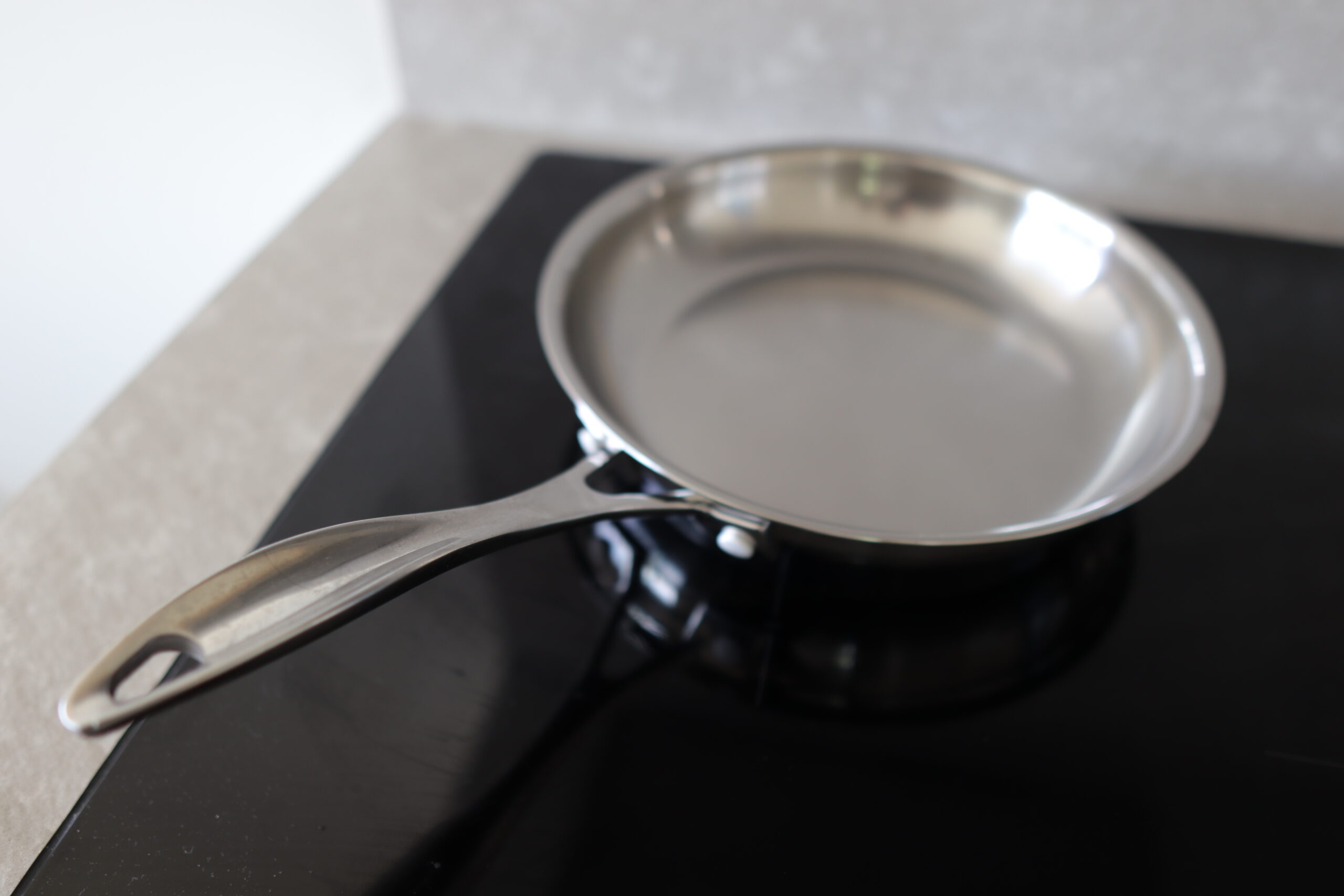
Stainless steel is safe for almost everyone — with one exception worth knowing: people with nickel allergies.
Quality 18/10 stainless steel (grade 316) contains approximately 16–18% chromium, 10–14% nickel, and 2–3% molybdenum. The “18/10” designation in cookware marketing reflects approximately 18% chromium and 10% nickel content. Both elements can leach into food in trace amounts, particularly when cooking acidic foods (tomatoes, citrus, vinegar) or when pans are new.
A 2013 study published in the Journal of Agricultural and Food Chemistry (Kamerud et al., Oregon State University) found that stainless steel pots leached approximately 88 μg of nickel and 86 μg of chromium per 126g serving of tomato sauce — measured at the tenth cooking cycle, when leaching had already begun to stabilize from the higher levels seen in the first few uses. That sounds alarming until you consider context: the daily adequate intake for nickel is around 25–35 μg/day, but the leaching drops sharply as the pan develops a stable oxide layer — typically after 6–8 cooking cycles.
A 2016 clinical study published in PubMed (PMID 27804135) concluded: “Under common conditions, the use of 18/10 stainless steel pots is considered safe for the majority of nickel-allergic and chromium-allergic subjects.”
For the small percentage of people with diagnosed nickel hypersensitivity, stainless steel cookware can occasionally trigger reactions. This is a genuine caveat that most pro-stainless articles skip. If you know you react to nickel jewelry or belt buckles, it’s worth discussing with a physician before committing to stainless steel as your primary cookware.
For everyone else, the leaching profile of stainless steel — trace metals that your body processes normally — is categorically different from the persistent organic fluorine compounds in PFAS coatings that bioaccumulate in tissues over years.
What About Ceramic Non-Stick? PFAS-Free Doesn’t Mean Problem-Free
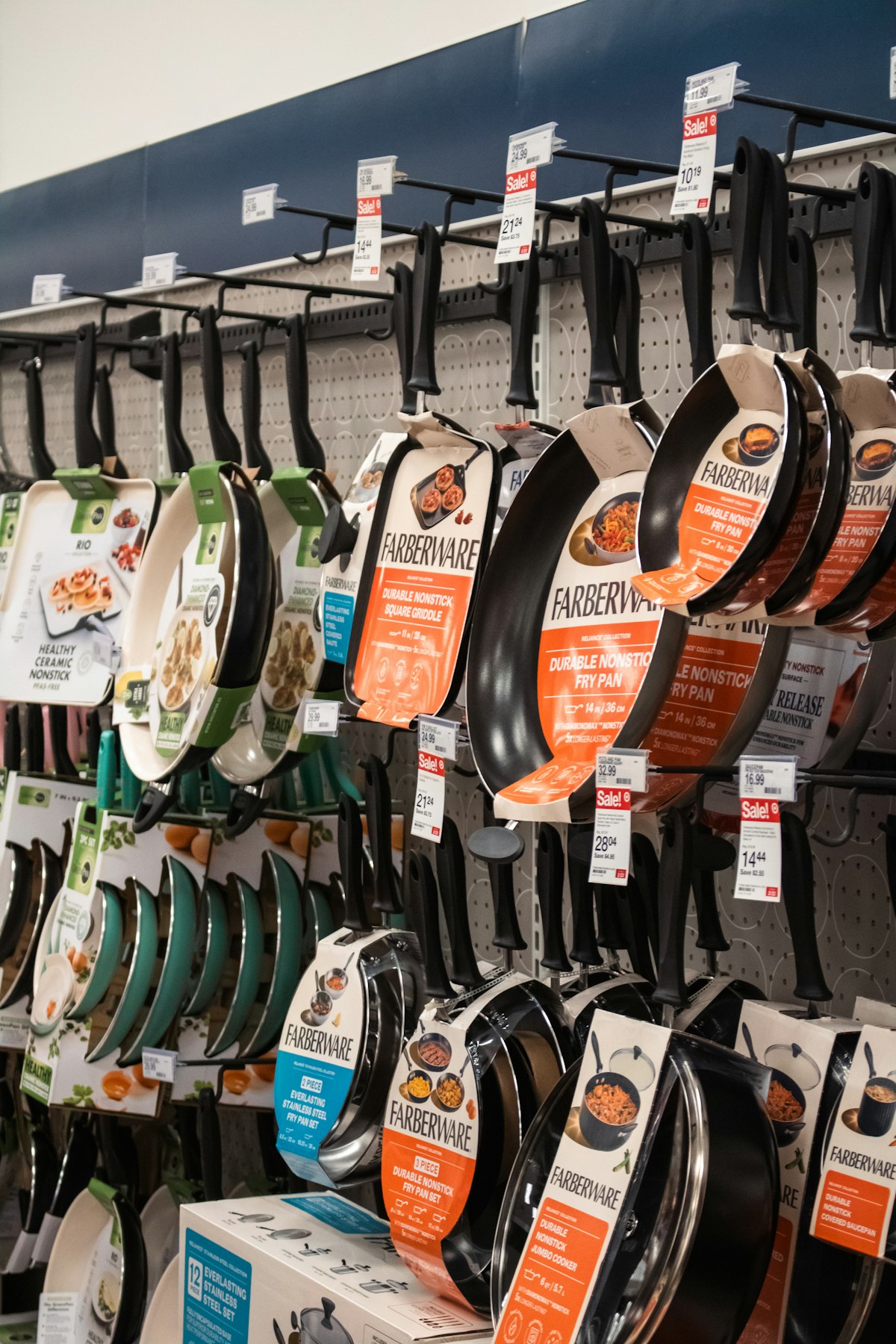
Ceramic non-stick is genuinely PFAS-free — but “PFAS-free” isn’t the same as “durable.”
Ceramic non-stick coatings use silicon dioxide (silica) particles derived from sand, bonded to an aluminum base through a high-heat curing process. There is no PTFE, no PFOA, no PFAS chemistry involved. Brands like Caraway and GreenPan have built successful product lines on this technology, and independent testing by Consumer Reports confirms their PFAS-free claims.
The honest limitation: ceramic coatings degrade. According to Serious Eats’ 2025 testing, ceramic pans are slightly more heat-resistant than PTFE non-sticks, but their non-stick performance degrades noticeably within 1–2 years under regular home use — faster if exposed to high heat or metal utensils. Consumer Reports has also documented that “non-toxic” claims on cookware labels aren’t always fully substantiated, and that the long-term composition of ceramic coatings under repeated thermal cycling isn’t yet as well-studied as stainless steel.
Where ceramic non-stick makes sense: you need true non-stick performance (eggs, delicate fish) and are willing to replace the pan every 2–3 years. Where stainless steel wins: you want a lifetime investment with a verified safety profile backed by decades of food-service use.
The two aren’t mutually exclusive. Many practical kitchens keep one quality stainless multi-ply sauté pan for searing and sauce-making, plus one ceramic non-stick pan specifically for eggs — and replace the ceramic as needed without guilt.
Making Stainless Steel Actually Work: The Preheating Method
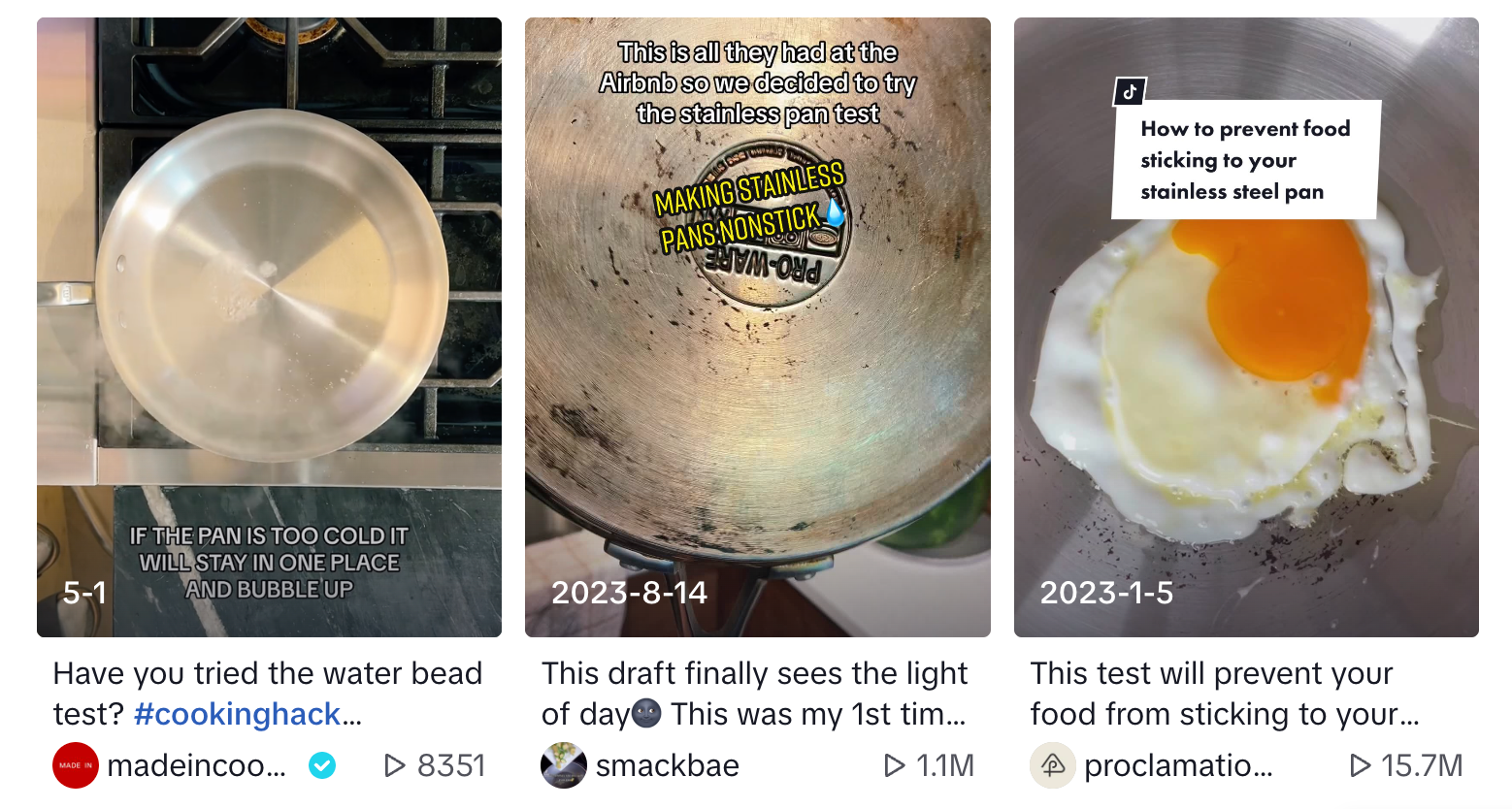
The most common reason people give up on stainless steel is food sticking — and it’s almost always a preheating problem, not a material problem.
After testing stainless cookware across different stovetop conditions, the technique that consistently prevents sticking is what professional cooks call the “mercury ball test”:
- Place the empty pan over medium heat for 2–3 minutes.
- Add a few drops of water. If they skitter across the surface in tight, rolling balls rather than evaporating on contact, the pan is at the right temperature.
- Add your oil or fat, swirl to coat, and add food immediately.
Why this works: Stainless steel has microscopic pores that expand and contract with temperature. Cold food added to an insufficiently preheated pan contacts metal at the pore level, creating a mechanical bond. A properly preheated pan causes the pores to expand uniformly, so proteins like eggs and chicken actually release naturally once a crust forms — typically 2–3 minutes for proteins.
Other practical notes from real use:
- Dry your food. Wet chicken or fish will steam instead of sear and stick guaranteed.
- Don’t overcrowd the pan. More than 70% full drops pan temperature and causes steaming.
- Let the fond happen. Brown bits on the bottom of a stainless pan aren’t failure — they’re flavor. Deglaze with stock or wine and they lift perfectly.
This technique takes 3–5 cooking sessions to feel natural. After that, stainless steel is no more frustrating than any other surface — and considerably more versatile.
Other PFAS-Free Cookware Worth Knowing

Stainless steel is the most versatile PFAS-free option, but it’s not the only one. Three others deserve mention:
Cast iron is completely PFAS-free, handles temperatures that would destroy any coated pan, and improves with age. The tradeoffs: it’s heavy (a standard 12-inch Lodge skillet weighs approximately 3.6 kg / 8 lbs), reacts with acidic foods if under-seasoned, and requires hand-washing plus drying to prevent rust. For people who want a permanent, zero-coating pan with genuine non-stick properties once seasoned, cast iron is an excellent complement to stainless.
Carbon steel is essentially lighter cast iron — similar seasoning-based non-stick properties, better heat responsiveness, roughly half the weight. It’s standard equipment in professional kitchens across Europe. The maintenance learning curve is comparable to cast iron, but the cooking experience is closer to non-stick once properly conditioned.
Enameled cast iron (Le Creuset, Staub) is PFAS-free with an inert glass-ceramic enamel surface that needs no seasoning and handles acidic foods safely. It’s the heaviest and most expensive option but essentially lifetime equipment. Not suitable for searing at very high heat (enamel can crack under thermal shock), but exceptional for braises, soups, and oven work.
How to Verify That Cookware Is Truly PFAS-Free
The label “PFOA-free” is insufficient. Here’s what to actually look for.
Certification to look for:
- NSF 537 — NSF International launched this PFAS-free certification guideline specifically for food equipment materials and nonfood compounds. It’s the most rigorous third-party PFAS verification currently available for cookware.
- GreenScreen Certified — The Center for Environmental Health’s standard covers a broad range of chemicals of concern, not just PFAS.
Regulatory context: As of January 1, 2025, Minnesota’s Amara’s Law prohibits the sale of products containing intentionally added PFAS in certain categories. About 25 states now have some form of PFAS restriction legislation. The regulatory direction is clear — PFAS use in consumer products is contracting, not expanding.
Questions to ask manufacturers:
- Does your coating contain any fluoropolymers or fluorocarbon compounds? (Not just “is it PFOA-free?”)
- Has the coating been independently tested by a third party?
- Do you hold NSF 537 or GreenScreen certification?
For stainless steel, cast iron, and carbon steel — no such questions are necessary. These materials have no coatings to test. The food contact surface is the metal itself, and the safety profiles have been documented for decades in commercial food service environments under FDA food contact regulations.
Frequently Asked Questions
Is stainless steel cookware PFAS-free?
Yes. Stainless steel is an iron-chromium alloy with no fluorine-based compounds, coatings, or PFAS chemistry of any kind. It is one of the most thoroughly verified non-toxic cookware materials available.
What’s the difference between PFOA-free and PFAS-free?
PFOA is one specific chemical formerly used to manufacture PTFE (Teflon) coatings. It was largely phased out in the US by 2015. However, PTFE itself is a fluoropolymer classified as a PFAS compound. A pan labeled “PFOA-free” can still contain PTFE and is therefore not PFAS-free. Look specifically for “PTFE-free” or “fluoropolymer-free” claims, backed by NSF 537 certification.
Does stainless steel leach chemicals into food?
Trace amounts of nickel and chromium can leach from stainless steel, particularly during early use with acidic foods. This typically drops to negligible levels after 6–8 uses as a stable oxide layer forms. Clinical research (PubMed 27804135) confirms that 18/10 stainless steel is safe for the vast majority of people, including most with nickel sensitivity.
Is ceramic non-stick truly PFAS-free?
Yes — reputable ceramic non-stick coatings (Caraway, GreenPan, etc.) contain no PTFE or PFAS. The limitation is durability: ceramic coatings lose their non-stick properties faster than stainless steel maintains its structural integrity. Expect to replace a ceramic pan every 2–3 years under regular use.
What is the safest cookware material overall?
For long-term, verified safety with the most supporting evidence: stainless steel, cast iron, carbon steel, and enameled cast iron. All are PFAS-free, have decades of documented safe use in commercial food service, and carry no coating degradation risk. Among these, stainless steel offers the best balance of versatility, ease of care, and induction compatibility.
At what temperature does PTFE non-stick become dangerous?
PTFE coatings begin breaking down at approximately 260°C (500°F). Standard stovetop searing temperatures regularly exceed this. Fumes from overheated PTFE are confirmed to be fatal to pet birds and linked to polymer fume fever in humans at sustained high-heat exposure.
Summary
If you’re replacing non-stick cookware because of PFAS concerns, stainless steel is the most defensible long-term choice — not because it’s perfect, but because its safety profile is thoroughly documented, its risks are well-understood and manageable, and it requires no coatings that degrade over time.
The ceramic non-stick category is a legitimate PFAS-free option for specific tasks (eggs, delicate proteins) where you accept a 2–3 year replacement cycle. Cast iron and carbon steel are excellent for high-heat work and reward the cooks willing to maintain them.
The single most important practical step: learn the preheating technique. It transforms stainless steel from frustrating to highly functional in a handful of cooking sessions. The mercury ball test takes 30 seconds to check and eliminates 90% of the sticking complaints I’ve seen from home cooks who “gave up” on stainless.
On the labeling front: don’t stop at “PFOA-free.” Ask for “PTFE-free,” look for NSF 537 certification, and treat any pan with a slippery synthetic coating as potentially PFAS-containing until proven otherwise.