
China supplies roughly 70% of the world’s cookware exports, with key manufacturing clusters in Guangdong and Zhejiang. Sourcing direct from Chinese factories can cut your COGS by 40–60% versus domestic supply, but only if you verify steel grades, secure the right certifications (FDA, LFGB), and account for current US import duties running approximately 27% for most cookware lines. This guide covers supplier vetting, quality control, compliance documentation, lead time planning, and landed cost math — everything you need to build a profitable cookware sourcing program, whether you’re importing your first container or scaling a private-label brand.
Why China Still Dominates Global Cookware Production
China accounts for roughly 65–75% of global cookware exports by volume. For US importers specifically, Chinese suppliers captured 81.2% of all stainless steel kitchen article imports (HS 7323) in 2024, representing a $3.14 billion trade flow (down from a 2021 peak of $3.5 billion, but recovering since a 2023 trough of $2.53 billion).
The reasons aren’t just labor cost. The manufacturing clusters in Guangdong and Zhejiang have built supply chains over 30+ years that make deep vertical integration possible. In Chaozhou (Guangdong), factories that specialize in stainless steel cookware sit within 30 miles of steel mills, stamping facilities, handle injection molders, and polishing shops. A competitive factory in Yongkang (Zhejiang) can source non-stick coating, aluminum blanks, and riveting hardware from suppliers on the same industrial estate.
That supply chain density translates to cost and speed advantages that other low-cost manufacturing regions — Vietnam, India, Mexico — cannot yet replicate at scale for this product category.
What’s changing in 2026: The current US duty stack on most stainless steel cookware (HTS 7323.93) runs approximately MFN 2% + Section 301 25% = ~27%. A short-lived Section 122 global surcharge added 10% from February to July 2026 before expiring on July 24, 2026 — so landed cost calculations should use the current ~27% baseline, not the higher figure that briefly applied earlier this year. EU importers face fewer duty headwinds on non-ceramic lines, though a new 79% anti-dumping duty on Chinese ceramic tableware and kitchenware (EU Implementing Regulation 2025/1981, October 2025) has effectively shut down that sub-category for EU-bound ceramic lines sourced from non-individually-rated Chinese factories.
China’s Cookware Manufacturing Map: Where to Source What
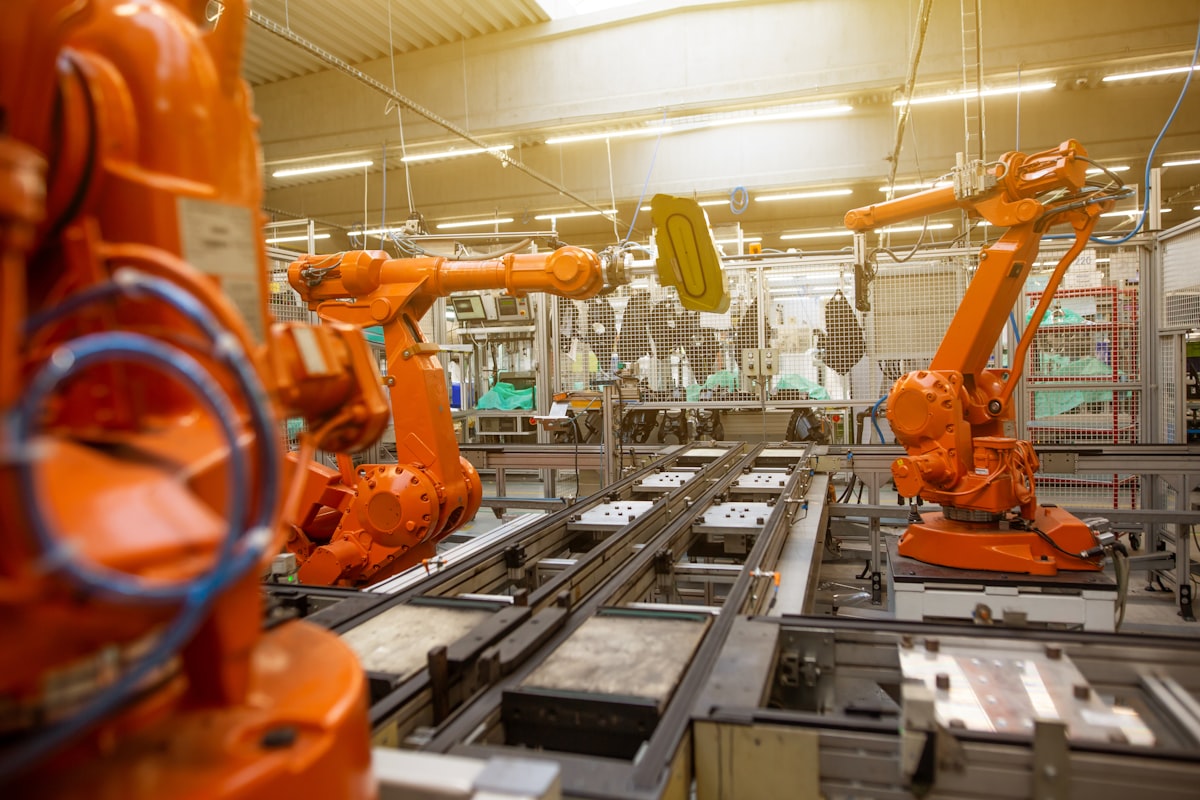
Not all cookware comes from the same place. Sourcing a full product range typically means drawing from multiple regional clusters.
| Region | Province | Specialization |
|---|---|---|
| Chaozhou / Jieyang | Guangdong | Stainless steel cookware (dense factory cluster; fully vertical from raw steel to finished goods) |
| Yangjiang | Guangdong | Knives, scissors, kitchen gadgets; ~72% of top-tier gadget suppliers |
| Foshan / Jiangmen | Guangdong | Broad cookware and kitchen hardware; HK port proximity |
| Yongkang (Jinhua) | Zhejiang | Non-stick aluminum pans, pressure cookers, thermal vessels |
| Ningbo | Zhejiang | Broad kitchenware; world-class container port; strong Western compliance infrastructure |
| Hebei Province | Hebei | Cast iron cookware (underreported; significant volume) |
| Jingdezhen / Liling | Jiangxi / Hunan | Fine ceramics and stoneware |
Practical implication: A supplier claiming they manufacture stainless sets, cast iron, non-stick pans, and ceramic bakeware under one roof in Zhejiang is almost certainly a trading company consolidating from multiple factories. This matters when you’re writing quality specs — each material requires different inspection protocols.
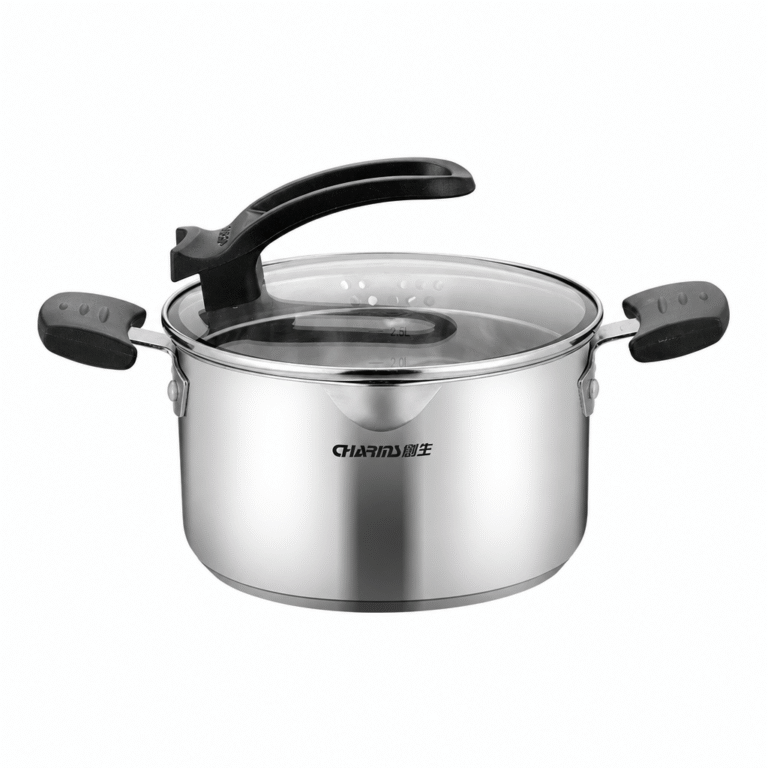
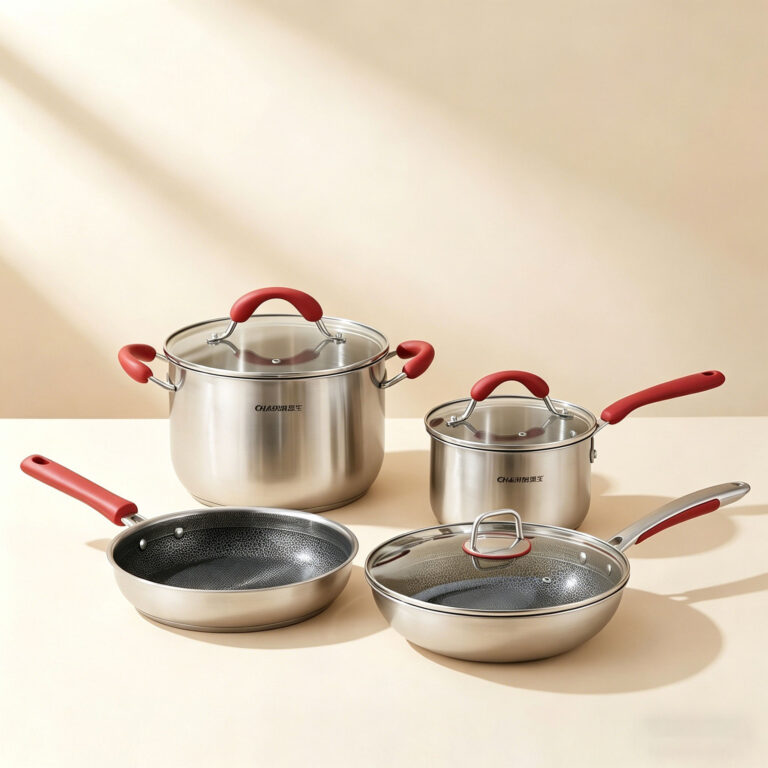
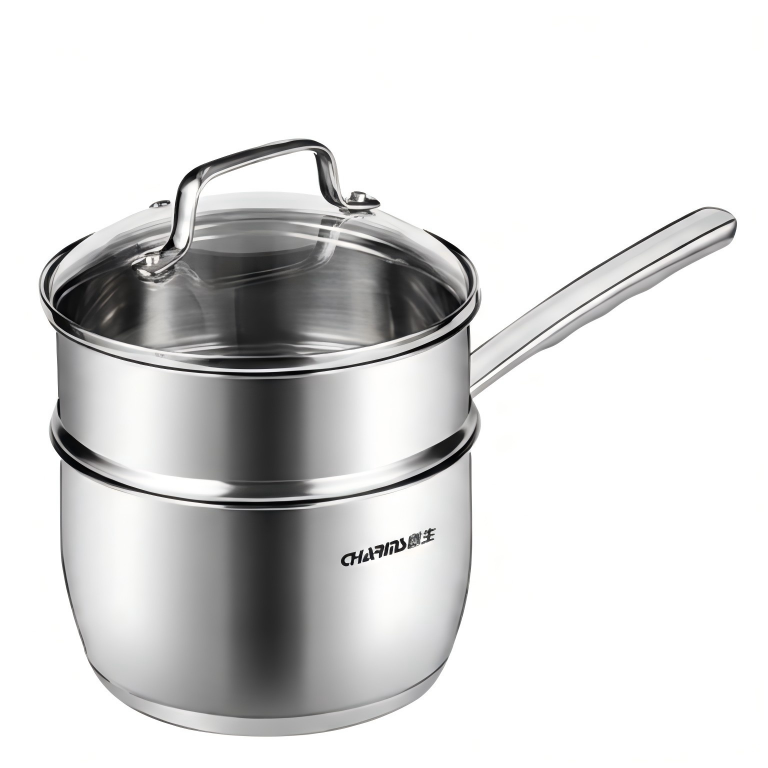
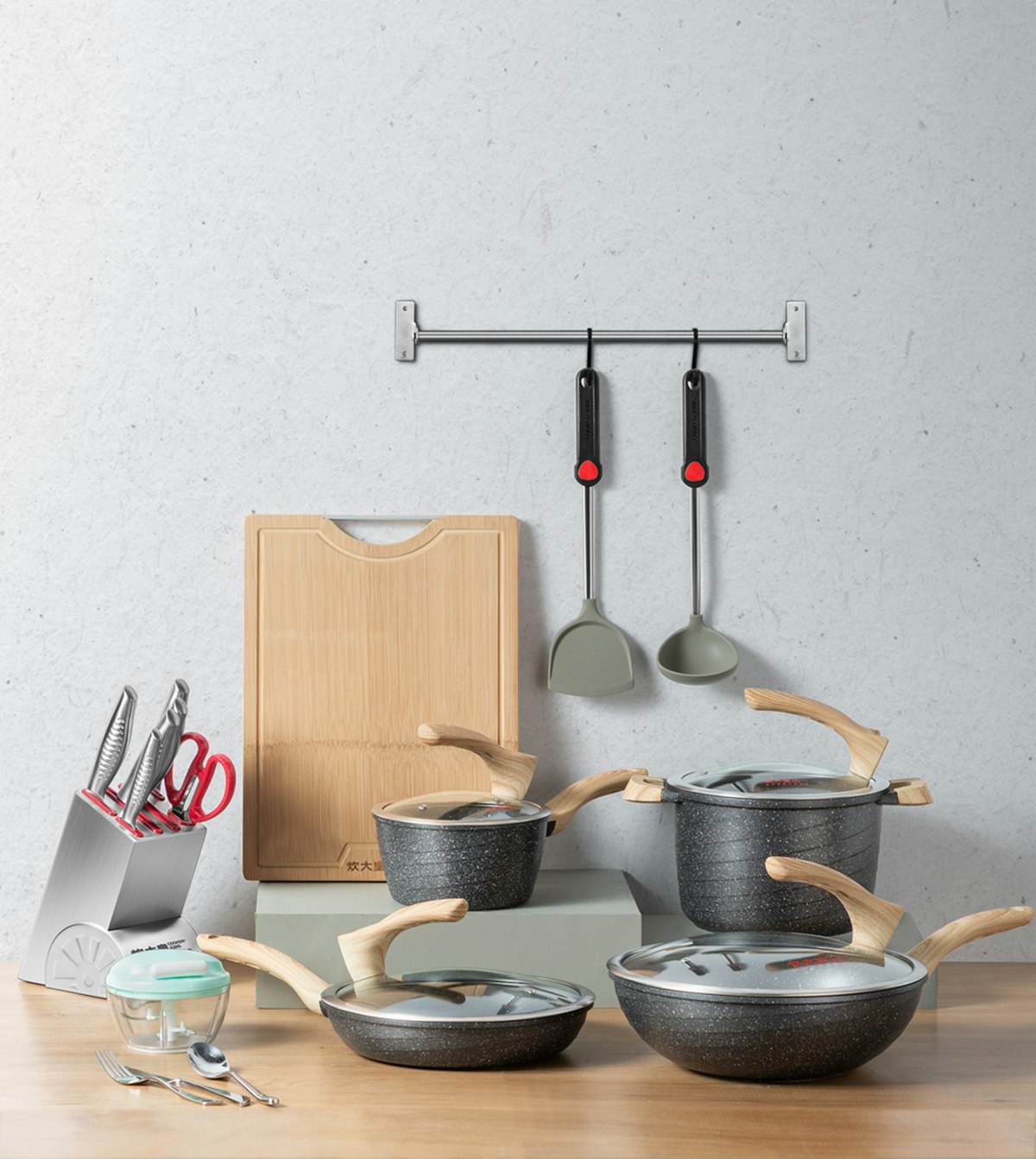
CharmsCook, for example, operates its stainless steel and non-stick lines from Guangdong, where the supplier density makes quality control faster and tooling turnarounds more predictable. That regional focus shows in lead time consistency.
Factory vs. Trading Company: How to Tell the Difference
The single most important vetting step many buyers skip. Estimates put 30–50% of Alibaba “manufacturer” listings as trading companies. This matters because:
- Trading companies add a margin layer (typically 15–25%) without the ability to customize specs or fix production issues
- If your QC inspection finds a problem, a trading company has limited leverage over the actual factory
- Lead times are longer because the trading company adds a communication buffer
How to verify:
- Request the factory’s business license (营业执照). A manufacturer’s license will list its registered business scope as “manufacturing” (制造). A trading company will list “trading/wholesale” (贸易/批发). The document is issued by the local Administration for Market Regulation.
- Check if the listed address is an industrial/factory zone. Use Google Maps satellite view — you’re looking for warehouse/factory buildings, not a commercial office block.
- Ask for a video factory tour. Legitimate factories respond immediately. Trading companies often delay or offer stock footage.
- Request a sample with the mold number stamped. Factories own their molds. If the mold number matches the factory’s own tooling records, you have a direct manufacturer.
- Cross-check on Made-in-China.com and the factory’s own website. Chinese factory websites (even crude ones) typically show production equipment photos, employee counts, and factory floor layouts.
- For large orders, commission an independent factory audit. Companies like SGS, Bureau Veritas, and Intertek charge $300–$800 per audit. On a $50,000+ order, this is non-negotiable.
OEM vs. ODM: Choosing Your Development Path
| Model | What It Means | Best For |
|---|---|---|
| OEM (Original Equipment Manufacturer) | You supply the design; factory manufactures to spec | Established brands with proprietary product designs |
| ODM (Original Design Manufacturer) | Factory has existing designs; you add your branding | First-time importers or fast-launch strategies |
| Private Label | ODM with your logo on factory stock items | Lowest barrier; fastest to market; least differentiated |
Most first-time importers start with ODM or private label, then move toward OEM as they develop proprietary designs. The ODM path is faster (no tooling lead time) and less risky for small initial runs. The OEM path delivers genuine product differentiation but requires investment in tooling ($2,000–$15,000 depending on complexity) and a longer development cycle.
The Stainless Steel Grade Problem: 201 vs. 304
This is where buyers most commonly get burned. Both 201 and 304 stainless steel look identical and feel similar to the touch. But the difference matters:
| Property | 304 Stainless | 201 Stainless |
|---|---|---|
| Nickel content | 8–10.5% | 3.5–5.5% |
| Chromium content | 18–20% | 16–18% |
| Corrosion resistance | Excellent | Moderate |
| Food contact compliance | Standard for all markets | Requires migration testing — may fail under acidic conditions |
| Price | Higher | 15–25% lower |
| Food contact designation | Standard for cookware | Gray area for long-term use |
Under EU food contact materials regulations, cookware that causes excessive nickel migration into food — particularly under acidic conditions from tomato sauces, citrus-based marinades, and similar preparations — is non-compliant. While 201 steel contains more nickel than many buyers assume (3.5–5.5% per ASTM A240, versus 8–10.5% for 304), its lower chromium content and overall alloy balance results in worse corrosion resistance and higher potential for migration under real cooking conditions.
How to protect yourself:
- Specify 304 / 18-8 stainless steel explicitly in your purchase order. Use the EN 10088 or ASTM A240 designation.
- Request the mill certificate (material test report / MTR) from the steel coil manufacturer. This is the document that came with the raw steel, not a certificate the cookware factory generates themselves.
- For large orders, send a representative sample to an accredited lab (SGS, Intertek) for XRF spectrometry testing — this directly reads elemental composition. Cost: $50–$150 per sample.
- For the highest certainty, add a clause to your purchase agreement: “Supplier to provide mill certificates from steel source for each production batch. Buyer reserves right to independent XRF testing. Failed steel grade is grounds for full refund.”
Certifications: What You Actually Need by Market
The certification landscape is confusing because different markets have different requirements, and some suppliers claim certifications that don’t mean what buyers think.
United States:
- FDA food contact compliance: Not a formal certification — it’s a compliance claim backed by migration testing and formulation documentation. The key verification step is checking the supplier’s FDA Facility Establishment Identifier (FEI number) in the FDA’s public database. If they claim FDA compliance but can’t provide an FEI number or test reports from an accredited US lab, the claim is unverified.
- California Proposition 65: If selling in California, cookware must comply with Prop 65 heavy metal limits (lead, cadmium). This requires separate testing from standard FDA compliance.
- Note on CE marking: CE marking does not apply to cookware. If a supplier lists CE as a cookware certification, they either misunderstand their own products or are adding credibility signals that don’t exist.
European Union:
- EU Food Contact Materials Regulation (EC 1935/2004): The framework regulation. All cookware sold in the EU must be accompanied by a Declaration of Compliance (DoC) stating compliance with applicable materials-specific measures.
- LFGB (Germany’s national food law): Stricter than FDA baseline. Requires migration testing and sensory testing (no taste, odor, or color transfer to food). This is the most demanding consumer-market certification for cookware sold in German-speaking markets and increasingly adopted as a premium signal in broader EU commerce.
- BPA ban (EU Regulation 2024/3190, effective January 20, 2025): BPA is now prohibited in food contact materials in the EU. Cookware with plastic lids, silicone-coated handles, or plastic accessories must be verified BPA-free.
- PFAS/PTFE compliance (incoming EU restriction, March 2026 backed): Non-stick coatings are under regulatory pressure. Current safe position: require PFOA-free PTFE as minimum. Future-proof position: require PFAS-free coatings (ceramic coating alternatives are available from Chinese factories and are not affected by PTFE restrictions).
- Ceramic cookware anti-dumping duty: Under EU Implementing Regulation 2025/1981 (October 2025), a 79% countrywide anti-dumping duty applies to Chinese ceramic tableware and kitchenware for factories that have not received individual duty rates. If you import ceramic lines to the EU, verify your specific factory’s individual rate in the EU’s TARIC database before placing any order.
Across markets:
- ISO 9001: A quality management system certification for the factory, not a product safety cert. Useful as a supplier screening filter.
- SGS/Intertek/Bureau Veritas reports: These are accredited third-party lab reports. When a supplier says “we have SGS certification,” ask to see the actual test report — it should specify which standard was tested, what product it covers, and when the test was conducted.
Quality Control: The Pre-Shipment Inspection Protocol
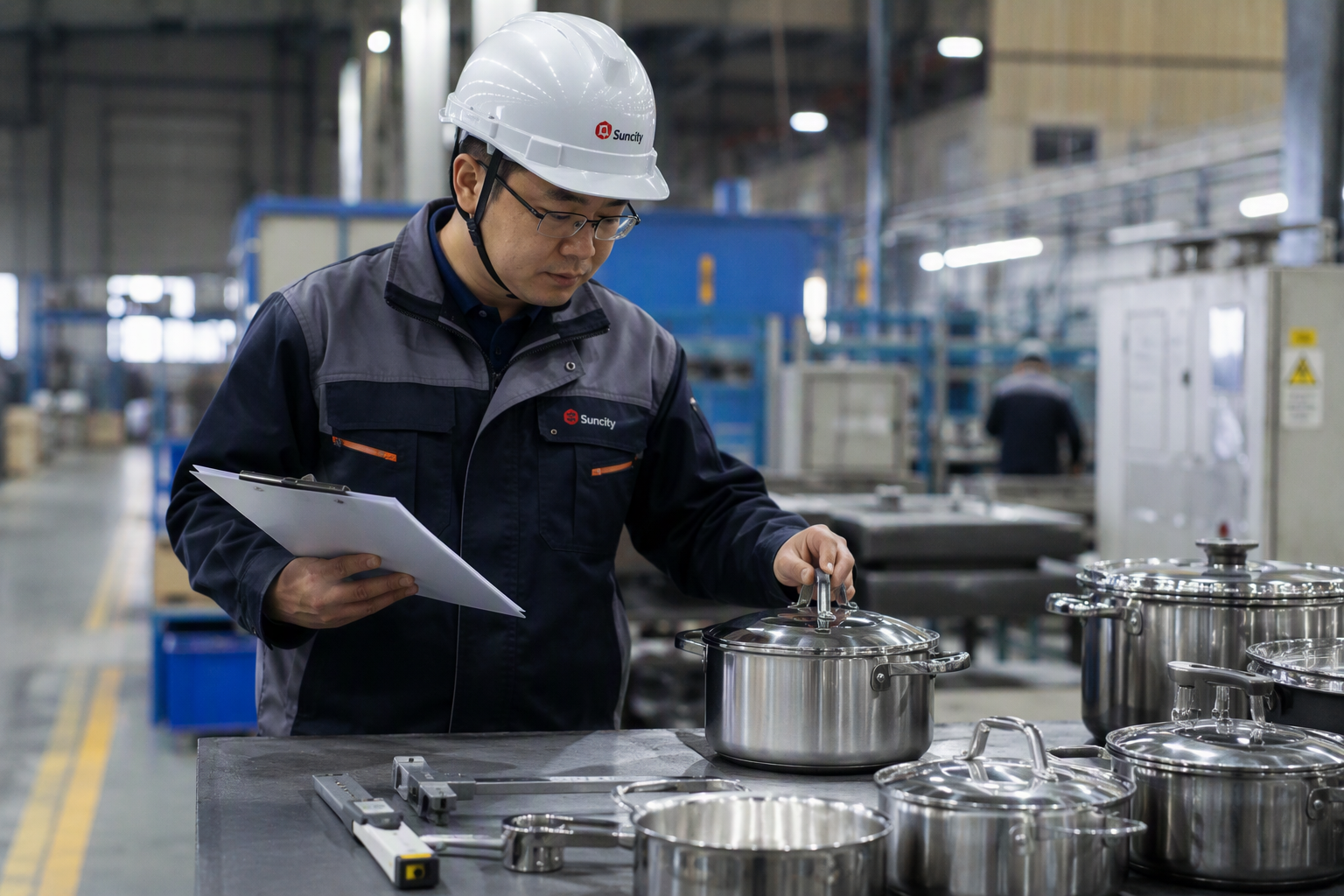
The gap between sample quality and production quality is the most common source of importer disappointment. Factories show their best work at the sample stage. A production run of 2,000 units introduces different variables: new machine operators, batch variation in materials, speed pressure from the factory floor.
The three-stage QC structure that works:
Stage 1 — Sample evaluation (before production):
- Request 3 production-grade samples (not showroom samples) per SKU
- Check handle attachment method (riveted vs. screwed — riveted is stronger)
- Check lid fit and handle heat resistance
- Check surface finish under 10x loupe for pitting, microcracks, or inconsistent coating
- Confirm weight matches stated specifications (±5% tolerance)
Stage 2 — During production (DUPRO inspection):
- Commission an independent third-party DUPRO (During Production) inspection at 50–60% production completion
- Inspect for batch consistency, coating coverage, packaging integrity
- SGS, Bureau Veritas, and Intertek all offer this service for $200–$350 per inspection day
Stage 3 — Pre-Shipment Inspection (PSI):
- Non-negotiable for first orders and new product lines
- The PSI uses AQL (Acceptable Quality Level) sampling: AQL 2.5 for major defects, AQL 4.0 for minor defects
- Check packing list accuracy, carton markings, and net weights before the container is sealed
- Cost: $250–$500 for a standard inspection; SGS/Intertek both offer same-day reports
Budget for defect buffer on new tooling: 3–8% of first production run typically contains defects requiring rework or replacement. Factor this into your unit economics from the start.
Landed Cost Math: What You’re Really Paying
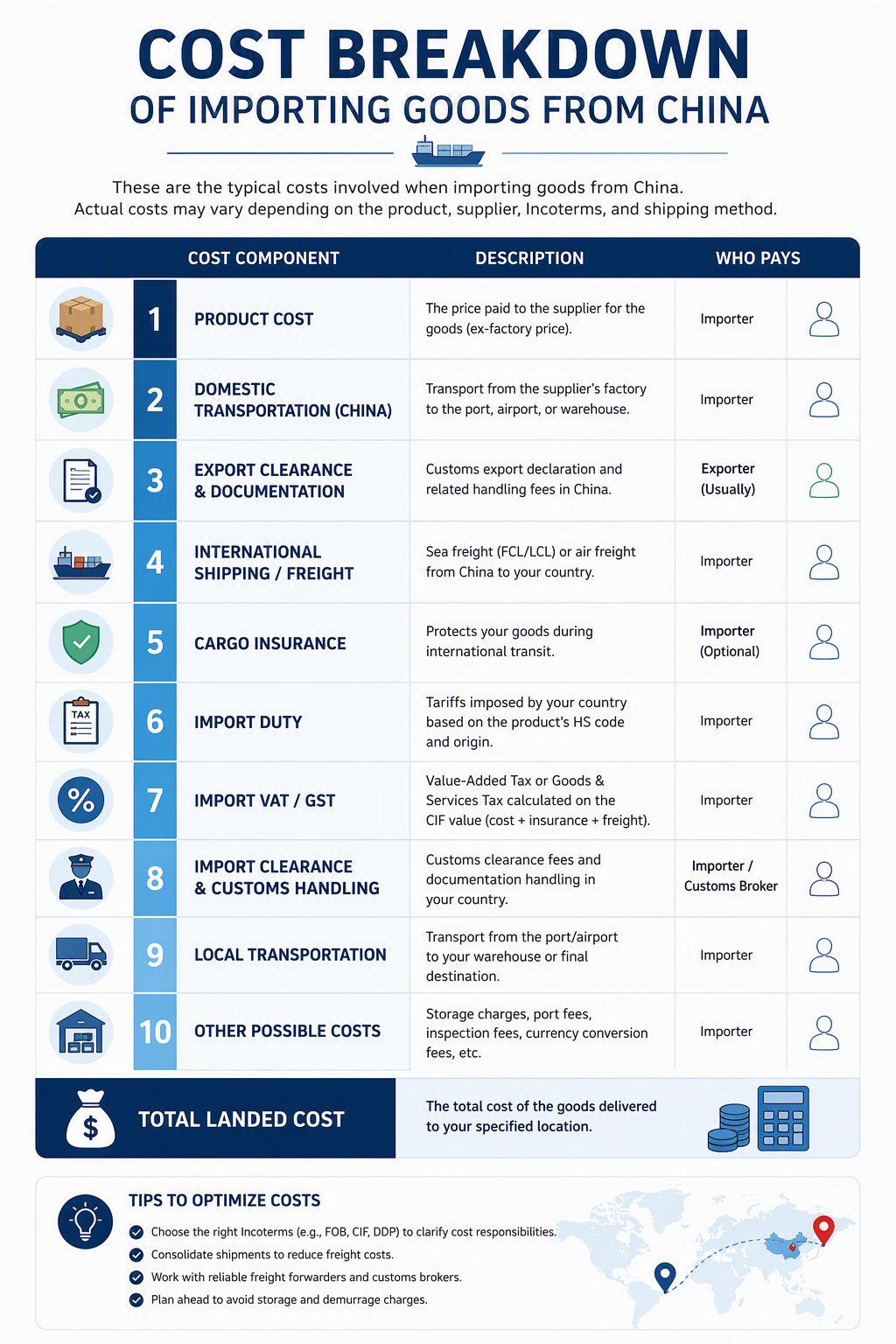
The FOB price on a Alibaba listing is not your cost. Here’s what a real landed cost calculation looks like for a US importer ordering 1,000 stainless steel cookware sets from a Guangdong factory (FOB Shenzhen: $26.50/set):
| Cost Component | Per Unit | Total (1,000 sets) |
|---|---|---|
| FOB factory price | $26.50 | $26,500 |
| Ocean freight (LCL) | $3.50–$5.00 | $3,500–$5,000 |
| Port handling + customs clearance | $1.00–$1.50 | $1,000–$1,500 |
| Import duty (~27% on US, HTS 7323.93) | $7.16 | $7,155 |
| Pre-shipment inspection | $0.35 | $350 |
| Product liability insurance | $0.50 | $500 |
| Inland freight (port to warehouse) | $1.50–$2.00 | $1,500–$2,000 |
| Total landed cost | ~$40–$44/set | ~$40,000–$44,000 |
At a wholesale price of $75–$85/set, this leaves a healthy gross margin — and the duty picture improved significantly after July 24, 2026, when the short-lived Section 122 global surcharge expired. EU importers face lower duties on non-ceramic stainless lines and often land closer to $35–$38/set equivalent.
The tariff-sensitivity test: Run your landed cost at both the current duty rate and +10 percentage points. If your business model breaks above a certain duty threshold, build a supply chain contingency plan now — Vietnam-origin tooling for key SKUs is a 12–18 month investment, not a 30-day pivot.
The Full Sourcing Timeline: Week by Week
Most sourcing guides describe lead times as “30–90 days.” That range is accurate but not useful for planning. Here’s what the calendar actually looks like for a first-time OEM order:
| Phase | Duration | What Happens |
|---|---|---|
| Supplier identification and vetting | Weeks 1–2 | Shortlist 8–10, audit 3, select 1 |
| Initial samples (stock items) | Weeks 3–4 | Factory ships 2–3 samples by air |
| Sample evaluation and feedback | Week 5 | Buyer reviews, marks up spec changes |
| Revised samples (if needed) | Weeks 6–8 | Factory incorporates changes, re-ships |
| Purchase order confirmation | Week 9 | 30% T/T deposit triggers production |
| Custom tooling (if applicable) | +3–6 weeks | Only for custom handles, lids, or shapes |
| Production run | Weeks 10–14 | 4–6 weeks typical for 1,000–3,000 sets |
| QC inspection (PSI) | Week 14–15 | Third-party PSI; buyer approves shipment |
| 70% balance payment | Week 15 | Against copy of Bill of Lading |
| Sea freight (China → US West Coast) | Weeks 16–19 | 20–28 days transit |
| Customs clearance + inland delivery | Weeks 19–20 | 5–10 business days |
| Total from first RFQ to warehouse | ~20 weeks | First-time OEM with custom tooling |
| Repeat orders (no tooling) | 10–14 weeks | Once relationship established |
Key insight: The bottleneck is almost always the sample iteration phase. Buyers who compress this by giving clear written specs and detailed red-line feedback on first samples save 2–4 weeks on every subsequent order cycle.
Payment Terms and Protecting Your First Order
Standard structure for new supplier relationships:
- 30% T/T deposit on purchase order confirmation (triggers production)
- 70% T/T balance against copy of Bill of Lading (paid before goods release from freight forwarder)
For your first order with a new supplier:
- Use Alibaba Trade Assurance if the supplier is on Alibaba. This escrows your payment and provides dispute resolution if the supplier ships non-conforming goods. It doesn’t replace a PSI, but it gives you recourse.
- For orders over $50,000, consider a Letter of Credit (L/C). An L/C ties payment release to documentary proof of shipment against your specified terms. It adds banking fees ($800–$2,000) but is the most secure payment structure for high-value first orders.
- Avoid paying 100% upfront regardless of how long the supplier has been in business. No legitimate manufacturer requires full prepayment from new buyers.
Sourcing Agent vs. Direct Factory: A Decision Framework
Every sourcing guide says “it depends.” Here is the actual framework:
Use a sourcing agent when:
- Your order value is below $30,000 (agent fee is cost-effective vs. your own audit time)
- You’re sourcing across multiple product categories simultaneously
- You need Mandarin-language technical communication for complex specs
- You’re sourcing from factories that don’t list on English-language B2B platforms
- This is your first order from China and the learning cost of direct sourcing is high
Go direct factory when:
- Your order value exceeds $50,000 on a repeating SKU
- You have a proprietary design requiring strict IP protection (trading companies and agents may share specs with competitors)
- You need direct communication on production issues with the factory floor
- You’re ready to invest 2–4 weeks in vetting and relationship building
The break-even math: A good sourcing agent charges 5–10% of order value. On a $40,000 order, that’s $2,000–$4,000. If your direct-sourcing alternative costs you 40 hours of your time, the agent pays for itself if your hourly opportunity cost exceeds $50–$100/hour.
Where to Find Verified Cookware Suppliers
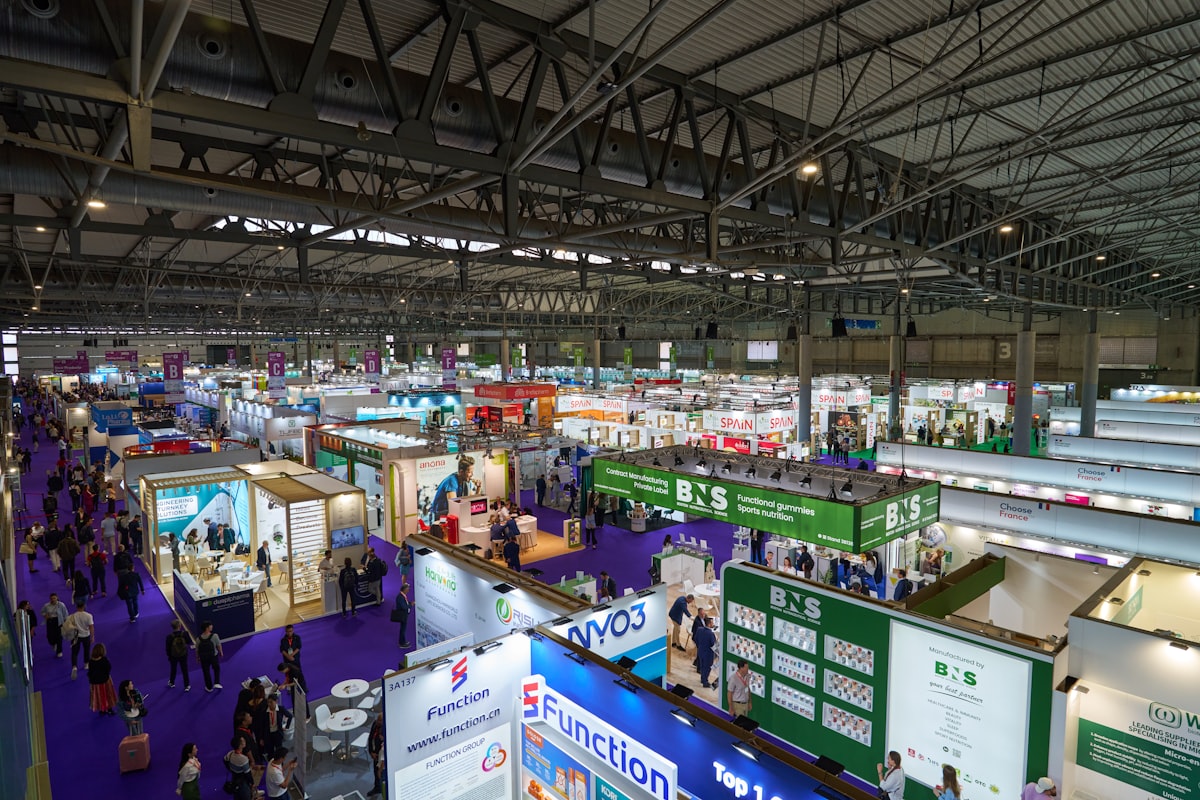
Online B2B platforms:
- Alibaba: Largest selection; apply heavy vetting filters (Trade Assurance, verified supplier badge, factory audit reports). Sort by “Verified Supplier” not “Gold Member” — the latter is paid, the former involves an on-site inspection.
- Made-in-China.com: Strong for stainless and metal cookware; supplier profiles tend to be more factory-heavy than Alibaba
- Global Sources: Better vetting, smaller volume; higher proportion of export-experienced suppliers
- 1688.com: Domestic Chinese wholesale platform. Prices are 10–20% lower than Alibaba but communication and payment require Chinese language capability or a local agent.
Trade shows:
- Canton Fair (Guangzhou): Twice yearly (April/May, October/November). The Phase 2 section covers home products and cookware. Best for meeting your shortlisted factories face-to-face before placing a large order.
- Ambiente (Frankfurt): Primarily for European buyers; many Chinese exhibitors attend with export-ready portfolios.
What to do with a shortlist of 8–10 suppliers:
- Send a standardized RFQ with explicit specs (material grade, surface finish, certifications required, MOQ, target FOB price)
- Evaluate responsiveness and specificity of responses — the factory that asks clarifying questions is more engaged than the one that sends a price list
- Request samples from your top 3
- Commission factory audits on your final 2 before placing a deposit
Frequently Asked Questions
What is the minimum order quantity for cookware from China?
MOQs vary significantly by product type and customization level. For stock (unbranded) stainless cookware sets, many factories start at 100–300 sets. For custom OEM orders with private label packaging, expect MOQs of 500–2,000 sets depending on complexity. Cast iron pieces often start at 300 units. The quoted MOQ is a starting point, not a fixed number — factories will often negotiate down 20–30% on a first order if the buyer demonstrates serious intent and a reorder plan.
Is cookware from China safe?
It depends on which factory, which material specs, and which certifications you require. Chinese factories supply cookware to every major Western retail brand. The safety questions arise when buyers skip certifications, don’t verify steel grades, and don’t conduct pre-shipment inspections. If you require LFGB test reports, mill certificates for 304 stainless, and PFOA-free coating declarations — and verify those documents independently — you get the same safety baseline as domestic supply at a fraction of the cost.
How do I avoid getting 201 stainless steel instead of 304?
Specify 304 / 18-8 in writing in your purchase order. Request the mill certificate (MTR) from the steel coil supplier — not a factory-generated certificate. Send a production sample for XRF spectrometry testing through SGS or Intertek ($50–$150). Add a contractual clause making steel grade failure grounds for full refund.
What certifications do I need to import cookware to the US?
FDA food contact compliance (verify via FEI number + migration test reports) is the baseline requirement. California Prop 65 if distributing in California. LFGB is not required for the US but adds significant trust signal if you plan to market on quality. Always confirm cookware does not require CE marking (it doesn’t — CE applies to electrical/mechanical products, not food-contact cookware).
How long does it take to source cookware from China?
For a first OEM order with custom elements, budget 18–22 weeks from first supplier contact to product in your warehouse. For repeat orders on established SKUs with no tooling changes, the cycle compresses to 10–14 weeks. Air freight for small urgent replenishment orders takes 5–7 days transit but costs 6–8x sea freight rates.
What is the difference between OEM and ODM?
OEM means you supply the design and the factory manufactures to your spec. ODM means the factory already has the design and you buy it (usually with your branding added). ODM is faster and cheaper to launch; OEM creates genuinely proprietary products that competitors can’t easily replicate.
How has the US-China trade war affected cookware imports?
The current US duty stack on Chinese stainless steel cookware (HTS 7323.93) runs approximately 27% — MFN 2% plus Section 301 25%. A temporary Section 122 global surcharge added another 10% from February through July 24, 2026, before expiring at its 150-day statutory limit. This has narrowed margins for US importers but hasn’t reversed China’s dominance — the supply chain advantage is too deep to offset quickly. Some US importers are building parallel Vietnam-origin tooling for key SKUs as a long-term hedge, but Vietnam production capacity for cookware remains limited compared to China.
Summary
Sourcing cookware from China remains one of the most viable paths to building a profitable kitchenware business — if you do the vetting work. The factories exist, the capacity is there, and the quality ceiling is as high as you’re willing to spec. The risk isn’t Chinese manufacturing in general; it’s specific: wrong steel grades, unverified certifications, production quality drift between sample and run, and duty structures that change faster than order cycles.
The practitioners who succeed are the ones who treat the first order as a qualification process, not a cost-saving exercise. Spend on audits, spend on lab testing, build the compliance documentation from day one, and plan your landed cost honestly including duties. From there, the economics of Chinese cookware supply work strongly in your favor.
If you’re building a cookware brand and want a supplier that provides LFGB test reports, 304 mill certificates, and full OEM/ODM capacity from Guangdong, CharmsCook is worth a conversation. They supply stainless and non-stick lines to markets in North America, Europe, and Australia, and are accustomed to the documentation requirements of export-focused buyers.