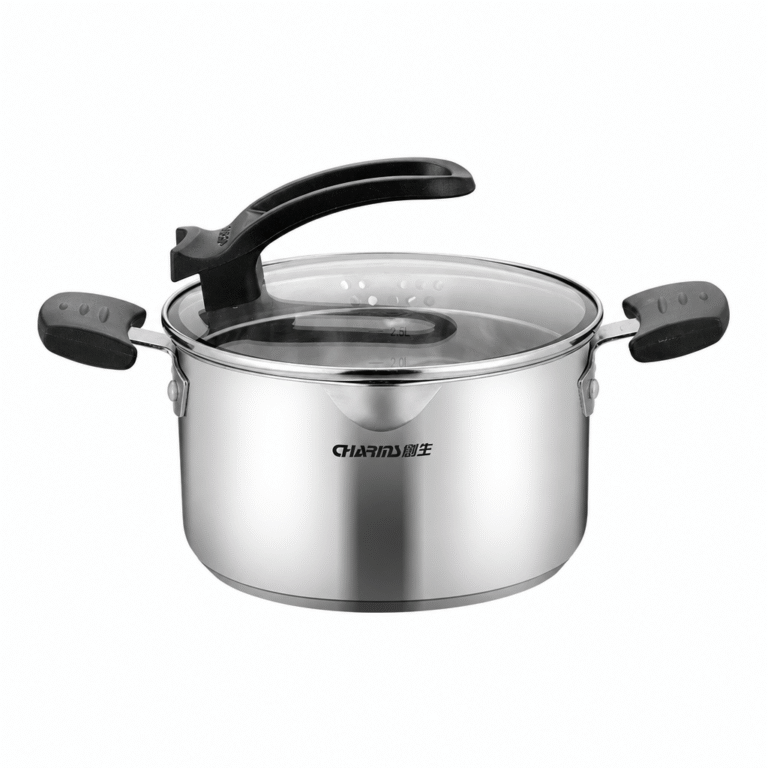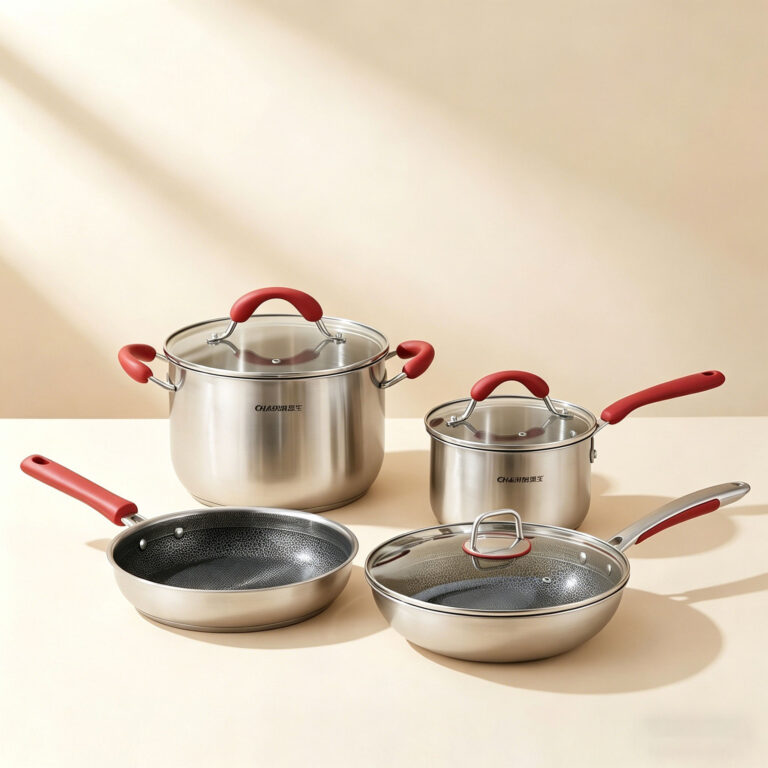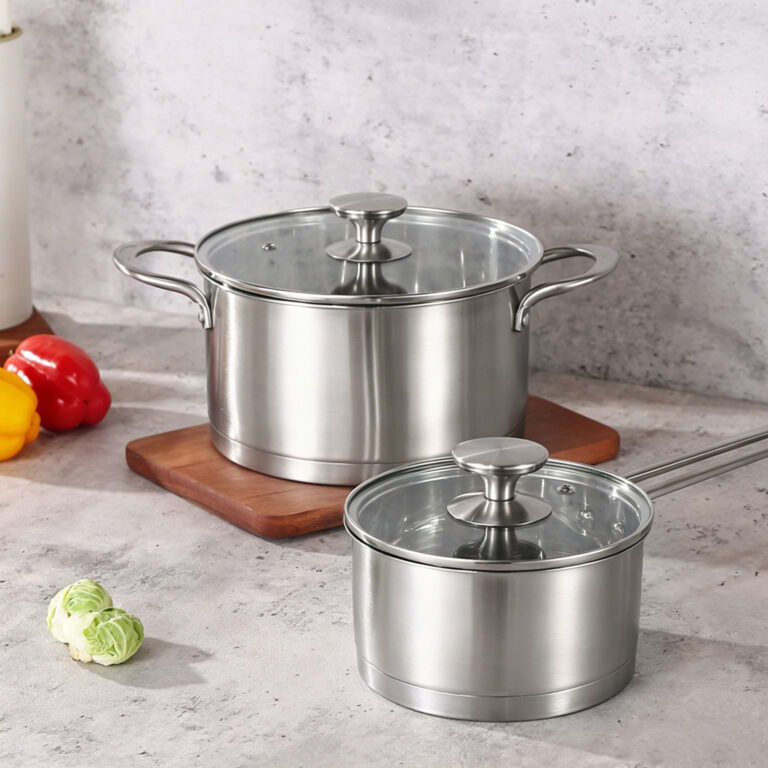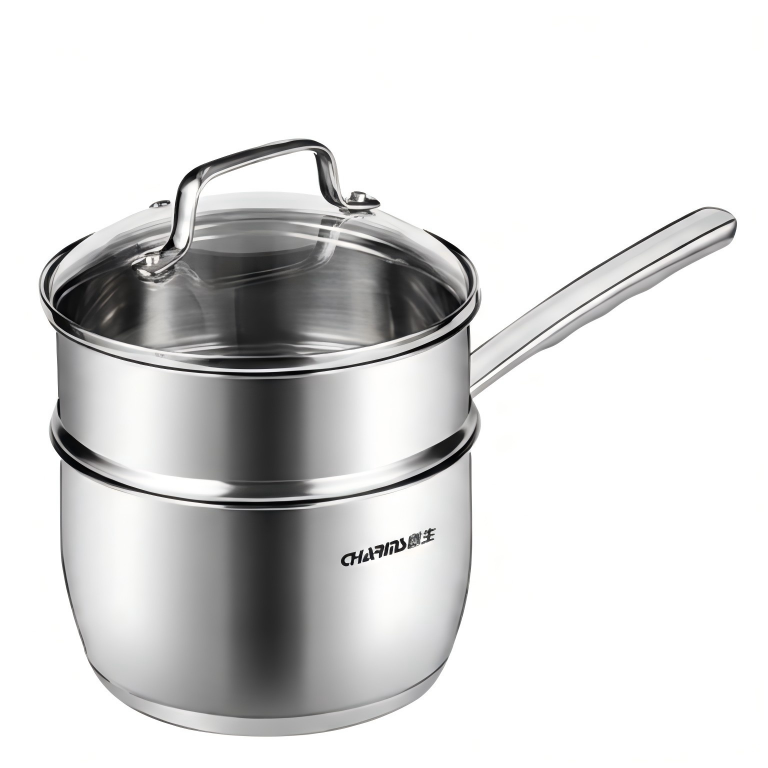


Yes, stainless steel is safe for cooking acidic foods like tomatoes under normal conditions. A peer-reviewed 2013 study (J Agric Food Chem) found that nickel and chromium do leach during long acidic cooking, but the amounts remain well below FDA/EFSA safe intake limits for most people. New cookware leaches more than seasoned pans; leaching stabilizes after about six cooking cycles. The main caveats: avoid storing acidic foods overnight in stainless steel, limit very long cooks (6+ hours), and consult a doctor if you have a confirmed nickel allergy.
The Short Answer: You Can Cook Tomatoes in Stainless Steel
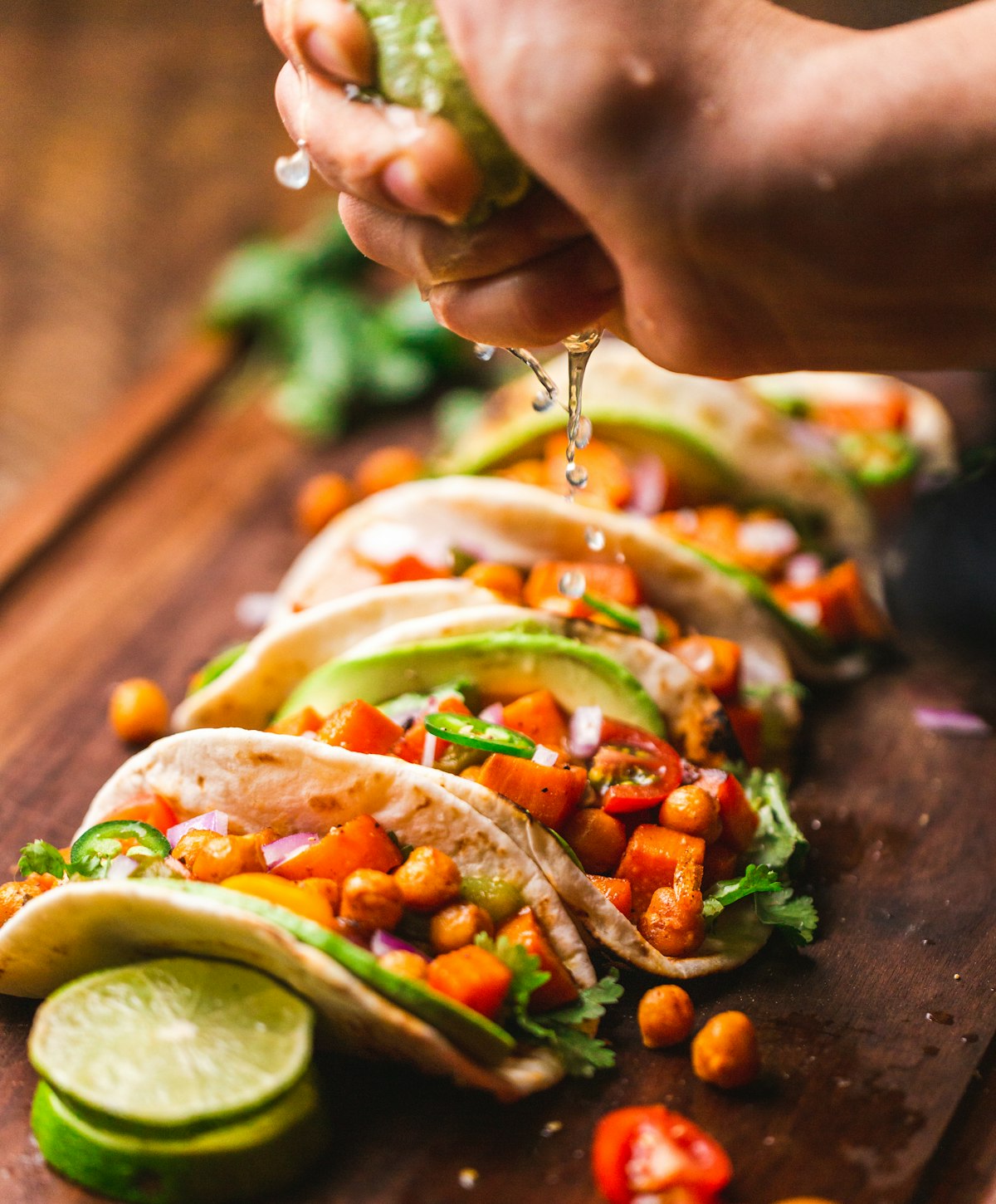
If you’ve ever made a bolognese, a marinara, or a wine-braised short rib in a stainless steel pan, you’re in good company — and, for the vast majority of people, in no real danger.
Stainless steel is one of the most widely used food-contact materials in the world, approved by the FDA, the European Food Safety Authority (EFSA), and food-service standards in over 50 countries. The reason it earns that approval is a thin, self-repairing layer of chromium oxide that forms on the surface when stainless is exposed to oxygen. That passive layer is what makes stainless “stainless” — it resists corrosion and acts as a barrier between the metal alloy and your food.
But “safe” doesn’t mean “zero interaction.” Acidic ingredients — tomatoes (pH ~4.0–4.5), wine, vinegar, citrus juice — are more chemically active than neutral foods, and they do put that passive layer to work. The real question isn’t whether leaching happens. It does. The question is whether the amounts matter.
What the Science Says: The 2013 Leaching Study
The most cited study on this topic was published in the Journal of Agricultural and Food Chemistry (2013, doi: 10.1021/jf402400v), now archived at PubMed (PMC4284091). Researchers at Oregon State University simulated home cooking conditions using three grades of stainless steel and four commercial tomato sauces.
Key findings:
- After 6 hours of continuous cooking in new stainless steel, nickel concentrations increased up to 26-fold depending on steel grade, with chromium also rising significantly
- Longer cooking times beyond 6 hours produced further increases in both metals
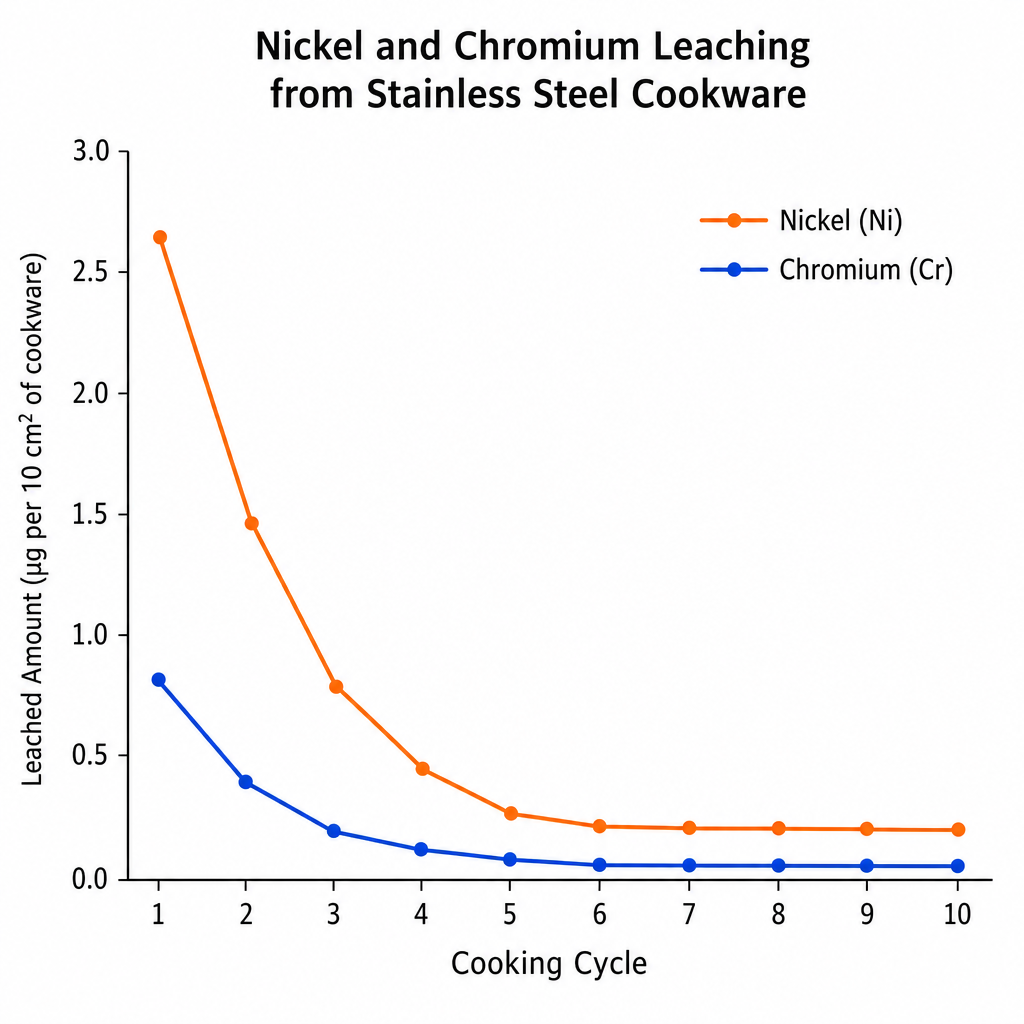
- After the 10th consecutive cooking cycle in the same pan, leaching stabilized at an average of 88 μg of Ni and 86 μg of Cr per 126 g serving
- New cookware leached the most; the passive layer rebuilt and strengthened with each use
Those numbers sound alarming in isolation. They become much less alarming in context.
The U.S. Tolerable Upper Intake Level for dietary nickel is 1,000 μg per day. The average American already consumes 69–162 μg of nickel per day through food (nuts, legumes, oats, chocolate are all natural nickel sources). An 88 μg contribution from a serving of tomato sauce cooked in a well-used pan represents roughly 9–55% of typical background dietary intake — significant, but not a threshold-breaking amount for most healthy adults.
For a brand-new pan on its very first use, the numbers are higher. This is the scenario where caution makes the most practical sense.
New vs. Seasoned Stainless Steel: The Difference Is Real
One nuance almost every article on this topic misses: the cookware’s age matters more than the cooking time in isolation.
The 2013 study showed that metal leaching decreases with each successive use and plateaus around the sixth cooking cycle. A new stainless pan hasn’t yet built up a stable, dense passive layer — especially on the interior. With repeated exposure to heat and oxygen, that layer thickens and becomes more protective.
Practical takeaway: The first few times you cook something acidic in a brand-new stainless pan are the highest-leaching events. After those initial uses, you’re cooking in a pan whose passive layer is battle-tested.
This is why some cooks recommend running a few non-acidic cooks (scrambled eggs, sautéed vegetables, seared proteins) before your first big tomato sauce in a new pan. There’s no official requirement to do this — stainless steel is food-safe from the factory — but it’s a reasonable way to pre-season the passive layer if you’re cautious.
| Cooking scenario | Leaching risk | Notes |
|---|---|---|
| New pan, short cook (<30 min tomato sauce) | Low-moderate | Still within safe limits for most adults |
| New pan, long simmer (2–6 hrs) | Moderate | Ni levels rise meaningfully; consider enamel for marathon cooks |
| Well-used pan (6+ acidic cooks), short cook | Low | Passive layer stabilized |
| Well-used pan, long simmer | Low-moderate | Manageable for healthy adults |
| Storing acidic food overnight in any SS container | Moderate-high | Prolonged contact without heat removal = higher leaching |
Cooking vs. Storing: A Critical Distinction Nobody Talks About
Most online discussions lump “cooking in stainless” and “storing food in stainless” together. They’re not the same risk profile.
When you cook tomato sauce, the process is active: the food moves, the heat drives steam, and cooking time is finite. Most home cooks simmer a sauce for 20–45 minutes — well within the range where leaching stays modest.
Storing acidic food in a stainless container overnight is a different scenario. The acid has continuous, static contact with the metal surface for hours or days at refrigerator temperature. While refrigeration slows chemical reactions, the prolonged contact time compensates. Studies on food-container interactions (including work by EFSA on metallic food contact materials) consistently flag storage duration as a more significant leaching driver than brief high-heat cooking.
The practical rule: cook freely, transfer promptly. Move your tomato sauce to a glass or ceramic container once it’s done. Don’t leave it sitting in the stainless pot in the fridge for three days.
Stainless Steel Grades: Does 304 vs. 316 Matter?
Most cookware is made from grade 304 stainless steel, also labeled 18/8 (18% chromium, 8–10% nickel). It’s the standard food-grade alloy used by brands from All-Clad to IKEA.
Grade 316 stainless steel (18% Cr, 10–14% Ni, with 2–3% molybdenum) is used in medical devices, marine hardware, and some premium cookware. The molybdenum addition improves resistance to pitting and chloride corrosion, making 316 more corrosion-resistant than 304 in aggressive environments.
For home cooking with tomatoes: the practical difference between 304 and 316 is small.
Both are approved for food contact. Both form a chromium oxide passive layer. The leaching study compared multiple grades and found that while lower-grade steels (like AISI 430, a ferritic grade) leached more, both 304 and 316 austenitic grades performed within acceptable ranges at normal cooking durations.
If you have a nickel allergy and are weighing options, 316 does not reduce nickel content — it actually contains slightly more nickel than 304. The molybdenum in 316 increases corrosion resistance but doesn’t eliminate nickel leaching. For those with confirmed nickel sensitivity, the grade choice matters less than cooking duration and pan age.
A Note for People With Nickel Allergy or Sensitivity
Nickel contact allergy affects approximately 10–15% of women and 1–3% of men in Western populations, according to dermatology literature. For most of these people, the primary trigger is skin contact (jewelry, belt buckles, watch clasps) — not dietary nickel.
Dietary nickel sensitivity (systemic contact dermatitis from ingested nickel) exists but affects a much smaller subset: roughly 1–2% of the general population. For these individuals, the 88 μg Ni contribution from a serving of tomato sauce cooked in stainless is clinically relevant — it can push total daily intake past individual trigger thresholds.
If you have a confirmed systemic nickel allergy:
- Use enameled cast iron (Le Creuset, Staub) or ceramic-coated cookware for long acidic cooks
- Use stainless for short-duration acidic cooking (quick pan sauces, deglazing with wine)
- Avoid stainless for storing acidic foods even briefly
- Consult an allergist to establish your personal dietary nickel threshold
For people with contact nickel allergy only (skin reaction to jewelry), dietary restriction is generally not required, and normal cooking in stainless steel poses negligible risk.
Practical Guidelines: When Stainless Steel Is Fine, When to Reach for Something Else
Stainless steel works well for:
- Tomato-based sauces cooked for under an hour
- Quick pan sauces with wine, vinegar, or citrus (deglazing, reductions)
- Adding a squeeze of lemon to finish a dish
- Stews and braises with moderate acidity (tomato-based soups, chicken cacciatore)
Consider an alternative when:
- Slow-cooking acidic sauces for 4+ hours (long braises, all-day bolognese, pressure-canned tomatoes)
- You’re using a brand-new pan and want to minimize first-use leaching
- You have a confirmed systemic nickel sensitivity
- Storing acidic foods for more than a few hours
Best alternatives for long acidic cooks:
- Enameled cast iron (Dutch oven) — completely non-reactive, ideal for long braises
- Anodized aluminum — non-reactive surface, good heat distribution, lighter than cast iron
- Ceramic-coated cookware — non-reactive, but coating longevity varies by brand
FAQ
Is stainless steel safe to cook tomatoes in?
Yes, for typical home cooking durations (under 1 hour), stainless steel is safe for tomatoes. Nickel and chromium leach into the food in trace amounts, but these remain well within safe dietary limits for healthy adults. The main precaution: transfer leftovers out of the pan rather than storing them in it.
Does stainless steel leach into tomato sauce?
It does. A peer-reviewed 2013 study found that nickel and chromium leach from stainless steel into tomato sauce, with the amount depending on cooking time, pan age, and stainless grade. Amounts are highest in new pans and during very long cooking. After about six cooking cycles, leaching stabilizes significantly.
Which is better for cooking tomato sauce — stainless steel or cast iron?
Unseasoned cast iron reacts more aggressively with acids than stainless, discoloring the food and adding iron to the dish (which can taste metallic). Stainless is better than bare cast iron for acidic cooking. Enameled cast iron is the gold standard — it’s completely non-reactive and handles long, slow tomato cooks without any leaching concern.
Can I use a stainless steel pan every day for tomato-based cooking?
Yes, with reasonable habits. Daily acidic cooking in a well-seasoned (6+ prior cooks) stainless pan, with transfers to glass for storage, keeps nickel and chromium intake well within safe ranges for healthy adults.
Should I avoid stainless steel if I have a nickel allergy?
It depends on the type. Contact nickel allergy (skin reactions) generally doesn’t require dietary restrictions — stainless steel cooking is fine. Systemic nickel sensitivity (gastrointestinal or skin symptoms from ingested nickel) is different; those individuals should minimize long acidic cooks in stainless and store acidic food in glass or ceramic.
Does the grade of stainless steel (304 vs. 316) affect food safety with acidic foods?
Both 304 and 316 are food-safe for normal cooking. Grade 316 has better corrosion resistance due to molybdenum content, but it doesn’t eliminate nickel leaching — it contains slightly more nickel than 304. For most home cooks, the grade difference has negligible practical impact on food safety.
Summary
Stainless steel and acidic foods have a nuanced relationship, not a dangerous one. The passive chromium oxide layer makes high-quality SS cookware genuinely resistant to acid corrosion, and the trace nickel and chromium that do migrate into food fall within accepted dietary safety margins for the vast majority of healthy people.
The variables that actually change the risk calculation — pan age, cooking duration, and especially storage time — are things you can manage with simple habits: break in a new pan before its first marathon tomato sauce, don’t leave acidic leftovers in the pot overnight, and reach for an enameled Dutch oven when you’re doing an all-day Sunday gravy.
What the science does not support is the blanket advice some articles give to avoid stainless steel entirely for acidic cooking. For the occasional home cook making pasta sauce, stainless steel remains one of the most practical, durable, and food-safe materials in the kitchen.