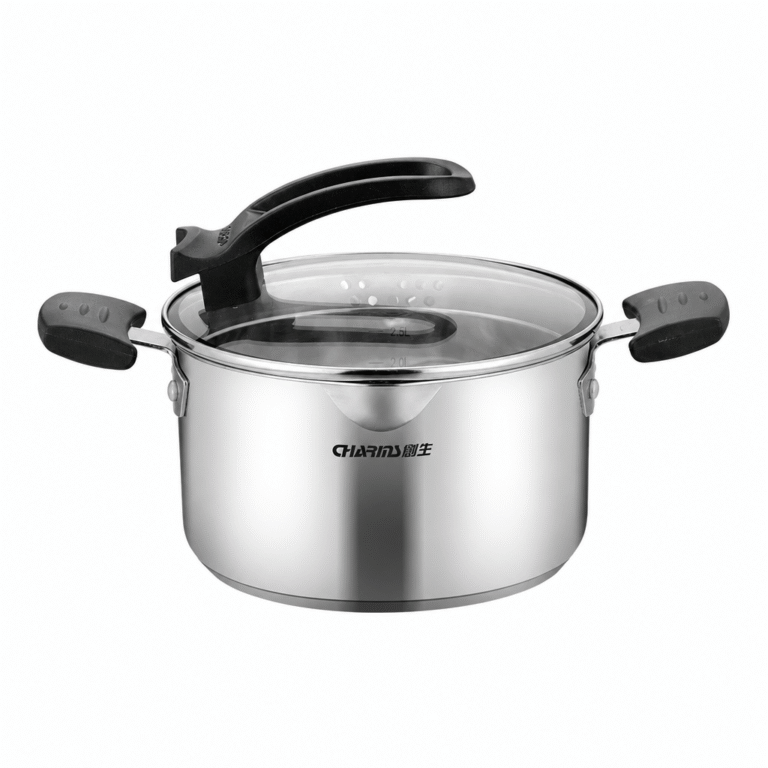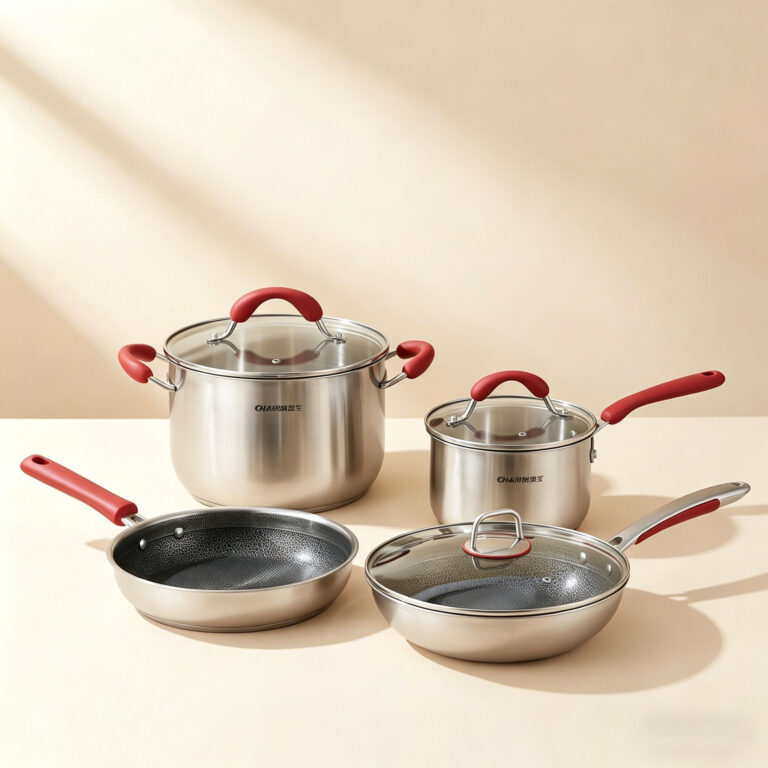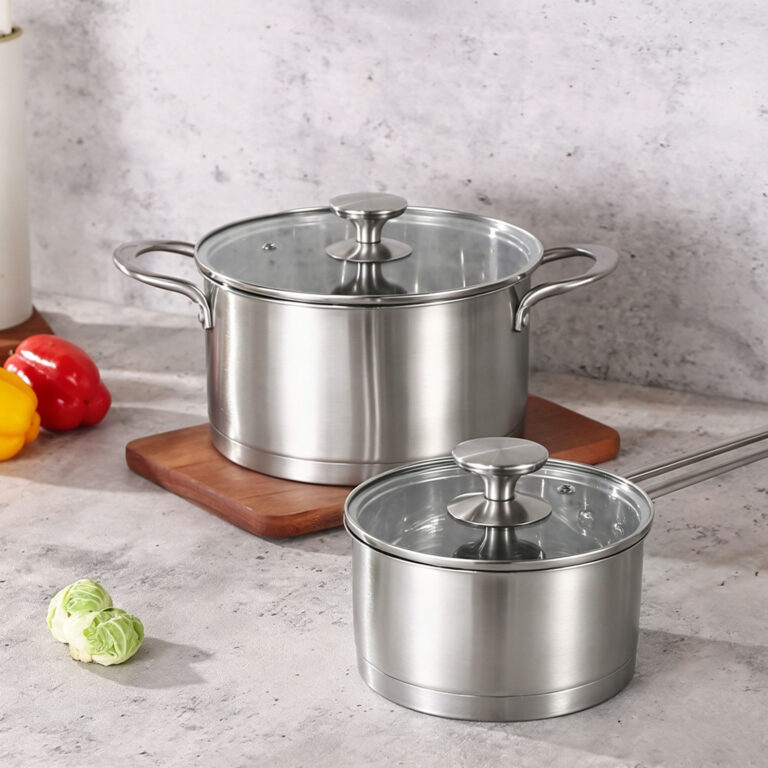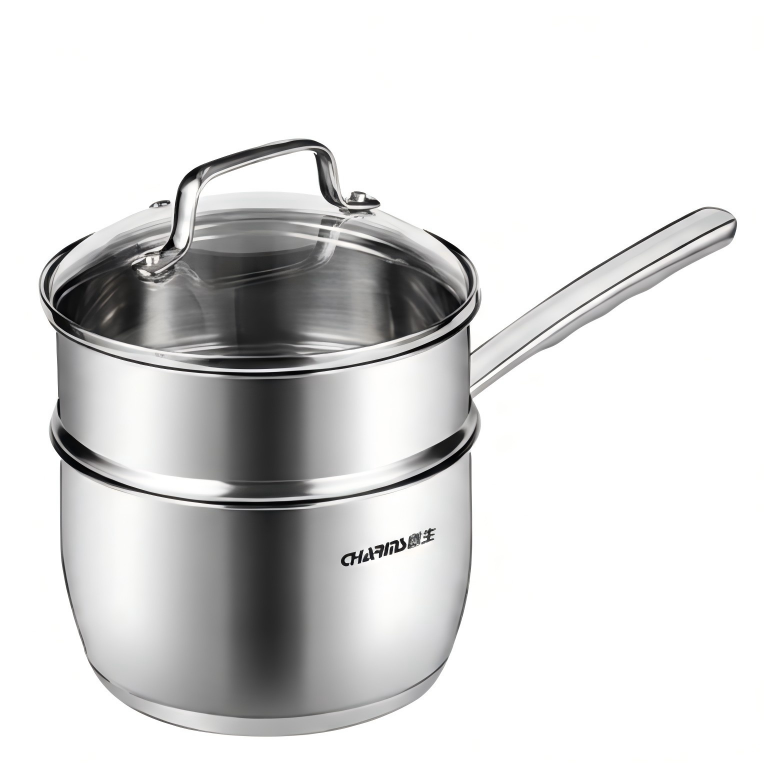

Stainless steel camp pots weigh 270–440 g for solo sizes (475–1100ml) — roughly 2–3x heavier than titanium equivalents. That weight penalty comes with real advantages: open-fire safe, no coatings, boil-sterilizable, and built to last 15+ years. This guide covers exactly when stainless makes sense for backpacking and camping, how it compares to titanium and aluminum by weight, and what to look for in a quality 304-grade pot.
Stainless Steel vs. Titanium vs. Aluminum: The Weight Reality
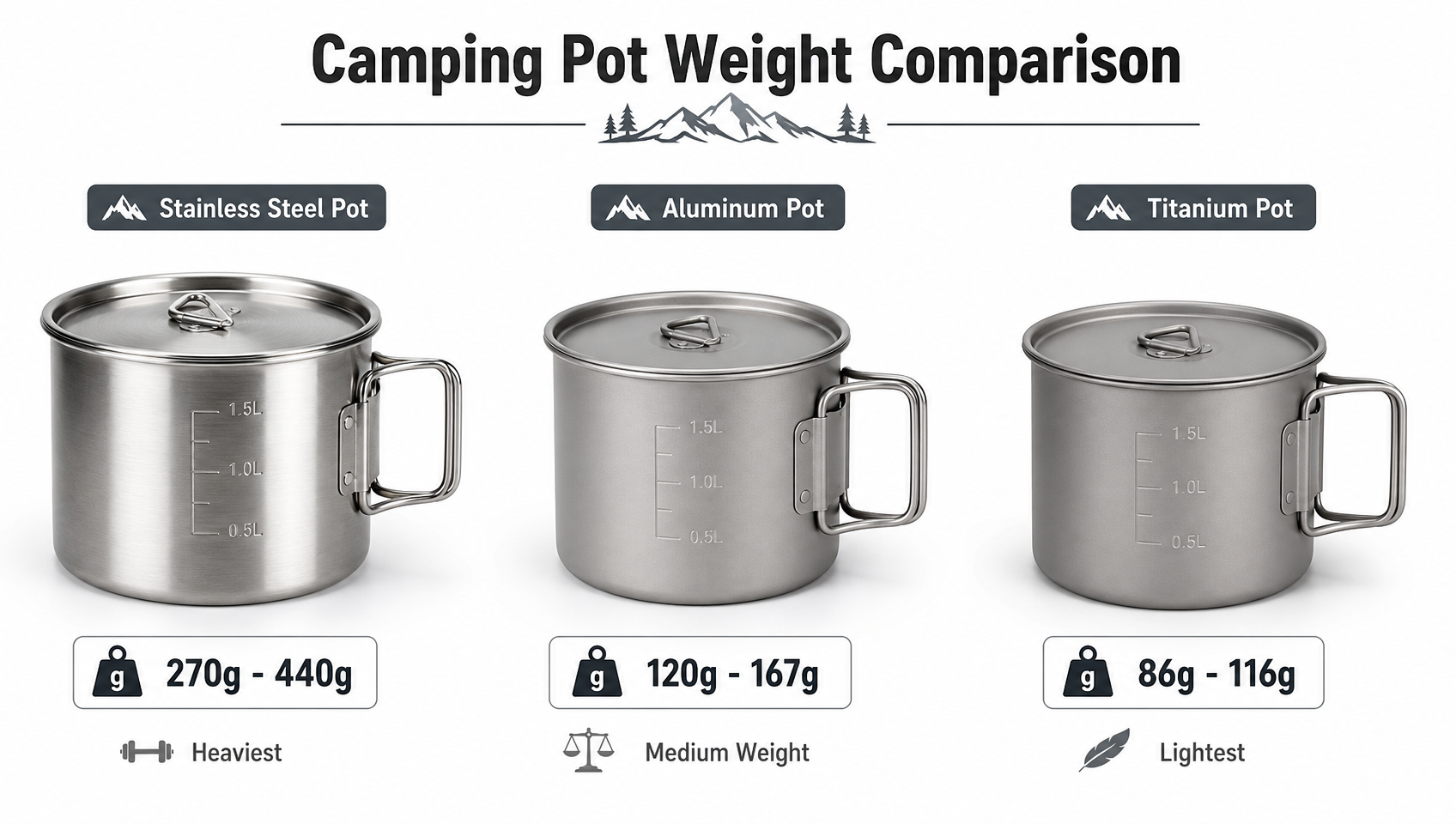
The biggest question anyone asks before buying a stainless steel camp pot is simple: how much heavier is it, really?
Here’s a direct comparison using real products at the same approximate capacities:
| Volume | Stainless Steel | Aluminum | Titanium |
|---|---|---|---|
| ~475ml | MSR Alpine Stowaway: 270 g | GSI Halulite Solo: ~120 g | TOAKS 550ml: ~72 g |
| ~775ml | MSR Alpine Stowaway 775ml: 365 g | GSI Halulite: ~120 g | TOAKS 750ml: 86 g (pot only) |
| ~1.1L | MSR Alpine Stowaway 1.1L: 440 g | MSR Titan Kettle 900ml: 126 g | TOAKS 1100ml: 116 g (pot only) |
| ~1.6L | MSR Alpine Stowaway 1.6L: 553 g | MSR Trail Base 2L: ~186 g | Snow Peak 1.8L Ti: ~230 g |
The numbers don’t lie: stainless steel runs roughly 3–4x heavier than titanium at the same volume. For a weight-obsessed ultralight backpacker, that’s a dealbreaker. For everyone else, it’s a trade-off worth understanding before you dismiss it.
What the weight table doesn’t show is heat performance. Among the three materials, aluminum conducts heat fastest (~237 W/m·K), followed by titanium (~22 W/m·K) and stainless steel (~14–15 W/m·K for 304 grade). Despite its lower conductivity, a stainless pot on a canister stove achieves roughly a 5–6 minute boil for 1L at sea level — comparable to titanium (which has thin walls that partially offset its slightly higher conductivity). The real boil-speed winner is aluminum, which outperforms both.
Where Stainless Steel Actually Wins
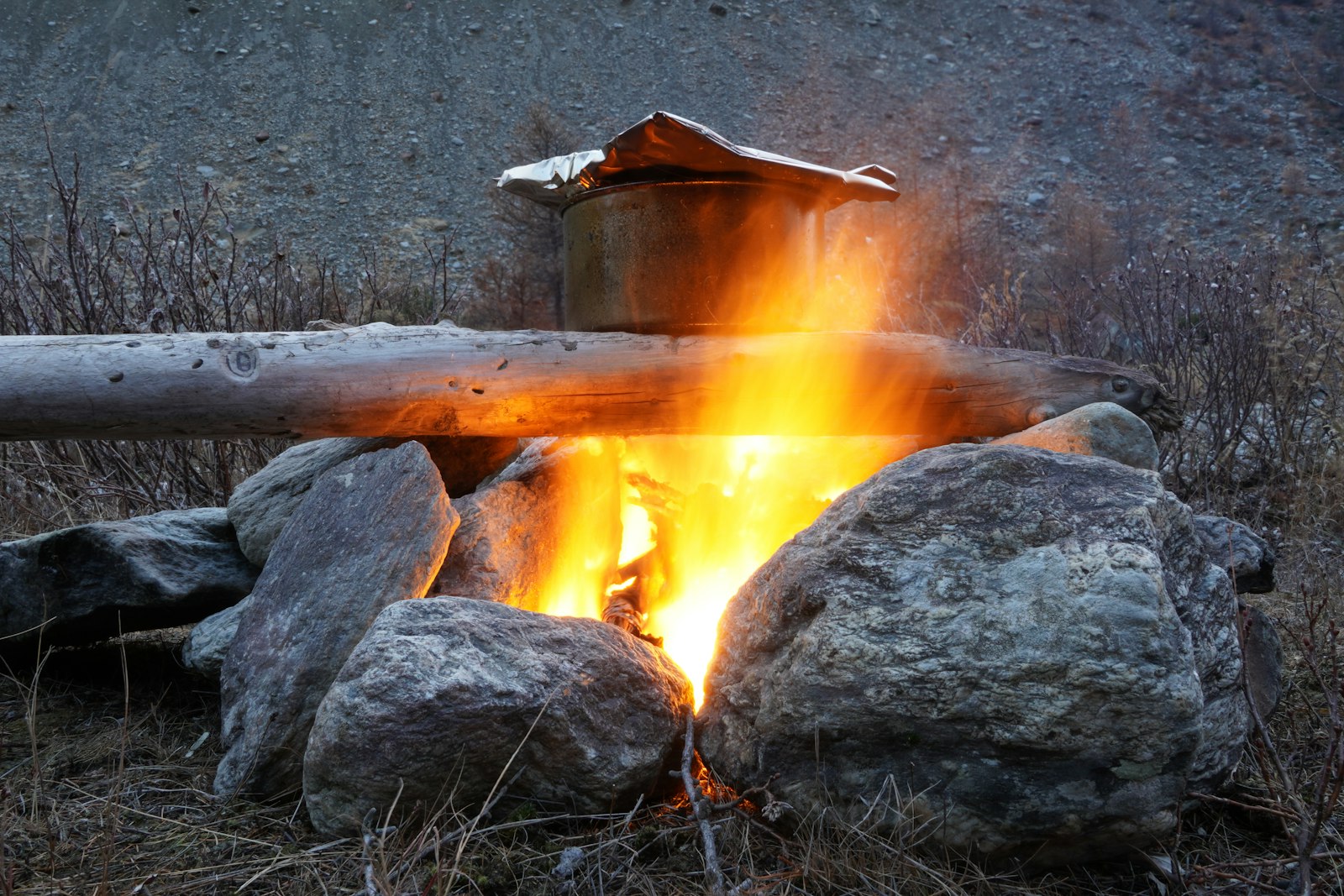
The case for stainless isn’t about weight. It’s about everything else.
Open-fire cooking is where stainless pulls ahead. You can set a stainless pot directly in coals, hang it over a wood fire on a tripod, or place it on a grate with a full flame underneath — and it handles all of it without complaint. Titanium can technically withstand open fire, but its thin walls (often 0.5–0.6mm) concentrate heat unevenly and the metal can discolor and warp over repeated flame exposure. Aluminum at extreme heat can partially melt or deform. Quality stainless steel pots (0.6–0.8mm wall thickness) are genuinely built for fire.
No coatings, no compromises. Every non-stick and most anodized camping pots have a surface coating that degrades over time — and the PFAS chemistry used in many non-stick coatings is currently being restricted in multiple US states. A bare 304 stainless pot has no coating to chip, flake, or off-gas. What you’re cooking in is the same metal surface year after year.
Durability that outlasts the category. The MSR Alpine Stowaway has been a fixture in the camping gear market for decades — a design unchanged because it doesn’t need changing. The material is nearly indestructible under normal camping abuse. Dents, drops, rough packing — stainless takes it. Multiple Reddit threads in r/CampingGear and r/Bushcraft confirm users running the same stainless pot for 10–15+ years. At $35–45 for a quality 1.1L pot, that works out to around $2.50–4.50 per year of use. A titanium pot at $60–90 that you replace or dent in 5 years costs more per year.
Food safety you can verify. Grade 304 stainless steel (18% chromium, 8% nickel) is the same alloy used in commercial kitchen equipment and FDA-compliant food processing. There is a documented concern about nickel leaching from lower-grade or worn stainless — but in intact, properly made 304 SS cookware under normal camping conditions, nickel migration is considered negligible by food safety standards. No coatings, no PFAS, no aluminum concerns. For anyone who’s been reading about PTFE and PFOA, bare stainless is the straightforward answer.
304 vs. 316 Stainless: Does the Grade Matter?
Most stainless camping pots use 304 stainless (18/8) — 18% chromium and 8% nickel. It’s corrosion-resistant, food-safe, widely available, and the right choice for 95% of camping use.
316 stainless adds molybdenum, which improves resistance to chloride corrosion (salt water, brackish water). Unless you’re specifically boiling seawater or camping heavily in coastal saltwater environments, 304 is sufficient and lighter. Some premium marine and overlanding cookware uses 316; for inland backpacking and camping, 304 is the standard and the correct choice.
What actually matters more than grade is wall thickness: 0.5mm is light but dings easily; 0.6–0.8mm hits the sweet spot for pack durability without excess weight. Check the spec sheet before buying — brands don’t always advertise this clearly.
The Right Person for a Stainless Steel Camp Pot
Stainless steel isn’t for everyone. Here’s an honest use-case framework:
Stainless is the right call if you:
- Cook over a wood fire or open coals regularly
- Prioritize durability over every other factor
- Want coating-free, PFAS-free cookware
- Are a guide, scout leader, or institutional buyer (shared-use durability)
- Camp 5–15 nights per year and want one pot that lasts 15 years
- Do base camping, car camping, or canoe camping where weight is secondary
Stainless is probably not the right call if you:
- Are backpacking 100+ miles per season and tracking grams
- Want the fastest possible boil times
- Already own quality titanium or heat-exchanger aluminum that works
The honest middle ground: for 3-season weekend backpackers who camp 10–20 nights a year with a mix of stove and campfire cooking, stainless is genuinely competitive. The 200–300g weight difference versus aluminum at 1.1L is about two energy bars — a trade-off many people make without thinking twice.
How to Clean a Stainless Steel Camp Pot in the Field
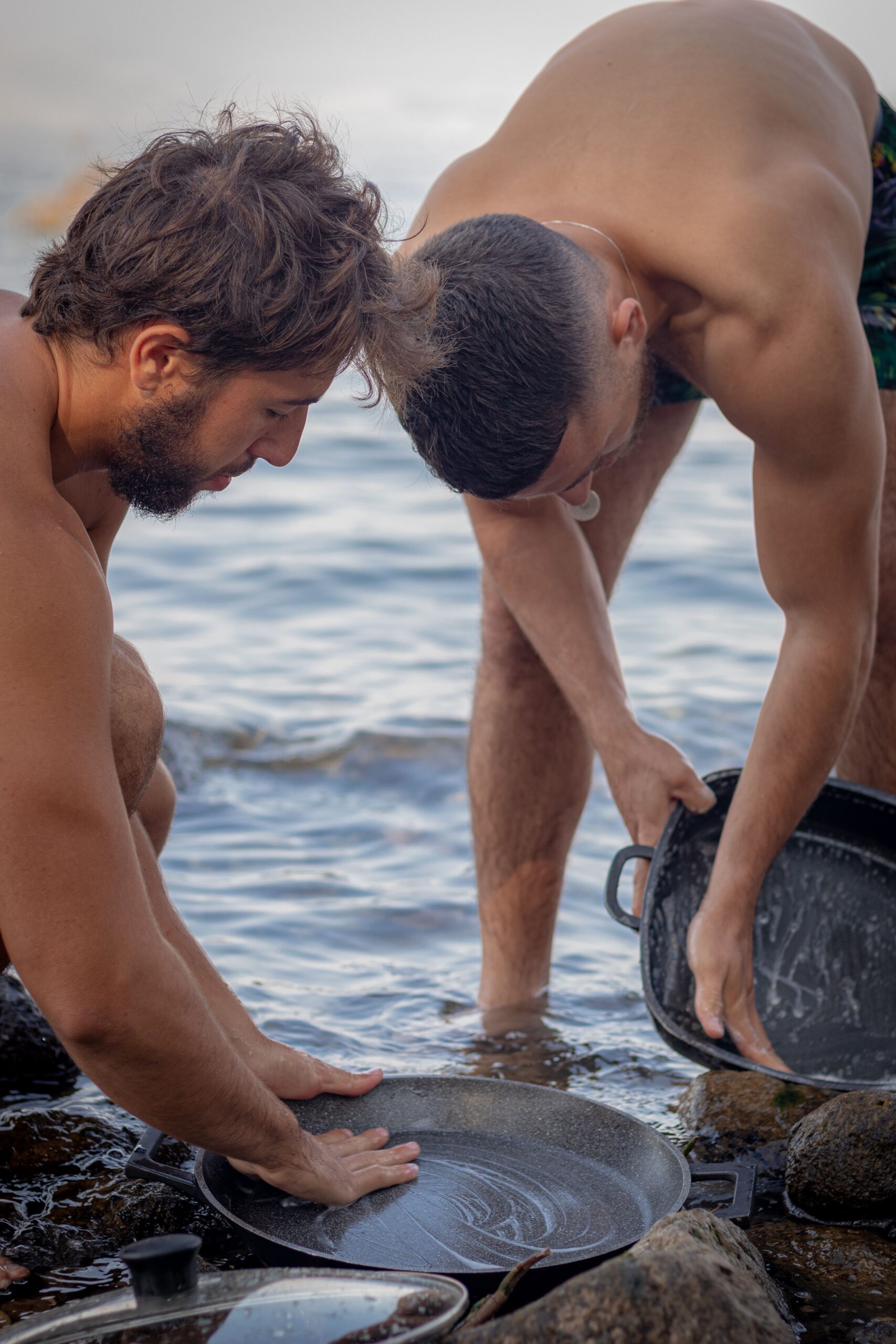
One of stainless steel’s underrated advantages is how it handles field cleaning.
Boil-sterilize method (no soap required): Fill with clean water, bring to a rolling boil, pour out. For Leave No Trace environments where soap runoff is a concern, this gets a pot food-safe without any detergent. The same technique works for sterilizing before longer expeditions.
For stuck-on food: Add a small amount of water, bring to a simmer, and use a wooden spoon or silicone spatula to lift the residue. Stainless responds well to heat-release cleaning in a way that coated pots don’t — you can scrub it firmly without worrying about scratching a coating.
Avoid: Chlorine bleach (will pit 304 stainless over time) and steel wool (leaves iron particles that can rust on the surface). A stiff nylon brush works well.
Long-term care: A small amount of cooking oil wiped into the interior before storage prevents water spots and the blue-gray heat discoloration that appears after repeated campfire use. The discoloration is cosmetic, not a structural issue.
What to Look for When Buying
If you’re ready to choose a stainless steel camp pot, the key specs worth checking:
Capacity: For solo backpacking, 750ml–1.1L handles boiling water plus a small meal. For two people, 1.5–2L. Stainless pots nest with a fuel canister in most designs.
Handle design: Look for folding bail handles (wire bail = better for open fire hanging) or folding side handles that lock flat. Some budget pots have handles that loosen over repeated heating — check reviews specifically for handle durability.
Lid fit: Tight-fitting lids matter more for stainless than titanium because you’re often waiting longer for a boil. A strainer lid with holes is useful for pasta but adds weight.
Known quality options: MSR Alpine Stowaway is the category benchmark — field-proven, available at most gear retailers, reasonable price. Sea to Summit’s Detour Stainless is newer and lighter-walled (some reports of handling issues at full boil). For bushcraft and open-fire focus, Zebra and Pathfinder Billy pots have strong field reputations.
Stainless Steel Camp Pot: Fast Answers
Is stainless steel good for backpacking? Yes, with a clear-eyed view of the trade-off. Stainless pots weigh 270–440 g for solo sizes — roughly 3–4x more than titanium. For campers who value durability, open-fire cooking, and coating-free materials over minimal pack weight, stainless is a strong choice.
Can you use a stainless steel pot directly on a campfire? Yes. Unlike titanium (which can warp with thin walls) and aluminum (which can deform at extreme heat), stainless steel handles direct flame and coal contact well. Wall thickness of 0.6mm+ handles repeated campfire use without structural issues.
What grade of stainless steel is best for camping cookware? 304 stainless (18/8) is the standard and appropriate for nearly all camping use. It’s food-safe, corrosion-resistant, and widely available. 316 stainless adds saltwater resistance but is heavier and unnecessary unless you’re cooking in marine environments.
How long does a stainless steel camping pot last? With basic care, 15–20 years is realistic. The MSR Alpine Stowaway is a decades-old design that remains in production with minimal changes — the material simply holds up.
Is stainless steel camping cookware PFAS-free? Yes. Bare stainless steel has no coatings of any kind. There are no PTFE, PFOA, PFAS, or ceramic coatings involved. It’s one of the most chemically inert cookware surfaces available for camping.
The Weight Trade-off Is Real — So Is the Value
Stainless steel camp pots will never win a weight competition. At 270–440 g for solo sizes, they’re firmly in the “heavy by ultralight standards” category, and there’s no reason to pretend otherwise.
What they offer instead is a pot you can cook over a wood fire, boil-sterilize in the field, never worry about coating damage, and likely still be using in 15 years. For a specific type of camper — the one who builds fires, camps hard, and measures quality in decades rather than grams — stainless steel is the right answer.