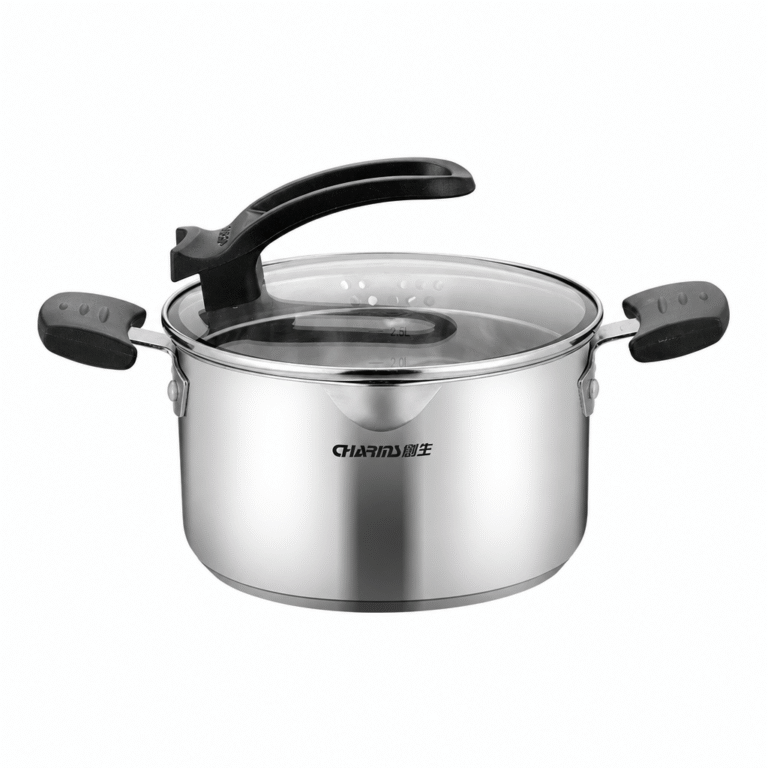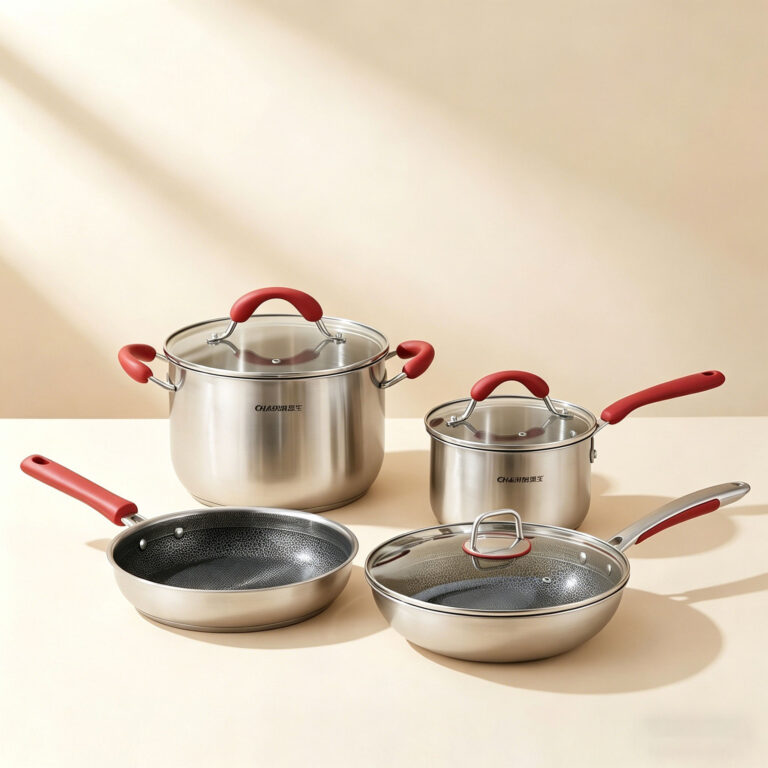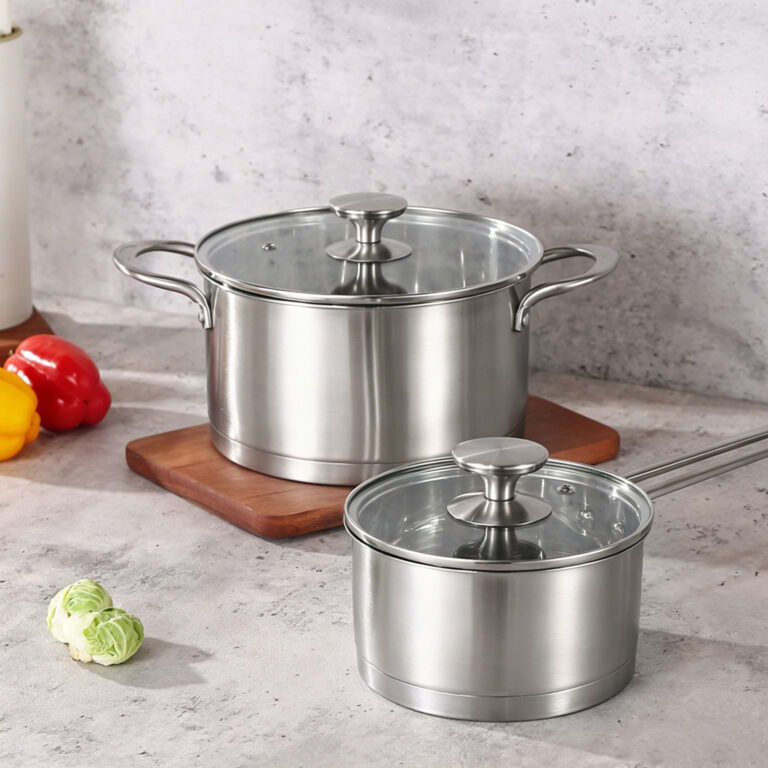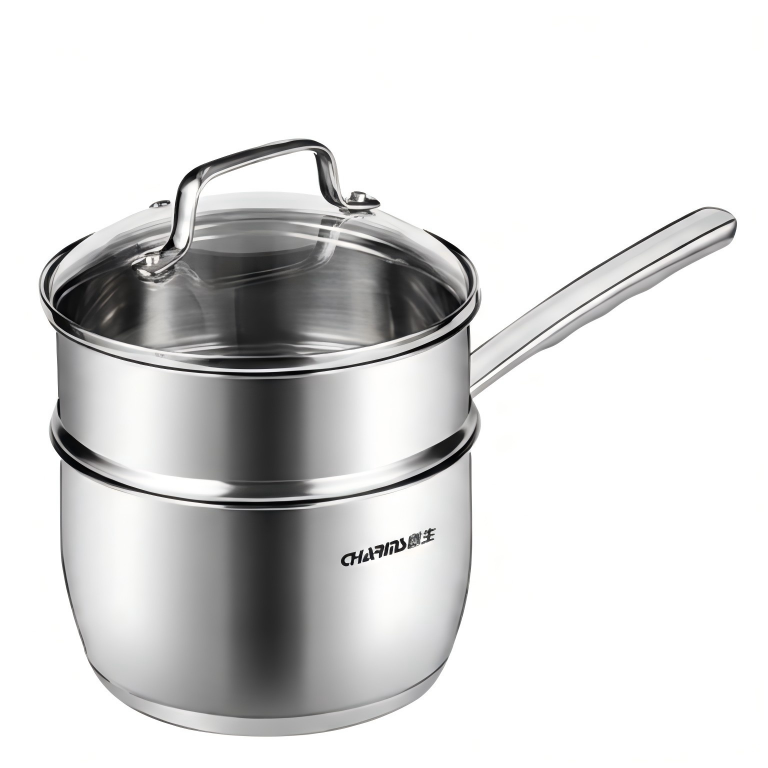


Most stainless steel cookware can go in the dishwasher without immediate harm, but “dishwasher safe” on the label is not a guarantee of long-term protection. The answer depends on the steel grade (18/10, 18/8, or 18/0), whether your pan has an exposed multi-ply core, and what detergent your machine uses. Highly alkaline detergents — and any product containing sodium hypochlorite (chlorine bleach) — are the main culprits behind dullness, pitting, and discoloration. This guide breaks down the science, explains what each damage type actually looks like, and gives you a practical decision framework — so you stop guessing and start cleaning correctly.
The Short Answer: Yes, But “Safe” Has a Range
Stainless steel cookware is technically dishwasher-safe for most people most of the time. The chromium in stainless steel forms a thin, self-repairing oxide layer on the surface — this is what makes it corrosion-resistant, and it’s tough enough to survive machine washing.
But “dishwasher safe” printed on a box is a legal minimum, not a care recommendation. I’ve put stainless pans through hundreds of dishwasher cycles over the years, and the ones that came out looking worse than when they went in all had something in common: they were either low-nickel grade steel, multi-ply pans with exposed aluminum cores, or washed alongside chlorine-heavy detergent tabs.
The real question isn’t whether your pan can survive the dishwasher. It’s whether you understand what slowly degrades it — so you can decide if the convenience is worth the trade-off.
Here’s what actually happens inside that machine.
What Makes Stainless Steel Resist Dishwashers — And What Breaks That Resistance
The core mechanism: Stainless steel gets its corrosion resistance from chromium. Steel alloyed with at least 10.5% chromium spontaneously forms a passive chromium oxide layer — roughly 1–3 nanometers thick — on any exposed surface. This layer is invisible, self-healing (it reforms when scratched), and chemically inert under normal conditions.
That passive layer is what dishwashers attack. Three factors break it down:
1. Alkaline detergents (pH 9–12)
Standard dishwasher detergents use sodium carbonate, sodium hydroxide, or bleach-based compounds to cut grease. These are highly alkaline. At the temperatures typical of residential dishwashers (120–145°F), high-pH solutions accelerate the dissolution of the passive layer — particularly on lower-nickel-content steel.
2. Chlorine exposure
Many detergent pods and powders contain sodium hypochlorite (bleach) or chlorine-releasing agents. Chloride ions are directly corrosive to the chromium oxide layer, and the damage is cumulative. A single cycle causes negligible harm; 200 cycles with chlorinated detergent on an 18/0 pan produces visible pitting.
3. Prolonged moisture at elevated temperature
The drying cycle and any residual steam that stays in contact with the steel after the cycle ends extends chemical exposure time. This is why the manufacturer advice “remove and dry immediately” actually matters — it’s not just about water spots.
The steel doesn’t fail catastrophically. It degrades gradually: first losing its shine, then developing white mineral deposits, then showing rainbow discoloration, and eventually — in worst-case scenarios — pitting.
Grade Matters: 18/10, 18/8, and 18/0 Are Not Equally Dishwasher-Safe
The numbers stamped on your cookware (or listed in the product spec) tell you the chromium-to-nickel ratio in the alloy. Both elements affect dishwasher resilience, but nickel content is the key variable for corrosion resistance.
| Grade | Chromium | Nickel | Dishwasher Resilience | Common Use |
|---|---|---|---|---|
| 18/10 | 18% | 10% | High — best choice for machine washing | Premium cookware (All-Clad, Tramontina Tri-Ply) |
| 18/8 | 18% | 8% | Good — can withstand regular machine washing | Mid-range cookware, most Cuisinart lines |
| 18/0 | 18% | 0% | Low — more susceptible to pitting over time | Budget cookware, some cutlery |
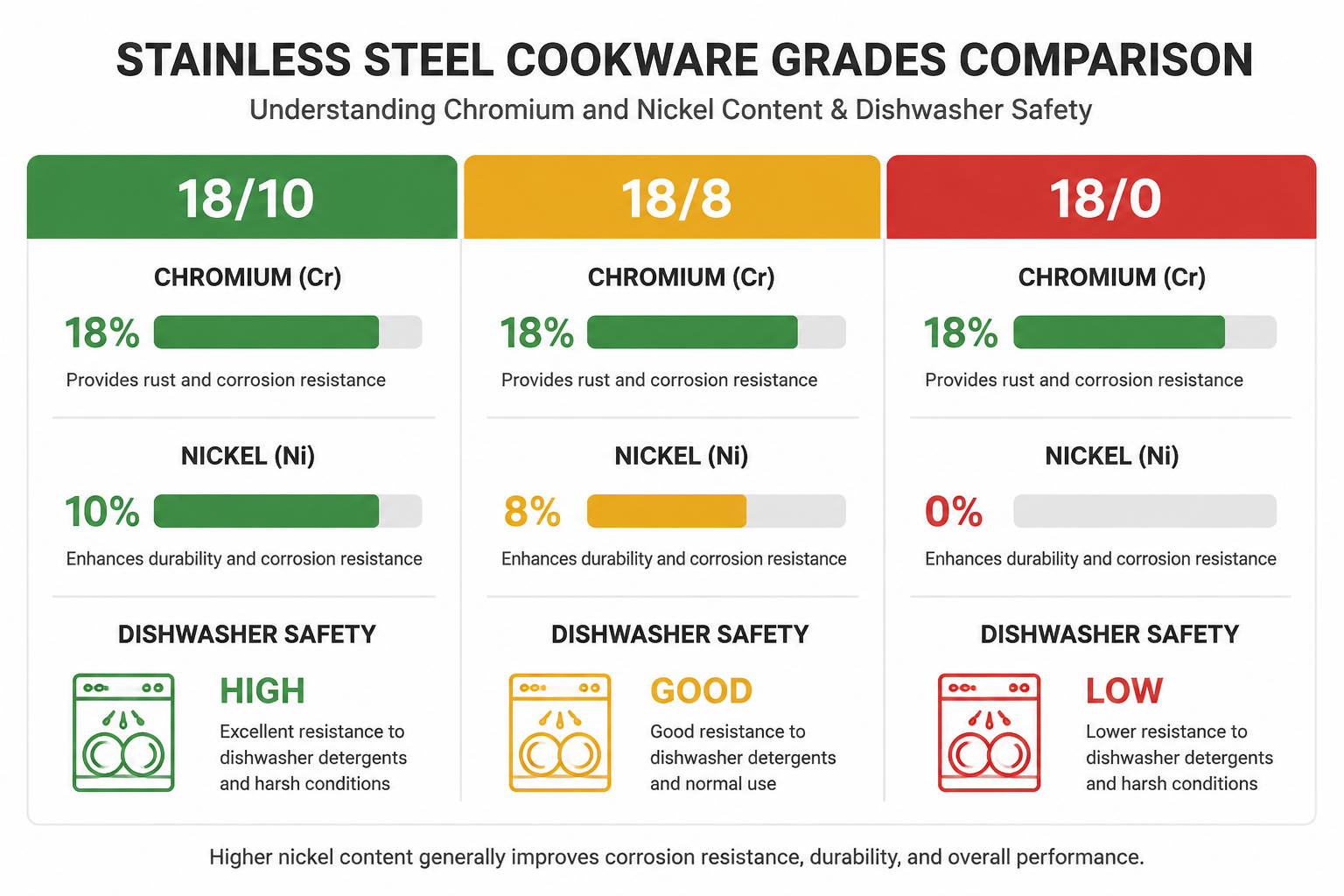
Why does nickel matter? Nickel stabilizes the austenitic crystal structure of the steel, which is what makes 18/10-labeled grades both non-magnetic and more resistant to chloride-induced corrosion. (Note: “18/10” is a marketing label — the actual nickel in ASTM 304 runs 8–10.5%; the “10” doesn’t guarantee exactly 10%.) 18/0 grade is ferritic (magnetic), with lower corrosion resistance. You can test this: a kitchen magnet that sticks firmly to your pan suggests 18/0 or lower grade.
For everyday home cooking with occasional dishwasher cycles, 18/8 is adequate. For a pan you plan to machine-wash weekly for ten years, 18/10 is the better investment. 18/0 in the dishwasher will eventually show the consequences.
The Hidden Risk in Clad and Multi-Ply Cookware
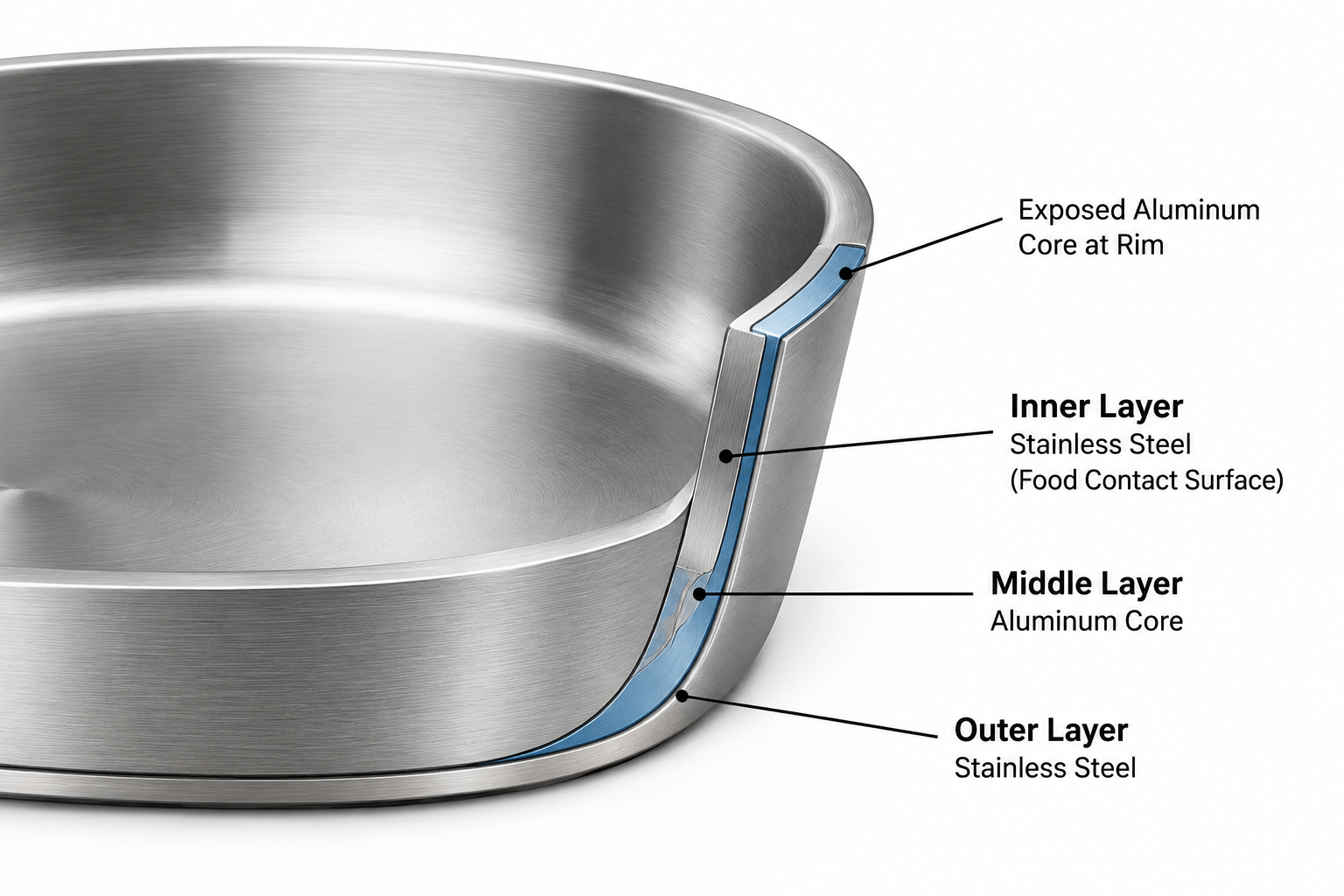
If you own All-Clad, Tramontina Tri-Ply, Made In, or any other “clad” or “multi-ply” pan, there’s a structural detail that makes the dishwasher conversation more complicated.
Multi-ply pans sandwich an aluminum (or copper) core between two stainless steel layers to improve heat distribution. The stainless exterior looks seamless — but at the rim of the pan, the cut edge of the bonded layers is exposed. That aluminum edge sits right where dishwasher water pools and detergent contacts the metal directly.
Aluminum behaves very differently from stainless steel in an alkaline environment. Aluminum corrosion accelerates meaningfully above pH 8.5–9 — and most dishwasher detergents run pH 9–12. The corrosion at the rim edge shows up as a gray chalky residue, a rough or sharp feel along the pan’s lip, and sometimes a white film on the exterior side near the base.
360 Cookware’s technical documentation describes this exact failure mode: their 3-ply construction leaves the aluminum layer exposed at the rim, and repeated dishwasher cycles with high-alkaline detergents eat into that edge. The result — beyond cosmetic damage — is a rim that feels gritty or sharp.
The practical takeaway: If you own a clad or multi-ply pan, hand washing isn’t just a recommendation — it’s how you protect a structural characteristic of the pan that cannot be repaired once corroded.
What the Discoloration Actually Means
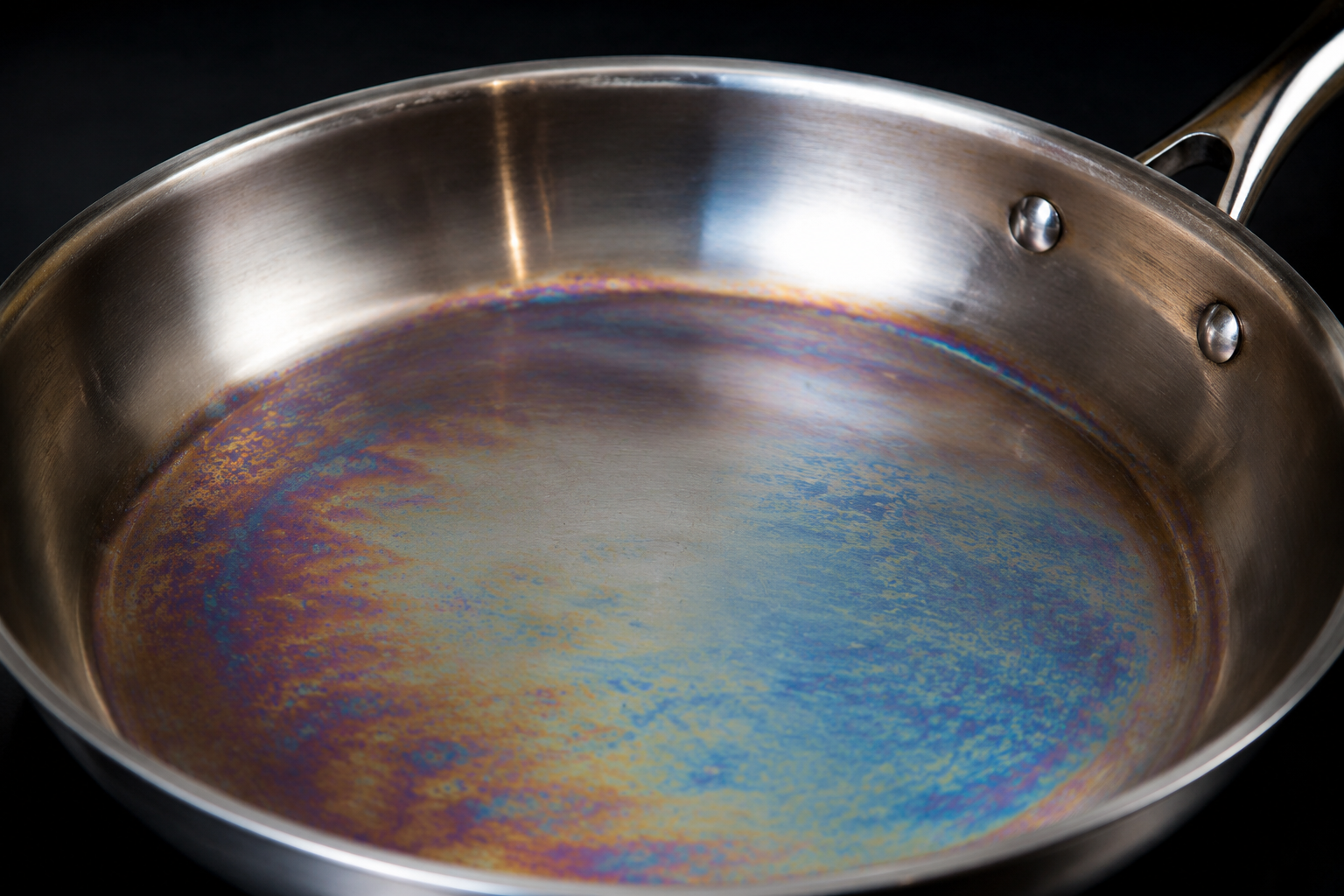
If your pan came out of the dishwasher looking different from how it went in, there are three distinct causes — and confusing them leads to the wrong fix.
Rainbow iridescence (heat tint)
Those oil-slick colors — blue, gold, purple — on the interior of a stainless pan are caused by a thin layer of chromium oxide growing slightly thicker than usual due to heat. This is not damage; it’s a surface optical effect. The passive layer is still intact. It wipes off with a small amount of Bar Keepers Friend (oxalic acid) or white vinegar. It has nothing to do with the dishwasher specifically — it can appear after high-heat cooking too.
White spots and chalky film
These are mineral deposits from hard water — calcium and magnesium compounds that precipitate out during the drying cycle. Again, cosmetic only. White vinegar dissolves them quickly. Using a rinse aid in the dishwasher prevents most of them from forming.
Pitting, dull gray patches, or rough texture
This is actual surface damage. Pitting happens when chloride ions penetrate the passive layer and corrode the steel beneath. Dull matte patches where the steel has lost its reflective finish indicate progressive loss of surface integrity. A pan showing these signs has been damaged — you can clean the surface but you cannot restore the original smoothness.
Knowing the difference matters because many people think rainbow marks or water spots mean their pan is “ruined,” when they’re actually routine and reversible. Conversely, slow pitting over two years of dishwasher use gets dismissed as normal wear, when it’s preventable corrosion.
Brand-Specific Guidance and the Warranty Question
Most premium cookware brands say their stainless steel is dishwasher safe — but the fine print often tells a different story.
All-Clad: Does not officially endorse dishwasher use for stainless steel. Their Care & Use page explicitly warns against “harsh detergents or detergents containing bleach or peroxide, which can damage the pan” — and the standard bleach pod falls into that category. Only their Hard Anodized Nonstick line carries an explicit dishwasher-safe designation. All-Clad’s position is effectively: hand wash for stainless.
Cuisinart: Most stainless lines are marked dishwasher safe. Cuisinart’s care documentation acknowledges that dishwashers “can dull stainless steel shine” and recommends removing food residue before loading. They prefer hand washing but permit machine washing for labeled pieces.
Tramontina: Their Tri-Ply Clad line is dishwasher safe per the label, but Tramontina’s care guide recommends hand washing for “best results” — the same soft hedge most premium brands use.
360 Cookware: Explicitly states dishwasher use is not recommended and will void the warranty. Their reasoning is the aluminum rim exposure issue in their surgical-grade 3-ply construction.
The warranty angle is often overlooked. Brands that say “dishwasher safe” generally won’t replace a pan with dishwasher-related finish degradation — because it happened gradually and is hard to attribute. But brands that say “hand wash only” or “may void warranty” have a clear position: if you machine-wash it and the rim corrodes, you own that outcome.
Before you decide your washing routine, it’s worth reading the care card that came with your specific pan — not just the general brand reputation. A 10-second check today avoids a warranty dispute later.
If You Must Use the Dishwasher: How to Minimize Damage
Life is busy. Sometimes the dishwasher is the only realistic option. Here’s how to reduce the risk:
Choose your detergent carefully. The single biggest variable in dishwasher damage is detergent chemistry. Modern pods (including Cascade) mostly use oxygen-based bleach (sodium carbonate peroxide) rather than sodium hypochlorite — but they still run at high alkalinity (pH 9–11), which is what actually attacks the chromium passive layer. Older powder formulations and some budget pods still contain chlorine-releasing agents; check the ingredient list and avoid anything listing sodium hypochlorite. Lower-alkalinity liquid gels (Seventh Generation, Ecover) are a gentler option for cookware.
Use the gentle or eco cycle. Lower wash temperatures (under 140°F) reduce the rate of passive layer breakdown. The “pots and pans” cycle that uses 160°F+ is the worst choice for longevity.
Load separately from other metals. Direct contact between dissimilar metals in the dishwasher causes galvanic corrosion — essentially, one metal accelerates the degradation of the other. Keep stainless steel pans away from cast iron, aluminum bakeware, and copper-bottomed pieces.
Remove and dry immediately. Don’t let the pan sit in the humid post-cycle environment. Pull it out as soon as the cycle finishes, dry with a microfiber towel, and store it.
Skip the dishwasher after acidic cooking. If you’ve made a tomato sauce, braised with wine, or cooked anything highly acidic in the pan, rinse it by hand first. Residual acid on the surface going into a hot alkaline environment accelerates surface changes.
The Hand-Wash Method That Actually Takes 3 Minutes
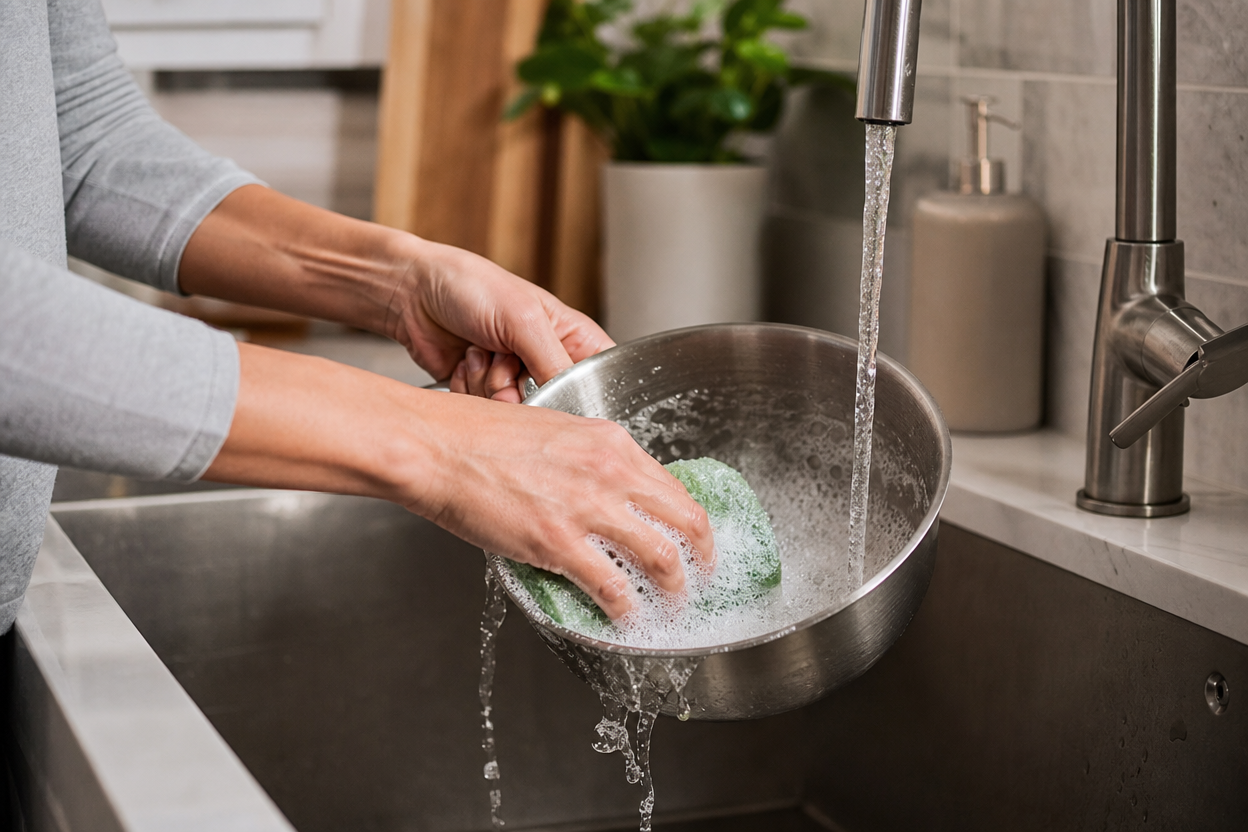
Hand washing sounds like a sacrifice. It isn’t, once you know the workflow.
For everyday cleaning (no stuck food):
Fill the pan with hot water immediately after use — while it’s still warm. Add a small squirt of dish soap. Let it sit 60 seconds, then wipe with a non-abrasive sponge. Rinse, dry with a towel. Done. The pan cools during the soak, making it safe to handle, and the residual heat from cooking helps lift any residue.
For stuck or burnt food:
Add a cup of water to the pan, bring to a simmer on the stove. The hot water loosens almost everything. Pour it out, then use a paste of baking soda and water with a soft sponge for any remainder. Rinse thoroughly.
For heat tint or rainbow marks:
Sprinkle Bar Keepers Friend (contains oxalic acid) onto a damp sponge, rub gently in the direction of the steel’s grain (the faint directional lines on the surface), rinse. The marks come off in under a minute.
For mineral deposits / white film from hard water:
Pour a small amount of white vinegar into the pan, swirl it, leave 2 minutes, then rinse. The acidity dissolves calcium deposits instantly.
For regular shine maintenance:
Once a month, a light rub with a few drops of mineral oil on a cloth keeps the surface looking new and adds a thin barrier against moisture. This takes 30 seconds.
None of these steps require specialty products or much time. The 3-minute investment per pan is considerably less than the cost of replacing a clad pan whose rim has corroded from repeated dishwasher cycles.
FAQ
Why shouldn’t you put stainless steel pans in the dishwasher?
The main risks are alkaline detergents (pH 9–12) gradually breaking down the chromium oxide passive layer, chlorine compounds causing cumulative pitting, and high heat accelerating both processes. For multi-ply pans, there’s an additional risk of alkaline detergent corroding the exposed aluminum core at the rim. None of this causes immediate failure — the damage is slow and cumulative, which is why many people don’t notice until the pan has visibly degraded.
Is 304 stainless steel (18/8) dishwasher safe?
Yes, 304 stainless steel — the same as 18/8 grade — holds up well to machine washing. Its 8% nickel content gives it solid corrosion resistance. It’s not as resilient as 18/10 (316 grade) under harsh conditions, but for normal home dishwasher use it performs reliably. Avoid chlorinated detergents and dry immediately for best results.
Is 18/10 stainless steel dishwasher safe?
18/10 is the most dishwasher-resilient common grade. The 10% nickel content stabilizes the austenitic structure and provides better resistance to chloride-induced corrosion than lower-nickel grades. Most premium cookware (All-Clad, Tramontina Tri-Ply) uses 18/10 for the interior cooking surface. You can machine-wash it, though hand washing still extends the lifespan of the finish.
Do stainless steel pans get ruined in the dishwasher?
“Ruined” is relative. A single cycle won’t destroy a pan. Hundreds of cycles over years with chlorinated detergents and high-heat cycles will progressively dull the finish, may cause pitting in lower-grade steel, and can corrode the aluminum rim in clad pans. Whether that constitutes “ruined” depends on how much you care about appearance and longevity vs. convenience.
What is the best detergent for stainless steel in the dishwasher?
Choose a chlorine-free, phosphate-free formulation — liquid gels tend to have lower pH than powder or pods. Seventh Generation Dishwasher Gel and Ecover Dishwasher Powder are widely cited by cookware enthusiasts as gentler options. Avoid any product listing sodium hypochlorite (bleach) as an ingredient.
Why did my stainless steel pan turn dull and white after the dishwasher?
White film is almost always mineral deposits from hard water — harmless and removable with white vinegar. A general dull matte appearance (not film, but a change in the steel’s reflective quality) is more serious and suggests the surface has been etched by repeated alkaline exposure. The former is cosmetic; the latter is surface degradation.
Can I put the lid of a stainless steel pan in the dishwasher?
Stainless steel lids are generally fine. If the lid has a silicone seal around the rim, check the silicone’s temperature rating — most dishwasher cycles are fine, but the drying cycle’s heat can degrade lower-quality silicone over time.
Conclusion
The dishwasher question for stainless steel doesn’t have one answer — it has a gradient. 18/10 grade, single-ply construction, with chlorine-free detergent and immediate drying: that’s the low-risk profile, and machine washing there is a reasonable choice. 18/0 grade, clad construction, with bleach-based pods and a long drying cycle: that’s where gradual damage is almost guaranteed.
Most people land somewhere in the middle and never read their pan’s care guide. The practical takeaway: know your grade, ditch the chlorine pods, and if you own a clad pan worth more than $80, three minutes of hand washing is probably the smarter investment. The pan will last years longer — and the chromium will handle the rest.