

Quality stainless steel cookware lasts 20–50 years — or a lifetime — when cared for correctly. The pan itself doesn’t wear out; what shortens its life are specific, avoidable mistakes: thermal shock, adding salt to cold water, dishwasher use, and wrong storage. This guide covers exactly how long to expect from different grades and constructions, the real signs a pan needs replacing, and nine evidence-backed habits that make the difference between a pan that fails in five years and one that outlasts your kitchen.
The Real Lifespan Numbers (Not the Marketing Version)
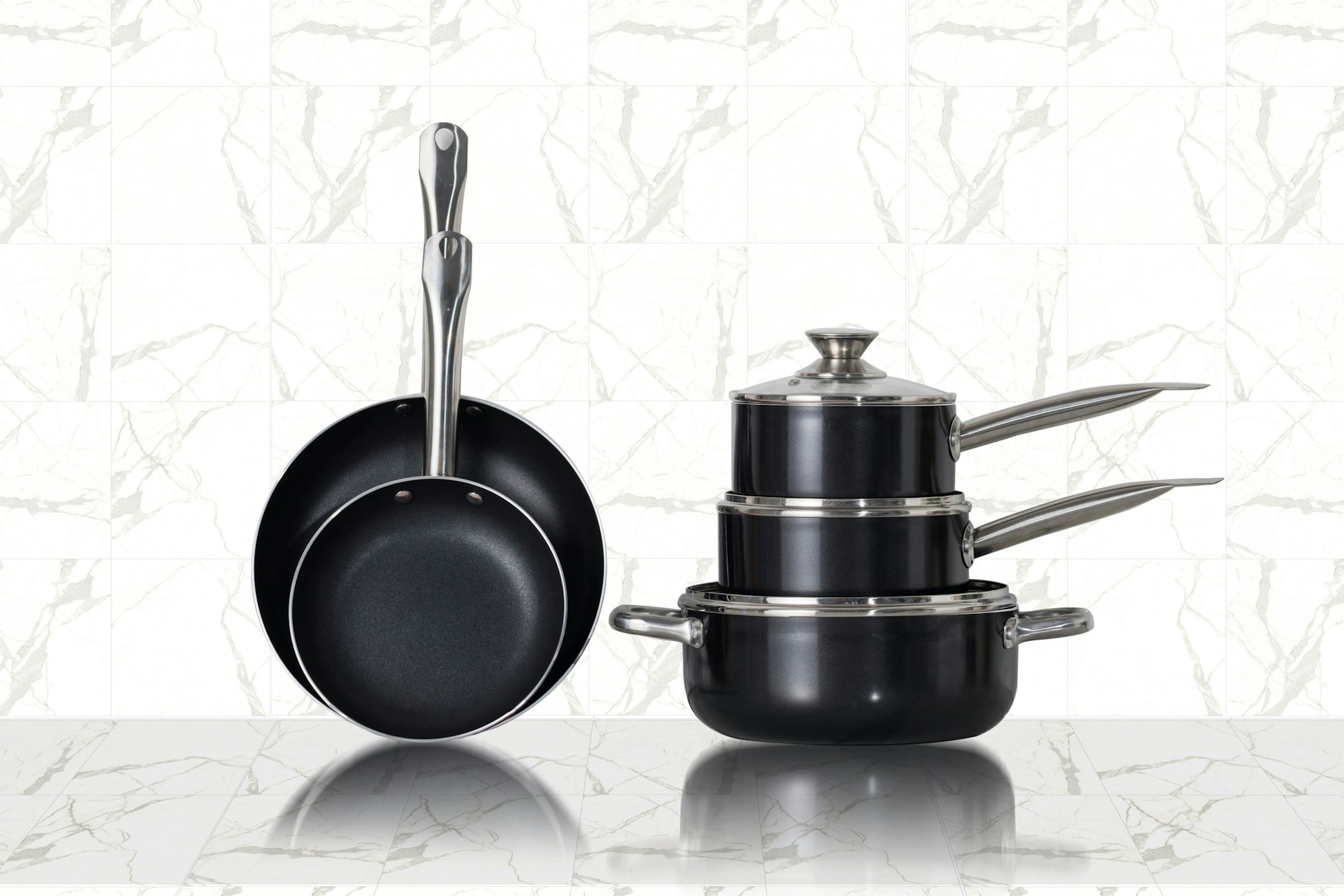
Most stainless steel cookware brands say “lasts a lifetime.” That’s technically true for high-quality pans — but it glosses over the wide range in real-world outcomes.
Here’s what the evidence shows:
| Cookware Type | Realistic Lifespan | Under Ideal Care |
|---|---|---|
| Budget stainless (impact-bonded, 18/0) | 3–8 years | 10–15 years |
| Mid-range 3-ply (18/8 or 18/10) | 10–25 years | 30+ years |
| Premium 5-ply fully-clad (18/10) | 25–50 years | Lifetime |
| Commercial-grade 316 stainless | 30–50+ years | Lifetime |
Viking Culinary puts the standard range at 10–25 years for most stainless steel cookware, with proper care extending that to a lifetime. That aligns with what I’ve observed: a cheap disc-bottom sauté pan I used daily for five years warped by year three; a 5-ply clad skillet I’ve had for over eight years still sits flat and cooks evenly.
The construction matters more than the brand. Fully-clad pans (where the aluminum or copper core runs up the sides, not just across the base) distribute stress more evenly under heat, which is the primary reason they resist warping longer.
What the Grade Numbers Actually Mean for Durability
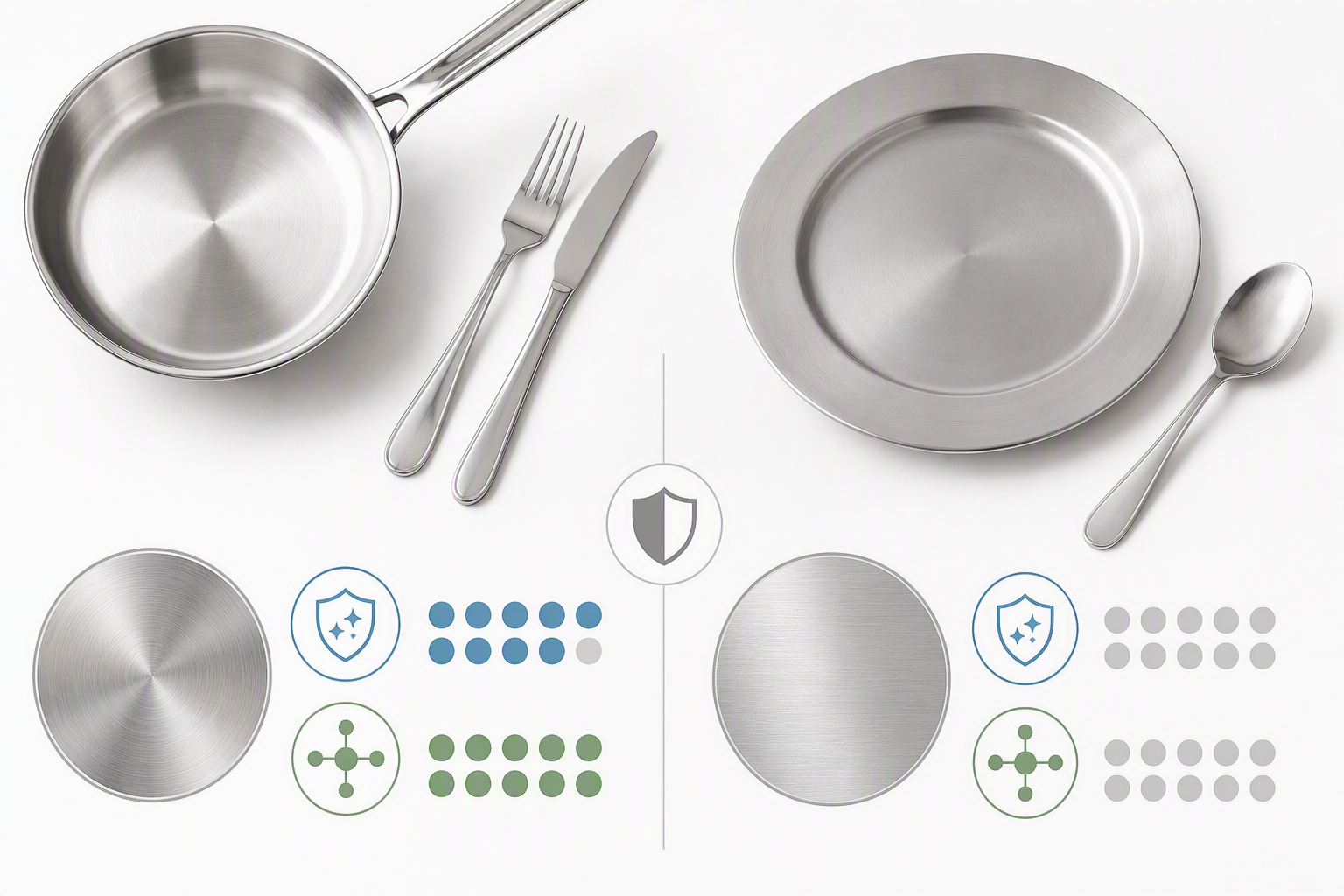
The “18/10” or “18/0” stamped on cookware is not marketing language — it’s a material specification that directly affects how long your pan resists corrosion and staining.
- 18/10 (Type 304): 18% chromium + 10% nickel. The nickel creates a shinier, more corrosion-resistant surface and gives the steel better acid resistance. This is the standard for quality cookware.
- 18/8 (also Type 304): Near-identical to 18/10 in practical kitchen performance. The 2% nickel difference is negligible for most home cooks.
- 18/0: 18% chromium, zero nickel. Cheaper, less corrosion-resistant, and more prone to rust over time — especially if the surface gets scratched and exposed to acidic foods or salt.
- 316 (marine grade): A distinct grade (16–18% chromium, 10–14% nickel) with 2–3% molybdenum added, which dramatically improves resistance to chloride-induced pitting. Note: 316 is not simply 18/10 with molybdenum — the base Cr/Ni ratios differ slightly from Type 304. Rarely found in home cookware; common in commercial and medical-grade applications.
For durability, 18/10 (304) is the practical minimum for cookware worth keeping long-term. 18/0 is fine for flatware that isn’t exposed to prolonged heat and acid, but in a pan it will show its limits faster.
The Three Failure Modes (And What Causes Each)
Most stainless steel pans don’t die of old age. They fail for one of three specific reasons.
1. Warping

A pan warps when different layers expand and contract at different rates. The most common trigger is thermal shock — pouring cold water into a screaming-hot pan, or setting a hot pan directly into a cold sink.
Stainless steel expands significantly under high heat. When you hit it with cold water, the sudden contraction buckles the base. Thinner pans (single-ply or impact-bonded) are especially vulnerable because there’s no thick aluminum core to absorb and distribute the temperature differential.
A warped pan rocks on a flat stovetop, creates uneven heat, and can’t be flattened at home. The practical test: if the pan visibly rocks on a flat stovetop or spins freely, it’s warped enough to affect cooking. Some sources cite a 0.5mm straightedge test, but no major cookware standard has formally defined a threshold — use the rocking test as your gauge.
2. Pitting
Pitting is localized corrosion: small craters etched into the steel surface by chloride ions. The most common cause in kitchens is adding salt to cold or room-temperature water. Salt sits on the steel surface before dissolving, attacking the chromium oxide layer that gives stainless steel its “stainless” property.
The fix is simple: always bring the water to a boil before adding salt. At boiling temperature, salt dissolves and disperses instantly rather than sitting on the surface.
Pitting that’s already formed can’t be reversed. Surface-level pits are cosmetic. Deep pitting that feels rough to the touch or creates visible craters is a structural concern — those pockets can harbor bacteria and compromise the non-reactive surface.
3. Handle Failure
Handles are often the first functional failure point, especially on budget pans where the rivets are aluminum rather than stainless. Loose handles are a safety hazard. Some can be tightened; others indicate the rivet or screw connection has corroded beyond repair.
9 Habits That Extend Stainless Steel Lifespan
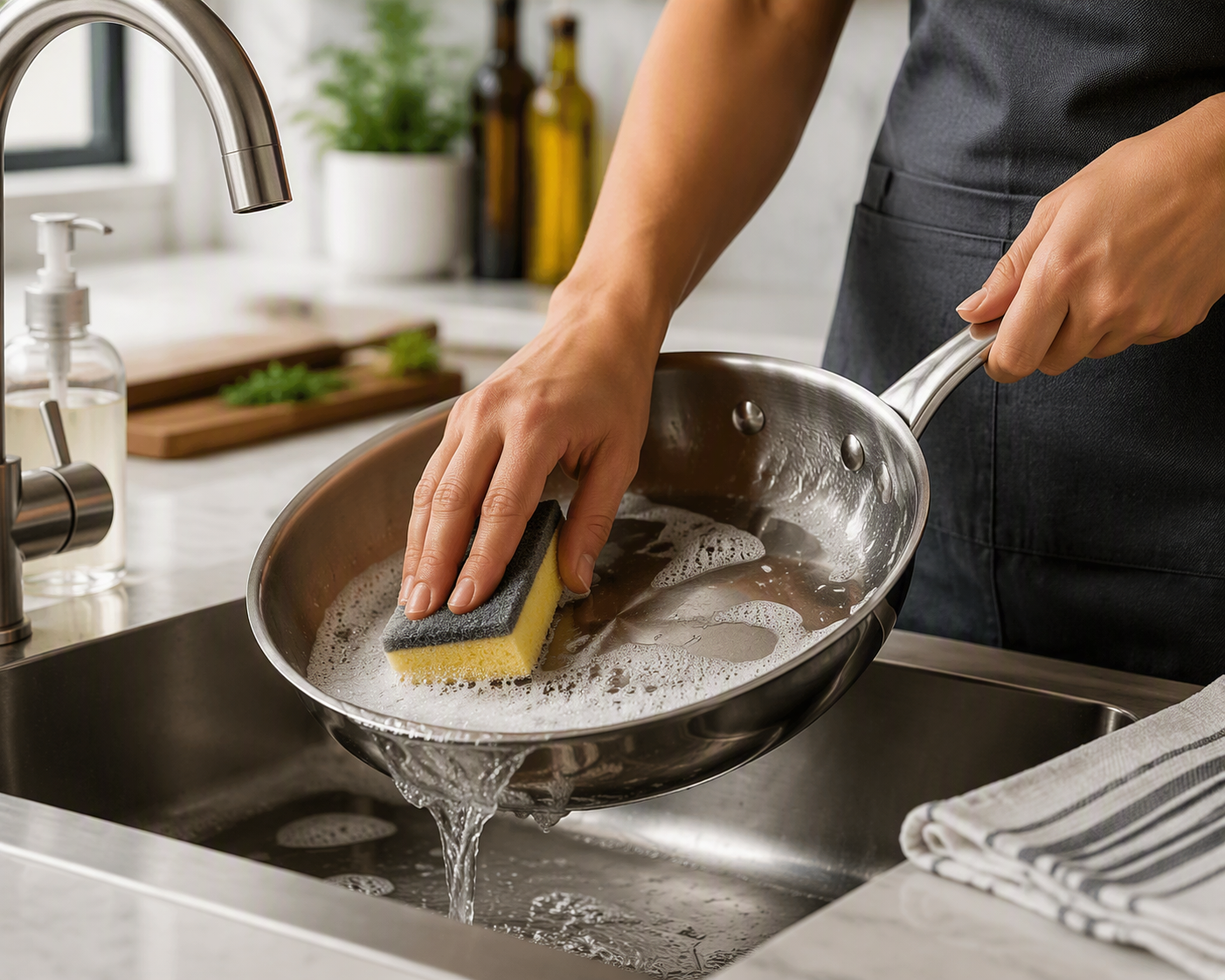
These aren’t the generic “hand wash and dry” tips you’ve already read. Each one targets a specific failure mechanism.
1. Let it cool before washing.
The single most impactful habit. Five minutes of cooling before rinsing eliminates virtually all warping risk from thermal shock. Not 30 minutes — just enough that the pan no longer sizzles when touched.
2. Add salt only to boiling water.
This prevents pitting directly. It’s also a better cooking practice — salt dissolves uniformly in boiling water rather than creating salty pockets near the bottom.
3. Hand wash, even if the label says dishwasher-safe.
Dishwashers expose pans to high-alkaline detergents, prolonged heat cycles, and hard water minerals. Made In Cookware’s care guide explicitly recommends handwashing to preserve the finish and prevent warping — the “dishwasher-safe” label is a liability protection statement, not a recommendation.
4. Dry immediately after washing.
Water left on the surface, especially hard water, deposits calcium and mineral spots. Over time these can pit the surface and dull the finish. A quick dry with a kitchen towel after washing costs 20 seconds.
5. Preheat before adding oil.
This prevents food from sticking and burning onto the surface, which is what leads to aggressive scrubbing — the scrubbing itself that scratches the steel. The water bead test: add a few drops of water to the pan; when they bead and roll around (the Leidenfrost effect), the pan is ready for oil.
6. Use wood, silicone, or nylon utensils.
Metal utensils scratch the surface. Surface scratches don’t compromise food safety on stainless (unlike coated pans), but they do create micro-crevices where mineral deposits accumulate and corrosion can start.
7. Store with protection between pans.
Stacking without protection scratches the cooking surface. A set of pan protector pads or even paper towels between pans makes a visible difference over years of use.
8. Clean stains with baking soda, not bleach.
Bleach degrades the chromium oxide passive layer that keeps stainless steel corrosion-resistant. For stubborn stains: make a paste with baking soda and water, let it sit for a few minutes, then scrub with a non-abrasive sponge. For rainbow discoloration (heat tint), a small amount of white vinegar removes it completely — it’s cosmetic, not structural damage.
9. Match burner size to pan size.
Using a large burner with a small pan concentrates heat in the center, creating temperature differentials that stress the base over time. This is low-risk for a single cooking session but compounds into micro-warping over years.
Signs Your Stainless Steel Pan Actually Needs Replacing
Not every imperfection is a death sentence. Here’s how to read what you’re seeing:
| What You See | Verdict |
|---|---|
| Rainbow discoloration / heat tint | Keep it. Purely cosmetic; remove with vinegar. |
| Water spots / calcium buildup | Keep it. Clean with vinegar or Bar Keepers Friend. |
| Light surface scratches | Keep it. Normal wear; doesn’t affect safety or performance. |
| Minor pitting (smooth, not deep) | Keep it. Monitor; clean thoroughly. |
| Pan rocks on a flat surface | Replace. Warping creates unsafe, uneven cooking. |
| Deep pitting with visible craters | Replace. Bacterial trap; compromised surface. |
| Exposed core layer at rim or base | Replace. Dissimilar metals exposed to food and moisture. |
| Rust that won’t clean off | Replace. Passive layer is compromised. |
| Handle that can’t be tightened | Replace immediately. Safety hazard. |
Stainless Steel vs. the Alternatives: Who Wins the Lifespan Race?
Stainless steel sits in a specific tier when it comes to raw longevity:
- Cast iron and carbon steel: Theoretically indefinite lifespan (re-seasoning restores function), but requires active maintenance — rust, warping, and seasoning loss are ongoing management tasks.
- Stainless steel (5-ply, 18/10): 25–50+ years with minimal maintenance. No seasoning required. Forgiving with acidic foods.
- Nonstick (PTFE or ceramic-coated): 2–5 years before coating degrades, regardless of care. Not in the same longevity category.
- Hard-anodized aluminum: 5–15 years, but coating can chip and oxidation eventually degrades the surface.
For home cooks who want maximum lifespan with minimum maintenance, 5-ply 18/10 stainless steel is the practical winner. For those willing to manage seasoning, cast iron matches or exceeds it.
What I Actually See After Long-Term Use
I’ve been using a 3-ply 18/10 skillet daily for eight years. It has surface scratches from utensil use in its first two years (before I switched to silicone). There’s a faint rainbow tint near the center that vinegar doesn’t fully remove anymore. But it sits flat, heats evenly, and shows no pitting.
The one pan I replaced in that same period was a budget disc-bottom sauté pan that warped by year three — precisely the thermal shock failure described above. I was in the habit of rinsing it immediately after cooking.
The lesson isn’t complicated: stainless steel fails fast when you abuse the thermal shock vulnerability, and lasts almost indefinitely when you don’t.
Summary
Stainless steel cookware is one of the most durable kitchen investments available — but “lifetime durability” depends entirely on avoiding three specific failure modes: thermal shock (warping), early salting (pitting), and dishwasher abuse. A quality 18/10 fully-clad pan used with those nine habits in mind should outlast most of the kitchens it’s used in. If yours is showing rainbow tint or calcium spots, don’t worry — a splash of vinegar fixes both. If it’s rocking on the stovetop or has deep craters, it’s done its job and it’s time for a replacement.
FAQ
How long does stainless steel cookware last?
Quality 18/10 stainless steel cookware lasts 25–50 years or a lifetime with proper care. Budget 18/0 pans realistically last 3–10 years. The biggest variable is construction: fully-clad 5-ply pans significantly outlast disc-bottom or impact-bonded alternatives.
Can stainless steel pans warp?
Yes. Thermal shock — putting a hot pan under cold water or on a cold surface — is the primary cause. The fix is letting the pan cool for a few minutes before washing. Fully-clad pans warp less than impact-bonded designs because the thick aluminum core distributes temperature changes more evenly.
Why does my stainless steel pan have pits?
Pitting is almost always caused by adding salt to cold water and letting it sit against the steel surface before dissolving. Salt contains chloride ions that attack the protective chromium oxide layer. Always add salt to boiling water to prevent this.
Is it safe to use a scratched stainless steel pan?
Light surface scratches on stainless steel are cosmetic and don’t affect food safety — unlike scratched nonstick coatings. The chromium oxide passive layer regenerates continuously. Deep pitting that forms rough craters is a different concern (bacterial traps) and warrants replacing the pan.
What’s the difference between 18/10 and 18/0 stainless steel for cookware?
18/10 contains 10% nickel, which improves corrosion resistance, creates a brighter finish, and makes the surface more resistant to acidic foods over time. 18/0 has no nickel, making it cheaper but more prone to rust and corrosion, especially on scratched surfaces. For cookware intended to last decades, 18/10 (Type 304) is the minimum worth buying.
Should I replace my stainless steel pan if it has rainbow discoloration?
No. Rainbow “heat tint” is a cosmetic issue caused by the chromium oxide layer thickening under high heat. It doesn’t affect safety or cooking performance. Remove it with a small amount of white vinegar and a soft cloth.