
Stainless steel cups hold roughly 40% of the global reusable drinkware market and remain the default choice for wholesale buyers because they survive heavy use, photograph well for retail, and clear food-safety regulations in the US, EU, and most of Asia. The real sourcing decisions come down to three things: material grade (201, 304, or 316), whether you need OEM customization or standard stock, and which certifications your target market requires. This guide covers realistic MOQs, pricing benchmarks by product type, a supplier vetting checklist, and the red flags that signal a bad factory — drawn from hands-on sourcing across multiple production runs.
Why Stainless Steel Cups Still Lead Wholesale Drinkware
Stainless steel cups hold roughly 40% of the global reusable drinkware market, ahead of ceramic and plastic. The reasons buyers keep returning are practical: a 304-grade steel cup survives a warehouse drop test that shatters ceramic, ships at lower breakage rates, and complies with food-contact regulations across major markets without exotic coatings or processing.
For wholesale buyers, the margin profile works. A basic 12oz stainless steel cup sources at $1.00–$2.00 FOB China. An insulated double-wall travel mug in the same material runs $3.65–$5.50 FOB at scale. Retail prices for branded equivalents range from $12 to $35, which leaves room for distributor margin, freight, and import duty.
The market has matured. Competition among manufacturers is intense, and buyers who arrive with clear spec sheets can negotiate effectively.
The Grade Confusion That Costs Buyers Money: 201 vs 304 vs 316
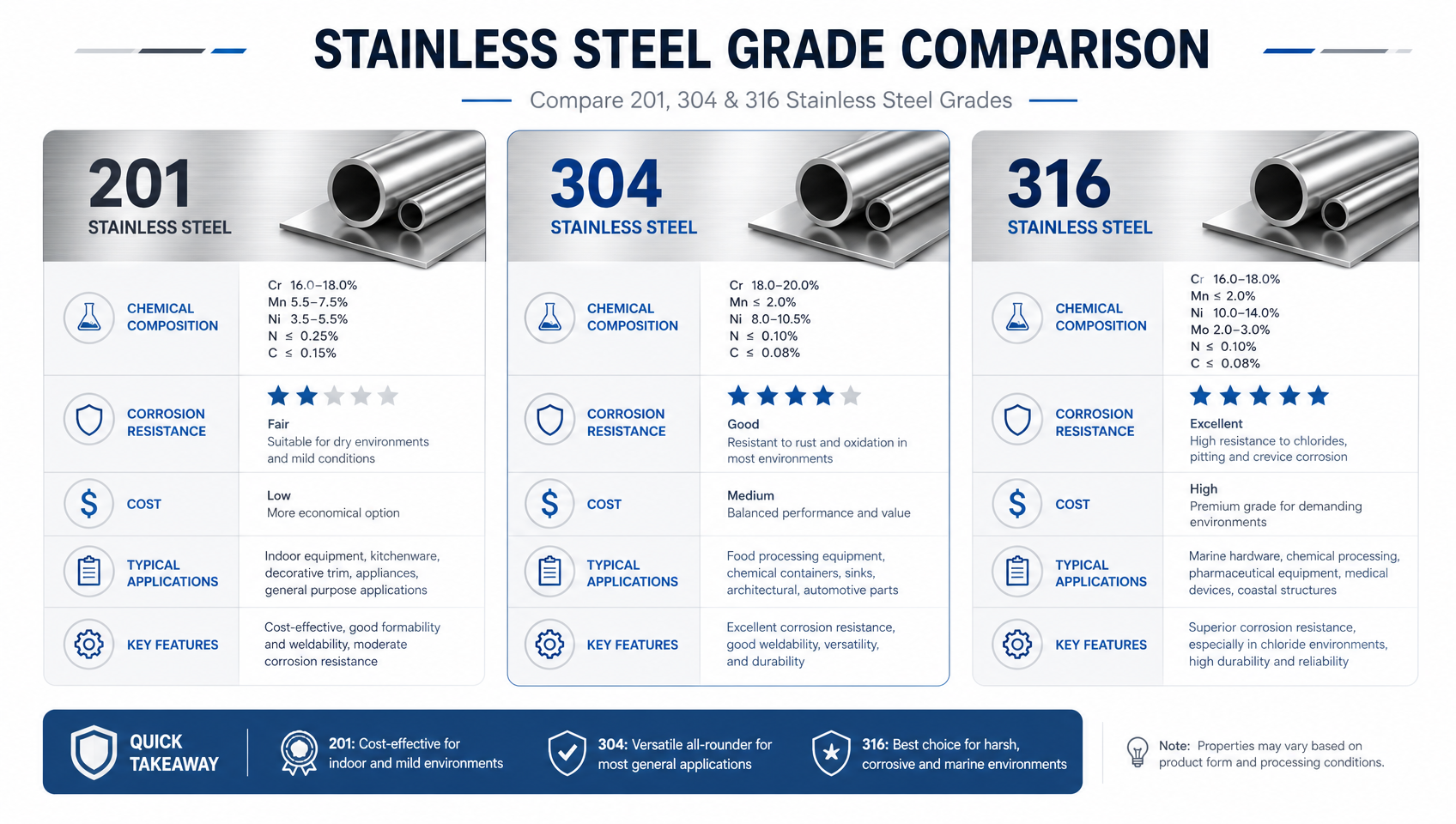
The grade printed on a spec sheet changes the product’s durability, safety profile, and price point — and substitution is common.
Most sourcing problems trace back to grade confusion. Either the buyer didn’t specify, or the supplier quietly used cheaper material.
Grade 201 substitutes manganese for nickel to achieve an austenitic structure. It costs roughly 15–20% less in raw material than 304, but corrodes faster in acidic liquids and chlorinated environments. For cups that hold coffee or tea daily, 201 is marginal. It works for short-lifecycle promotional giveaways or event cups, but fails faster in real use. Field test: a magnet will weakly stick to 201; it won’t stick to 304 or 316.
Grade 304 (also labeled 18/8) is the industry default for food-contact drinkware. It contains 18% chromium and 8% nickel, giving solid corrosion resistance for everything a cup will realistically encounter: coffee, tea, citrus juice, carbonated water. Under the FDA’s general food contact materials framework (21 CFR Parts 170–186) and EU Regulation (EC) No 1935/2004, 304 is considered compliant for food contact. For any wholesale program targeting US, EU, or Japanese retail, 304 is the baseline — not an upgrade.
Grade 316 adds 2–3% molybdenum, which improves resistance to chloride corrosion significantly. It’s standard in medical equipment, marine hardware, and premium outdoor brands. For most wholesale coffee cup applications, 316 is unnecessary — and adds roughly 25–30% to raw material cost. The cases where 316 earns its premium: cups marketed for salt-air environments, spa/wellness positioning, or brand differentiation programs where “316 surgical grade” is a marketing claim worth paying for.
| Grade | Nickel % | Corrosion Resistance | Food-Safe | Cost vs 201 | Best Application |
|---|---|---|---|---|---|
| 201 | 3.5–5.5% | Low | Marginal | Base | Short-life promos, events |
| 304 | 8–10.5% | Good | Yes (FDA/LFGB) | +15–20% | Standard wholesale programs |
| 316 | 10–14% | Excellent | Yes | +40–50% | Premium, outdoor, marine, medical |
Always request the mill certificate (material test report or MTR). It should list the batch/heat number, chemical composition, and the steel mill name. If a supplier hesitates or provides a generic document without batch numbers, grade substitution risk is real.
MOQ Reality Check: What Suppliers Actually Offer
MOQs typically run 300–1,000 pieces per SKU — but the real number depends on how much customization you’re adding.
Based on published supplier data from multiple factory websites:
- Stock items, no branding: 50–100 pieces is possible, but expect near-sample pricing and limited finish options.
- Logo engraving or print on stock items: 200–500 pieces is standard. Laser engraving MOQs skew lower than color printing because setup cost is minimal.
- Custom color coating (powder coat/electroplating) with logo: 500–1,000 pieces per colorway. A color change requires a full production setup run.
- Full OEM with custom mold/shape: 3,000–5,000 pieces minimum, plus tooling fees that typically run $800–$3,000 depending on mold complexity.
If your first order totals under 500 pieces, you’re in sampling territory with most Chinese manufacturers. You’ll pay near-sample unit pricing and have limited lead-time leverage. The range where you start getting competitive unit economics without overcommitting on a first run is 500–1,000 pieces per SKU.
OEM vs Off-the-Shelf: Choosing Your Path
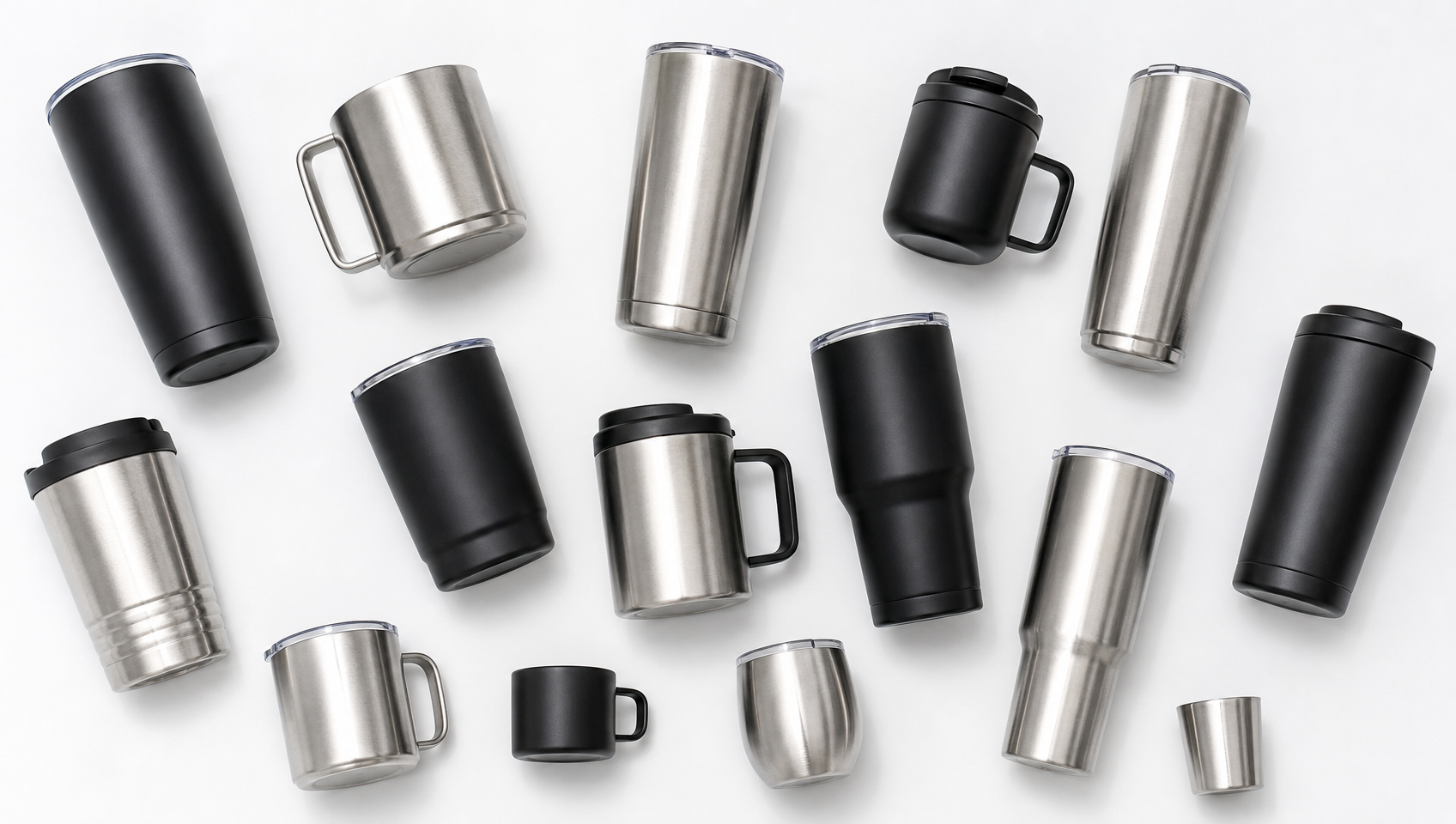
OEM (Original Equipment Manufacturer) means the factory builds to your specifications. ODM (Original Design Manufacturer) means you select from existing designs and add your branding. Most buyers use these terms interchangeably — suppliers don’t.
For most wholesale buyers starting out, ODM is the practical choice:
- Faster to market: No mold development. ODM production runs in 2–4 weeks versus 8–14 weeks for new OEM tooling.
- Lower risk: You’re producing a proven design with known failure rates, not debugging a new mold.
- Lower capital: No tooling investment ($800–$3,000+ avoided on a first order).
OEM makes sense when you have a specific functional requirement no existing design meets, an established brand that needs distinctive hardware, or enough volume (10,000+ pieces per year) to amortize tooling cost over time.
One mistake I see repeatedly: buyers pay for OEM tooling on a shape that’s already available as ODM from three factories. Before commissioning custom molds, spend 48 hours on Alibaba and ask three factories to send their standard catalogs. You’ll find 80% of what you want already exists.
Certifications That Unlock Markets
Your target market determines which certifications are mandatory — and getting this wrong can hold an entire container at customs.
| Market | Required/Expected | Notes |
|---|---|---|
| United States | FDA 21 CFR compliance, Prop 65 (CA) | Supplier self-declaration + third-party test report |
| European Union / Germany | LFGB (§31), EU Regulation (EC) No 1935/2004 | German retailers often require LFGB specifically; EC 1935/2004 is the general FCM framework |
| Japan | JHOSPA / JHPA | Food hygiene law compliance |
| Canada | Health Canada food contact standards | US test reports often accepted |
| UAE / Saudi Arabia | ESMA, SASO | Increasingly required for modern retail channels |
The minimum for any wholesale program targeting US or EU: a third-party test report confirming 304 or 316 grade, BPA-free status, and heavy metals (lead, cadmium) under limit. Since 2025, US retailers have increasingly requested PFAS-free declarations, driven by state-level legislation in several major markets.
Ask your supplier for test reports showing the actual test date and the accredited lab name — SGS, Bureau Veritas, and Intertek are the most widely accepted. Reports older than 24 months are routinely rejected by major retailers on supplier audits.
Price Ranges and What Moves Them
Landed cost is rarely the same as FOB cost. A realistic breakdown by product type at current market pricing (FOB China):
| Product | MOQ | FOB Price Range |
|---|---|---|
| Basic 12oz steel cup, 304, logo printed | 1,000 pcs | $1.20–$1.80 |
| 12oz double-wall insulated tumbler, 304, powder coat + logo | 500 pcs | $3.80–$5.50 |
| 20oz insulated travel mug with lid, 304 | 1,000 pcs | $4.50–$7.00 |
| 12oz cup, 316 grade, ODM with branding | 500 pcs | $6.00–$9.00 |
| Full OEM custom mug, 304, 30oz with custom lid | 3,000 pcs | $7.00–$12.00 |
Add sea freight ($100–$150 per CBM), US import duties, and warehousing for your true landed cost. For China-origin goods under HTS 7323.93 (stainless steel household articles), the base MFN rate is approximately 2%, but Section 301 tariffs on Chinese-origin goods significantly raise the effective rate — verify current rates with a customs broker before finalizing landed cost projections, as Section 301 rates have been subject to ongoing adjustment. A container of 10,000 mugs typically occupies 12–18 CBM depending on packaging.
What moves the price: material grade (201 saves 15–20%, 316 adds 40%+), surface treatment (bare steel < brushed < powder coat < electroplating < vacuum plating), lid complexity, and order volume. Doubling quantity from 500 to 1,000 pieces typically drops unit cost 12–18%.
Red Flags Every Sourcing Manager Should Know

These come from direct factory vetting — situations that looked acceptable on paper but weren’t:
No mill certificate on request. A legitimate supplier has material test reports on file for every production run. “We guarantee it’s 304” without documentation isn’t acceptable for any serious wholesale program.
Sample passes, bulk production doesn’t. Sample quality is often better than production quality because factories sometimes dedicate better operators to sample runs. Always plan for a pre-shipment inspection (AQL 2.5 standard) before final payment. Third-party QC visits typically cost $150–$300 per factory.
Certifications are “in progress” or “being renewed.” A factory that maintains LFGB and FDA certification continuously has no documentation gaps. A gap means either recent failure or poor compliance management.
Lead time quoted at 7 days. Standard production for a branded order of 500+ pieces runs 15–30 days. A 7-day quote usually means existing stock from a prior run — which may not match your spec.
They can’t name their raw material supplier. Top-tier factories source steel from recognized mills: Baosteel, TISCO, Yongxing. If a supplier won’t disclose their steel source or changes the answer, grade substitution risk is elevated.
FAQ
What is the minimum order quantity for stainless steel cups wholesale? Most Chinese manufacturers start at 300–500 pieces per SKU for branded customized orders. Plain stock items sometimes move in quantities of 50–100 pieces at near-retail pricing. Full OEM with custom molds requires 3,000–5,000 pieces minimum.
Is 304 or 316 stainless steel better for coffee cups? 304 is the industry standard and performs well for coffee, tea, and most everyday beverages. 316 adds chloride corrosion resistance that isn’t necessary for typical cup use. Unless your product positioning specifically requires 316 (marine, outdoor premium, spa), 304 is the right balance of safety, durability, and cost.
What certifications do I need to sell stainless steel cups in the US? At minimum: a third-party test report confirming FDA 21 CFR food-contact compliance, BPA-free status, and heavy metals under limit. California Prop 65 is a separate compliance layer. PFAS-free declarations are increasingly required by major US retailers as of 2025–2026.
What is the difference between OEM and ODM for drinkware? OEM means you design the product and the factory manufactures to your spec — requiring custom mold tooling. ODM means you select from the factory’s existing designs and add your branding. ODM is faster, lower risk, and cheaper for most buyers. OEM makes sense when volume and brand differentiation justify the tooling investment.
How do I verify a supplier’s stainless steel grade? Request the mill certificate (material test report) for the steel coil used in your order. It should include the heat/batch number, chemical composition, and the originating steel mill name. You can also commission a third-party XRF analysis on a production sample — typically $50–$150 per sample, with results in 24 hours.
The Grade You Specify Is the Product You Receive
Stainless steel cup wholesale is a mature, competitive market — which is an advantage for buyers. Factories are plentiful, pricing is transparent, and most decisions that determine product quality and market fit happen before the first order is placed: grade, MOQ path, certification scope.
Buyers who get burned aren’t the ones who negotiated badly. They’re the ones who didn’t specify clearly and didn’t verify. Get the mill certificate. Run a pre-shipment inspection. Match your certification requirements to your actual target market before production starts. Everything else is negotiable.