


This guide is written for B2B buyers — restaurant operators, hotel procurement teams, catering companies, and retail brand owners — sourcing stainless steel food containers in bulk. It covers what grade to specify (304 vs 316), how airtight seals actually work, what realistic MOQ and pricing look like, and a 5-point checklist to vet suppliers before you commit to an order. Skip the consumer-facing fluff; this is about making the right procurement call.
Why Wholesale Buyers Are Switching to Stainless Steel
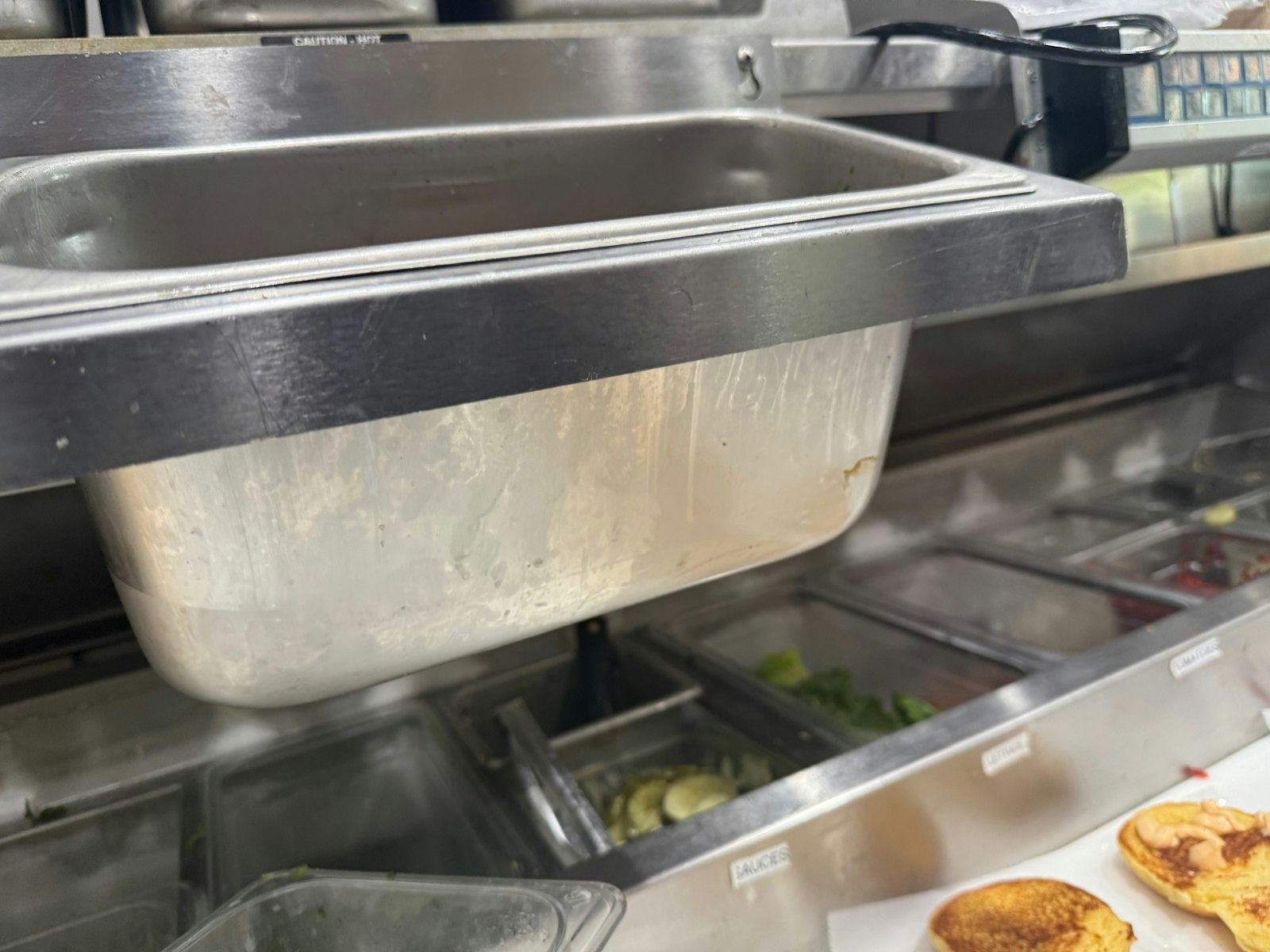
Plastic food containers are cheap per unit but expensive in the long run. They crack, absorb odors, and carry regulatory risk as more markets tighten rules around BPA and food-contact plastics. When I started comparing total cost of ownership for a catering operation using polypropylene containers vs. 304-grade stainless steel, the stainless option broke even within 18 months and outlasted plastic by years.
There are three real drivers behind the wholesale shift:
- Regulatory pressure. The EU’s Single-Use Plastics Directive and FDA guidance on food-contact materials are pushing food service businesses toward safer alternatives. Food-grade stainless steel (grades 304 and 316) meets both FDA and EU regulation (EC) No 1935/2004 for food contact materials.
- Brand positioning. Retailers and meal-prep brands use stainless containers to signal premium quality. The container is part of the product experience.
- Operational durability. A well-made stainless container handles daily commercial dishwasher cycles, freezer-to-oven temperature swings, and stacking under load — something most plastic containers cannot sustain beyond a year of heavy use.
304 vs 316 Stainless Steel: Which Grade Should You Specify?
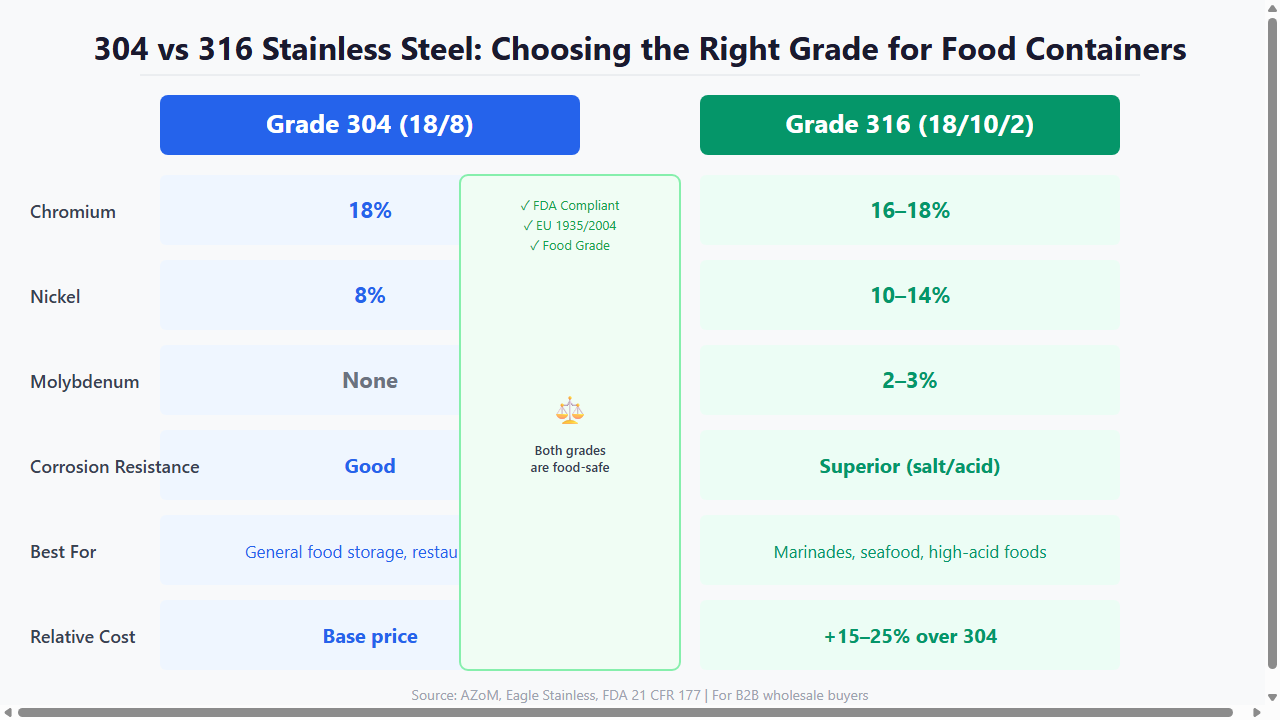
The short answer: 304 covers 90% of food storage applications. Specify 316 only for high-acid, high-salt, or marine environments.
Both grades are classified as food-grade and meet FDA and ISO standards for direct food contact. The composition difference is small but meaningful:
| Property | 304 (18/8) | 316 (18/10/2) |
|---|---|---|
| Chromium | 18% | 16–18% |
| Nickel | 8% | 10–13% |
| Molybdenum | None | 2–3% |
| Corrosion resistance | Good | Superior (especially saltwater/acid) |
| Typical use | General food storage, meal prep, restaurants | Sauces, marinades, seafood, dairy processing |
| Relative cost | Base price | ~15–25% premium over 304 |
The molybdenum content in 316 is what makes it more resistant to chloride corrosion — relevant if you’re storing pickles, fermented foods, or anything with high salt content long-term. For a standard restaurant mise en place setup or a meal-prep operation, 304 is the correct specification and the more cost-effective choice.
One thing worth flagging from my sourcing experience: grade mislabeling is real. A viral YouTube test showed several Aliexpress-listed “316” containers that tested as 304 or even lower grades. When ordering wholesale, ask suppliers for their material test certificates (MTCs) and cross-reference with the steel mill number on the certificate.
How Airtight Seals Work (and What to Look For)
The term “airtight” is used loosely in product listings. In practice, there are three seal mechanisms used in stainless steel food containers:
1. Silicone ring + latch system — A food-grade silicone gasket sits in a channel around the lid perimeter. One or more locking latches press the lid against the gasket. This is the most reliable mechanism for true airtight performance. Look for silicone rated to at least -40°C to +220°C for freezer-to-oven versatility.
2. Snap-fit plastic lip — Common in lower-cost containers. A plastic rim snaps over the container edge. Less reliable for liquids and loses fit over time due to temperature cycling.
3. Threaded lid (canister style) — Used in round bulk storage containers. Very effective for dry goods (flour, rice, coffee). Not suitable for liquid-heavy foods.
For restaurant and catering use, the silicone ring + latch system is the only mechanism I’d specify. Ask for the silicone grade in the product spec — platinum-cured silicone is the cleanest and most durable option, while cheaper containers may use blended or pigment-heavy silicone that degrades faster and can transfer taste.
Wholesale Pricing and MOQ: What to Expect
Pricing varies significantly by grade, capacity, and supplier tier. Based on typical factory-direct and trading company quotes I’ve reviewed:
| Container Type | MOQ (units) | FOB Price Range (USD/unit) |
|---|---|---|
| 304 SS basic (no seal) | 500–1,000 | $1.20–$2.50 |
| 304 SS with silicone lid + latches | 500–1,000 | $2.80–$5.50 |
| 316 SS with silicone lid + latches | 500–1,000 | $3.80–$7.00 |
| OEM/custom logo + packaging | 1,000–3,000 | Add $0.30–$1.00/unit |
These are FOB China port prices. Add sea freight (typically $100–$150 per CBM) and import duties (US Section 301 tariffs on steel housewares from China can range from 7.5–25%; verify your HTS code) before finalizing landed cost.
For buyers who need smaller quantities, domestic US wholesale distributors (like WebstaurantStore or restaurant supply chains) offer smaller MOQs but at 2–3x the price per unit vs. direct factory sourcing.
5-Point Supplier Vetting Checklist
Placing a large wholesale order on a new supplier is a real risk. Here’s the checklist I’d run through before committing:
1. Request Material Test Certificates (MTCs)
Legitimate manufacturers will provide MTCs from the steel mill, showing the exact chemical composition. Cross-reference the mill name against the certificate — this is the only way to confirm grade.
2. Verify Food Contact Certifications
For US markets: FDA food-contact compliance letter or self-declaration per 21 CFR 177. For EU: EC No 1935/2004 compliance. For Germany: LFGB certification. Ask the supplier for these documents before sampling.
3. Request Pre-Shipment Samples
Test the seal under real conditions: fill with liquid, invert for 30 seconds, then refrigerate overnight. Test the latch mechanism for at least 50 open/close cycles. Inspect weld seams for internal burrs.
4. Check Production Lead Times vs. Your Inventory Cycle
Standard lead time from Chinese factories is 30–45 days for stock items, 60–75 days for custom OEM. Build this into your planning buffer.
5. Clarify Defect Rate Policy
Ask about their AQL (Acceptable Quality Level) standard. Reputable manufacturers follow AQL 2.5 for consumer goods. Get the defect rate policy in writing: what percentage of defects triggers a replacement or credit?
Use Cases by Business Type
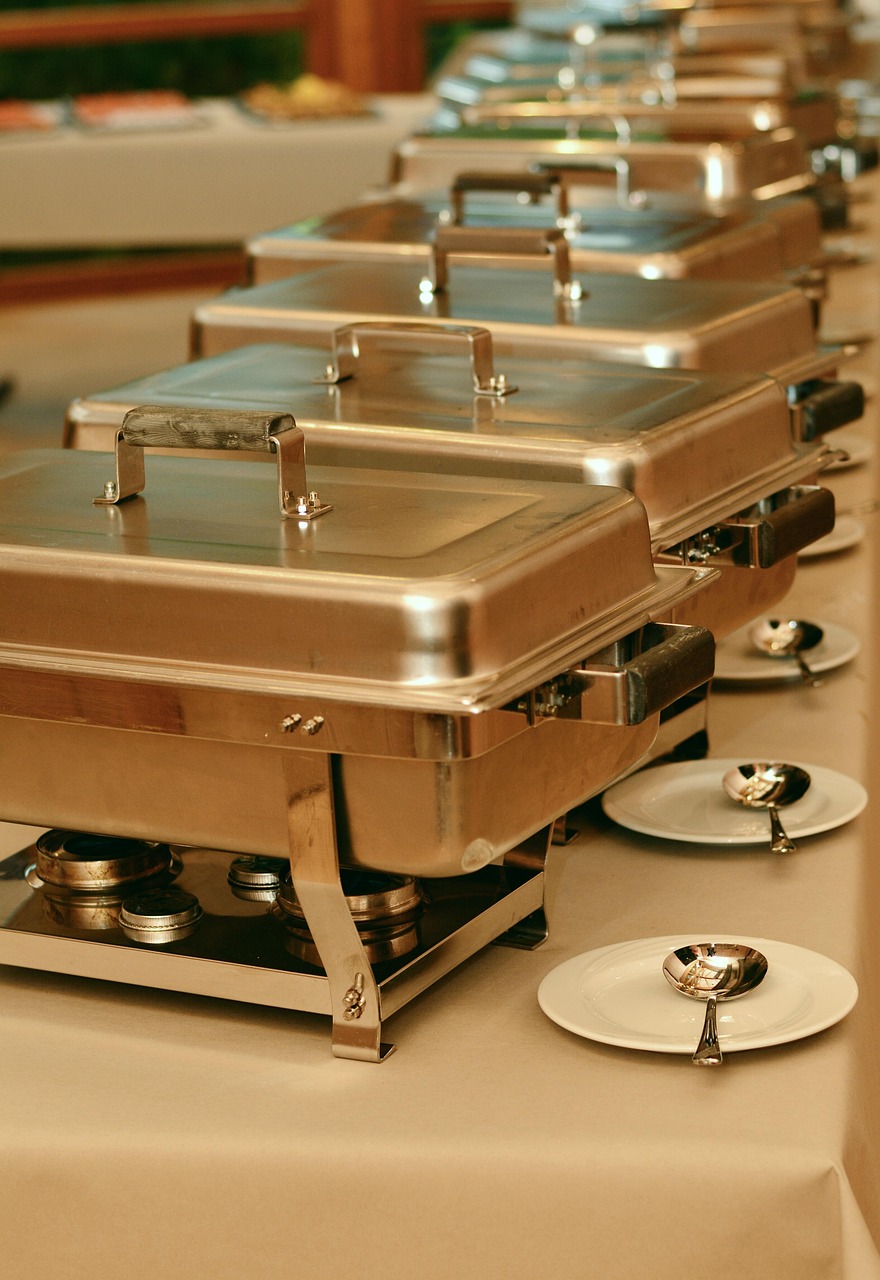
Not all wholesale buyers have the same requirements. Here’s how the spec changes by segment:
Restaurants and commissary kitchens: Prioritize stackability, standardized sizes (hotel pans and 1/6, 1/3, 1/2 GN dimensions are universal), and dishwasher compatibility. 304 grade is standard. Airtight seals are secondary — most kitchen containers just need good-fitting lids, not a hermetic seal.
Catering and meal-prep brands: Airtight performance matters here because containers are often pre-filled and transported. Silicone latch lids are essential. Portion-sized containers (500ml–1L) move fastest in this segment.
Retail and eco-brand buyers: Consumers in this segment pay more for visible quality cues: brushed finish, clean laser-engraved logos, and satisfying latch feel. OEM customization adds cost but is often necessary to justify a premium retail price. 304 grade with platinum-cured silicone lids hits the right value/quality balance.
What Stainless Steel Can’t Do (Be Honest With Your Customers)
Stainless steel is excellent — but it’s not right for every food storage application. Things worth communicating to your end customers:
- Not microwave-safe. Metal and microwaves don’t mix. This is a real friction point for consumers transitioning from plastic.
- Acidic foods over long storage: Highly acidic foods (citrus-based sauces, tomato-heavy dishes) stored in 304 grade for extended periods can cause slight metallic taste. 316 grade or glass-lined lids mitigate this.
- Not transparent. Unlike glass, you can’t see contents without opening the container. Some buyers find this inconvenient.
Being upfront about these limitations builds credibility and reduces returns — which matters more in a B2B relationship than a retail one.
The Right Container for the Right Volume
Whether you’re outfitting a new hotel kitchen, launching a private-label eco brand, or stocking a catering fleet — the procurement decision starts with grade and seal, not price. Specify 304 for general use, insist on silicon ring + latch for anything that needs to stay airtight, and vet your supplier’s MTCs before placing your first order.
The cost savings of direct factory sourcing are real, but they only materialize when the product performs reliably. Getting the spec right upfront is cheaper than a customer complaint at scale.





