

Stainless steel kitchen utensils sets are among the most in-demand products in wholesale kitchenware sourcing. This guide is written for B2B buyers — importers, Amazon sellers, restaurant procurement teams, and private-label brands — who need to evaluate material grades, verify certifications, negotiate MOQs, and avoid common quality traps. We cover 18/8 vs 18/10 grade differences, FDA and LFGB certification requirements, realistic FOB pricing, OEM/ODM packaging options, and a 7-point supplier vetting checklist drawn from real trade experience.
What Makes a Stainless Steel Kitchen Utensils Set “Wholesale-Ready”
Not every kitchen utensil set that looks good in a retail listing is actually built for bulk procurement. When I evaluate wholesale utensil sets, three criteria determine whether a product is wholesale-ready: consistent material grade across the entire set, certifiable food-contact compliance, and packaging that survives container shipping.
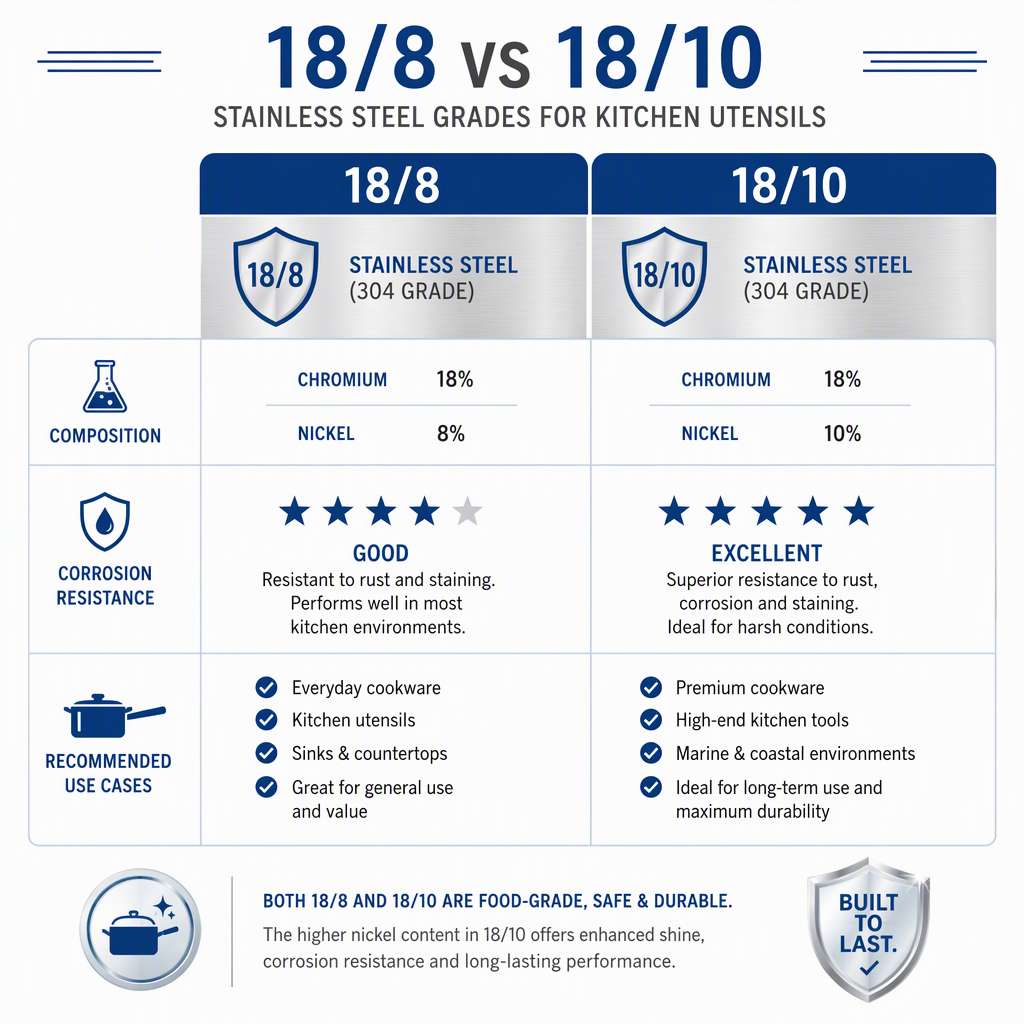
The stainless steel grade printed in a supplier’s catalog is where most problems start. The two grade designations you’ll encounter in kitchen utensil production are 18/8 and 18/10 — the numbers refer to chromium and nickel content by percentage. Both typically correspond to 304-grade austenitic stainless steel (ASTM A240 Type 304), with 18/10 indicating a slightly higher nickel content within the 304 specification range. True 316-grade stainless is a distinct alloy that adds 2–3% molybdenum to the 18/10 base, which is what gives it superior resistance to chloride corrosion — it is rarely used in consumer utensil production due to cost, but does appear in marine-grade and high-end professional cookware. That nickel content difference between 18/8 and 18/10 still matters: higher nickel improves corrosion resistance against acidic foods like tomato sauce, vinegar, and citrus marinades.
For most wholesale buyers targeting general retail or hospitality, 18/8 or 18/10 (304 grade) is the standard workhorse — durable, widely produced, and cost-effective. For buyers supplying professional kitchens in chloride-heavy environments (coastal hotels, seafood restaurants), or where LFGB certification for heavy metal migration is required, specifying 316-grade commands a meaningful price premium and justifies it.
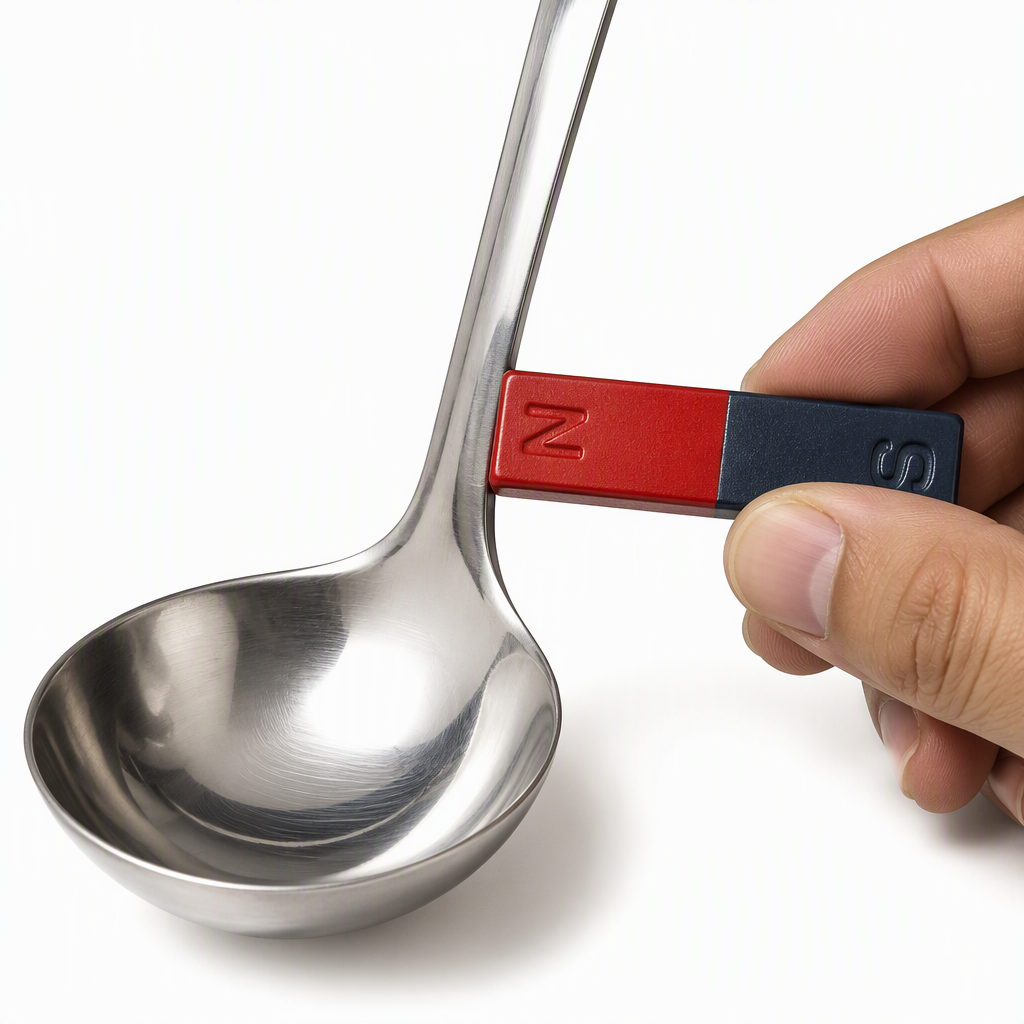
There is a third grade worth knowing: 430 (ferritic stainless), which contains 16–18% chromium but essentially zero nickel. It’s magnetic, cheaper to produce, and significantly more prone to staining. Many low-cost suppliers use 430 for handles or decorative elements while claiming the set is “stainless steel” — which is technically true but misleading. A quick magnetic test on a finished utensil will tell you the grade: 18/8 and 18/10 are weakly or non-magnetic; 430 will stick firmly to a magnet.
For a bulk order, request the material test report (MTR) — a mill certificate tied to the specific steel batch used in your order. Legitimate manufacturers keep these on file. If a supplier can’t produce an MTR within 48 hours, that’s a red flag.
Standard Piece Counts and Set Configurations for Bulk Orders
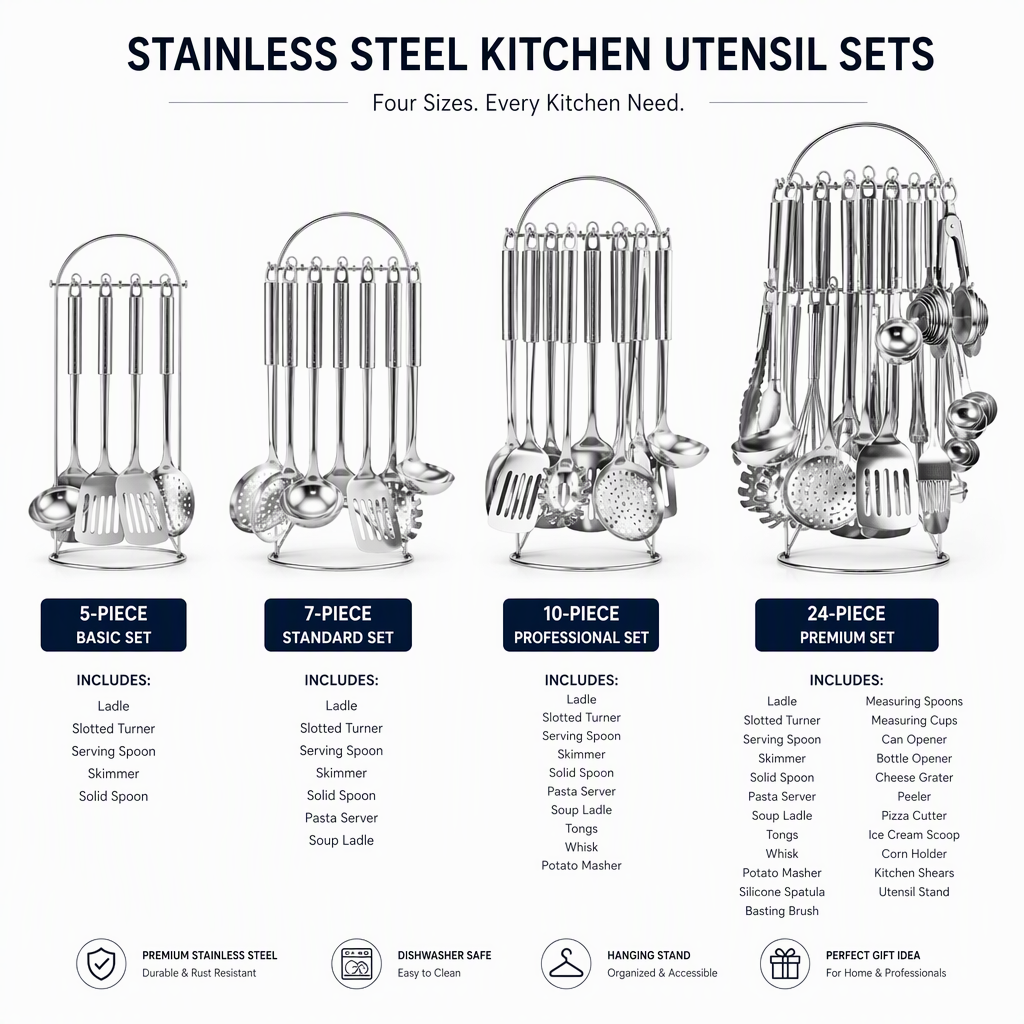
Wholesale kitchen utensil sets typically come in four configurations, each targeting a different buyer segment:
| Configuration | Typical Pieces | Best For | Avg. FOB Price (per set) |
|---|---|---|---|
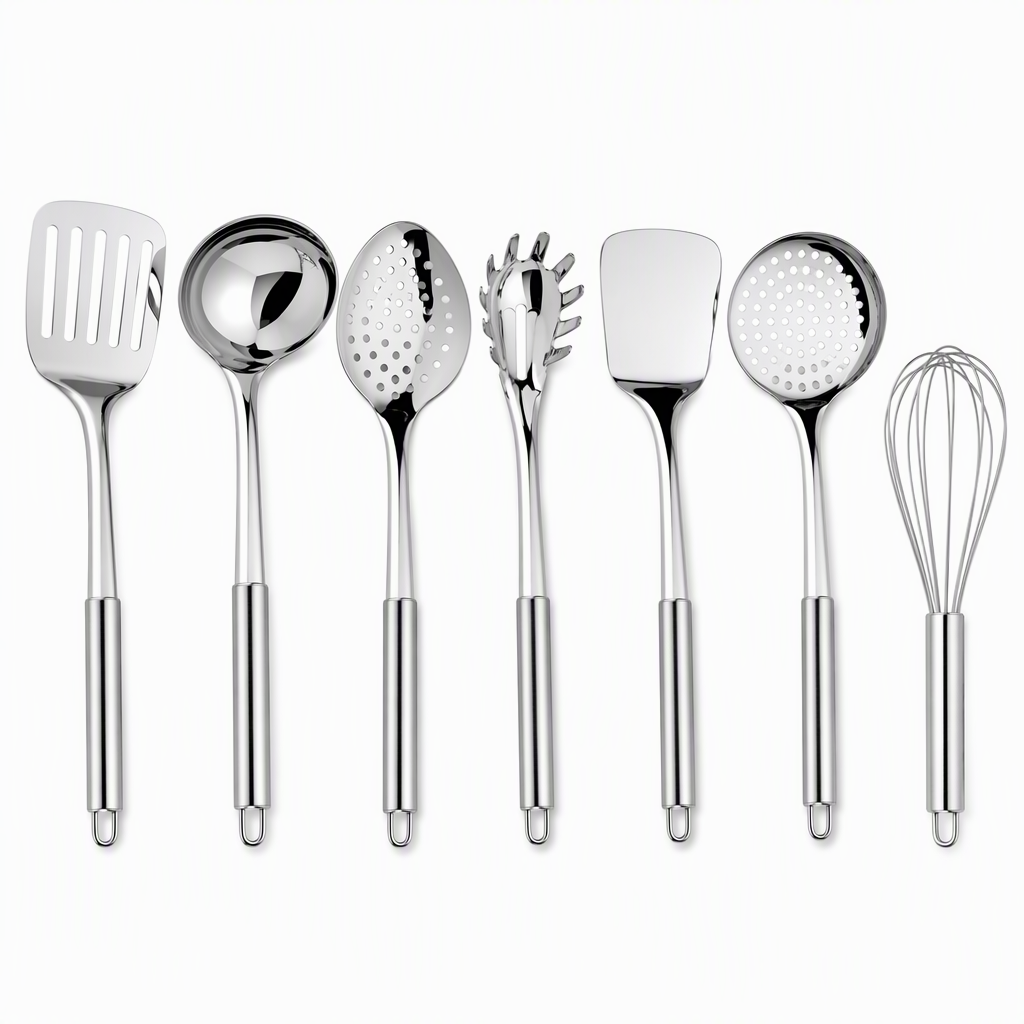
| Core 5-piece | Spatula, ladle, slotted spoon, pasta fork, turner | Small café, starter retail | $3.50–$6.00 |
| Standard 7-piece | Core 5 + skimmer + potato masher | Mid-range retail, Amazon listings | $5.50–$9.00 |
| Professional 10-piece | Core 7 + tongs, whisk, brush | Restaurant/hotel procurement | $8.00–$14.00 |
| Premium 24+ piece | Full cooking + baking tool range | Private label, gift sets | $18.00–$35.00 |
FOB prices based on 500-set minimum order quantities from southeastern China manufacturers, 2025–2026 market data.
The piece count decision should follow your end-buyer profile. For Amazon FBA sellers, the 7-piece set in the $5.50–$9.00 FOB bracket hits the sweet spot for a $25–$40 retail price with healthy margins after shipping, FBA fees, and duties. For hotel and restaurant procurement, buyers typically specify individual pieces rather than sets — but a 10-piece set with a countertop holder is a common tender item.
One thing experienced buyers confirm: piece count inflation is real. A “24-piece set” that includes four sizes of measuring spoons and a bottle opener is not the same as a 24-piece cooking tools set. Always request an itemized piece list, not just a number.
Certifications Required by Market
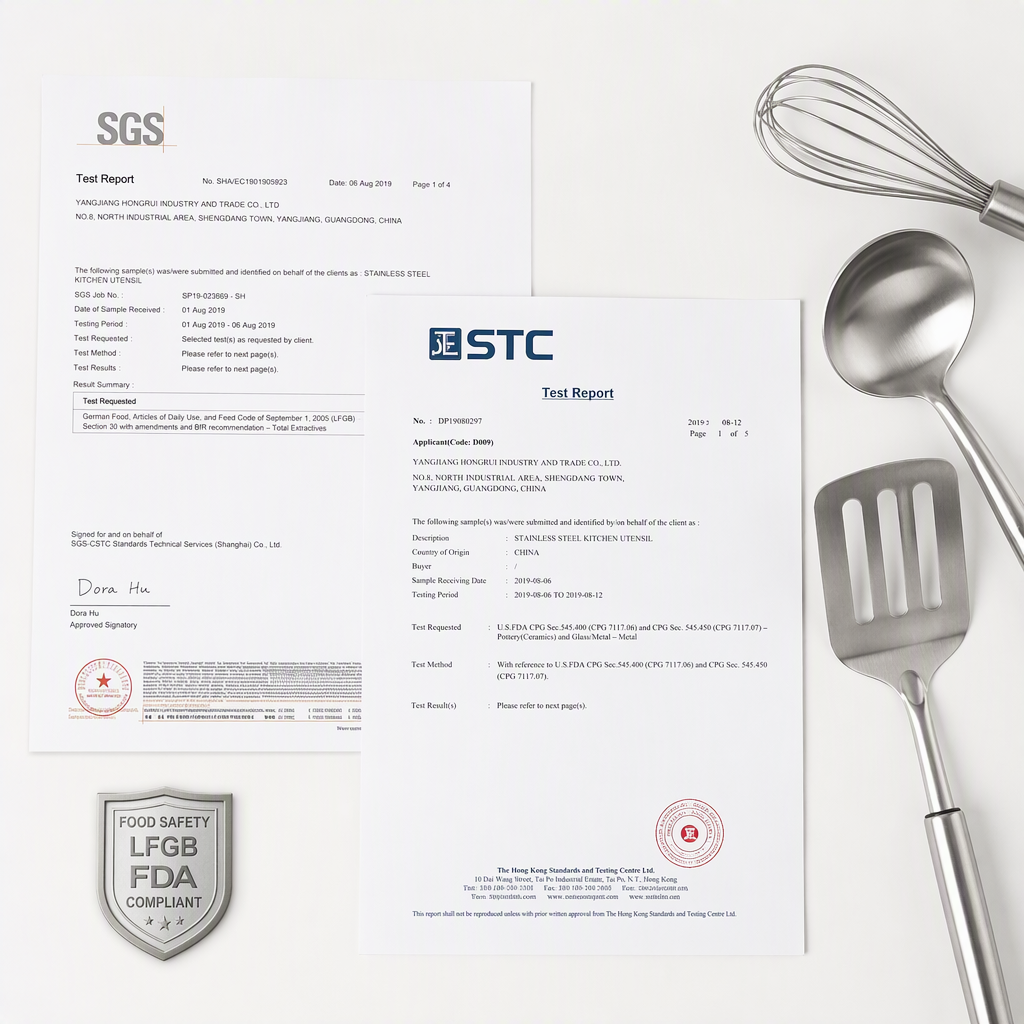
Certification requirements vary sharply by destination market, and this is where bulk orders can get held at customs or rejected entirely. Here’s what each major market actually requires:
United States (FDA) Kitchen utensils that contact food fall under the FDA’s food contact materials framework (21 CFR Parts 170–189). For uncoated 304 and 316 stainless steel, compliance is straightforward: both grades are GRAS (Generally Recognized As Safe) for food contact applications, meaning they are accepted as inert and non-migrating under normal cooking conditions. You don’t need a per-shipment FDA certificate for uncoated stainless steel utensils, but you do need to ensure that any handle coatings, paints, or plating comply with FDA indirect food additive regulations.
European Union (LFGB / EU 1935/2004) The EU standard EU 1935/2004 governs all food contact materials. For stainless steel, buyers typically request a LFGB certificate (German standard, widely accepted across the EU), which tests migration of heavy metals and overall safety. LFGB-certified utensil sets require lab testing through accredited bodies such as SGS, Intertek, or TÜV. Budget approximately $300–$600 per product range for initial certification.
United Kingdom (post-Brexit) The UK has adopted its own UKCA marking framework aligned with former EU directives. In practice, most UK importers accept LFGB-certified products as equivalent pending formal UKCA transition guidance.
Middle East / Gulf (GCC) Gulf Cooperation Council countries reference Saudi GSO standards, which align closely with EU Regulation 1935/2004. An LFGB certificate generally satisfies GCC importers.
Bottom line for bulk orders: If you’re selling into the US retail market, FDA-compliant 304 stainless (no coating, no plating) is sufficient. If you’re selling into EU or targeting premium positioning globally, budget for LFGB certification from the start — retrofitting a certification after production is costly.
MOQ Reality Check: What Factories Actually Offer
The minimum order quantity (MOQ) conversation is where most first-time wholesale buyers get tripped up. Factory websites list MOQs of 500–1,000 sets, but the actual trading floor reality is more flexible.
What I’ve seen across sourcing projects:
- OEM blank sets (no custom logo): MOQ is typically 200–300 sets. Factories can mix configurations (e.g., 100 × 7-piece + 100 × 10-piece) to hit a unit threshold.
- OEM with custom printing/laser engraving: MOQ rises to 500 sets minimum, because tooling and setup costs need amortization.
- ODM custom design (new mold, handle shape): MOQ 1,000+ sets, lead time 60–90 days for mold development.
- Trading companies vs. direct factories: Trading companies (middlemen) often have lower stated MOQs (100–200 sets) but higher unit prices. Direct factories have higher MOQs but 15–25% lower FOB prices at volume.
For buyers wanting to test a new product with a smaller initial order, the practical approach is to source blank sets from a trading company for the first 200–300 units, validate the market, then switch to a direct factory at 500+ units for margin improvement.
Lead times run 25–35 days for standard configurations, 45–60 days for custom packaging, and 75–90 days for new mold development.
Packaging Options That Drive Retail Sell-Through
Wholesale buyers underestimate how much packaging impacts retail performance. For stainless steel utensil sets, there are four primary retail packaging formats:
Blister + cardboard (retail box): Industry standard for mid-range Amazon and brick-and-mortar retail. Allows product visibility. Cost adds $0.80–$1.50/set to FOB price. Minimum 500 sets for custom design.
Kraft paper box with window: Trending for eco-positioned brands. Sustainable-look positioning commands a 10–15% retail price premium. Cost adds $1.00–$2.00/set.
Countertop holder + polybag: Common for restaurant supply and food service wholesale. Minimal packaging cost, focuses value on the tool set itself.
Gift box with ribbon/magnetic closure: Premium positioning for seasonal retail, hotel amenities, and corporate gifting channels. Adds $2.00–$4.00/set but enables $60–$120 retail price points.
Specify your packaging format before sampling — changing packaging mid-production is expensive and delays shipment.
7-Point Supplier Vetting Checklist for Bulk Orders
Before committing to a purchase order, run every potential supplier through this checklist:
1. Mill Certificate (MTR): Request the material test report for the steel batch. Verify chromium/nickel content matches the grade claim (18/8 = ~18% Cr, ~8% Ni).
2. Magnetic test on sample: 304 and 316 stainless should be non-magnetic or weakly magnetic. A strong magnetic response on the cooking surface indicates 430-grade steel.
3. Certification documentation: Request original LFGB or FDA compliance letter. Check the issuing lab (SGS, Intertek, BV are credible; unknown “in-house” certificates are not).
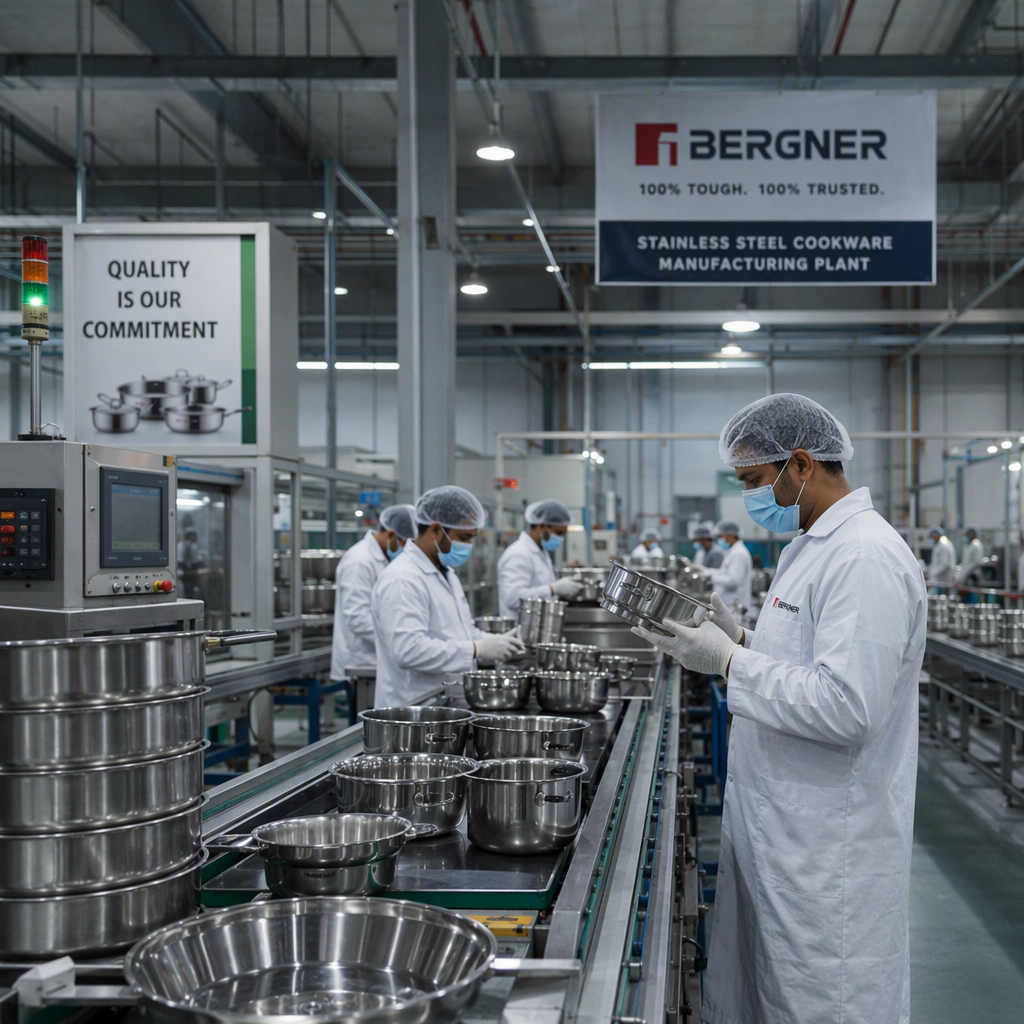
4. Factory audit report: Request ISO 9001 certification or a recent third-party factory audit report. Alibaba Gold Supplier status alone is insufficient.
5. Salt spray test (for corrosion claims): For items marketed as “rustproof,” ask for ASTM B117 salt spray test data (48-hour minimum for 304, 96-hour for 316).
6. Dishwasher cycle test: Request documentation of dishwasher durability testing — at minimum 50-cycle testing without surface degradation or discoloration.
7. Payment terms and production timeline: Legitimate manufacturers accept 30% deposit + 70% against copy of B/L. Requests for 100% prepayment without escrow should raise concerns.
OEM and Private Label Options
Private label kitchen utensil sets are one of the most accessible entry points into branded kitchenware. The typical customization options available from Chinese manufacturers:
- Laser engraving: Brand logo on handle. Most permanent and premium. Added cost: $0.15–$0.30/piece.
- Color handle (silicone-tipped or painted): Popular for brand differentiation. Adds $0.20–$0.40/piece depending on coating type.
- Custom packaging with brand artwork: Full-color retail box with product photography. Requires 300–500 DPI print-ready artwork files.
- Hang tag / QR code labeling: For linking to recipes, warranty registration, or brand storytelling. Cost: $0.05–$0.10/set.
For buyers building a brand, the combination of laser-engraved handles + kraft paper gift box is currently the most-ordered configuration on B2B platforms — it balances premium appearance, eco-positioning, and manageable MOQ (typically 500 sets for full custom).
The Grade Fraud Problem: How to Protect Your Order
Grade substitution is the most common quality issue in stainless steel kitchen utensil wholesale. A supplier ships 430-grade product against an order spec for 304. The items look identical, feel similar in hand, and pass visual inspection. The difference only becomes apparent after a few dishwasher cycles — rust spots appear on the surface, or the surface loses its polish.
Three field tests you can do on a production sample before issuing final payment:
- Magnet test: As noted, 430 is ferromagnetic. Press a magnet firmly to the cooking surface (not the decorative rivets, which may be a different material). Strong pull = 430. Weak or no pull = 304/316.
- Copper sulfate spot test: Apply a 10% copper sulfate solution to a lightly abraded surface spot. On 430, a copper deposit will appear within 30 seconds. On 304/316, no reaction.
- Third-party XRF testing: For large orders ($50,000+), commissioning a handheld XRF (X-ray fluorescence) scan through SGS or Intertek adds $150–$300 per sample batch and gives you a verified elemental composition report. Worth it for first-time suppliers.
Include a quality clause in your purchase order: “Product must comply with ASTM A240 Type 304 (or 316) stainless steel. Seller warrants material grade through mill certificate. Non-conforming shipments are subject to full return at seller’s cost.”
Why Stainless Steel Sets Stay the Default for B2B Kitchenware
Silicone sets, nylon sets, and wooden tool collections all have their niches. But stainless steel kitchen utensil sets remain the workhorse choice for wholesale buyers for three reasons that haven’t changed:
Durability without maintenance: Unlike silicone (which absorbs odors over time) or wood (which requires oiling and is incompatible with commercial dishwashers), 304 stainless utensils require zero maintenance and withstand institutional cleaning cycles without degrading.
Temperature tolerance: 304 stainless is safe for use up to approximately 870°C (1,600°F) continuous, and the consumer cooking range of 200°C (400°F) poses no deformation risk. This matters for professional kitchens using high-BTU commercial burners.
End-of-life recyclability: With increasing focus on product sustainability, stainless steel’s 100% recyclability is a genuine B2B selling point for brands targeting environmentally-conscious retailers and procurement teams.
The wholesale market for stainless steel kitchen utensil sets is mature, competitive, and price-transparent — which means buyer sophistication on grade specifications and certification requirements is now the primary differentiator between brands that build lasting supplier relationships and those that keep chasing the lowest FOB price.
The Grade, the Cert, the Clause — That’s Your Entire Buy Decision
Buying stainless steel kitchen utensils in bulk doesn’t require a metallurgy degree. It requires three things executed consistently: confirm the steel grade with a mill certificate, match your certification requirements to your target market before sampling, and include a grade-warranty clause in every purchase order.
Buyers who get tripped up in this category almost always skipped one of those three. Suppliers know which buyers check and which don’t — and they price quality accordingly.
The sets themselves are a commodity. Your sourcing process is the differentiation.