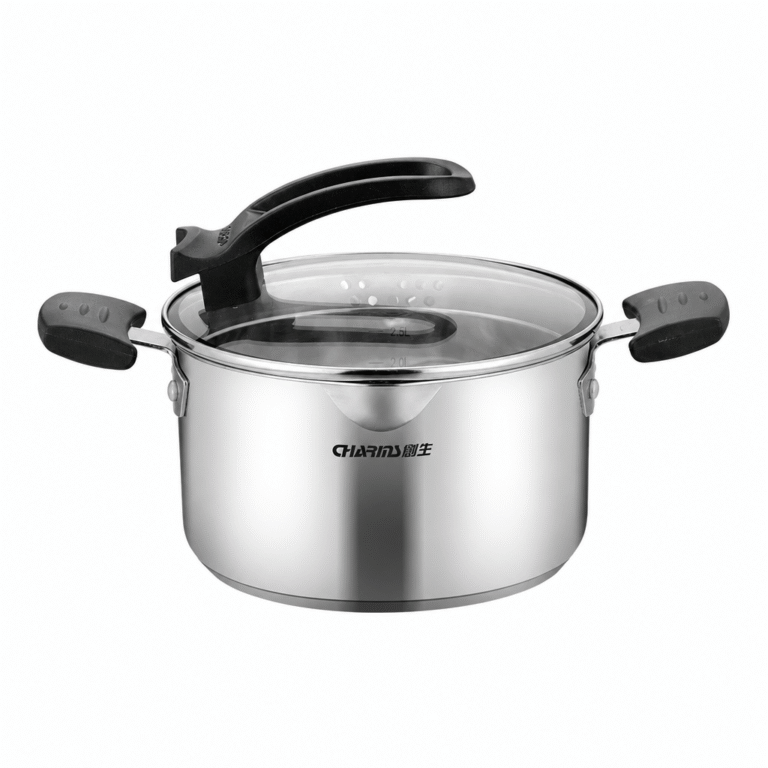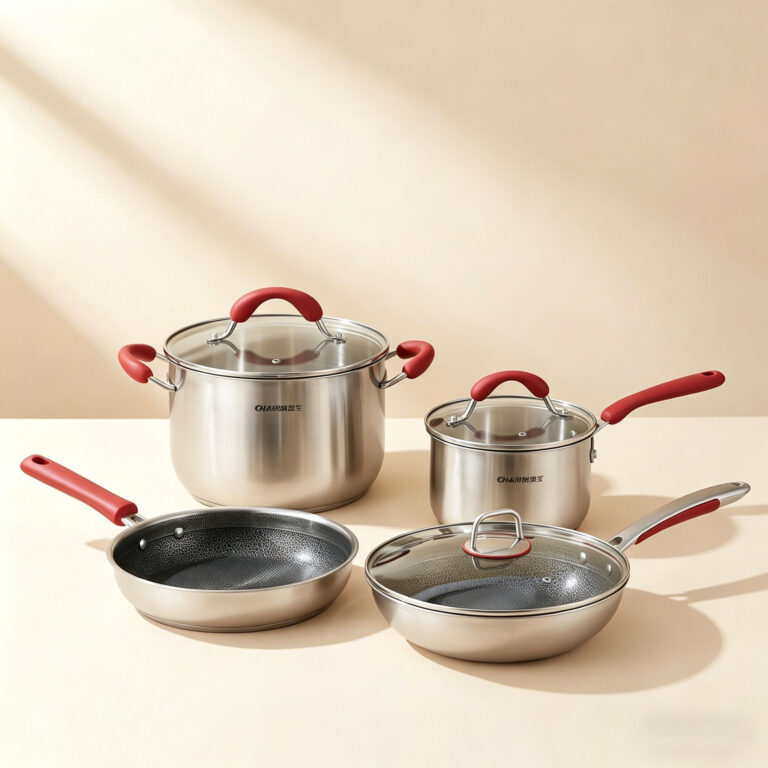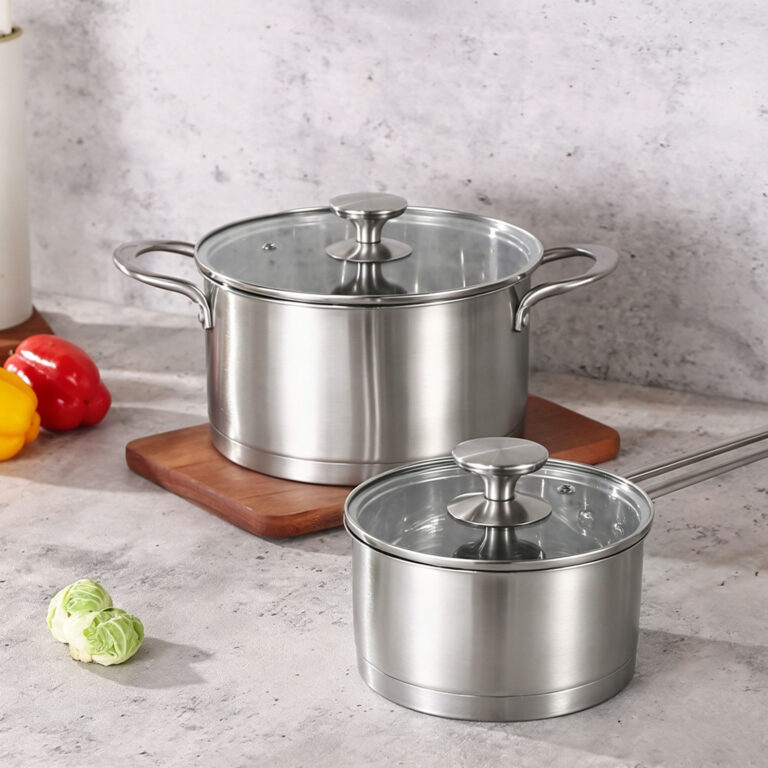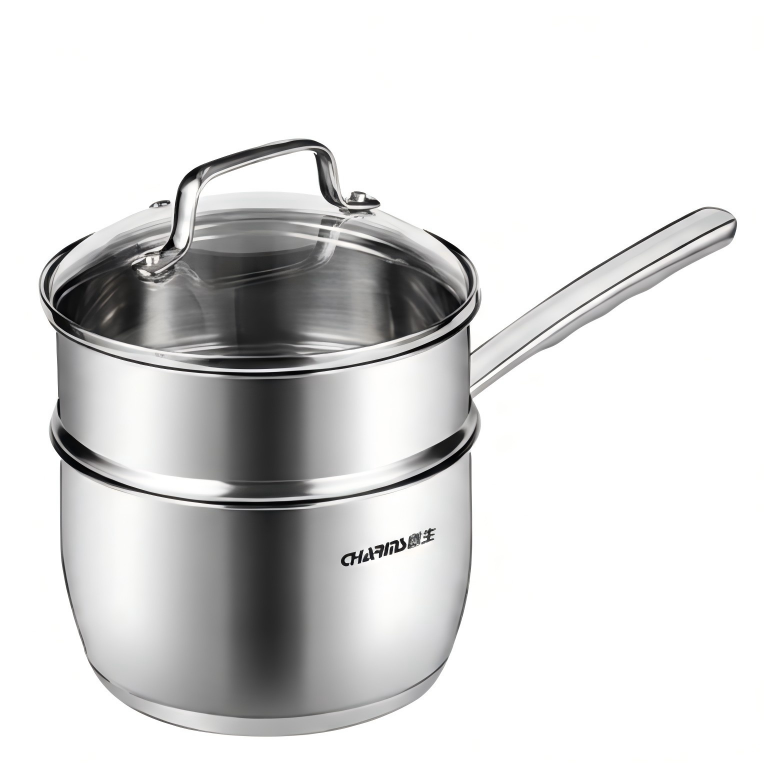


What Is a Mess Kit — and Why Does the Material Matter?
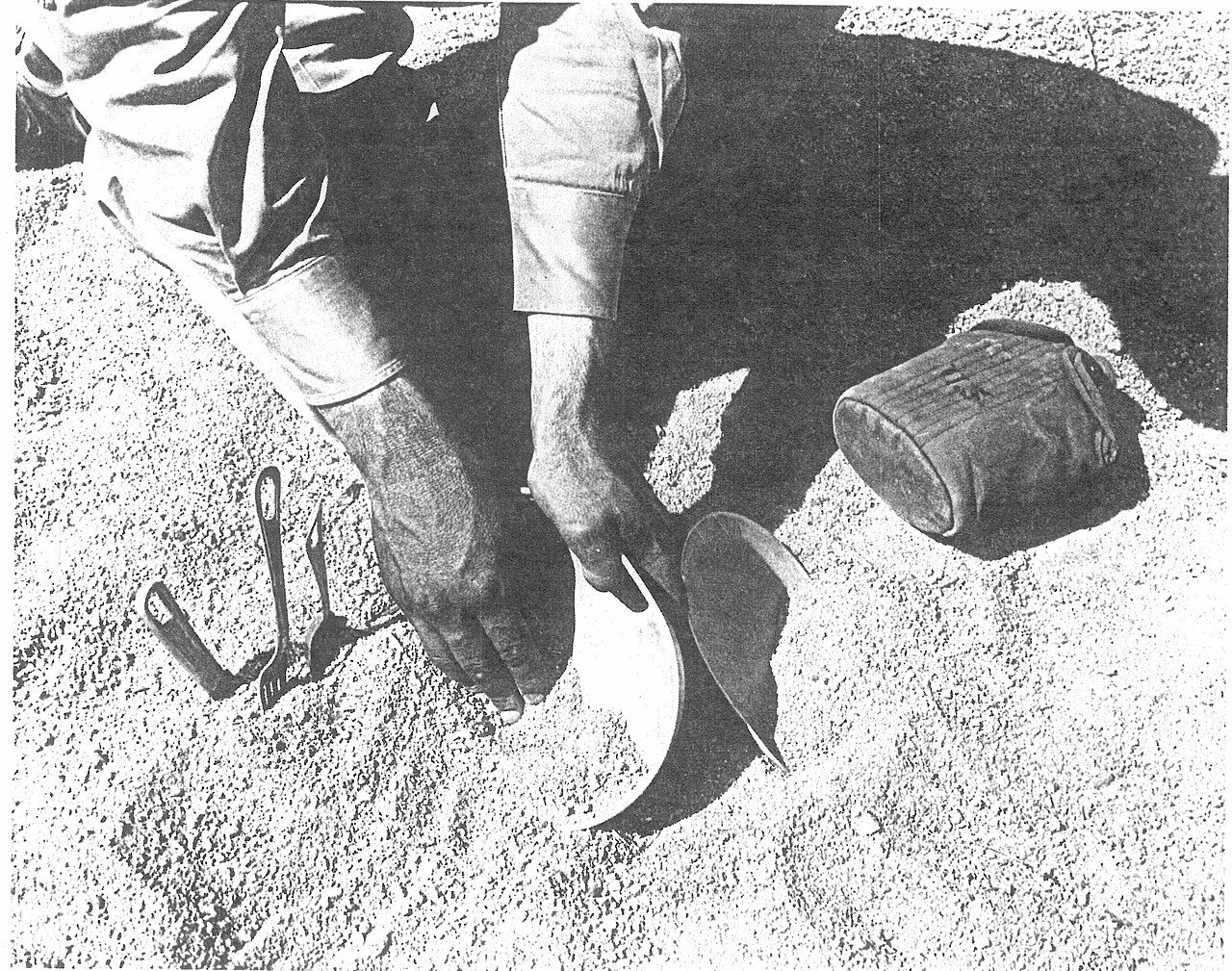
A mess kit is a compact, nesting set of cookware designed to pack small, handle open flame or stove heat, and survive rough field conditions. The typical kit includes a pot, a lid that doubles as a frying pan, a cup or bowl, and sometimes utensils — all nested together and secured with a folding handle.
The material choice shapes nearly everything: how long the kit lasts, how safe it is for cooking acidic foods, how much it weighs, and how easy it is to clean after a week in the field.
Stainless steel has been the backbone of military mess kits since the mid-20th century. The US Army shifted from aluminum to stainless steel in several standard-issue designs because stainless resists corrosion, doesn’t react with food, and doesn’t dent as easily when thrown in a pack. It’s heavier than titanium and not as fast-heating as aluminum — but it lasts.
Stainless Steel vs. Aluminum vs. Titanium
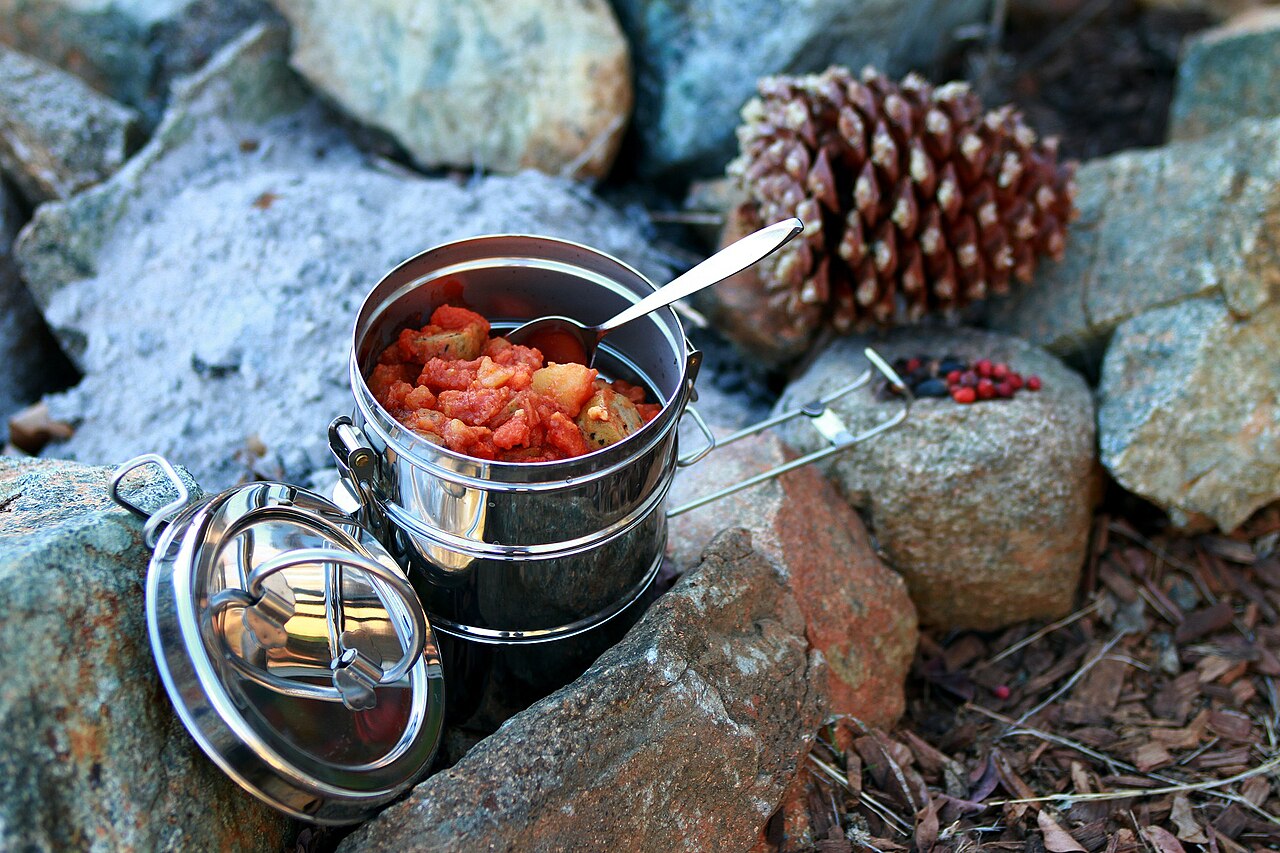
The three most common mess kit materials each make different tradeoffs.
| Feature | Stainless Steel | Aluminum | Titanium |
|---|---|---|---|
| Weight (typical 1L pot) | 300–450g | 130–200g | 120–160g |
| Corrosion resistance | Excellent | Poor–Moderate | Excellent |
| Food safety (no coating) | Yes (304 grade) | Requires anodizing | Yes |
| Heat distribution | Moderate (uneven without clad base) | Good | Poor (hot spots) |
| Durability | Very high | Moderate | Very high |
| Cost | $ (budget–mid) | $ (budget) | $$$ (premium) |
| Reactive to acidic food | No | Yes (bare aluminum) | No |
For most users, stainless steel hits the sweet spot. It’s more affordable than titanium, safer than bare aluminum for acidic foods like tomato-based rations, and durable enough to outlast the rest of your gear.
The main downside is weight. If you’re counting grams on a multi-week backpacking trip, titanium is worth the price premium. For car camping, basecamp use, or military field conditions where kits take real abuse, stainless steel is the more practical choice.
Understanding Steel Grades: 304 vs. 430
Most buyers don’t realize there are different stainless steel grades, and the difference matters more than branding.
304 stainless steel (also marketed as 18/8 — 18% chromium, 8% nickel) is the standard for food-grade cookware. It’s highly corrosion-resistant, doesn’t leach into food under normal cooking temperatures, and handles acidic ingredients without reacting. If a mess kit is labeled 304 or 18/8, it’s a safe, quality choice.
430 stainless steel is a ferritic grade with negligible nickel (≤0.75% max, versus 8% in 304). It’s cheaper to produce and still functional, but it’s slightly more prone to surface rust in sustained wet conditions and doesn’t have the same corrosion barrier. Some budget kits use 430 without advertising it.
What to check: Look for “304 stainless” or “18/8” on the product spec sheet or listing. If it only says “stainless steel” with no grade number, it may be 430. That’s not a dealbreaker for occasional use, but for sustained military or expedition use, hold out for 304.
A third grade worth knowing: 316 stainless (which adds 2–3% molybdenum for better corrosion resistance, sometimes marketed as 18/10 cookware grade) offers even better protection against saltwater and chloride exposure. Marine-grade applications use 316, and some premium mess kits do too. It costs more but is worth it for coastal or maritime environments.
Military-Spec vs. Commercial “Military-Style”
The outdoor gear market is full of mess kits labeled “military,” “army-style,” or “tactical.” Most are commercial products that mimic the aesthetic — olive drab finish, folding handle, nested design — but are not manufactured to US military specification.
Actual mil-spec mess kits are manufactured to DoD MIL-spec standards — the mess kit pan specification is MIL-P-89 (Corrosion-Resisting Steel). These specs define wall thickness, handle strength, finish durability, and dimensional tolerances. True mil-spec kits are typically procured through the Defense Logistics Agency and show up in the surplus market under NSN (National Stock Number) references.
What you get with mil-spec: Thicker walls (often 0.8–1.0mm), tested handle attachment points, standardized nesting with other GI components (canteen cup fits a 1-quart canteen, etc.), and a paper trail of quality control.
What you get with commercial “military-style”: Usually lighter wall thickness (0.4–0.6mm), aesthetic cues (color, shape), and a significantly lower price. For recreational camping, most commercial stainless kits perform just fine. For sustained daily field use, thicker mil-spec construction holds up better.
The honest advice: if you’re building a bug-out kit or want something that survives years of hard use, look for actual surplus mil-spec gear or brands that publish their wall thickness specs. If you’re a weekend camper who wants the look without the price, a commercial 304SS kit works fine.
What to Look for When Buying
Capacity and Pieces
Mess kits are typically sized for one person. A solo kit usually includes:
- 1× pot: 700ml–1.0L (enough for a meal with water for boiling)
- 1× lid/pan: 500–700ml capacity doubled as frying surface
- 1× cup or bowl: 350–500ml
- Utensils: fork, spoon, sometimes knife (varies by kit)
For two people sharing, look for a pot capacity of at least 1.5L. Some kits include two pots of different sizes for cooking separate components.
Common ml-to-serving guide:
- 700ml pot → 1 serving rice or pasta (dry volume ~200ml + water)
- 1.0L pot → 1–2 servings, or single boil-in-bag meal
- 1.5L pot → 2 servings comfortably
Heat Source Compatibility
Most stainless steel mess kits work on any heat source: gas canister stoves, alcohol stoves, wood fires, and solid fuel tablets (Esbit). Stainless is more resistant to direct flame than aluminum.
Check for induction compatibility separately — only ferritic grades (430) or specially designed induction-ready bases work on induction cooktops. Standard 304 austenitic stainless is not induction-compatible unless the base includes an iron or ferritic layer.
Handle Design
Folding handles are standard. Check that the hinge mechanism locks in both open and closed positions — a handle that wobbles when cooking is a burn risk. Bail handles (wire loop handles on pots) are common on canteen cups and offer better stability over a fire.
Weight
Expect a complete stainless steel solo mess kit to weigh 350–550g for the full set. If your setup shows under 300g, check the wall thickness — it may be 0.4mm sheet steel, which dents more easily.
Top Stainless Steel Mess Kit Options
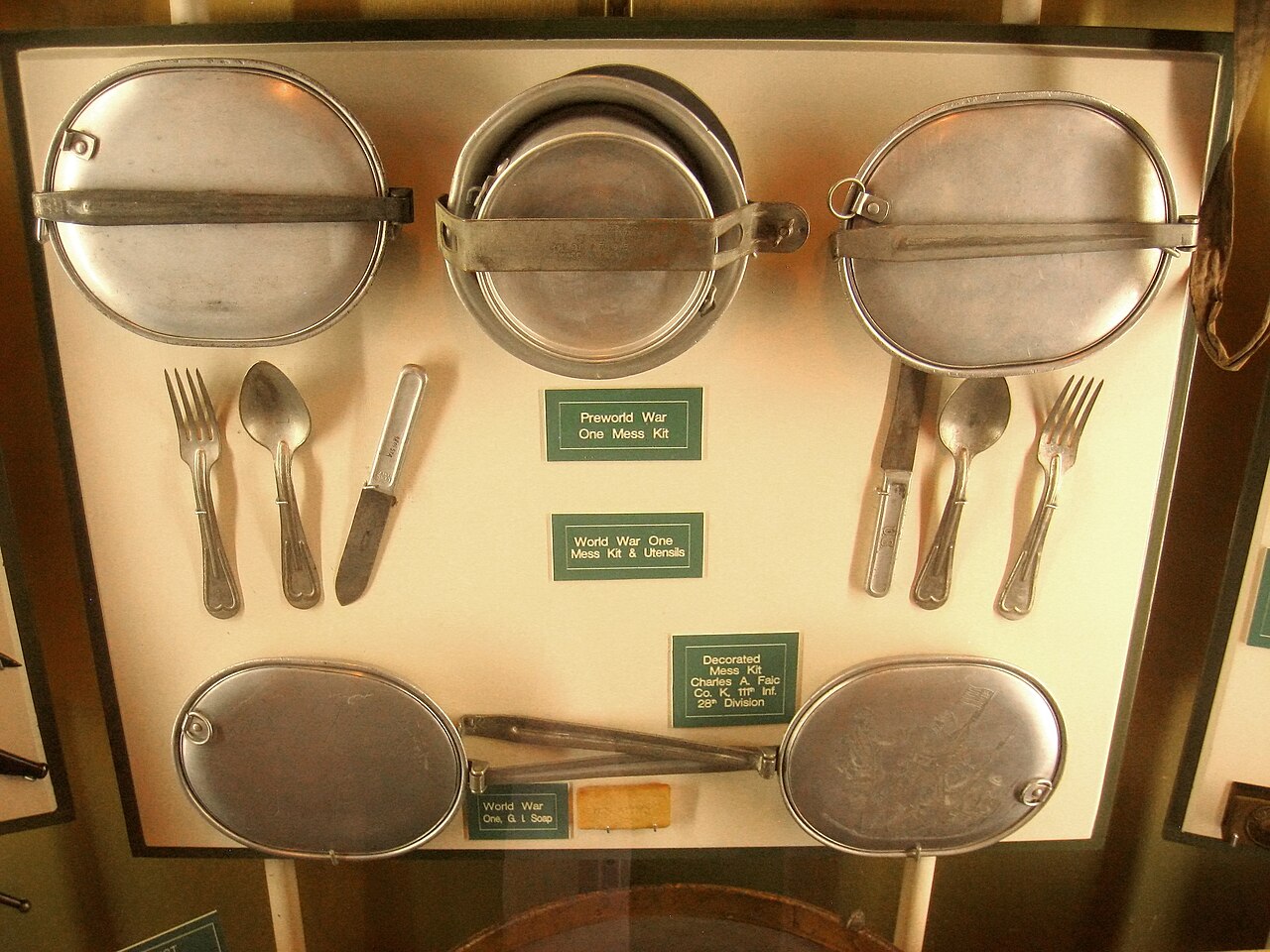
These are the types of kits worth looking at, organized by use case:
Best for Military/Surplus Use GI-spec canteen cup systems (NSN 8465-00-165-6838 type) — the folding handle canteen cup in 18/8 stainless has been in continuous US military service since the 1960s. It weighs ~255g (9 oz) and pairs with the standard GI 1-quart canteen. Widely available in surplus markets: used authentic surplus typically $10–16, new-old-stock up to $32.
Best Commercial Kit for Backpacking Look for kits from GSI Outdoors, Stanley, or Boundless Voyage. Confirm 304 stainless in the spec sheet. A 2-piece nested kit (pot + lid-pan) in the 700–900ml range weighs around 300–400g and costs $30–60.
Best Budget Option Chinese-manufactured kits labeled 304SS at $15–25 can be functional but vary in handle quality. Check wall thickness (ask the seller or verify at delivery — 0.6mm minimum is acceptable).
B2B / OEM Buyers For custom-branded stainless mess kits, factories in Zhejiang (China) produce OEM kits to 304 or 316SS at MOQs of 500–1,000 units. Typical FOB unit costs: $4–9 USD depending on piece count and wall thickness. Request a material test report (SGS or BV) confirming steel grade.
How to Clean and Maintain Your Stainless Steel Mess Kit
Stainless steel is low-maintenance but benefits from basic care:
In the field: Wipe with a damp cloth or rinse with water. Food residue burns onto the surface over open flame — a brief soak in hot water loosens it. Avoid abrasive rocks or sand as scouring agents; they scratch the surface and make future sticking worse.
At home: Dish soap and a non-abrasive sponge handle most cleaning. For stubborn burn marks, a paste of baking soda and water scrubbed with a soft brush works without damaging the steel.
Rust spots: Surface rust (tea-colored staining) on 304 steel usually means mineral deposits, not actual corrosion. A 10-minute soak in a 1:10 vinegar-water solution dissolves it. Rinse thoroughly after.
Dry fully before storage. Even 304 stainless can develop minor surface oxidation in enclosed, humid storage. Nest the kit with lids slightly ajar if storing long-term.
No seasoning required — unlike cast iron or carbon steel, stainless doesn’t need a protective fat layer. Food sticking is the main complaint; medium heat and adding fat to the pan surface before cooking solves 90% of sticking issues.
FAQ
What is a military mess kit made of? Authentic US military mess kits are made from 18/8 stainless steel (304 grade) or, in older designs, aluminum. Post-WWII production shifted toward stainless for better corrosion resistance. Surplus “mess kits” sold commercially are often aluminum replicas of the WWII M1942 design.
How much does a stainless steel mess kit weigh? A typical complete solo kit (pot + lid/pan + cup) weighs 450–650g. The standard USGI stainless canteen cup alone weighs approximately 255g (9 oz). Titanium equivalents run 200–350g for a comparable set.
Is stainless steel or aluminum better for a mess kit? Stainless steel is safer for acidic food without coatings, more corrosion-resistant, and more durable over time. Aluminum is lighter and heats faster but requires anodizing to be food-safe for long-term use. For field cooking with varied rations, stainless steel is the more versatile and long-lasting choice.
What stainless steel grade should I look for? 304 stainless (18/8) is the minimum standard for a quality mess kit. It’s food-safe, corrosion-resistant, and widely available. 316 stainless offers better saltwater resistance for coastal/maritime use. Avoid kits that only say “stainless steel” without specifying a grade — they may be 430, which performs adequately but corrodes faster in wet conditions.
Can a stainless steel mess kit be used on any stove? Yes — gas, alcohol, wood fire, and solid fuel (Esbit) all work. Standard 304 stainless does not work on induction cooktops. For induction use, look for kits specifically labeled induction-compatible (usually 430SS or a clad base).
What pieces should a mess kit include? A standard solo mess kit includes a pot (700ml–1L), a lid that doubles as a frying pan, and a cup or bowl. Better kits add a carry pouch, folding utensils, and a pot lifter. Military surplus canteen systems pair a stainless cup with a canteen and canteen cover as a complete cooking-and-hydration setup.
Steel That Doesn’t Quit in the Field
A stainless steel mess kit is one of those pieces of gear where buying once and buying right makes sense. It won’t dent at the first drop, it won’t leach into your food, and — if you get a 304-grade kit with a solid handle — it will still be functional long after the pack it came in has worn out.
The key decision points: confirm 304 or 316 steel grade, check wall thickness if durability is a priority, and match capacity to actual serving needs before purchase. Everything else is secondary. The best mess kit is the one still in your kit five years from now.