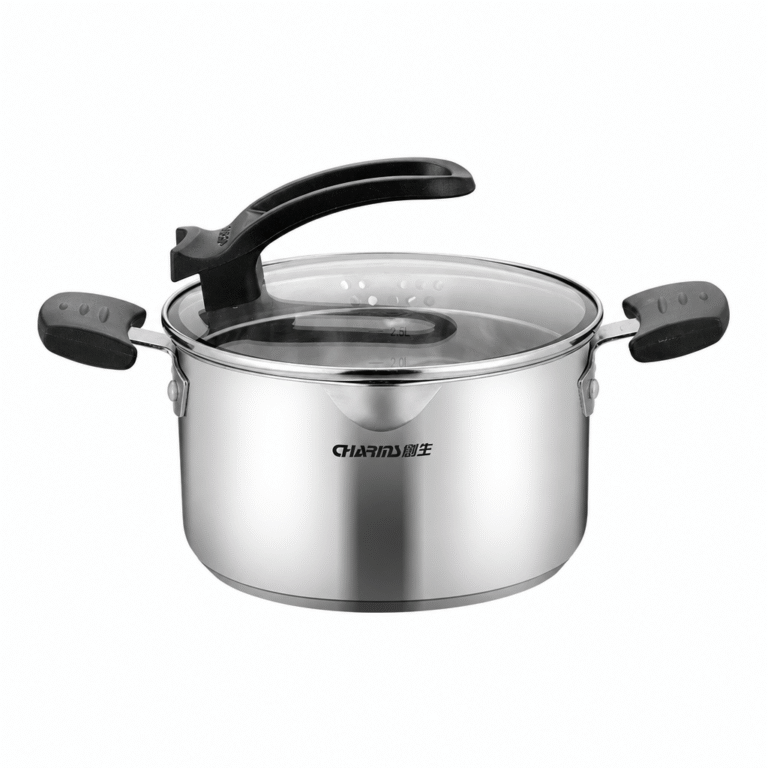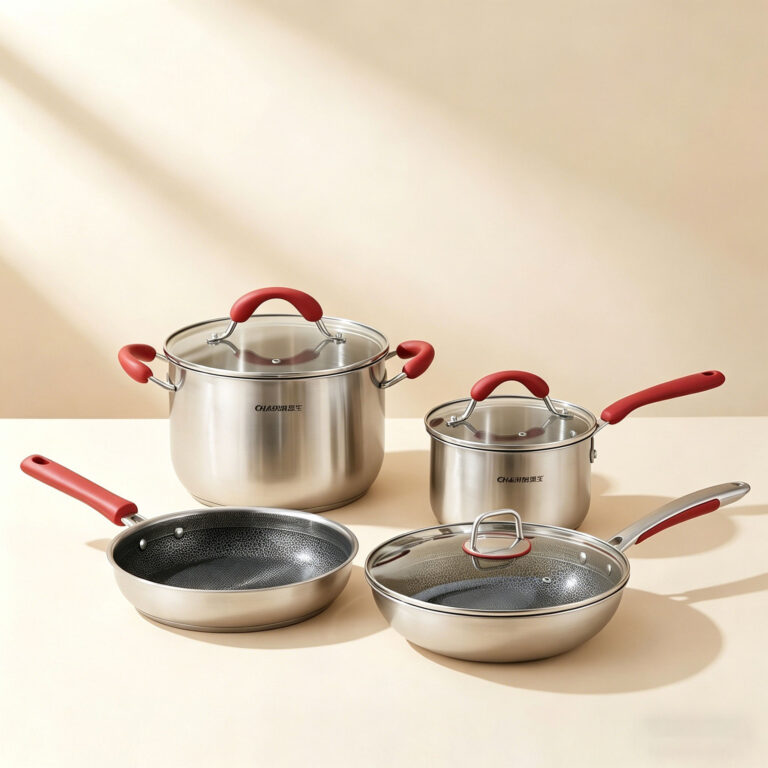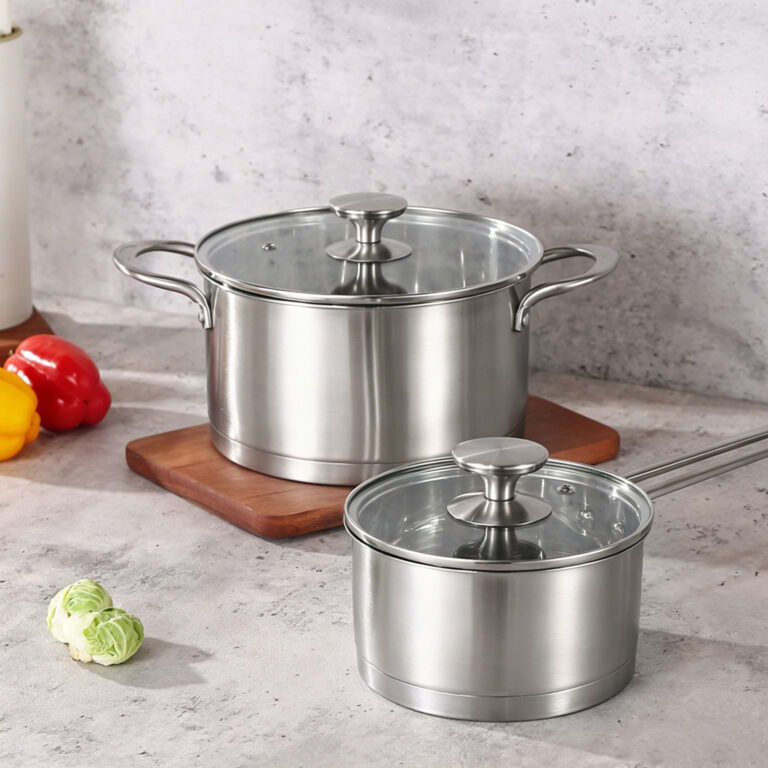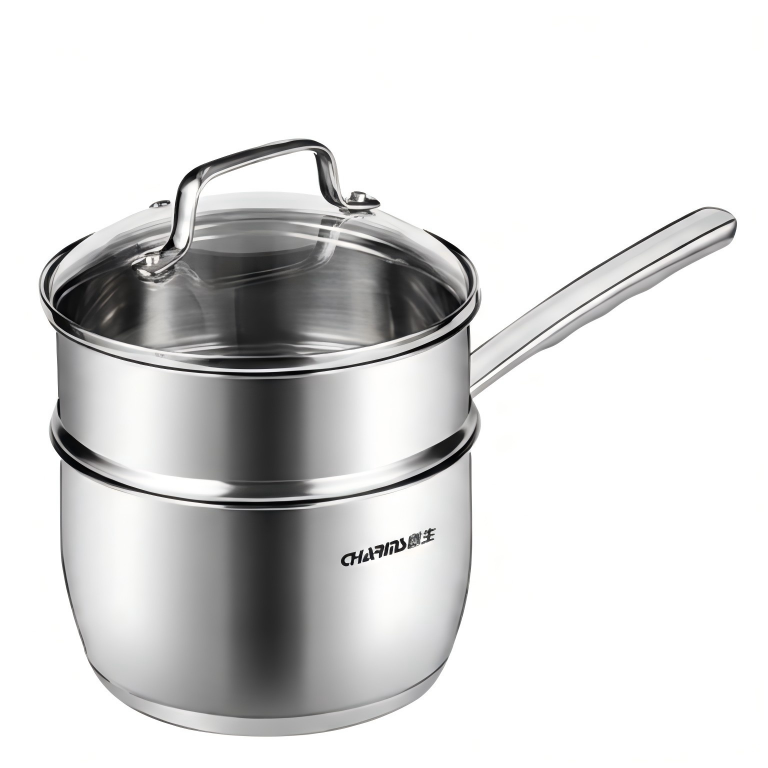


Stainless steel cookware is durable but accumulates damage in storage through three main causes: bare metal-on-metal contact, trapped moisture, and overcrowded cabinets. The most effective storage setups — hanging, vertical pan organizers, and padded stacking — each solve the contact problem differently. Lids should be stored separately and vertically, not sealed on the pan. Drying completely before storage prevents water spots and surface etching. This guide covers the three best storage configurations, five habits that cause gradual damage, a tested routine for a full 10-piece set, and practical solutions for small kitchens without wall space.
Why Stainless Steel Storage Matters More Than You Think
Most people assume stainless steel is tough enough to handle rough treatment in the cabinet — and they’re partly right. Stainless steel is an iron alloy containing at least 10.5% chromium; cookware-grade 18/8 steel (the most common type) contains 18% chromium and 8% nickel. That chromium reacts with oxygen to form a thin, invisible chromium oxide passive layer on the surface, which is what gives stainless its corrosion resistance and signature shine.
The problem: that passive layer repairs itself when exposed to oxygen, but physical scratches from careless storage accumulate over time and create micro-pits where food residue and moisture collect. Once pitting develops in these areas, it accelerates. A pan that has been carelessly stacked against rough cast iron for two years will develop surface roughness that makes food stick slightly more and cleaning harder — even though it technically never “rusted.”
Moisture is the second threat. Stainless won’t rust the way bare carbon steel does, but mineral deposits from trapped water leave white spots and can etch the surface if left for extended periods. A sealed lid on a slightly damp pan creates a confined environment that speeds this up.
The core principle behind every tip in this guide: prevent bare metal contact and eliminate trapped moisture.
The 3 Best Ways to Store Stainless Steel Cookware
Option 1 — Hanging (Best Overall Protection)
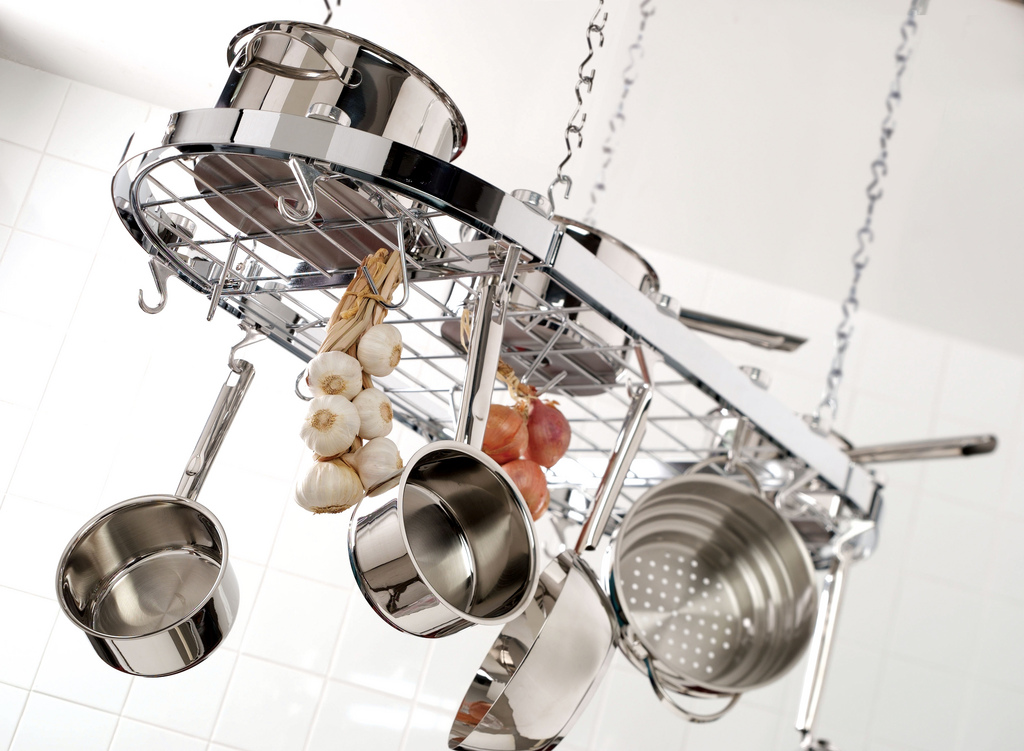
A ceiling-mounted pot rack or wall-mounted rail with S-hooks keeps every piece of cookware physically isolated. There’s no contact, no scratching, and full airflow to prevent moisture buildup. This is how most professional kitchens handle stainless, and it’s the cleanest solution for home use too.
For most home kitchens, a ceiling rack above a kitchen island works well. Wall-mounted rails are better for smaller spaces. The main requirement is a hook-compatible handle hole — most stainless cookware has one built in.
One thing to watch: don’t let multiple pans share hooks where they can swing together. One hook per pan, or enough spacing that pieces can’t contact each other. The protection hanging offers depends entirely on pieces staying separated.
Hanging works best in kitchens with vertical clearance, an island, or open wall space. It’s also the most practical method for frequently used pieces — grab and go without shuffling a stack.
Option 2 — Vertical Pan Organizer (Best for Cabinets)
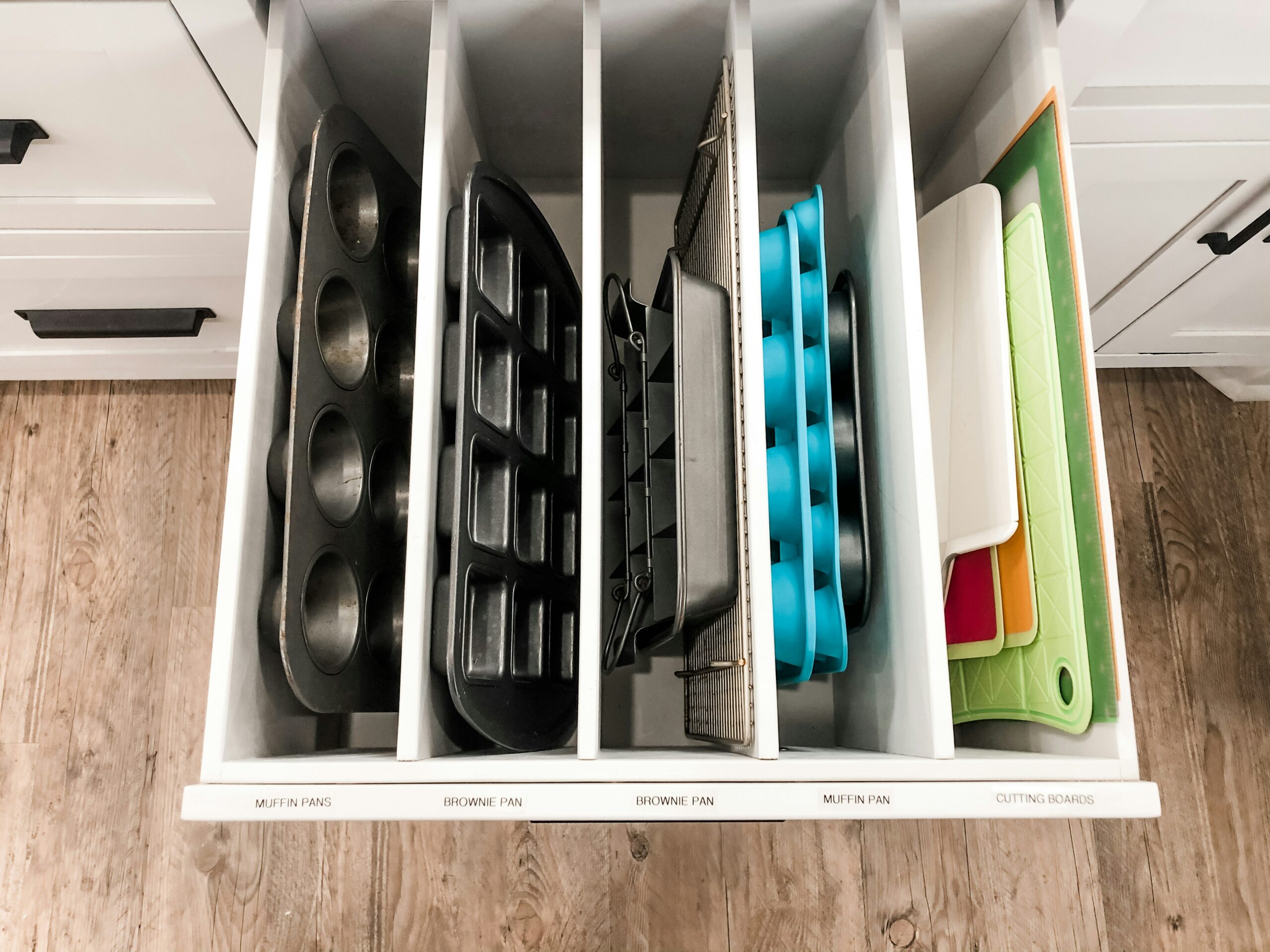
A vertical or slotted pan organizer holds pans upright and separated inside a cabinet or deep drawer. Each slot acts as a divider — no surface contact between pans, and each piece is individually accessible without lifting anything else.
Look for organizers with smooth or rubberized slot edges rather than bare metal. Metal-edged organizers can cause their own marks if pans are pushed in at an angle. Adjustable-slot models let you fit different pan diameters in the same unit, which matters if your set mixes 8-inch, 10-inch, and 12-inch skillets.
Heavy Dutch ovens and stock pots don’t belong in a vertical organizer — their weight can warp lighter wire organizers over time. Store them flat on a lower shelf behind or beside the organizer unit.
Option 3 — Stacking with Protectors (Works If Done Right)
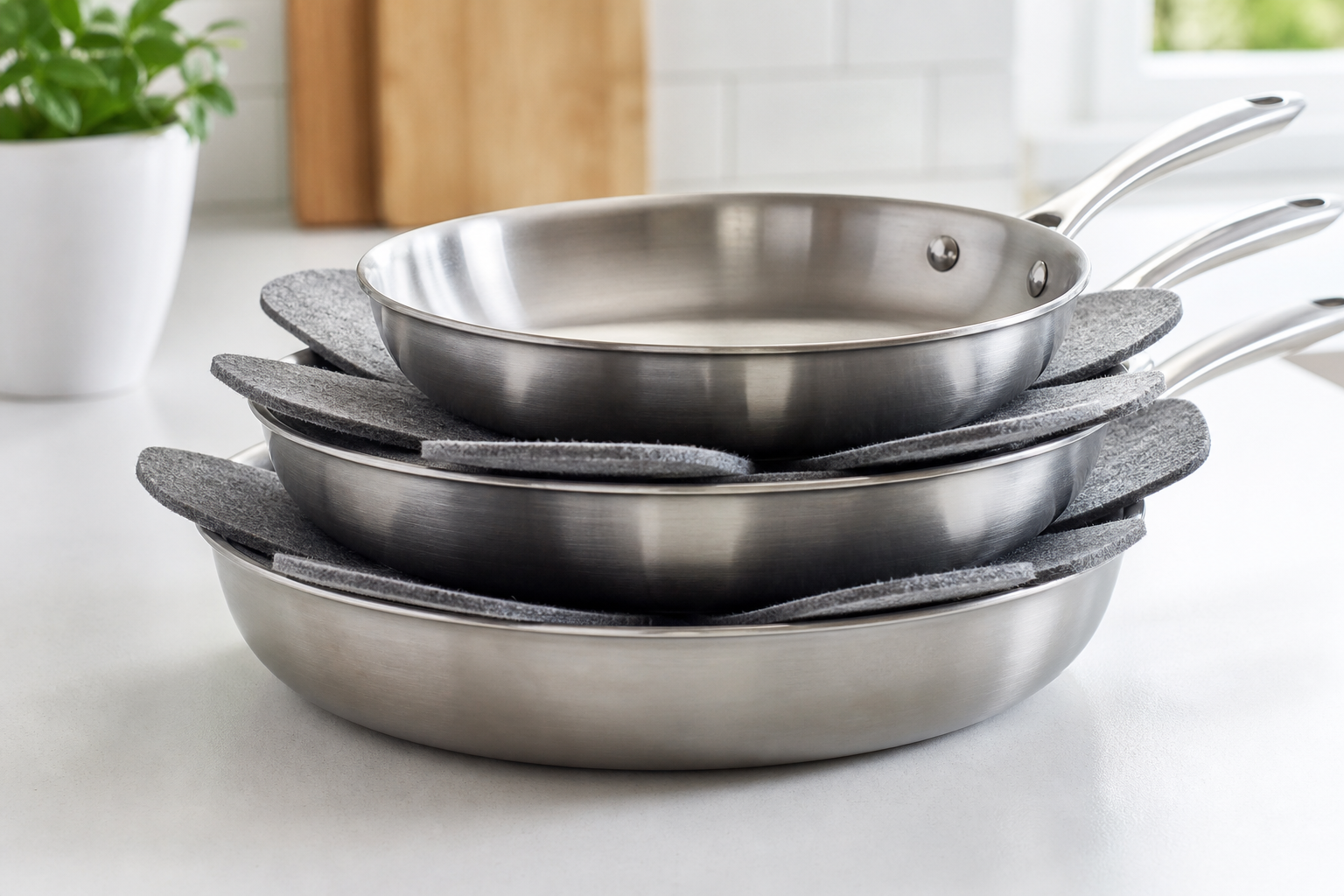
Stacking is the default in most kitchens and it’s completely fine, as long as you put something between each pan. The options:
- Felt pan protectors — soft, thin, stay in position, cut custom-size circles from craft felt if branded sizes don’t fit your pans
- Silicone pan protectors — slightly thicker, easier to wipe clean, more durable than felt; most brands sell sets in three sizes
- Folded dish towel — works just as well as either of the above, takes up slightly more space, shifts around when you pull a pan
- Paper towels — last resort; they compress unevenly and leave lint but they do create separation
Stack heaviest at the bottom, lightest on top. A 12-inch skillet resting on top of a 1.5-quart saucepan puts localized pressure on a smaller surface and will mark it. Match sizes when possible.
5 Storage Habits That Damage Stainless Steel
1. Bare metal-on-metal stacking
The most common mistake. The bottom of one pan sits directly on the cooking surface of the pan below it. Even stainless-on-stainless contact scratches under its own weight when the stack shifts, which happens every time you open the cabinet door. Over hundreds of uses, this creates visible radial scratches on the cooking surface.
2. Storing pans while still damp
Mineral deposits from tap water — especially in hard-water households — leave white calcified spots when moisture evaporates slowly between stacked pans. Pat dry with a lint-free cloth before storage. This takes about 30 seconds per pan and eliminates the problem entirely.
3. Mixing stainless and cast iron in the same stack
Cast iron has a rough, porous surface even when well-seasoned. Stacking a stainless pan on top of cast iron, or allowing them to slide against each other in a shared drawer, scores the stainless surface more aggressively than stainless-on-stainless contact. Keep cast iron and stainless in separate locations.
4. Overcrowded cabinets where pans knock together
A cabinet packed too tightly means pans collide every time the door opens or closes. Over months, this accumulates the same surface wear as careless stacking. Leave enough clearance in each storage slot that pulling one pan out doesn’t drag another with it.
5. Storing lids sealed tightly on the pan
A lid pressed down on a slightly damp or recently cooked pan seals in moisture and residual food vapors. This creates water spots inside the pan and accelerates discoloration at the rim contact point. Lid storage gets its own section below because it’s a separate problem with a different solution.
How to Store Stainless Steel Lids (Most Guides Skip This)
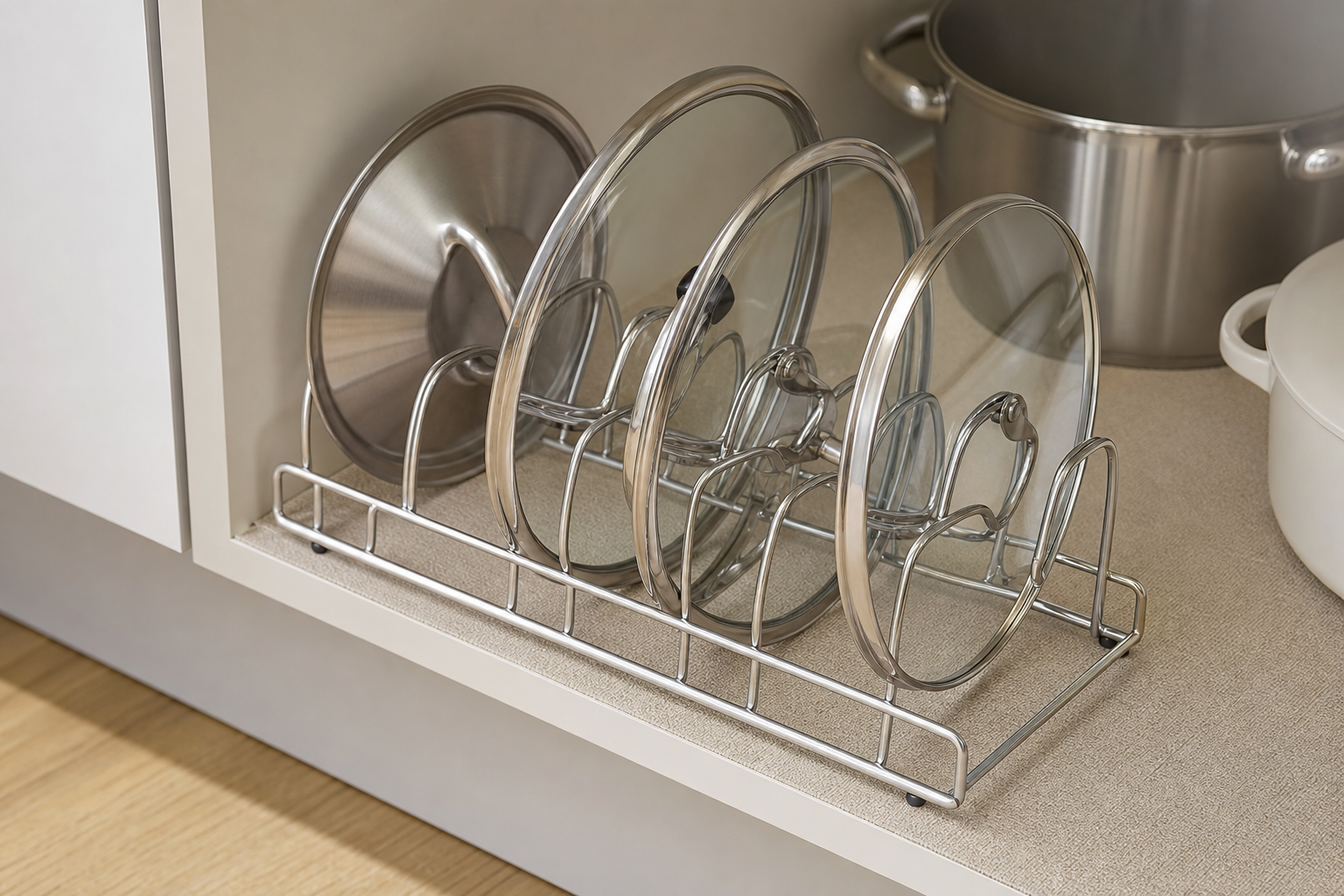
Most cookware storage guides give lids two sentences at most. This is a mistake — poorly stored lids cause a disproportionate share of the moisture damage and surface marks on stainless cookware.
The right approach: store lids separately from the pan body, standing vertically. A cabinet door lid rack, a freestanding lid organizer, or even a repurposed wire magazine holder keeps lids upright so air circulates on both surfaces. This prevents moisture from pooling on the inside of the lid and transferring to the pan rim.
If space forces you to store a lid with its pan, set it slightly offset — not sealed flat — so there’s a gap for air to escape around the edge. A small folded paper towel tucked under one edge of the lid accomplishes the same thing.
Never stack lids flat on top of each other without protection. The underside of most stainless lids is brushed or textured, and it will scratch the cooking surface of the pan below it more aggressively than a smooth pan bottom.
Glass lids are slightly more forgiving since the smooth glass won’t scratch stainless — but they’re heavier and still trap moisture if sealed tight.
A 3-Year Tested Routine for a 10-Piece Set
I’ve run the same 18/10 stainless set through a weekly routine for about three years in a kitchen with one dedicated cabinet. Here’s the exact configuration.
The cabinet has two shelves. Bottom shelf: a 5-slot adjustable wire pan organizer. The 12-inch skillet, 10-inch skillet, 3-quart saucepan, and 4-quart sauté pan each get their own slot. The 8-quart stock pot sits flat at the back of the same shelf — it’s too tall to fit in the organizer vertically.
Top shelf: lids stand in a repurposed wire magazine holder. Each lid sits upright, separated by its own curve. The two smaller saucepan lids stand at the front; the larger skillet lids behind them.
Before anything goes in: completely dried with a kitchen towel. About 30 seconds per pan.
After three years: no visible scratches on cooking surfaces, no pitting, minimal water spots — and those only appeared during a stretch when I stopped drying before storing. The connection was obvious and immediate.
The one area showing any wear: I occasionally nest the two saucepans inside the stock pot when the organizer is full. Even with a dish towel between them, those saucepan interiors show faint circular marks from the rim of the pot below. The lesson: any stacking without consistent separation eventually leaves evidence.
Storage Solutions for Small Kitchens
If wall space and cabinet depth are both limited, these approaches make the most of constrained layouts:
Over-the-door organizers: Cabinet door racks designed for pots and pans can hold 3–4 pieces on the inside of a single door. They use vertical space that’s otherwise completely wasted.
Under-shelf hanging hooks: Clip-on hooks that attach to the underside of an existing shelf let you hang smaller saucepans or skillets without any installation. No drilling, no landlord issues, no tools required.
Deep drawer with a peg or divider system: IKEA’s UPPDATERA drawer insert and similar adjustable peg systems let you create custom-width lanes inside a deep drawer. Pans stand on edge, each in its own slot. For a stainless set of 8 or fewer pieces, this is arguably the most space-efficient permanent solution available.
Stovetop staging for daily-use pieces: Pans you use every day or two don’t need to go in a cabinet at all. Leaving them on the stovetop or a countertop trivet keeps them accessible and reduces the number of pieces you need to organize. Stainless is visually clean enough to sit out without looking cluttered.
The honest answer for small kitchens: you’ll probably use a combination of two or three of these. The goal isn’t perfect storage — it’s eliminating the worst habits (bare stacking, wet storage) while making daily access practical.
FAQ
Does stainless steel scratch easily in storage?
Stainless is harder than aluminum and softer than cast iron. Bare stainless-on-stainless contact under weight scratches the surface gradually over time — typically visible as fine circular marks on the cooking surface. These don’t affect cooking performance significantly at first, but they accumulate into surface roughness that can make food stick slightly more over years. A pan protector, dish towel, or vertical organizer prevents this entirely.
Can I store stainless steel pans with the lid on?
You can, but it’s better to store them separately. A sealed lid traps residual moisture, which causes water spots and localized discoloration at the rim contact point. If you must store with the lid on, ensure the pan is bone-dry first and rest the lid slightly offset to allow airflow around the edge.
Do I need to buy special pan protectors, or will a dish towel work?
A folded dish towel works fine. The goal is to prevent direct metal-to-metal contact and provide cushioning when the stack shifts. Dedicated felt or silicone protectors are more convenient — they stay in place when you pull a pan from the stack — but they’re not required. A towel you already own does the same job.
How do I remove scratches from stainless steel cookware?
Light surface scratches can be reduced (not eliminated) using a mild abrasive cleaner like Bar Keepers Friend, applied with a soft cloth in the direction of the grain. Deep scratches that have created pits are permanent. Prevention through proper storage is more effective than any repair method.
Is it safe to store stainless steel cookware in the oven between uses?
Stainless is oven-safe and heat during storage won’t damage the metal. The practical problem: oven storage blocks oven access, and if someone preheats the oven without checking, any non-metal components — plastic handle inserts, silicone protectors, or non-oven-safe lids stored inside — will be damaged. Reserve oven storage for pieces you’re confident are fully oven-safe and that your household won’t accidentally heat.
Why are there white spots on my stainless steel after storage?
White or chalky spots are mineral deposits from tap water that dried on the surface. They’re more common in hard-water areas. They’re not damage — they wipe off with a mild vinegar solution (equal parts water and white vinegar) or a small amount of Bar Keepers Friend. Preventing them: dry the pan with a lint-free cloth before storing.
Summary
The three habits that matter: keep pans physically separated, dry them completely before storing, and keep lids off the pan body. Hanging is the best setup if you have the space. A vertical organizer in a cabinet is the most practical alternative. Stacking with a protector between each pan works too — a dish towel is enough. Most damage to stainless cookware happens gradually in the cabinet, not on the stove. A small investment in organization prevents years of accumulated surface wear.